Skip to Content Facebook Feature Image

Arizona Supreme Court taps AI avatars to make the judicial system more publicly accessible

News

Arizona Supreme Court taps AI avatars to make the judicial system more publicly accessible
News

News

Arizona Supreme Court taps AI avatars to make the judicial system more publicly accessible

2025-03-19 10:24 Last Updated At:10:31

PHOENIX (AP) — Arizona's highest court has created a pair of AI-generated avatars to deliver news of every ruling issued by the justices, marking what is believed to be the first example in the U.S. of a state court system tapping artificial intelligence to build more human-like characters to connect with the public.

A court in Florida uses an animated chatbot to help visitors navigate its website, but the Arizona Supreme Court is charting new territory with the creation of Victoria and Daniel. Made of pixels, the two avatars have a different job in that they serve as the face of news coming from the court just as a spokesperson made of flesh and blood would do — but faster.

The use of AI has touched nearly every profession and discipline, growing exponentially in recent years and showing infinite potential when it comes to things as simple as internet searches or as complex as brain surgery. For officials with the Arizona Supreme Court, their venture into AI is rooted in a desire to promote trust and confidence in the judicial system.

There was a protest outside the state Capitol last April and calls for two justices to be booted after the Arizona Supreme Court ruled that a Civil War-era law that banned nearly all abortions, except when a woman’s life is in jeopardy, could be enforced. Emotions flared on both sides of the issue.

When Chief Justice Ann Timmer took over the court last summer, she made public trust a key pillar of her platform. She had been thinking for a few years about how to reach out to the public using digital media. Among the rulings that helped solidify the idea that the court needed to play a more active part in the public's understanding of opinions were the abortion decision and another that clarified how unwed fathers could establish parental rights.

“We serve the public better by saying, OK, we’ve issued this decision," she said. "Now, let us help you understand what it is.”

Timmer told The Associated Press earlier this year that if the court had to do the abortion ruling over again, it would have approached the dissemination of information differently. In a Wednesday interview, she said that a news release and avatar video could have helped the public better understand the legal underpinnings of the lengthy decision — possibly including what it didn't do, which she said some misunderstood.

“We got a lot of backlash for it and probably deservedly so, in terms of how can we complain that people don’t understand what we did when we didn’t really do enough to give a simplified version," she said in the January interview, explaining that people want to know the basis for the court’s decisions and what they can do, such as lobbying state lawmakers for whatever changes in law would support their positions.

Democratic Gov. Katie Hobbs signed a repeal of the ban last May, and in November, Arizona voters approved a constitutional amendment expanding abortion access up to the point of fetal viability.

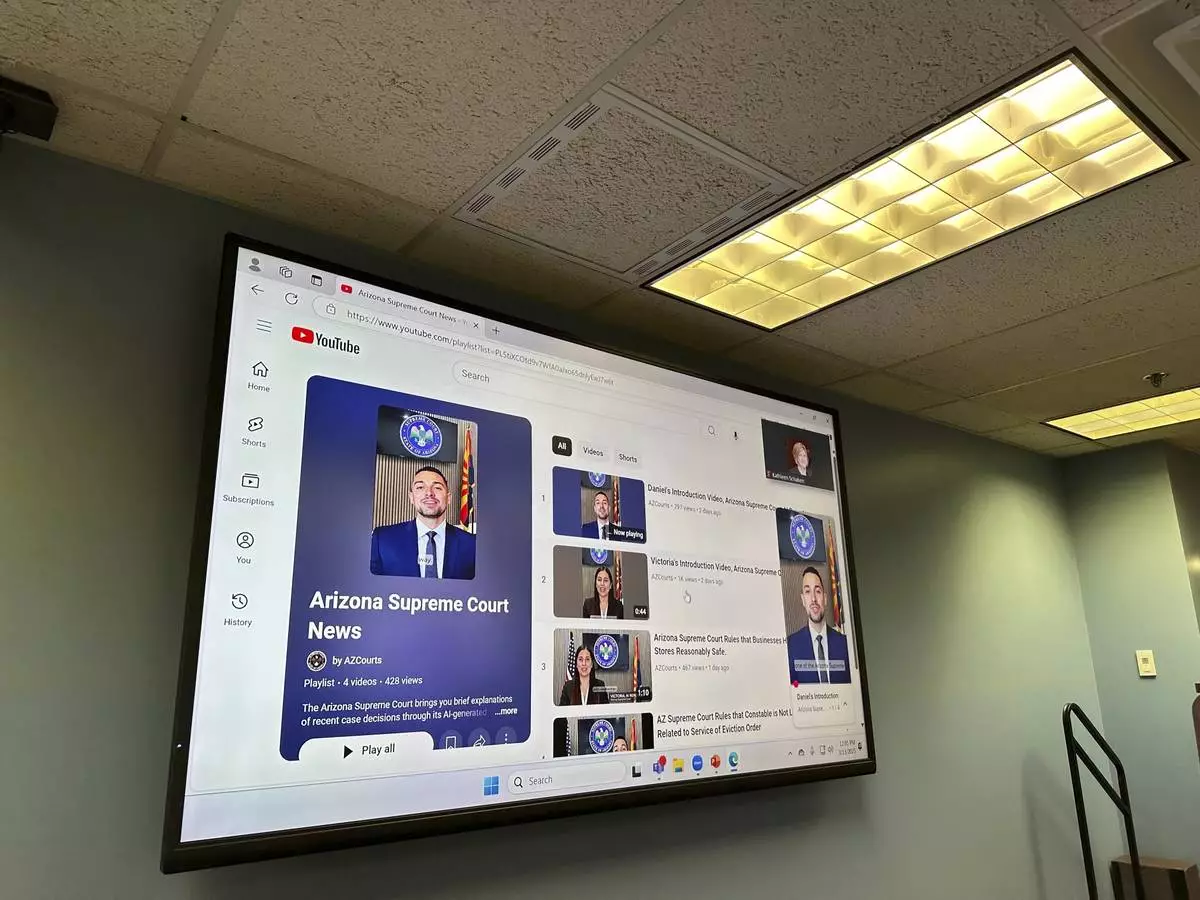
Created with a program called Creatify, Daniel and Victoria in a way bring to life the court's news releases. Videos featuring one or the other are being posted for every ruling by the high court, and may be used for Access to Justice projects, community programs and civics information in the future.

The court has been sending out releases since October to summarize and explain rulings. After seeing success with the releases, it began exploring options to convey that information through video.

The AI-generated avatars were the most efficient way to produce videos and get the information out, said court spokesperson Alberto Rodriguez. Producing a video usually can take hours, he said, but an AI-generated video is ready in about 30 minutes. The court might introduce more AI-generated reporters in the future, Rodriguez said in a news release.

The justice who authors the legal opinion also drafts a news release, the wording of which must be approved by the entire bench. The justice then works with the court's communications team to craft a script for the avatars — the avatars aren't interpreting original court decisions or opinions, Rodriguez said.

Daniel and Victoria's names and physical appearances were designed to represent a wide cross-section of people, Rodriguez said. He said they aren’t meant to come off as real people and the court emphasizes their AI origins with disclaimers. The court is exploring different emotional deliveries, cadences and pronunciations as well as Spanish translations for the avatars, Rodriguez said.

Mason Kortz, a clinical instructor at the Harvard Law School's Cyberlaw Clinic at the Berkman Klein Center for Internet & Society, described the court's new cyber employees as "quite realistic." While their voices might give them away, he said some people could be fooled into thinking that Daniel and Victoria are real reporters if viewers are only reading the subtitles and looking at the characters' movements and facial expressions.

Kortz also said it would be better for the language of the disclaimer that is in the videos' text description to be featured more prominently.

“You want to make it as hard as possible for someone to advertently or inadvertently remove the disclaimer,” he said.

Asheley Landrum, associate professor at the Walter Cronkite School of Journalism and Mass Communication at Arizona State University, said the avatars feel robotic. She said a format that mimics real dialogue and storytelling might be more engaging than an AI reading of a news release.

“Because it’s not just about using AI or even creating videos,” she said, “but about doing so in a way that really resonates with audiences.”

Still, it's fine line. She said engaging characteristics can help to build trust over time but the danger is that content could appear biased.
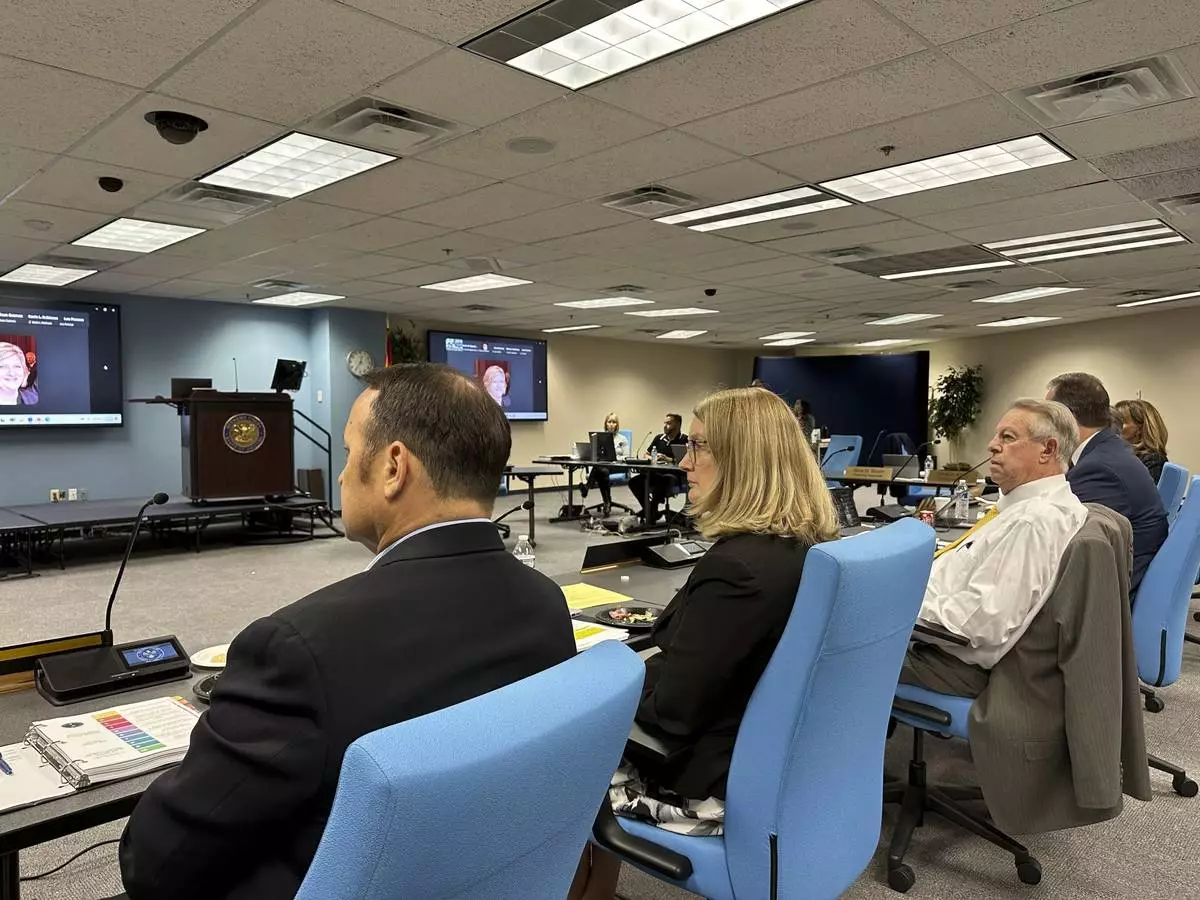
Arizona Supreme Court Chief Justice Ann Timmer, second from left, and David Byers, director of the Administrative Office of the Courts, listen as the Arizona Judicial Council discusses the high court's new use of AI-generated avatars that are used to relay information to the public on Thursday, March 13, 2025., in Phoenix. (AP Photo/Sejal Govindarao)
Arizona Supreme Court Chief Justice Ann Timmer, second from left, and David Byers, director of the Administrative Office of the Courts, listen as the Arizona Judicial Council discusses the high court's new use of AI-generated avatars that are used to relay information to the public on Thursday, March 13, 2025., in Phoenix. (AP Photo/Sejal Govindarao)
The Arizona Judicial Council discusses the Arizona Supreme Court's new use of AI-generated avatars that are used to relay information to the public on Thursday, March 13, 2025., in Phoenix. (AP Photo/Sejal Govindarao)

The Arizona Judicial Council discusses the Arizona Supreme Court's new use of AI-generated avatars that are used to relay information to the public on Thursday, March 13, 2025., in Phoenix. (AP Photo/Sejal Govindarao)

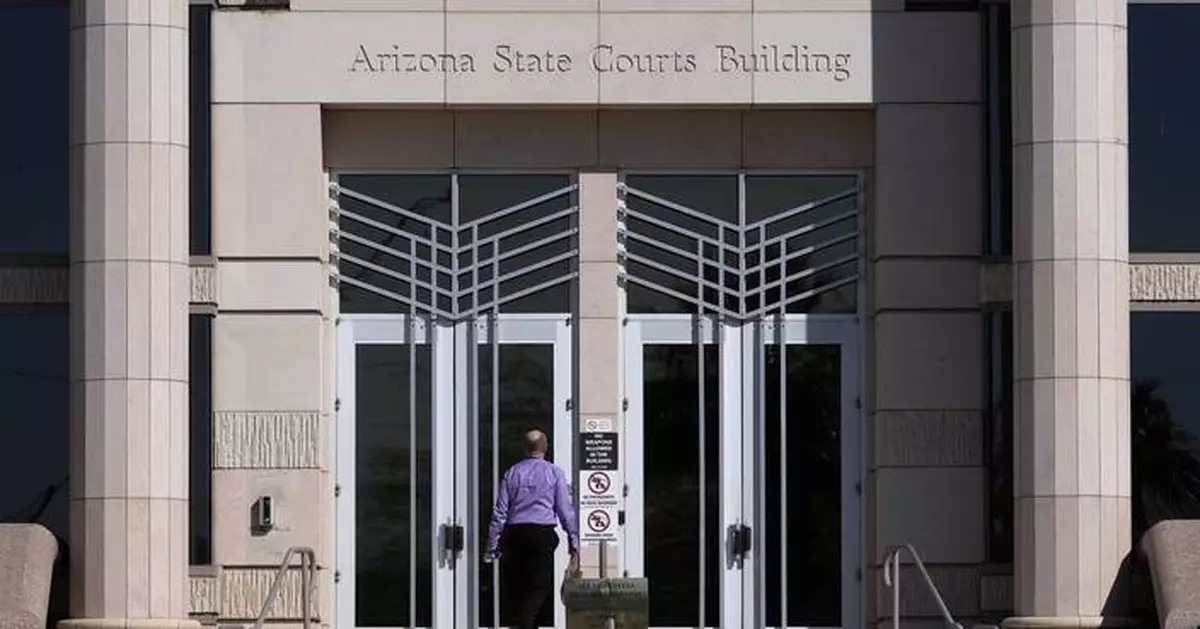
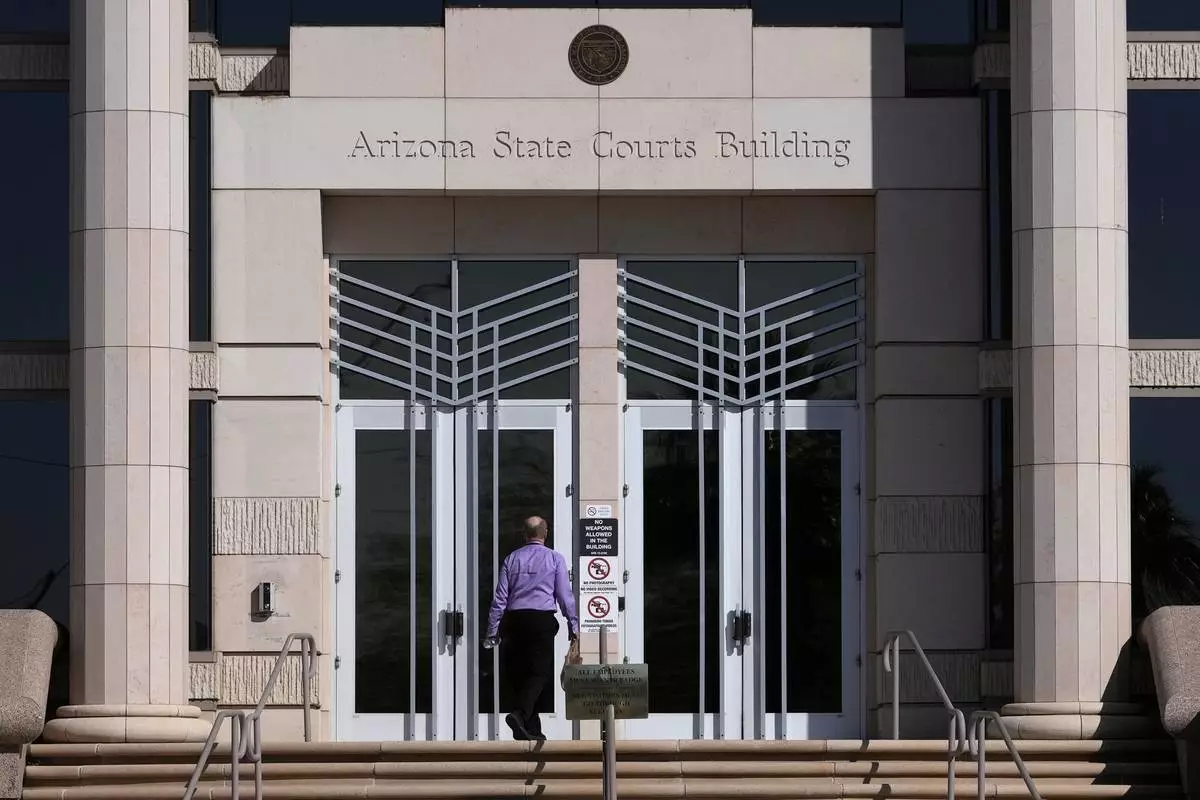
FILE - A man enters the Arizona Supreme Court building, Wednesday, April 10, 2024, in Phoenix. (AP Photo/Matt York, File)
FILE - A man enters the Arizona Supreme Court building, Wednesday, April 10, 2024, in Phoenix. (AP Photo/Matt York, File)
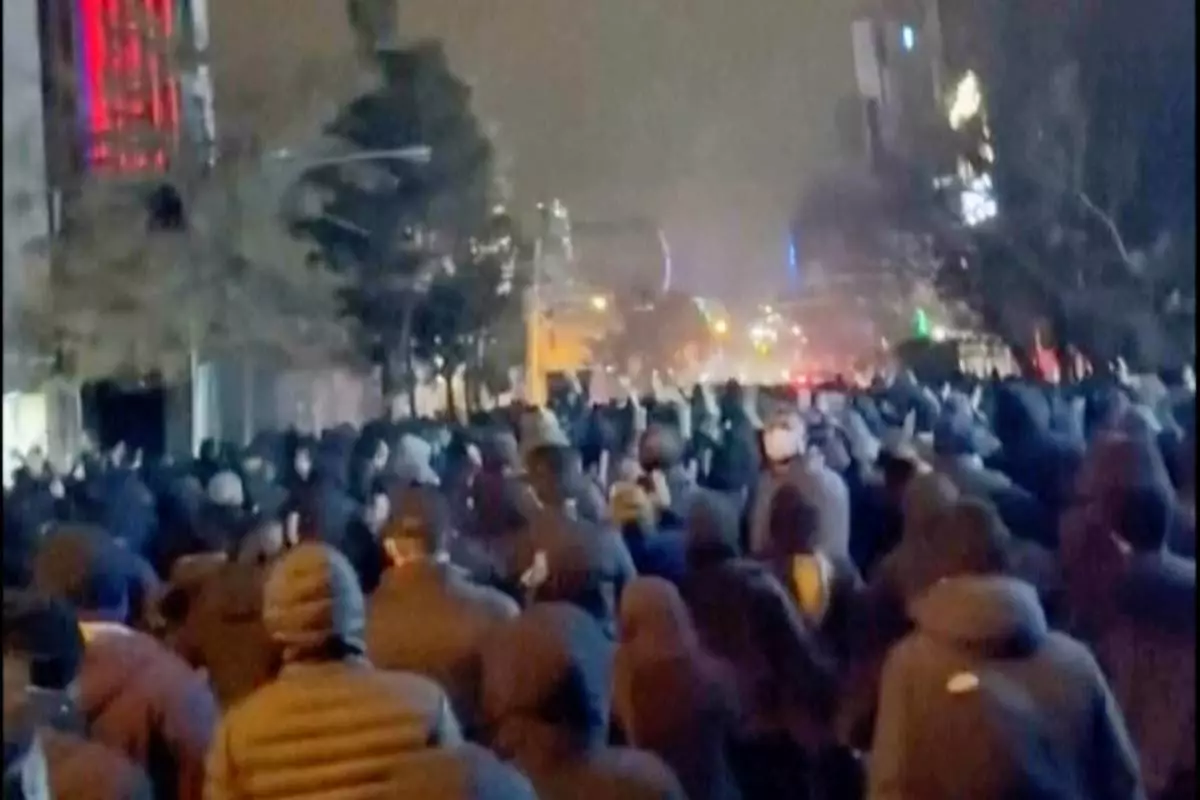
DUBAI, United Arab Emirates (AP) — U.S. President Donald Trump said Iran wants to negotiate with Washington after his threat to strike the Islamic Republic over its bloody crackdown on protesters, a move coming as activists said Monday the death toll in the nationwide demonstrations rose to at least 544.

Iran had no immediate reaction to the news, which came after the foreign minister of Oman — long an interlocutor between Washington and Tehran — traveled to Iran this weekend. It also remains unclear just what Iran could promise, particularly as Trump has set strict demands over its nuclear program and its ballistic missile arsenal, which Tehran insists is crucial for its national defense.

Meanwhile Monday, Iran called for pro-government demonstrators to head to the streets in support of the theocracy, a show of force after days of protests directly challenging the rule of 86-year-old Supreme Leader Ayatollah Ali Khamenei. Iranian state television aired chants from the crowd, who shouted “Death to America!” and “Death to Israel!”

Trump and his national security team have been weighing a range of potential responses against Iran including cyberattacks and direct strikes by the U.S. or Israel, according to two people familiar with internal White House discussions who were not authorized to comment publicly and spoke on condition of anonymity.

“The military is looking at it, and we’re looking at some very strong options,” Trump told reporters on Air Force One on Sunday night. Asked about Iran’s threats of retaliation, he said: “If they do that, we will hit them at levels that they’ve never been hit before.”

Trump said that his administration was in talks to set up a meeting with Tehran, but cautioned that he may have to act first as reports of the death toll in Iran mount and the government continues to arrest protesters.

“I think they’re tired of being beat up by the United States,” Trump said. “Iran wants to negotiate.”

He added: “The meeting is being set up, but we may have to act because of what’s happening before the meeting. But a meeting is being set up. Iran called, they want to negotiate.”

Iran through country's parliamentary speaker warned Sunday that the U.S. military and Israel would be “legitimate targets” if America uses force to protect demonstrators.

More than 10,600 people also have been detained over the two weeks of protests, said the U.S.-based Human Rights Activists News Agency, which has been accurate in previous unrest in recent years and gave the death toll. It relies on supporters in Iran crosschecking information. It said 496 of the dead were protesters and 48 were with security forces.

With the internet down in Iran and phone lines cut off, gauging the demonstrations from abroad has grown more difficult. The Associated Press has been unable to independently assess the toll. Iran’s government has not offered overall casualty figures.

Those abroad fear the information blackout is emboldening hard-liners within Iran’s security services to launch a bloody crackdown. Protesters flooded the streets in the country’s capital and its second-largest city on Saturday night into Sunday morning. Online videos purported to show more demonstrations Sunday night into Monday, with a Tehran official acknowledging them in state media.

In Tehran, a witness told the AP that the streets of the capital empty at the sunset call to prayers each night. By the Isha, or nighttime prayer, the streets are deserted.

Part of that stems from the fear of getting caught in the crackdown. Police sent the public a text message that warned: “Given the presence of terrorist groups and armed individuals in some gatherings last night and their plans to cause death, and the firm decision to not tolerate any appeasement and to deal decisively with the rioters, families are strongly advised to take care of their youth and teenagers.”

Another text, which claimed to come from the intelligence arm of the paramilitary Revolutionary Guard, also directly warned people not to take part in demonstrations.

“Dear parents, in view of the enemy’s plan to increase the level of naked violence and the decision to kill people, ... refrain from being on the streets and gathering in places involved in violence, and inform your children about the consequences of cooperating with terrorist mercenaries, which is an example of treason against the country,” the text warned.

The witness spoke to the AP on condition of anonymity due to the ongoing crackdown.

The demonstrations began Dec. 28 over the collapse of the Iranian rial currency, which trades at over 1.4 million to $1, as the country’s economy is squeezed by international sanctions in part levied over its nuclear program. The protests intensified and grew into calls directly challenging Iran’s theocracy.

Nikhinson reported from aboard Air Force One.

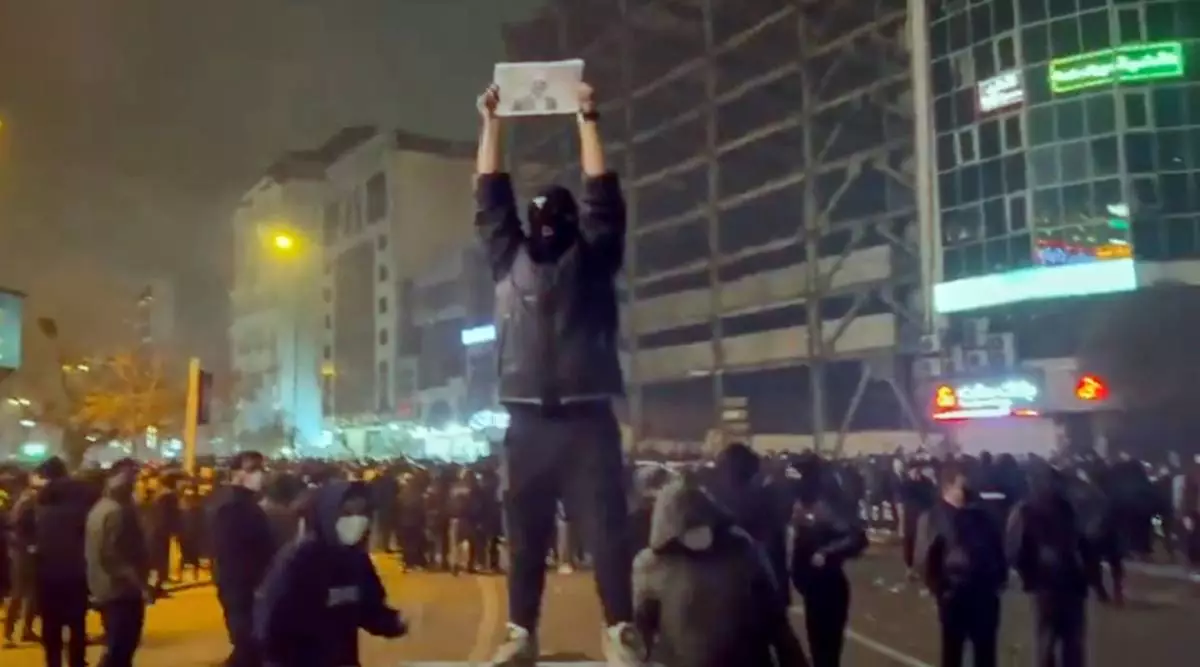
In this frame grab from video obtained by the AP outside Iran, a masked demonstrator holds a picture of Iran's Crown Prince Reza Pahlavi during a protest in Tehran, Iran, Friday, January. 9, 2026. (UGC via AP)

In this frame grab from video obtained by the AP outside Iran, a masked demonstrator holds a picture of Iran's Crown Prince Reza Pahlavi during a protest in Tehran, Iran, Friday, January. 9, 2026. (UGC via AP)

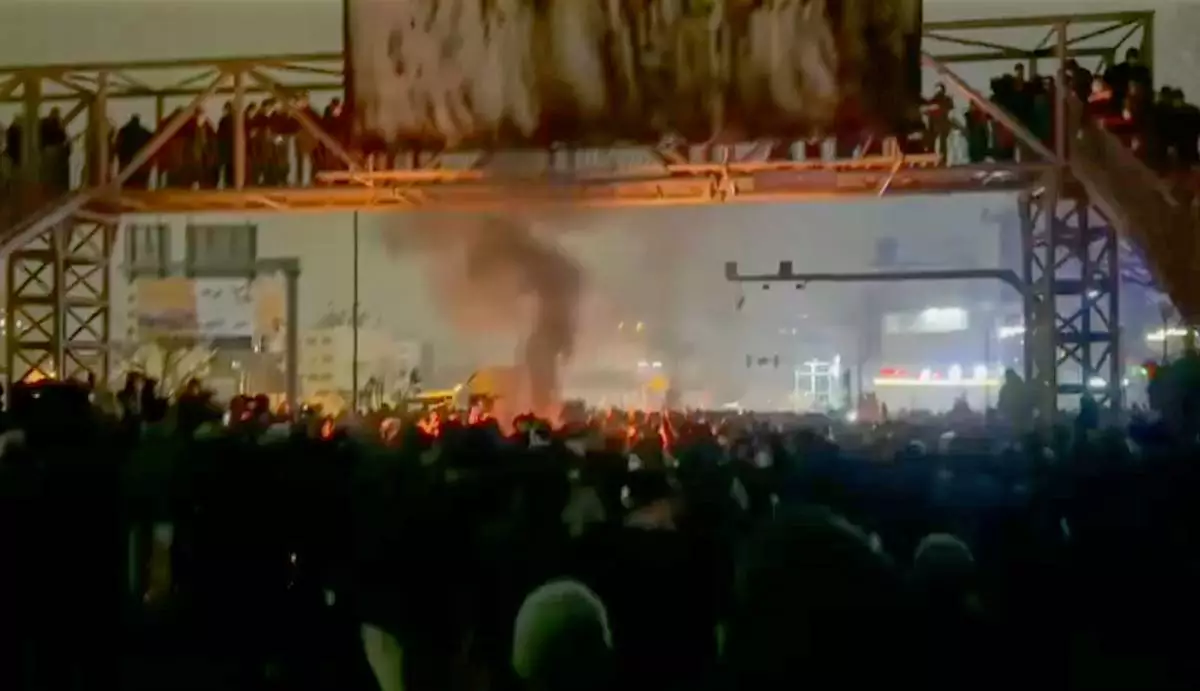
In this frame grab from footage circulating on social media from Iran shows protesters taking to the streets despite an intensifying crackdown as the Islamic Republic remains cut off from the rest of the world in Tehran, Iran, Friday, Jan. 9, 2026.(UGC via AP)

In this frame grab from footage circulating on social media from Iran shows protesters taking to the streets despite an intensifying crackdown as the Islamic Republic remains cut off from the rest of the world in Tehran, Iran, Friday, Jan. 9, 2026.(UGC via AP)

In this frame grab from footage circulating on social media from Iran showed protesters once again taking to the streets of Tehran despite an intensifying crackdown as the Islamic Republic remains cut off from the rest of the world in Tehran, Iran, Saturday Jan. 10, 2026. (UGC via AP)

In this frame grab from footage circulating on social media from Iran showed protesters once again taking to the streets of Tehran despite an intensifying crackdown as the Islamic Republic remains cut off from the rest of the world in Tehran, Iran, Saturday Jan. 10, 2026. (UGC via AP)

Recommended Articles