SANTA FE, N.M. (AP) — Dust storms, strong gusts and at least two brush fires descended on New Mexico on Tuesday, snarling highway traffic, knocking out power and setting buildings ablaze.
The National Weather Service pushed an emergency alert to cellphones that warned of zero-visibility conditions and adverse health consequences for infants and the elderly. And in some parts of the state, gusts have reached as high as 70 mph (113 kph).
Click to Gallery
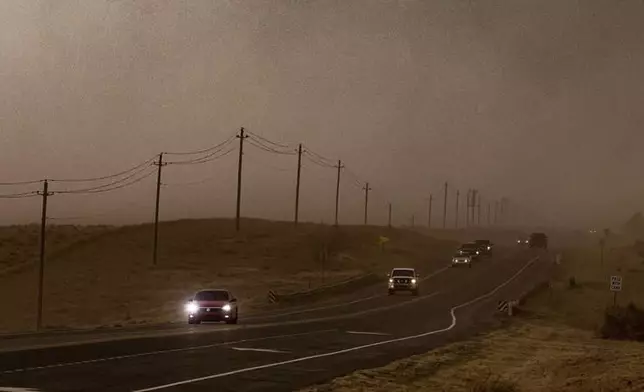
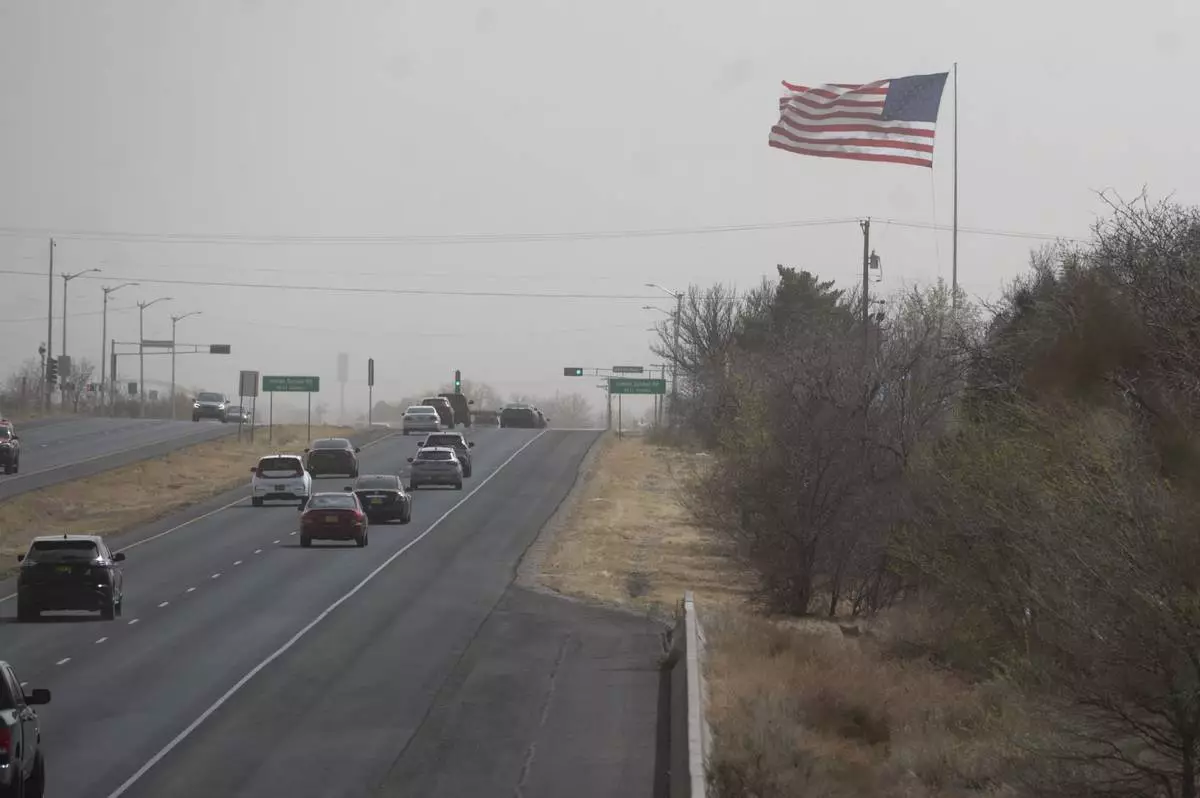
The wind and dust sweep over Highway 14 obscuring the road and the sky on Tuesday, March 18, 2025, in Santa Fe, N.M. (Gabriela Campos/Santa Fe New Mexican via AP)
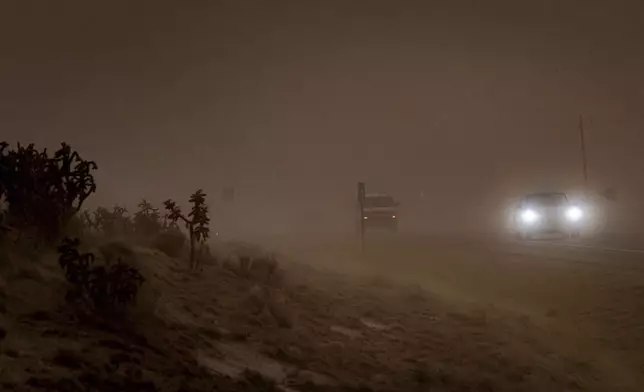
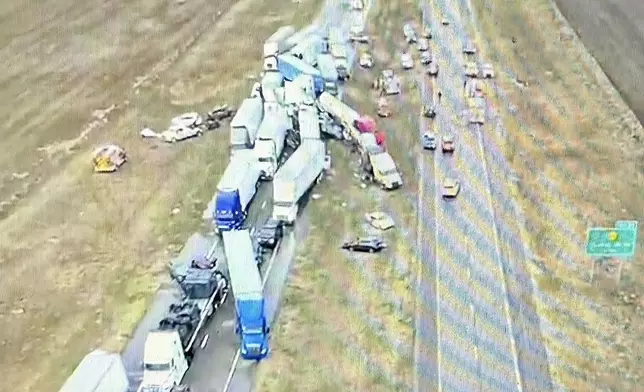
This image provided by the Kansas Highway Patrol shows the aftermath of a pileup on Interstate 70 near Goodland, Kan., caused by a dust storm and involving more than 70 vehicles, Friday, March 14, 2025. (Kansas Highway Patrol via AP)
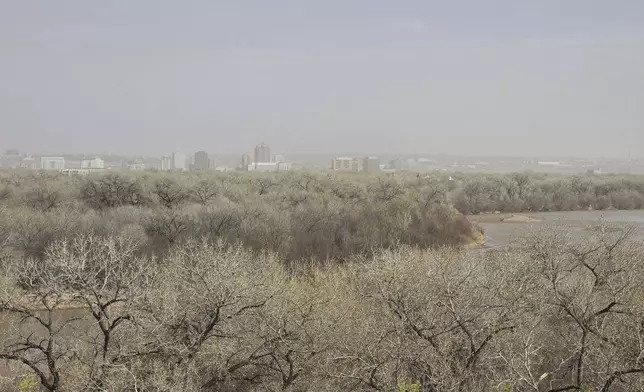
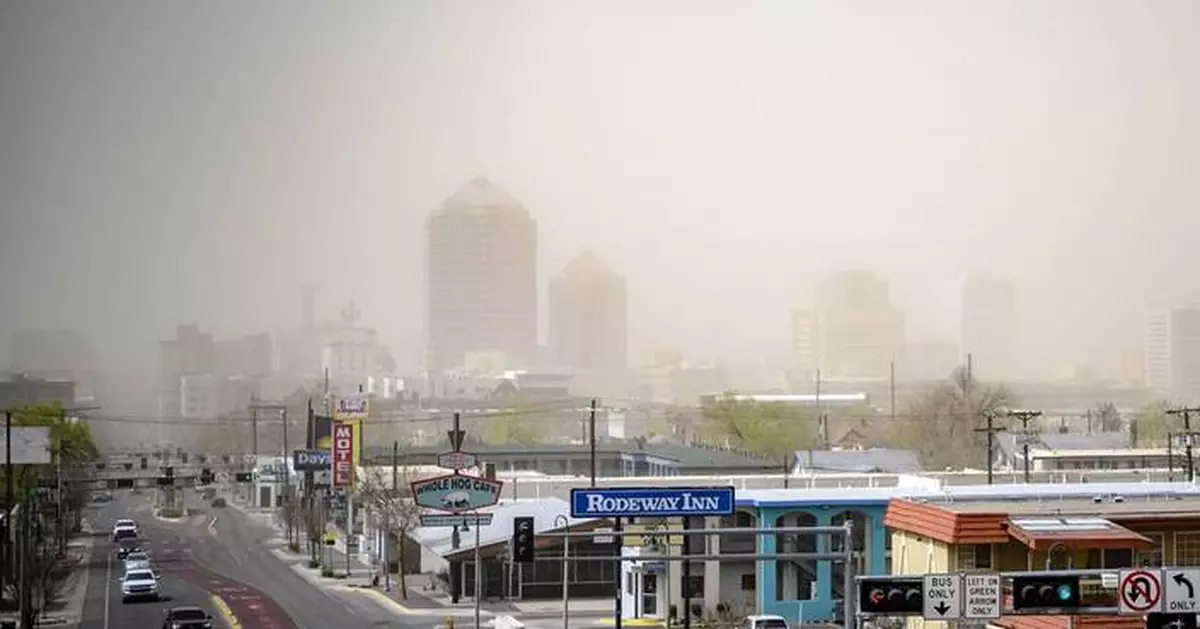
Dust fills the sky in Albuquerque, N.M., Tuesday, March 18, 2025. (AP Photo/Felicia Fonseca)
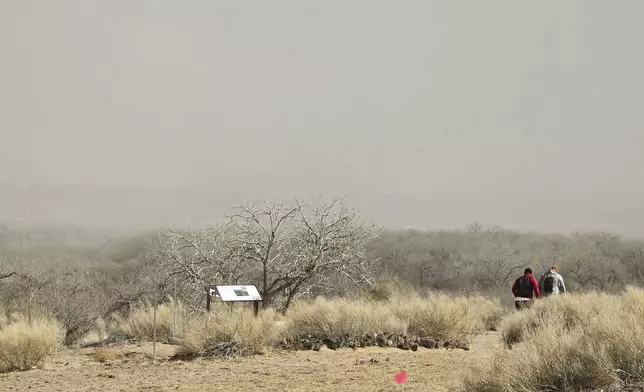
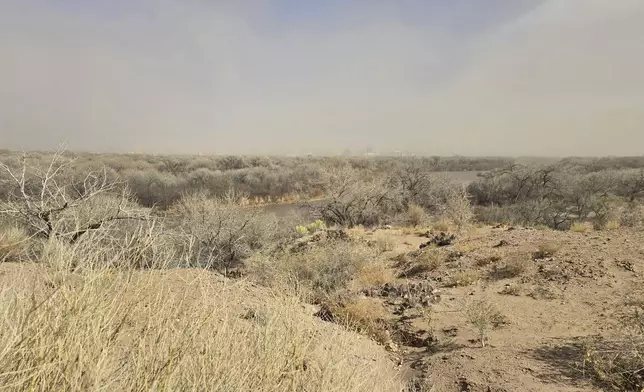
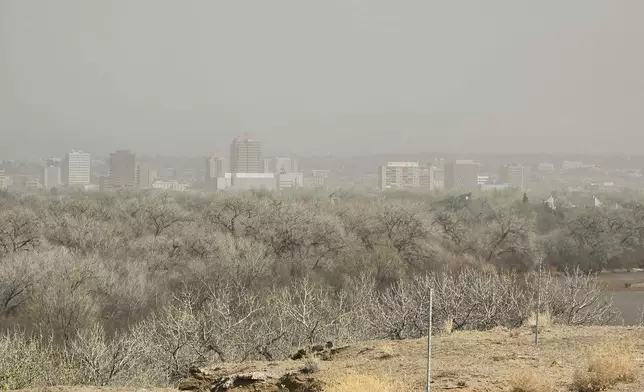
Dust shrouds buildings in Albuquerque, N.M., Tuesday, March 18, 2025. (AP Photo/Felicia Fonseca)
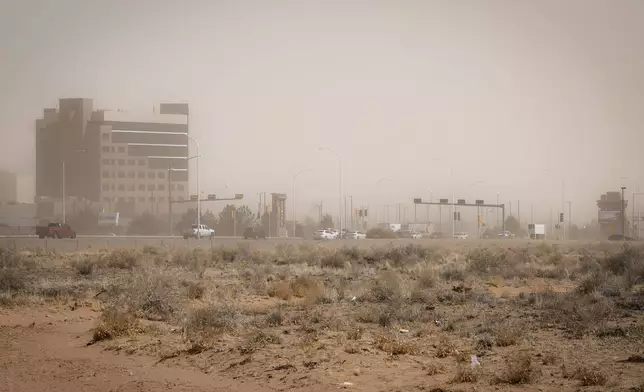
Strong winds and dust obscure the Santa Ana Star Casino in Bernalillo, N.M., Tuesday, March 18, 2025. (Jessica Baca/The Albuquerque Journal via AP)
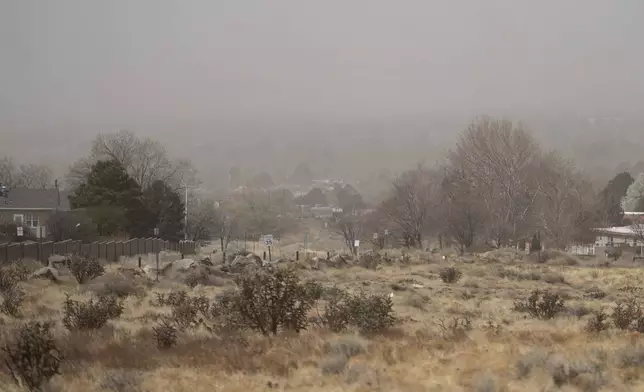
Dust obscures Albuquerque, N.M., as pictured near the Menaul Trailhead on Tuesday, March 18, 2025. (Jon Austria/The Albuquerque Journal via AP)
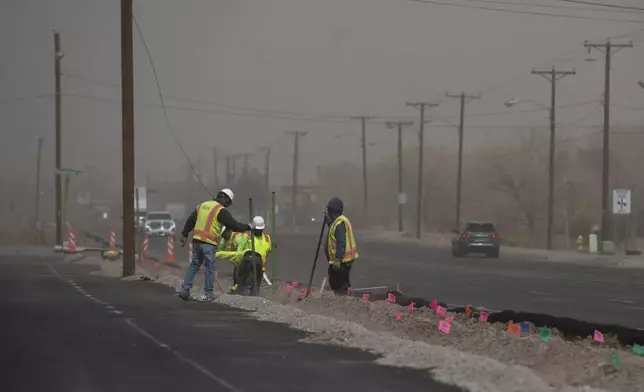
Construction workers work on a trench across as high winds and dust blow across 2nd Street NW in Albuquerque, N.M., Tuesday, March 18, 2025. (Jon Austria/The Albuquerque Journal via AP)
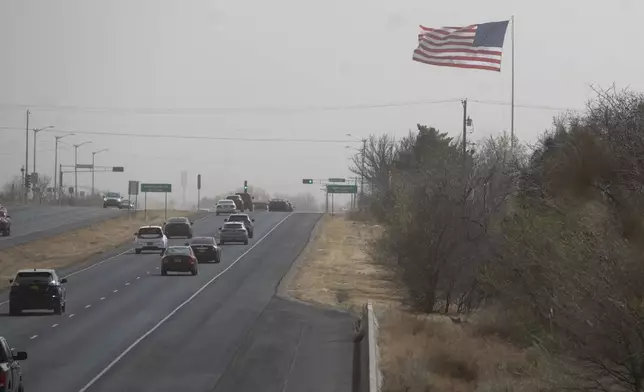
Winds whip across Tramway Boulevard NE in Albuquerque, N.M., Tuesday, March 18, 2025. (Jon Austria/The Albuquerque Journal via AP)
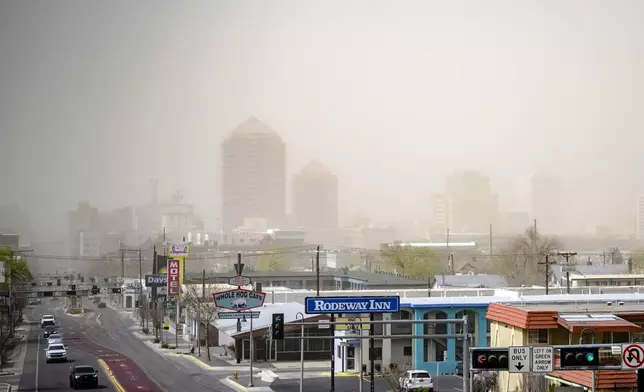
Travel is highly discouraged in the #ABQ metro through Tuesday afternoon, March 18, 2025, due to visibility below a quarter mile from blowing dust and dangerous crosswinds of up to 70 mph on north to south roads and highways, in downtown Albuquerque, N.M., looking west from Route 66. (AP Photo/Roberto E. Rosales)
The state is being hit by strong winds off an area of low pressure directly over Kansas on Tuesday evening, while extremely dry conditions over the last few months have created prime conditions for fire threat and dust storms, said Marc Chenard, meteorologist for the weather service.
Dry, dusty weather reduced visibility to almost zero in some instances amid gusts of up to 50 mph (80 kph) along the Albuquerque-Santa Fe corridor and high plains communities in Torrance County, including towns along Interstate 40. Interstate 25 was opened after a brief closure near Cochiti Pueblo due to dust, wind and poor visibility.
Blinding dust prompted New Mexico’s transportation department to close a 130-mile stretch of Interstate 10, from the Arizona state line to the outskirts of Las Cruces, along with state highways near Deming.
High winds also led to road closures in the state's oil-producing region near Roswell and Carlsbad.
“Motorists should not drive into a dust storm. Pull aside and stay alive,” the National Weather Service said in a dust-storm warning.
More than 39,000 customers were without power by Tuesday evening, according to PowerOutage.us. The utility PNM said on X that it was responding to several outages due to high winds and suggested its customers prepare for the possibility of more outages.
Authorities also warned of extreme conditions in the event of wildfire, in the aftermath of a grasslands fire that prompted evacuations Friday on the outskirts of Wagon Mound.
A brush fire ignited in Bosque Farms, a village just south of Albuquerque, temporarily closing part of Highway 47, according to Albuquerque TV station KOAT. The Valencia County Fire Department said in a social media post that the fire has “burned structures,” though the number of buildings that sustained damage was not immediately clear.
Beyond New Mexico, dust storms last week resulted in a pileup in western Kansas on Interstate 70 involving dozens of cars and trucks that left eight people dead.
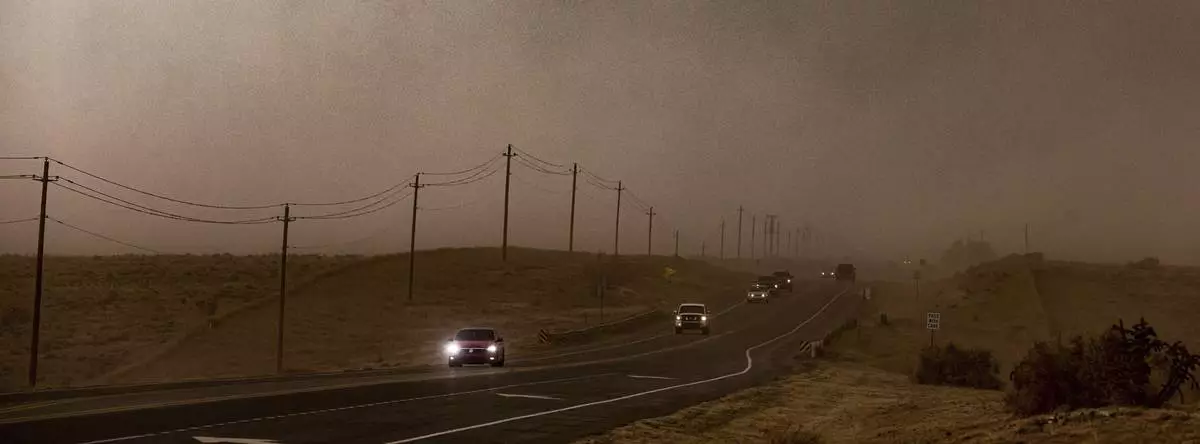
The wind and dust sweep over Highway 14 obscuring the road and the sky on Tuesday, March 18, 2025, in Santa Fe, N.M. (Gabriela Campos/Santa Fe New Mexican via AP)
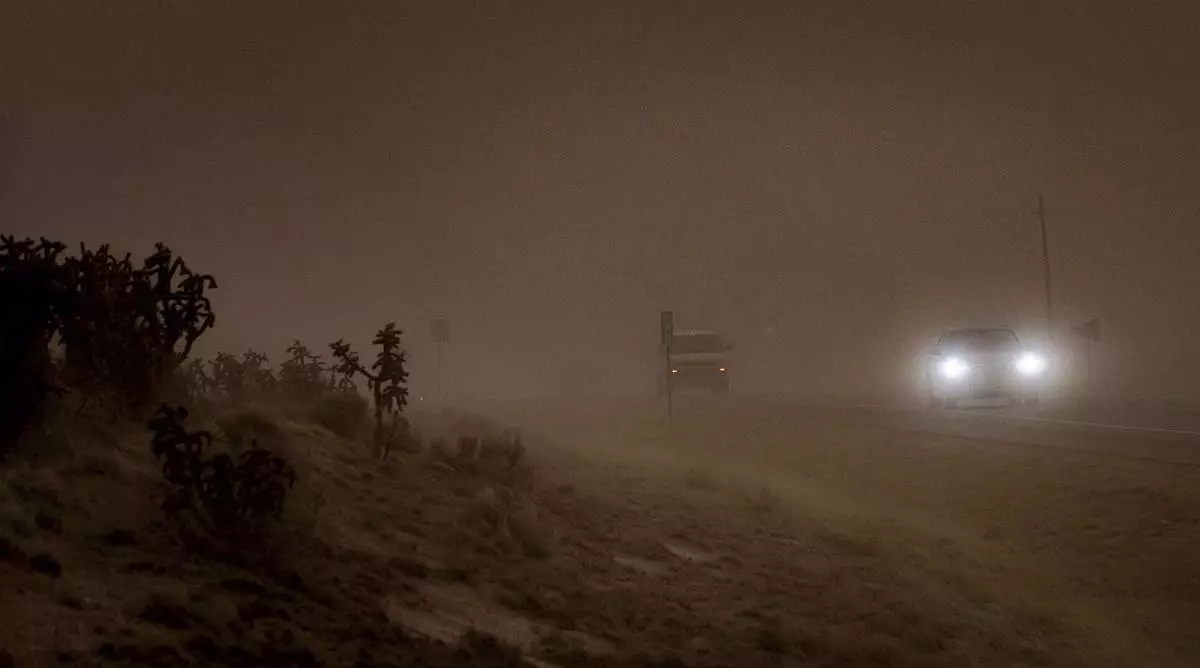
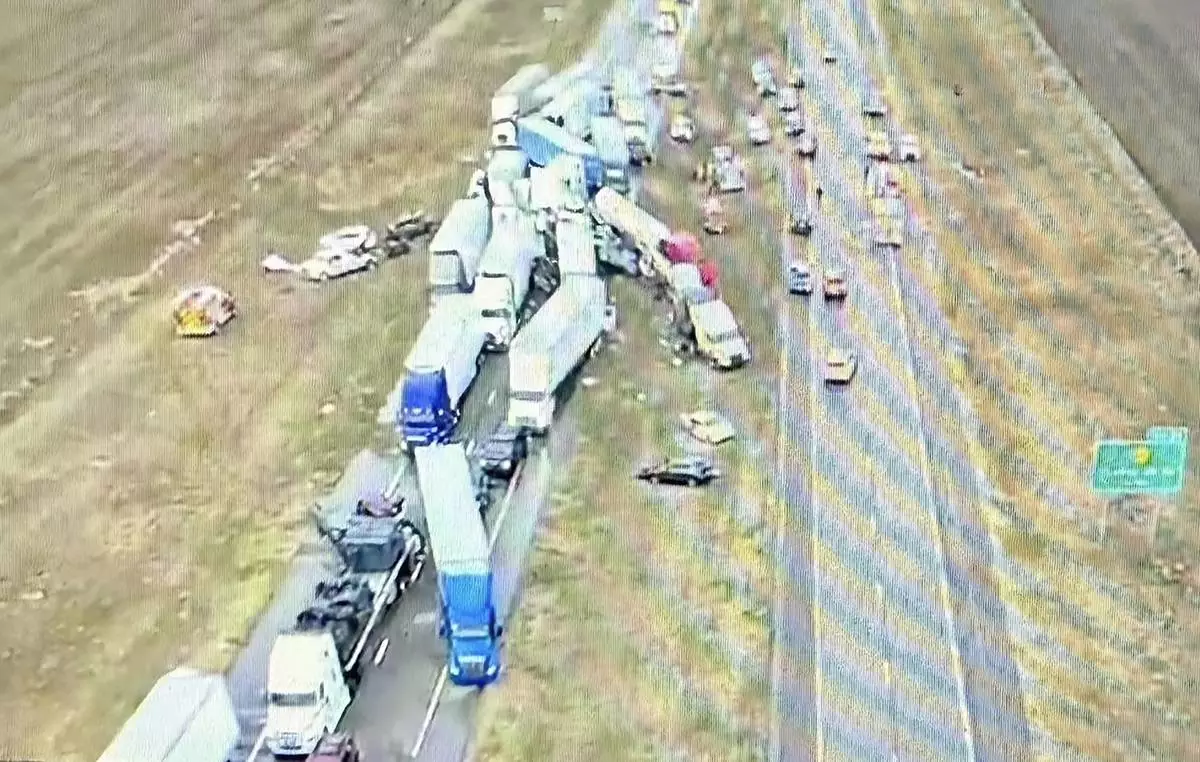
This image provided by the Kansas Highway Patrol shows the aftermath of a pileup on Interstate 70 near Goodland, Kan., caused by a dust storm and involving more than 70 vehicles, Friday, March 14, 2025. (Kansas Highway Patrol via AP)
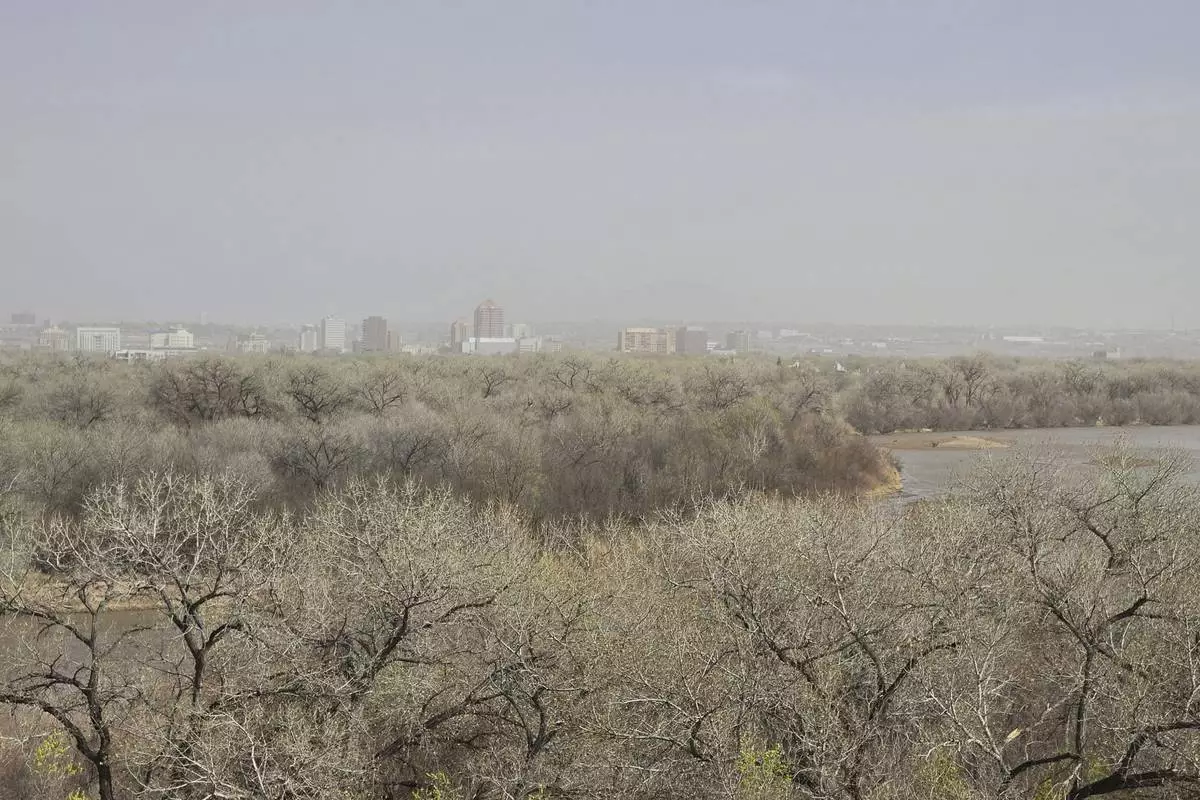
Dust fills the sky in Albuquerque, N.M., Tuesday, March 18, 2025. (AP Photo/Felicia Fonseca)
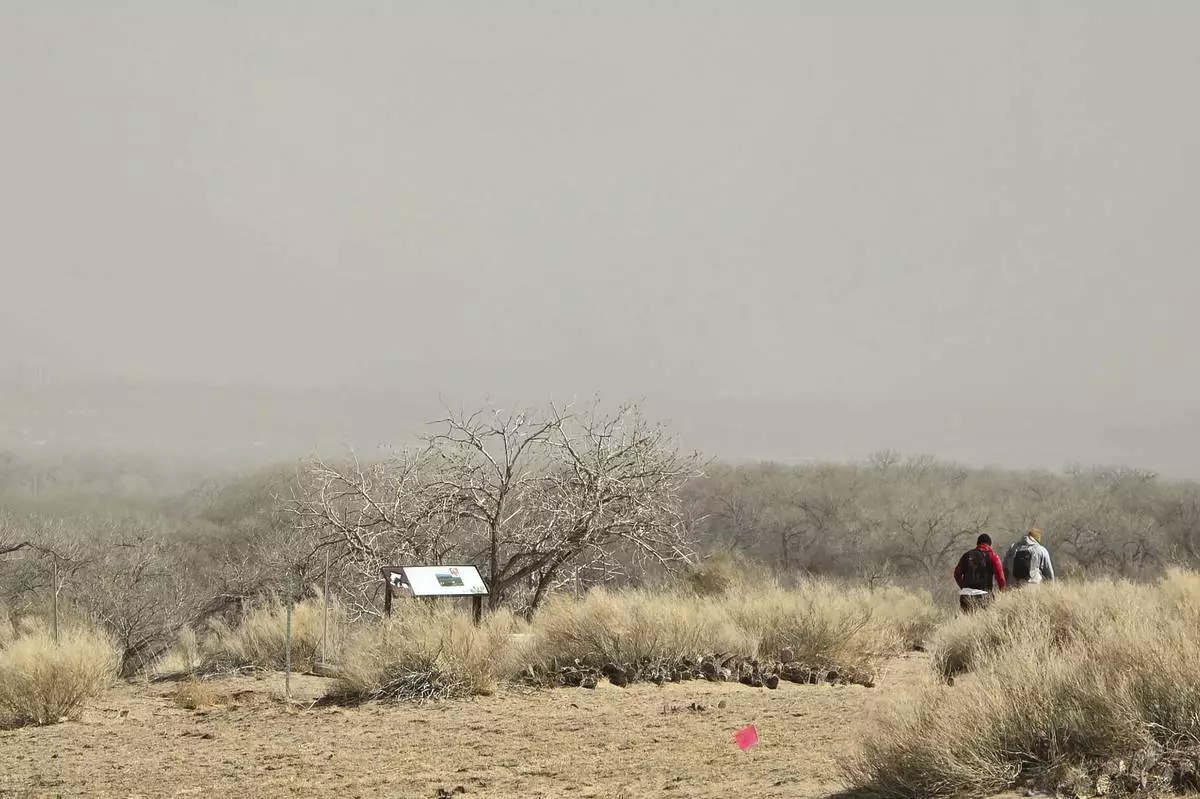
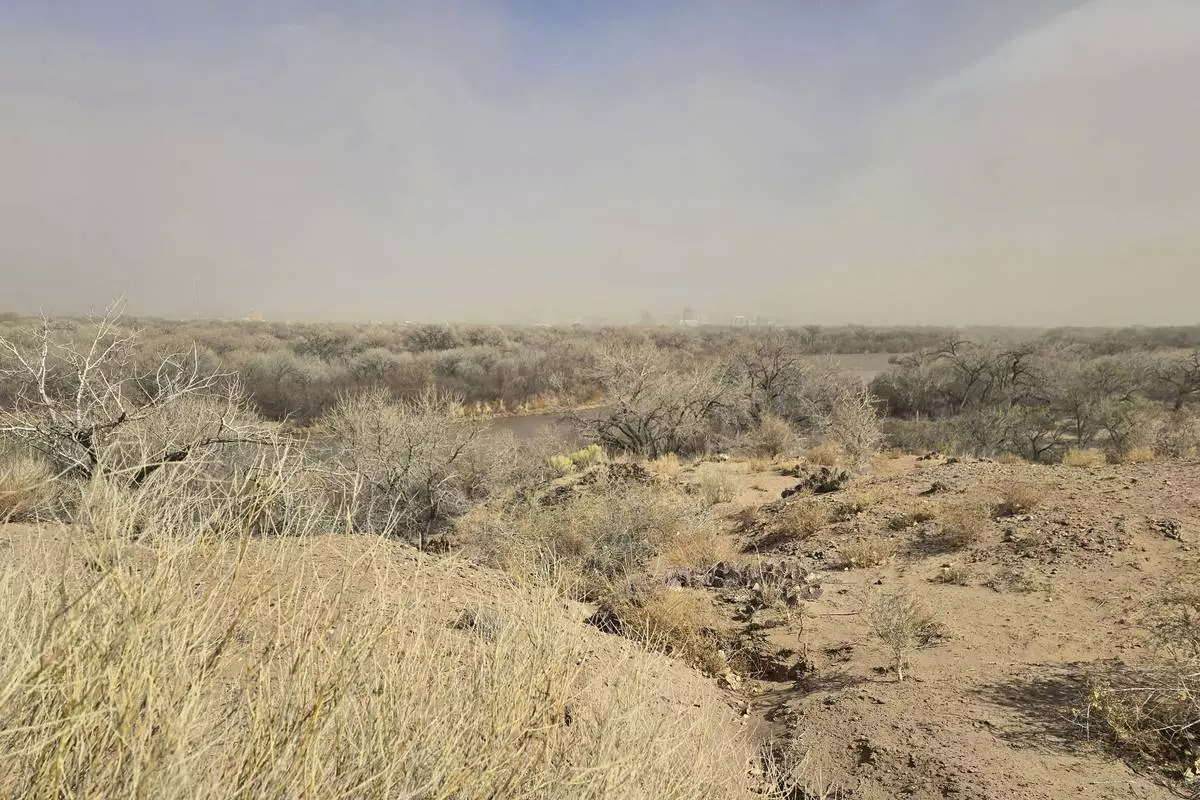
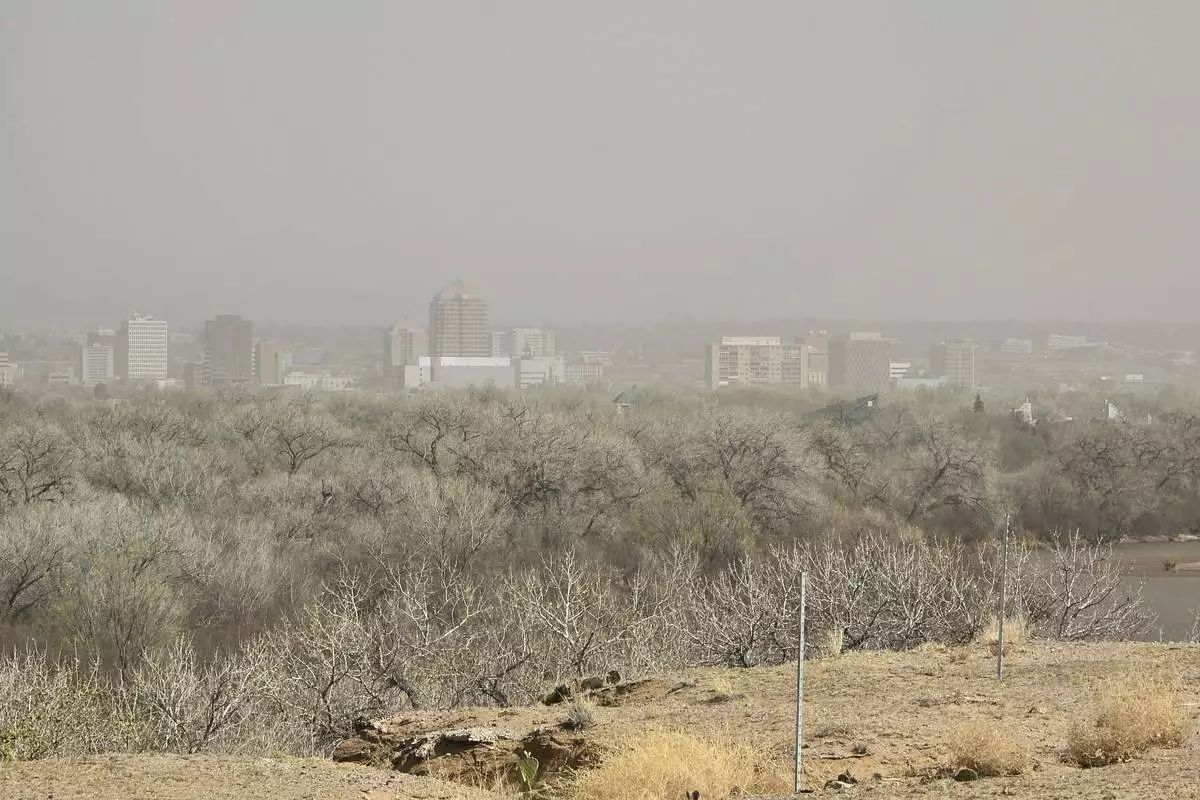
Dust shrouds buildings in Albuquerque, N.M., Tuesday, March 18, 2025. (AP Photo/Felicia Fonseca)
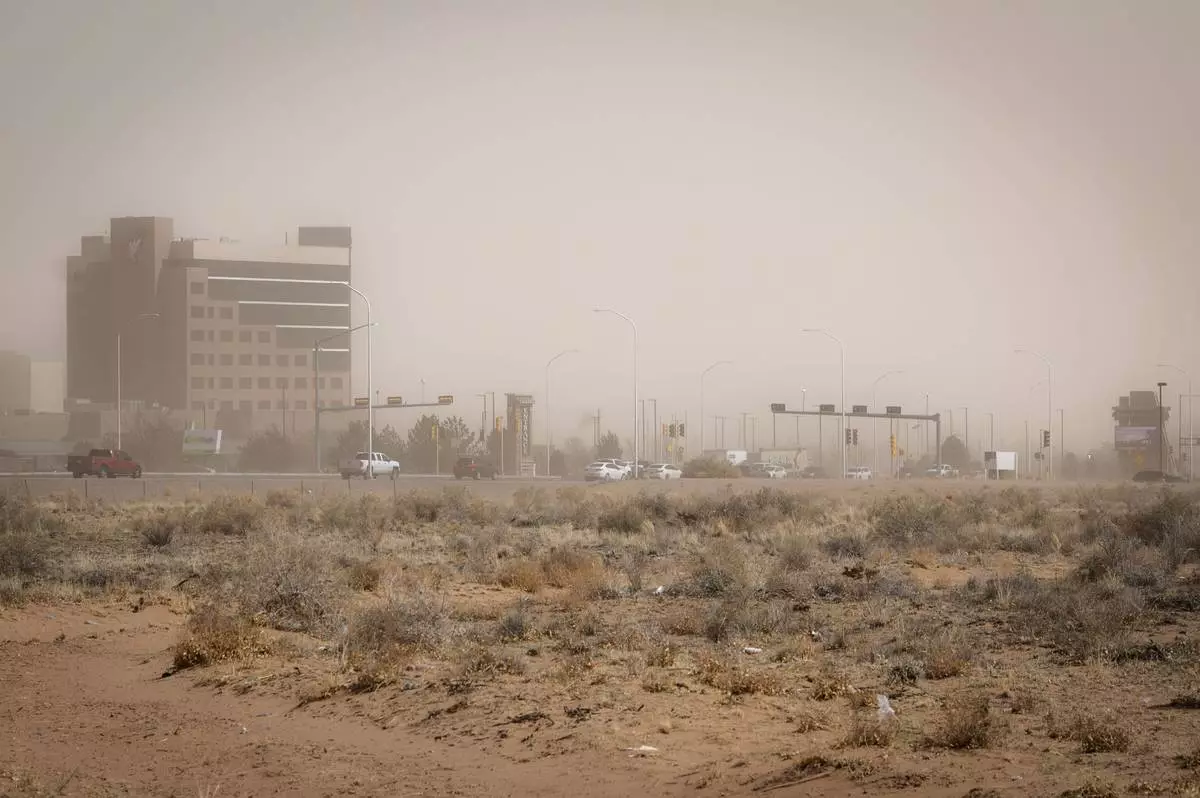
Strong winds and dust obscure the Santa Ana Star Casino in Bernalillo, N.M., Tuesday, March 18, 2025. (Jessica Baca/The Albuquerque Journal via AP)
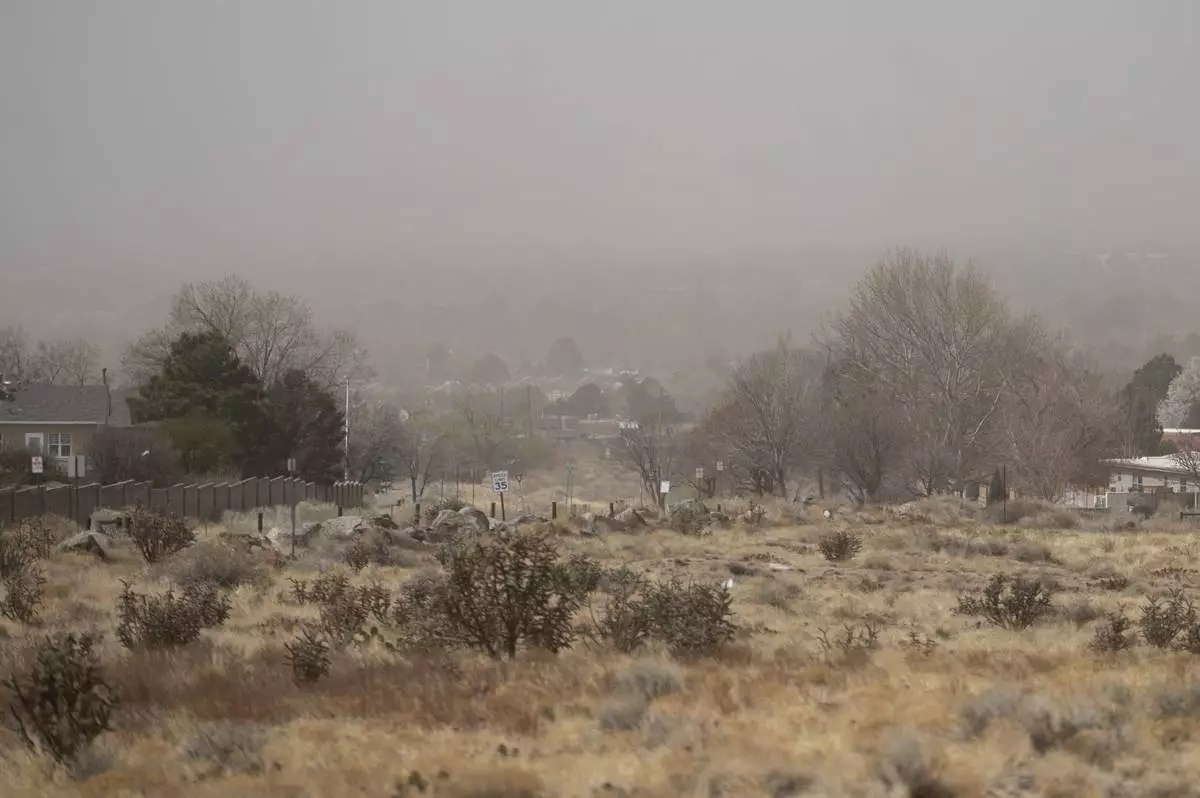
Dust obscures Albuquerque, N.M., as pictured near the Menaul Trailhead on Tuesday, March 18, 2025. (Jon Austria/The Albuquerque Journal via AP)
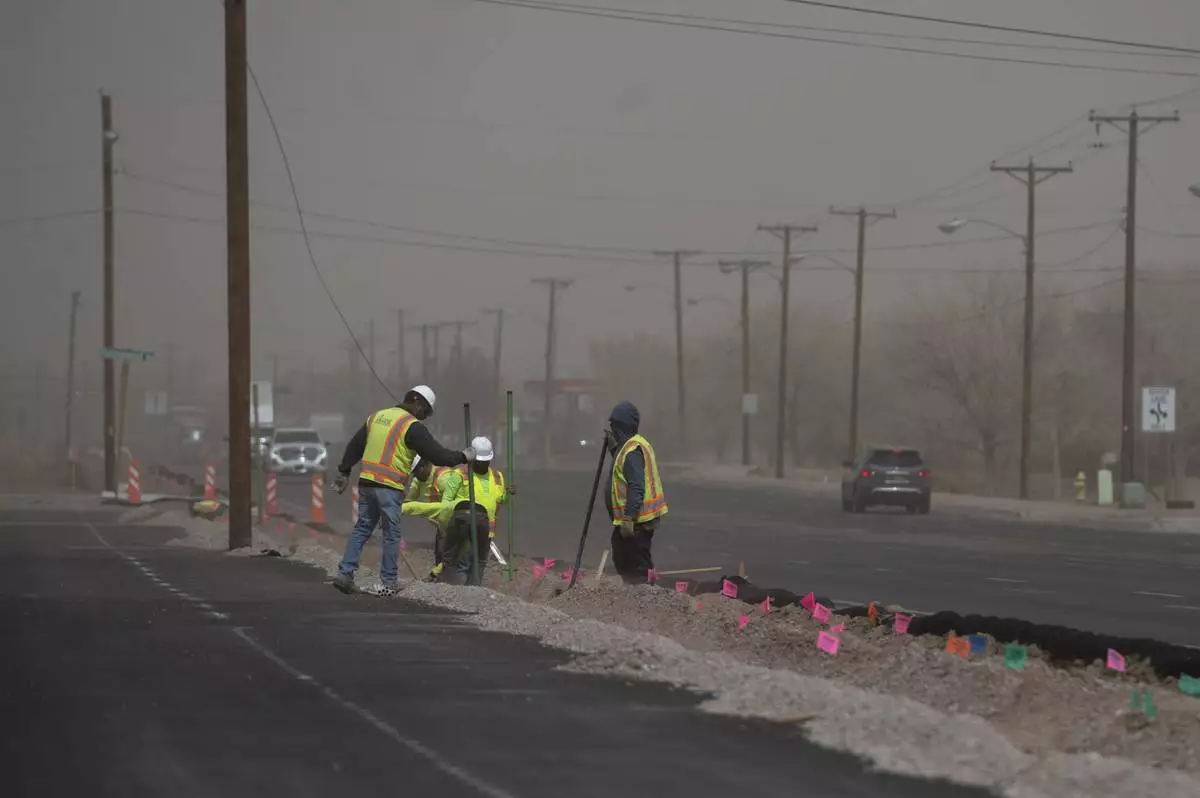
Construction workers work on a trench across as high winds and dust blow across 2nd Street NW in Albuquerque, N.M., Tuesday, March 18, 2025. (Jon Austria/The Albuquerque Journal via AP)
Winds whip across Tramway Boulevard NE in Albuquerque, N.M., Tuesday, March 18, 2025. (Jon Austria/The Albuquerque Journal via AP)
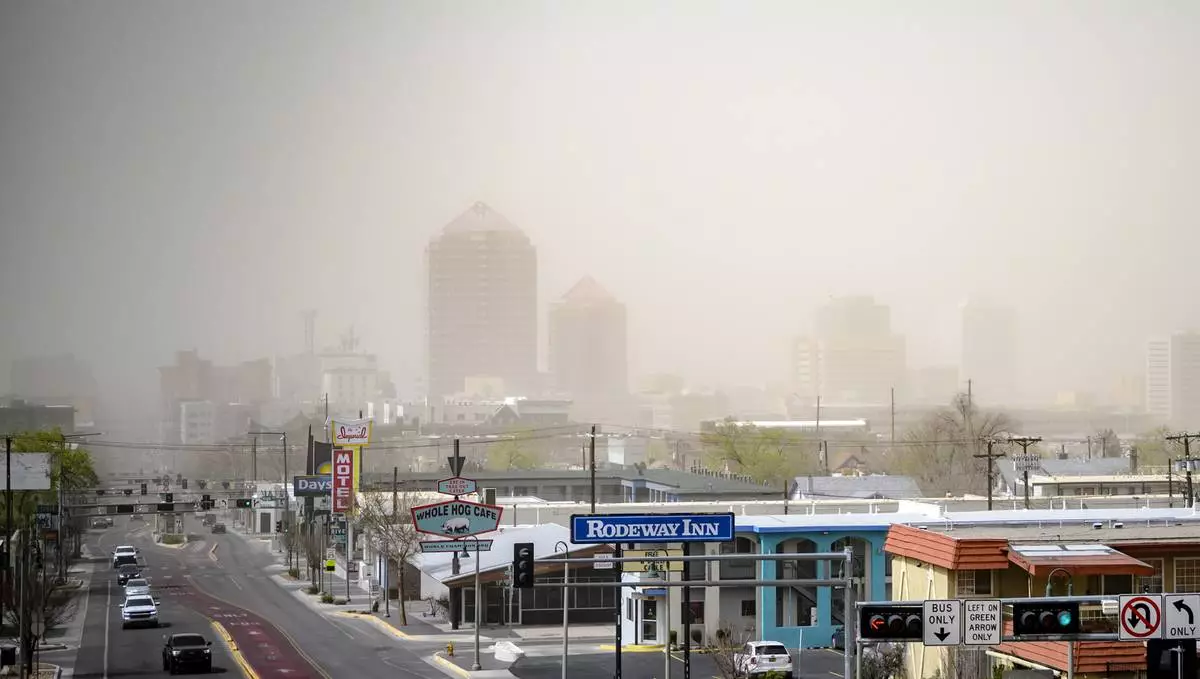
Travel is highly discouraged in the #ABQ metro through Tuesday afternoon, March 18, 2025, due to visibility below a quarter mile from blowing dust and dangerous crosswinds of up to 70 mph on north to south roads and highways, in downtown Albuquerque, N.M., looking west from Route 66. (AP Photo/Roberto E. Rosales)

NEW YORK (AP) — Reviving a campaign pledge, President Donald Trump wants a one-year, 10% cap on credit card interest rates, a move that could save Americans tens of billions of dollars but drew immediate opposition from an industry that has been in his corner.
Trump was not clear in his social media post Friday night whether a cap might take effect through executive action or legislation, though one Republican senator said he had spoken with the president and would work on a bill with his “full support.” Trump said he hoped it would be in place Jan. 20, one year after he took office.
Strong opposition is certain from Wall Street in addition to the credit card companies, which donated heavily to his 2024 campaign and have supported Trump's second-term agenda. Banks are making the argument that such a plan would most hurt poor people, at a time of economic concern, by curtailing or eliminating credit lines, driving them to high-cost alternatives like payday loans or pawnshops.
“We will no longer let the American Public be ripped off by Credit Card Companies that are charging Interest Rates of 20 to 30%,” Trump wrote on his Truth Social platform.
Researchers who studied Trump’s campaign pledge after it was first announced found that Americans would save roughly $100 billion in interest a year if credit card rates were capped at 10%. The same researchers found that while the credit card industry would take a major hit, it would still be profitable, although credit card rewards and other perks might be scaled back.
About 195 million people in the United States had credit cards in 2024 and were assessed $160 billion in interest charges, the Consumer Financial Protection Bureau says. Americans are now carrying more credit card debt than ever, to the tune of about $1.23 trillion, according to figures from the New York Federal Reserve for the third quarter last year.
Further, Americans are paying, on average, between 19.65% and 21.5% in interest on credit cards according to the Federal Reserve and other industry tracking sources. That has come down in the past year as the central bank lowered benchmark rates, but is near the highs since federal regulators started tracking credit card rates in the mid-1990s. That’s significantly higher than a decade ago, when the average credit card interest rate was roughly 12%.
The Republican administration has proved particularly friendly until now to the credit card industry.
Capital One got little resistance from the White House when it finalized its purchase and merger with Discover Financial in early 2025, a deal that created the nation’s largest credit card company. The Consumer Financial Protection Bureau, which is largely tasked with going after credit card companies for alleged wrongdoing, has been largely nonfunctional since Trump took office.
In a joint statement, the banking industry was opposed to Trump's proposal.
“If enacted, this cap would only drive consumers toward less regulated, more costly alternatives," the American Bankers Association and allied groups said.
Bank lobbyists have long argued that lowering interest rates on their credit card products would require the banks to lend less to high-risk borrowers. When Congress enacted a cap on the fee that stores pay large banks when customers use a debit card, banks responded by removing all rewards and perks from those cards. Debit card rewards only recently have trickled back into consumers' hands. For example, United Airlines now has a debit card that gives miles with purchases.
The U.S. already places interest rate caps on some financial products and for some demographics. The Military Lending Act makes it illegal to charge active-duty service members more than 36% for any financial product. The national regulator for credit unions has capped interest rates on credit union credit cards at 18%.
Credit card companies earn three streams of revenue from their products: fees charged to merchants, fees charged to customers and the interest charged on balances. The argument from some researchers and left-leaning policymakers is that the banks earn enough revenue from merchants to keep them profitable if interest rates were capped.
"A 10% credit card interest cap would save Americans $100 billion a year without causing massive account closures, as banks claim. That’s because the few large banks that dominate the credit card market are making absolutely massive profits on customers at all income levels," said Brian Shearer, director of competition and regulatory policy at the Vanderbilt Policy Accelerator, who wrote the research on the industry's impact of Trump's proposal last year.
There are some historic examples that interest rate caps do cut off the less creditworthy to financial products because banks are not able to price risk correctly. Arkansas has a strictly enforced interest rate cap of 17% and evidence points to the poor and less creditworthy being cut out of consumer credit markets in the state. Shearer's research showed that an interest rate cap of 10% would likely result in banks lending less to those with credit scores below 600.
The White House did not respond to questions about how the president seeks to cap the rate or whether he has spoken with credit card companies about the idea.
Sen. Roger Marshall, R-Kan., who said he talked with Trump on Friday night, said the effort is meant to “lower costs for American families and to reign in greedy credit card companies who have been ripping off hardworking Americans for too long."
Legislation in both the House and the Senate would do what Trump is seeking.
Sens. Bernie Sanders, I-Vt., and Josh Hawley, R-Mo., released a plan in February that would immediately cap interest rates at 10% for five years, hoping to use Trump’s campaign promise to build momentum for their measure.
Hours before Trump's post, Sanders said that the president, rather than working to cap interest rates, had taken steps to deregulate big banks that allowed them to charge much higher credit card fees.
Reps. Alexandria Ocasio-Cortez, D-N.Y., and Anna Paulina Luna, R-Fla., have proposed similar legislation. Ocasio-Cortez is a frequent political target of Trump, while Luna is a close ally of the president.
Seung Min Kim reported from West Palm Beach, Fla.
President Donald Trump arrives on Air Force One at Palm Beach International Airport, Friday, Jan. 9, 2025, in West Palm Beach, Fla. (AP Photo/Julia Demaree Nikhinson)
FILE - Visa and Mastercard credit cards are shown in Buffalo Grove, Ill., Feb. 8, 2024. (AP Photo/Nam Y. Huh, File)