It seemed a perfect and even relatively safe setup for Arizona. The Wildcats held a No. 2 seed in last year's NCAA Tournament and headed to Los Angeles within their long-running Pac-12 regional footprint with a chance to reach the Final Four.
Instead, a sixth-seeded Clemson team that had traveled across the country and hadn't reached a regional final in more than four decades sent the Wildcats home.
“It's all about matchups at the end of the day,” said Tigers forward Ian Schieffelin, who had 14 points in that upset and is part of Clemson's fifth-seeded team this year. “Whether you're a 6 or an 11, it really doesn't matter.”
That's always been one of the biggest selling points of March Madness, that anything-can-and-will-happen vibe on everything from buzzer-beaters and memorable upsets to the best teams abruptly stalling at a shocking time. But the road to college basketball's biggest stage for the top seeds has been even trickier in the four tournaments since the COVID-19 pandemic, with lower-seeded opponents making deeper runs to put more potential chaos into the bracket.
It just so happens that volatility has come amid the growing use of the transfer portal, which has granted freer player movement to distribute talent more widely in the college version of free agency. That's been particularly true with many players carrying a fifth year of eligibility after competing during the pandemic, though this year largely marks the final crop of those players coming through the tournament.
“I think winning a championship is harder, the path is harder,” said ACC Network analyst Luke Hancock, who was the Final Four's most outstanding player during Louisville's run to a later-vacated national title in 2013. "You don't have teams that have just five, six, seven upperclassmen who have played together three, four and five years, where they play a certain way and know each other and there's continuity.
“It's more about how you build your team, roster management, how you can navigate the portal. ... I think there will be more variance.”
There's already been an uptick in that starting with the bizarre “bubble” tournament of 2021, both when compared to the four years immediately before the pandemic as well as going back to the expansion of the tournament to 64 teams in 1985. A look at the combined seeds of teams reaching specific points in the tournament offers a glimpse as to just how much, with higher averages indicating the presence of more teams with bigger numbers alongside their names in the bracket.
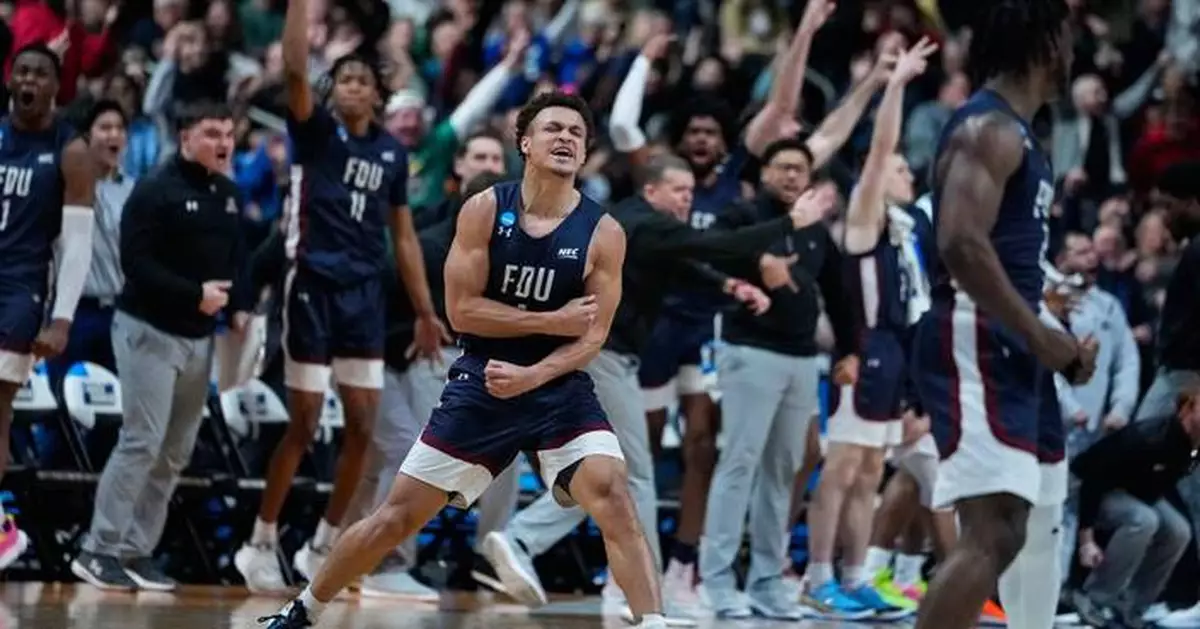
And trouble has come throughout the bracket for the teams carrying those No. 1, 2 or 3 seeds, most notably Fairleigh Dickinson joining UMBC as the only 16-seeds to take down a No. 1 by beating Purdue in the 2023 first round.
The average combined seeds of teams in the Final Four was 17.0 from 2021-24, up from 13.5 from 2016-19 and 11.3 for the 35 tournaments from 1985-2019.
It was only two years ago when 4-seed UConn was the top team in an unusual Final Four in Houston, marking the first time there was no 1-, 2- or 3-seed in the national semifinals dating to '85.
Additionally, there has been at least one team seeded eighth or lower in four consecutive Final Fours for the first time dating to the 1985 expansion, with 11th-seeded N.C. State as last year's improbable example.
The average combined seeds for teams in the regional finals has been 38.3 from 2021-24, up from 27.8 from 2016-19 and 25.6 dating to 1985. The biggest outlier came in 2022, when St. Peter's stunned Kentucky in Round 1 on the way to becoming the only 15-seed ever to reach a regional final.
The Peacocks' opponent? Another surprise team in eighth-seeded North Carolina, which went all the way to the national title game.
Meanwhile, only six No. 1 seeds have reached the Elite Eight from 2021-24. That's half the total of the same span immediately before the pandemic.
Just getting to the tournament's second week has been tricky, too.
The average combined seeds since the pandemic is 77.5. That's up from 66.3 immediately before the canceled 2020 tournament and 70.6 from 1985-2019.
The aforementioned 2023 tournament had only two No. 1 seeds — Alabama and Houston — survive the opening weekend. And that had happened only three times previously going back to 1985 (2000, 2004, 2018).
Tennessee coach Rick Barnes has been around long enough to understand the seismic changes across college sports, including players being able to profit from their own fame through use of their name, image and likeness.
He points to the portal as a key factor in these tournament-changing moments, and examples abounded in a Southeastern Conference that put a record 14 teams in the field. There's fifth-year Auburn forward Johni Broome, who started his career at a mid-major and this year is an unanimous Associated Press All-America first-team pick. Or on Barnes' roster with Jordan Gainey (previously USC Upstate) and Chaz Lanier (North Florida) as examples this year, as well as AP first-team All-American Dalton Knecht (Northern Colorado) last year.
“Just goes to show you there's players at every level, certainly guard play,” Barnes said.
Duke's Jon Scheyer sees the impact, too, in terms of teams having to essentially start over every year with roster overhauls whether they gain valuable transfers or lose them, then try to build cohesion over potentially a lone season together.
But does he think that equates to a trickier path now for top teams like his Blue Devils, the East Region's No. 1 seed?
“As a player we were a 1-seed, as an assistant coach — I always think there's a lot of risk,” Scheyer said. “It's how I'm wired, to never assume anything. But sure, I think the thing you have to consider is you just don't have the continuity, no matter what. I don't care if you're a 1-seed all the way through 16. Less teams have that.”
Hancock looks at the volatility as a potential argument toward expanding the tournament field, which has been a multiyear topic when mulling the future of the sport. He sees the path being tougher through the portal mixed with older players sticking around college longer because of NIL.
Still, that's not to say it's ever been easy to win those last six games.
“Outside of the 1-16 game,” Auburn big man Dylan Cardwell said, “it's going to be a gauntlet regardless.”
AP Sports Writer Teresa M. Walker in Nashville, Tennessee, contributed to this report.
AP March Madness bracket: https://apnews.com/hub/ncaa-mens-bracket and coverage: https://apnews.com/hub/march-madness Get poll alerts and updates on the AP Top 25 throughout the season. Sign up here.
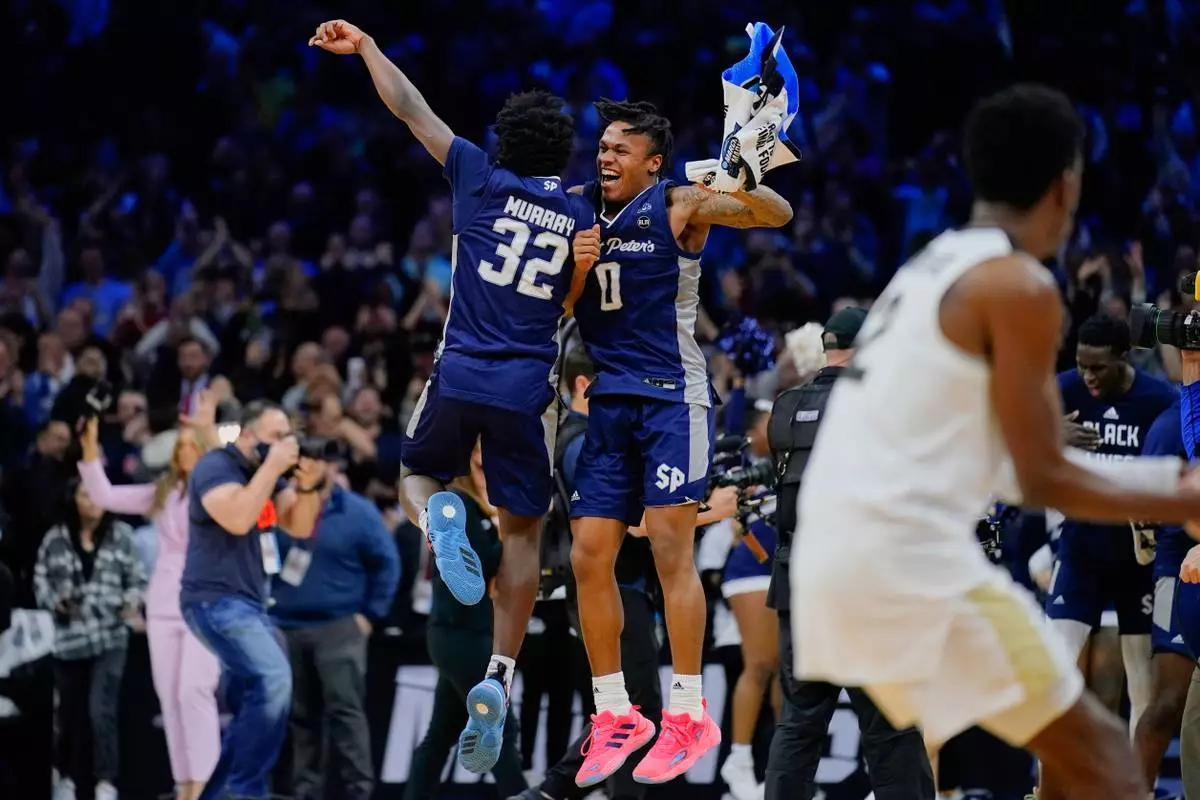
FILE - Saint Peter's Jaylen Murray, left, and Latrell Reid celebrate after their team won a college basketball game against Purdue in the Sweet 16 round of the NCAA tournament March 25, 2022, in Philadelphia. (AP Photo/Matt Rourke, File)
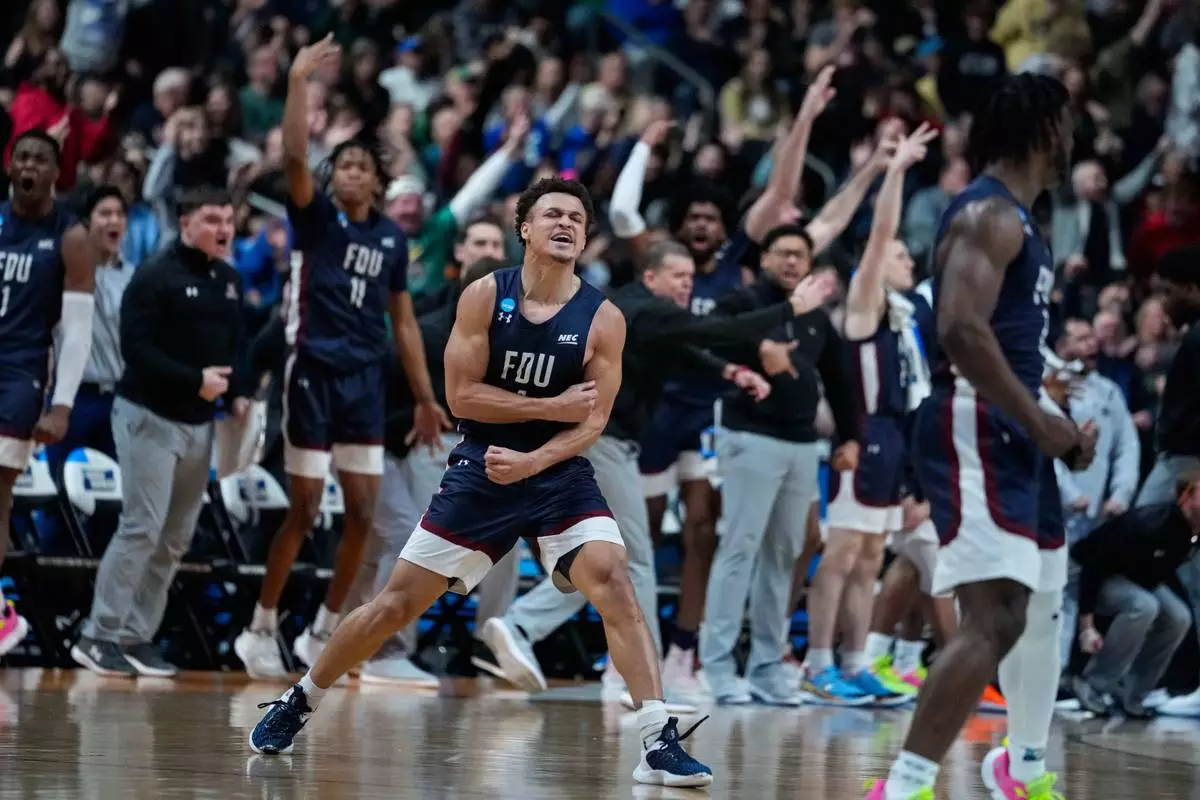
Fairleigh Dickinson guard Grant Singleton (4) celebrates after a basket against Purdue during the second half in the first round of the NCAA college basketball tournament in Columbus, Ohio, Friday, March 17, 2023. (AP Photo/Michael Conroy, File)