A flourishing Dong ethnic village in southwest China's Guizhou Province is a testament to the efforts made to promote rural revitalization through cultural diversity in a region home to many different ethnic groups.
Chinese President Xi Jinping visited the Zhaoxing Dong Village in Guizhou’s Liping County on Monday afternoon to learn about local initiatives to preserve traditional ethnic minority culture and advance comprehensive rural revitalization.
Xi, also general secretary of the Communist Party of China Central Committee, praised the distinctive culture of the Dong ethnic group as "deeply traditional and remarkably stylish".
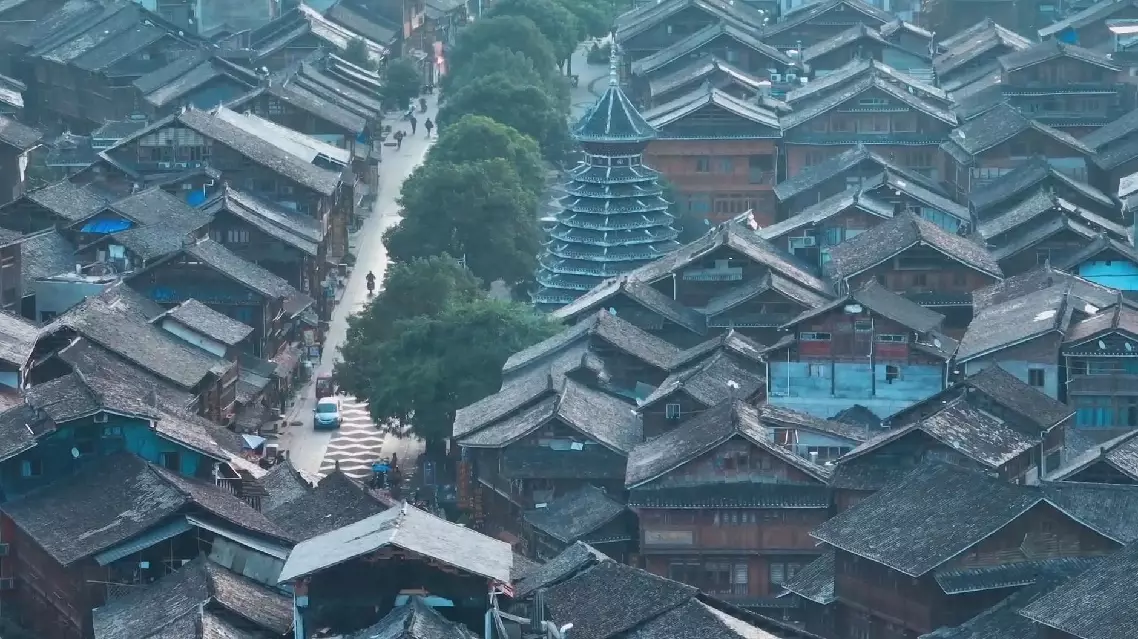
Surrounded by green mountains, the ancient village has a history that dates back to the Northern Song Dynasty (960-1127), and is one of the largest Dong ethnic minority villages in China, with 5,261 residents.
In recent years, the village has intensified efforts to use the unique culture of the minority group to create more jobs and raise incomes for villagers through culture and tourism.
The traditional fingertip embroidery technique of the Dong people has a long history and is supported by government initiatives that have made it possible for local people to make a living out of this old skill.
"This traditional pattern has now become a cultural and creative product. Many young people have returned to the village to learn embroidery techniques and sell embroidered pieces via livestreaming e-commerce. We have received a lot of orders. Last year saw tens of thousands of orders done," said a local embroider.
The ancient village also boasts an architectural complex featuring five different drum towers -- wooden buildings unique to the Dong ethnic group that serve as communal gathering spots. These drum towers are seen as symbols of the integration of different ethnic groups.
"General Secretary noted that ethnic minority cultures are an indispensable part of Chinese civilization. The five drum towers of the Zhaoxing Dong Village are of great significance as they symbolize not only the unity of our big family, but also the distinctiveness of different branches in this harmonious family," said Professor Yu Yafang from the College of Architecture and Urban Planning of Guizhou University.
The ancient village boasts rich folk customs such as the Lusheng Festival, which celebrates a traditional Chinese folk musical instrument made of bamboo pipes, and the Dong New Year Festival. Cloth-making, silverwork, embroidery, wax printing and the 2,500-year-old Grand Song of the Dong ethnic group are among the vast array of intangible cultural heritage items of the Dong ethnic group.
The local authorities have taken an innovative approach to these Dong cultural symbols, making them a focal point for developing cultural tourism. Officials said that these efforts have not only helped villagers improve their livelihoods, but also in turn contributed to local cultural preservation.
"On the one hand, promoting cultural tourism benefits the inheritance of intangible cultural heritage. On the other hand, the influx of tourists boosts villagers' incomes, thus the local villagers are more motivated to participate in the inheritance and protection of our cultural heritage. While ensuring the protection of local unique ethnic minority culture, we have intensified efforts in tourism investment and cultural inheritance. This approach can help locals increase their income, and then drive them to better protect our culture," said Xu Xinji, first Party secretary of Zhaoxing Village.
Guizhou leverages distinctive ethnic culture to promote rural revitalization