Skip to Content Facebook Feature Image

Hospitals in Shanghai provide outpatient services for obese patients

China

China

China

Hospitals in Shanghai provide outpatient services for obese patients

2025-03-21 07:39 Last Updated At:16:42

Hospitals in Shanghai have opened outpatient departments to treat the increasing number of obese patients.

Today, with more than 1.4 billion people, China faces a growing obesity challenge. The National Health Commission (NHC) said that over half of adults are overweight or obese. It warned that if left unchecked, the rate could climb to 70.5 percent by 2030.

At a recent news conference, Lei Haichao, head of the NHC, announced plans to establish more weight management clinics at medical and health facilities, helping people shed pounds safely and pivot to healthier lifestyles.

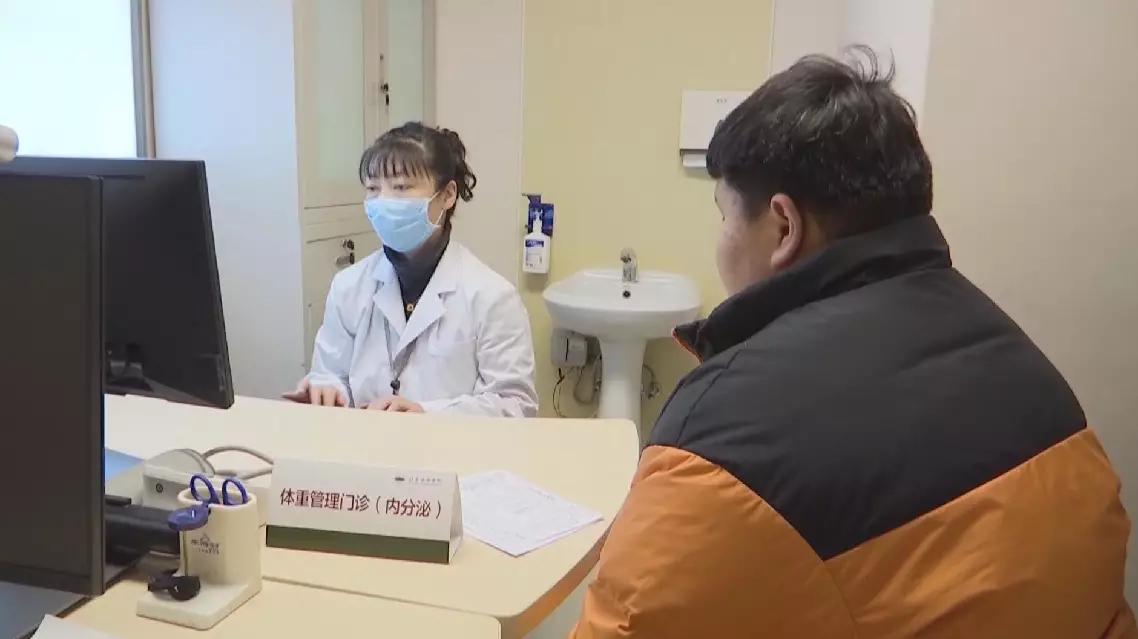
As one of China's megacities, Shanghai has started to address the pressing health issue by setting up outpatient departments specifically for obesity.

Mrs. Zhao has been suffering from postpartum obesity for a long time. On Wednesday, she met with experts from departments of nutrition, endocrinology, gastroenterology and general surgery from Huadong Hospital at the same time who provided customized treatment plans for her.

"I think we can consider prescribing some medicine. However, it's not necessary to always take them while having improved diet," said Lu Bin, director of Huadong Hospital's endocrinology department.

The launch of obesity treatment has drawn more and more patients to seek for professional medical help.

Among the obesity cases, over 50 percent are young people.

Ms. Chen is one of them. She used to weigh as heavy as 100 kilograms. After several treatments, her weight has now dropped to 80 kilograms.

"On the one hand, doctors will help me lose weight in a healthier way; while on the other hand, I will suffer less. These doctors have treated a lot of patients. Therefore, they can provide suggestions that suit me according to his previous experiences. I can receive much more information this way," she said.

In the past, there weren't many ways to lose weight. Patients mainly tried to lose weight by doing exercises.

However, in recent years, many new drugs and forms of surgeries have become quite useful in tackling obesity. With these measures, not only can hospitals provide more treatment alternatives, but patients are also more confident in achieving their weight loss goal.

"We have outpatient services seven days a week. For now, the number of patients is about 800 to 1,000 per month, and the annual figure could reach 10,000 to 12,000. It's likely that there would be more cases," said Qu Shen, director of Shanghai Tenth People's Hospital’s obesity treatment center.
Hospitals in Shanghai provide outpatient services for obese patients


Hospitals in Shanghai provide outpatient services for obese patients

Voting for the second phase of Myanmar's multi-party democratic general election concluded on Sunday afternoon.

Voting began at 06:00 local time on Sunday. At 16:00, an election official at a polling station in Yangon's Latha township announced the closure of the polling station.

Following the closure, election staff at the polling station, in the presence of domestic and international media, candidates, and observers, counted the votes, including advance votes, for seats in the Pyithu Hluttaw (Lower House), Amyotha Hluttaw (Upper House), and State and Region Hluttaws (State and Region Parliaments).

The second phase of the election was held in 100 townships across 12 of the 14 regions and states. In the Yangon region, it was held in 16 townships, including the townships of Latha, Bahan, Kyimyindaing and Kawhmu.

"We welcome the election, which is expected to bring new changes to the country," said a Yangon resident.

"I hope the parties can lead us and make it a better country, which is why I support the election," said another voter.

Myanmar's multi-party democratic general election is being held in three phases, with the first phase held in 102 townships on Dec 28 last year, and the third phase scheduled for Jan 25 this year in 63 townships.

"The parliament is scheduled to convene in March. Following the conclusion of the session, the new government will officially take office in April. We hope that more foreign investment will flow into Myanmar, enabling the public to enjoy the opportunities generated by the country's economic development more fully," said Zaw Min Tun, leader of the Information Team of Myanmar's National Defense and Security Council.

The Union Election Commission (UEC) said that about 5,000 candidates from 57 political parties are competing in the three phases of the election, adding that it plans to set up over 21,000 polling stations across the country for all three phases of the general election.

The election will produce the elected members of the Union Parliament (Pyithu Hluttaw and Amyotha Hluttaw) and State and Region Parliaments; the new Union Parliament will then elect a new president, who will form a new Union Government.

Voting for 2nd phase of Myanmar's general election concludes

Voting for 2nd phase of Myanmar's general election concludes

Recommended Articles