China's Meridian Project, a national space weather monitoring network comprising ground-based stations, passed national acceptance procedures for Phase II on Friday, making it the world's largest comprehensive space environment monitoring network together with Phase I.
The project, which began operation in 2012, is China's first national-level major science and technology infrastructure in the field of space weather.
The construction of the second phase started in 2019, deploying additional 16 stations, 58 observation points, and 195 sets of space weather equipment.
Aligned with Phase I, it will provide data support to enhance the accuracy of space weather forecasts, including solar flares, coronal mass ejections, and magnetic storms, ensuring the safe operation of aerospace, communications, navigation, and other high-tech systems.
"The first phase of the Meridian Project features monitoring stations along longitude and latitude lines, forming a pattern similar to a 'T'. In the second phase, we upgraded this pattern into a tic-tac-toe shaped monitoring network. With 31 comprehensive stations and nearly 300 sets of space environment monitoring equipment, it forms the world's largest ground-based space environment monitoring network, featuring the broadest range, most thorough coverage of monitoring factors, and strongest comprehensive monitoring capacity. The passing of national acceptance procedures marks the normal operation of all our equipment and the official shift from the construction phase to scientific operation," said Wang Chi, an academician of the Chinese Academy of Sciences who serves as the chief commander of the project's Phase II.
During its trial phase, Phase II of the Meridian Project showcased impressive performance. For instance, it successfully tracked the super geomagnetic storm in May 2024 and recorded the event, providing valuable insights into how solar activity impacts the space environment between the Sun and Earth.
"During the trial phase, we obtained a wealth of firsthand data and supported numerous major national space activities. In the future, we plan to integrate the ground-based monitoring network with space-based weather satellites to create a comprehensive space weather monitoring system. We also aim to expand international collaboration, promote a global scientific program about Meridian Circle, and develop a CT scan system that can monitor solar activity and the Earth's space environment on a global scale, so as to address the worldwide challenges posed by space weather," said Wang.
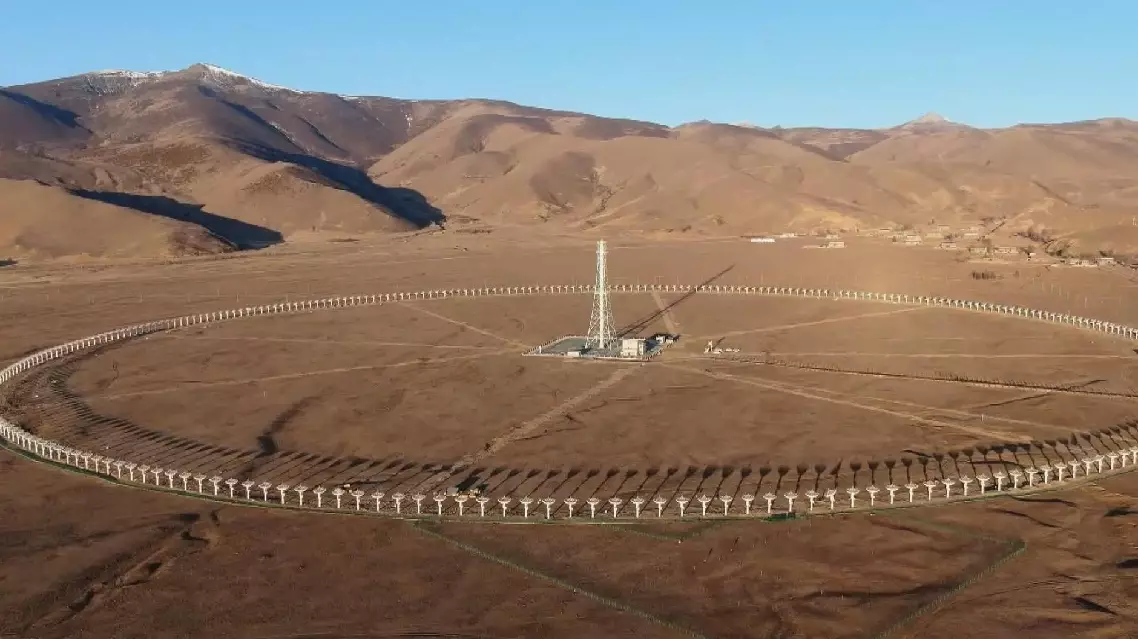
Phase II of China's gigantic space weather monitoring project passes national acceptance