AKRE. Iraq (AP) — Kurds in Iraq and Syria this week marked the Newroz festival, a traditional celebration of spring and renewal, at a time when many are hoping that a new political beginning is on the horizon.
Newroz, the Farsi-language word for “new year,” is an ancient Persian festival that is celebrated in countries including Iraq, Syria, Turkey and Iran. It is characterized by colorful street festivals and torch-bearing processions winding their way into the mountains.
Click to Gallery
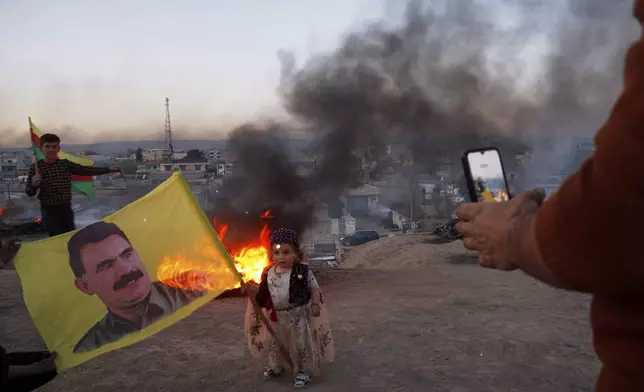
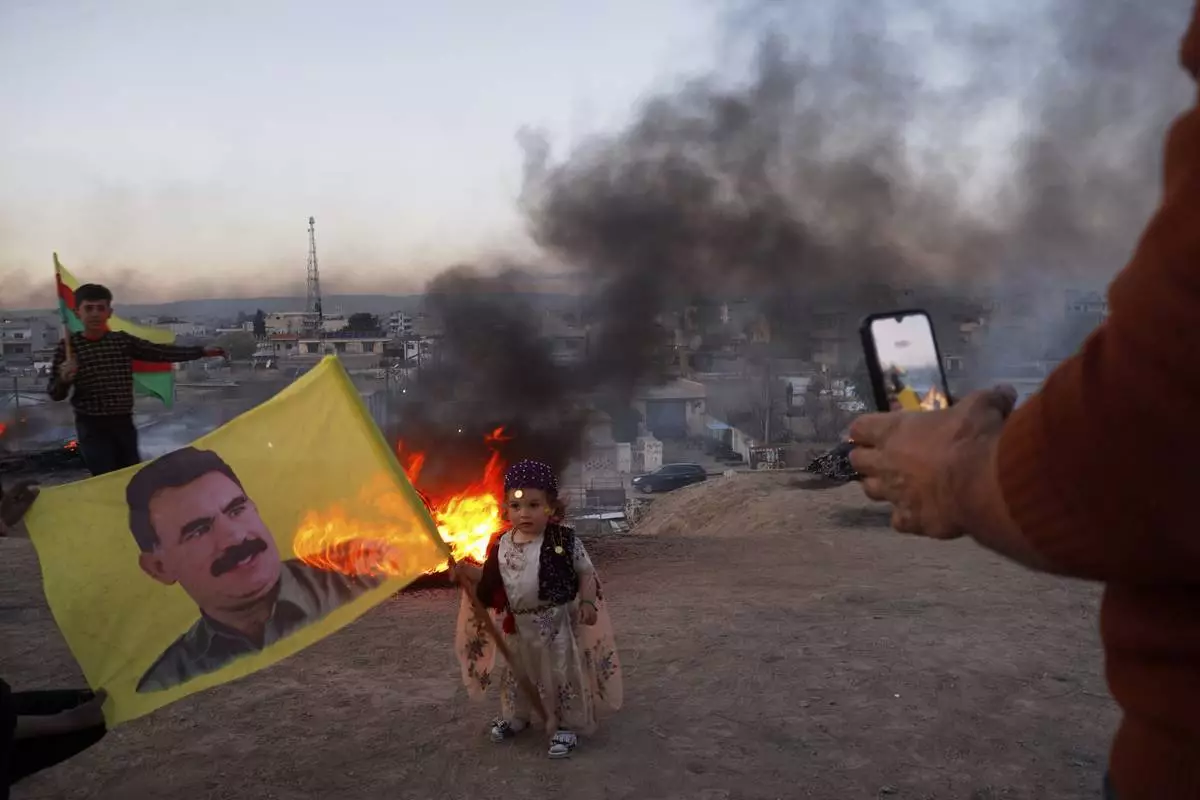
A child holds a flag showing Kurdish leader Abdullah Ocalan as he has his picture taken during Nowruz celebrations, in Amuda, Hasaka region, northeastern Syria, Thursday, March 20, 2025. (AP Photo/Baderkhan Ahmad)
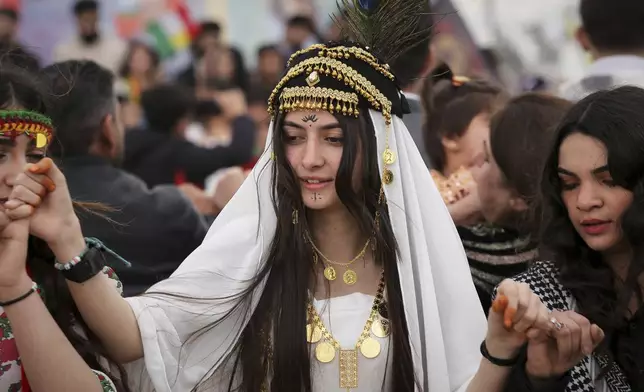
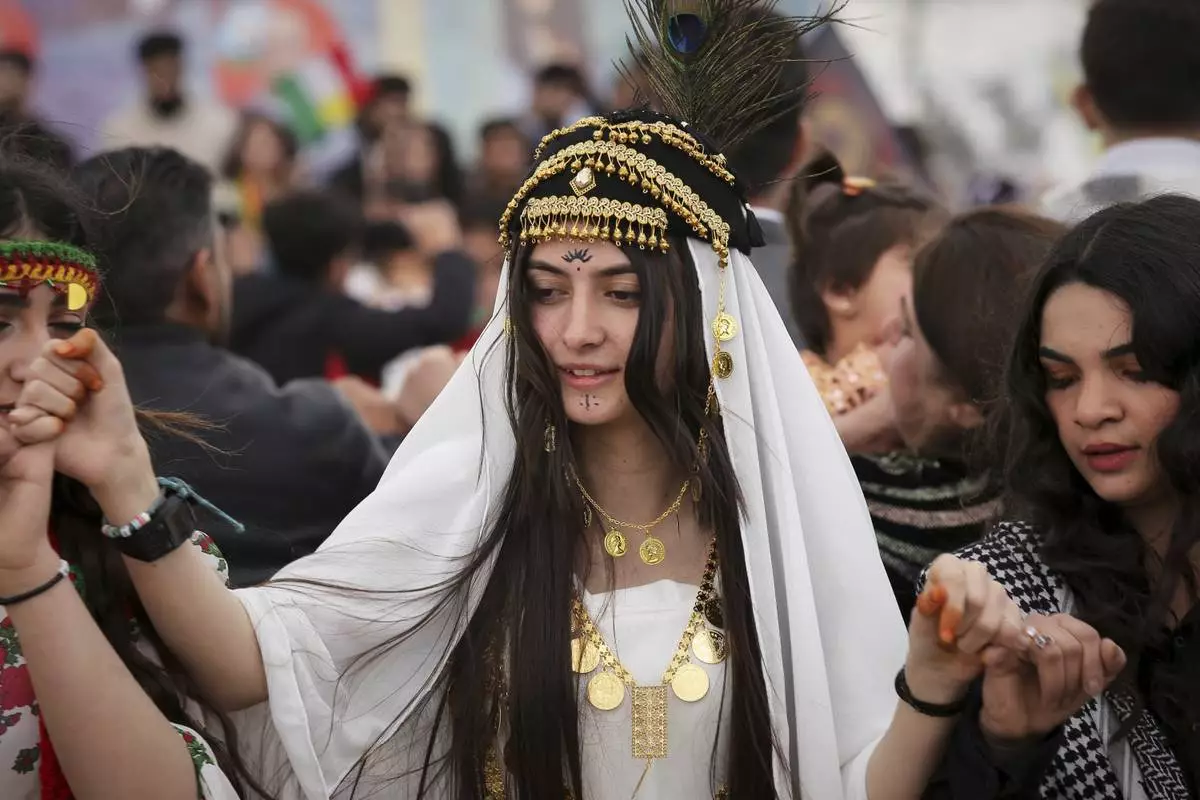
A Syrian Kurdish girl wearing traditional clothing dances during a celebration of Nowruz, Kurdish New Year, in Qamishli, northeastern Syria, Friday March 21, 2025. (AP Photo/Baderkhan Ahmad)
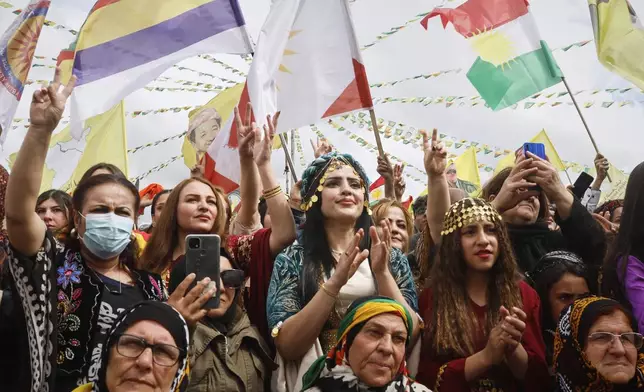
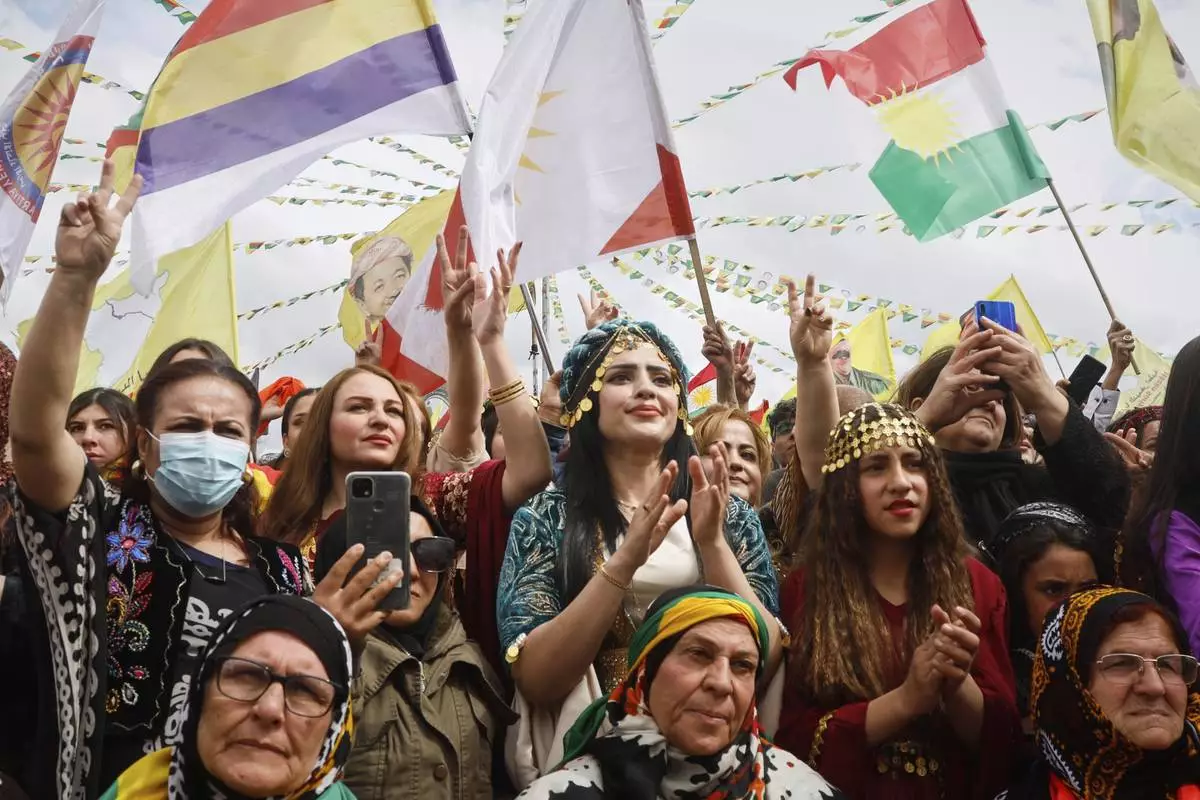
Syrian Kurdish women, most of them wearing traditional clothing, gather to celebrate their Nowruz, Kurdish New Year, in Qamishli, northeastern Syria, Friday March 21, 2025. (AP Photo/Baderkhan Ahmad)
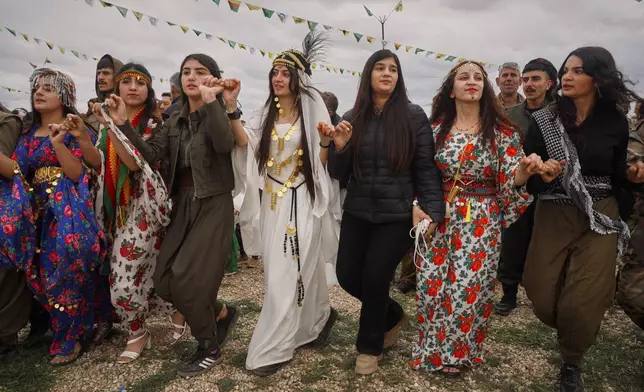
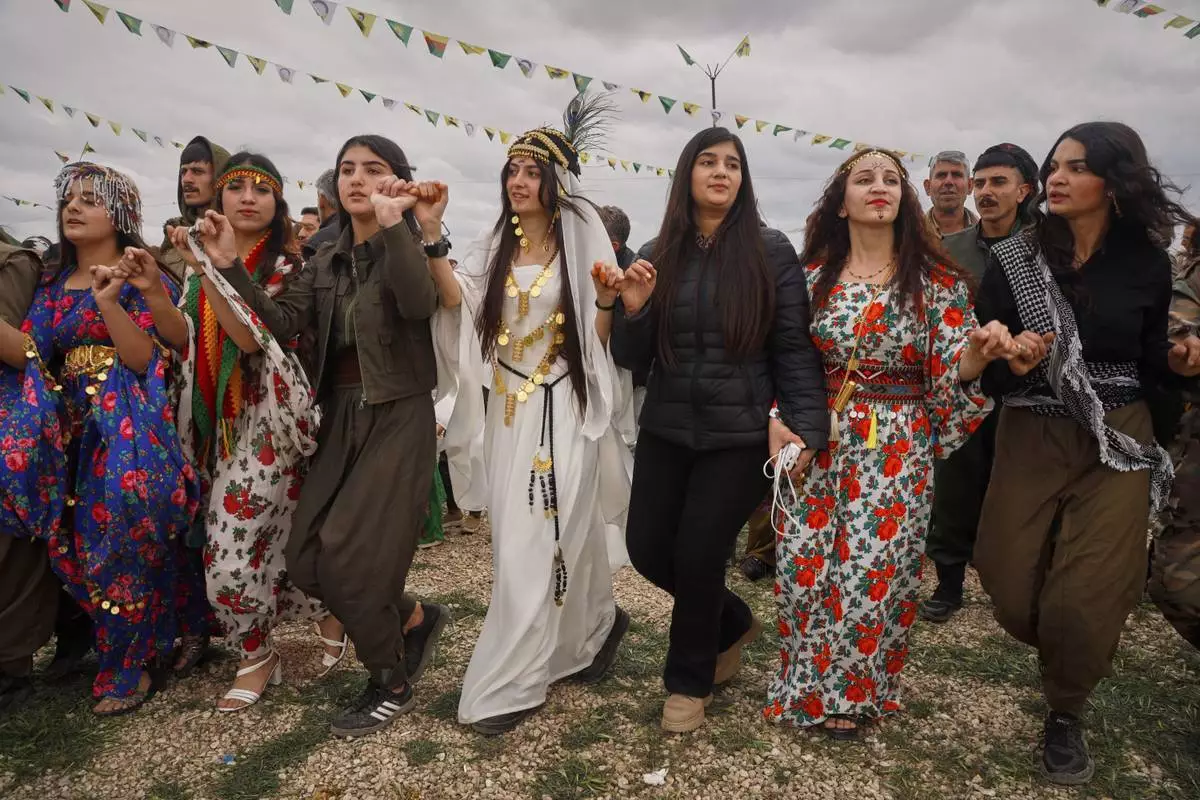
Syrian Kurdish women, some of them wearing traditional clothing, gather to celebrate their Nowruz, Kurdish New Year, in Qamishli, northeastern Syria, Friday March 21, 2025. (AP Photo/Baderkhan Ahmad)
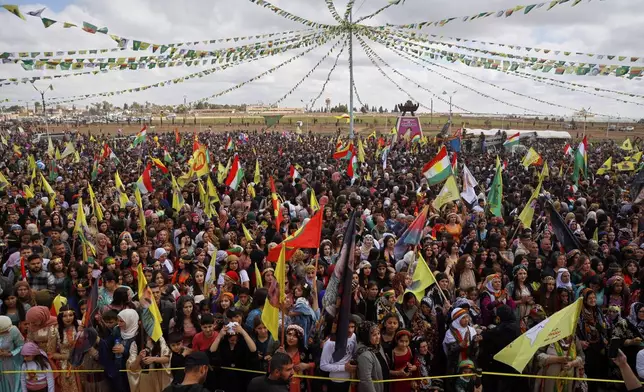
Syrian Kurds gather to celebrate their Nowruz, Kurdish New Year, in Qamishli, northeastern Syria, Friday March 21, 2025. (AP Photo/Baderkhan Ahmad)
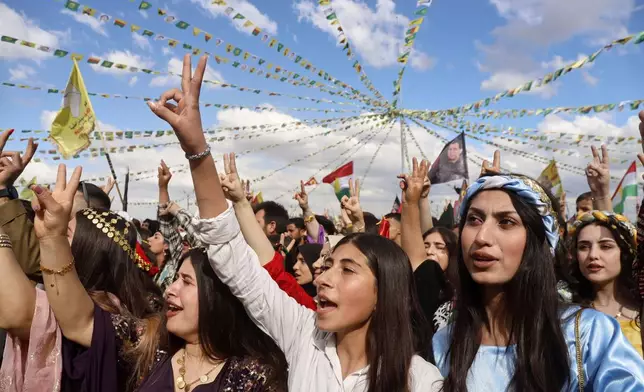
Syrian Kurdish women gather to celebrate their Nowruz, Kurdish New Year, in Qamishli, northeastern Syria, Friday March 21, 2025. (AP Photo/Baderkhan Ahmad)
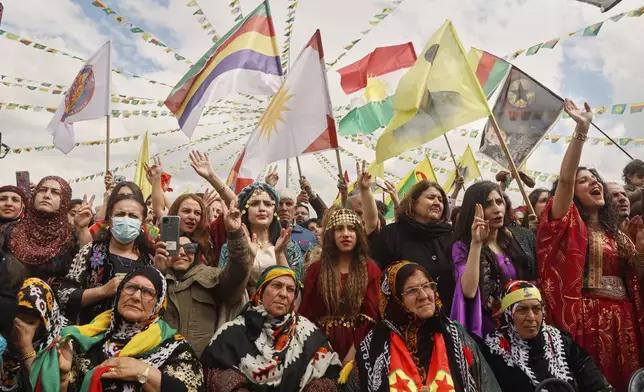
Syrian Kurdish women, most of them wearing traditional clothing, gather to celebrate their Nowruz, Kurdish New Year, in Qamishli, northeastern Syria, Friday March 21, 2025. (AP Photo/Baderkhan Ahmad)
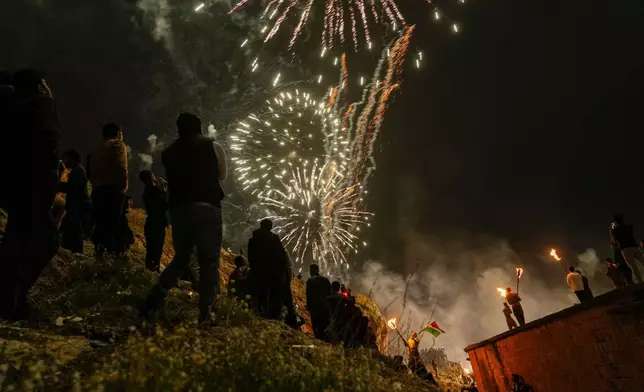
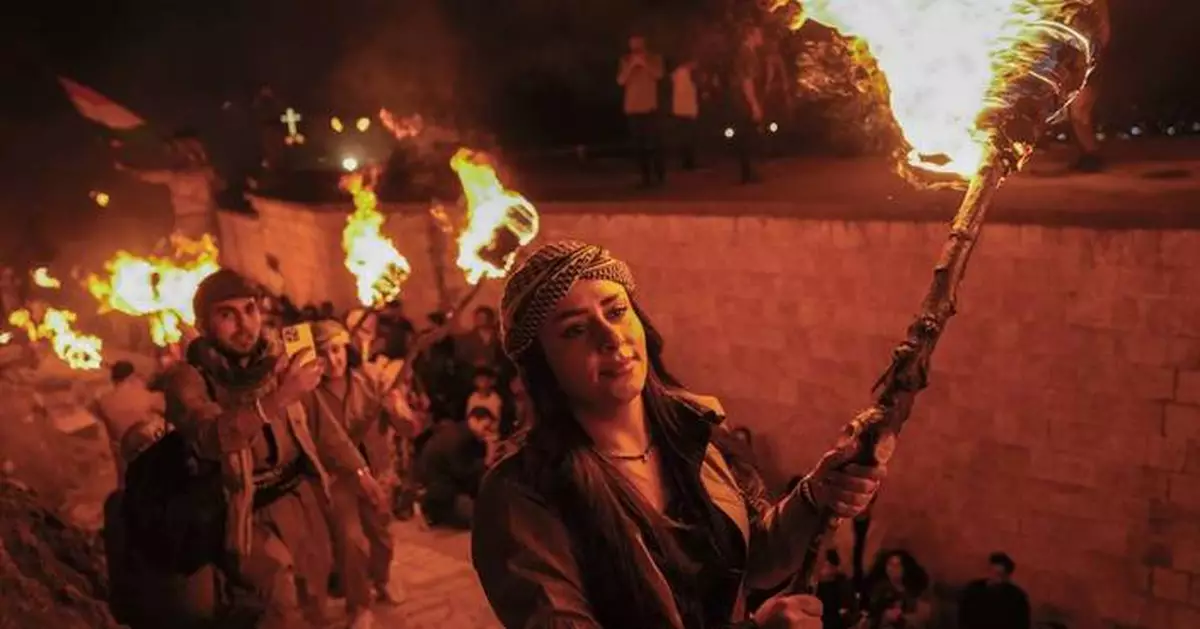
Iraqi Kurds holding lit torches walk up a mountain during a procession to celebrate their Nowruz, the Persian New Year, in Akra, in Iraq's northern autonomous Kurdish region, Thursday, March 20, 2025. (AP Photo/Hadi Mizban)
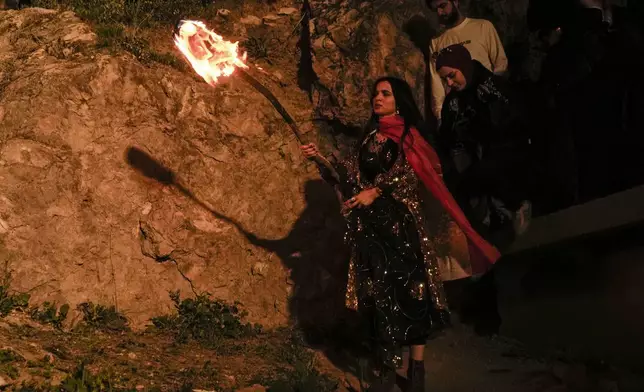
Iraqi Kurds holding lit torches walk up a mountain during a procession to celebrate their Nowruz, the Persian New Year, in Akra, in Iraq's northern autonomous Kurdish region, Thursday, March 20, 2025. (AP Photo/Hadi Mizban)
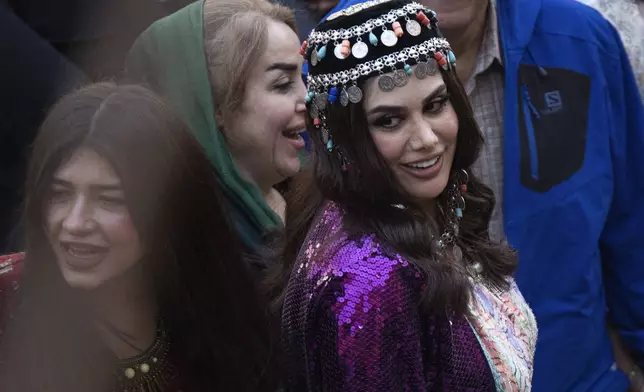
Iraqi Kurds celebrate Nowruz, the Persian New Year, in Akra, Iraq, Thursday, March 20, 2025. (AP Photo/Hadi Mizban)
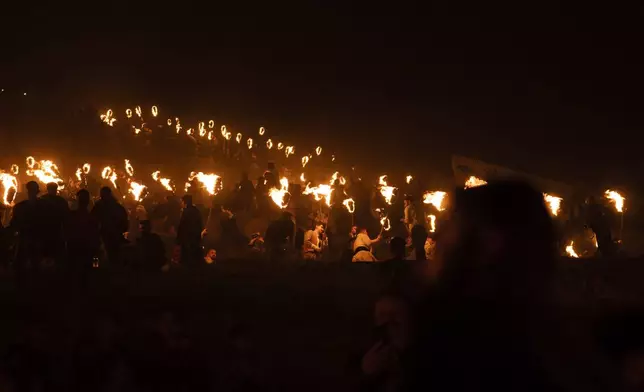
Iraqi Kurds holding lit torches walk up a mountain during a procession to celebrate their Nowruz, the Persian New Year, Akra, Iraq, Thursday, March 20, 2025. (AP Photo/Hadi Mizban)
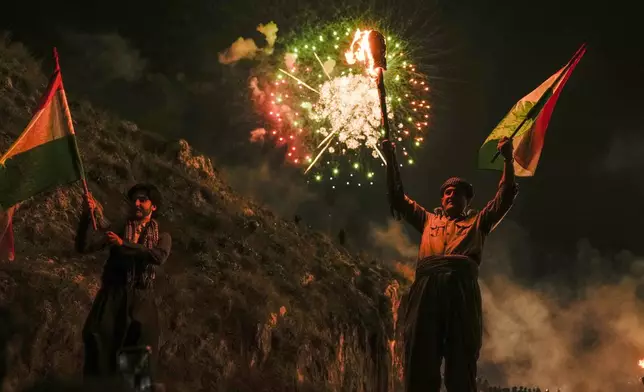
Iraqi Kurds walk up a mountain during a procession to celebrate their Nowruz, the Persian New Year, Akra, in Iraq's northern autonomous Kurdish region, Thursday, March 20, 2025. (AP Photo/Hadi Mizban)
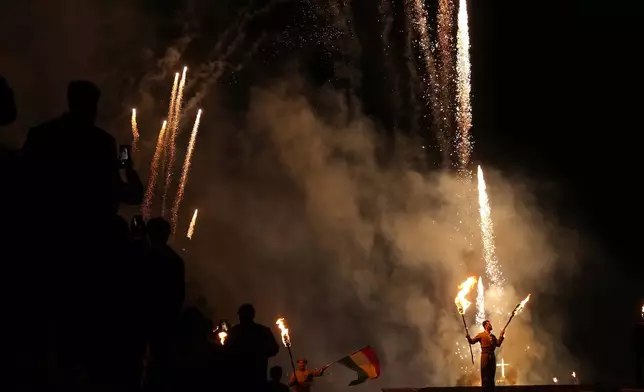
Iraqi Kurds holding lit torches walk up a mountain during a procession to celebrate their Nowruz, the Persian New Year, in Akra, Iraq, Thursday, March 20, 2025. (AP Photo/Hadi Mizban)
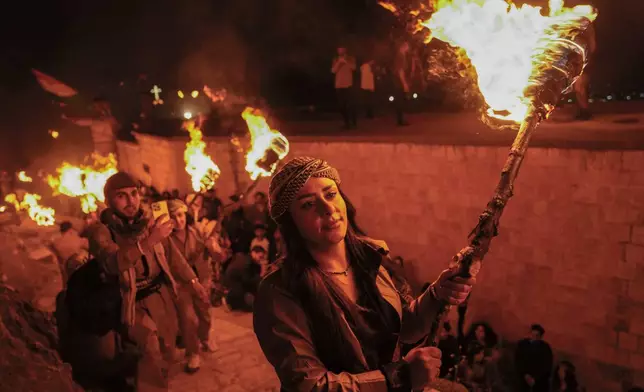
Iraqi Kurds holding lit torches walk up a mountain during a procession to celebrate their Nowruz, the Persian New Year, in Akra, Iraq, Thursday, March 20, 2025. (AP Photo/Hadi Mizban)
For many, Thursday and Friday's Newroz festivities symbolized not only the arrival of spring but also the spirit and aspirations of the Kurdish people, who are now facing a moment of transformation in the region.
The Kurdish-led Syrian Democratic Forces, which holds sway in much of northeastern Syria, recently signed a landmark deal with the new government in Damascus that includes a ceasefire and eventual merging of the SDF into the Syrian army.
Meanwhile, the Kurdistan Workers' Party, or PKK, which has waged a decades-long insurgency in Turkey that has spilled over into conflict in Syria and northern Iraq, recently announced a ceasefire after the group's imprisoned leader, Abdullah Ocalan, called for its members to put down their weapons.
As the sun set behind the mountains of Akre in the semi-autonomous Kurdish region of northern Iraq Thursday, more than 1,500 volunteers climbed the steep hills, carrying burning torches as their faces shimmered in the light of the flame.
From a distance, their movements looked like a river of fire flowing up and down the mountain. At the top, small bonfires burned, while the sky was filled with the flashing colors of fireworks.
Women wearing colorful dresses with gold and silver jewelry and men dressed in traditional outfits with wide belts and turbans danced in the streets of the town and in the hills, Kurdish flags waving above the crowds.
The sound of dahol drums and zurna flutes echoed everywhere, mixed with modern Kurdish folk songs played from loudspeakers.
According to Akre’s directorate of tourism, some 88,000 people attended the event, including Kurds who traveled from around the region and the world. The substantial turnout came despite the fact that this year the festival coincides with Ramadan, during which many Kurds - like other Muslims - fast from sunrise to sunset daily.
Among those dancing on the hill was Hozan Jalil, who traveled from Batman city in Turkey. Jalil said he is happy about the peace process and hopeful that it will bear results, although he was also somewhat circumspect.
“I hope it won’t finish with regrets and our Kurdish people will not be deceived or cheated,” he said.
Jalil said Newroz to him represents unity between Kurdish people across national boundaries.
“This year, Newroz to me symbolizes the point of achieving freedom for all Kurdish people," he said.
For the people of Akre, Newroz has become a tradition that connects them to Kurds and others everywhere. A local from Akre, described her pride in hosting such a celebration in her town.
“It’s a great feeling that everyone from all over the world comes to Akre for this celebration because it makes Akre the capital of Newroz for the whole world," said Guevara Fawaz. She was walking through the town's main square with her family dressed in traditional Kurdish clothes. Like Jalil, she voiced hopes that the PKK-Turkey talks would progress and "achieve peace in all four parts of Kurdistan.”
Across the border in Syria, where former President Bashar Assad was unseated in a lightning rebel offensive in December, Newroz celebrations took place openly in the streets of the capital for the first time in more than a decade since anti-government protests spiraled into a civil war in 2011.
Hundreds of Kurds packed into Shamdeen Square in the Roken al-Din neighborhood, the main Kurdish area in the Syrian capital, to light the Newroz fire, waving Kurdish flags alongside the new, three-starred Syrian flag.
In the village of Hemo, just outside the city of Qamishli in northeastern Syria, the Kurdish flag, along with flags of Abdullah Ocalan and the SDF, waved high above the crowds as people danced in the streets.
The new rulers in Damascus, Islamist former insurgents, have promised to respect minorities. A temporary constitution announced earlier this month states that “citizens are equal before the law ... without discrimination based on race, religion, gender or lineage.” But many Kurds were unhappy that the text does not explicitly recognize Kurdish rights.
Mizgeen Tahir, a well-known Kurdish singer who attended the festivities in Hemo, said, “This year, Newroz is different because it’s the first Newroz since the fall of the Baath regime and authority," referring to the now-disbanded Baath party of the Assad dynasty.
But Syria's Kurdish region “is at a turning point now,” he said. "This Newroz, we’re unsure about our situation. How will our rights be constitutionally recognized?”
Media Ghanim, from Qamishli, who also joined the celebrations, said she is hopeful that after Assad's fall, "we will keep moving forward towards freedom and have our rights guaranteed in the Syrian constitution."
“We hope these negotiations will end with success, because we want our rights as Kurds,” she said.
Abdo reported from Hemo, Syria. Associated Press journalist Omar Sanadiki in Damascus contributed to this report.
Associated Press religion coverage receives support through the AP’s collaboration with The Conversation US, with funding from Lilly Endowment Inc. The AP is solely responsible for this content.
A child holds a flag showing Kurdish leader Abdullah Ocalan as he has his picture taken during Nowruz celebrations, in Amuda, Hasaka region, northeastern Syria, Thursday, March 20, 2025. (AP Photo/Baderkhan Ahmad)
A Syrian Kurdish girl wearing traditional clothing dances during a celebration of Nowruz, Kurdish New Year, in Qamishli, northeastern Syria, Friday March 21, 2025. (AP Photo/Baderkhan Ahmad)
Syrian Kurdish women, most of them wearing traditional clothing, gather to celebrate their Nowruz, Kurdish New Year, in Qamishli, northeastern Syria, Friday March 21, 2025. (AP Photo/Baderkhan Ahmad)
Syrian Kurdish women, some of them wearing traditional clothing, gather to celebrate their Nowruz, Kurdish New Year, in Qamishli, northeastern Syria, Friday March 21, 2025. (AP Photo/Baderkhan Ahmad)
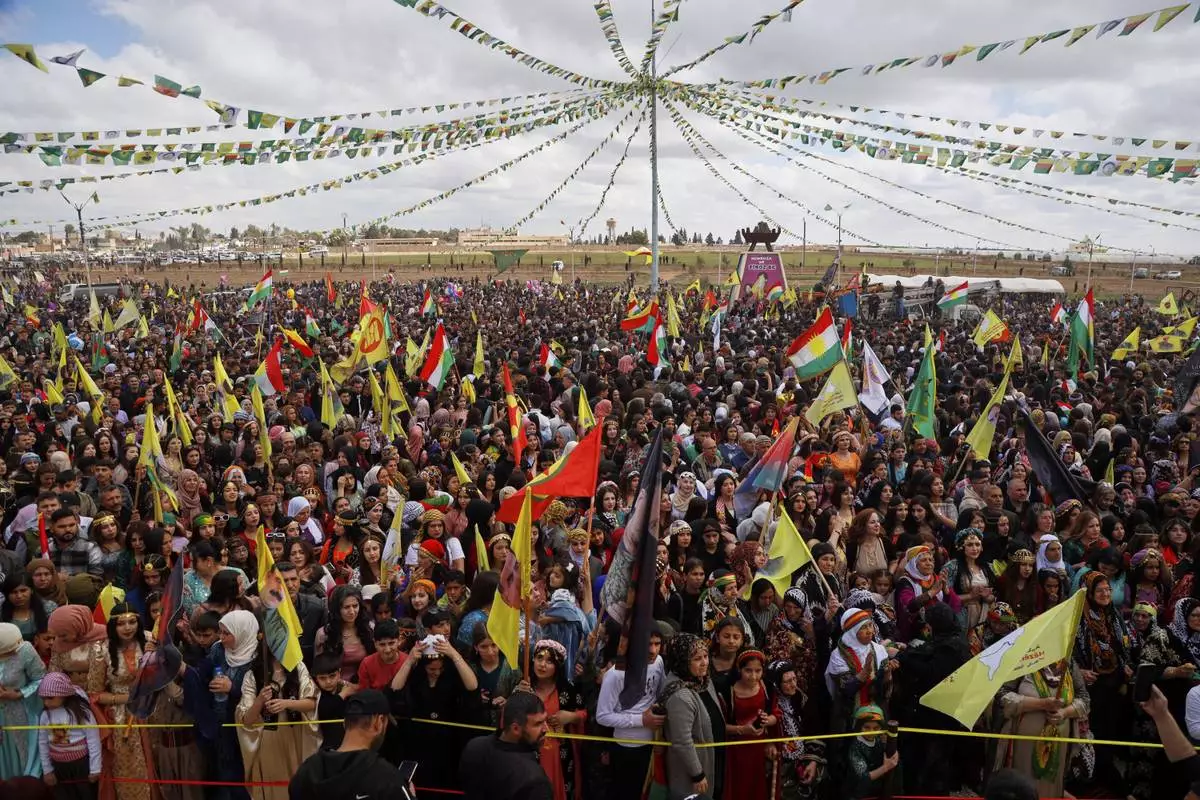
Syrian Kurds gather to celebrate their Nowruz, Kurdish New Year, in Qamishli, northeastern Syria, Friday March 21, 2025. (AP Photo/Baderkhan Ahmad)
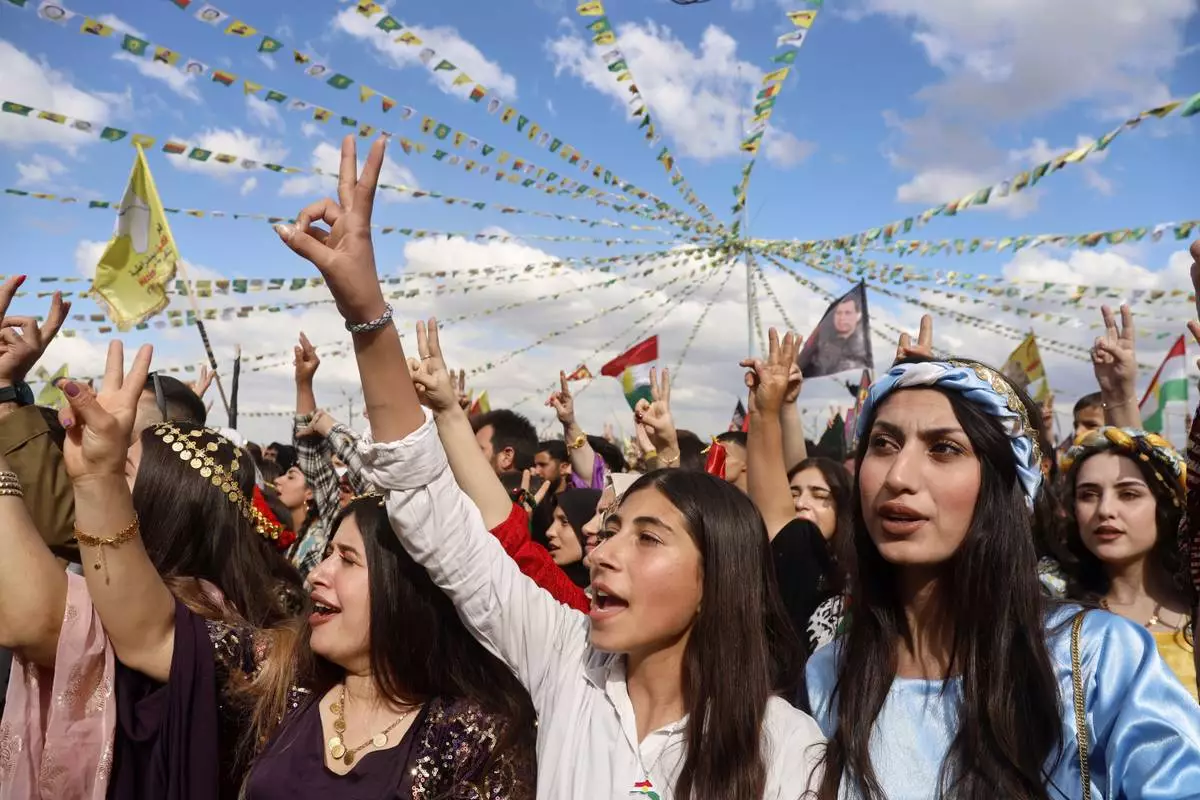
Syrian Kurdish women gather to celebrate their Nowruz, Kurdish New Year, in Qamishli, northeastern Syria, Friday March 21, 2025. (AP Photo/Baderkhan Ahmad)
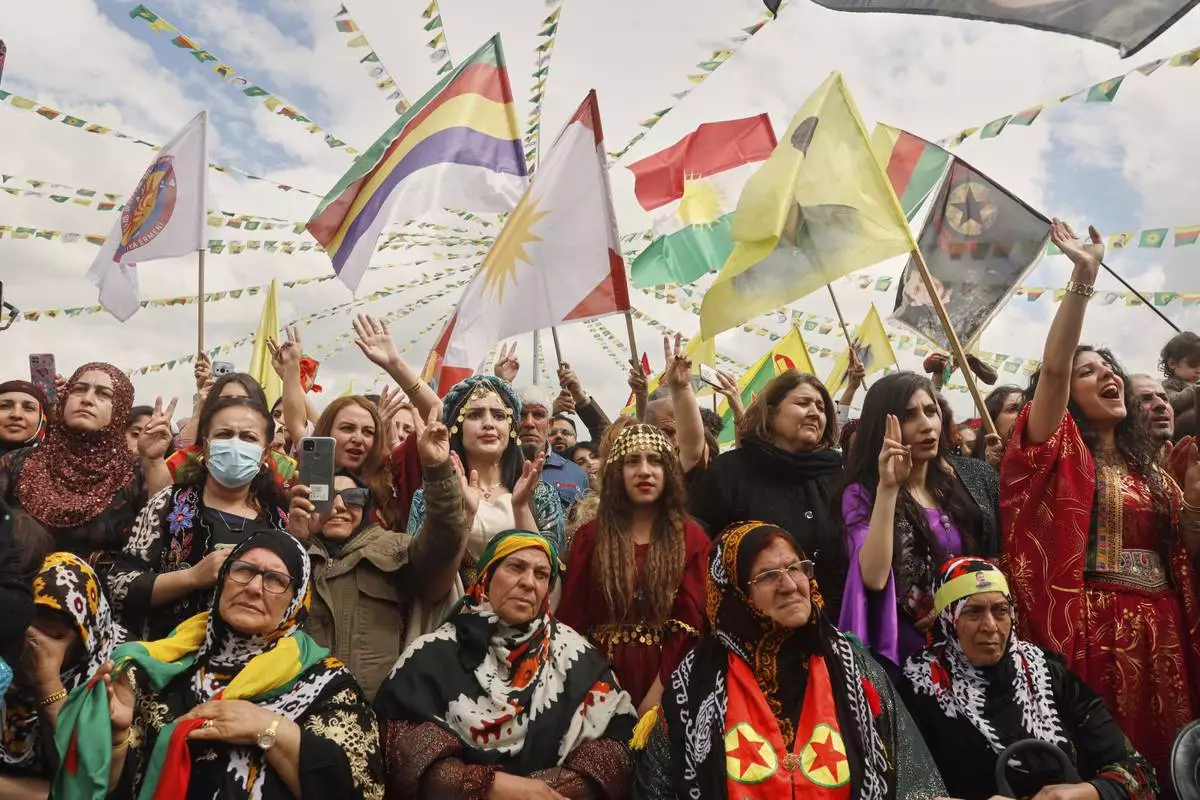
Syrian Kurdish women, most of them wearing traditional clothing, gather to celebrate their Nowruz, Kurdish New Year, in Qamishli, northeastern Syria, Friday March 21, 2025. (AP Photo/Baderkhan Ahmad)
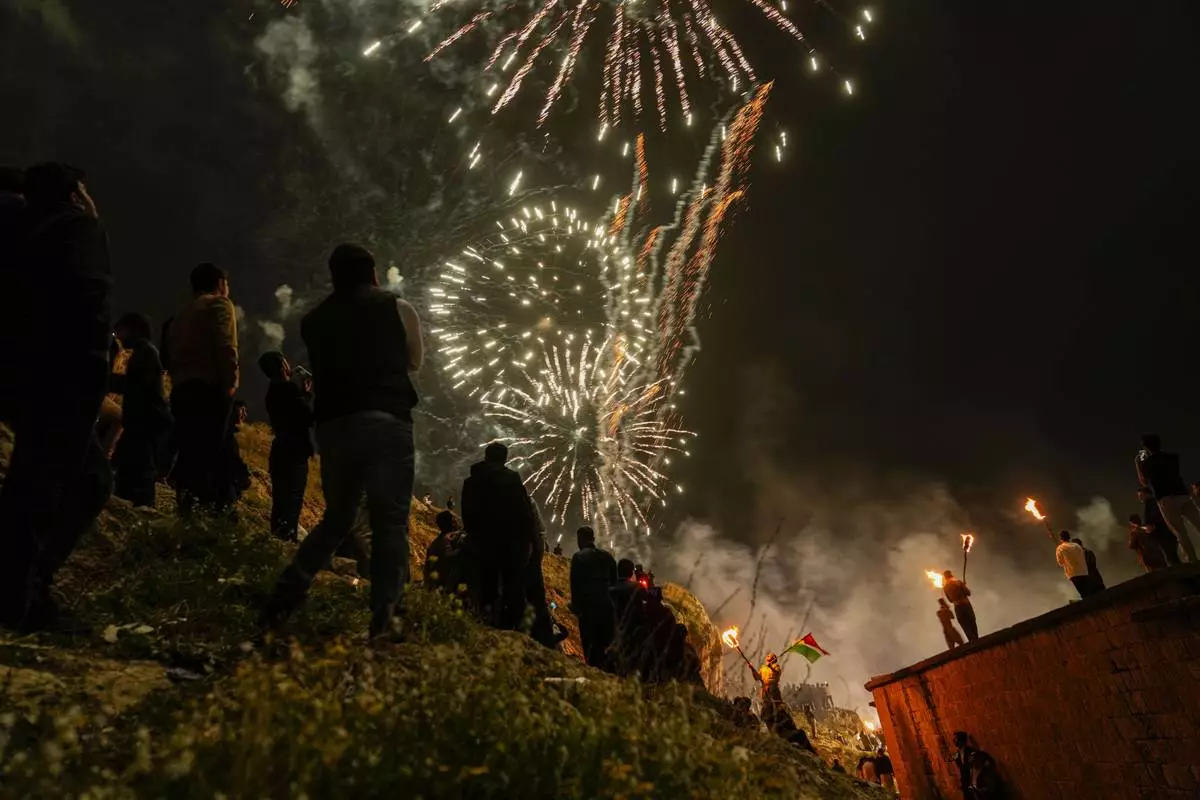
Iraqi Kurds holding lit torches walk up a mountain during a procession to celebrate their Nowruz, the Persian New Year, in Akra, in Iraq's northern autonomous Kurdish region, Thursday, March 20, 2025. (AP Photo/Hadi Mizban)
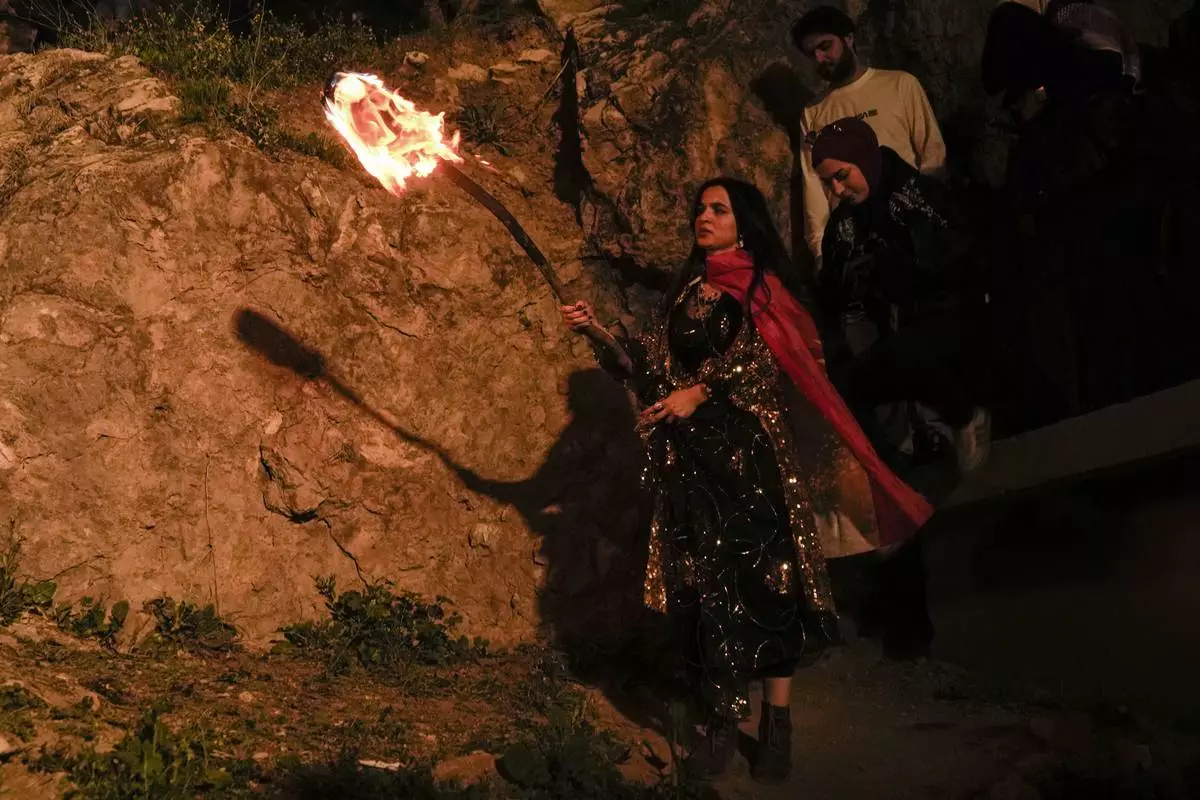
Iraqi Kurds holding lit torches walk up a mountain during a procession to celebrate their Nowruz, the Persian New Year, in Akra, in Iraq's northern autonomous Kurdish region, Thursday, March 20, 2025. (AP Photo/Hadi Mizban)
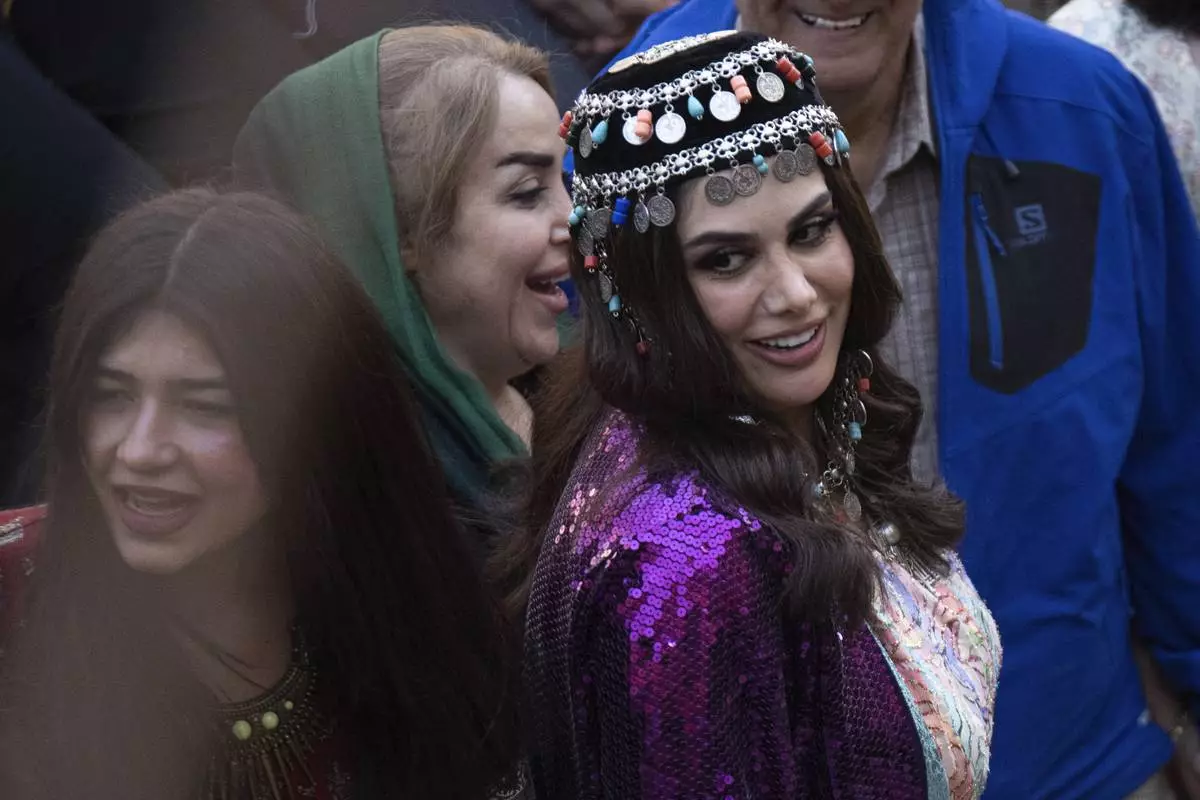
Iraqi Kurds celebrate Nowruz, the Persian New Year, in Akra, Iraq, Thursday, March 20, 2025. (AP Photo/Hadi Mizban)
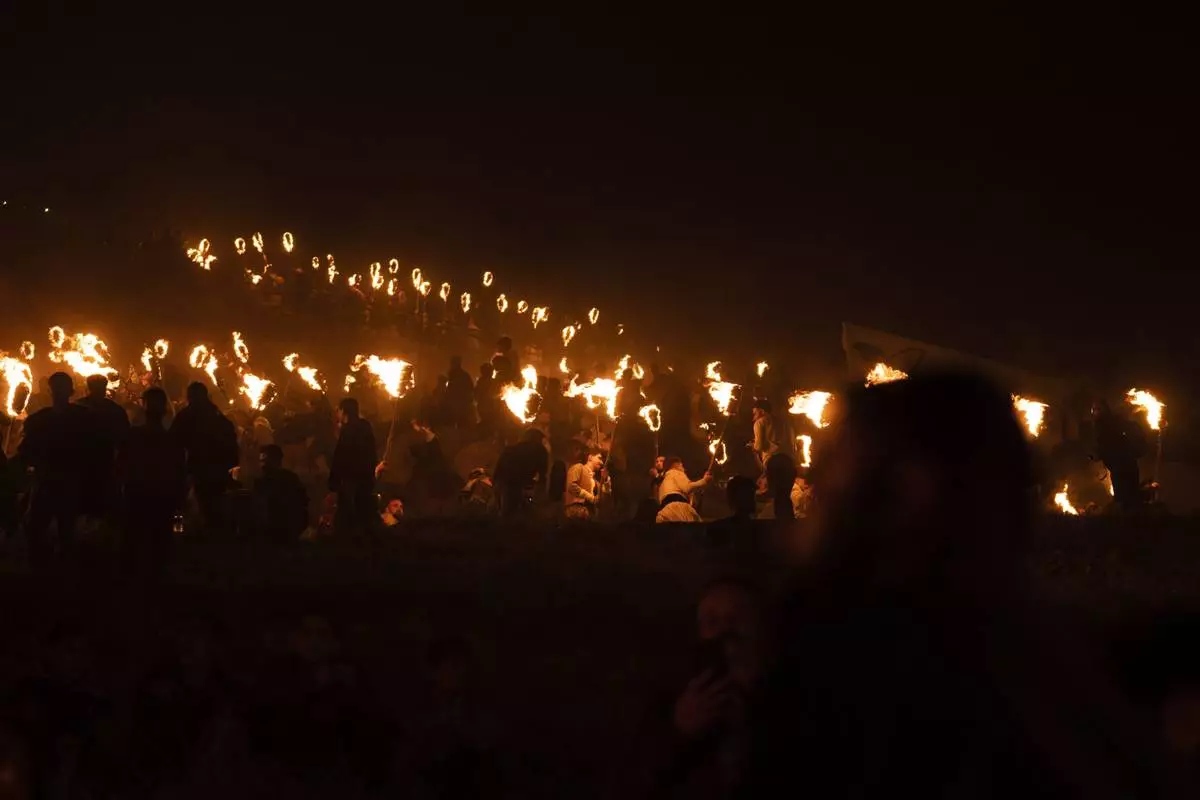
Iraqi Kurds holding lit torches walk up a mountain during a procession to celebrate their Nowruz, the Persian New Year, Akra, Iraq, Thursday, March 20, 2025. (AP Photo/Hadi Mizban)
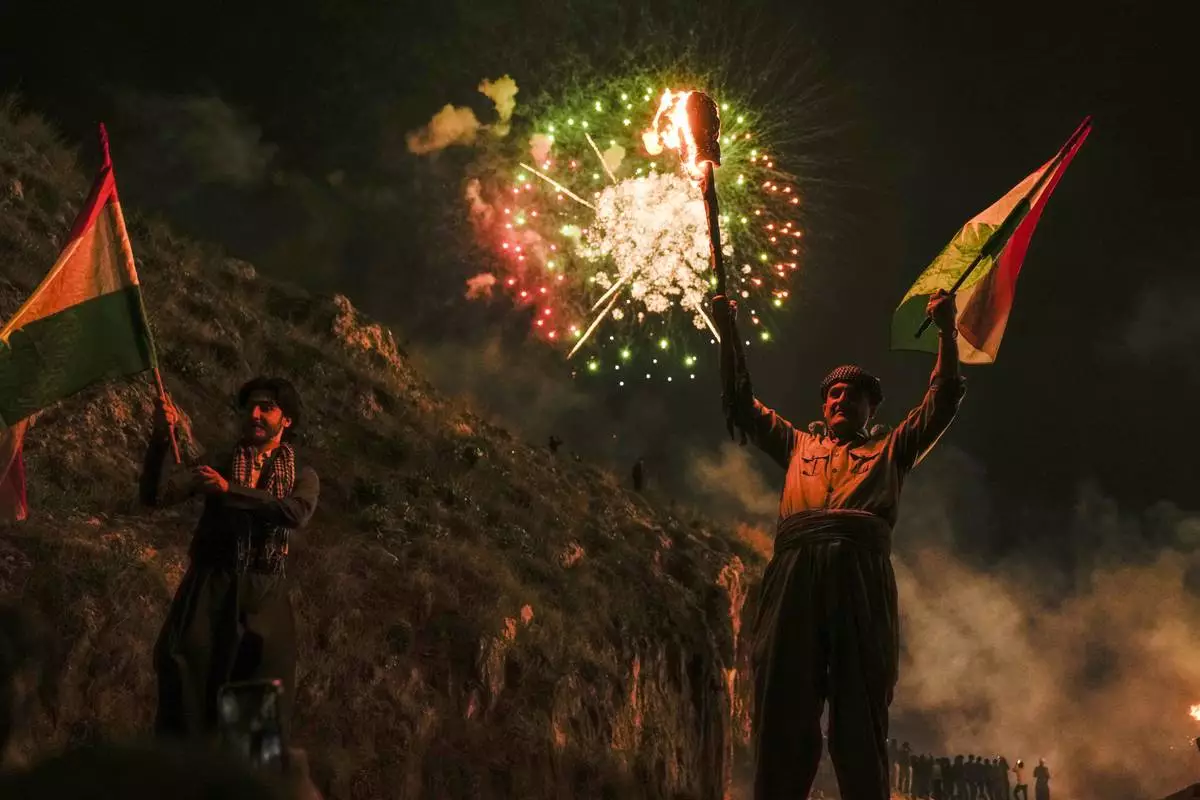
Iraqi Kurds walk up a mountain during a procession to celebrate their Nowruz, the Persian New Year, Akra, in Iraq's northern autonomous Kurdish region, Thursday, March 20, 2025. (AP Photo/Hadi Mizban)
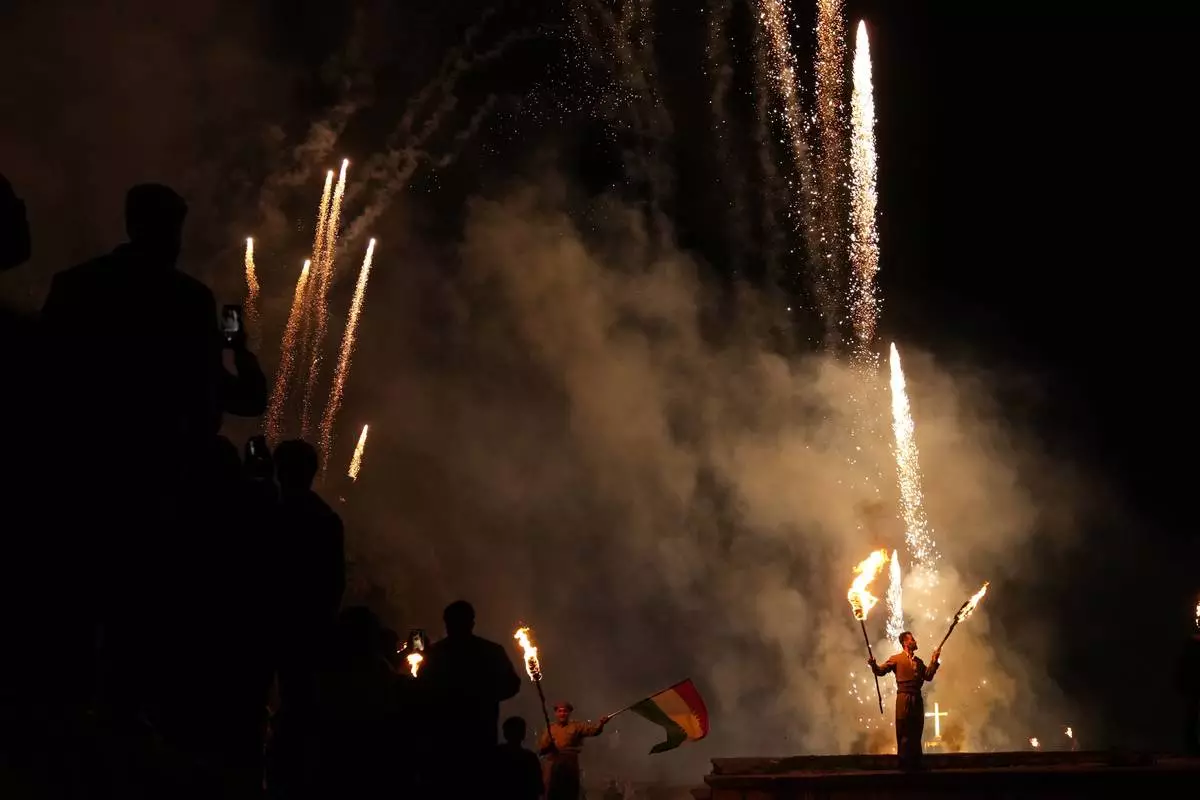
Iraqi Kurds holding lit torches walk up a mountain during a procession to celebrate their Nowruz, the Persian New Year, in Akra, Iraq, Thursday, March 20, 2025. (AP Photo/Hadi Mizban)
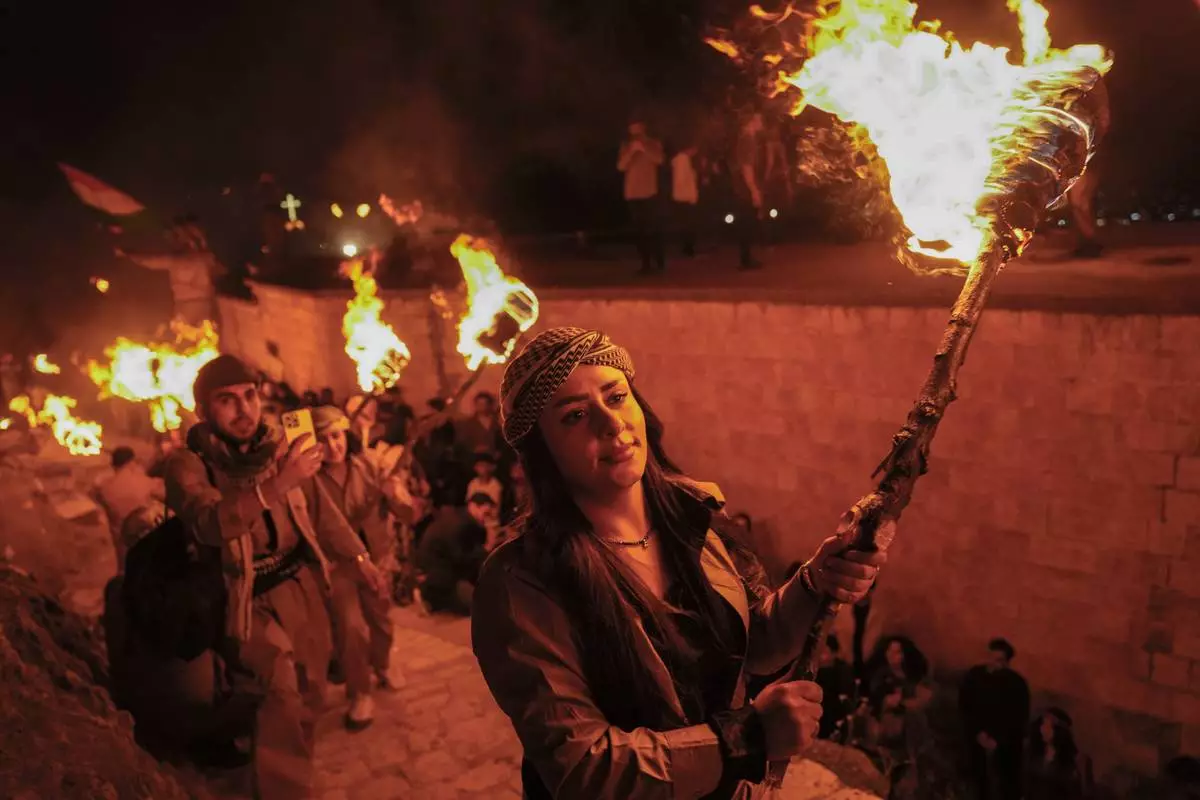
Iraqi Kurds holding lit torches walk up a mountain during a procession to celebrate their Nowruz, the Persian New Year, in Akra, Iraq, Thursday, March 20, 2025. (AP Photo/Hadi Mizban)