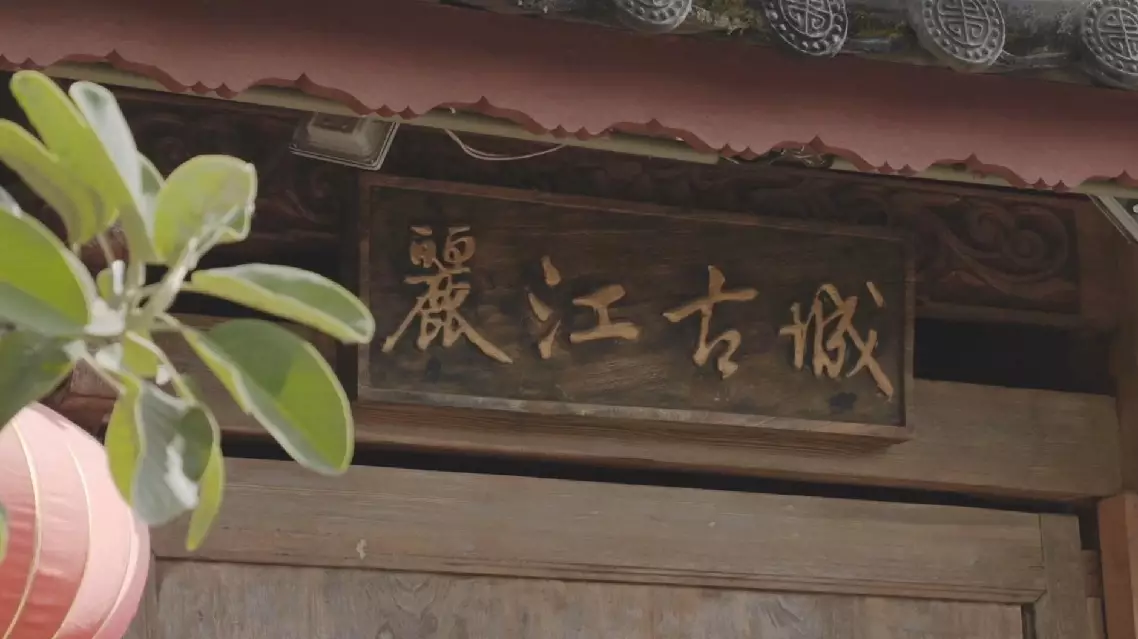
The 800-year-old Old Town of Lijiang, also known was the town of Dayan in southwest China's Yunnan Province is now eyeing revitalization and new development while preserving the old cultural elements and ancient buildings.
First built in the late Song (960-1279) and early Yuan (1271-1368) dynasties, the Old Town of Lijiang is China's only ancient town without walls. In 1997, it was officially listed as a UNESCO World Heritage Site.
On Wednesday afternoon, Chinese President Xi Jinping, also general secretary of the Communist Party of China Central Committee and chairman of the Central Military Commission, visited the Old Town and chatted with residents and visitors, inquiring about their business and travel experiences.
After learning about the town's history, distinctive dwellings and efforts in preserving and utilizing cultural heritage, Xi stressed the need to balance protection and development to make the beautiful old town shine with new vigor and vitality.
He Maodie, the 33-year-old Naxi native, is a tour guide at the Lijiang Ancient Town Museum, also known as the Mufu Mansion, once the residential and working site of the Naxi rulers of Lijiang in ancient times, which bears witness to the historical interactions and integration of various ethnic groups in southwest China.
"The water in Lijiang all comes from Jade Dragon Snow Mountain and flows through the entire Dayan ancient town, creating a picturesque scene where every household has running water in front of their doors. The architecture of Lijiang Ancient Town is primarily made of earth and wood structures, and despite standing for thousands of years, it has preserved its original charm," said He.
Besides the beautiful scenery, the Old Town of Lijiang also boasts a rich variety of intangible cultural heritage.
More than 30 cultural courtyards are scattered across the town, each serving as a unique space for preserving heritage and offering visitors a deeper understanding of Lijiang. These courtyards not only create new venues for cultural inheritance but also provide fresh perspectives for travelers.
Tiandi Courtyard, for example, serves as a place for Naxi people to perform Dongba music and dance three times a day for visitors free of charge.
"They have multiple identities — first, as folk artists, and second, as inheritors of intangible cultural heritage. Although our stage may not be grand, visitors to the Old Town can still come to our small Tiandi Courtyard to experience and immerse themselves up close in the purest and most treasured aspects of the Naxi culture," said He Xuejun, a staff member of Tiandi Courtyard.
The Old Town of Lijiang integrates a scenic area, a community, and a heritage site, with many local residents still living here today. The Hengyu Folk Residence Museum used to be the home of Li Junxing, whose family has lived here for generations since 1875. In 2010, the museum was opened to the public free of charge, and it has since become a popular destination for visitors to experience the living residential culture of the ancient town.
"This house was built by my great-grandfather, and our family has lived here for four generations and we've preserved its original appearance. It's our ancestral heritage, passed down through the generations. When it reached us, the fourth generation, we made a decision — to ensure its preservation and continuation," Li said.
"Our way of protecting it is to open it to the public as a folk residence museum, allowing more people to see what an authentic ancient courtyard truly looks like. We have a saying: 'As long as the house stands, we'll be here; and as long as the house stands, our souls endures.' This is the charm of world heritage that we wish to share with the world," he added.
800-year-old ancient city eyes revitalization, new development