BROOKLINE, Mass. (AP) — Kitty Dukakis, the wife of former Massachusetts governor and Democratic presidential candidate Michael Dukakis, who spoke openly about her struggles with depression and addiction, has died. She was 88.
Dukakis died on Friday night surrounded by her family, her son, John Dukakis, said on Saturday by telephone. She fought to make the world better, “sharing her vulnerabilities to help others face theirs,” her family said in a statement.
Click to Gallery
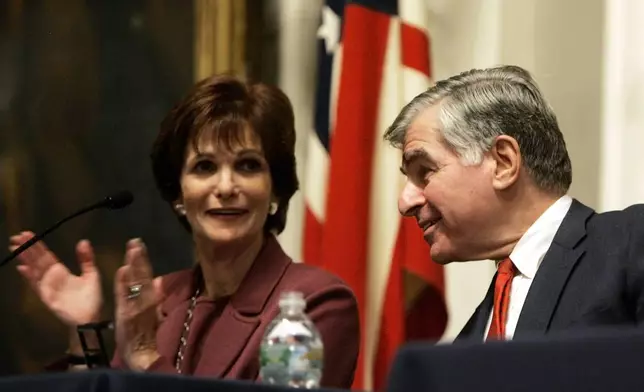
FILE - Former Massachusetts Gov. Michael Dukakis and his wife, Kitty, appear onstage prior to reading letters between John Adams and his wife, Abigail, during a Massachusetts Historical Society program at Faneuil Hall in Boston Monday, Nov. 19, 2007. AP Photo/Elise Amendola, File)
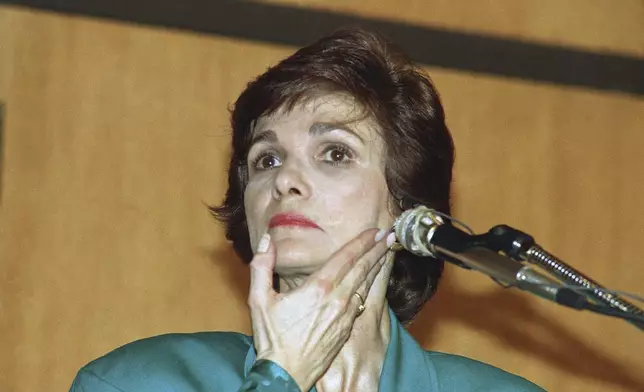
FILE - Kitty Dukakis listens to a question from the audience during a speaking engagement at Villanova University in Villanova, Pa, Wednesday, March 15, 1989. (AP Photo/Sean Kardon, File)
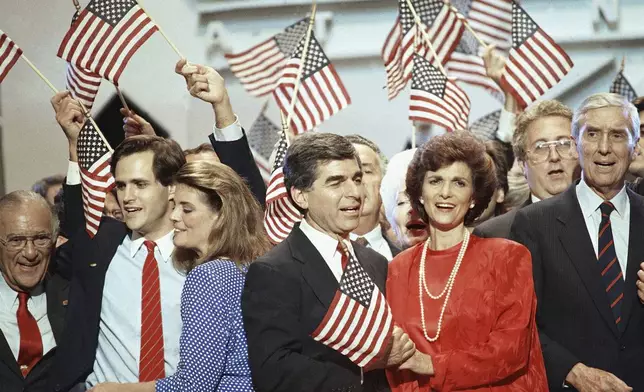
FILE - Gov Michael Dukakis and his wife Kitty wave the American flag as they are cheered by delegates after Dukakis accepted the nomination as the presidential candidate in July 21, 1988 at the Democratic National Convention in Atlanta. (AP Photo/Charles Tasnadi, File)

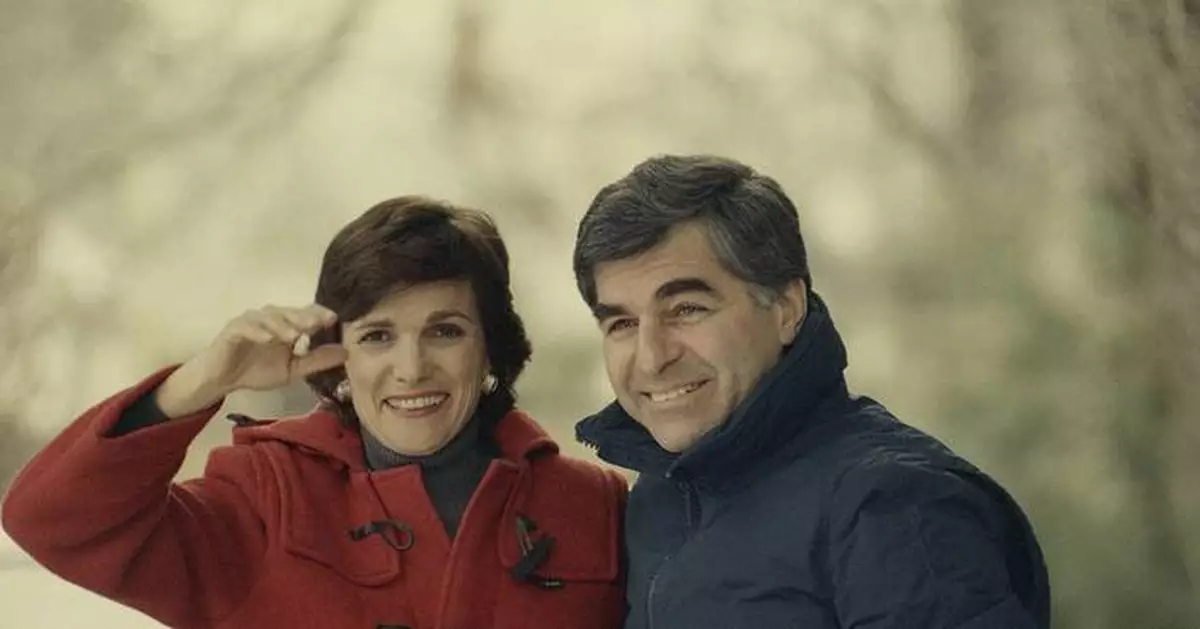
FILE - Kitty Dukakis, left, and Massachusetts Gov. Michael S. Dukakis are seen outside their home in Brookline, Massachusetts, March 7, 1989. (AP Photo/David Tenenbaum, File)
“She was loving, feisty and fun, and had a keen sensitivity to people from all walks of life,” the family said. “She and our dad, Michael Dukakis, shared an enviable partnership for over 60 years and loved each other deeply.”
Dukakis won high marks as a political campaigner during her husband's 1988 presidential efforts, stumping tirelessly for him. She was called a key influence in his decision to seek the presidency.
She even figured in the opening question of a 1988 presidential debate, when her husband was asked: "Governor, if Kitty Dukakis were raped and murdered, would you favor an irrevocable death penalty for the killer?" Dukakis said he would not, and his unemotional response was widely criticized.
Earlier in the campaign, in 1987, Dukakis revealed she had overcome a 26-year addiction to amphetamines five years earlier after receiving treatment. She said she began taking diet pills at age 19.
Her husband made anti-drug efforts a major issue and she became prominent in the effort to educate youngsters against the perils of drug and alcohol abuse.
But a few months after Michael Dukakis lost the election to Vice President George H.W. Bush, Kitty Dukakis entered a 60-day treatment program for alcoholism. Several months later she suffered a relapse and was hospitalized after drinking rubbing alcohol.
In her 1990 autobiography, "Now You Know," she blamed her mother for much of her alcohol and drug addiction and a long history of low self-esteem. In 2006, she wrote another book, "Shock," which credits the electroconvulsive therapy she began in 2001 for relieving the depression she had suffered for years. The treatment, she wrote, "opened a new reality for me."
Current Massachusetts Gov. Maura Healey called Dukakis “a force for good in public life and behind the scenes,” a leader in the effort to ensure that the Holocaust is never forgotten, and an advocate for children, women and refugees.
"She spoke courageously about her struggles with substance use disorder and mental health, which serves as an inspiration to us all to break down stigma and seek help,” Healey said in a statement.
Dukakis used her personal pain to help others, Massachusetts Attorney General Andrea Joy Campbell said in a statement on social media on Saturday.
"Her legacy will live on in the policies she helped shape and the people she inspired to speak their own truths,” Campbell said.
Dukakis broke ground by speaking openly about her struggles and championed support for the homeless and political refugees, said Maria Ivanova, director of Northeastern University’s Policy School, which hosts the Kitty and Michael Dukakis Center for Urban and Regional Policy.
“Kitty Dukakis brought honesty, compassion, and strength to public life,” Ivanova said in a statement. “Her legacy is one of service, resilience, and truth-telling.”
Kitty Dukakis inspired many to engage in activism and was a “deeply devoted spiritual companion” to her husband, center Director Ted Landsmark said in a statement.
“They have been truly effective change-makers on behalf of those in need of care and support,” he said.
Michael Dukakis served as a distinguished professor of political science at the university. He has retired, but returns to campus for events and student consultations, Landsmark said.
Dukakis and her future husband met while attending high school in Brookline, Massachusetts, a Boston suburb. He was dull and frugal; she was dramatic and fancy. He is Greek Orthodox; she was Jewish.
Kitty Dukakis, who was divorced and had a 3-year-old son, married Michael Dukakis in 1963, and they had two children, Andrea and Kara.
Dukakis, whose late father, Harry Ellis Dickson, was associate conductor of the Boston Symphony Orchestra, earned degrees in modern dance and broadcasting.
After the presidential election, in 1989, Bush appointed her to be a member of the United States Holocaust Memorial Council.
She earlier served on the President's Commission on the Holocaust in 1979 and on the board of directors of the Refugee Policy Group. She has also been a member of the Task Force on Cambodian Children.
By the late 1990s, Dukakis and her husband divided their time between Massachusetts and California, where she was a social worker and he was a professor for part of the year at the University of California, Los Angeles.
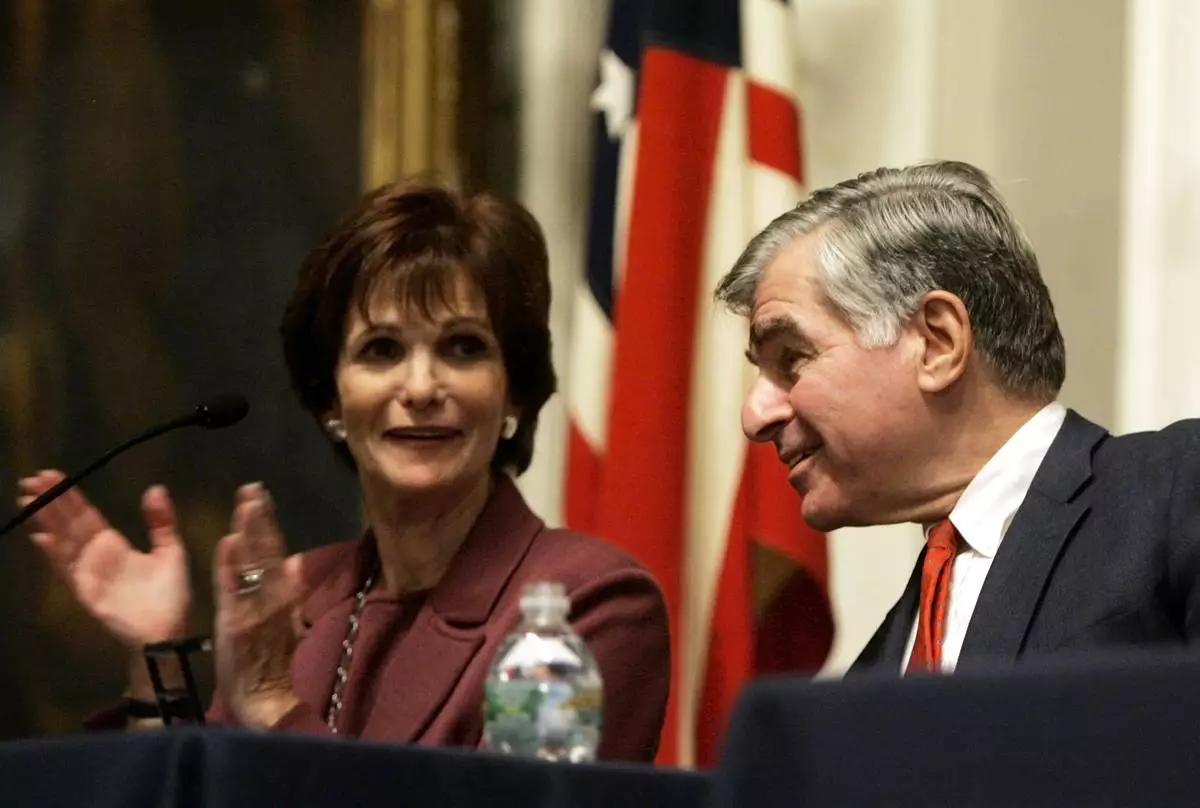
FILE - Former Massachusetts Gov. Michael Dukakis and his wife, Kitty, appear onstage prior to reading letters between John Adams and his wife, Abigail, during a Massachusetts Historical Society program at Faneuil Hall in Boston Monday, Nov. 19, 2007. AP Photo/Elise Amendola, File)
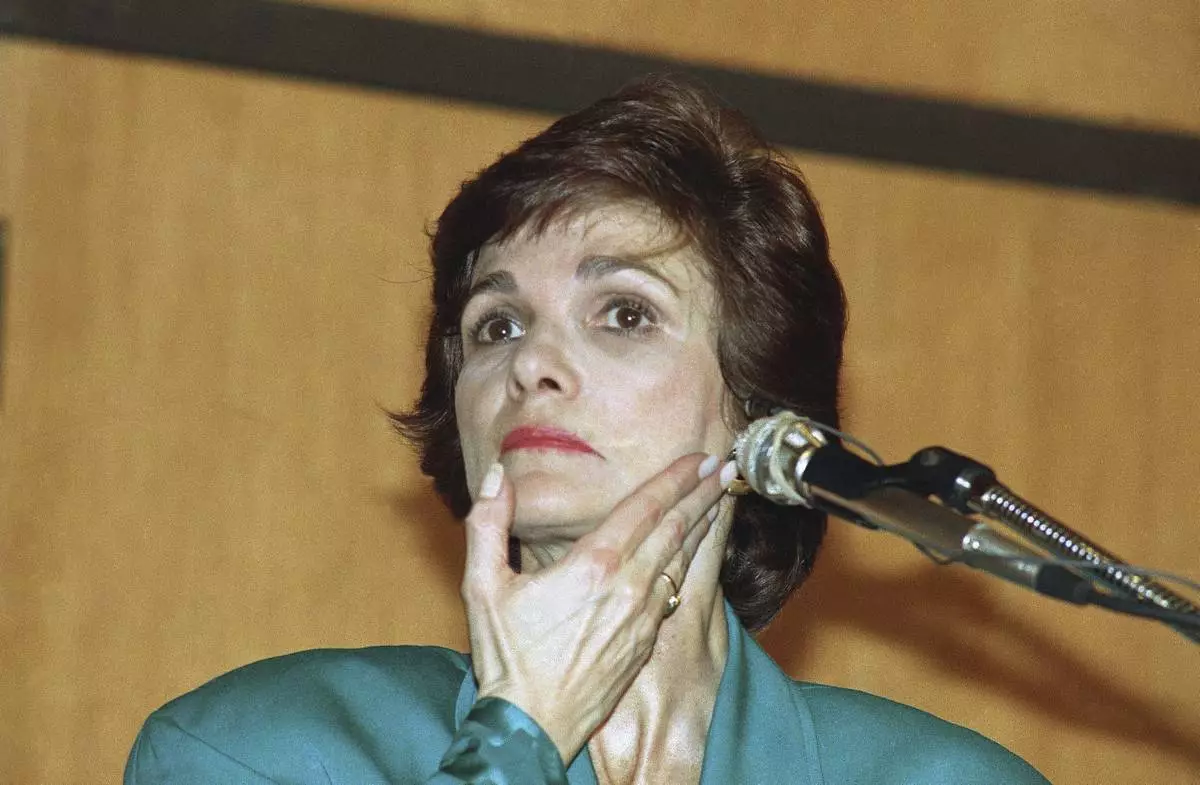
FILE - Kitty Dukakis listens to a question from the audience during a speaking engagement at Villanova University in Villanova, Pa, Wednesday, March 15, 1989. (AP Photo/Sean Kardon, File)

FILE - Gov Michael Dukakis and his wife Kitty wave the American flag as they are cheered by delegates after Dukakis accepted the nomination as the presidential candidate in July 21, 1988 at the Democratic National Convention in Atlanta. (AP Photo/Charles Tasnadi, File)
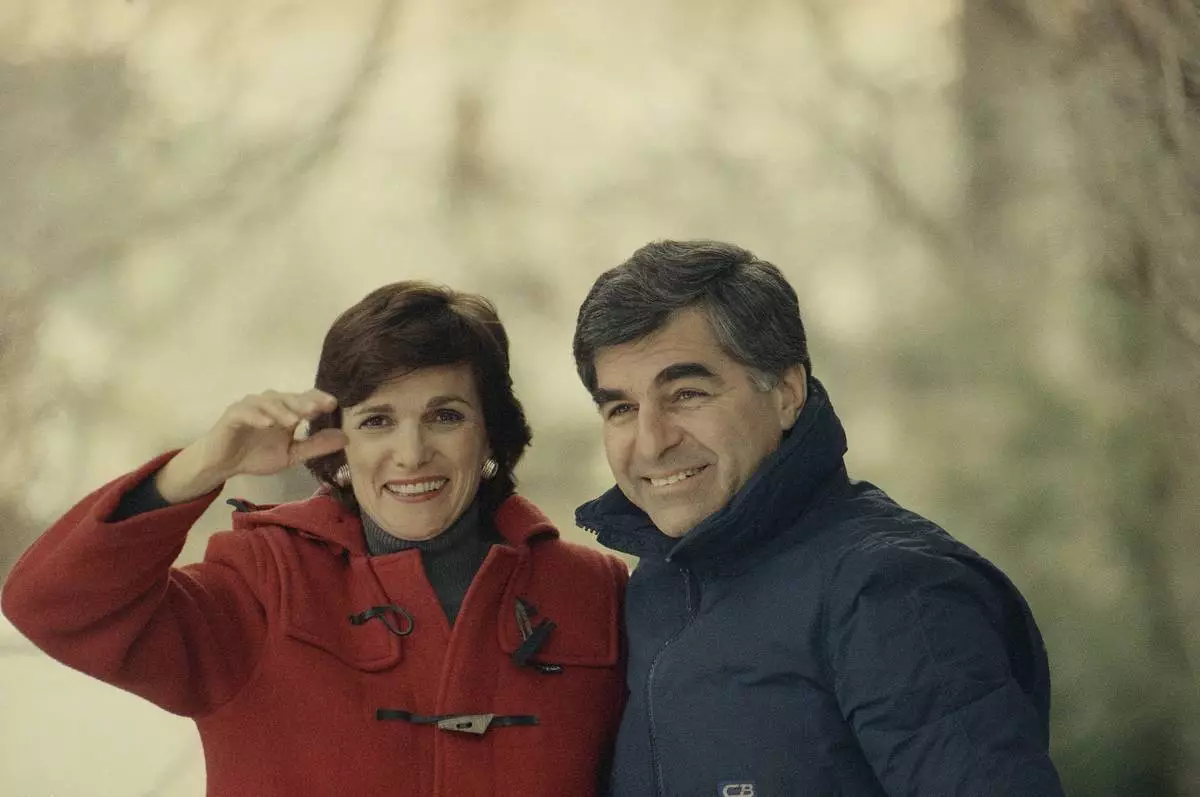
FILE - Kitty Dukakis, left, and Massachusetts Gov. Michael S. Dukakis are seen outside their home in Brookline, Massachusetts, March 7, 1989. (AP Photo/David Tenenbaum, File)