Delegations of Russia and Ukraine will hold separate talks on Monday with the delegation of the United States in Saudi Arabia on achieving a ceasefire.
A Chinese expert said that the upcoming talks face significant challenges and uncertainties.
Dmitry Sergeyevich Peskov, press secretary for Russian president Vladimir Putin, said that the next round of Russia-U.S. talks on Ukraine will be held on Monday in Riyadh and the two sides will discuss the Ukraine settlement and the Black Sea initiative.
According to the report of Tass on Saturday, Grigory Karasin, chairman of the committee on international affairs in Russia's upper house, said they are determined to try to resolve at least one issue.
The Ukrainian delegation is also set to hold talks with U.S. representatives in Saudi Arabia. According to AFP, a senior Ukrainian official revealed on Friday that the delegation, led by Ukrainian Defense Minister Rustem Umerov, will engage in "technical discussions" regarding the implementation of any potential truce. Ukraine aims to reach an agreement, and at the very least, it seeks to discuss its ceasefire proposal during the talks in Saudi Arabia.
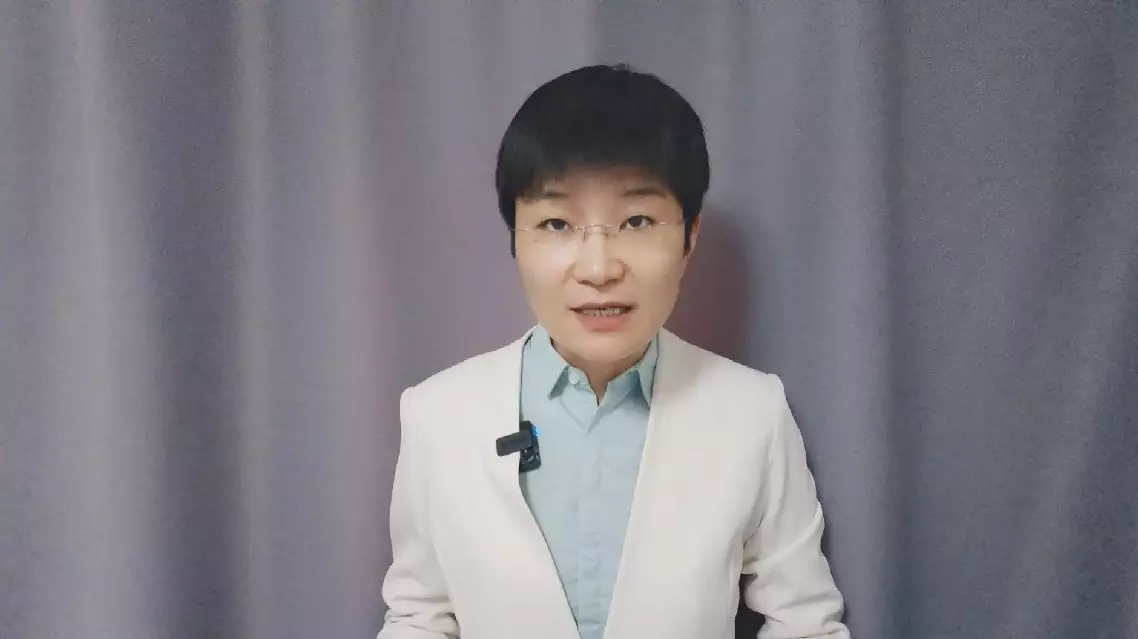
In an interview with the China Media Group (CMG), Su Xiaohui, deputy director of the department for American Studies of the China Institute of International Studies, shared her views on the talks.
"In Saudi Arabia, the United States will negotiate separately with Ukraine and Russia. In this indirect or parallel negotiation, the United States defines its role as a leader, rather than as a mediator. Recently, the United States has shown its eagerness to stay away from the Russia-Ukraine conflict, hoping to reset relations with Russia. However, achieving that goal by realizing an immediate and comprehensive ceasefire between Russia and Ukraine is unrealistic. Therefore, we saw the U.S. propose a temporary 30-day ceasefire. Regarding the so-called peace process, the United States has now further clarified its approach: First, Russia and Ukraine should cease attacking each other's energy and infrastructure. Then, military operations in the direction of the Black Sea should stop, ultimately paving the way for a comprehensive ceasefire. The United States is seeking to make it clear that its approach is in the process of advancing," said Su.
Su noted that the United States is pressuring Ukraine into negotiations to gain greater benefits.
"The United States wants to take the lead, so it is exerting more pressure on Ukraine. On the surface, Ukraine is also a party to this parallel negotiation, but it is clear that Ukraine is forced to come to the negotiating table. On one hand, the United States is asking Ukraine to give up some of its positions in order to meet U.S. demands. In addition, when the leaders of the United States and Ukraine failed to sign the minerals agreement after the clash in the White House, it was evident that the United States is raising its prices. Therefore, in its recent negotiations with Ukraine, the United States not only discussed ceasefire, but also demanding the withdrawal of its previous investment in military assistance to Ukraine for future benefits. In essence, the United States is seeking to further extract Ukraine's interests," Su said.
Su stressed that despite shared interests, the negotiations for a temporary truce between Russia and Ukraine face significant challenges and uncertainties.
"There has been some communication between the United States and Russia regarding a temporary truce between Russia and Ukraine, as well as for a compromise between Russia and Ukraine. In this negotiation process, all parties have found certain common interests. First of all, the United States hopes to promote the so-called peace process. The Ukrainian side also seeks to boost morale and reduce losses, especially as the Ukrainian army is still at a disadvantage on the battlefield, and this dilemma is further exacerbated. So, before the negotiation, the president of Ukraine visited the frontlines in Kharkiv and Donetsk to boost the morale of the Ukrainian army. For Russia, stopping attacks on energy infrastructure could also improve its refining capacity. Despite these common interests, the negotiation process will still be very difficult and full of uncertainties," she said.
There is a significant gap in the interests of the parties, and the negotiation process will be challenging, Su said.
"First of all, fundamentally speaking, there is a clear gap between the interests and demands of all parties. How to conduct a ceasefire and how to supervise and guarantee it? There are some technical problems that need to be solved. More importantly, the Russian side has not softened its negotiating positions and still emphasized that the Western world should stop providing military aid to Ukraine and asked the United States to make adjustments. At this time, for Ukraine, future Western military support is indispensable. The United States has no clear direction in stopping military aid. Therefore, in the future, there will still be a fierce tug of war between the parties regarding the negotiation process and the ultimate goal," she said.
Russia, Ukraine to hold separate talks with US in Saudi Arabia amidst uncertainties: expert