WASHINGTON (AP) — The chairman of a prominent law firm who cut a deal with President Donald Trump last week to avert the consequences of a White House executive order told colleagues in an email Sunday that he did so because the order “could easily have destroyed our firm” and put it out of business.
The message from Brad Karp offers the most detailed public explanation yet about the decision to make significant concessions to the White House in the face of an executive order that targeted his firm, Paul, Weiss, Rifkind, Garrison & Wharton.
The order, the latest in a series of similar actions targeting law firms whose lawyers have performed legal work that Trump disagrees with, threatened the suspension of security clearances for Paul Weiss attorneys as well as the termination of any federal contracts involving the firm. It cited as an explanation the fact that a former Paul Weiss attorney, Mark Pomerantz, had been a central player in an investigation by the Manhattan district attorney’s office into Trump’s finances before Trump became president.
On Thursday evening, though, Trump announced that he had rescinded the March 14 order following a White House meeting with Karp. The White House said the firm had agreed to dedicate $40 million worth of free legal services to support certain Trump administration agenda items, including on countering antisemitism; to conduct an audit of its hiring practices and “not adopt, use, or pursue any DEI" policies; and to take on clients regardless of political affiliation.
The resolution triggered an intense backlash within the legal community, with lawyers criticizing the firm for capitulating to Trump rather than standing up to him, particularly at a time when he's using the power of the presidency to threaten the livelihoods of attorneys and companies he believes have crossed him. The deal also reinforced Trump's recent success in extracting concessions from a broad swath of targets, in both academia and private industry, who have opted to compromise rather than fight.
In an email to Paul Weiss employees obtained by The Associated Press, Karp described the order as having presented an “existential crisis” for the firm. He said it was very likely the firm would not have survived a protracted fight with the Trump administration.
“The executive order could easily have destroyed our firm,” Karp wrote. “It brought the full weight of the government down on our firm, our people, and our clients. In particular, it threatened our clients with the loss of their government contracts, and the loss of access to the government, if they continued to use the firm as their lawyers. And in an obvious effort to target all of you as well as the firm, it raised the specter that the government would not hire our employees.”
Karp wrote that the firm was initially prepared to challenge the executive order in court, something another law firm targeted with a Trump executive order, Perkins Coie, has done. Even as a team of attorneys prepared a complaint, he said, “it became clear that, even if we were successful in initially enjoining the executive order in litigation, it would not solve the fundamental problem, which was that clients perceived our firm as being persona non grata with the Administration.”
He also said that the support he hoped the firm would receive from other law firms never materialized.
“Disappointingly, far from support, we learned that certain other firms were seeking to exploit our vulnerabilities by aggressively soliciting our clients and recruiting our attorneys,” he wrote.
Against that backdrop, when the firm learned that the administration might be willing to cut a deal, it sought to do so and negotiated a settlement in a “matter of days.”
“I know many of you are uncomfortable that we entered into any sort of resolution at all. That is completely understandable,” Karp wrote to his colleagues, adding that “there was no right answer to the predicament in which we found ourselves.”
He added: “It is very easy for commentators to judge our actions from the sidelines. But no one in the wider world can appreciate how stressful it is to confront an executive order like this until one is directed at you."
The firm is one of numerous Trump targets that have recently reached agreements with the administration rather than further provoke the president's ire.
On Friday, for instance, Columbia University agreed to put its Middle East studies department under new supervision and overhaul its rules for protests and student discipline, acquiescing to an ultimatum by the Trump administration to implement those changes or risk losing billions of dollars in federal funding.
Meta and ABC made settlement payments to Trump’s future presidential library to end lawsuits filed by Trump. Other tech and financial firms have publicly rolled back DEI programs in line with Trump’s policy interests.
Associated Press writer Zeke Miller in Washington contributed to this report.
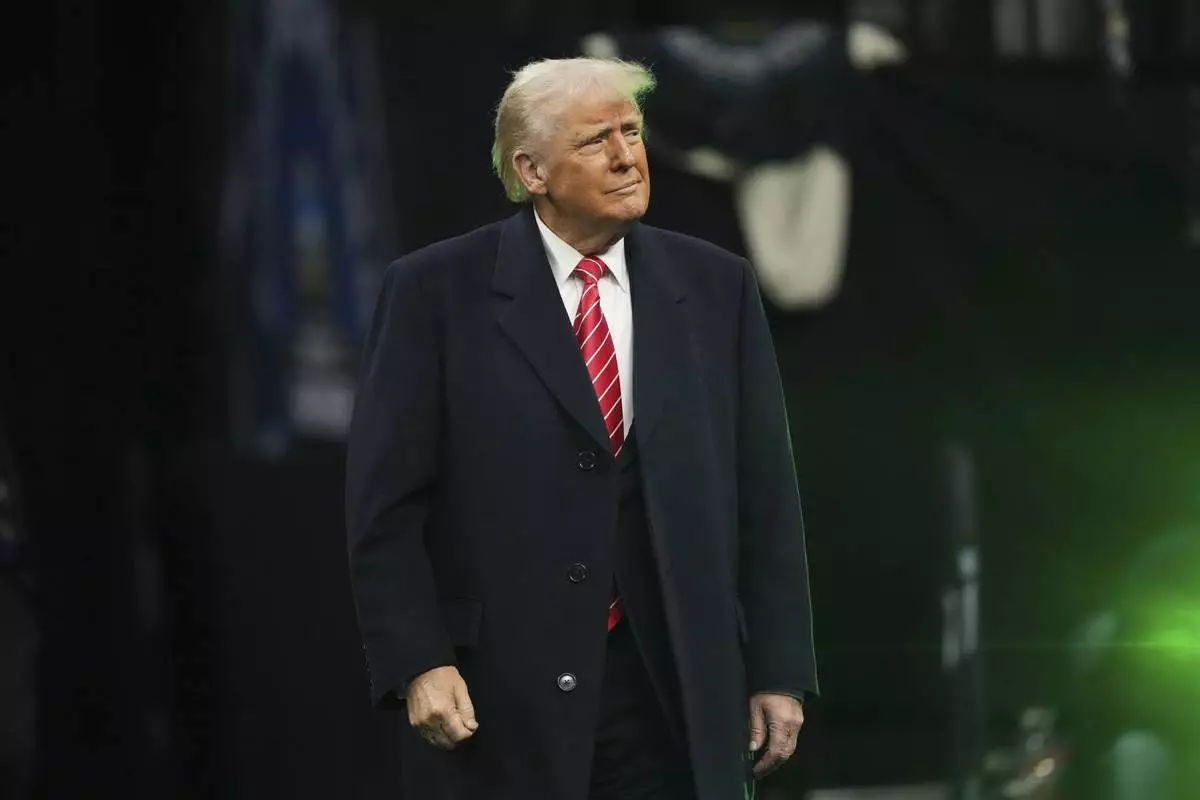
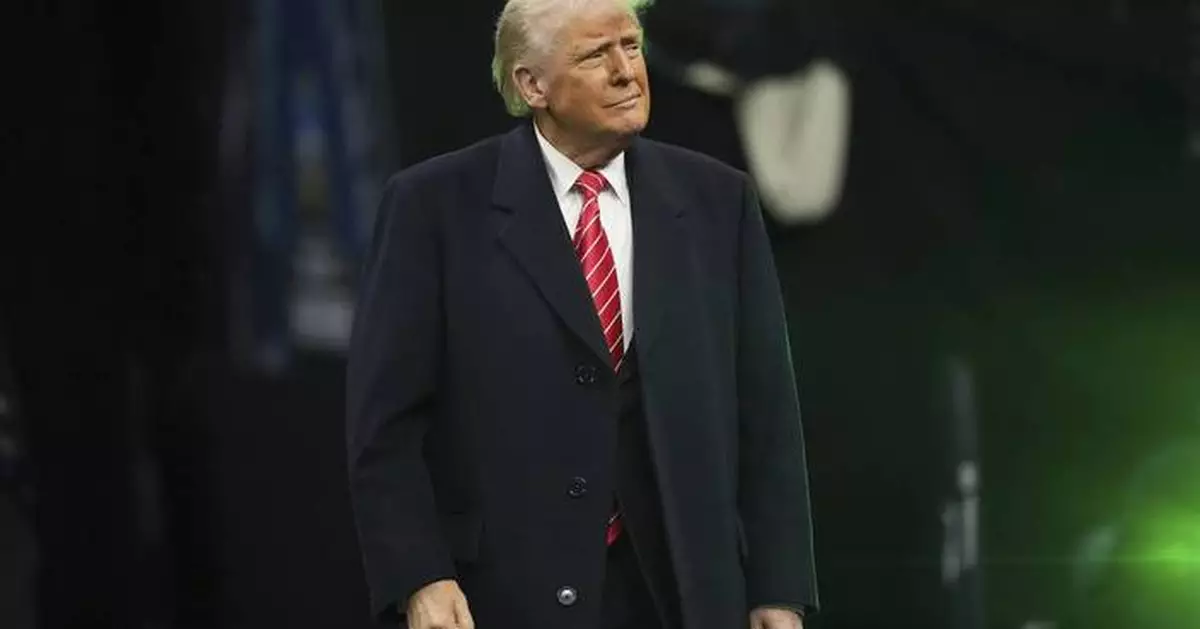
President Donald Trump attends the finals at the NCAA wrestling championship, Saturday, March 22, 2025, in Philadelphia. (AP Photo/Matt Rourke)
DUBAI, United Arab Emirates (AP) — U.S. President Donald Trump said Iran wants to negotiate with Washington after his threat to strike the Islamic Republic over its bloody crackdown on protesters, a move coming as activists said Monday the death toll in the nationwide demonstrations rose to at least 544.
Iran had no immediate reaction to the news, which came after the foreign minister of Oman — long an interlocutor between Washington and Tehran — traveled to Iran this weekend. It also remains unclear just what Iran could promise, particularly as Trump has set strict demands over its nuclear program and its ballistic missile arsenal, which Tehran insists is crucial for its national defense.
Meanwhile Monday, Iran called for pro-government demonstrators to head to the streets in support of the theocracy, a show of force after days of protests directly challenging the rule of 86-year-old Supreme Leader Ayatollah Ali Khamenei. Iranian state television aired chants from the crowd, who shouted “Death to America!” and “Death to Israel!”
Trump and his national security team have been weighing a range of potential responses against Iran including cyberattacks and direct strikes by the U.S. or Israel, according to two people familiar with internal White House discussions who were not authorized to comment publicly and spoke on condition of anonymity.
“The military is looking at it, and we’re looking at some very strong options,” Trump told reporters on Air Force One on Sunday night. Asked about Iran’s threats of retaliation, he said: “If they do that, we will hit them at levels that they’ve never been hit before.”
Trump said that his administration was in talks to set up a meeting with Tehran, but cautioned that he may have to act first as reports of the death toll in Iran mount and the government continues to arrest protesters.
“I think they’re tired of being beat up by the United States,” Trump said. “Iran wants to negotiate.”
He added: “The meeting is being set up, but we may have to act because of what’s happening before the meeting. But a meeting is being set up. Iran called, they want to negotiate.”
Iran through country's parliamentary speaker warned Sunday that the U.S. military and Israel would be “legitimate targets” if America uses force to protect demonstrators.
More than 10,600 people also have been detained over the two weeks of protests, said the U.S.-based Human Rights Activists News Agency, which has been accurate in previous unrest in recent years and gave the death toll. It relies on supporters in Iran crosschecking information. It said 496 of the dead were protesters and 48 were with security forces.
With the internet down in Iran and phone lines cut off, gauging the demonstrations from abroad has grown more difficult. The Associated Press has been unable to independently assess the toll. Iran’s government has not offered overall casualty figures.
Those abroad fear the information blackout is emboldening hard-liners within Iran’s security services to launch a bloody crackdown. Protesters flooded the streets in the country’s capital and its second-largest city on Saturday night into Sunday morning. Online videos purported to show more demonstrations Sunday night into Monday, with a Tehran official acknowledging them in state media.
In Tehran, a witness told the AP that the streets of the capital empty at the sunset call to prayers each night. By the Isha, or nighttime prayer, the streets are deserted.
Part of that stems from the fear of getting caught in the crackdown. Police sent the public a text message that warned: “Given the presence of terrorist groups and armed individuals in some gatherings last night and their plans to cause death, and the firm decision to not tolerate any appeasement and to deal decisively with the rioters, families are strongly advised to take care of their youth and teenagers.”
Another text, which claimed to come from the intelligence arm of the paramilitary Revolutionary Guard, also directly warned people not to take part in demonstrations.
“Dear parents, in view of the enemy’s plan to increase the level of naked violence and the decision to kill people, ... refrain from being on the streets and gathering in places involved in violence, and inform your children about the consequences of cooperating with terrorist mercenaries, which is an example of treason against the country,” the text warned.
The witness spoke to the AP on condition of anonymity due to the ongoing crackdown.
The demonstrations began Dec. 28 over the collapse of the Iranian rial currency, which trades at over 1.4 million to $1, as the country’s economy is squeezed by international sanctions in part levied over its nuclear program. The protests intensified and grew into calls directly challenging Iran’s theocracy.
Nikhinson reported from aboard Air Force One.
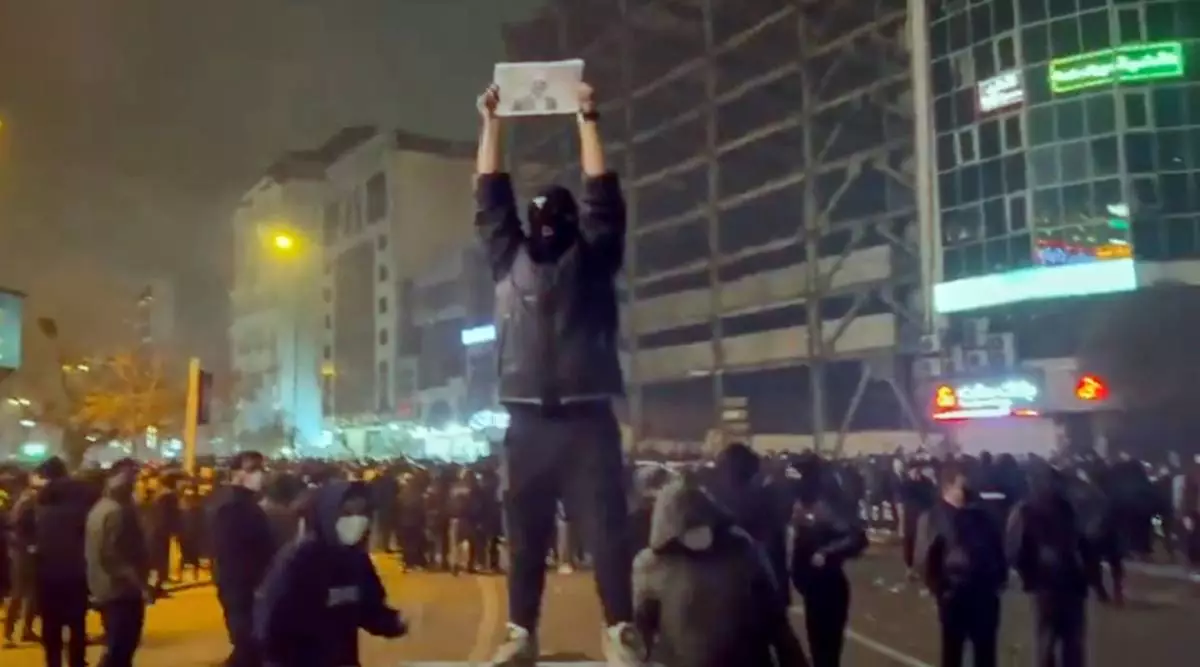
In this frame grab from video obtained by the AP outside Iran, a masked demonstrator holds a picture of Iran's Crown Prince Reza Pahlavi during a protest in Tehran, Iran, Friday, January. 9, 2026. (UGC via AP)
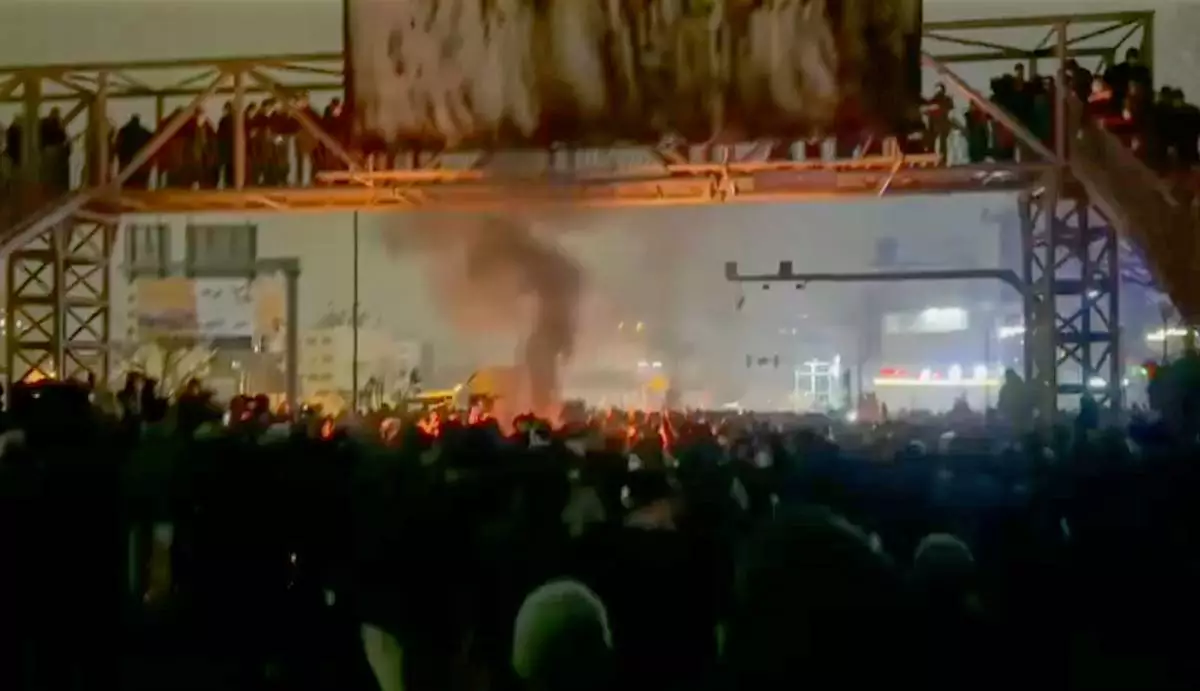
In this frame grab from footage circulating on social media from Iran shows protesters taking to the streets despite an intensifying crackdown as the Islamic Republic remains cut off from the rest of the world in Tehran, Iran, Friday, Jan. 9, 2026.(UGC via AP)
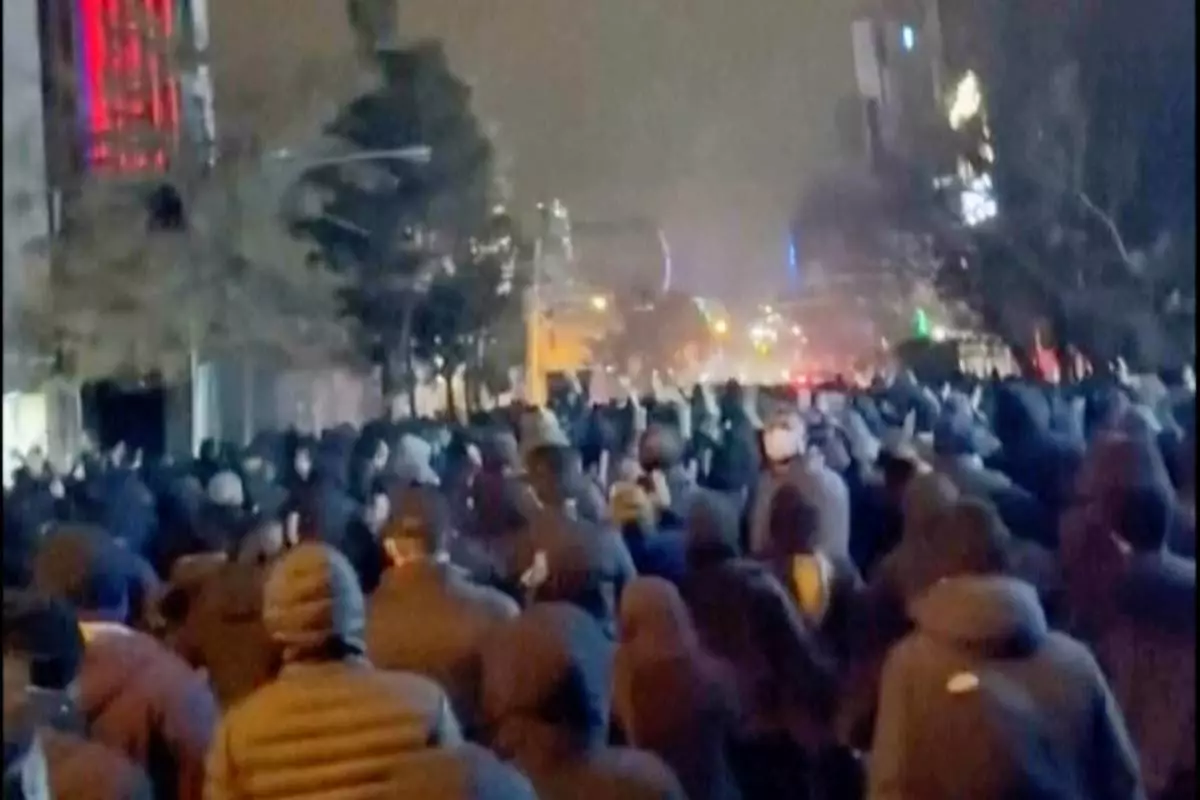
In this frame grab from footage circulating on social media from Iran showed protesters once again taking to the streets of Tehran despite an intensifying crackdown as the Islamic Republic remains cut off from the rest of the world in Tehran, Iran, Saturday Jan. 10, 2026. (UGC via AP)