Markets appear to be settling a day after a broad rally was fueled by hopes the Trump administration may take a more targeted approach to tariffs.
Futures for the S&P 500, the Nasdaq and the Dow Jones Industrial Average all rose less than 0.1% before Tuesday's opening bell.
Click to Gallery
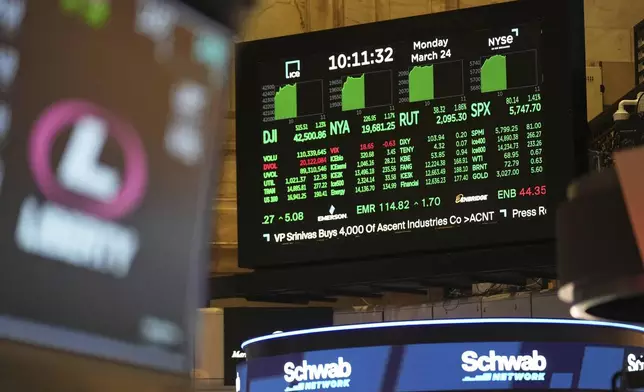
Financial information is displayed on the floor at the New York Stock Exchange in New York, Monday, March 24, 2025. (AP Photo/Seth Wenig)
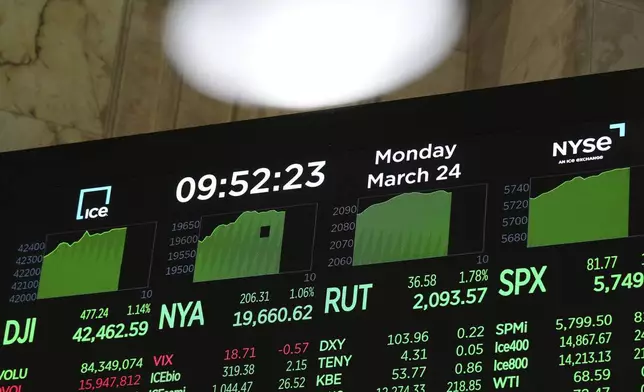
Financial information is displayed on the floor at the New York Stock Exchange in New York, Monday, March 24, 2025. (AP Photo/Seth Wenig)
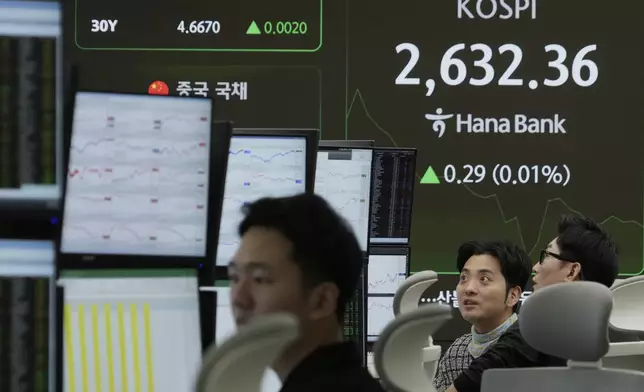
Currency traders watch monitors near a screen showing the Korea Composite Stock Price Index (KOSPI) at the foreign exchange dealing room of the KEB Hana Bank headquarters in Seoul, South Korea, Tuesday, March 25, 2025. (AP Photo/Ahn Young-joon)
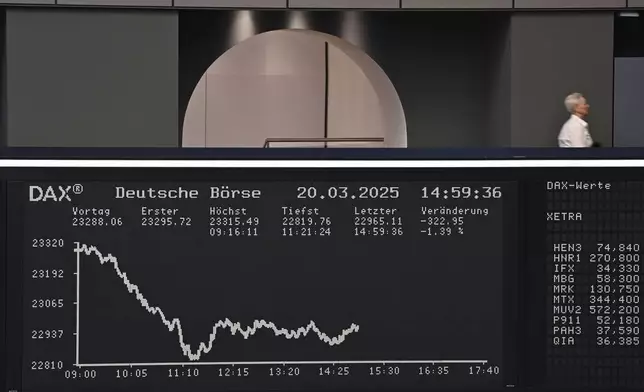
The display board with the Dax curve in the trading hall of the Frankfurt Stock Exchange, Germany, Thursday, March 20, 2025. (Arne Dedert/dpa/dpa via AP)
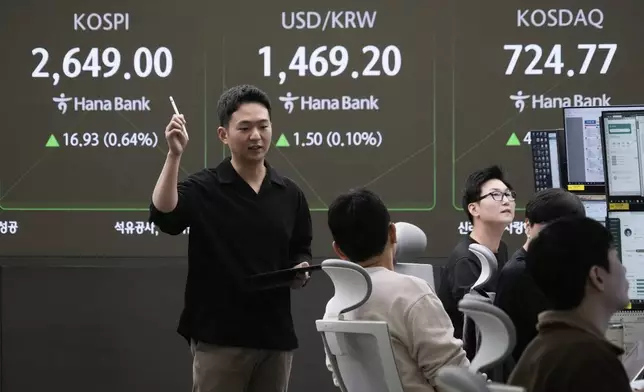
Currency traders work near a screen showing the Korea Composite Stock Price Index (KOSPI), top left, and the foreign exchange rate between U.S. dollar and South Korean won, top center, at the foreign exchange dealing room of the KEB Hana Bank headquarters in Seoul, South Korea, Tuesday, March 25, 2025. (AP Photo/Ahn Young-joon)
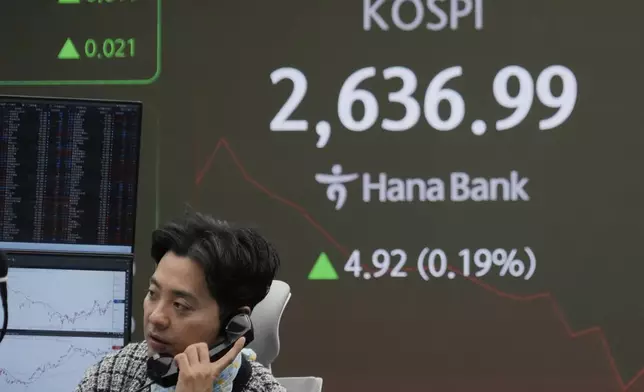
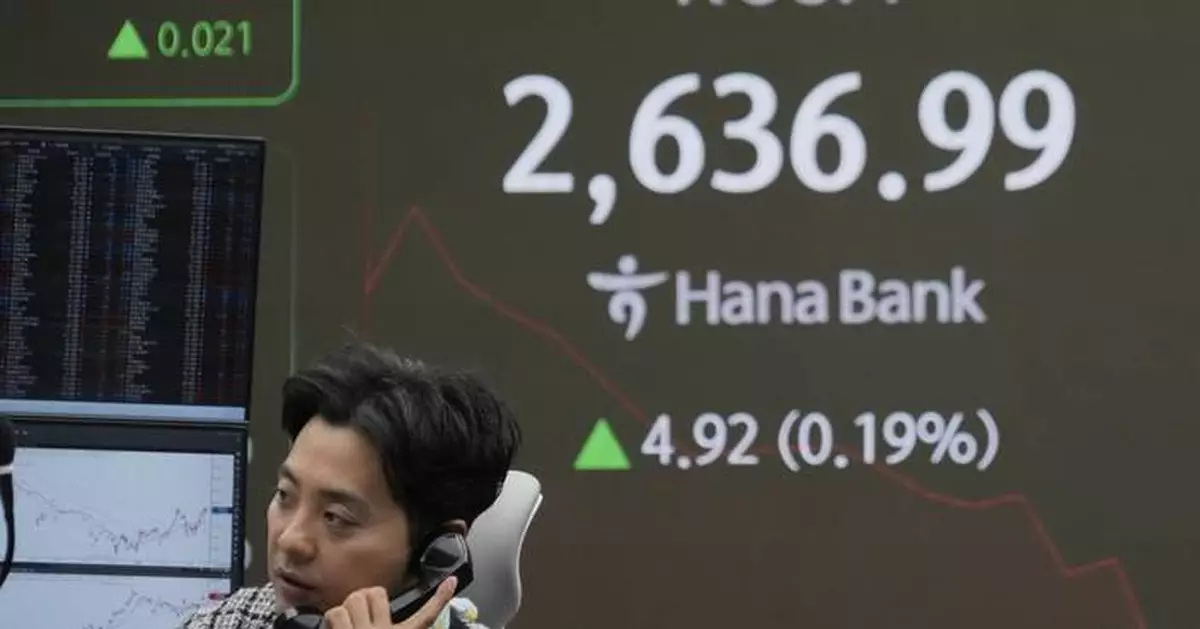
A currency trader talks on the phone near a screen showing the Korea Composite Stock Price Index (KOSPI) at the foreign exchange dealing room of the KEB Hana Bank headquarters in Seoul, South Korea, Tuesday, March 25, 2025. (AP Photo/Ahn Young-joon)
KB Homes slid 8.6% after it fell significantly short of Wall Street's first quarter sales and profit forecasts. Already mired in a slump, homebuilders are now faced with potentially rising costs due to tariffs, which they will have to pass on to buyers. KB's results and grim forecast dragged a host of other homebuilders' shares down with it, including Toll Brothers, LGI and Lennar.
Tesla shares ticked up 1.3% despite more grim sales figures from Europe.
European sales of Tesla electric cars were almost cut in half during the first two months of the year compared with a year earlier, even as the overall market for battery-powered cars grew, according to the European Automobile Manufacturers Association.
In addition to an aging model line, sales declines are also being blamed in part on CEO Elon Elon Musk’s endorsement of Germany’s far-right party in last month’s national election, his embrace of fringe political movements, and a gesture during a Trump event in January that many saw as a Nazi salute. Tesla is also facing increasing competition from Chinese carmakers such as BYD.
Wall Street has several economic updates this week. The Conference Board releases its consumer confidence survey for March on Tuesday. On Friday, the U.S. government releases the personal consumption expenditures price index for February, a measure of inflation closely watched by the Federal Reserve.
Stocks have been roiled for weeks by concerns that a trade war could hinder economic growth and increase inflationary pressures.
A new round of tariffs is scheduled to go into effect on April 2, but President Donald Trump has been unclear on his plans, saying Monday that even though he wants to charge “reciprocal” rates — import taxes to match the rates charged by other countries -- that “we might be even nicer than that.”
In a Truth Social post, Trump said Venezuela has been “very hostile” to the U.S. and any county purchasing its oil will pay a 25% tariff on all exports to the U.S. starting April 2.
“U.S. tariffs remain a critical headwind for the region to navigate. Any slowdown in trade could weigh on Asia’s export-driven economies, while shifting supply chains may complicate investment flows,” Junrong Yeap of IG said in a commentary.
That would likely more than double the already high tariffs facing China, which in 2023 bought 68% of the oil exported by Venezuela, according to a 2024 analysis by the U.S. Energy Information Administration. The U.S. also imports oil from Venezuela.
In Asian trading, Tokyo's Nikkei 225 gained 0.5% to 37,780.54, while the Kospi in South Korea lost 0.6% to 2,615.81.
Hong Kong's Hang Seng sank 2.4% to 23,344.25 as heavy selling of tech-related shares pulled the benchmark lower.
Cell phone maker Xiaomi's Hong Kong-traded shares dropped 6.3% and delivery app company Meituan lost 4.4%. E-commerce giant Alibaba was down 3.8%.
The Shanghai Composite index was unchanged at 3,369.98.
Taiwan's Taiex gained 0.8% and the SET in Thailand lost 0.5%.
In Europe at midday, Germany’s DAX added 1.1%, while the CAC 40 in Paris was up 1.3%. Britain’s FTSE 100 advanced 0.7%.
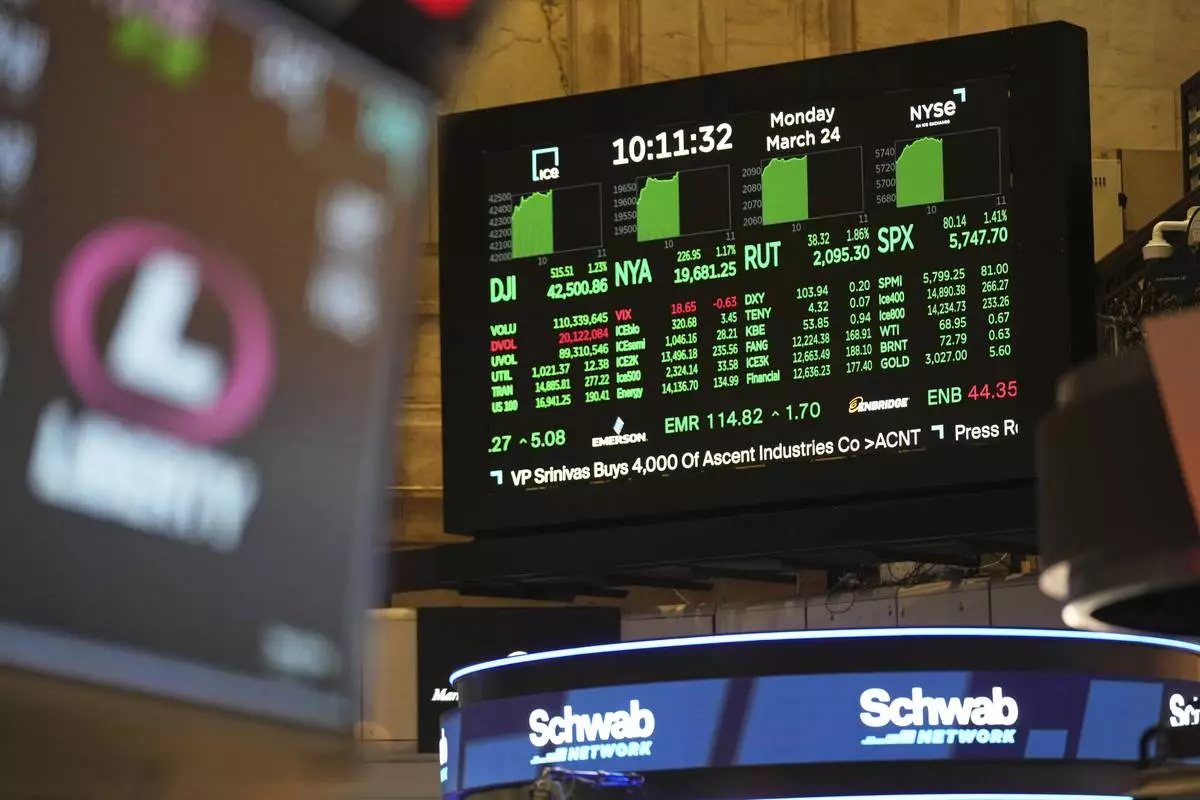
Financial information is displayed on the floor at the New York Stock Exchange in New York, Monday, March 24, 2025. (AP Photo/Seth Wenig)
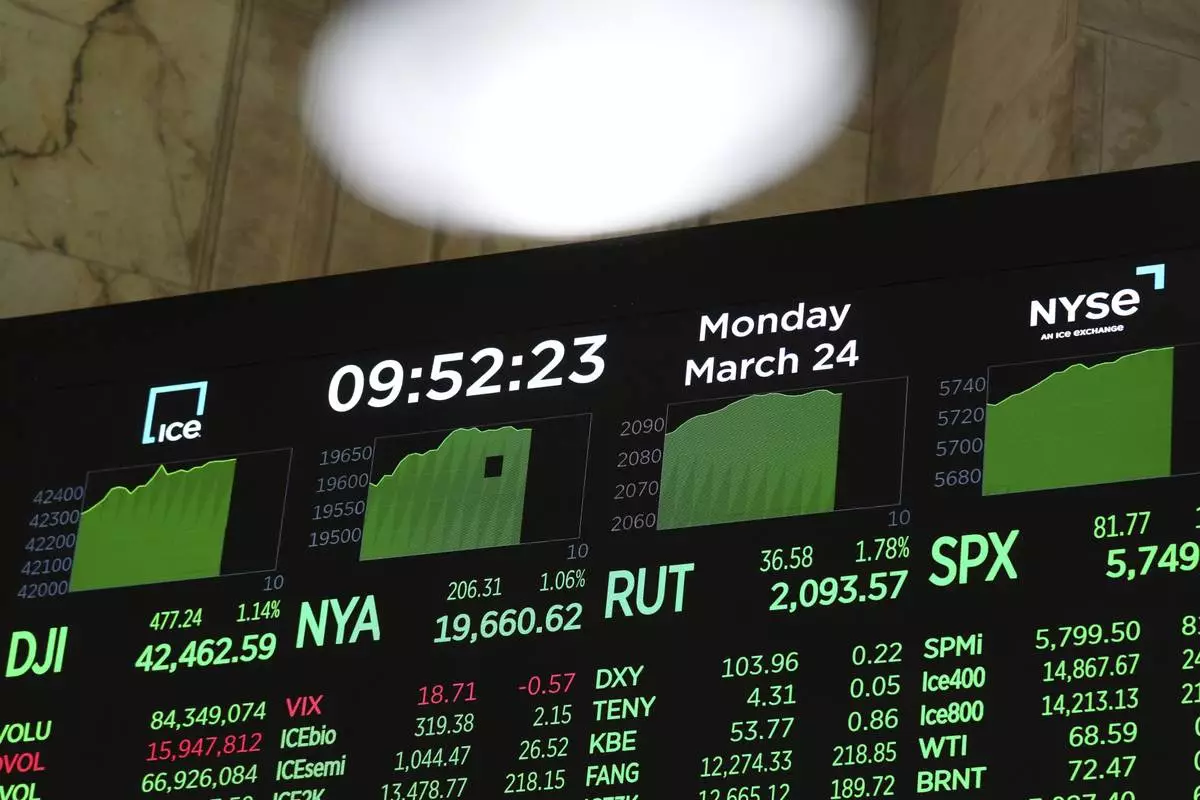
Financial information is displayed on the floor at the New York Stock Exchange in New York, Monday, March 24, 2025. (AP Photo/Seth Wenig)
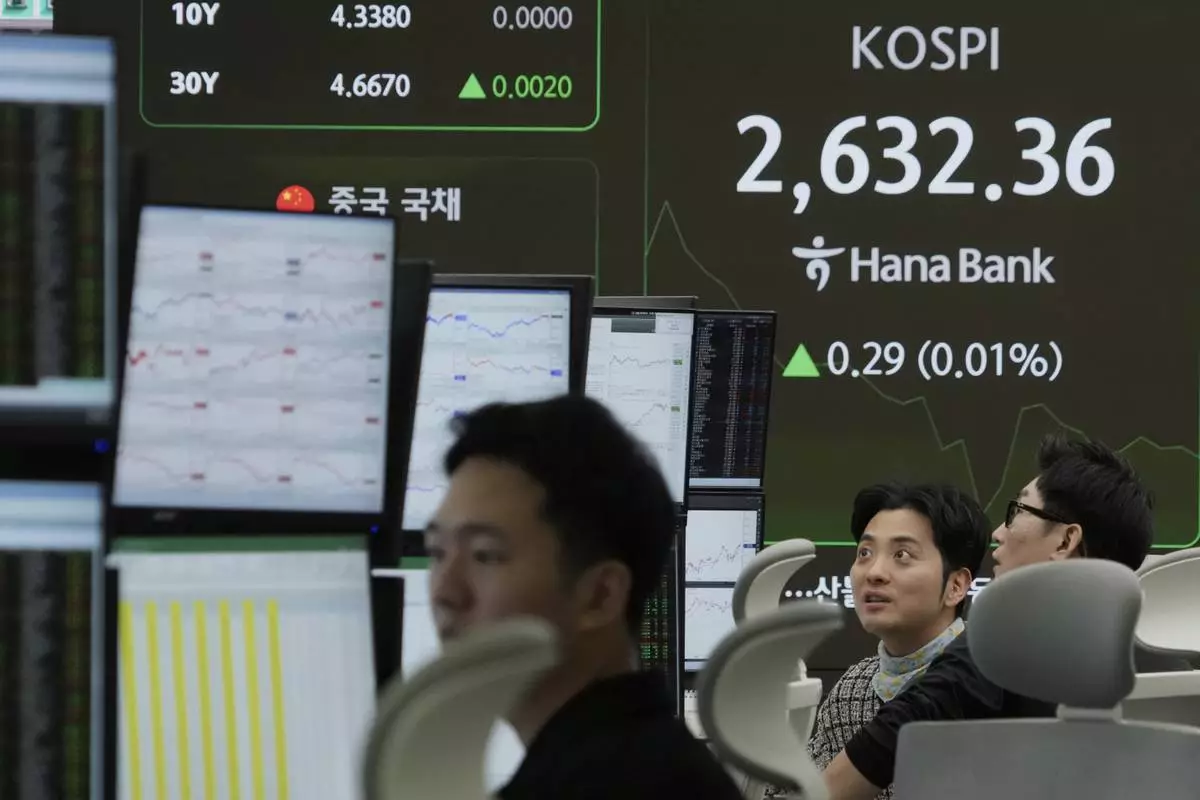
Currency traders watch monitors near a screen showing the Korea Composite Stock Price Index (KOSPI) at the foreign exchange dealing room of the KEB Hana Bank headquarters in Seoul, South Korea, Tuesday, March 25, 2025. (AP Photo/Ahn Young-joon)
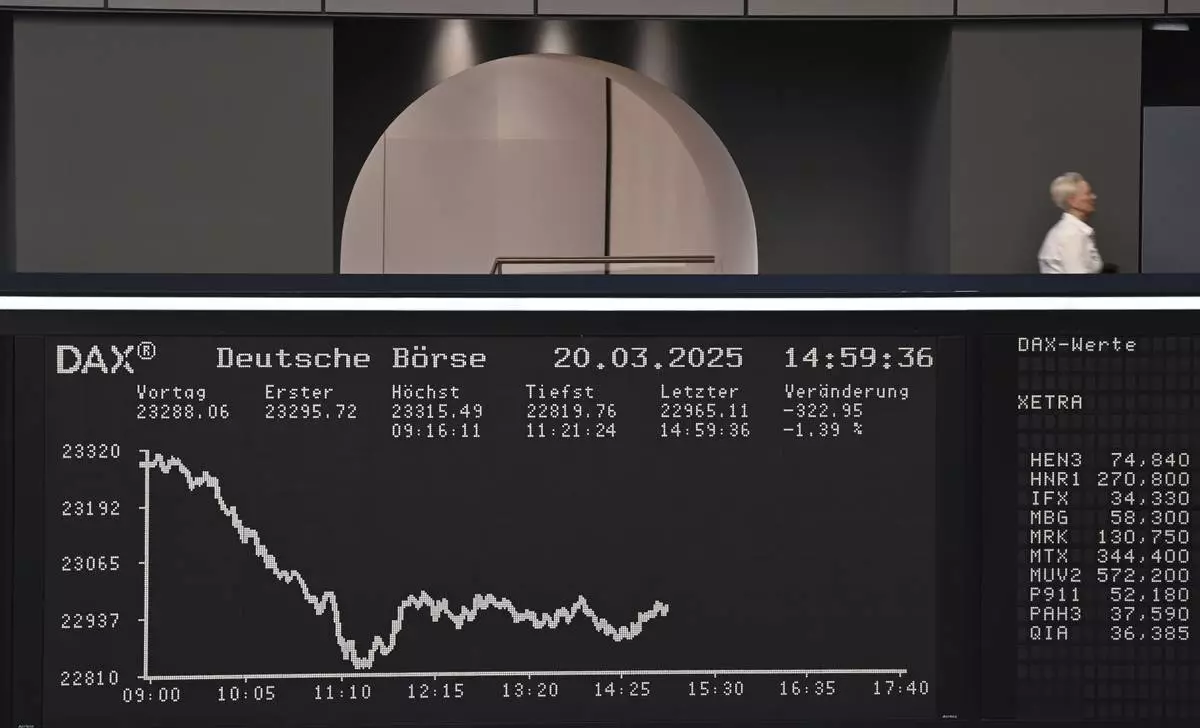
The display board with the Dax curve in the trading hall of the Frankfurt Stock Exchange, Germany, Thursday, March 20, 2025. (Arne Dedert/dpa/dpa via AP)
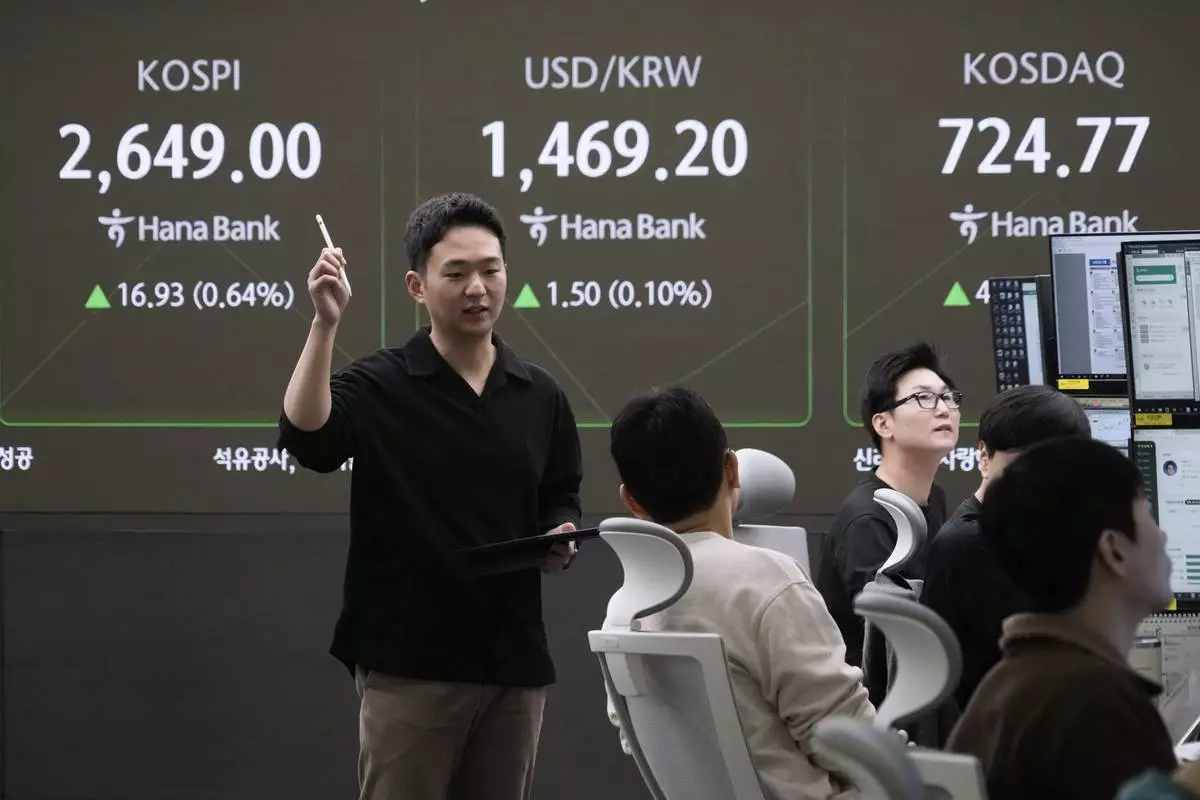
Currency traders work near a screen showing the Korea Composite Stock Price Index (KOSPI), top left, and the foreign exchange rate between U.S. dollar and South Korean won, top center, at the foreign exchange dealing room of the KEB Hana Bank headquarters in Seoul, South Korea, Tuesday, March 25, 2025. (AP Photo/Ahn Young-joon)
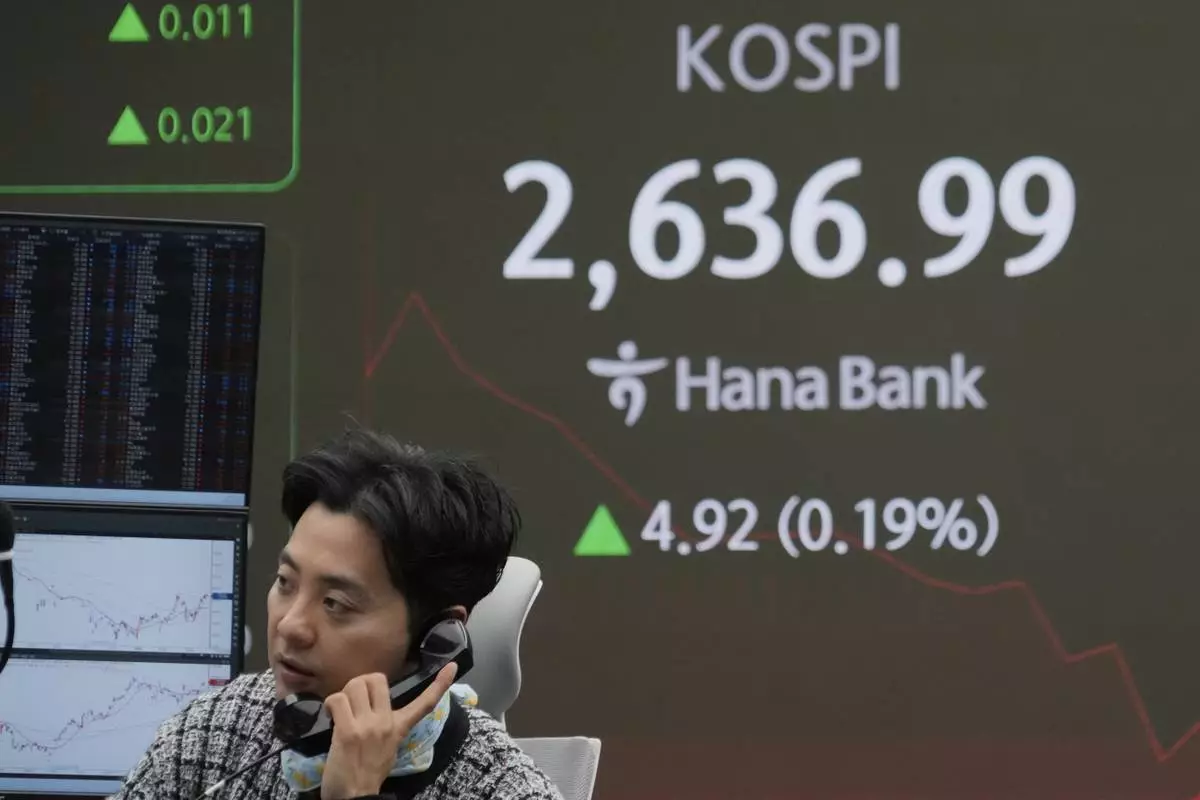
A currency trader talks on the phone near a screen showing the Korea Composite Stock Price Index (KOSPI) at the foreign exchange dealing room of the KEB Hana Bank headquarters in Seoul, South Korea, Tuesday, March 25, 2025. (AP Photo/Ahn Young-joon)