DAMASCUS, Syria (AP) — Sahar Diab had visited Damascus’ famed Umayyad Mosque previously. But as the Syrian lawyer went there to pray during her country’s first Ramadan after the end of the Assad family’s iron-fisted rule, she felt something new, something priceless: A sense of ease.
“The rituals have become much more beautiful,” she said. “Before, we were restricted in what we could say. ... Now, there’s freedom.”
Click to Gallery
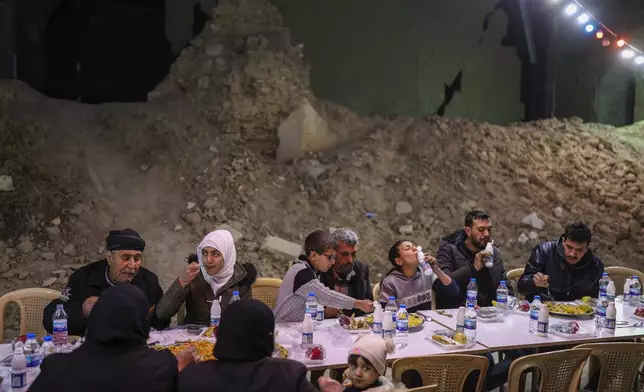
FILE.- Residents gather for the fast-breaking meal known as iftar, organized by the Turkish Humanitarian Relief Foundation (IHH), on the first day of Ramadan in the Jobar neighborhood, which was devastated by the Syrian war, in Damascus, Syria, on Saturday, March 1, 2025.(AP Photo/Ghaith Alsayed,File)
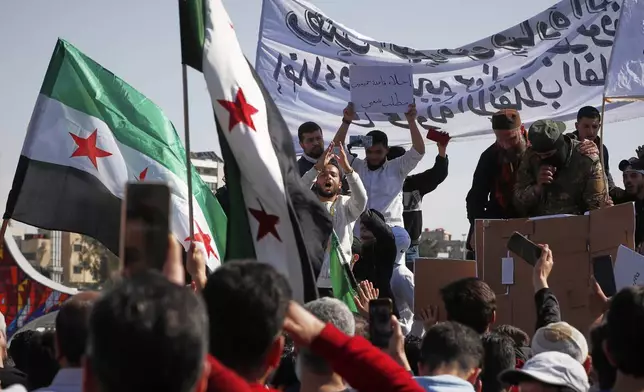
Supporters of Syria's new government gather after the prayer in Umayyad square in Damascus, Syria, Friday March 14, 2025.(AP Photo/Omar Sanadiki)
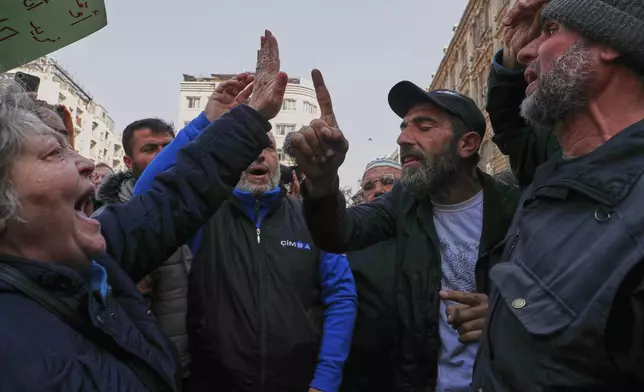
An activist woman protesting against the recent wave of violence and sectarian attacks in Syria's coastal region faces off against a man at Al Marjeh Square in Damascus, Syria, Sunday, March 9, 2025. (AP Photo/Omar Sanadiki)
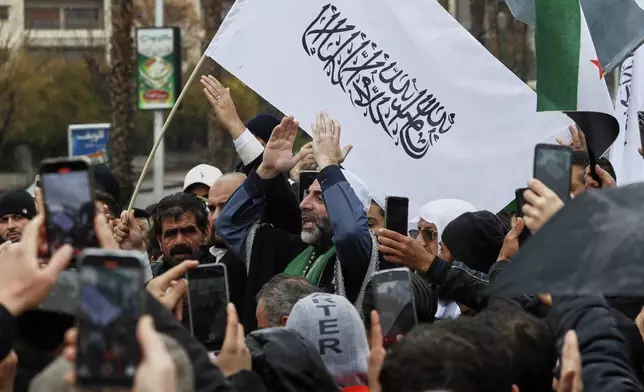
Supporters of Syria's new government gather after the prayer in Umayyad square in Damascus, Syria, Friday March 7, 2025.(AP Photo/Omar Sanadiki)
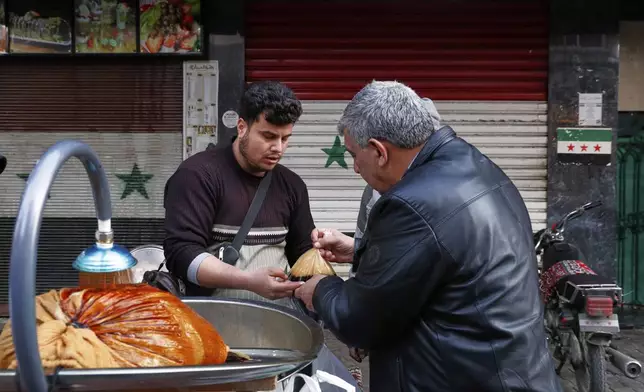
A man buys a traditional cold drink on the first day of Ramadan, the holy month for Muslims, in Damascus, Syria, Saturday March 1, 2025.(AP Photo/Omar Sanadiki)
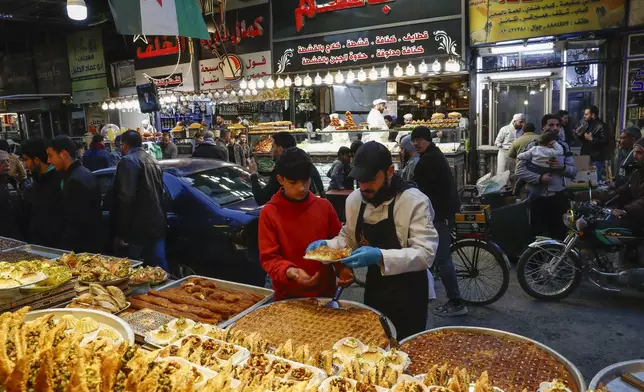
FILE.- A boy buys sweets on the first day of Ramadan, the holy month for Muslims, in Damascus, Syria, Saturday March 1, 2025.(AP Photo/Omar Sanadiki,File)
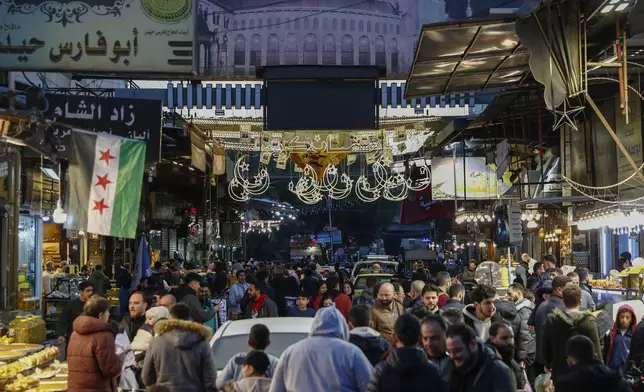
FILE.- Residents walk in the market on the first day of Ramadan, the holy month for Muslims, in Damascus, Syria, Saturday March 1, 2025.(AP Photo/Omar Sanadiki,File)
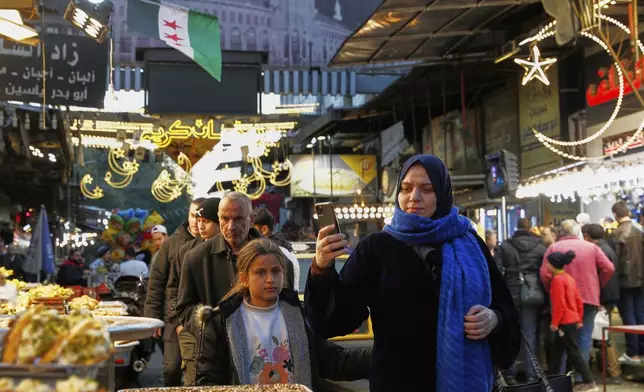
Syrians look for sweets to buy during Ramadan, the holy month for Muslims, in Damascus, Syria, Saturday, March 1, 2025.(AP Photo/Omar Sanadiki)
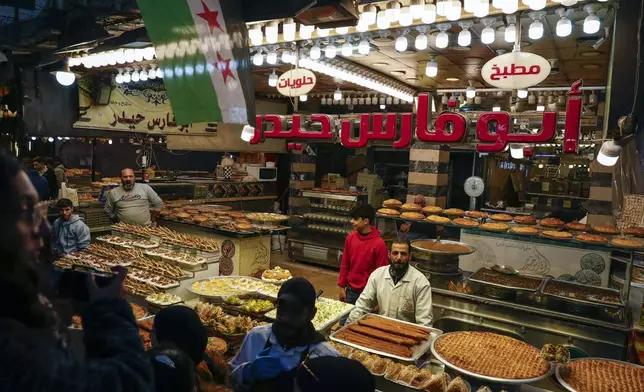
FILE.- Vendors display traditional sweets as residents shop on the first day of Ramadan, the Muslim holy month, in Damascus, Syria, Saturday March 1, 2025. (AP Photo/Omar Sanadiki,File)
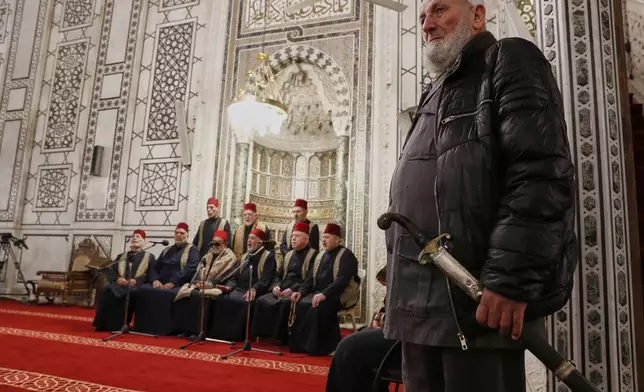
A man holds a traditional sword next to a group of sheikhs reading the Quran during the first Ramadan Friday prayer at the Umayyad mosque in Damascus, Friday, March 7, 2025.(AP Photo/Omar Sanadiki)
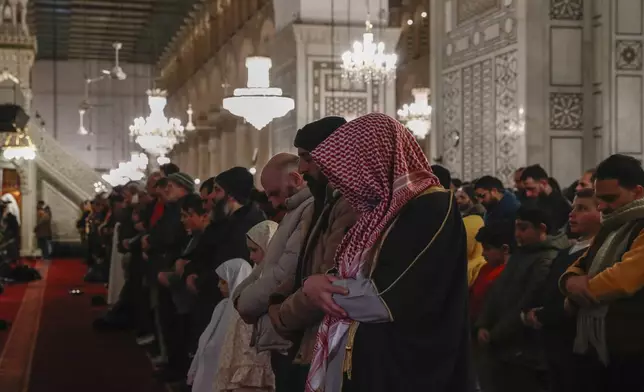
FILE.- Muslim worshippers pray on the first day of the Muslim holy month of Ramadan at the Umayyad Mosque in Damascus, Syria, Saturday March 1, 2025.(AP Photo/Omar Sanadiki,File)
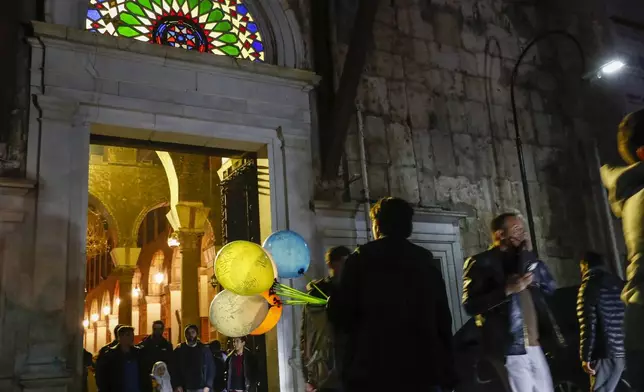
FILE.- Worshippers exit the Umayyad Mosque after prayers on the first day of the Muslim holy month of Ramadan in Damascus, Syria, Saturday March 1, 2025.(AP Photo/Omar Sanadiki,File)
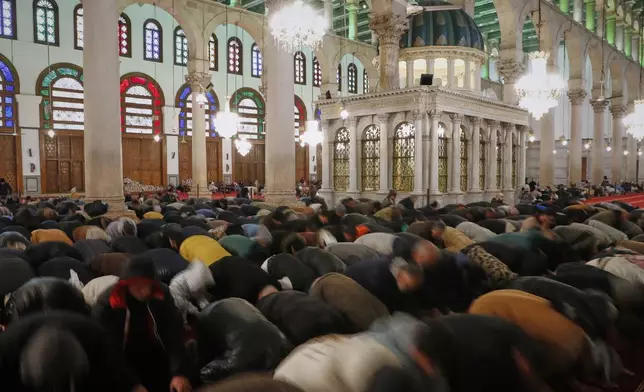
Muslim worshippers pray during the Muslim holy month of Ramadan at the Umayyad Mosque in Damascus, Syria, Friday March 7, 2025. (AP Photo/Omar Sanadiki)
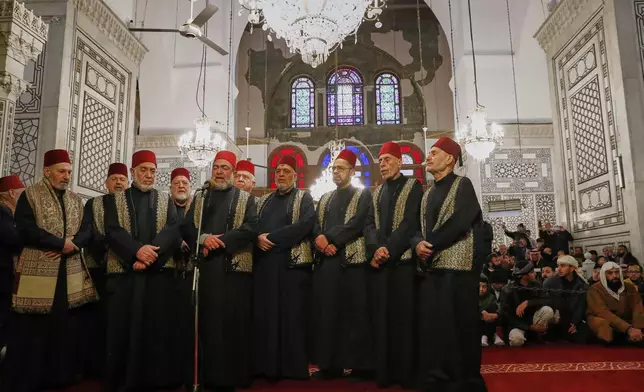
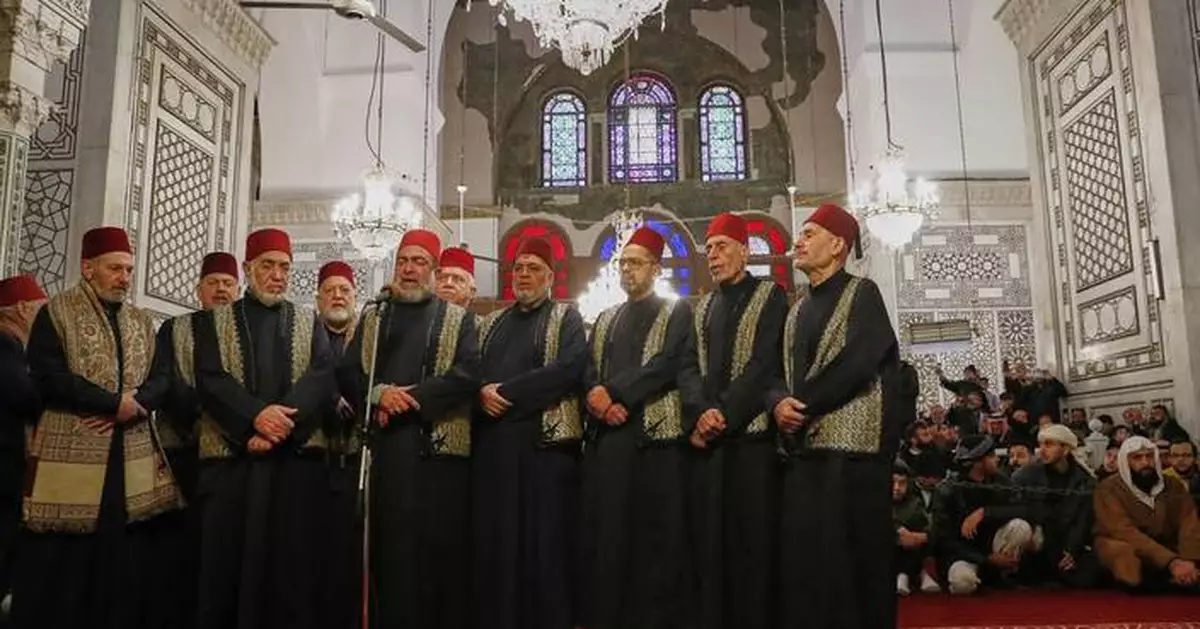
A group of sheikhs call for the prayer during the Muslim holy month of Ramadan at the Umayyad Mosque in Damascus, Syria, Friday March 7, 2025.(AP Photo/Omar Sanadiki)
As Diab spoke recently, however, details were trickling in from outside Damascus about deadly clashes. The bloodshed took on sectarian overtones and devolved into the worst violence since former President Bashar Assad was overthrown in December by armed insurgents led by the Islamist group Hayat Tahrir al-Sham (HTS).
This Ramadan — the Muslim holy month of daily fasting and heightened worship — such are the realities of a Syria undergoing complex transition. Relief, hope and joy at new openings — after 53 years of the Assad dynasty’s reign, prolonged civil war and crushing economic woes — intermingle with uncertainty, fear by some, and a particularly bloody and worrisome wave of violence.
Some are feeling empowered, others vulnerable.
“We’re not afraid of anything,” Diab said. She wants her country to be rebuilt and to get rid of Assad-era “corruption and bribery.”
At the Umayyad Mosque, the rituals were age-old: A woman fingering a prayer bead and kissing a copy of the Quran; the faithful standing shoulder-to-shoulder and prostrating in prayer; the Umayyad’s iconic and unusual group call to prayer, recited by several people.
The sermon, by contrast, was fiery in delivery and new in message.
The speaker, often interrupted by loud chants of “God is great,” railed against Assad and hailed the uprising against him.
“Our revolution is not a sectarian revolution even though we’d been slaughtered by the sword of sectarianism,” he said.
This Ramadan, Syrians marked the 14th anniversary of the start of their country’s civil war. The conflict began as one of several popular uprisings against Arab dictators, before Assad crushed what started as largely peaceful protests and a civil war erupted.
It became increasingly fought along sectarian lines, drawing in foreign powers and fighters. Assad, who had ruled over a majority Sunni population, belongs to the minority Alawite sect and had drawn from Alawite ranks for military and security positions, fueling resentment. That, Alawites say now, shouldn’t mean collective blame for his actions.
Many Syrians speak of omnipresent fear under Assad, often citing the Arabic saying, “the walls have ears,” reflecting that speaking up even privately didn’t feel safe. They talk of hardships, injustices and brutality. Now, for example, many celebrate freedom from dreaded Assad-era checkpoints.
“They would harass us,” said Ahmed Saad Aldeen, who came to the Umayyad Mosque from the city of Homs. “You go out ... and you don’t know whether you’ll return home or not.”
He said more than a dozen cousins are missing; a search for them in prisons proved futile.
Mohammed Qudmani said even going to the mosque caused anxiety for some before, for fear of getting on security forces’ radar screen or being labeled a “terrorist.”
Now, Damascus streets are bedecked with the new three-starred flag, not long ago a symbol of Assad's opponents. It flutters from poles and is plastered to walls, sometimes with the words “God is great” handwritten on it.
One billboard declares this the “Ramadan of victory.” On a government building, the faces of former presidents Bashar and Hafez Assad are partly cut off from a painting; in their place, “The Freedom” is scribbled in Arabic.
Haidar Haidar, who owns a sweets shop, said he was touched that new security force members gave him water and dates while he was out when a call to prayer signaled that those fasting can eat and drink.
“We never saw such things here,” he said, adding that he used to recite Quranic verses for protection before passing through Assad’s checkpoints.
He said his business was doing well this Ramadan and ingredients have become more available.
Still, challenges — economic, geopolitical and otherwise — abound.
Many dream of a new Syria, but exactly how that would look remains uncertain.
“The situation is foggy,” said Damascus resident Wassim Bassimah. “Of course, there’s great joy that we’ve gotten rid of the cancer we had, but there’s also a lot of wariness.”
Syrians, he added, must be mindful to protect their country from sliding back into civil war and should maintain a dialogue that is inclusive of all.
“The external enemies are still there,” he said. “So are the enemies from within.”
The war’s scars are inescapable.
Just outside of Damascus, death and destruction are seared into some landscapes littered with pockmarked and ruined structures. Many Syrians grieve the missing and killed; many families have been divided by the exodus of millions as refugees.
Ramadan typically sees festive gatherings with loved ones to break the daily fast. Some Syrians huddle around food and juices at restaurants or throng to Ramadan tents to break their fast and smoke waterpipes as they listen to songs.
But this month’s violence in Syria’s coastal region has stoked fears among some.
The bloodshed began after reports of attacks by Assad loyalists on government security forces. Human rights and monitoring groups reported revenge killings in the counteroffensive, which they said saw the involvement of multiple groups. According to them, hundreds of civilians, or more, were killed; figures couldn't be independently confirmed. The Syrian Observatory for Human Rights said most of the killed civilians were Alawites in addition to a number of armed Alawites and security forces. Syrian authorities have formed a committee tasked with investigating the violence.
Even before the bloodshed, while many celebrated the new government, others questioned what the ascent of the former insurgent forces would mean for freedoms, including of minorities and of those in the majority who are secular-minded or adhere to less conservative interpretations of Islam. The new authorities have made assurances about pluralism.
Sheikh Adham al-khatib, a representative of Twelver Shiites in Syria, said many from the Shiite minority felt scared after Assad’s ouster and some fled the country. Some later returned, encouraged by a relative calm and the new authorities’ reassurances, he said, but the recent violence and some “individual transgressions" have rekindled fears.
As the violence unfolded earlier this month, crowds gathered in Damascus.
Some rallied to support security forces. Others, like Malak al Shanawani, participated in a different gathering, against the killing of the security forces and civilians. The bloodshed brought tears to her eyes.
“It’s nightmarish,” said the feminist and political activist. “It’s one of the worst moments.”
Under Assad, al Shanawani was arrested more than once. Among those killed in the violence, she said, were three brothers of an Alawite friend who was also arrested under Assad.
“When we used to hear that the Alawites would get slaughtered, we’d say: ‘No, we can protect you; we wouldn’t allow this to happen,’” said al Shanawani, who's from the Sunni community. “But it has happened.”
At the silent vigil, activists raised signs that called for de-escalation and denounced “sectarian incitement.” One read: “Neither religion, nor sect will divide us.” Another declared: “The Syrian revolution doesn’t accept injustice.”
But the gathering quickly deteriorated into shouting and shoving matches as some on the street appeared provoked by it.
One man angrily asked participants where they were when it was the Sunnis who were suffering. Another furiously ripped a sign. A third insulted Alawites.
Here and there, some attempted to discuss, to find common ground. Occasionally, people who started off arguing would agree on something and join each other in chants.
“One. One. One,” they yelled. “The Syrian people are one.”
As the chaos and friction continued, however, gunshots were fired into the air to disperse the crowds.
Associated Press religion coverage receives support through the AP’s collaboration with The Conversation US, with funding from Lilly Endowment Inc. The AP is solely responsible for this content.
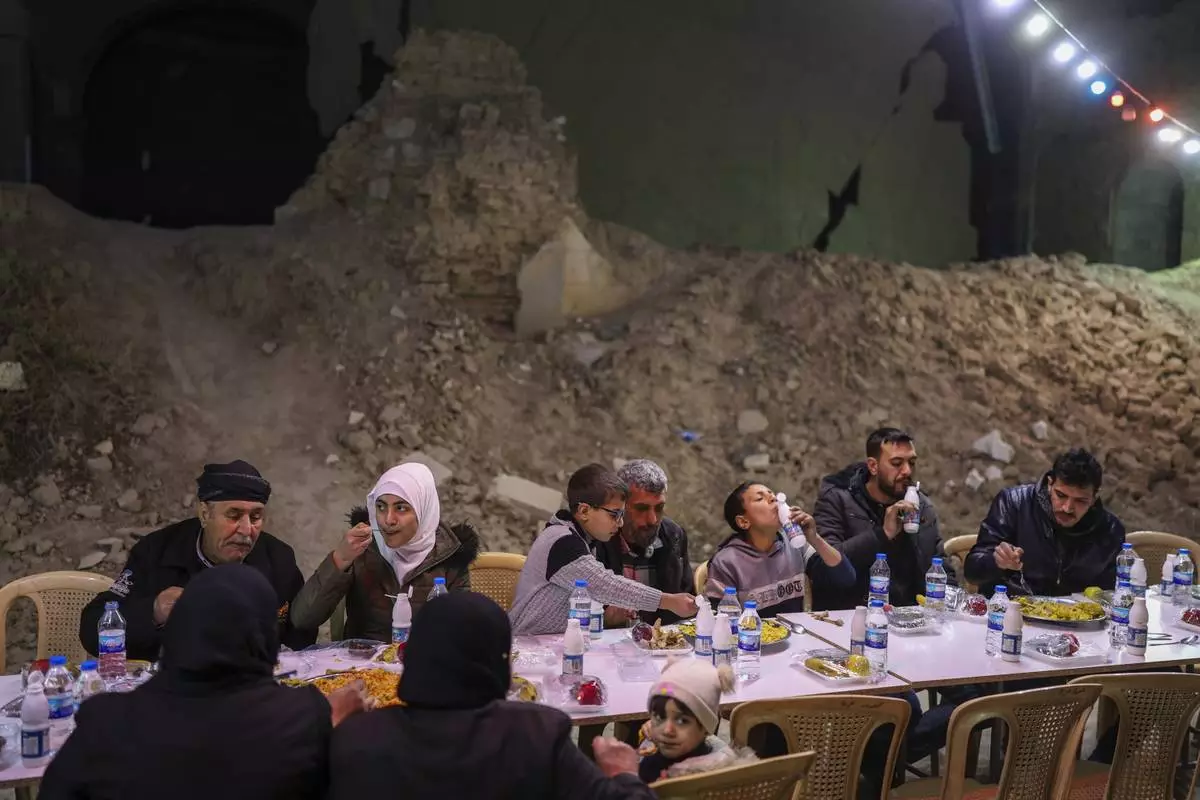
FILE.- Residents gather for the fast-breaking meal known as iftar, organized by the Turkish Humanitarian Relief Foundation (IHH), on the first day of Ramadan in the Jobar neighborhood, which was devastated by the Syrian war, in Damascus, Syria, on Saturday, March 1, 2025.(AP Photo/Ghaith Alsayed,File)
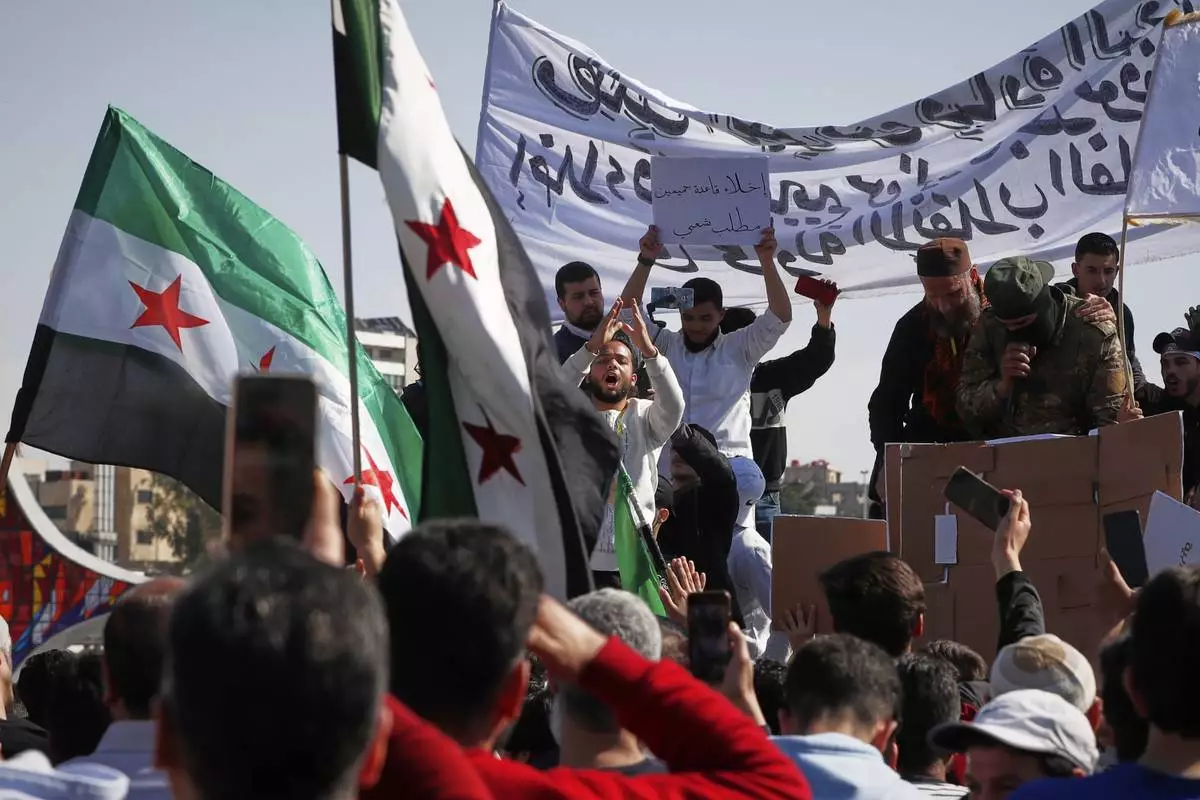
Supporters of Syria's new government gather after the prayer in Umayyad square in Damascus, Syria, Friday March 14, 2025.(AP Photo/Omar Sanadiki)
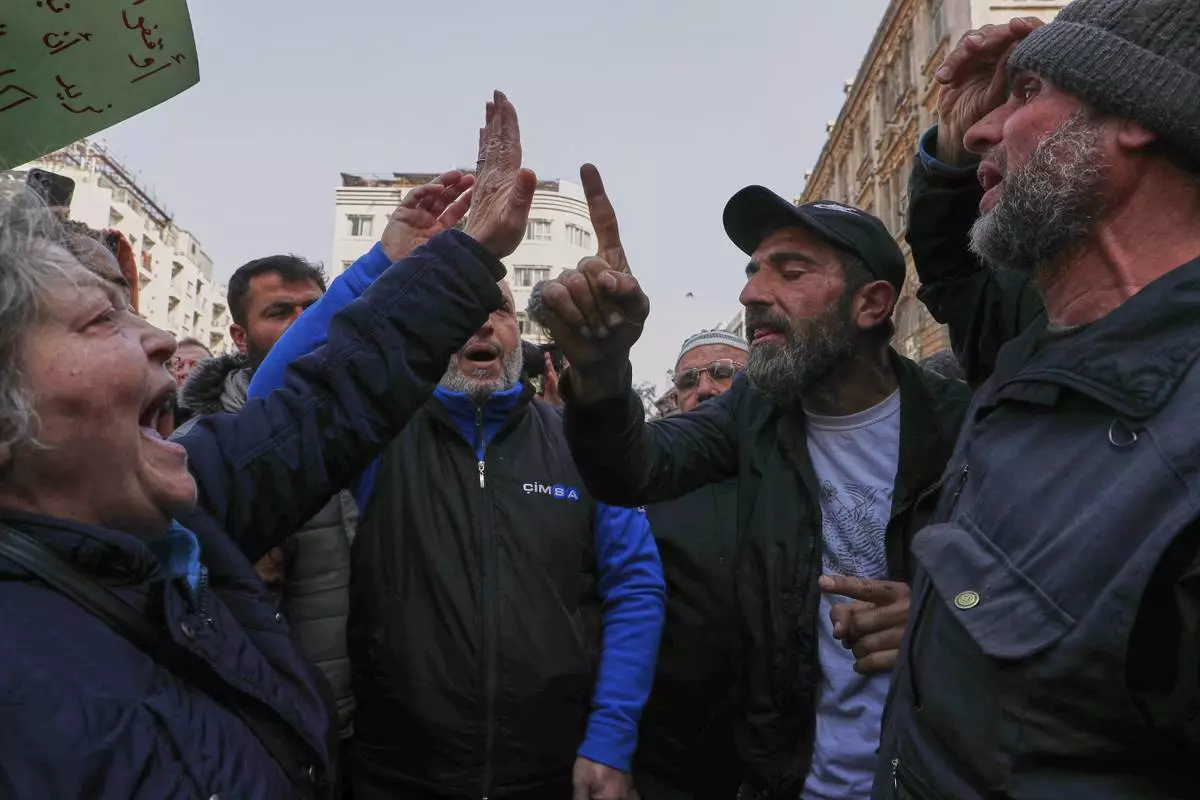
An activist woman protesting against the recent wave of violence and sectarian attacks in Syria's coastal region faces off against a man at Al Marjeh Square in Damascus, Syria, Sunday, March 9, 2025. (AP Photo/Omar Sanadiki)
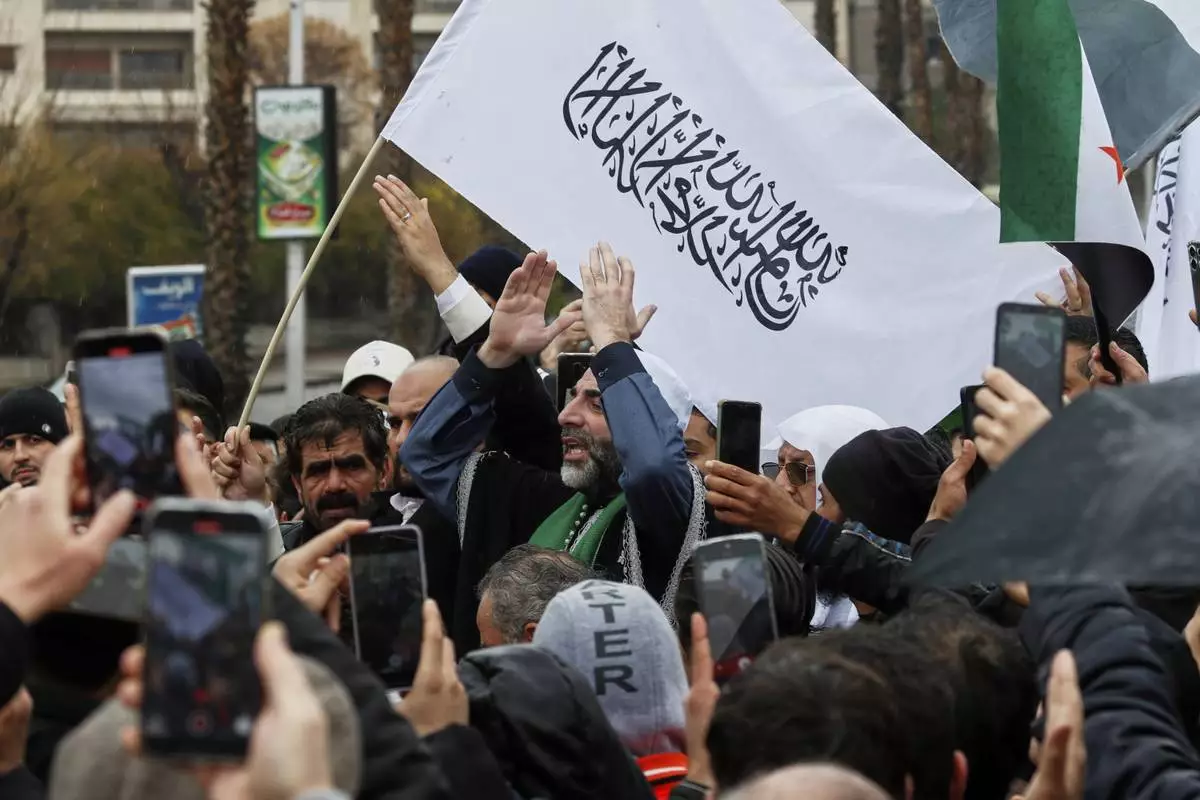
Supporters of Syria's new government gather after the prayer in Umayyad square in Damascus, Syria, Friday March 7, 2025.(AP Photo/Omar Sanadiki)
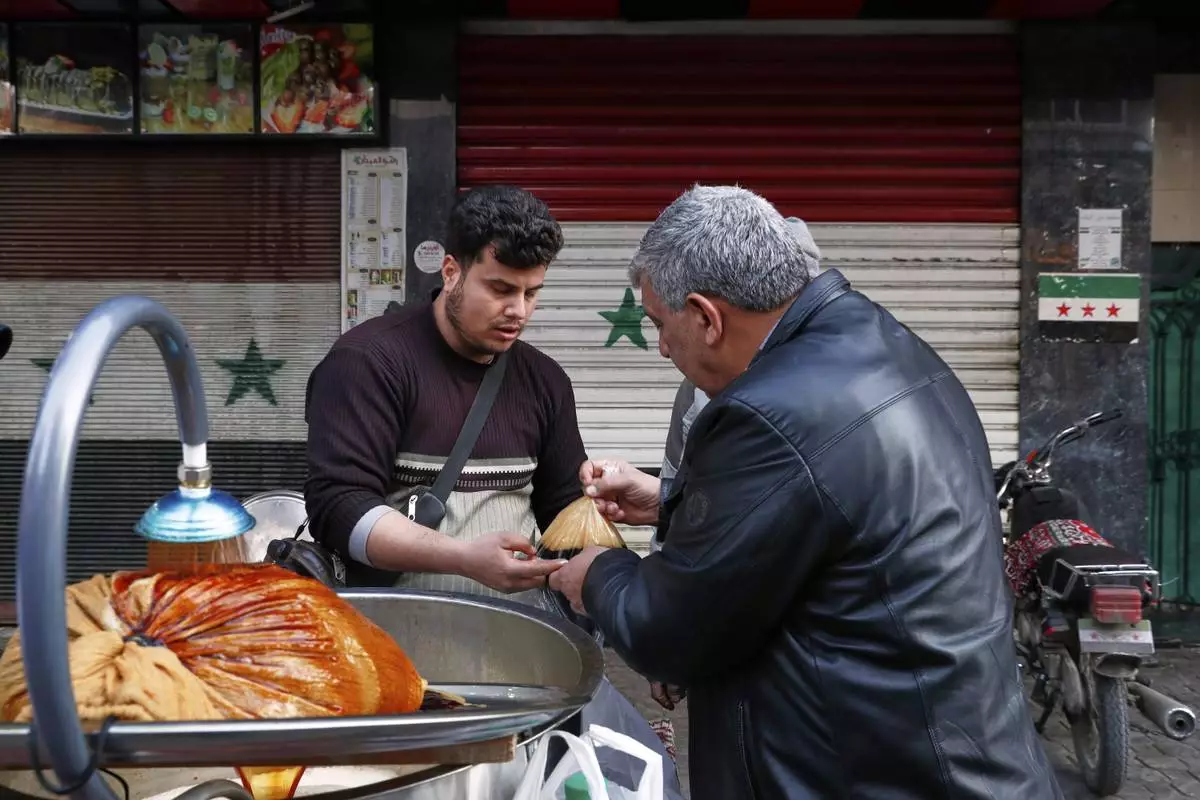
A man buys a traditional cold drink on the first day of Ramadan, the holy month for Muslims, in Damascus, Syria, Saturday March 1, 2025.(AP Photo/Omar Sanadiki)
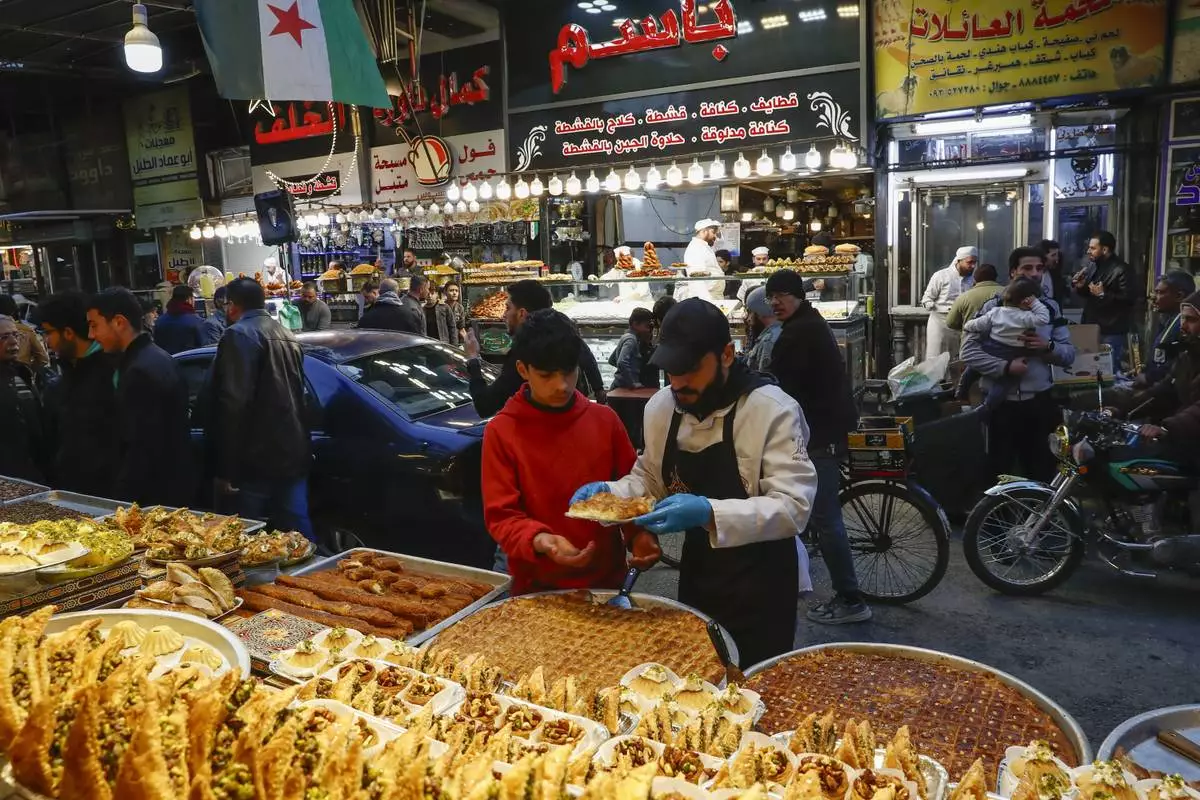
FILE.- A boy buys sweets on the first day of Ramadan, the holy month for Muslims, in Damascus, Syria, Saturday March 1, 2025.(AP Photo/Omar Sanadiki,File)
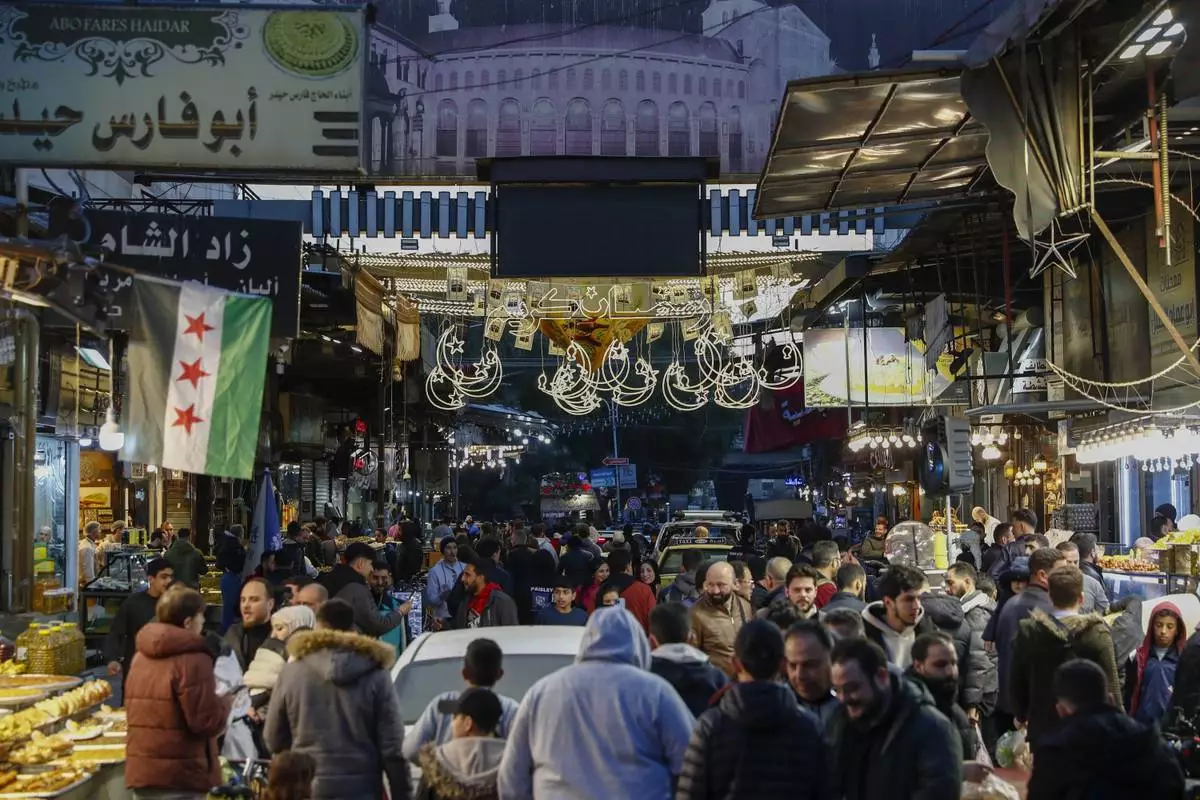
FILE.- Residents walk in the market on the first day of Ramadan, the holy month for Muslims, in Damascus, Syria, Saturday March 1, 2025.(AP Photo/Omar Sanadiki,File)
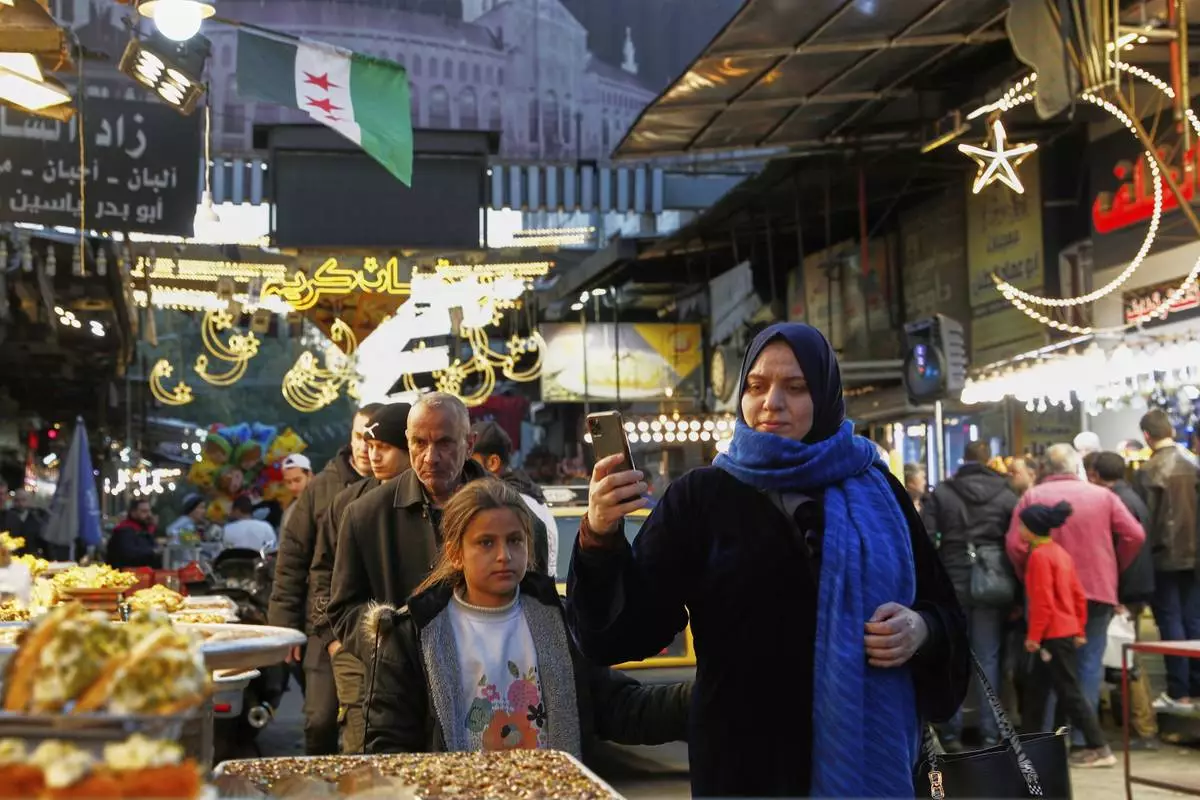
Syrians look for sweets to buy during Ramadan, the holy month for Muslims, in Damascus, Syria, Saturday, March 1, 2025.(AP Photo/Omar Sanadiki)
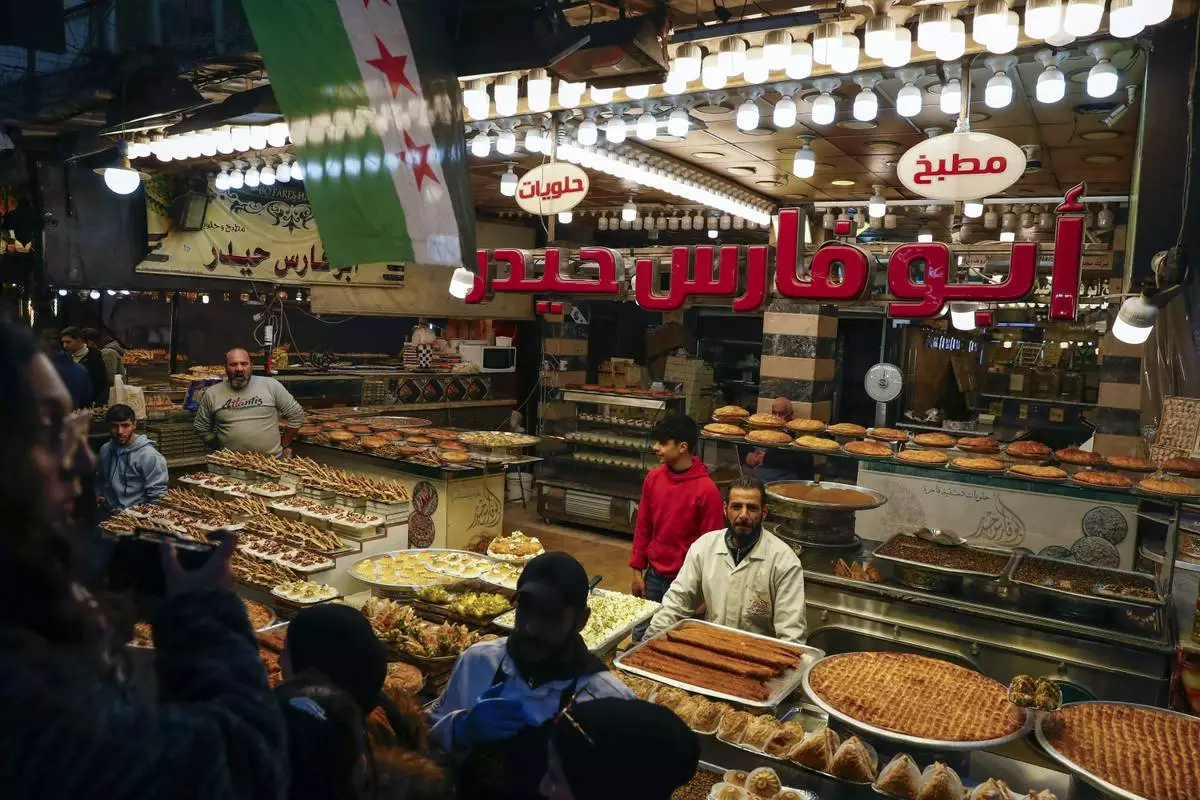
FILE.- Vendors display traditional sweets as residents shop on the first day of Ramadan, the Muslim holy month, in Damascus, Syria, Saturday March 1, 2025. (AP Photo/Omar Sanadiki,File)
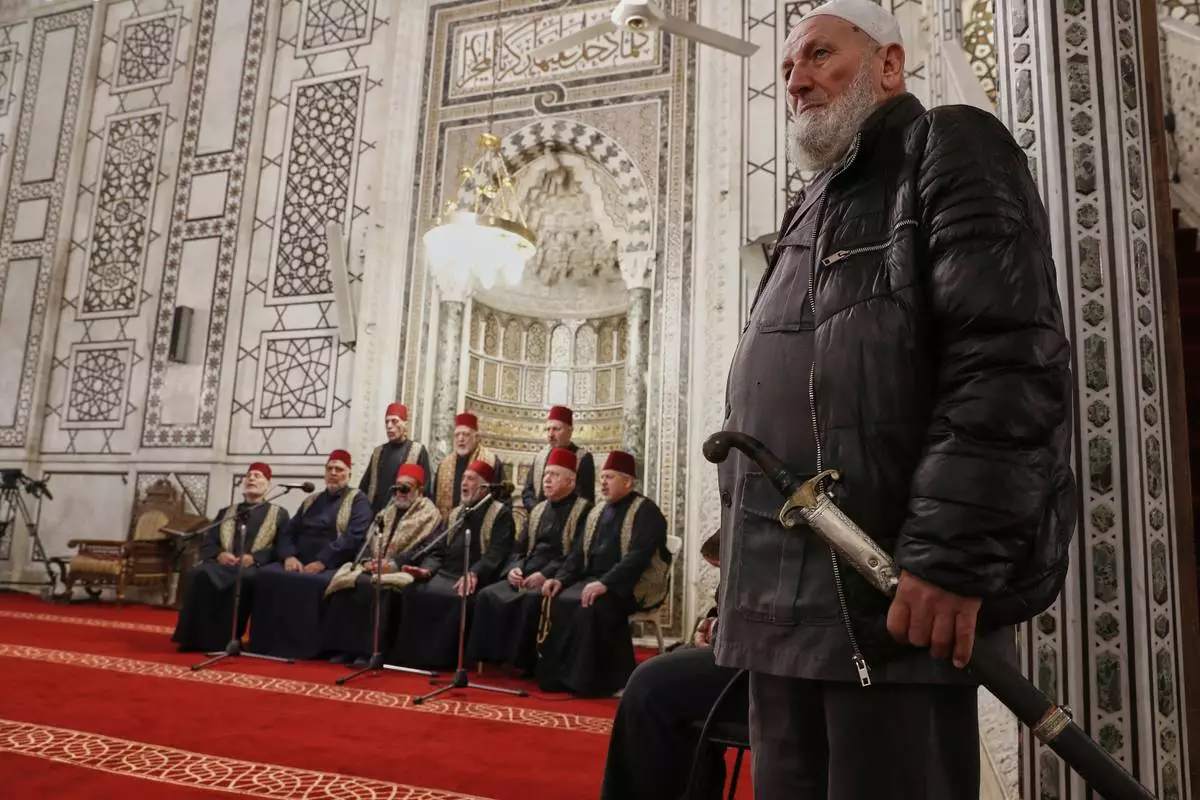
A man holds a traditional sword next to a group of sheikhs reading the Quran during the first Ramadan Friday prayer at the Umayyad mosque in Damascus, Friday, March 7, 2025.(AP Photo/Omar Sanadiki)
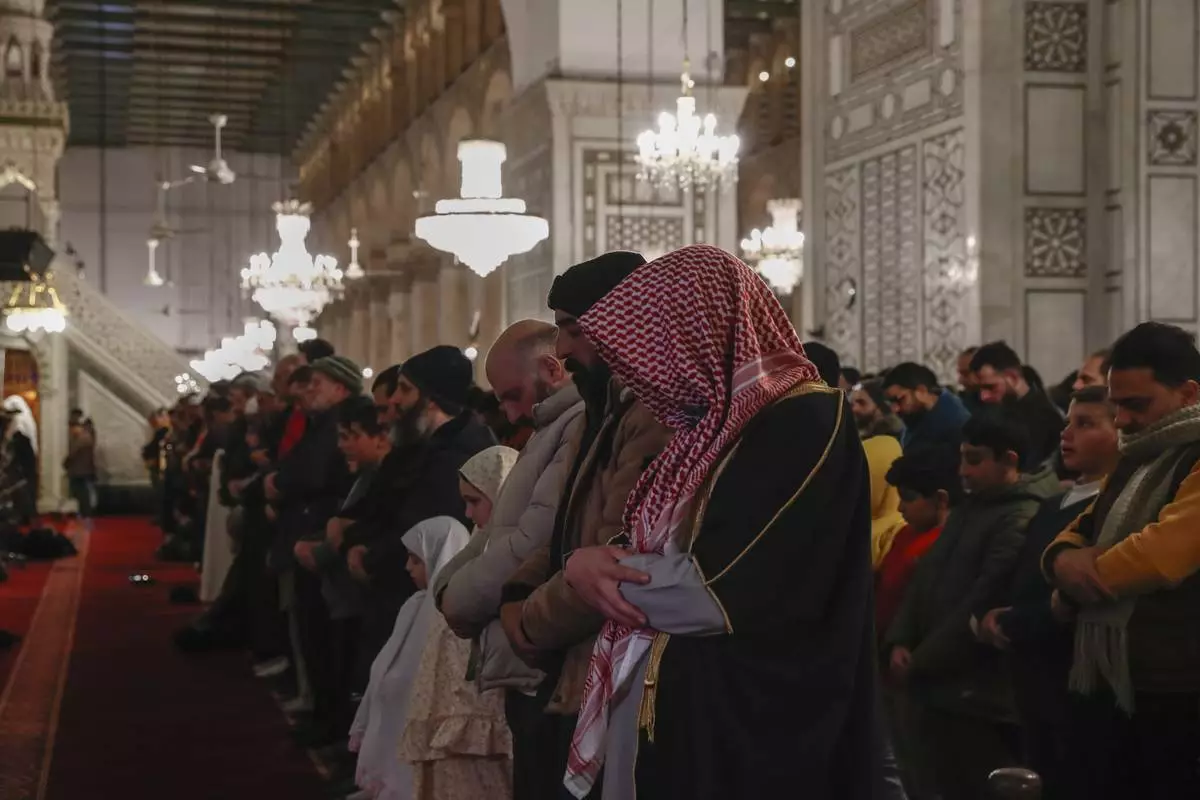
FILE.- Muslim worshippers pray on the first day of the Muslim holy month of Ramadan at the Umayyad Mosque in Damascus, Syria, Saturday March 1, 2025.(AP Photo/Omar Sanadiki,File)
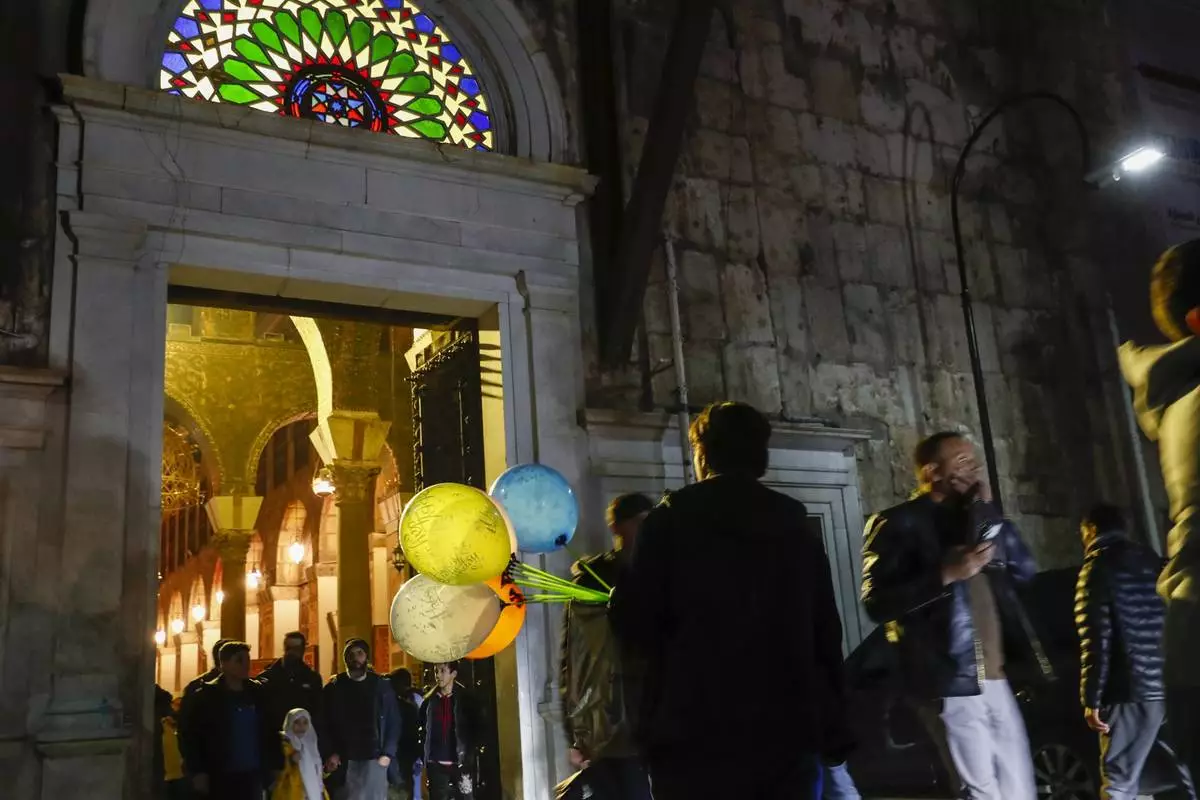
FILE.- Worshippers exit the Umayyad Mosque after prayers on the first day of the Muslim holy month of Ramadan in Damascus, Syria, Saturday March 1, 2025.(AP Photo/Omar Sanadiki,File)
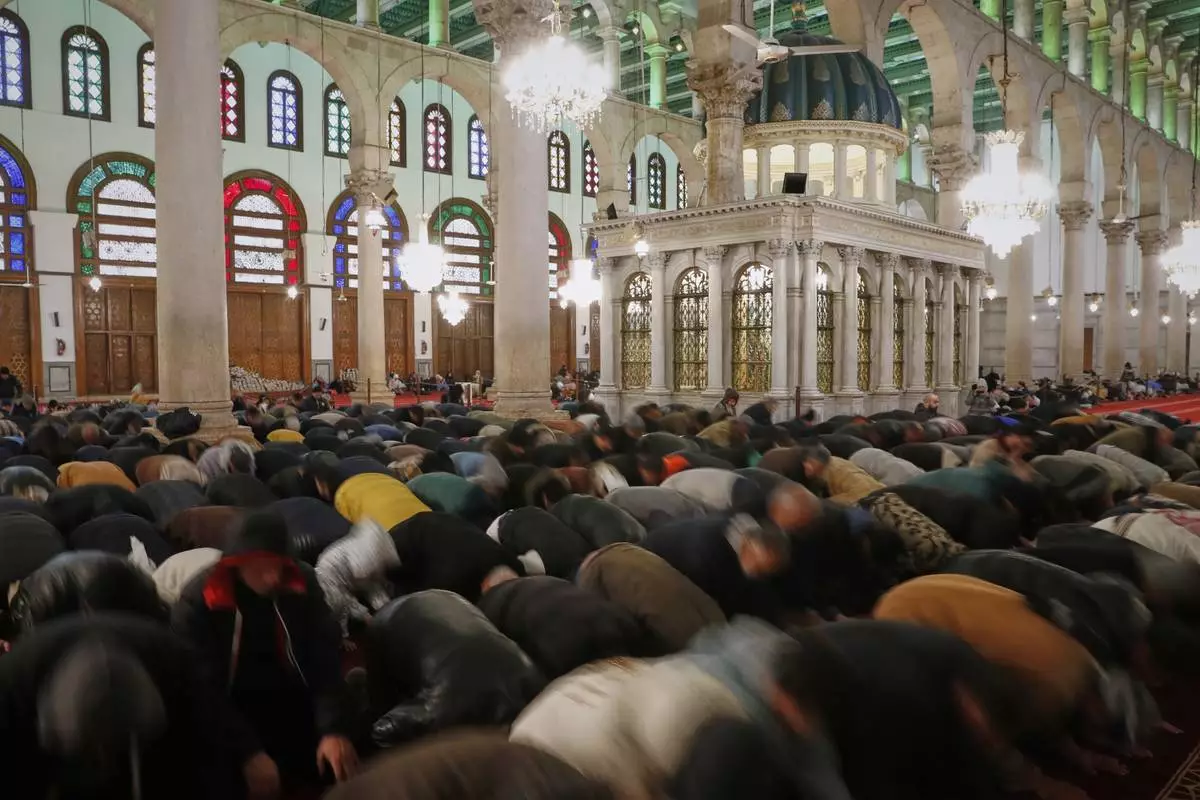
Muslim worshippers pray during the Muslim holy month of Ramadan at the Umayyad Mosque in Damascus, Syria, Friday March 7, 2025. (AP Photo/Omar Sanadiki)
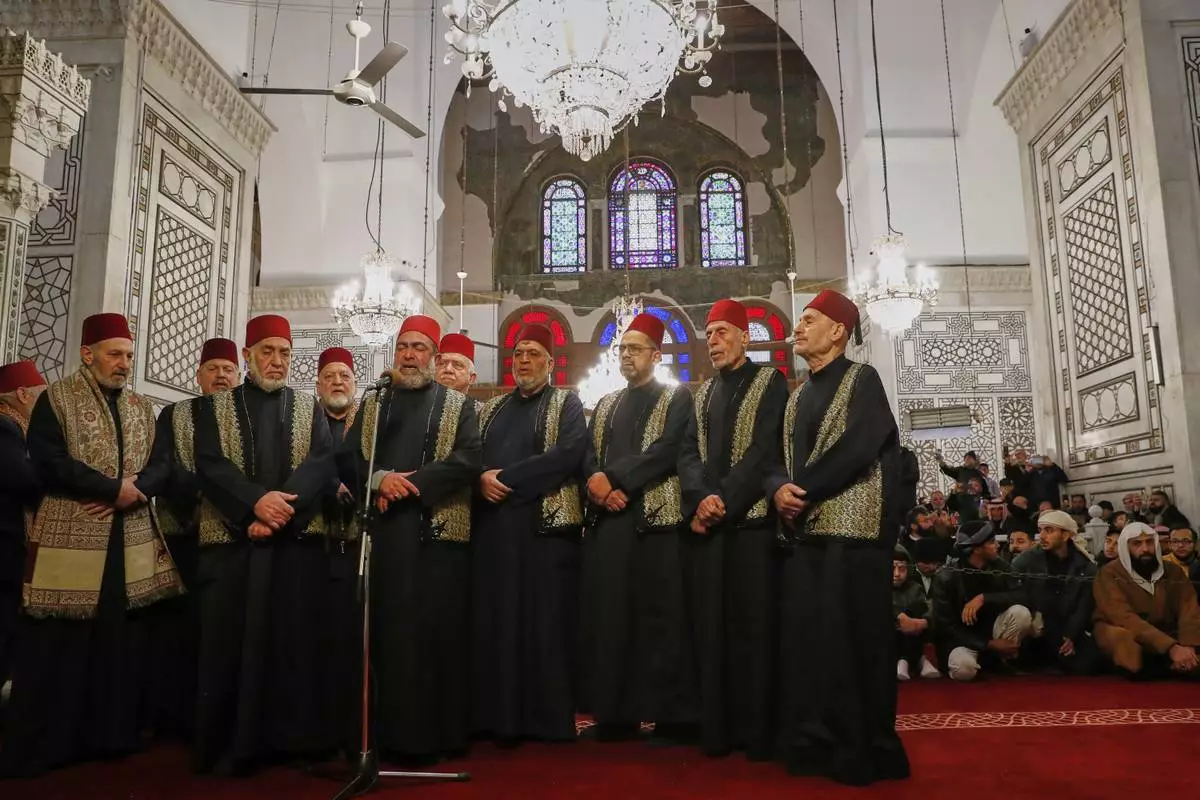
A group of sheikhs call for the prayer during the Muslim holy month of Ramadan at the Umayyad Mosque in Damascus, Syria, Friday March 7, 2025.(AP Photo/Omar Sanadiki)