LONDON--(BUSINESS WIRE)--Mar 25, 2025--
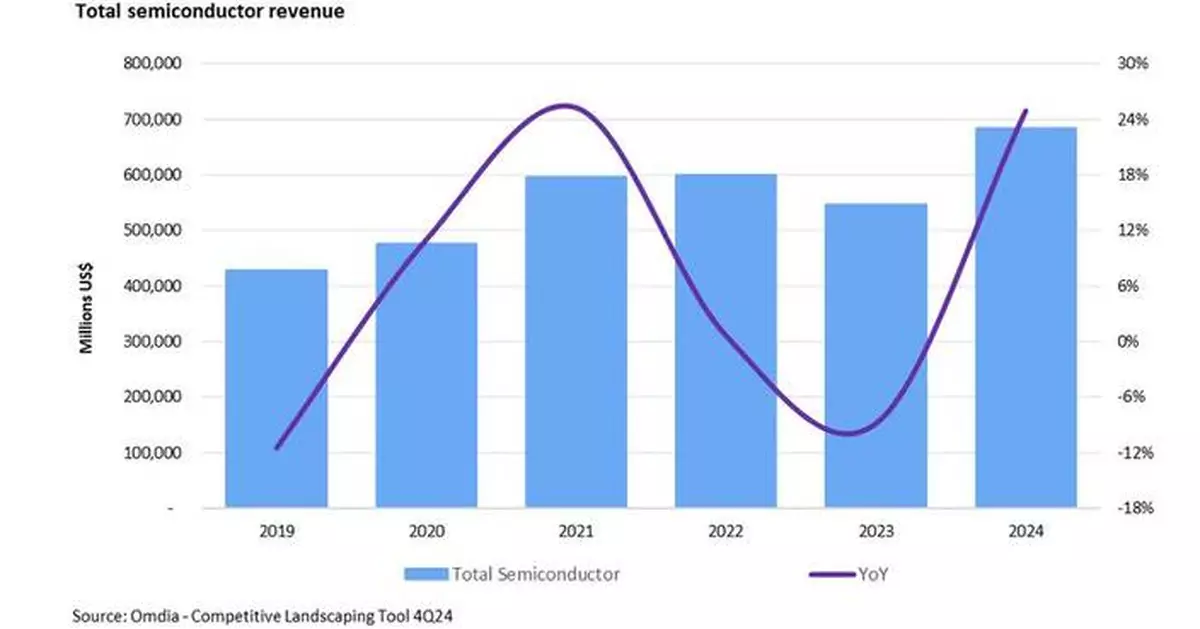
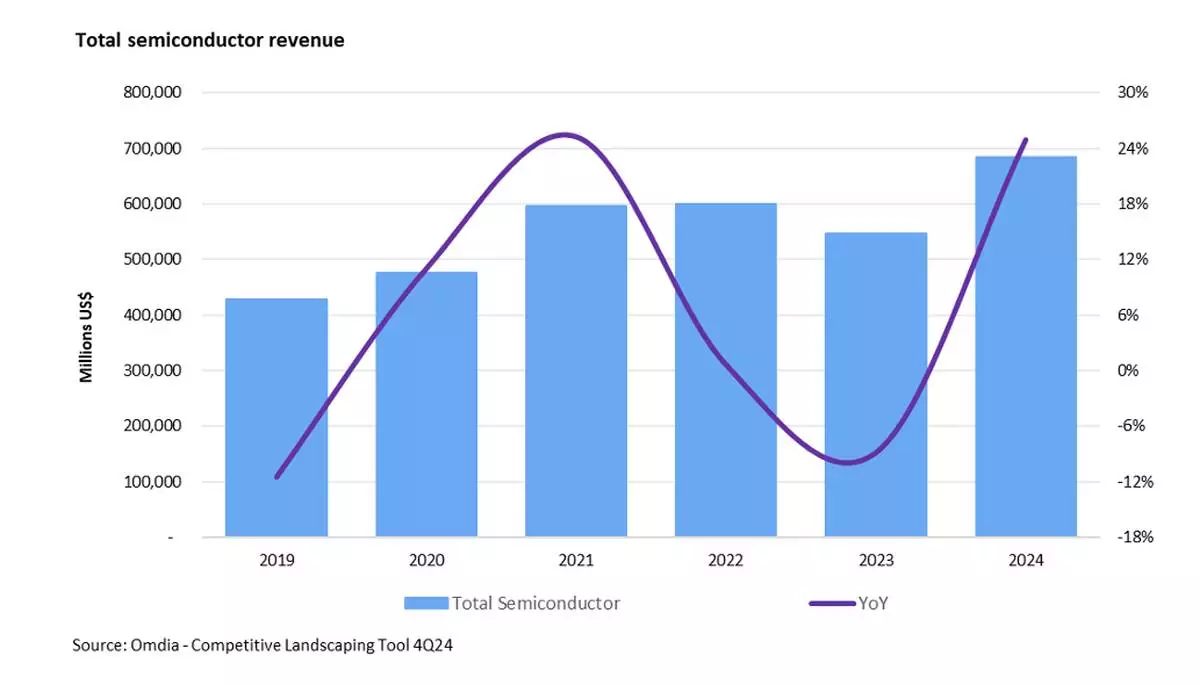
2024 marked a record-breaking year for the semiconductor market with annual revenue surging approximately 25% to $683 billion according to Omdia’s Competitive Landscaping Tool. The sharp rise was attributed to strong demand for AI-related chips, particularly high bandwidth memory (HBM), used in AI GPUs, which contributed to a 74% year-over-year growth in the memory segment. The rebound in memory helped lift the overall market after a challenging 2023.
This press release features multimedia. View the full release here: https://www.businesswire.com/news/home/20250325544613/en/
However, this record-setting year masked uneven performance across the industry. While the data processing segment experienced strong growth, other key segments - automotive, consumer, and industrial semiconductor – experienced revenue declines in 2024. These struggles highlight areas of weakness within an otherwise booming market.
AI and memory complete a strong 2024
Throughout 2024, AI’s influence on the semiconductor market has been a dominant force, driving record revenues and reshaping industry dynamics. NVIDIA emerged as the clear leader, climbing the market share rankings with strong revenue growth the last few years due to its AI GPUs. HBM, a critical component for AI applications surged alongside, significantly boosting revenues for memory companies. While HBM outpaced other DRAM segments in growth, an improved supply-demand balance contributed to higher average selling prices (ASPs) and revenue gains across the broader memory market.
Industrial segment faces a second consecutive year of decline
The downturn in the industrial semiconductor segment, which began in 2023, deepened in 2024, posing challenges for companies focused on this sector. “Historically, the industrial semiconductor market has grown approximately 6% each year, however, after two years of above-average growth in 2021 and 2022, semiconductor market revenue declined in double digits in 2024,” said Cliff Leimbach, Omdia Principal Analyst. “Diminished demand coupled with inventory adjustments made 2024 a difficult year for the industrial segment. Companies with a large presence in this segment saw their market share rankings slip as a result.”
Automotive market stalls
While the automotive semiconductor market performed better than the industrial sector, it also experienced a revenue decline in 2024. After nearly doubling in size from 2020 to 2023, far exceeding the historical average annual growth rate of 10%, the sector saw an abrupt slowdown. Weakening demand led to a contraction in 2024, disrupting the steady upward trajectory the market had enjoyed in recent years.
NVIDIA takes the top spot as market rankings shift
NVIDIA’s dominance in AI-driven GPUs pushed it to the top position in semiconductor companies by revenue, surpassing Samsung which held the number one position in 2023.
The strong memory market also reshaped the leaderboard with Samsung, SK Hynix, and Micron all ranking among the top seven largest semiconductor companies by revenue. Each of these companies climbed at least one spot from their 2023 rankings, marking a significant shift from the previous year when they were spread across the top eleven.
ABOUT OMDIA
Omdia, part of Informa TechTarget, Inc. (Nasdaq: TTGT), is a technology research and advisory group. Our deep knowledge of tech markets combined with our actionable insights empower organizations to make smart growth decisions.
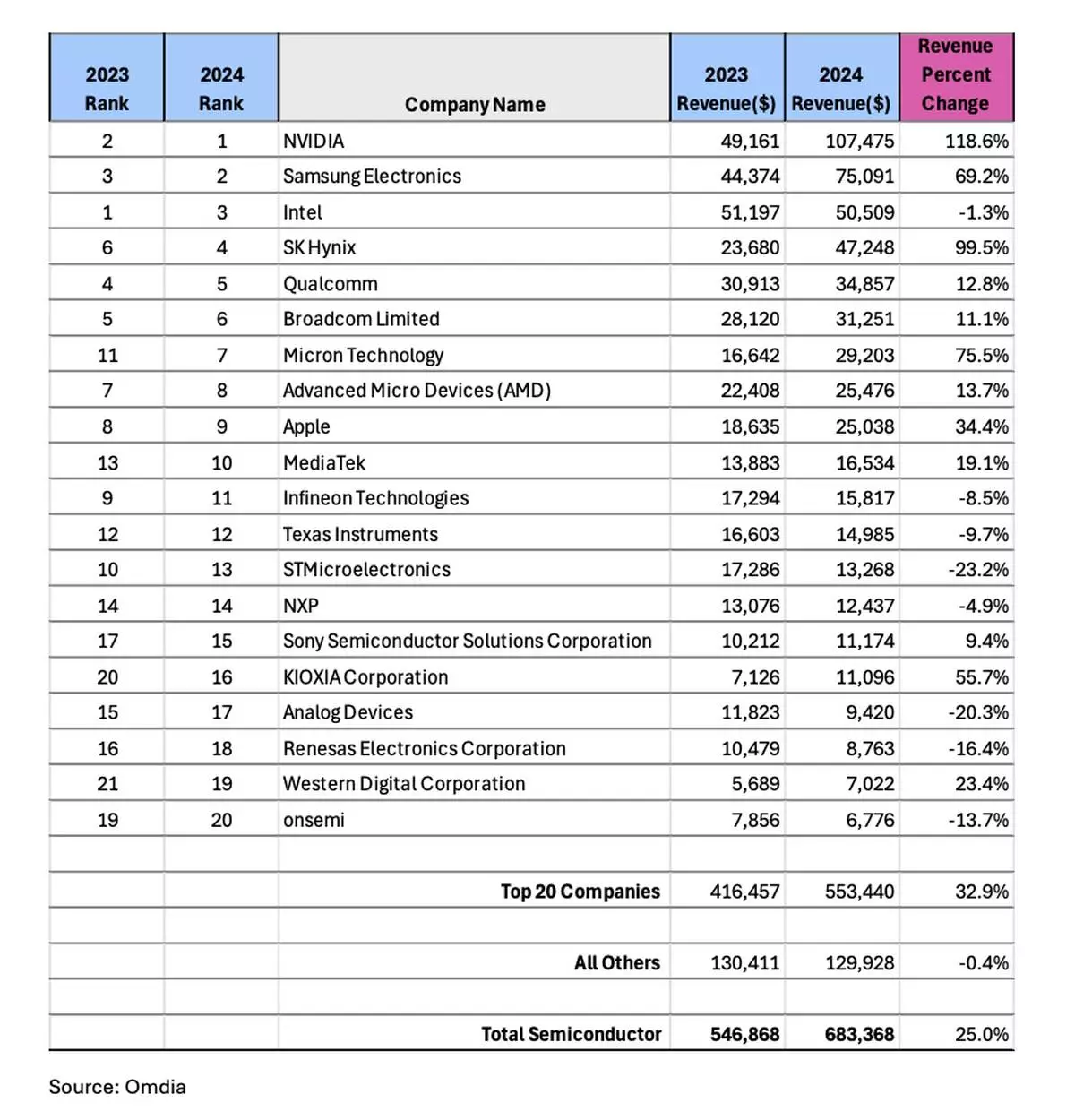
Semiconductor companies by revenue 2024 rankings
Total semiconductor revenue Omdia CLT 4Q24
ALEPPO, Syria (AP) — First responders on Sunday entered a contested neighborhood in Syria’ s northern city of Aleppo after days of deadly clashes between government forces and Kurdish-led forces. Syrian state media said the military was deployed in large numbers.
The clashes broke out Tuesday in the predominantly Kurdish neighborhoods of Sheikh Maqsoud, Achrafieh and Bani Zaid after the government and the Syrian Democratic Forces, the main Kurdish-led force in the country, failed to make progress on how to merge the SDF into the national army. Security forces captured Achrafieh and Bani Zaid.
The fighting between the two sides was the most intense since the fall of then-President Bashar Assad to insurgents in December 2024. At least 23 people were killed in five days of clashes and more than 140,000 were displaced amid shelling and drone strikes.
The U.S.-backed SDF, which have played a key role in combating the Islamic State group in large swaths of eastern Syria, are the largest force yet to be absorbed into Syria's national army. Some of the factions that make up the army, however, were previously Turkish-backed insurgent groups that have a long history of clashing with Kurdish forces.
The Kurdish fighters have now evacuated from the Sheikh Maqsoud neighborhood to northeastern Syria, which is under the control of the SDF. However, they said in a statement they will continue to fight now that the wounded and civilians have been evacuated, in what they called a “partial ceasefire.”
The neighborhood appeared calm Sunday. The United Nations said it was trying to dispatch more convoys to the neighborhoods with food, fuel, blankets and other urgent supplies.
Government security forces brought journalists to tour the devastated area, showing them the damaged Khalid al-Fajer Hospital and a military position belonging to the SDF’s security forces that government forces had targeted.
The SDF statement accused the government of targeting the hospital “dozens of times” before patients were evacuated. Damascus accused the Kurdish-led group of using the hospital and other civilian facilities as military positions.
On one street, Syrian Red Crescent first responders spoke to a resident surrounded by charred cars and badly damaged residential buildings.
Some residents told The Associated Press that SDF forces did not allow their cars through checkpoints to leave.
“We lived a night of horror. I still cannot believe that I am right here standing on my own two feet,” said Ahmad Shaikho. “So far the situation has been calm. There hasn’t been any gunfire.”
Syrian Civil Defense first responders have been disarming improvised mines that they say were left by the Kurdish forces as booby traps.
Residents who fled are not being allowed back into the neighborhood until all the mines are cleared. Some were reminded of the displacement during Syria’s long civil war.
“I want to go back to my home, I beg you,” said Hoda Alnasiri.
Associated Press journalist Kareem Chehayeb in Beirut contributed to this report.
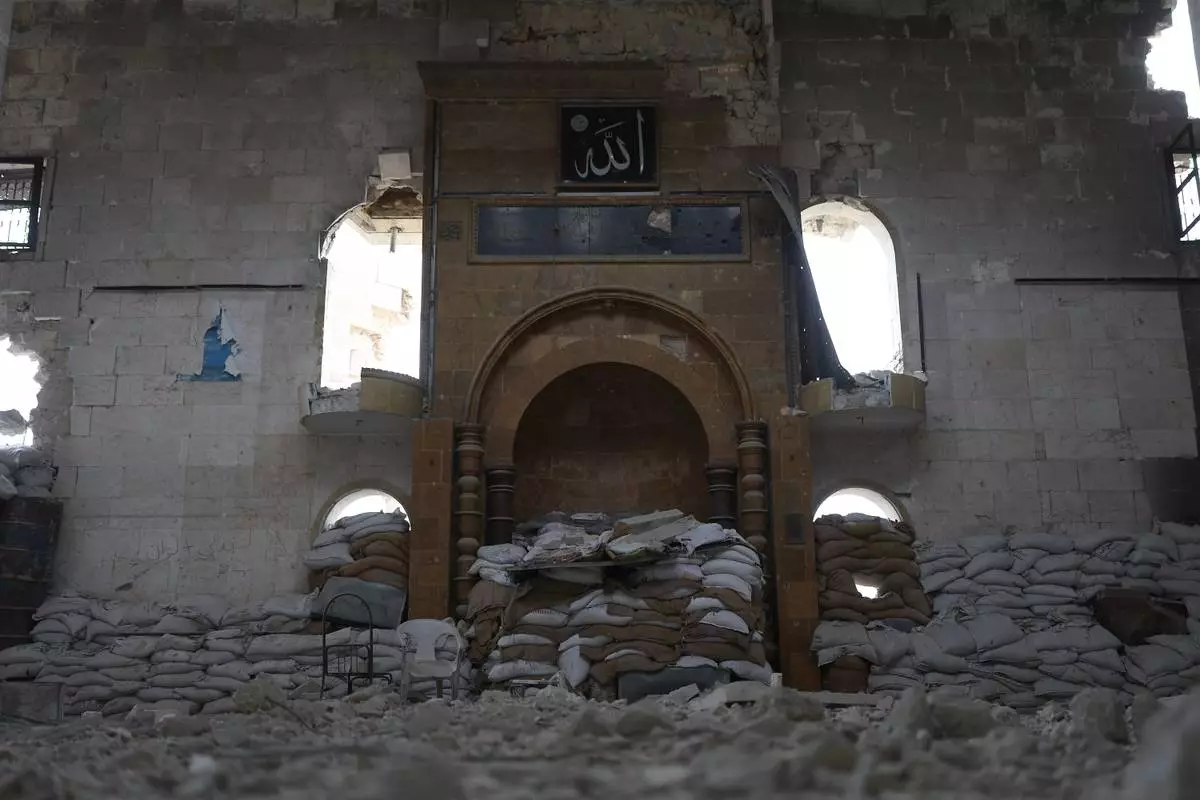
Sandbag barriers used as fighting positions by Kurdish fighters, left inside a destroyed mosque in the Sheikh Maqsoud neighborhood, where clashes between government forces and Kurdish fighters have been taking place in the northern city of Aleppo, Syria, Sunday, Jan. 11, 2026. (AP Photo/Ghaith Alsayed)

Burned vehicles at one of the Kurdish fighters positions at the Sheikh Maqsoud neighborhood, where clashes between government forces and Kurdish fighters have been taking place in the northern city of Aleppo, Syria, Sunday, Jan. 11, 2026. (AP Photo/Ghaith Alsayed)
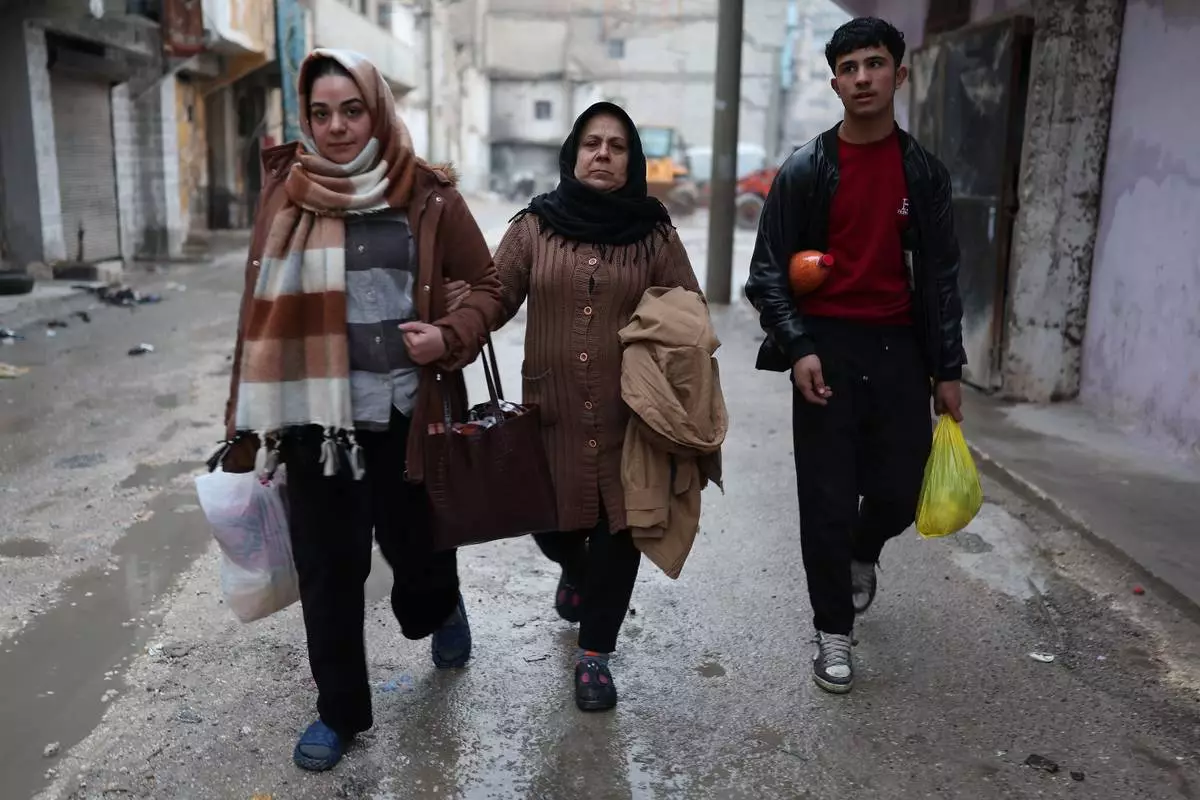
People flee the Sheikh Maqsoud neighborhood, where clashes between government forces and Kurdish fighters have been taking place in the northern city of Aleppo, Syria, Sunday, Jan. 11, 2026. (AP Photo/Ghaith Alsayed)

A Syrian military police convoy enters the Sheikh Maqsoud neighborhood, where clashes between government forces and Kurdish fighters have been taking place in the northern city of Aleppo, Syria, Sunday, Jan. 11, 2026. (AP Photo/Ghaith Alsayed)
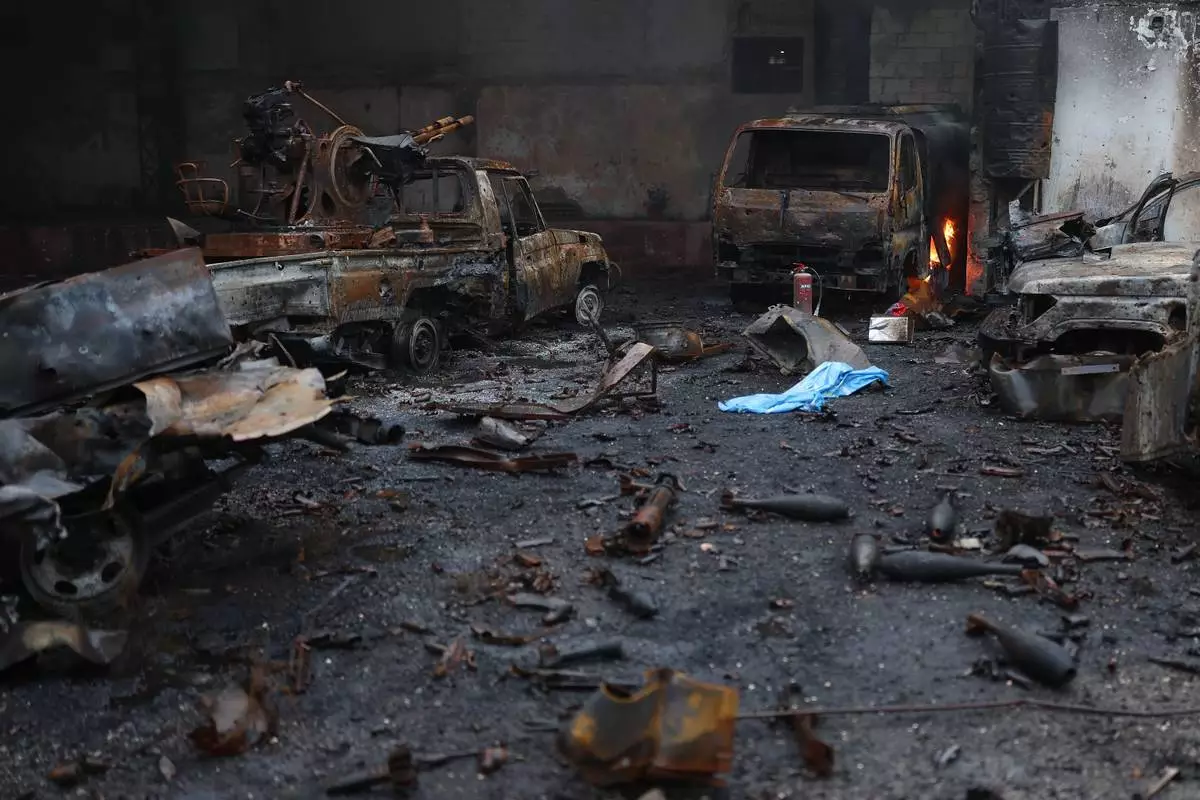
Burned vehicles and ammunitions left at one of the Kurdish fighters positions at the Sheikh Maqsoud neighborhood, where clashes between government forces and Kurdish fighters have been taking place in the northern city of Aleppo, Syria, Sunday, Jan. 11, 2026. (AP Photo/Ghaith Alsayed)