Skip to Content Facebook Feature Image

After Lahaina fire, Hawaii residents address their risk by becoming 'Firewise'

Business

After Lahaina fire, Hawaii residents address their risk by becoming 'Firewise'
Business

Business

After Lahaina fire, Hawaii residents address their risk by becoming 'Firewise'

2025-03-25 20:12 Last Updated At:20:31

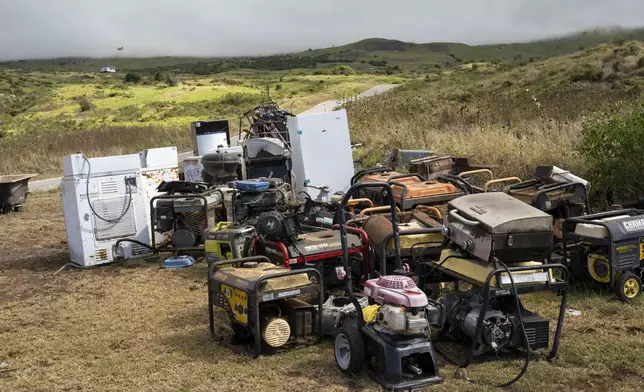
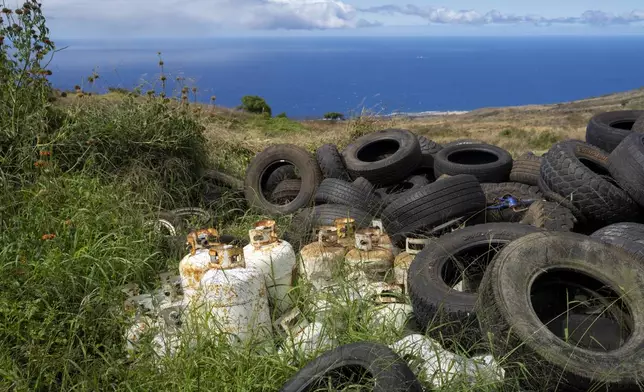
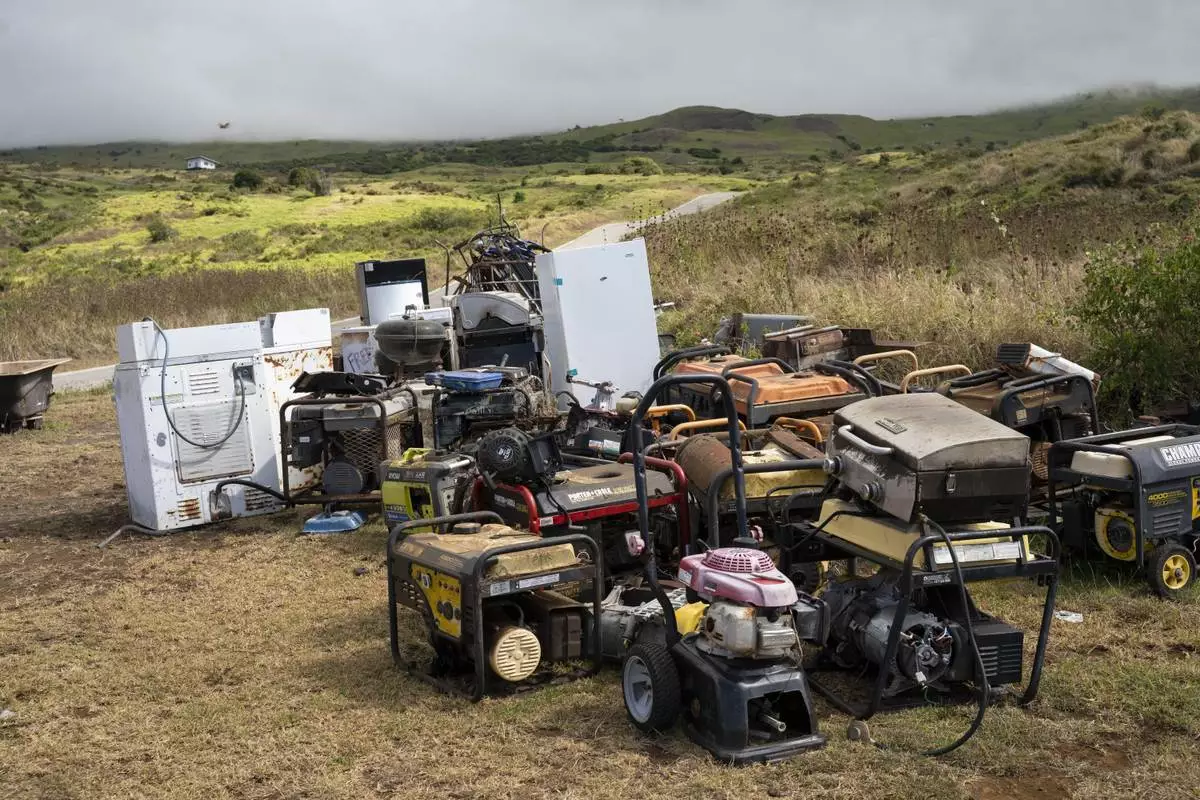
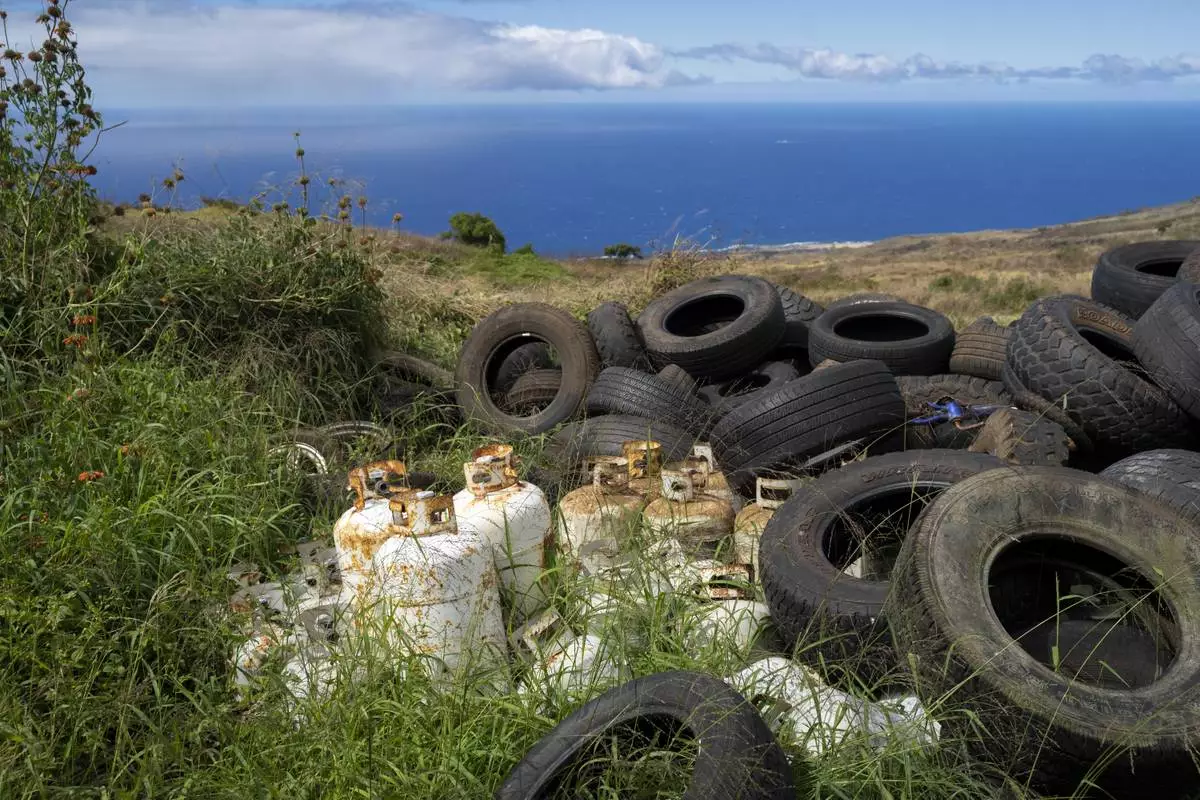
KULA, Hawaii (AP) — The car tires, propane tanks, gas generators and rusty appliances heaped on the side of a dirt road waiting to be hauled away filled Desiree Graham with relief.

“That means all that stuff is not in people’s yards," she said on a blustery July day in Kahikinui, a remote Native Hawaiian homestead community in southeast Maui where wildfire is a top concern.

More Images
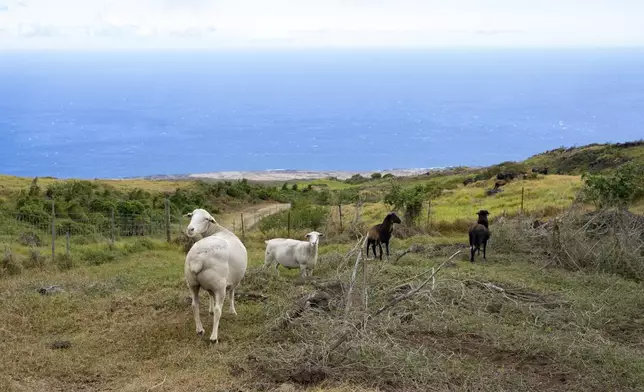
Sheep graze at Kahikinui Homestead on Sunday, July 7, 2024, in Kahikinui, Hawaii. (AP Photo/Mengshin Lin)
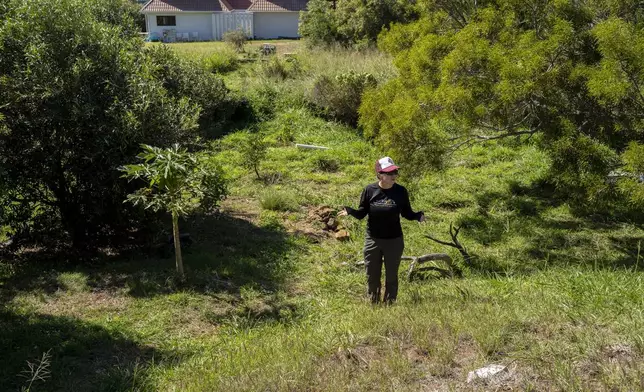
Sheep graze at Kahikinui Homestead on Sunday, July 7, 2024, in Kahikinui, Hawaii. (AP Photo/Mengshin Lin)

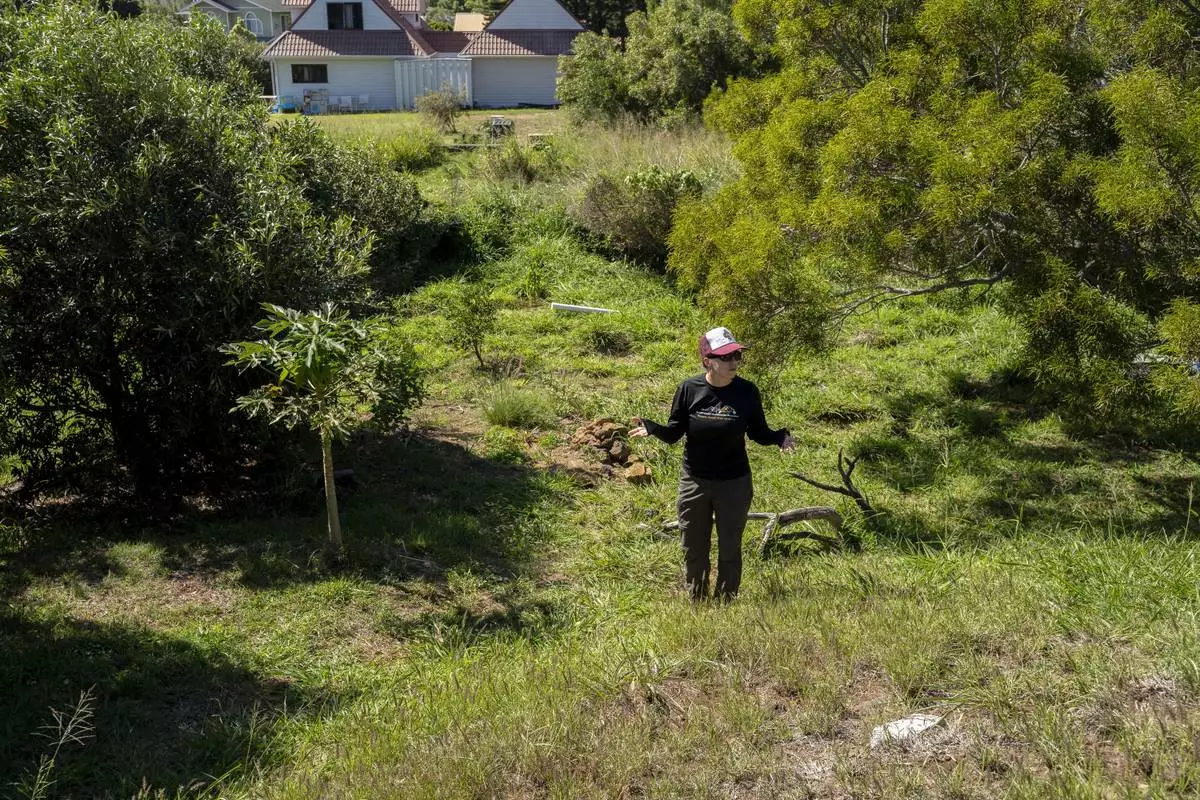
Harriet Parsons, a firewise community support specialist for the Hawaii Wildfire Management Organization, points to the drylands behind a house in her community, Tuesday, Feb. 25, 2025, in Kamuela, Hawaii. (AP Photo/Mengshin Lin)
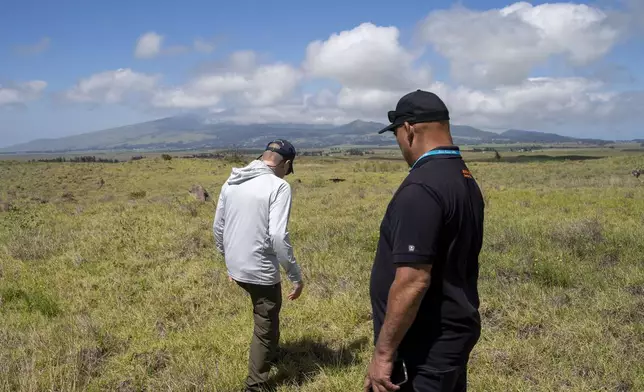
Harriet Parsons, a firewise community support specialist for the Hawaii Wildfire Management Organization, points to the drylands behind a house in her community, Tuesday, Feb. 25, 2025, in Kamuela, Hawaii. (AP Photo/Mengshin Lin)

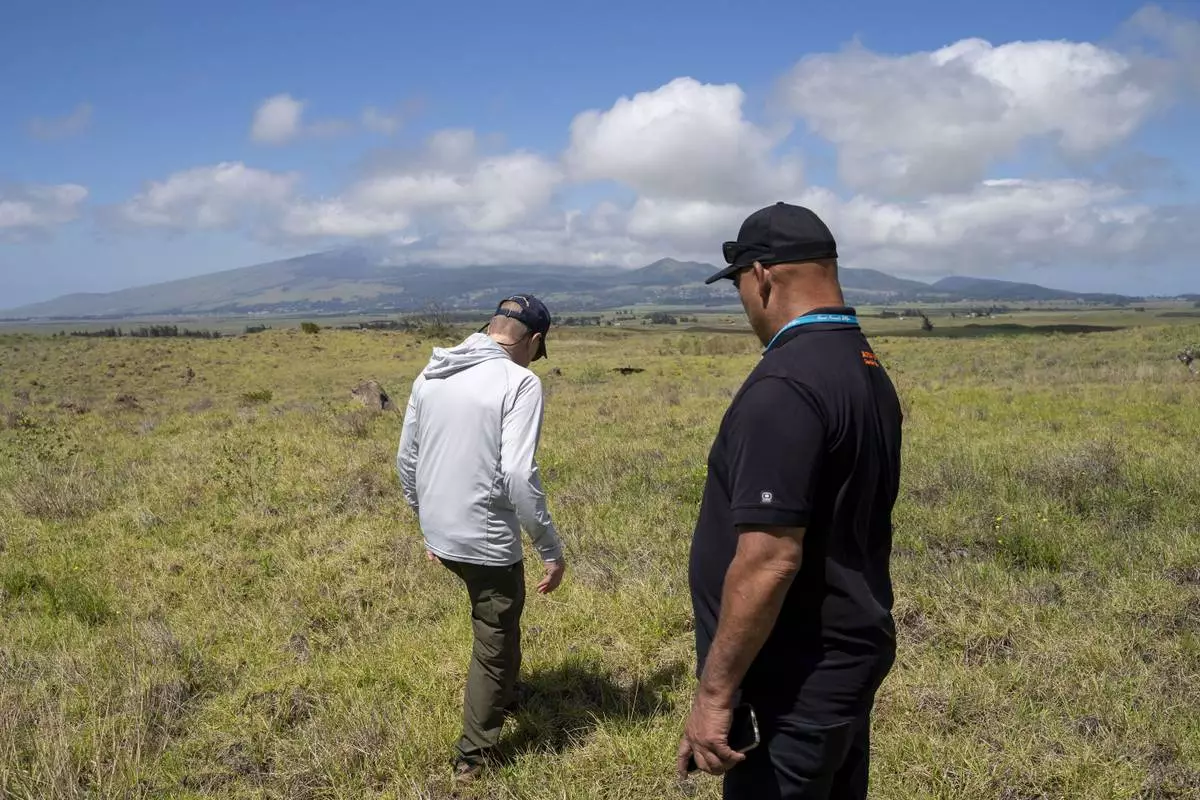
Dr. Jack Cohen, a former fire research scientist for the U.S. Forest Service, assesses the condition of the grass with Mike Mundon, Tuesday, Feb. 25, 2025, in Pu'ukapu Homesteads, Hawaii. (AP Photo/Mengshin Lin)
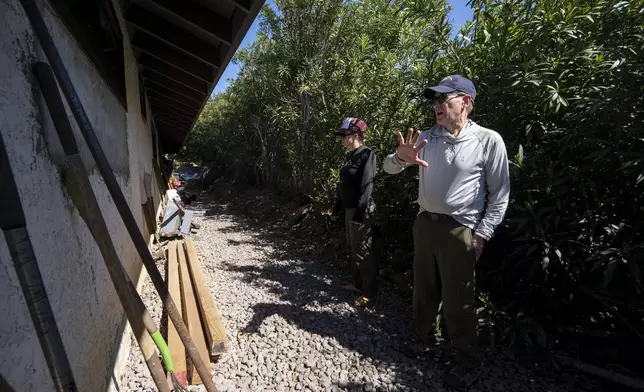
Dr. Jack Cohen, a former fire research scientist for the U.S. Forest Service, assesses the condition of the grass with Mike Mundon, Tuesday, Feb. 25, 2025, in Pu'ukapu Homesteads, Hawaii. (AP Photo/Mengshin Lin)

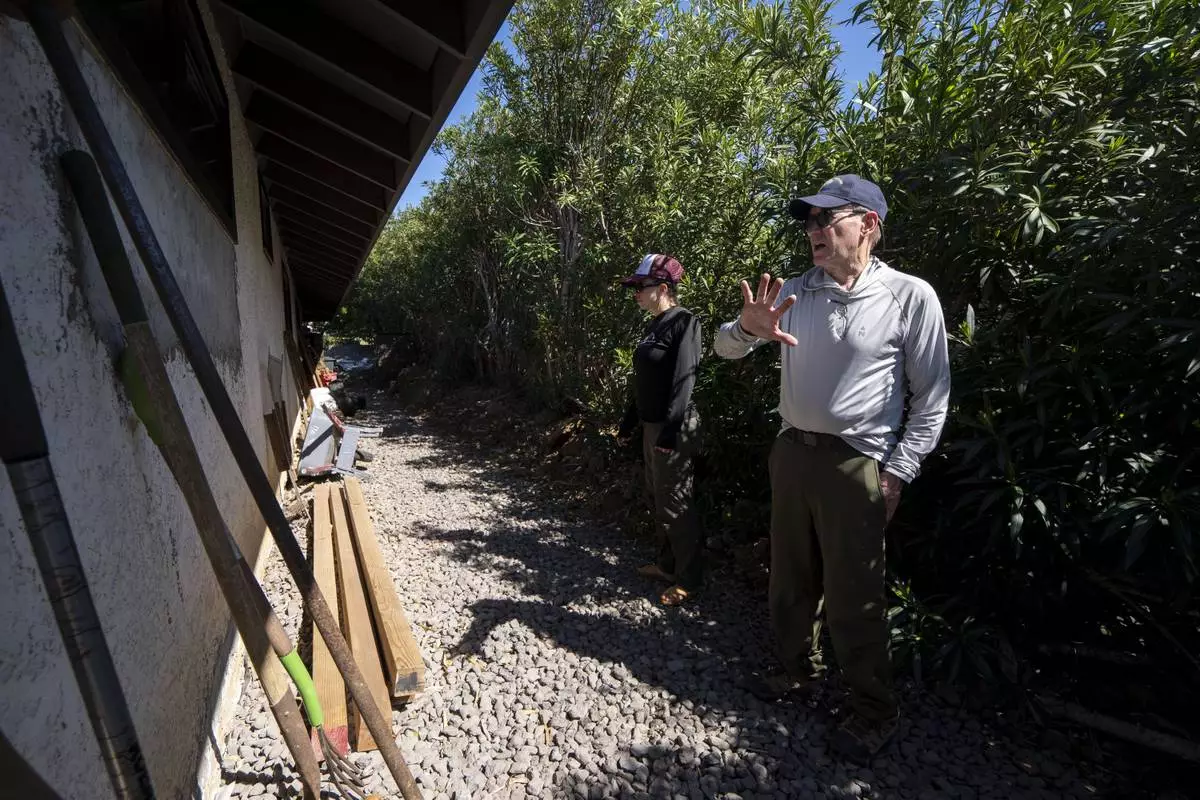
Dr. Jack Cohen, a former fire research scientist for the U.S. Forest Service, right, asseses the exterior condition of a house, Tuesday, Feb. 25, 2025, in Kamuela, Hawaii. (AP Photo/Mengshin Lin)
Dr. Jack Cohen, a former fire research scientist for the U.S. Forest Service, right, asseses the exterior condition of a house, Tuesday, Feb. 25, 2025, in Kamuela, Hawaii. (AP Photo/Mengshin Lin)

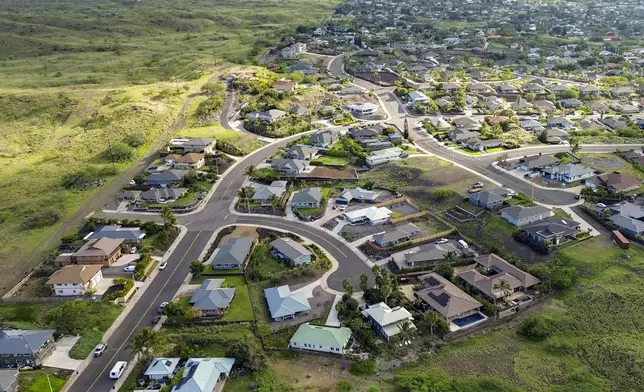
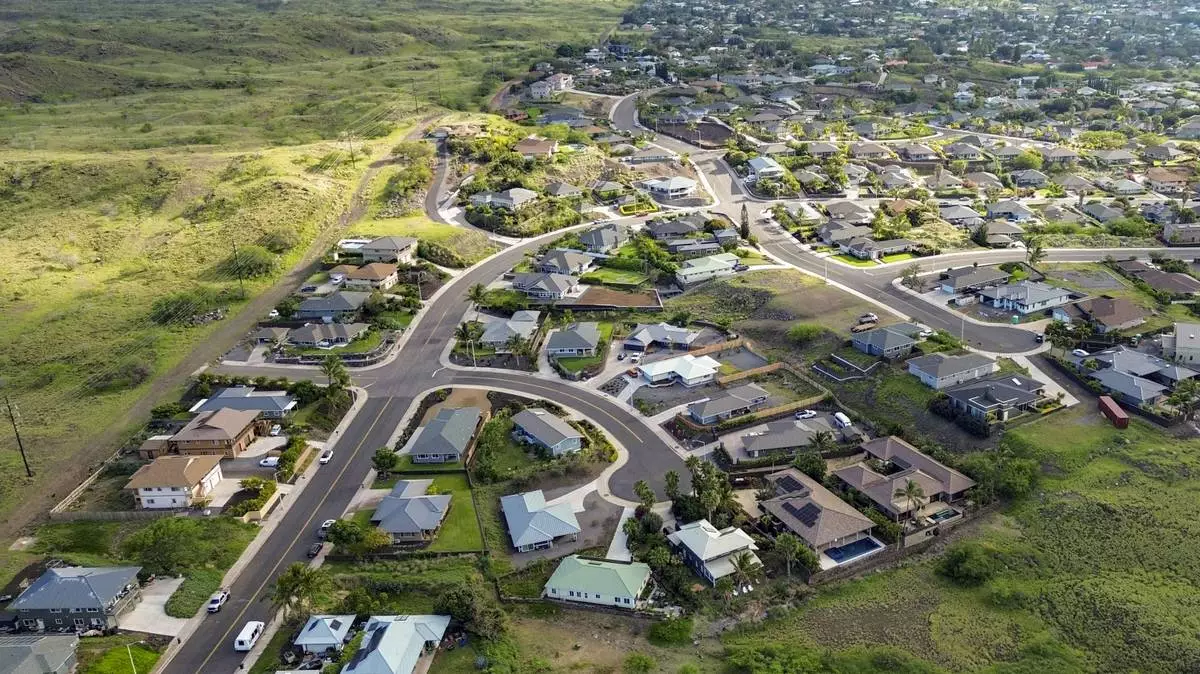
An aerial view shows the landscape of Waikoloa Village, Tuesday, Feb. 25, 2025, in Hawaii. (AP Photo/Mengshin Lin)
An aerial view shows the landscape of Waikoloa Village, Tuesday, Feb. 25, 2025, in Hawaii. (AP Photo/Mengshin Lin)

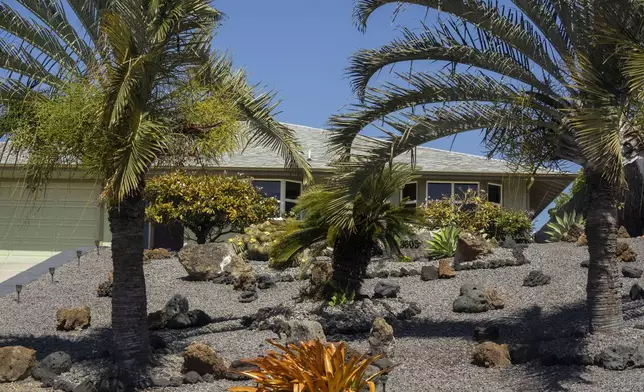
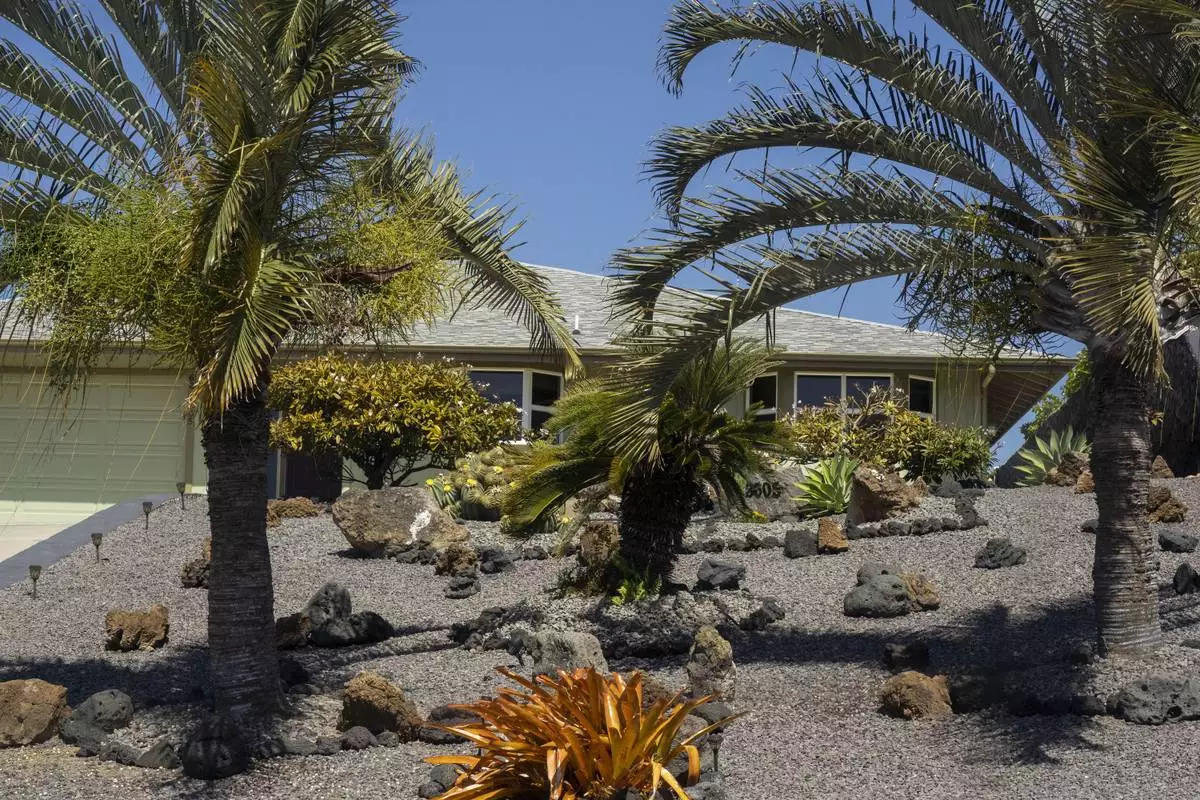
Palm trees stand in front of a house in Waikoloa Village, Hawaii, Tuesday, Feb. 25, 2025. (AP Photo/Mengshin Lin)
Palm trees stand in front of a house in Waikoloa Village, Hawaii, Tuesday, Feb. 25, 2025. (AP Photo/Mengshin Lin)

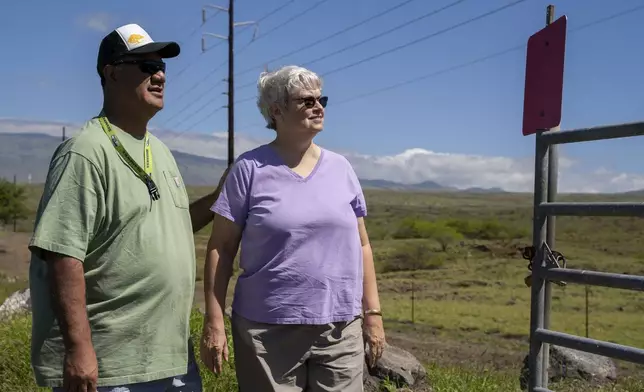
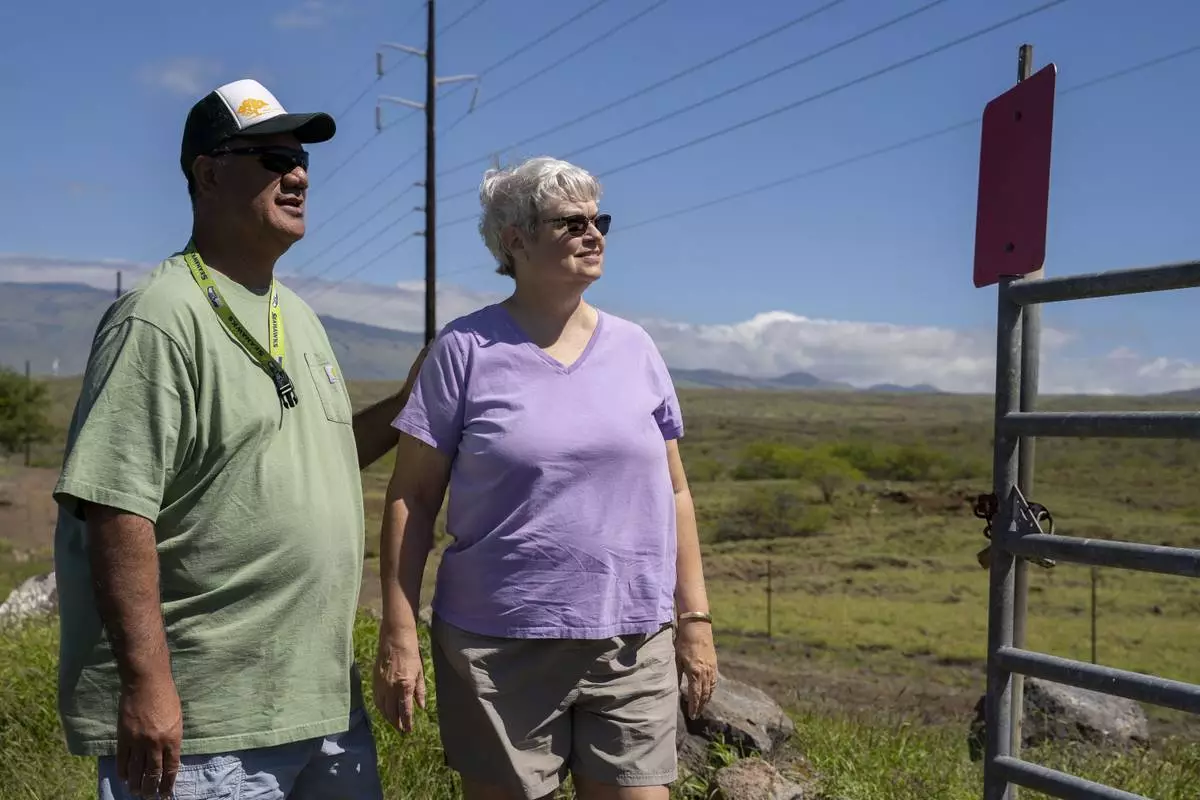
Dana Aina, a firewise community support specialist for the Hawaii Wildfire Management Organization, left, poses for a portrait with his wife, Shelly, an NFPA-trained wildfire home assessor, Tuesday, Feb. 25, 2025, in Waikoloa Village, Hawaii. (AP Photo/Mengshin Lin)
Dana Aina, a firewise community support specialist for the Hawaii Wildfire Management Organization, left, poses for a portrait with his wife, Shelly, an NFPA-trained wildfire home assessor, Tuesday, Feb. 25, 2025, in Waikoloa Village, Hawaii. (AP Photo/Mengshin Lin)

Unused refrigerators and generators are temporarily stored at Kahikinui homestead on Sunday, July 7, 2024, in Kahikinui, Hawaii. Residents were asked to remove unused items to reduce fire risks. (AP Photo/Mengshin Lin)
Unused refrigerators and generators are temporarily stored at Kahikinui homestead on Sunday, July 7, 2024, in Kahikinui, Hawaii. Residents were asked to remove unused items to reduce fire risks. (AP Photo/Mengshin Lin)

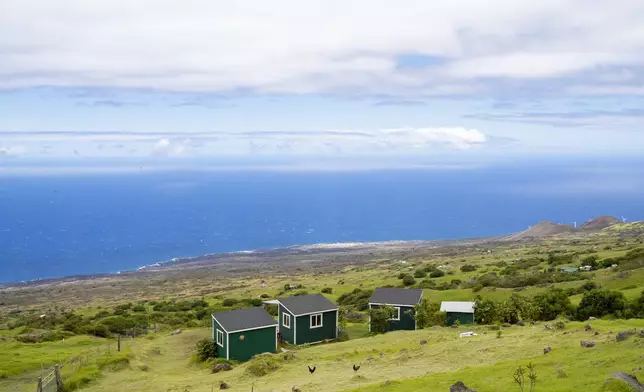
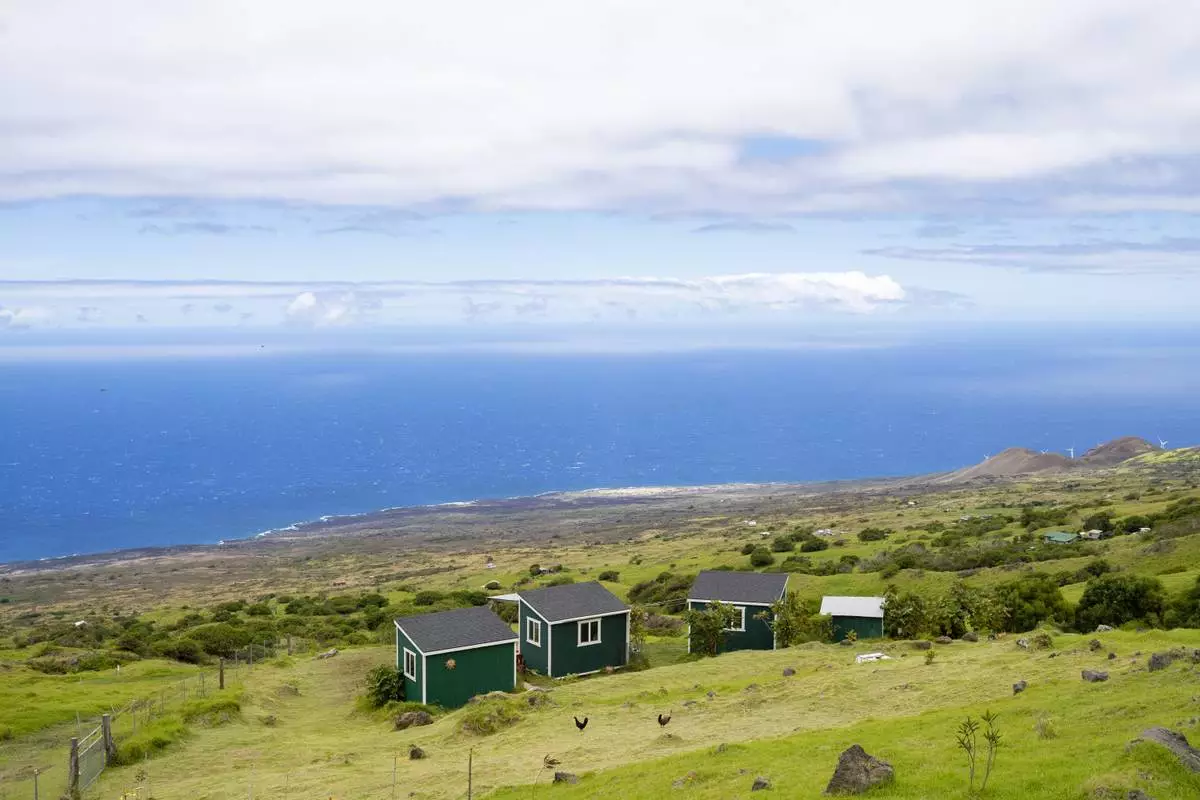
Homes in Kahikinui homestead spread across the southern slope of Kahikinui are pictured on Sunday, July 7, 2024, in Kula, Hawaii. (AP Photo/Mengshin Lin)
Homes in Kahikinui homestead spread across the southern slope of Kahikinui are pictured on Sunday, July 7, 2024, in Kula, Hawaii. (AP Photo/Mengshin Lin)

Propane tanks and discarded tires are temporarily stored at Kahikinui homestead on Sunday, July 7, 2024, in Kahikinui, Hawaii. Residents were asked to remove unused items to reduce fire risks. (AP Photo/Mengshin Lin)
Propane tanks and discarded tires are temporarily stored at Kahikinui homestead on Sunday, July 7, 2024, in Kahikinui, Hawaii. Residents were asked to remove unused items to reduce fire risks. (AP Photo/Mengshin Lin)

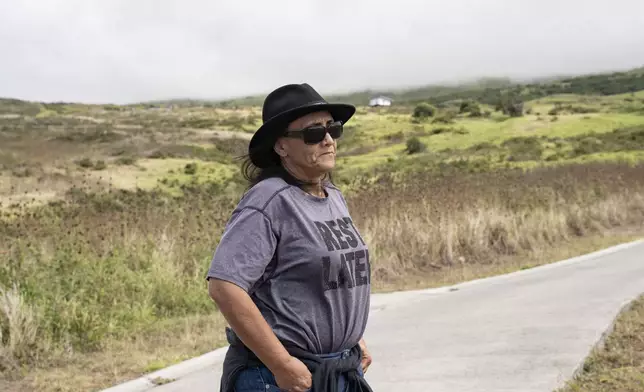
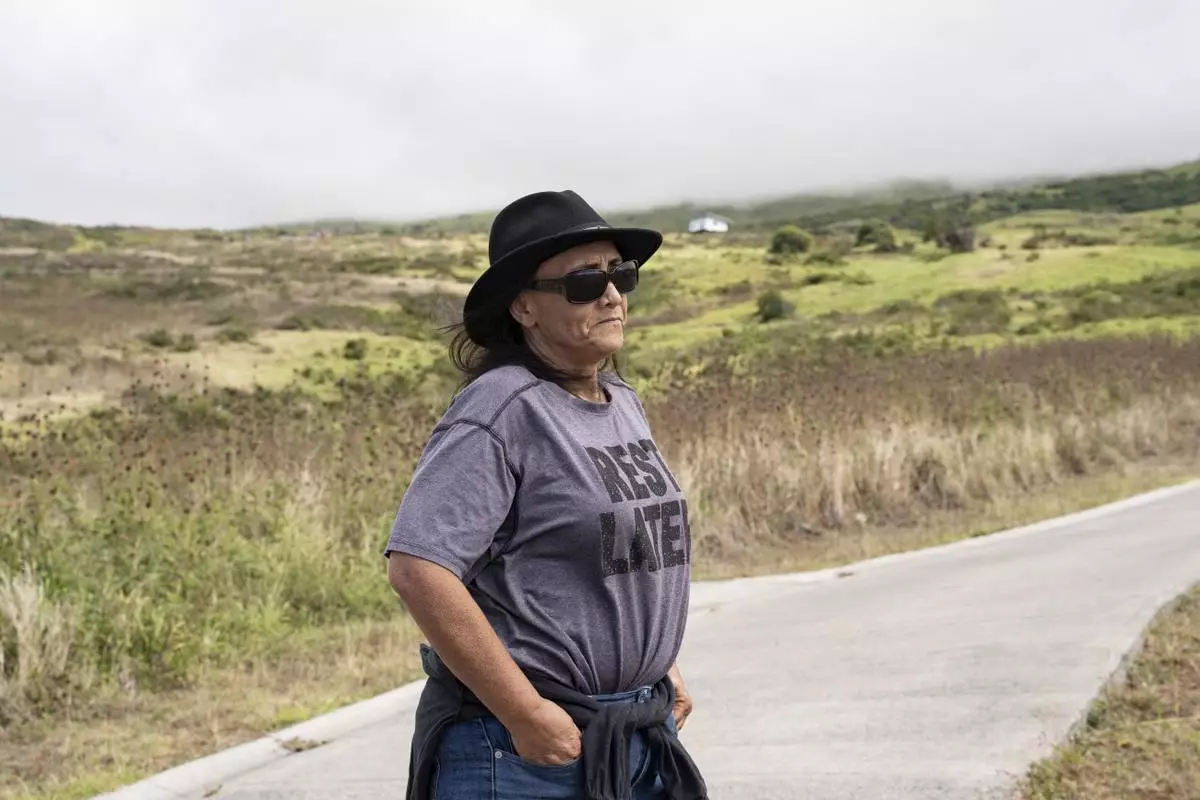
Desiree Graham is pictured during an interview at Kahikinui homestead on Sunday, July 7, 2024, in Kahikinui, Hawaii. (AP Photo/Mengshin Lin)

Desiree Graham is pictured during an interview at Kahikinui homestead on Sunday, July 7, 2024, in Kahikinui, Hawaii. (AP Photo/Mengshin Lin)

In June, neighbors and volunteers spent four weekends clearing rubbish from their properties in a community-wide effort to create “defensible space,” or areas around homes free of ignitable vegetation and debris. They purged 12 tons of waste.

“It’s ugly, but it’s pretty beautiful to me,” said Graham, a member of Kahikinui's Firewise committee, part of a rapidly growing program from the nonprofit National Fire Protection Association that helps residents assess their communities' fire risk and create plans to mitigate it.

Kahikinui is one of dozens of Hawaii communities seeking ways to protect themselves as decades of climate change, urban development, and detrimental land use policies culminate to cause more destructive fires.

The state has 250,000 acres of unmanaged fallow agricultural land, nearly all of its buildings sit within the wildland-urban interface, and two-thirds of communities have only one road in and out.

But experts say that even with so many factors out of communities’ control, they can vastly improve their resilience — by transforming their own neighborhoods.

“Fire is not like other natural hazards, it can only move where there is fuel, and we have a lot of say in that,” said Nani Barretto, co-executive director of the Hawaii Wildfire Management Organization (HWMO), a 25-year-old nonprofit at the forefront of the state’s fire-risk mitigation.

Neighborhoods all over the United States are wrestling with the same challenge, some in places that never worried about fire before. A recent Headwaters Economics analysis found 1,100 communities in 32 states shared similar risk profiles to places recently devastated by urban wildfires.

HWMO helps communities like Kahikinui become Firewise. In the 10 years preceding the August 2023 Maui fires that destroyed Lahaina, 15 Hawaii communities joined Firewise USA. Since then, the number has more than doubled to 31, with a dozen more in the process of joining.

“Everyone was like, ’My God, what can we do?'” said Shelly Aina, former chair of the Firewise committee for Waikoloa Village, an 8,000-resident community on the west side of the Big Island, recalling the months after the Maui fires.

The development — heavily wind exposed, surrounded by dry invasive grasses and with just one main road in and out — had already experienced several close calls in the last two decades. It was first recognized as Firewise in 2016.

As HWMO-trained home assessors, Shelly and her husband Dana Aina have done over 60 free assessments for neighbors since 2022, evaluating their properties for ignition vulnerabilities. Volunteers removed kiawe trees last year along a fuel break bordering houses. Residents approved an extra HOA fee for vegetation removal on interior lots.

Measures like these can have outsized impact as people in fire-prone states adapt to more extreme wildfires, according to Dr. Jack Cohen, a retired U.S. Forest Service scientist.

“The solution is in the community, not out there with the fire breaks, because those don’t stop the fire in extreme conditions,” said Cohen.

Direct flames from a wildfire aren’t what typically initiate an urban conflagration, he said. Wind-blown embers can travel miles away from a fire, landing on combustible material like dry vegetation, or accumulating in corners like where a deck meets siding.

“They’re urban fires, not wildfires,” said Cohen.

The solutions don't always require expensive retrofits like a whole new roof, but targeting the specific places within 100 feet of the house where embers could ignite material. In dense neighborhoods, that requires residents work together, making community-wide efforts like Firewise important. “The house is only as ignition resistant as its neighbors,” said Cohen.

Even with renewed interest in fire resilience, community leaders face challenges in mobilizing their neighbors. Mitigation can take money, time and sacrifice. It’s not enough to cut the grass once, for example, vegetation has to be regularly maintained. Complacency sets in. Measures like removing hazardous trees can cost thousands of dollars.

“I don’t know how we deal with that, because those who have them can’t afford to take them down,” said Shelly Aina. The Ainas try offering low-cost measures, like installing metal screening behind vents and crawl spaces to keep out embers.

HWMO helps with costs where it can. It gave Kahikinui a $5,000 grant for a dumpster service to haul out its waste, and helped Waikoloa Village rent a chipper for the trees it removed. It’s been hard to keep up with the need, said Barretto, but even just a little bit of financial assistance can have an exponential impact.

“You give them money, they rally,” she said. “We can give them $1,000 and it turns into 1,000 man hours of doing the clearing.” HWMO was able to expand its grant program after the Maui fires with donations from organizations like the Bezos Earth Fund and the American Red Cross.

At a time when federal funding for climate mitigation is uncertain, communities need far more financial support to transform their neighborhoods, said Headwaters Economics' Kimi Barrett, who studies the costs of increasing fire risk. “If what we’re trying to do is save people and communities, then we must significantly invest in people and communities,” said Barrett.

Those investments are just a fraction of the billions of dollars in losses sustained after megafires, said Barrett. A recent study by the U.S. Chamber of Commerce and Allstate found that $1 in resilience and preparation investment can save $13 in economic and property losses after a disaster.

Another hurdle is asking residents to do work and make sacrifices as they watch others neglect their role. “The neighbors will ask, ‘What about the county land?' There’s no routine maintenance,’” said Shelly Aina.

Her husband Dana Aina said he reminds people that it is everyone’s kuleana, or responsibility, to take care of land and people. “An island is a canoe, a canoe is an island,” he said, quoting a Hawaiian proverb. “We all have to paddle together.”

Bigger stakeholders are starting to make changes. Among them, Hawaii passed legislation to create a state fire marshal post, and its main utility, Hawaiian Electric, is undergrounding some power lines and installing AI-enabled cameras to detect ignitions earlier.

Meanwhile, Firewise communities have found that doing their own mitigation gives them more clout when asking for funding or for others to do their part.

After the 66-residence community of Kawaihae Village on Hawaii Island joined Firewise, they were finally able to get a neighboring private landowner and the state to create fuel breaks and clear grasses.

“Without that we wouldn’t have been on anyone’s radar,” said Brenda DuFresne, committee member of Kawaihae Firewise. “I think Firewise is a way to show people that you’re willing to help yourself.”

——

Associated Press coverage of philanthropy and nonprofits receives support through the AP’s collaboration with The Conversation US, with funding from Lilly Endowment Inc. The AP is solely responsible for this content. For all of AP’s philanthropy coverage, visit https://apnews.com/hub/philanthropy.
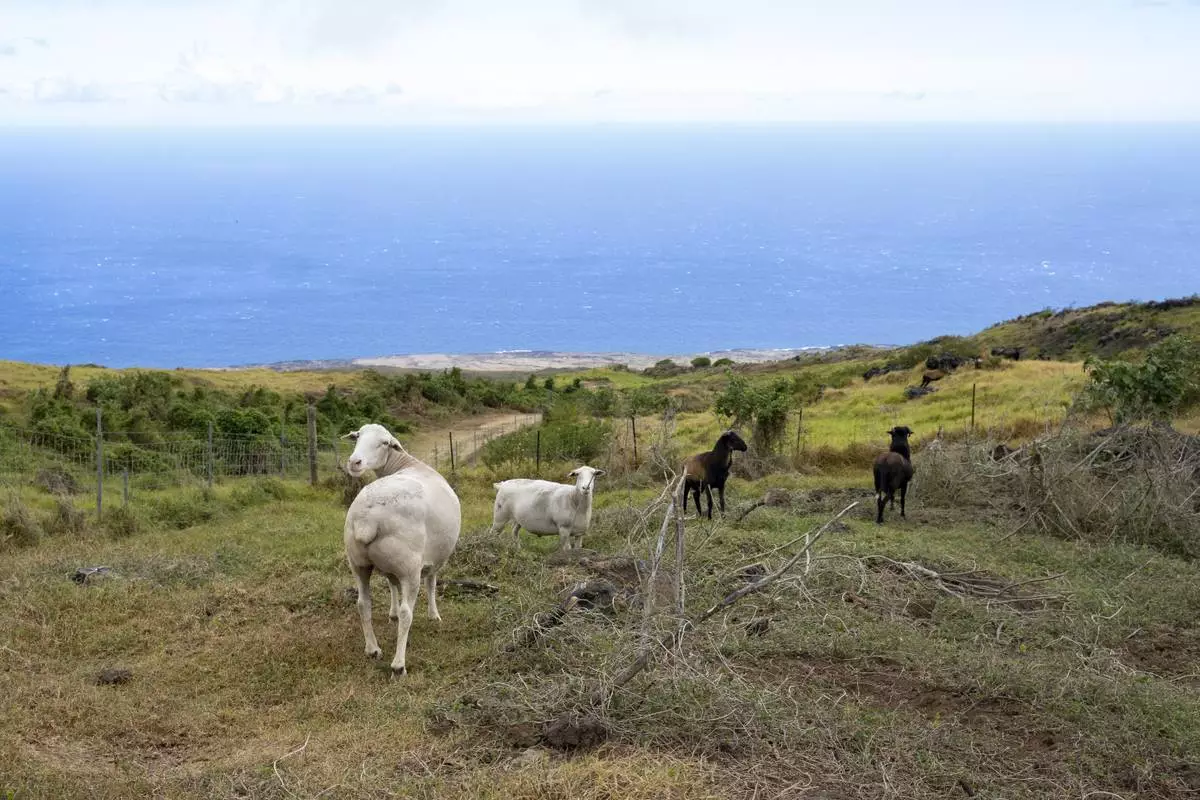
Sheep graze at Kahikinui Homestead on Sunday, July 7, 2024, in Kahikinui, Hawaii. (AP Photo/Mengshin Lin)
Sheep graze at Kahikinui Homestead on Sunday, July 7, 2024, in Kahikinui, Hawaii. (AP Photo/Mengshin Lin)

Harriet Parsons, a firewise community support specialist for the Hawaii Wildfire Management Organization, points to the drylands behind a house in her community, Tuesday, Feb. 25, 2025, in Kamuela, Hawaii. (AP Photo/Mengshin Lin)
Harriet Parsons, a firewise community support specialist for the Hawaii Wildfire Management Organization, points to the drylands behind a house in her community, Tuesday, Feb. 25, 2025, in Kamuela, Hawaii. (AP Photo/Mengshin Lin)

Dr. Jack Cohen, a former fire research scientist for the U.S. Forest Service, assesses the condition of the grass with Mike Mundon, Tuesday, Feb. 25, 2025, in Pu'ukapu Homesteads, Hawaii. (AP Photo/Mengshin Lin)
Dr. Jack Cohen, a former fire research scientist for the U.S. Forest Service, assesses the condition of the grass with Mike Mundon, Tuesday, Feb. 25, 2025, in Pu'ukapu Homesteads, Hawaii. (AP Photo/Mengshin Lin)

Dr. Jack Cohen, a former fire research scientist for the U.S. Forest Service, right, asseses the exterior condition of a house, Tuesday, Feb. 25, 2025, in Kamuela, Hawaii. (AP Photo/Mengshin Lin)
Dr. Jack Cohen, a former fire research scientist for the U.S. Forest Service, right, asseses the exterior condition of a house, Tuesday, Feb. 25, 2025, in Kamuela, Hawaii. (AP Photo/Mengshin Lin)

An aerial view shows the landscape of Waikoloa Village, Tuesday, Feb. 25, 2025, in Hawaii. (AP Photo/Mengshin Lin)
An aerial view shows the landscape of Waikoloa Village, Tuesday, Feb. 25, 2025, in Hawaii. (AP Photo/Mengshin Lin)

Palm trees stand in front of a house in Waikoloa Village, Hawaii, Tuesday, Feb. 25, 2025. (AP Photo/Mengshin Lin)
Palm trees stand in front of a house in Waikoloa Village, Hawaii, Tuesday, Feb. 25, 2025. (AP Photo/Mengshin Lin)

Dana Aina, a firewise community support specialist for the Hawaii Wildfire Management Organization, left, poses for a portrait with his wife, Shelly, an NFPA-trained wildfire home assessor, Tuesday, Feb. 25, 2025, in Waikoloa Village, Hawaii. (AP Photo/Mengshin Lin)
Dana Aina, a firewise community support specialist for the Hawaii Wildfire Management Organization, left, poses for a portrait with his wife, Shelly, an NFPA-trained wildfire home assessor, Tuesday, Feb. 25, 2025, in Waikoloa Village, Hawaii. (AP Photo/Mengshin Lin)

Unused refrigerators and generators are temporarily stored at Kahikinui homestead on Sunday, July 7, 2024, in Kahikinui, Hawaii. Residents were asked to remove unused items to reduce fire risks. (AP Photo/Mengshin Lin)
Unused refrigerators and generators are temporarily stored at Kahikinui homestead on Sunday, July 7, 2024, in Kahikinui, Hawaii. Residents were asked to remove unused items to reduce fire risks. (AP Photo/Mengshin Lin)

Homes in Kahikinui homestead spread across the southern slope of Kahikinui are pictured on Sunday, July 7, 2024, in Kula, Hawaii. (AP Photo/Mengshin Lin)
Homes in Kahikinui homestead spread across the southern slope of Kahikinui are pictured on Sunday, July 7, 2024, in Kula, Hawaii. (AP Photo/Mengshin Lin)

Propane tanks and discarded tires are temporarily stored at Kahikinui homestead on Sunday, July 7, 2024, in Kahikinui, Hawaii. Residents were asked to remove unused items to reduce fire risks. (AP Photo/Mengshin Lin)
Propane tanks and discarded tires are temporarily stored at Kahikinui homestead on Sunday, July 7, 2024, in Kahikinui, Hawaii. Residents were asked to remove unused items to reduce fire risks. (AP Photo/Mengshin Lin)

Desiree Graham is pictured during an interview at Kahikinui homestead on Sunday, July 7, 2024, in Kahikinui, Hawaii. (AP Photo/Mengshin Lin)
Desiree Graham is pictured during an interview at Kahikinui homestead on Sunday, July 7, 2024, in Kahikinui, Hawaii. (AP Photo/Mengshin Lin)
MINNEAPOLIS (AP) — Federal agents carrying out immigration arrests in Minnesota's Twin Cities region already shaken by the fatal shooting of a woman rammed the door of one home Sunday and pushed their way inside, part of what the Department of Homeland Security has called its largest enforcement operation ever.

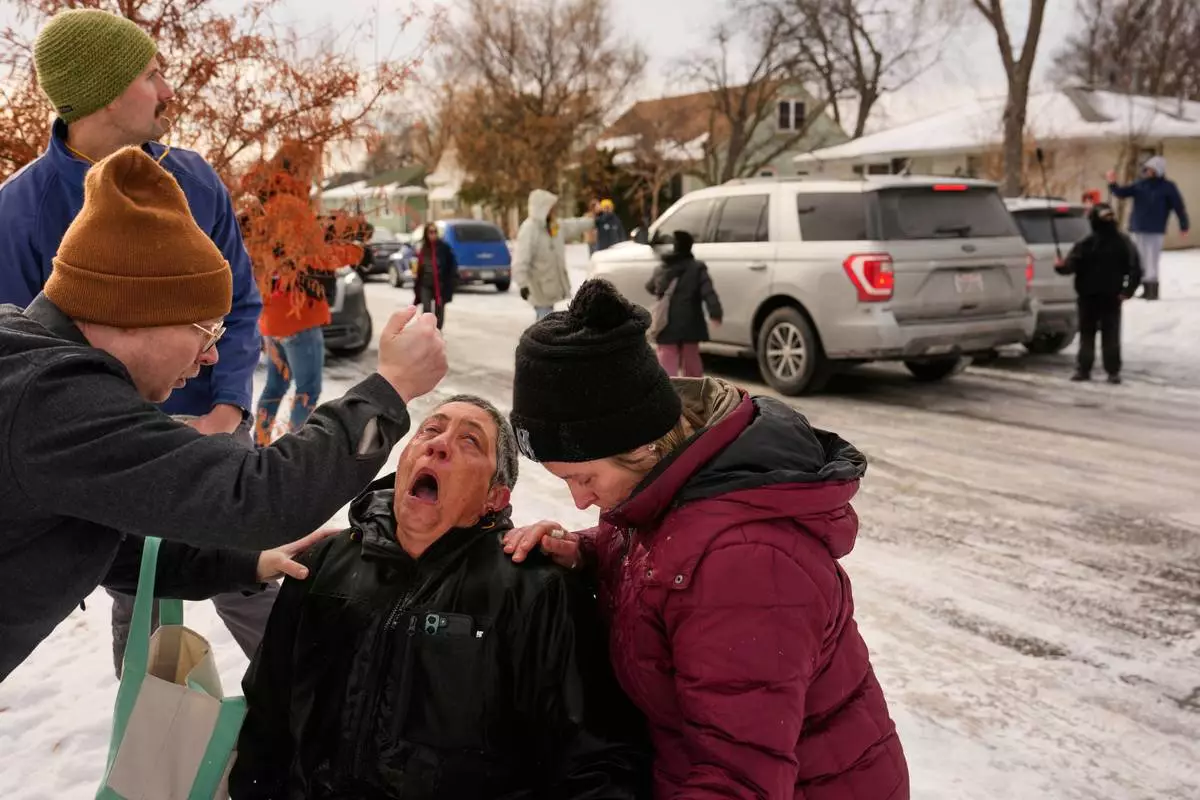
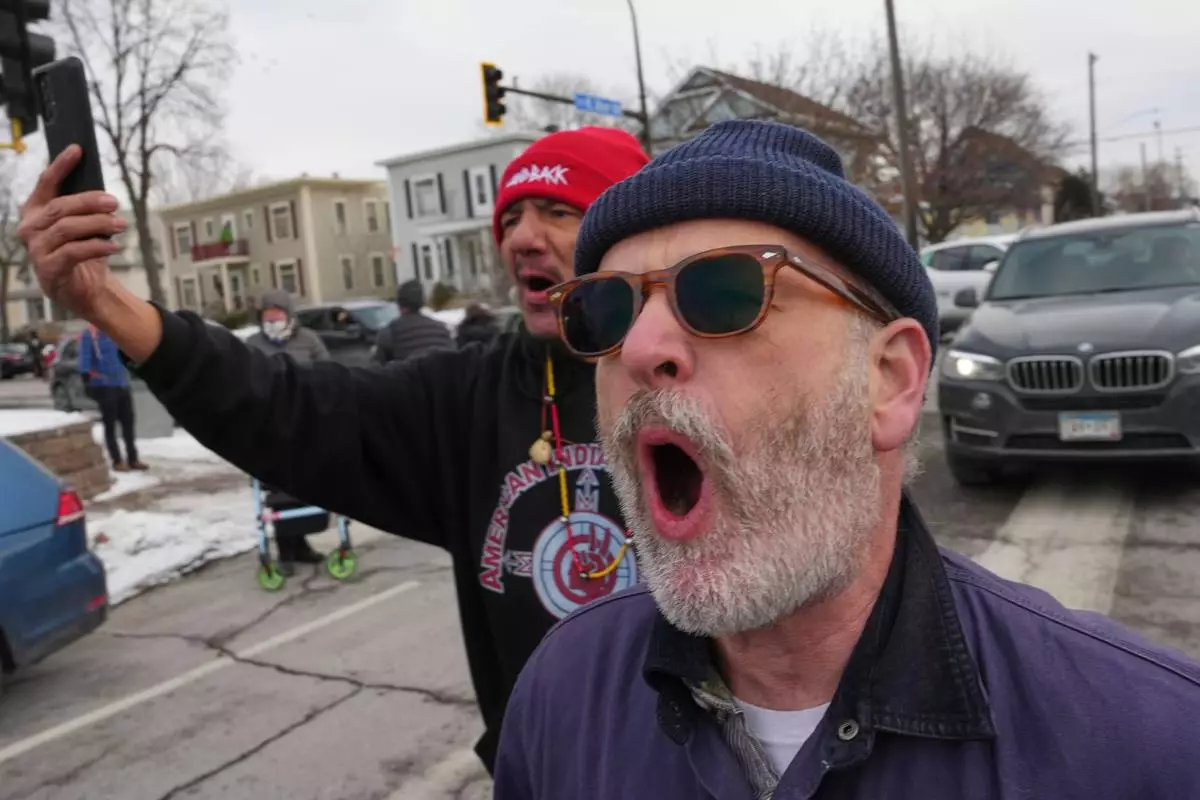
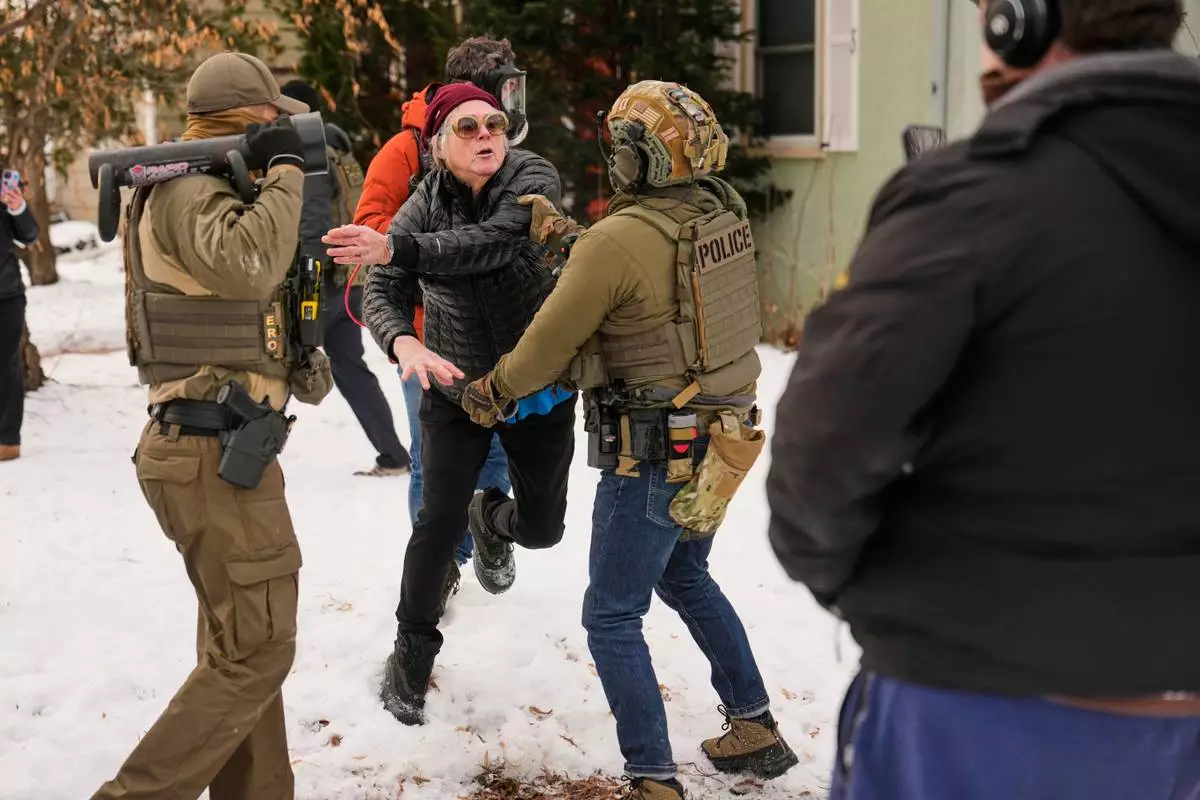
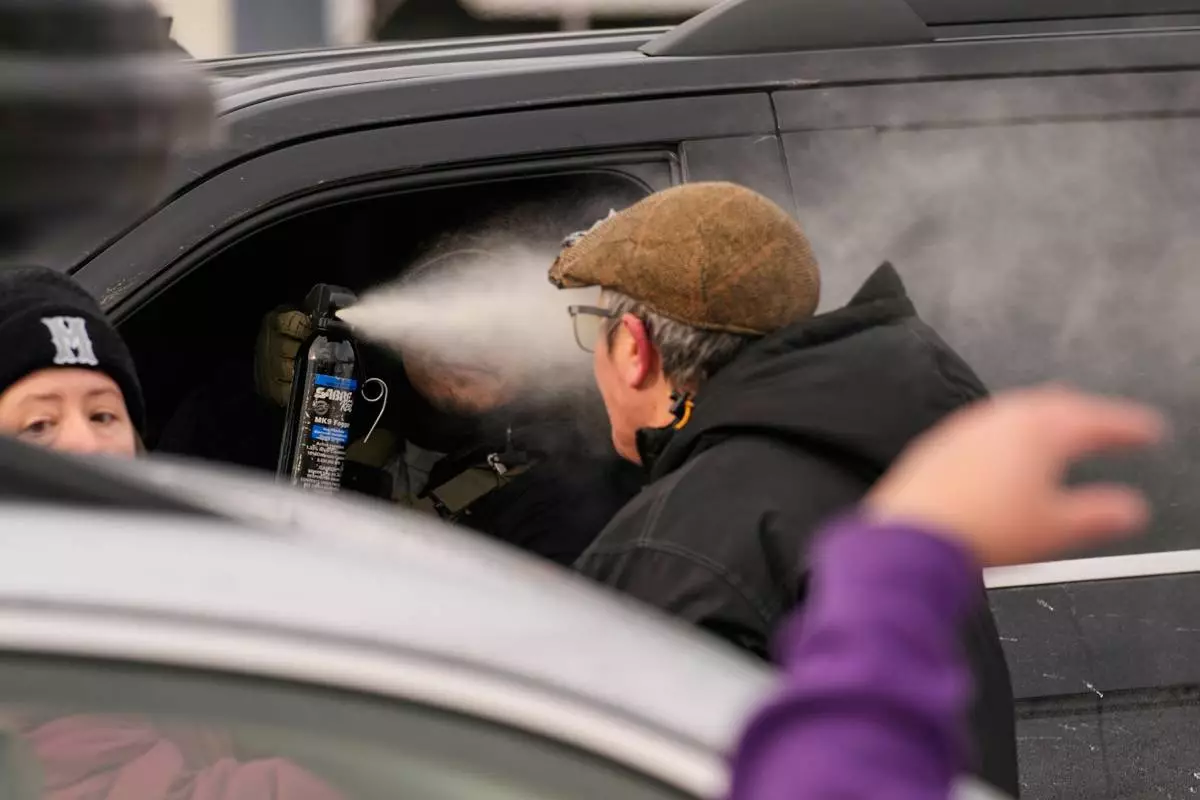
In a dramatic scene similar to those playing out across Minneapolis, agents captured a man in the home just minutes after pepper spraying protesters outside who had confronted the heavily-armed federal agents. Along the residential street, protesters honked car horns, banged on drums and blew whistles in attempts to disrupt the operation.

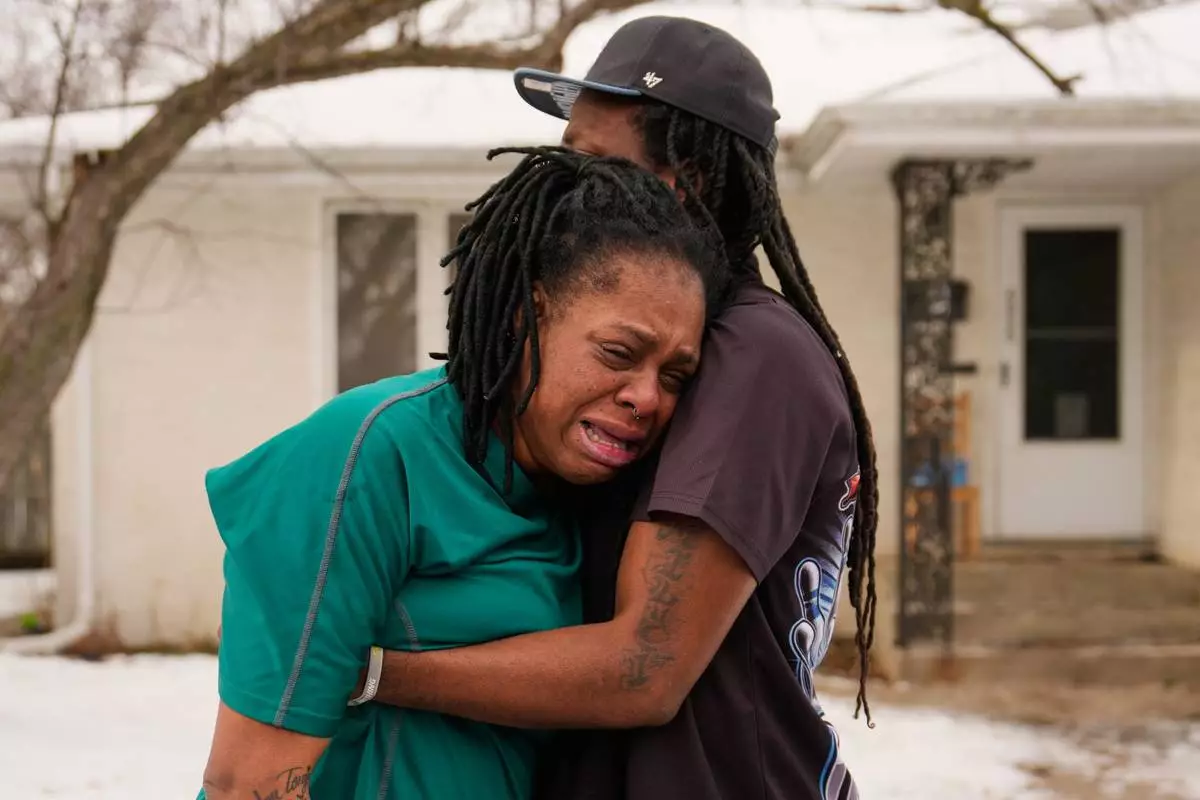
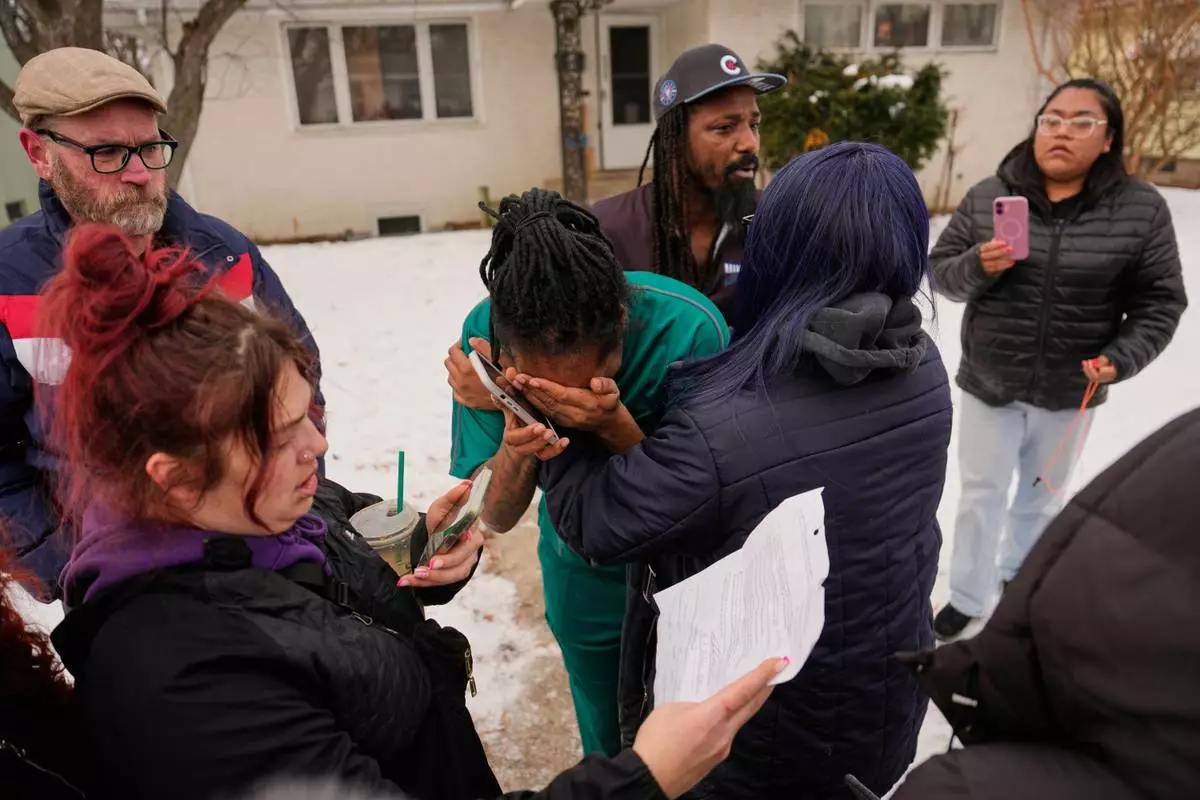
Video of the clash showed some agents pushing back protesters while a distraught woman later emerged from the house with a document that federal agents presented to arrest the man. Signed by an immigration officer, the document — unlike a warrant signed by a judge — does not authorize forced entry into a private residence. A warrant signed by an immigration officer only authorizes arrest in a public area.

Immigrant advocacy groups have done extensive “know-your-rights” campaigns urging people not to open their doors unless agents have a court order signed by a judge.

But within minutes of ramming the door in a neighborhood filled with single-family homes, the handcuffed man was led away and soon gone.

More than 2,000 immigration arrests have been made in Minnesota since the enforcement operation began at the beginning of December, said Homeland Security spokesperson Tricia McLaughlin.

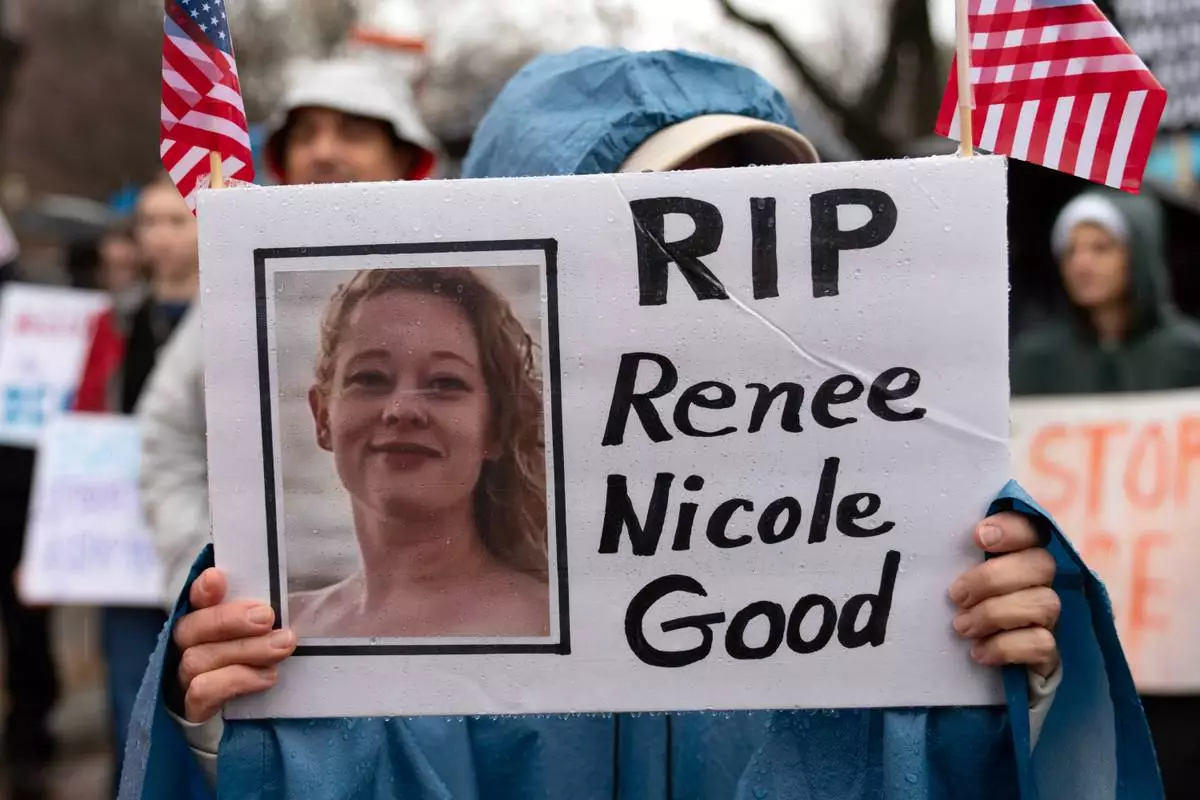
The Twin Cities — the latest target in President Donald Trump’s immigration enforcement campaign — is bracing for what is next after 37-year-old Renee Good was shot and killed by an immigration officer Wednesday.

“We’re seeing a lot of immigration enforcement across Minneapolis and across the state, federal agents just swarming around our neighborhoods,” said Jason Chavez, a Minneapolis city councilmember. “They’ve definitely been out here.”

Chavez, the son of Mexican immigrants who represents an area with a growing immigrant population, said he is closely monitoring information from chat groups about where residents are seeing agents operating.

People holding whistles positioned themselves in freezing temperatures on street corners Sunday in the neighborhood where Good was killed, watching for any signs of federal agents.

More than 20,000 people have taken part in a variety of trainings to become “observers” of enforcement activities in Minnesota since the 2024 election, said Luis Argueta, a spokesperson for Unidos MN, a local human rights organization .

“It’s a role that people choose to take on voluntarily, because they choose to look out for their neighbors,” Argueta said.

The protests have been largely peaceful, but residents remained anxious. On Monday, Minneapolis public schools will start offering remote learning for the next month in response to concerns that children might feel unsafe venturing out while tensions remain high.

Many schools closed last week after Good’s shooting and the upheaval that followed.

While the enforcement activity continues, two of the state’s leading Democrats said that the investigation into Good's shooting death should not be overseen solely by the federal government.

Minneapolis Mayor Jacob Frey and U.S. Sen. Tina Smith said in separate interviews Sunday that state authorities should be included in the investigation because the federal government has already made clear what it believes happened.

“How can we trust the federal government to do an objective, unbiased investigation, without prejudice, when at the beginning of that investigation they have already announced exactly what they saw — what they think happened," Smith said on ABC’s "This Week."

The Trump administration has defended the officer who shot Good in her car, saying he was protecting himself and fellow agents and that Good had “weaponized” her vehicle.

Todd Lyons, acting director of ICE, defended the officer on Fox News Channel’s “The Sunday Briefing.”

"That law enforcement officer had milliseconds, if not short time to make a decision to save his life and his other fellow agents,” he said.

Lyons also said the administration’s enforcement operations in Minnesota wouldn't be needed “if local jurisdictions worked with us to turn over these criminally illegal aliens once they are already considered a public safety threat by the locals.”

The killing of Good by an ICE officer and the shooting of two people by federal agents in Portland, Oregon, led to dozens of protests across the country over the weekend.

Thousands of people marched Saturday in Minneapolis, where Homeland Security called its deployment of immigration officers in the Twin Cities its biggest ever immigration enforcement operation.

Associated Press journalists Giovanna Dell’Orto in Minneapolis, Thomas Strong in Washington, Bill Barrow in Atlanta, and John Seewer in Toledo, Ohio, contributed.

A woman gets into an altercation with a federal immigration officer as officers make an arrest Sunday, Jan. 11, 2026, in Minneapolis. (AP Photo/John Locher)

A woman gets into an altercation with a federal immigration officer as officers make an arrest Sunday, Jan. 11, 2026, in Minneapolis. (AP Photo/John Locher)

A federal immigration officer deploys pepper spray as officers make an arrest Sunday, Jan. 11, 2026, in Minneapolis. (AP Photo/John Locher)

A federal immigration officer deploys pepper spray as officers make an arrest Sunday, Jan. 11, 2026, in Minneapolis. (AP Photo/John Locher)

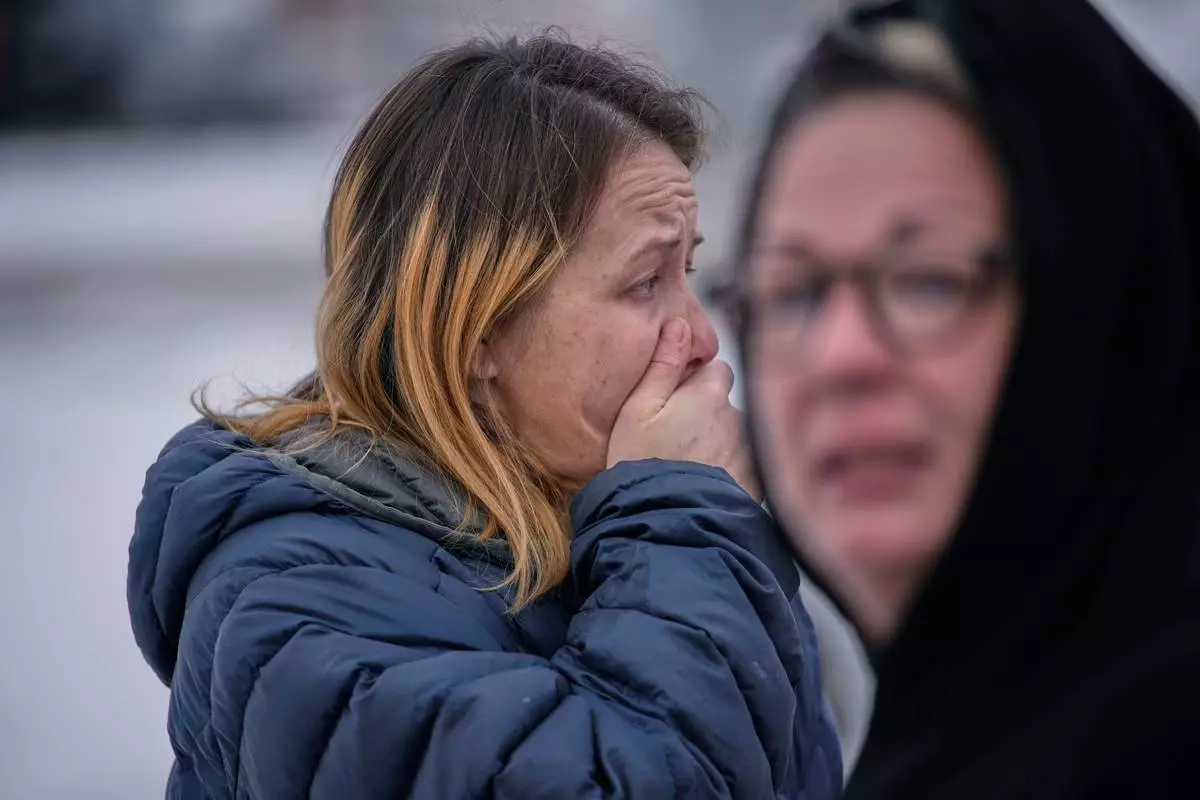
A family member, center, reacts after federal immigration officers make an arrest Sunday, Jan. 11, 2026, in Minneapolis. (AP Photo/John Locher)

A family member, center, reacts after federal immigration officers make an arrest Sunday, Jan. 11, 2026, in Minneapolis. (AP Photo/John Locher)

Bystanders are treated after being pepper sprayed as federal immigration officers make an arrest Sunday, Jan. 11, 2026, in Minneapolis. (AP Photo/John Locher)

Bystanders are treated after being pepper sprayed as federal immigration officers make an arrest Sunday, Jan. 11, 2026, in Minneapolis. (AP Photo/John Locher)

A family member reacts after federal immigration officers make an arrest Sunday, Jan. 11, 2026, in Minneapolis. (AP Photo/John Locher)

A family member reacts after federal immigration officers make an arrest Sunday, Jan. 11, 2026, in Minneapolis. (AP Photo/John Locher)

Federal agents look on after detaining a person during a patrol in Minneapolis, Minn., Sunday, Jan. 11, 2026. (Christopher Katsarov/The Canadian Press via AP)

Federal agents look on after detaining a person during a patrol in Minneapolis, Minn., Sunday, Jan. 11, 2026. (Christopher Katsarov/The Canadian Press via AP)

Bystanders react after a man was detained by Immigration and Customs Enforcement (ICE) agents during a traffic stop, Sunday, Jan. 11, 2026, in Robbinsdale, Minn. (AP Photo/John Locher)

Bystanders react after a man was detained by Immigration and Customs Enforcement (ICE) agents during a traffic stop, Sunday, Jan. 11, 2026, in Robbinsdale, Minn. (AP Photo/John Locher)

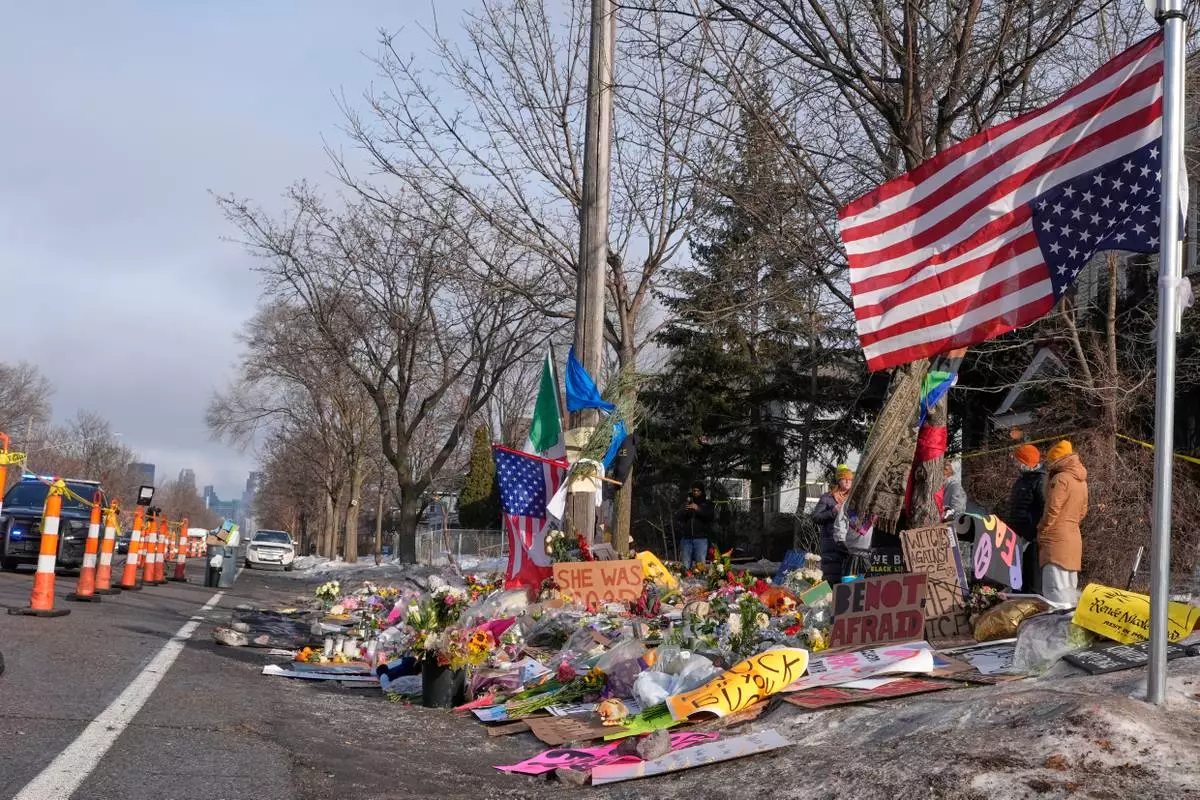
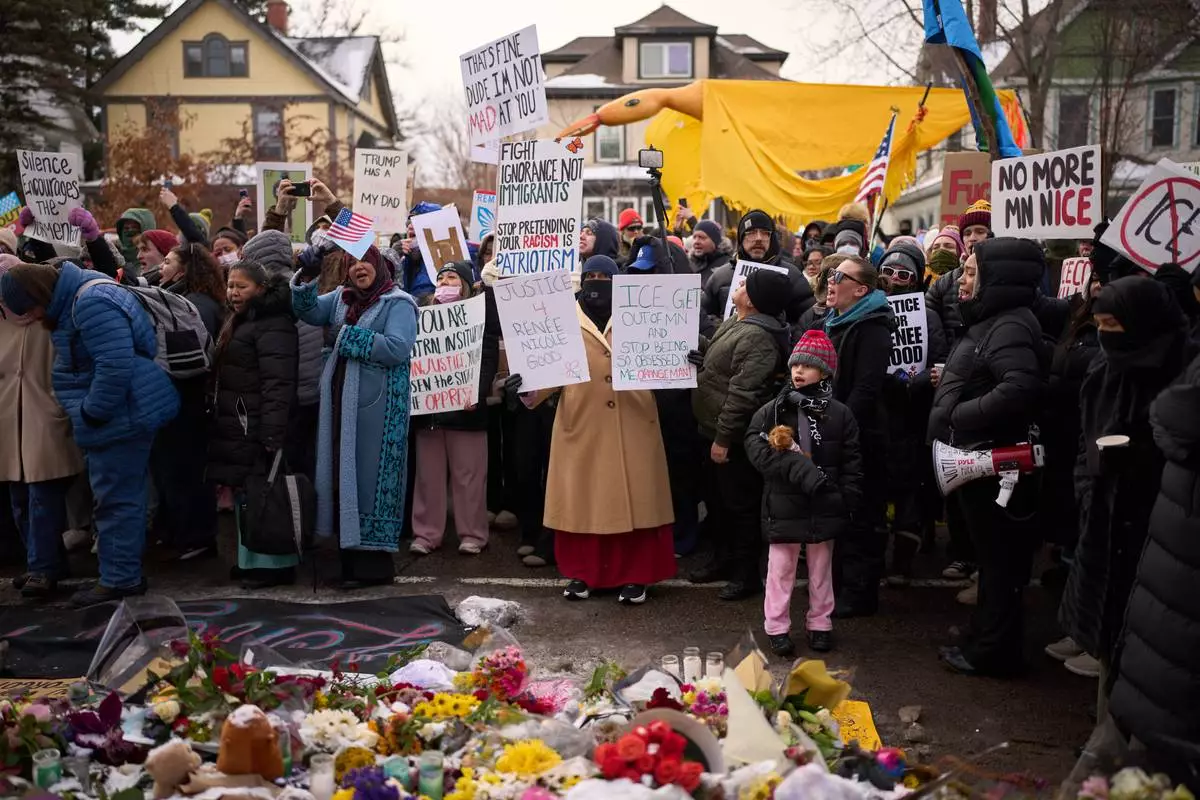
People stand near a memorial at the site where Renee Good was fatally shot by an ICE agent, Sunday, Jan. 11, 2026, in Minneapolis. (AP Photo/Jen Golbeck)

People stand near a memorial at the site where Renee Good was fatally shot by an ICE agent, Sunday, Jan. 11, 2026, in Minneapolis. (AP Photo/Jen Golbeck)

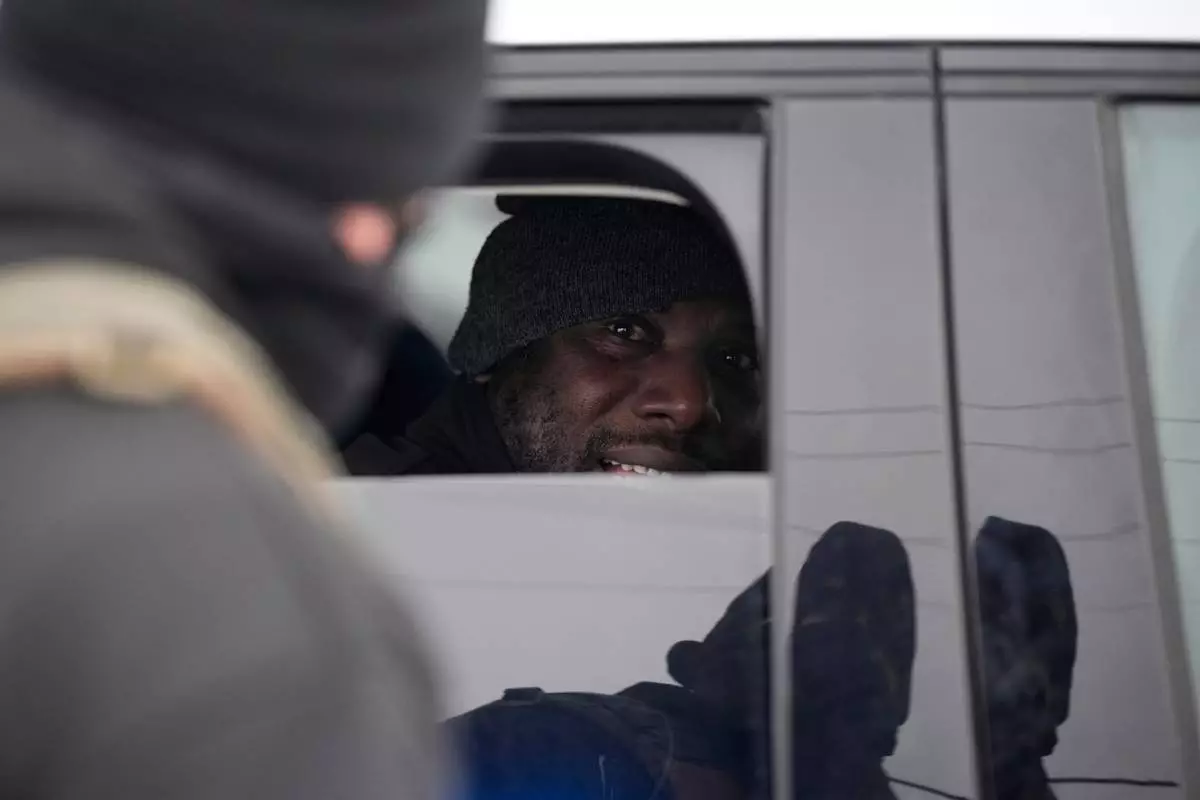
A man looks out of a car window after being detained by Immigration and Customs Enforcement (ICE) agents during a traffic stop, Sunday, Jan. 11, 2026, in Robbinsdale, Minn. (AP Photo/John Locher)

A man looks out of a car window after being detained by Immigration and Customs Enforcement (ICE) agents during a traffic stop, Sunday, Jan. 11, 2026, in Robbinsdale, Minn. (AP Photo/John Locher)

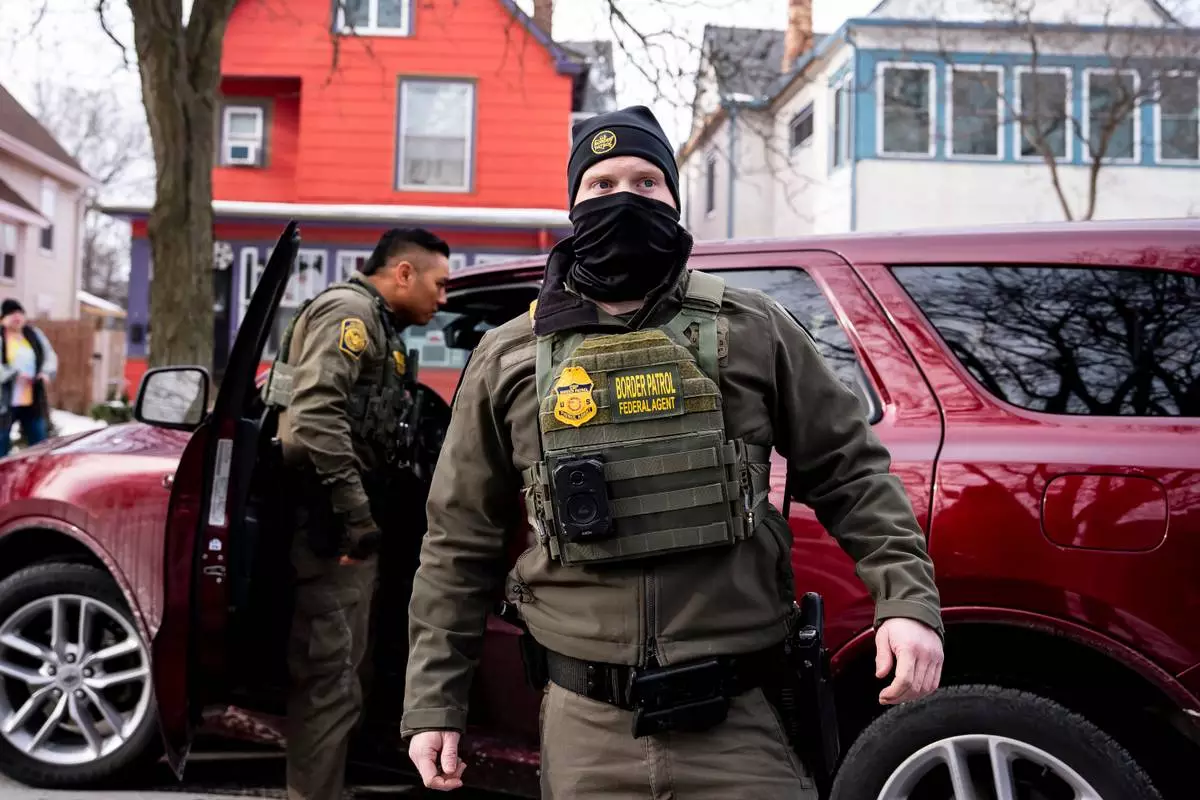
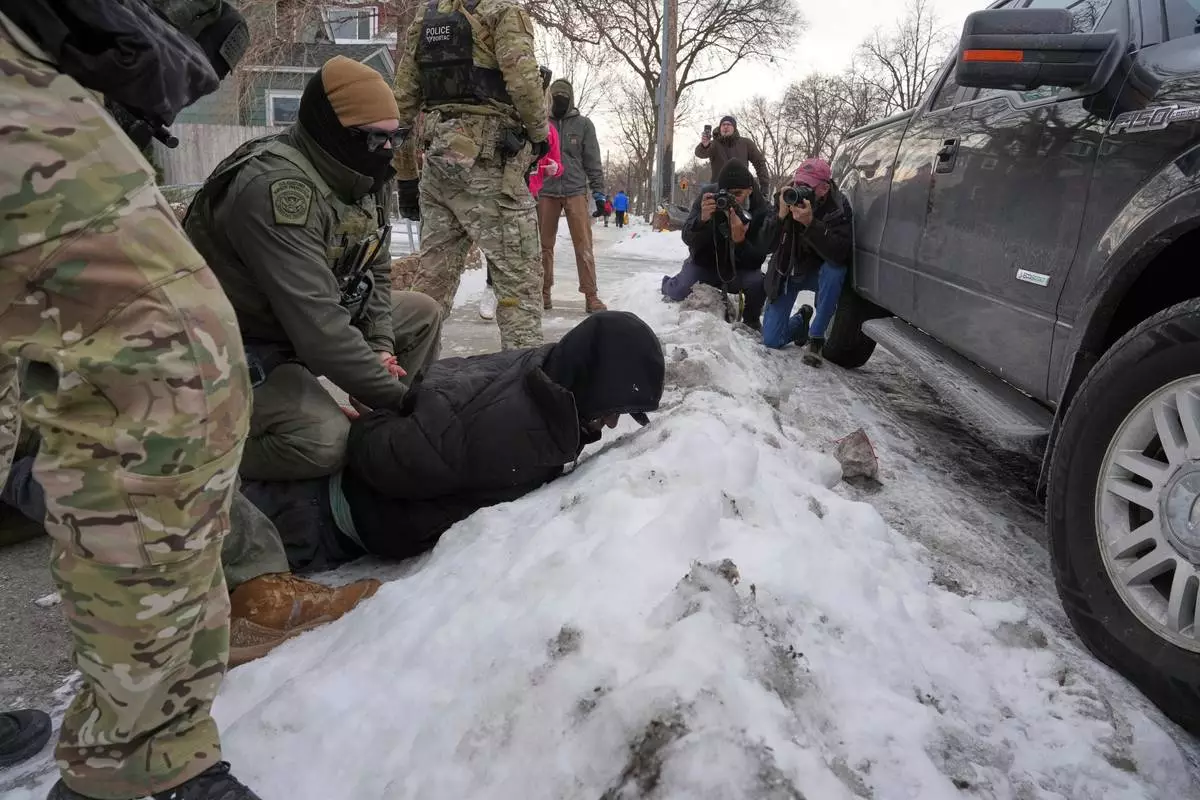
Border Patrol agents detain a man, Sunday, Jan. 11, 2026, in Minneapolis. (AP Photo/Adam Gray)

Border Patrol agents detain a man, Sunday, Jan. 11, 2026, in Minneapolis. (AP Photo/Adam Gray)

People shout toward Border Patrol agents making an arrest, Sunday, Jan. 11, 2026, in Minneapolis. (AP Photo/Adam Gray)

People shout toward Border Patrol agents making an arrest, Sunday, Jan. 11, 2026, in Minneapolis. (AP Photo/Adam Gray)

Demonstrators protest outside the White House in Washington, Saturday, Jan. 10, 2026, against the Immigration and Customs Enforcement agent who fatally shot Renee Good in Minneapolis. (AP Photo/Jose Luis Magana)

Demonstrators protest outside the White House in Washington, Saturday, Jan. 10, 2026, against the Immigration and Customs Enforcement agent who fatally shot Renee Good in Minneapolis. (AP Photo/Jose Luis Magana)

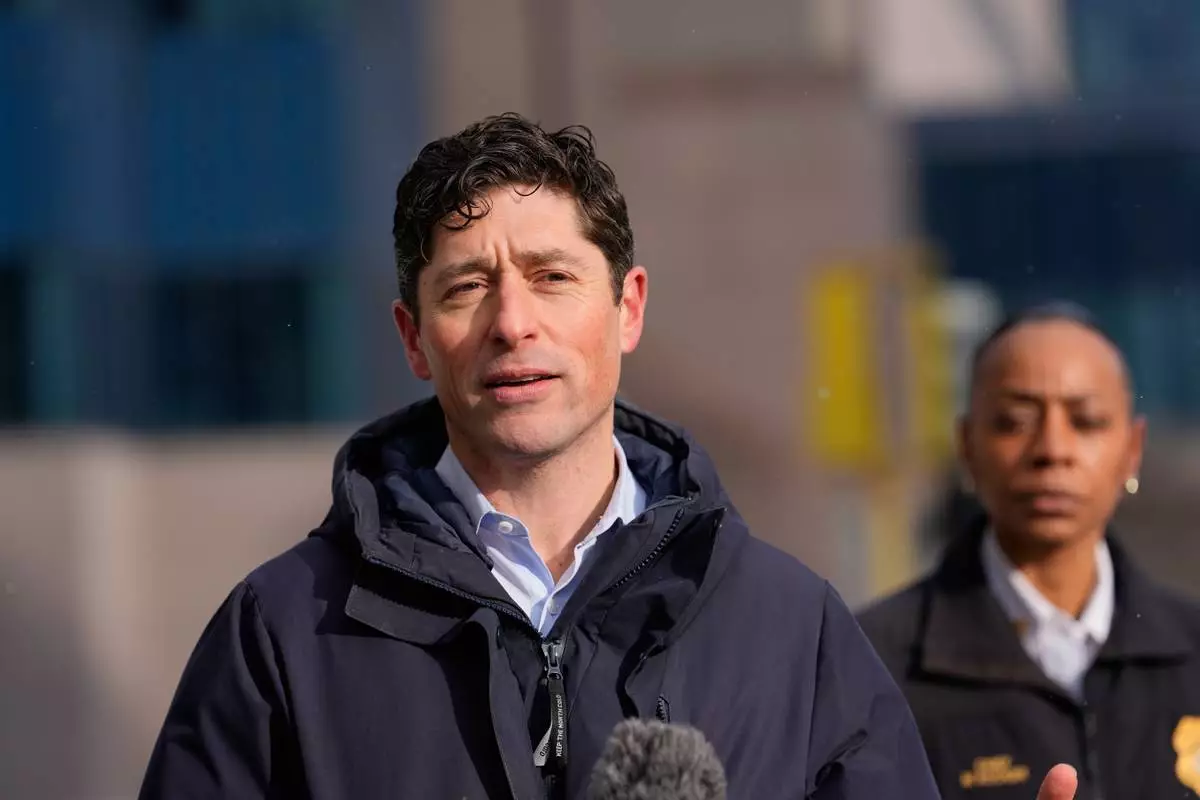
Minneapolis Mayor Jacob Frey holds a news conference on Saturday, Jan. 10, 2026, in Minneapolis. (AP Photo/Jen Golbeck)

Minneapolis Mayor Jacob Frey holds a news conference on Saturday, Jan. 10, 2026, in Minneapolis. (AP Photo/Jen Golbeck)

Protesters react as they visit a makeshift memorial during a rally for Renee Good, who was fatally shot by an ICE officer earlier in the week, Saturday, Jan. 10, 2026, in Minneapolis. (AP Photo/John Locher)

Protesters react as they visit a makeshift memorial during a rally for Renee Good, who was fatally shot by an ICE officer earlier in the week, Saturday, Jan. 10, 2026, in Minneapolis. (AP Photo/John Locher)

Recommended Articles