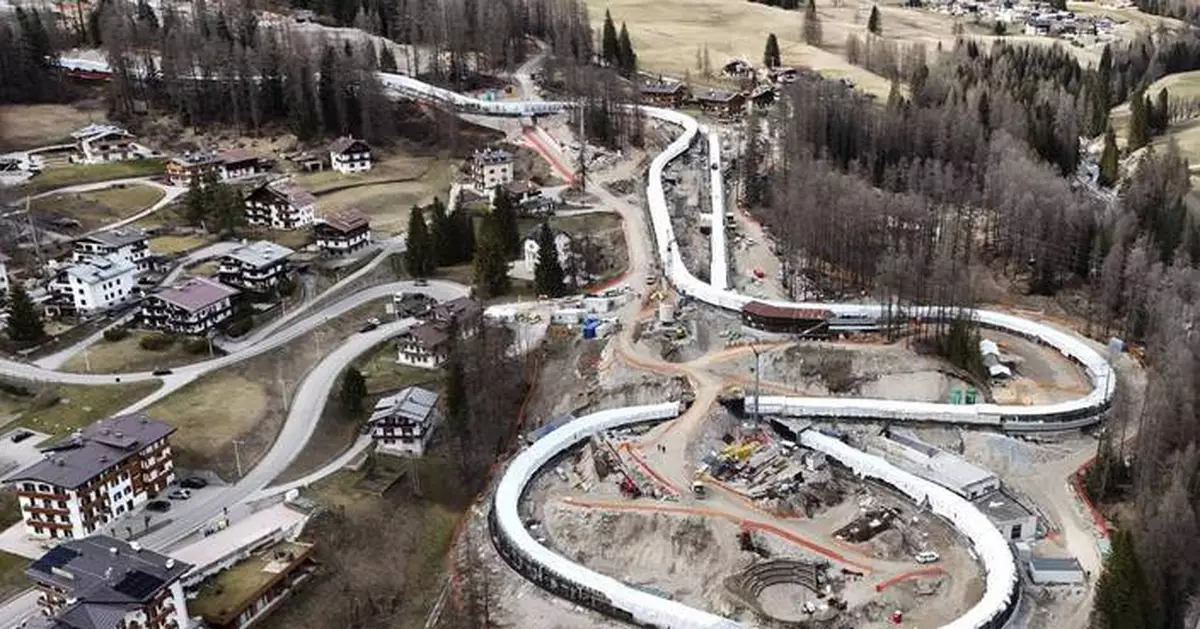
ROME (AP) — When Italian skeleton competitor Mattia Gaspari became the first athlete to test the controversial sliding track for next year's Milan-Cortina Winter Olympics, he did so in a sort of tunnel under a temporary roof built of wooden beams and white plastic paper.
That's because the sliding center in Cortina d'Ampezzo is still under construction and the only part that is really finished is the track structure.
Click to Gallery
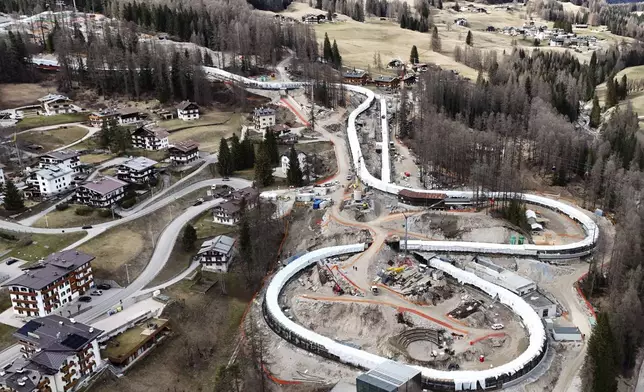
Construction work takes place at the Cortina Sliding Center, venue for the bob, luge and skeleton disciplines at the Milan Cortina 2026 Winter Olympics, in Cortina D'Ampezzo, Italy, Tuesday, March 25, 2025. (AP Photo/Luca Bruno)
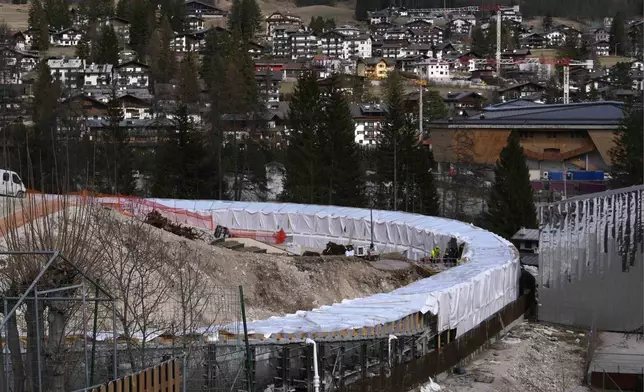
Construction work takes place at the Cortina Sliding Center, venue for the bob, luge and skeleton disciplines at the Milan Cortina 2026 Winter Olympics, in Cortina D'Ampezzo, Italy, Tuesday, March 25, 2025. (AP Photo/Luca Bruno)
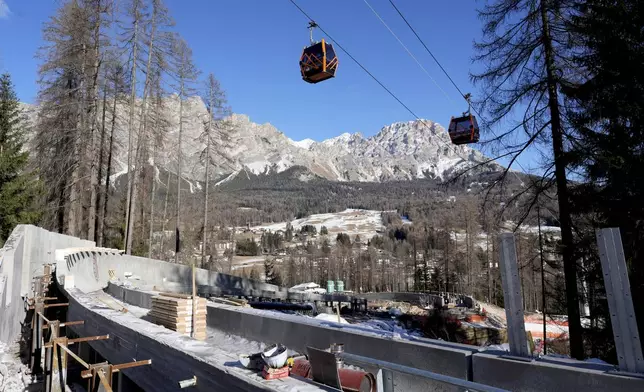
FILE - Construction work takes place at the Cortina Sliding Center, venue for the bob, luge and skeleton disciplines at the Milan Cortina 2026 Winter Olympics, in Cortina d'Ampezzo, Italy, Thursday, Jan. 16, 2025. (AP Photo/Giovanni Auletta, file)
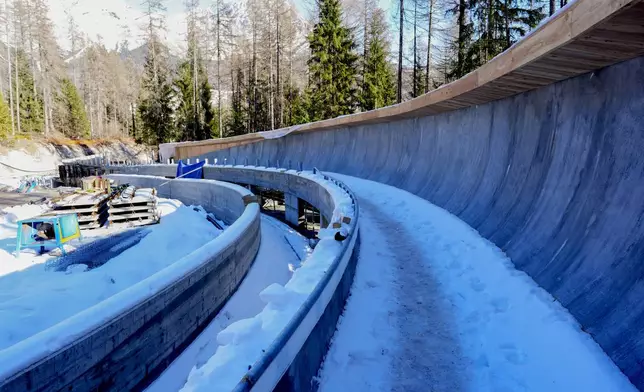
FILE - Construction work takes place at the Cortina Sliding Center, venue for the bob, luge and skeleton disciplines at the Milan Cortina 2026 Winter Olympics, in Cortina d'Ampezzo, Italy, Thursday, Jan. 16, 2025. (AP Photo/Giovanni Auletta, file)
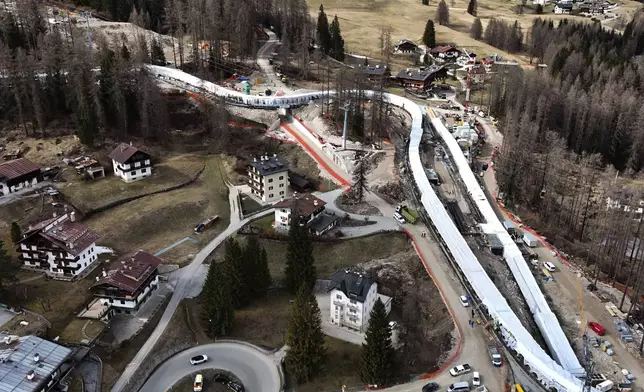
Construction work takes place at the Cortina Sliding Center, venue for the bob, luge and skeleton disciplines at the Milan Cortina 2026 Winter Olympics, in Cortina D'Ampezzo, Italy, Tuesday, March 25, 2025. (AP Photo/Luca Bruno)
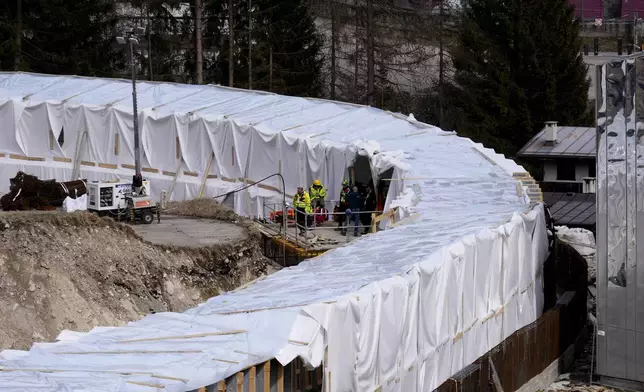
Construction work takes place at the Cortina Sliding Center, venue for the bob, luge and skeleton disciplines at the Milan Cortina 2026 Winter Olympics, in Cortina D'Ampezzo, Italy, Tuesday, March 25, 2025. (AP Photo/Luca Bruno)
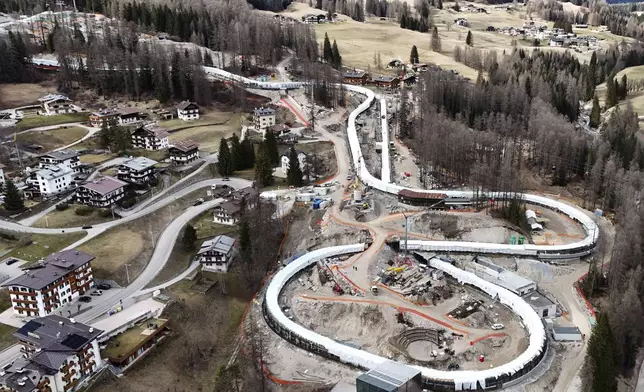
Construction work takes place at the Cortina Sliding Center, venue for the bob, luge and skeleton disciplines at the Milan Cortina 2026 Winter Olympics, in Cortina D'Ampezzo, Italy, Tuesday, March 25, 2025. (AP Photo/Luca Bruno)
Still, getting to this point little more than a year after construction began is a big achievement for the Italian government, which rebuilt the century-old track despite calls from the International Olympic Committee to hold bobsled, luge and skeleton athletes at a venue in nearby Austria or Switzerland instead.
“It's really been quite an adventure,” Infrastructure and Transport Minister Matteo Salvini said Tuesday.
“I want to thank the construction firm, which was the first one to believe in this, and the journalists who motivated us,” said Salvini, who is also the deputy premier, citing articles claiming that the project would never be done. “Well, here we are.”
Olympic bronze medalist Dominik Fischnaller was the second athlete down the track on his luge before Simone Bertazzo and Eric Fantazzini made a two-man bobsled run.
Simico, the government agency in charge of the 118 million euro ($128 million) project, reported positive results for the test runs. But it will be officials from the International Bobsleigh and Skeleton Federation, International Luge Federation and the IOC to determine whether to bestow preliminary certification — homologation is the technical word — for the track.
Preliminary approval would be a big step in avoiding a backup Plan B option that the IOC had demanded and which would require moving the three sliding sports all the way to Lake Placid, New York, if the track in Italy wasn’t finished in time. Lake Placid officials were hopeful that, if the sliding events were going to be awarded to the U.S., the official word would come by the end of March.
Construction on the Cortina track began in February last year. The pre-homologation plan calls for athletes to begin their initial runs from the junior start, well below the ramps from where they would begin to race for World Cup and Olympic competitions. Sliders would move up the track slowly throughout the coming days.
There are testing events at the Cortina track for all three sliding sports — bobsled, skeleton and luge — scheduled for throughout the fall. Those are important so that sliders can familiarize themselves with the track and feel safe there when competing at the Olympics. Safety has taken on more importance since the death of Georgian luger Nodar Kumaritashvili in a training crash hours before the start of the opening ceremony for the 2010 Vancouver Games.
Luge athletes are scheduled to have an international training period at the new track from Oct. 27 through Nov. 2, then return for a test event there in the final week of November. The bobsled and skeleton tours will hold their international training period from Nov. 7-16, followed by the season-opening World Cup races there from Nov. 17-23.
The 1.749-kilometer (1.09-mile) track features 16 curves with an estimated top speed of 145 kph (90 mph) with run times slated for 55-60 seconds.
Athletes from 12 nations are involved in the tests this week. It's about 60 athletes in all, about half of them being Italian sliders. Coaches representing at least 23 different sliding nations were also invited to view this week's events.
AP Sports Writer Tim Reynolds contributed to this report.
AP Olympics: https://apnews.com/hub/winter-olympics

Construction work takes place at the Cortina Sliding Center, venue for the bob, luge and skeleton disciplines at the Milan Cortina 2026 Winter Olympics, in Cortina D'Ampezzo, Italy, Tuesday, March 25, 2025. (AP Photo/Luca Bruno)
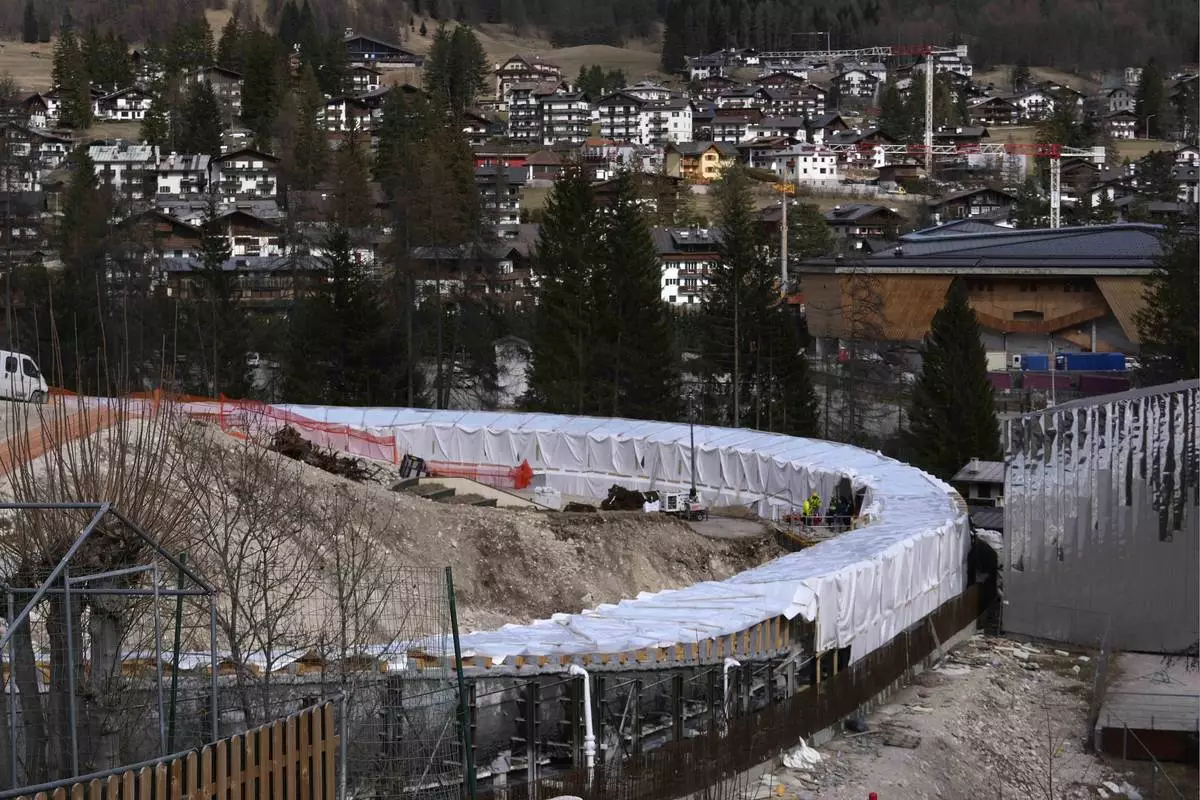
Construction work takes place at the Cortina Sliding Center, venue for the bob, luge and skeleton disciplines at the Milan Cortina 2026 Winter Olympics, in Cortina D'Ampezzo, Italy, Tuesday, March 25, 2025. (AP Photo/Luca Bruno)
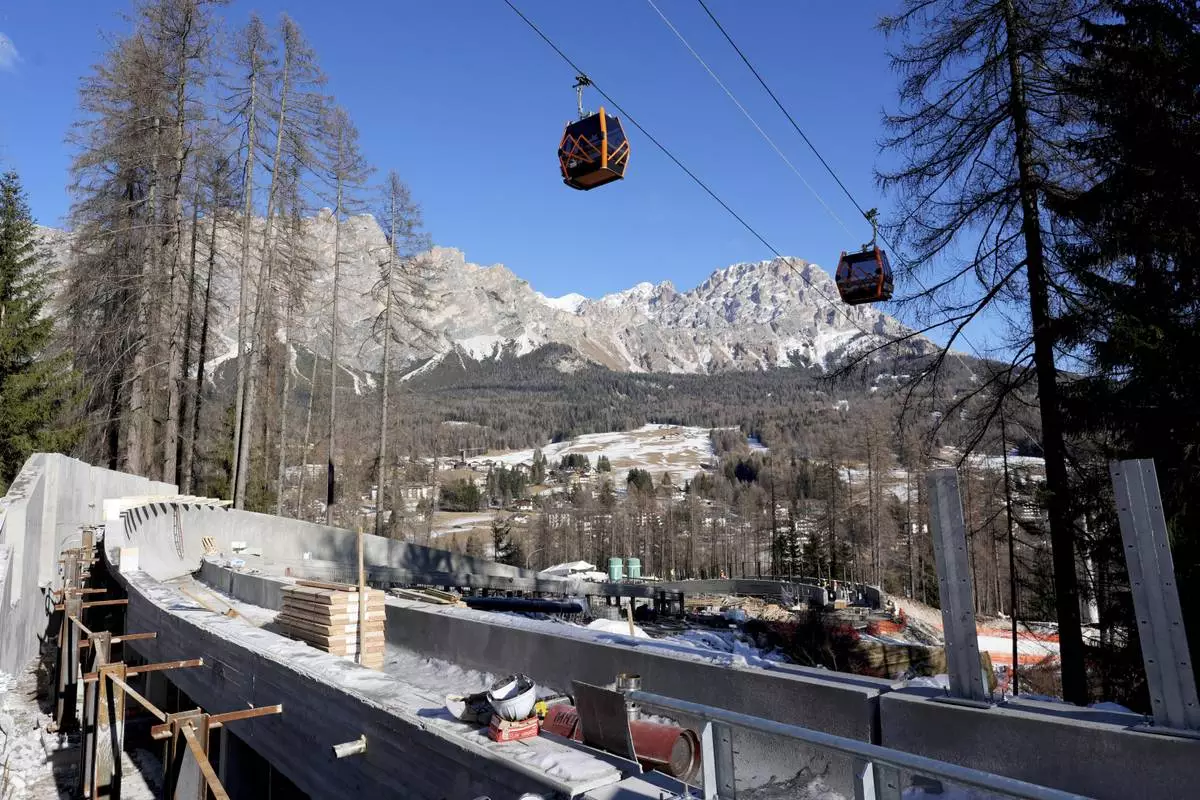
FILE - Construction work takes place at the Cortina Sliding Center, venue for the bob, luge and skeleton disciplines at the Milan Cortina 2026 Winter Olympics, in Cortina d'Ampezzo, Italy, Thursday, Jan. 16, 2025. (AP Photo/Giovanni Auletta, file)
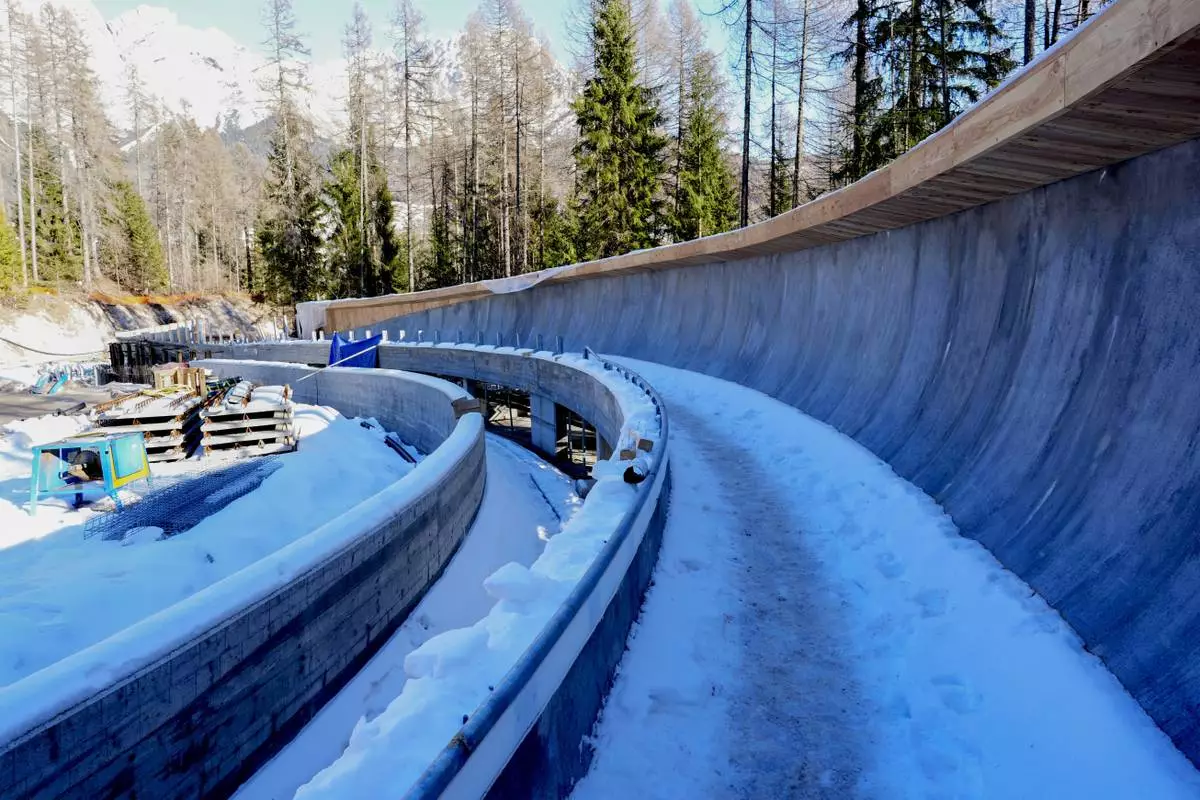
FILE - Construction work takes place at the Cortina Sliding Center, venue for the bob, luge and skeleton disciplines at the Milan Cortina 2026 Winter Olympics, in Cortina d'Ampezzo, Italy, Thursday, Jan. 16, 2025. (AP Photo/Giovanni Auletta, file)
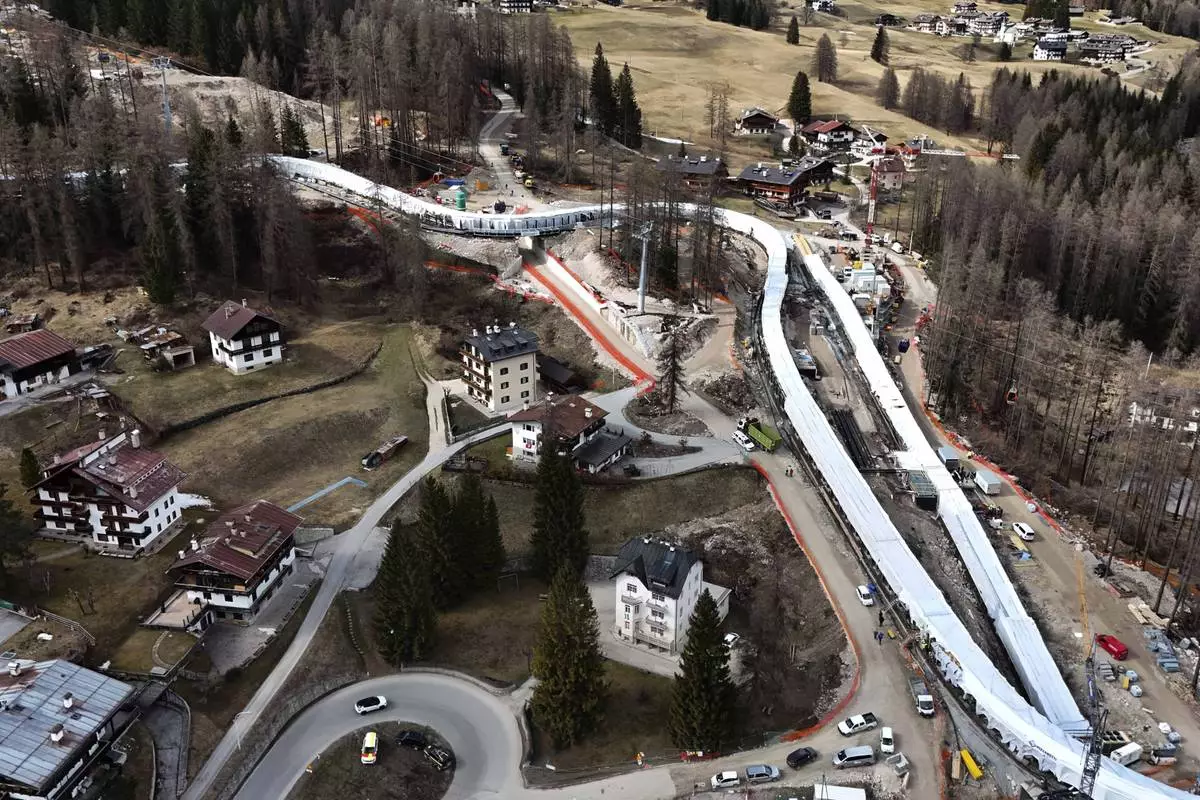
Construction work takes place at the Cortina Sliding Center, venue for the bob, luge and skeleton disciplines at the Milan Cortina 2026 Winter Olympics, in Cortina D'Ampezzo, Italy, Tuesday, March 25, 2025. (AP Photo/Luca Bruno)
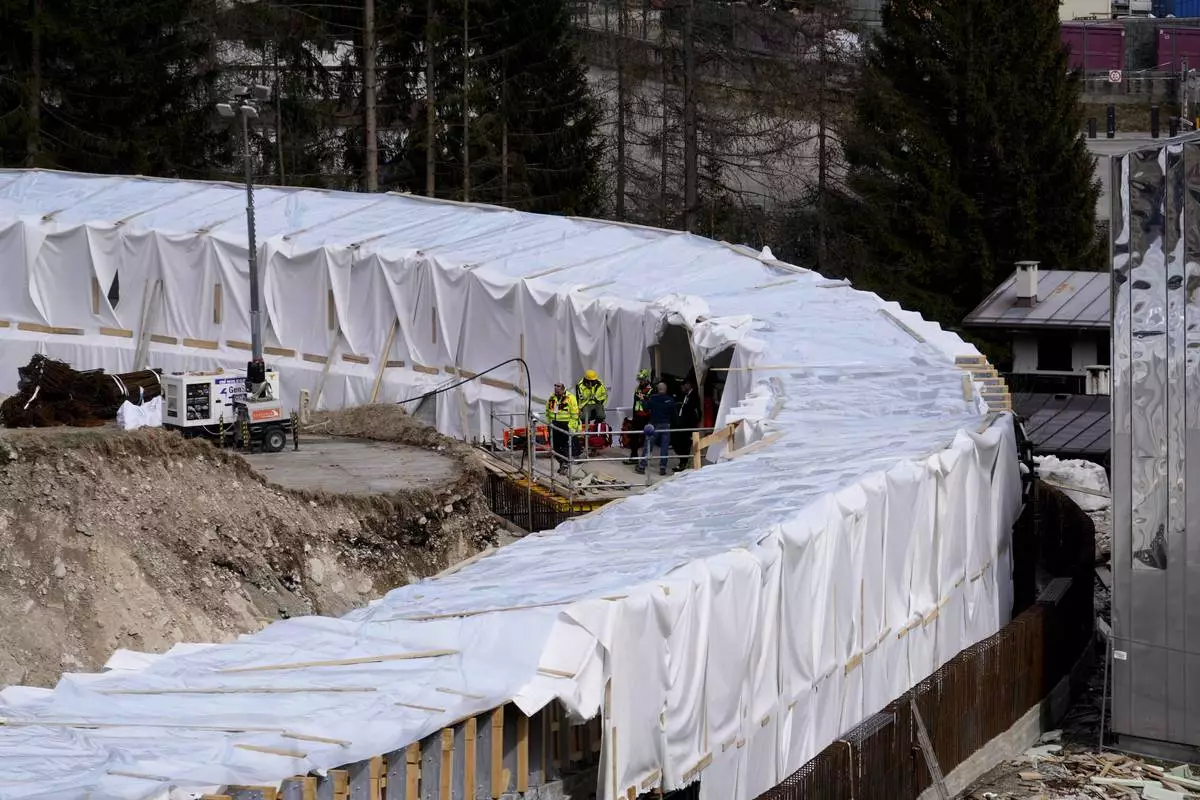
Construction work takes place at the Cortina Sliding Center, venue for the bob, luge and skeleton disciplines at the Milan Cortina 2026 Winter Olympics, in Cortina D'Ampezzo, Italy, Tuesday, March 25, 2025. (AP Photo/Luca Bruno)
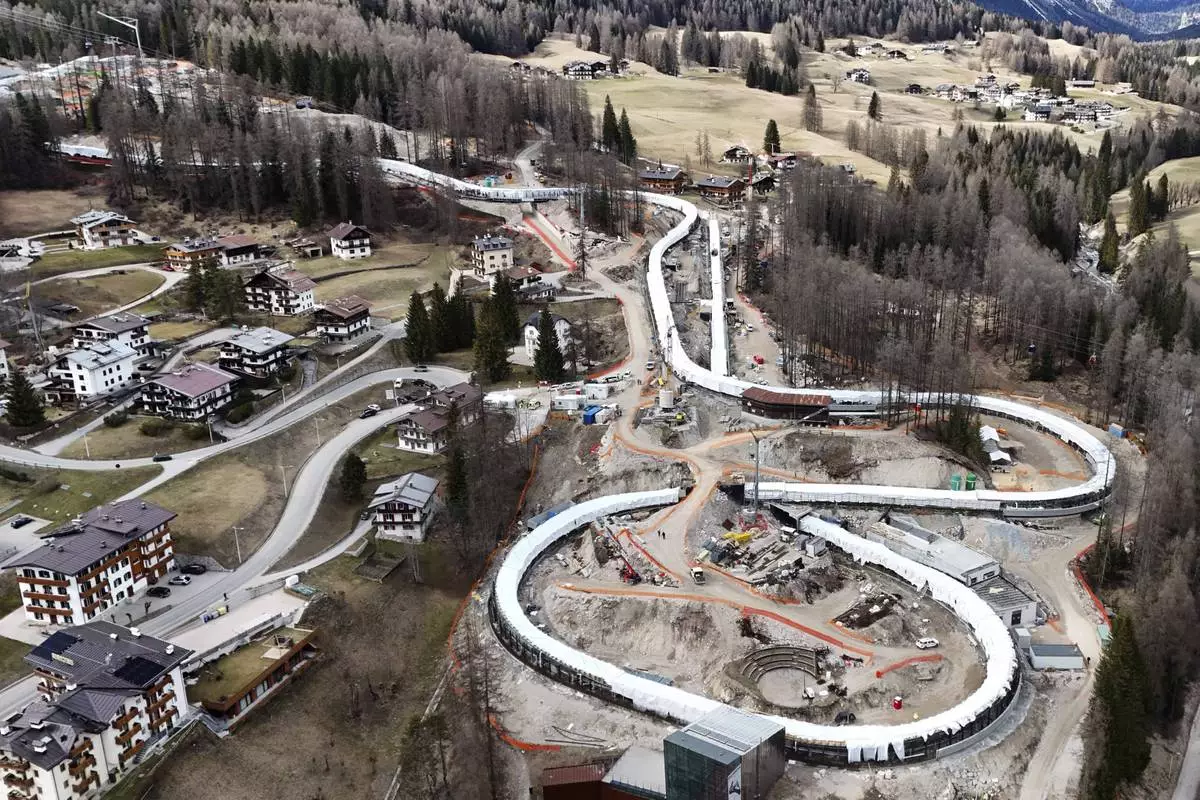
Construction work takes place at the Cortina Sliding Center, venue for the bob, luge and skeleton disciplines at the Milan Cortina 2026 Winter Olympics, in Cortina D'Ampezzo, Italy, Tuesday, March 25, 2025. (AP Photo/Luca Bruno)