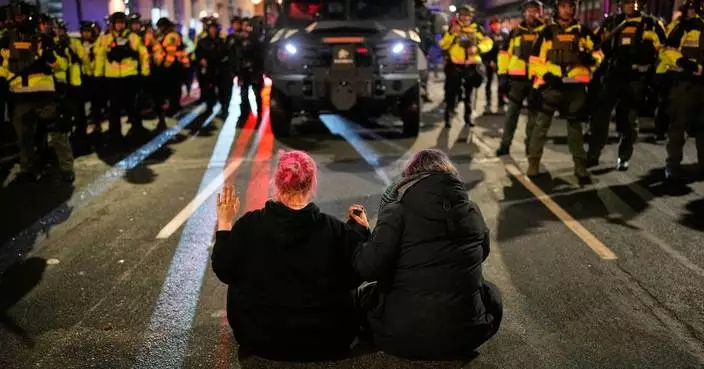
BUDAPEST, Hungary (AP) — Several thousand protesters blocked major thoroughfares and three bridges in the center of Hungary's capital on Tuesday in opposition to a recent law that effectively bans LGBTQ+ Pride events and restricts Hungarians' right to assembly.
The demonstration was the second within a week since Hungary's ruling Fidesz party used its two-thirds parliamentary majority last Tuesday to fast-track the law, seen by critics as the government's latest crackdown on the rights of the country's LGBTQ+ community.
Click to Gallery
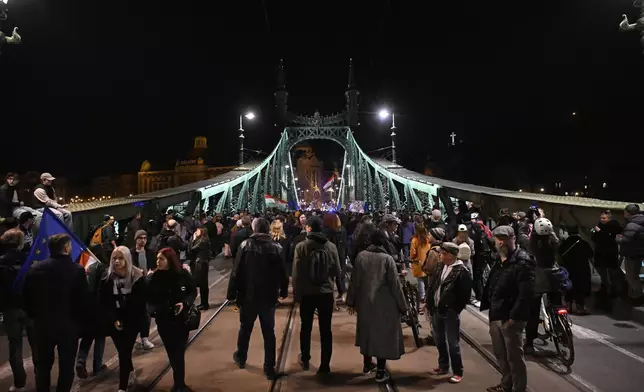
Hungarian demonstrators occupy Liberty Bridge as they protest against a law that effectively bans LGBTQ+ Pride events and restricts the right to assembly, in central Budapest, Hungary, Tuesday, March 25, 2025. (Zoltan Mathe/MTI via AP)
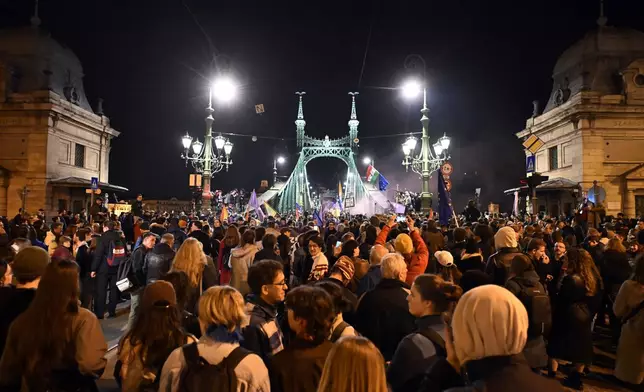
Hungarian demonstrators occupy Liberty Bridge as they protest against a law that effectively bans LGBTQ+ Pride events and restricts the right to assembly, in central Budapest, Hungary, Tuesday, March 25, 2025. (Zoltan Mathe/MTI via AP)
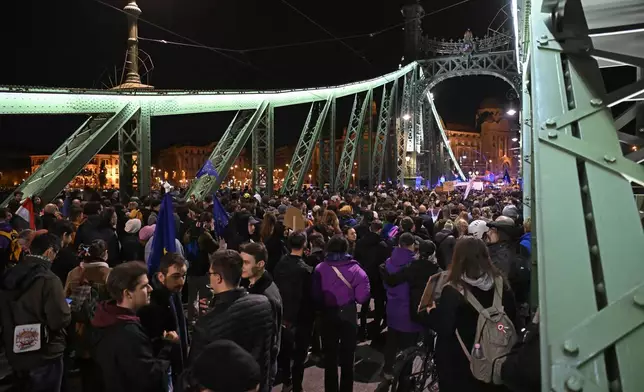
Hungarian demonstrators occupy Liberty Bridge as they protest against a law that effectively bans LGBTQ+ Pride events and restricts the right to assembly, in central Budapest, Hungary, Tuesday, March 25, 2025. (Zoltan Mathe/MTI via AP)
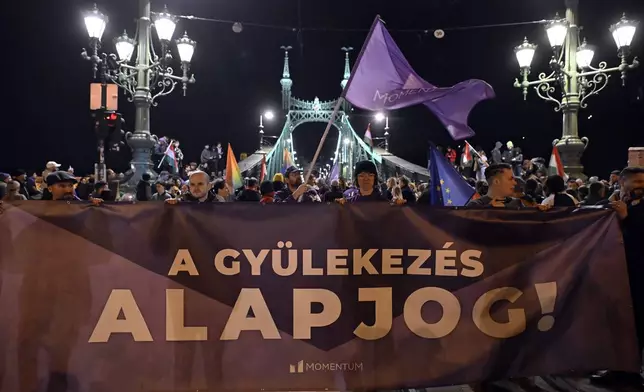
Hungarian demonstrators occupying Liberty Bridge hold a banner reading "assembling is a fundamental right" as they protest against a law that effectively bans LGBTQ+ Pride events and restricts the right to assembly, in central Budapest, Hungary, Tuesday, March 25, 2025. (Zoltan Mathe/MTI via AP)
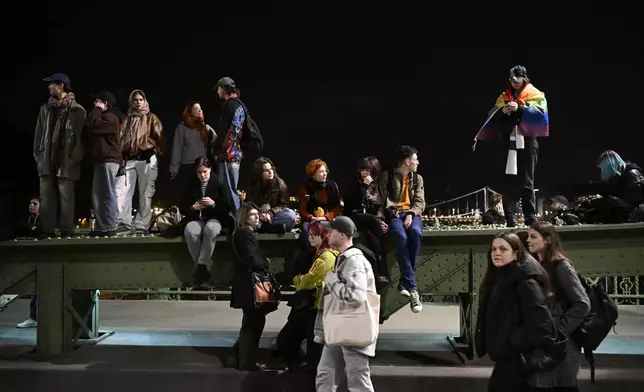
Hungarian demonstrators occupy Liberty Bridge as they protest against a law that effectively bans LGBTQ+ Pride events and restricts the right to assembly, in central Budapest, Hungary, Tuesday, March 25, 2025. (Zoltan Mathe//MTI via AP)
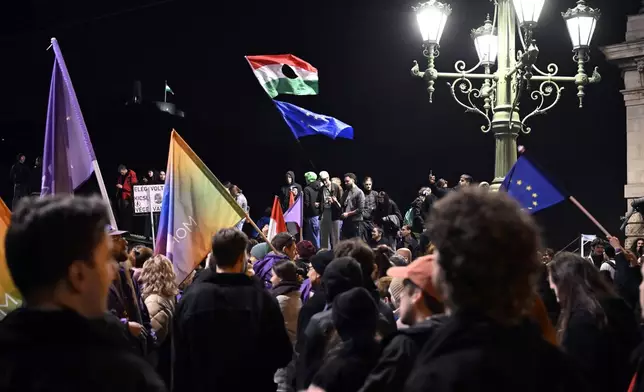
Hungarian demonstrators occupy Liberty Bridge as they protest against a law that effectively bans LGBTQ+ Pride events and restricts the right to assembly, in central Budapest, Hungary, Tuesday, March 25, 2025. (Zoltan Mathe/MTI via AP)
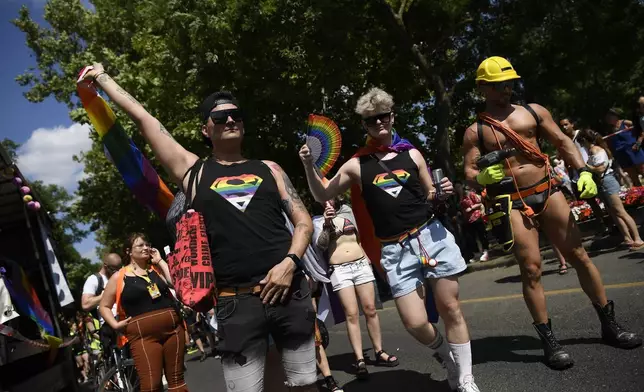
FILE - Participants march during the 28th Budapest Pride parade in Budapest, Hungary, Saturday, July 15, 2023. (Tamas Kovacs/MTI via AP, file)
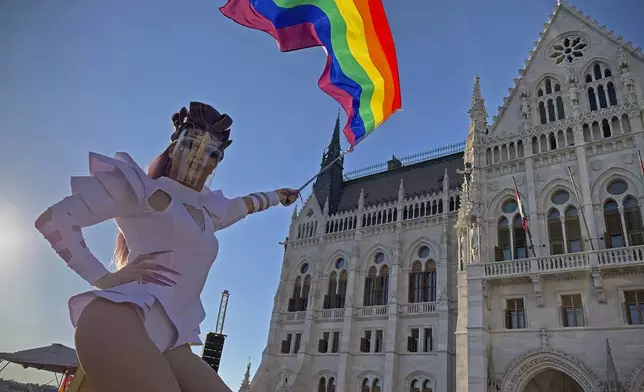
FILE - A participant waves a rainbow flag during an LGBT rights demonstration in front of the Hungarian Parliament building in Budapest, Hungary on June 14, 2021. (AP Photo/Bela Szandelszky, File)
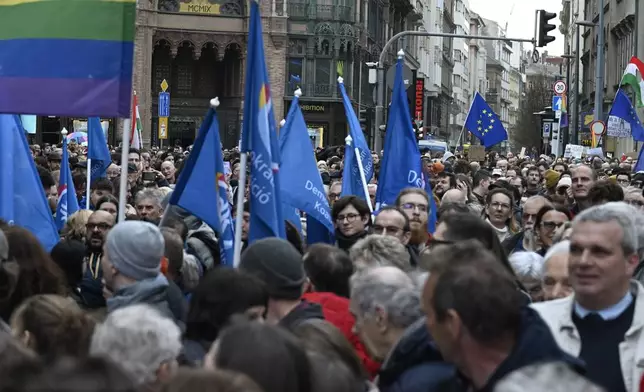
Waving EU and party flags Hungarian demonstrators protest against the amandment of the assembly law banning the Pride in downtown Budapest, Hungary, Tuesday, March 25, 2025. (Zoltan Mathe/MTI via AP)
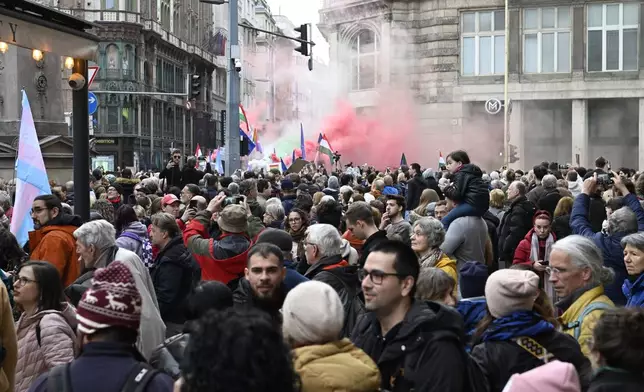
Hungarian demonstrators protest against the amendment of the assembly law banning the Pride in downtown Budapest, Hungary, Tuesday, March 25, 2025. (Zoltan Mathe/MTI via AP)
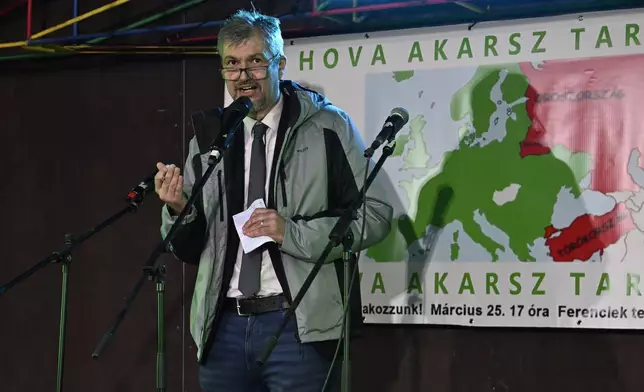
Independent Hungarian MP and co-organizer Akos Hadhazy addresses demonstrators protesting against a law that effectively bans LGBTQ+ Pride events and restricts the right to assembly in downtown Budapest, Hungary, Tuesday, March 25, 2025. (Zoltan Mathe/MTI via AP)
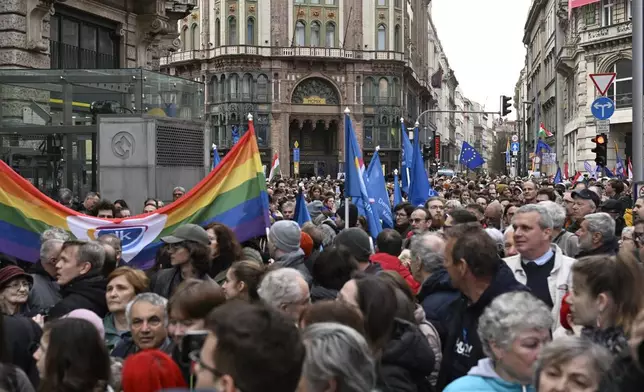
Waving EU and party flags Hungarian demonstrators protest against a law that effectively bans LGBTQ+ Pride events and restricts the right to assembly in the downtown of Budapest, Hungary, Tuesday, March 25, 2025. (Zoltan Mathe/MTI via AP)
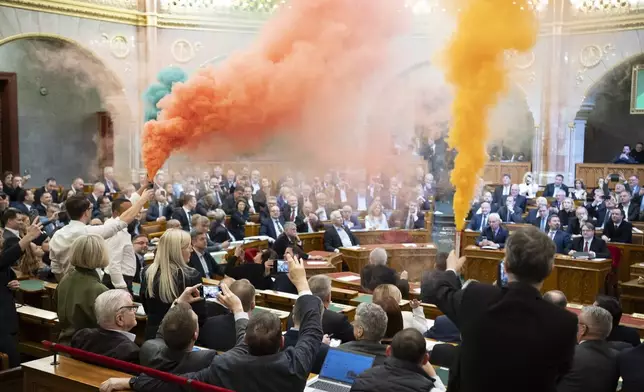
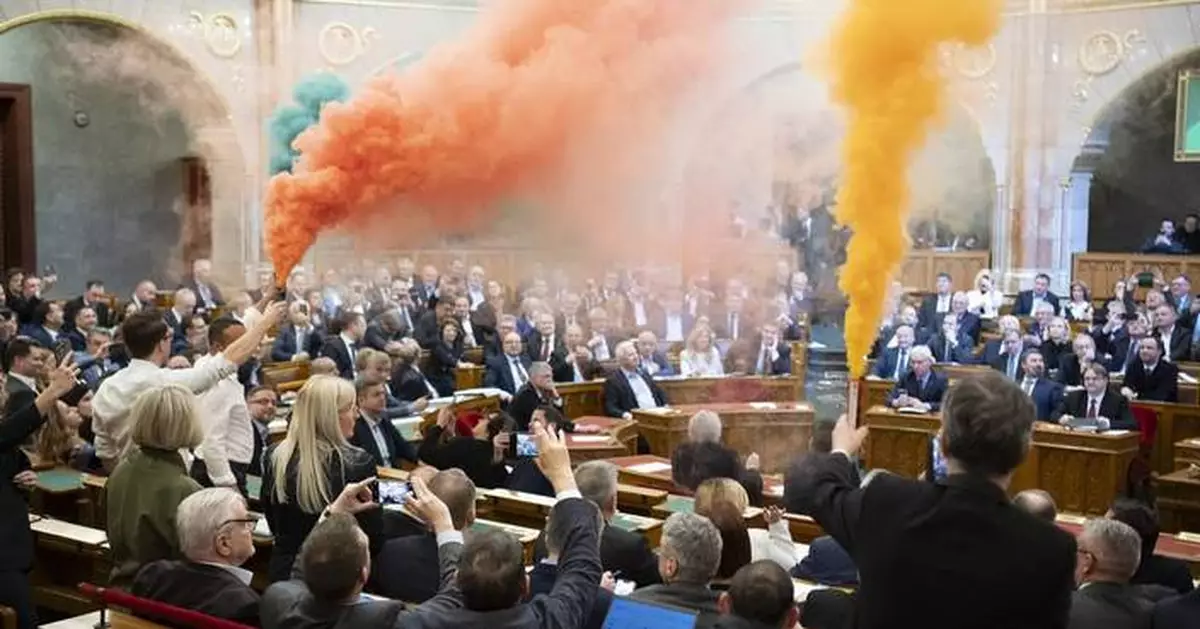
MPs of Momentum protest with flares during the plenary session of the Hungarian parliament in Budapest, Hungary, Tuesday, March 18, 2025. (Boglarka Bodnar/MTI via AP)
Chanting “democracy” and “assembly is a fundamental right,” thousands of the demonstrators poured onto one of the city’s busiest roads, igniting colorful smoke bombs and blocking traffic. In the coming hours, they went on to blockade three of the city's bridges spanning the Danube, facing lines of police blocking their path.
One of the demonstrators, 26-year-old Paula Antalfy, said she believed the government’s recent steps to ban certain public events were “yet another step in the direction of dismantling democracy.”
“I feel like love should be free, and who you love is not a decision in any way,” she said. “That we would not be able to gather like this, as we do now, and stand in our own streets, in our own city, is something I just can’t agree with.”
Hungary's new law, which is reminiscent of similar restrictions against sexual minorities in Russia, amends rules on assembly to make it an offense to hold or attend events that violate Hungary’s contentious child protection legislation, which prohibits the “depiction or promotion” of homosexuality to minors under 18.
Authorities may now use facial recognition tools to identify individuals that attend prohibited events — such as the popular Budapest Pride which draws tens of thousands each year — and can issue fines for violators of up to 200,000 Hungarian forints ($546).
Hungary's right-wing populist prime minister, Viktor Orbán, has in recent years taken aim at the country's LGBTQ+ community, prohibiting same-sex adoption and — in a 2021 child protection law — banning any LGBTQ+ content including in television, films, advertisements and literature that is available to minors.
Orbán's party plans to adopt a constitutional amendment in April that will codify the ban on public LGBTQ+ events. His government argues that its policies are designed to protect children from “sexual propaganda,” but critics view them as part of a broader effort to scapegoat sexual minorities and mobilize his conservative base.
Last week, a spokesperson for the United Nations’ human rights commission said that the recent law “results in arbitrary and discriminatory restrictions on the rights of LGBTIQ+ individuals to freedom of expression, peaceful assembly and privacy.”
The statement drew attention to a part of the law which authorizes the government to use facial recognition technology to identify and fine participants of prohibited events, saying such tools “should never be deployed in a discriminatory manner through targeted surveillance of peaceful assemblies of LGBTIQ+ persons or other marginalized groups.”
Budapest Pride organizers, as well as Budapest's mayor, have vowed to go ahead with the city's Pride events, which are set to celebrate their 30th anniversary this summer. In response to the recent law, Pride organizers wrote: “This is not child protection, this is fascism.”
The organizer of Tuesday's protest, independent lawmaker Ákos Hadházy, called on Hungarians to continue taking to the streets until the government repeals the law. He told the crowd the government's measures to restrict the right of assembly and utilize surveillance tools against protesters was the start of “techno-fascism” in Hungary.
Benedek Lakos, a 27-year-old member of Budapest's LGBTQ+ community who attended the Tuesday demonstration, said he has not previously been active in expressing his opinion about actions taken by Hungary's government.
But the latest law, he said, had been “the last straw.”
"I feel now for a number of reasons that we have reached a level where, if there are no visible consequences for this (law) from the people, we can just start digging our own graves," he said.
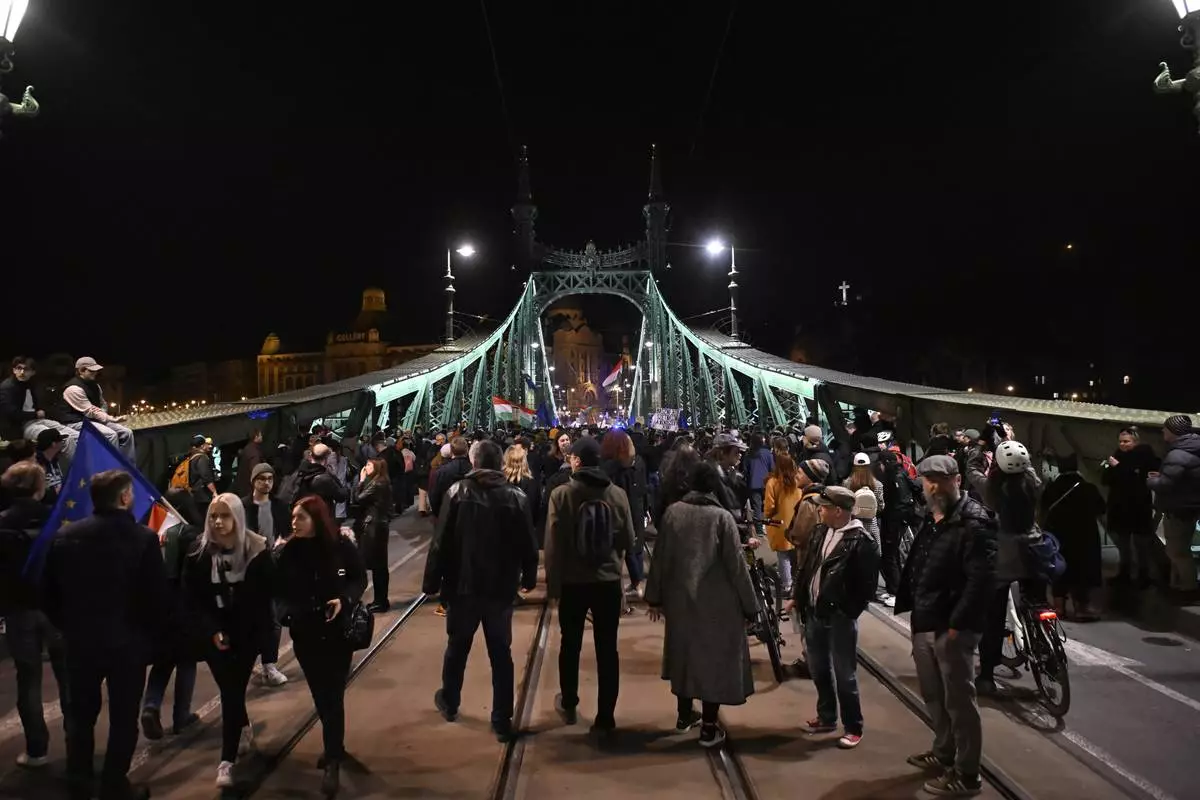
Hungarian demonstrators occupy Liberty Bridge as they protest against a law that effectively bans LGBTQ+ Pride events and restricts the right to assembly, in central Budapest, Hungary, Tuesday, March 25, 2025. (Zoltan Mathe/MTI via AP)
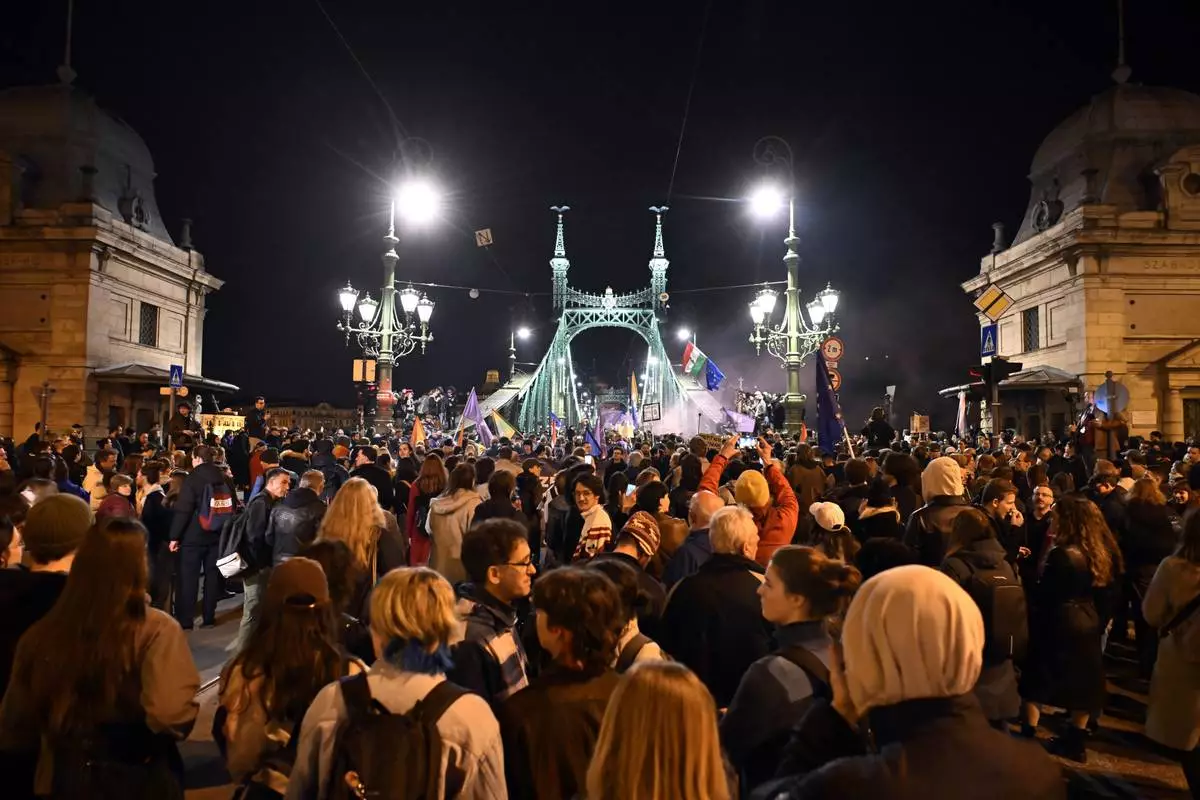
Hungarian demonstrators occupy Liberty Bridge as they protest against a law that effectively bans LGBTQ+ Pride events and restricts the right to assembly, in central Budapest, Hungary, Tuesday, March 25, 2025. (Zoltan Mathe/MTI via AP)
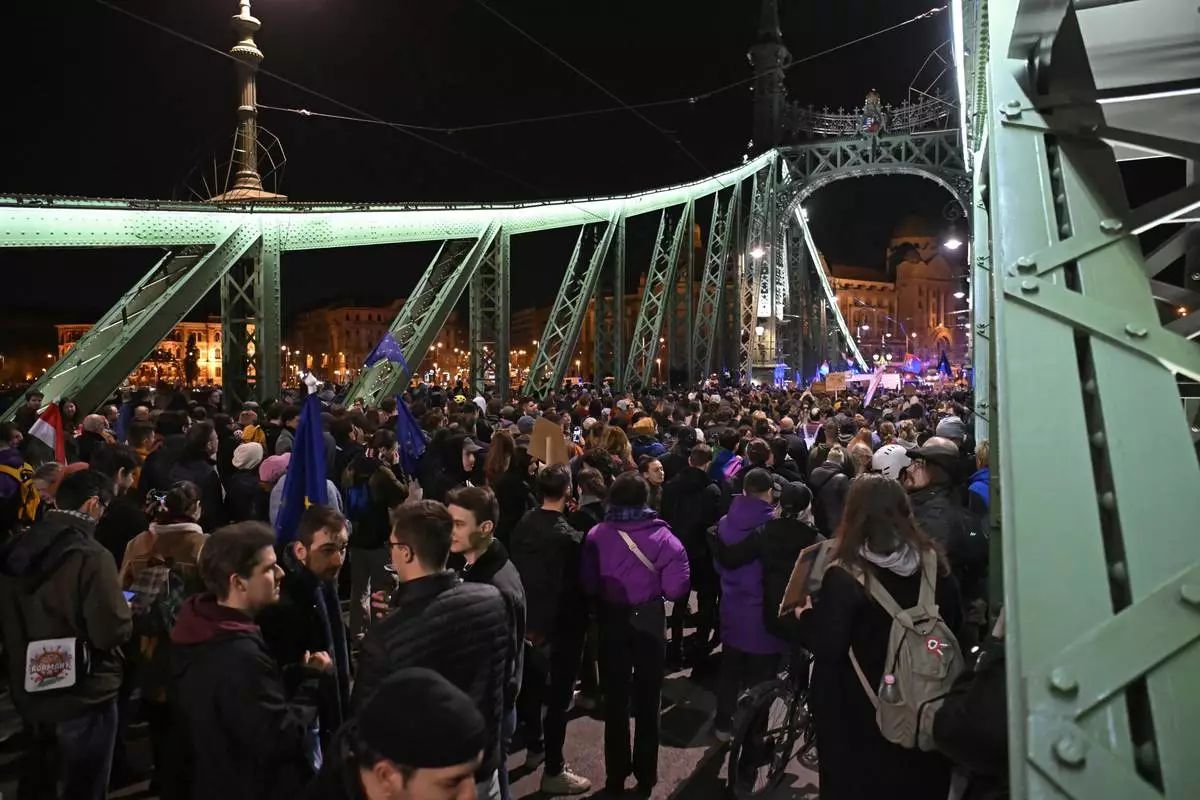
Hungarian demonstrators occupy Liberty Bridge as they protest against a law that effectively bans LGBTQ+ Pride events and restricts the right to assembly, in central Budapest, Hungary, Tuesday, March 25, 2025. (Zoltan Mathe/MTI via AP)
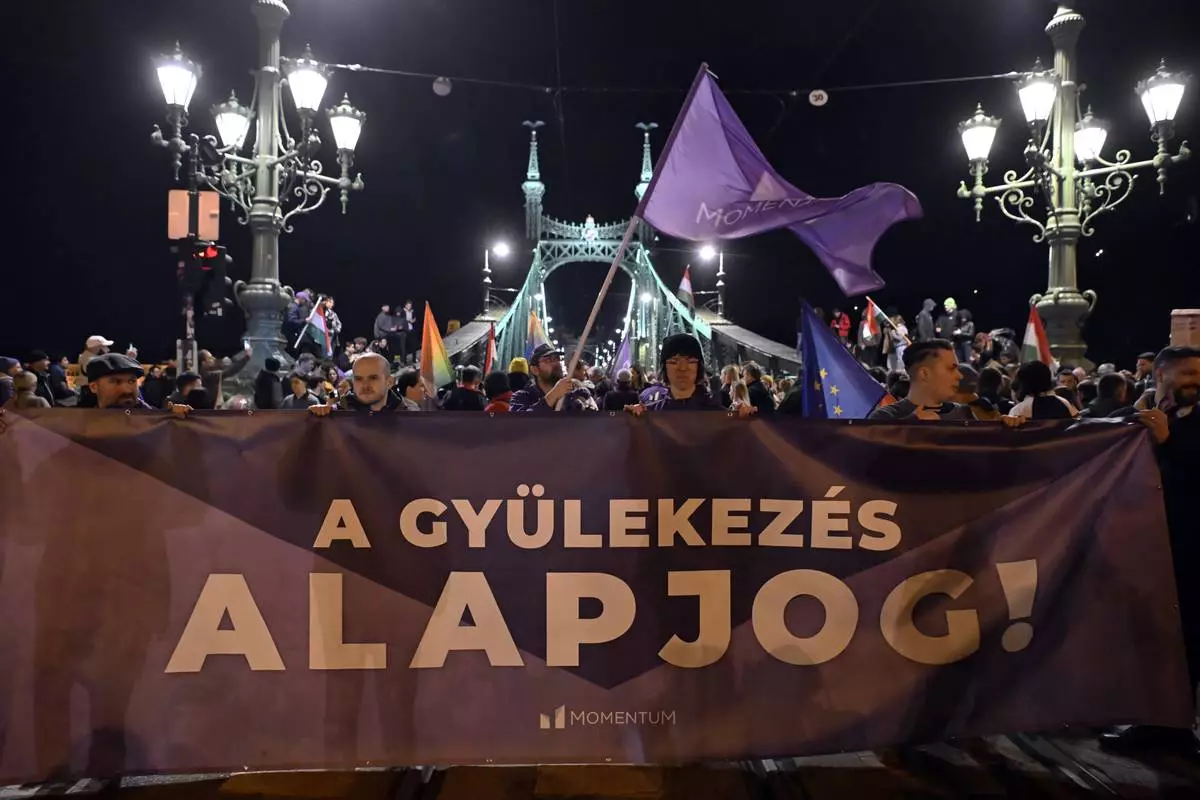
Hungarian demonstrators occupying Liberty Bridge hold a banner reading "assembling is a fundamental right" as they protest against a law that effectively bans LGBTQ+ Pride events and restricts the right to assembly, in central Budapest, Hungary, Tuesday, March 25, 2025. (Zoltan Mathe/MTI via AP)
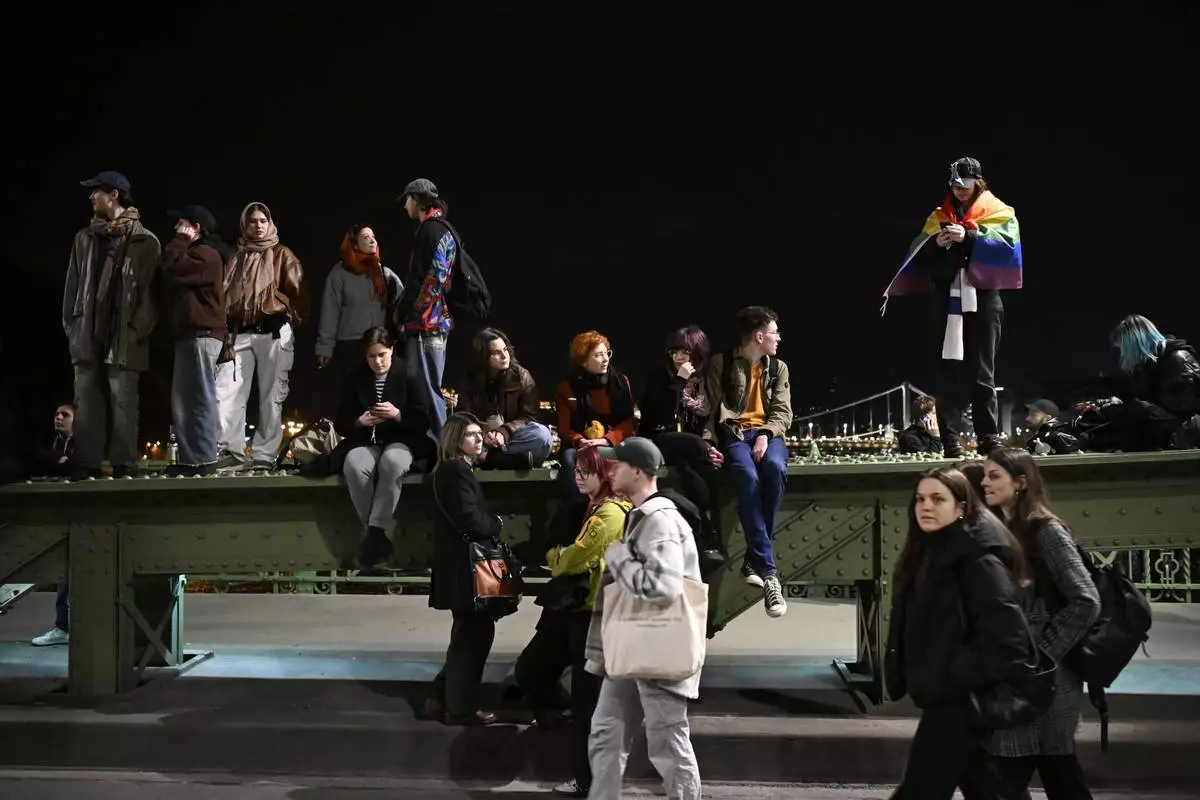
Hungarian demonstrators occupy Liberty Bridge as they protest against a law that effectively bans LGBTQ+ Pride events and restricts the right to assembly, in central Budapest, Hungary, Tuesday, March 25, 2025. (Zoltan Mathe//MTI via AP)
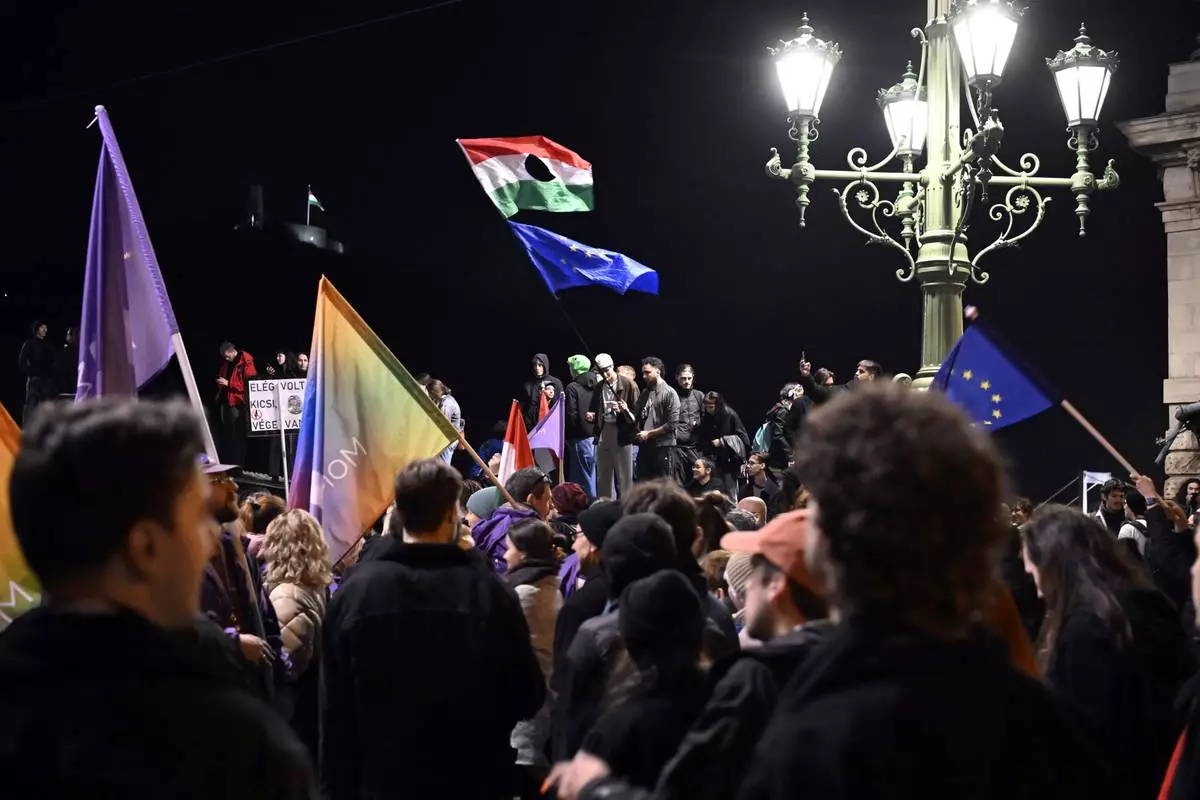
Hungarian demonstrators occupy Liberty Bridge as they protest against a law that effectively bans LGBTQ+ Pride events and restricts the right to assembly, in central Budapest, Hungary, Tuesday, March 25, 2025. (Zoltan Mathe/MTI via AP)
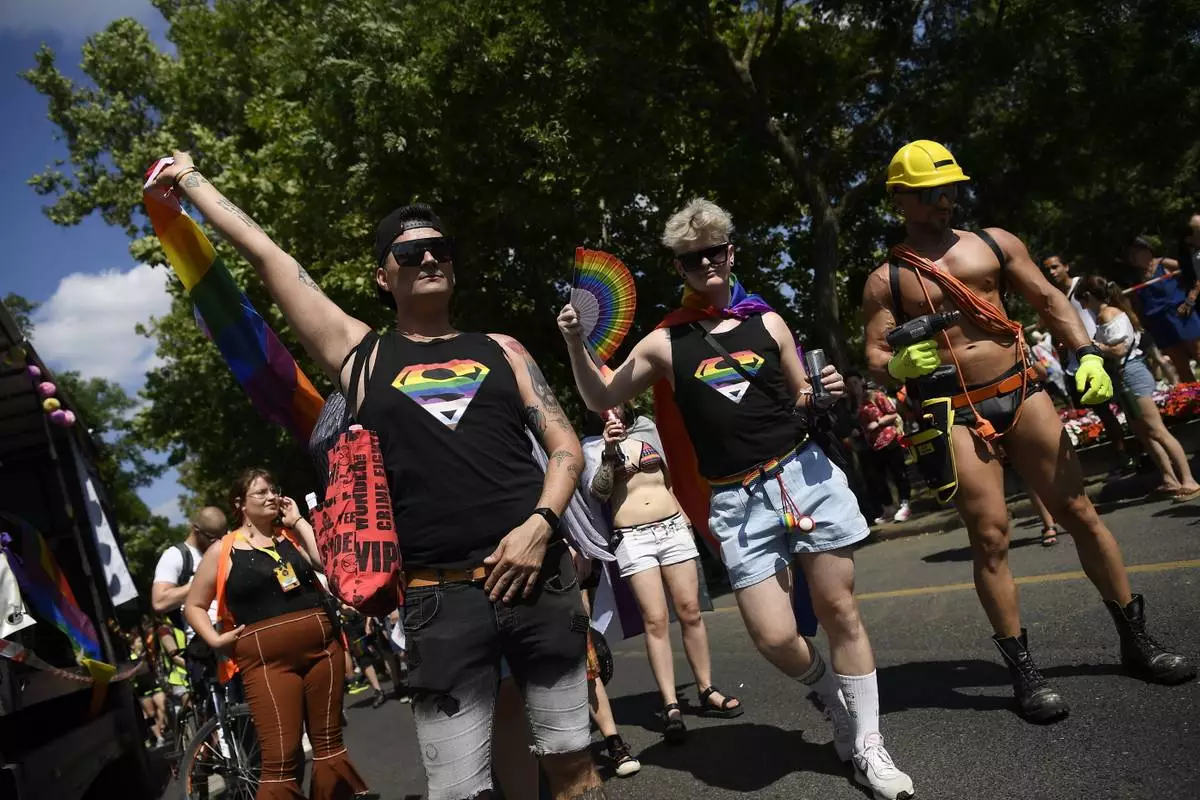
FILE - Participants march during the 28th Budapest Pride parade in Budapest, Hungary, Saturday, July 15, 2023. (Tamas Kovacs/MTI via AP, file)
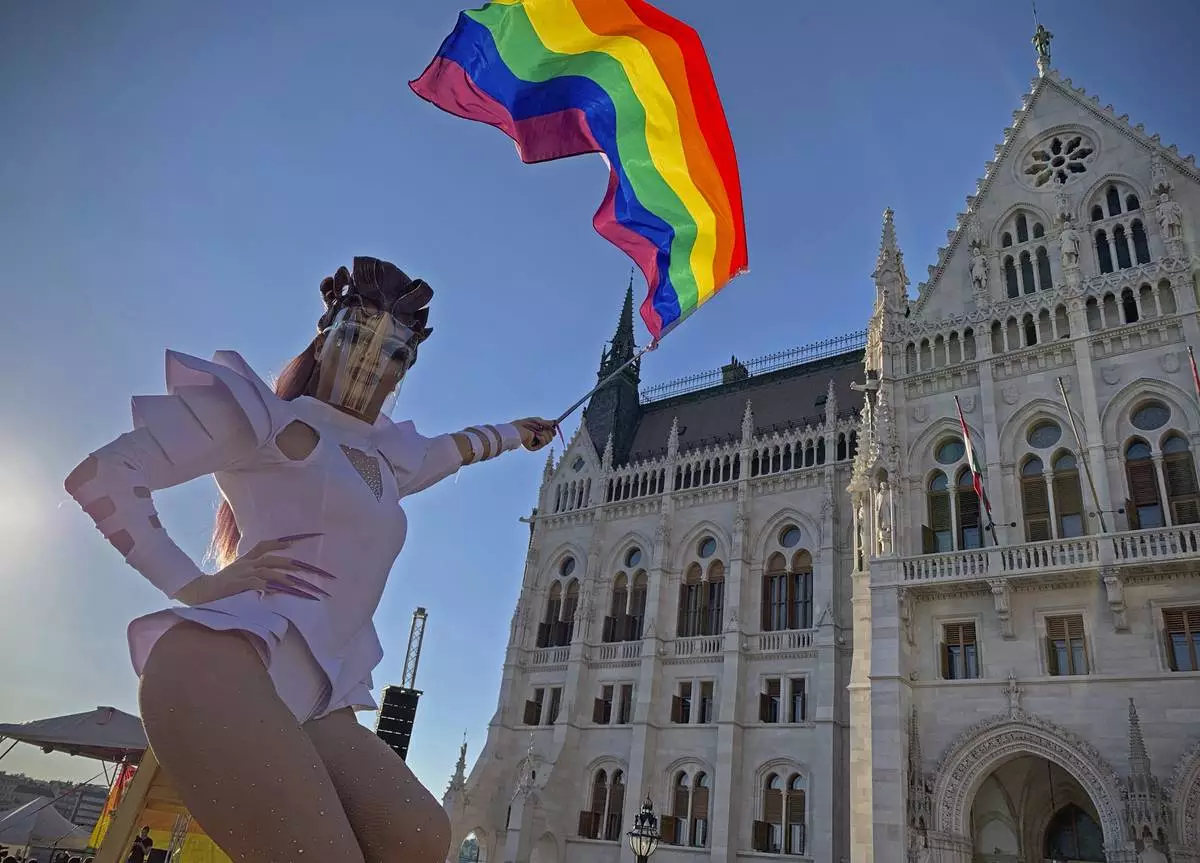
FILE - A participant waves a rainbow flag during an LGBT rights demonstration in front of the Hungarian Parliament building in Budapest, Hungary on June 14, 2021. (AP Photo/Bela Szandelszky, File)
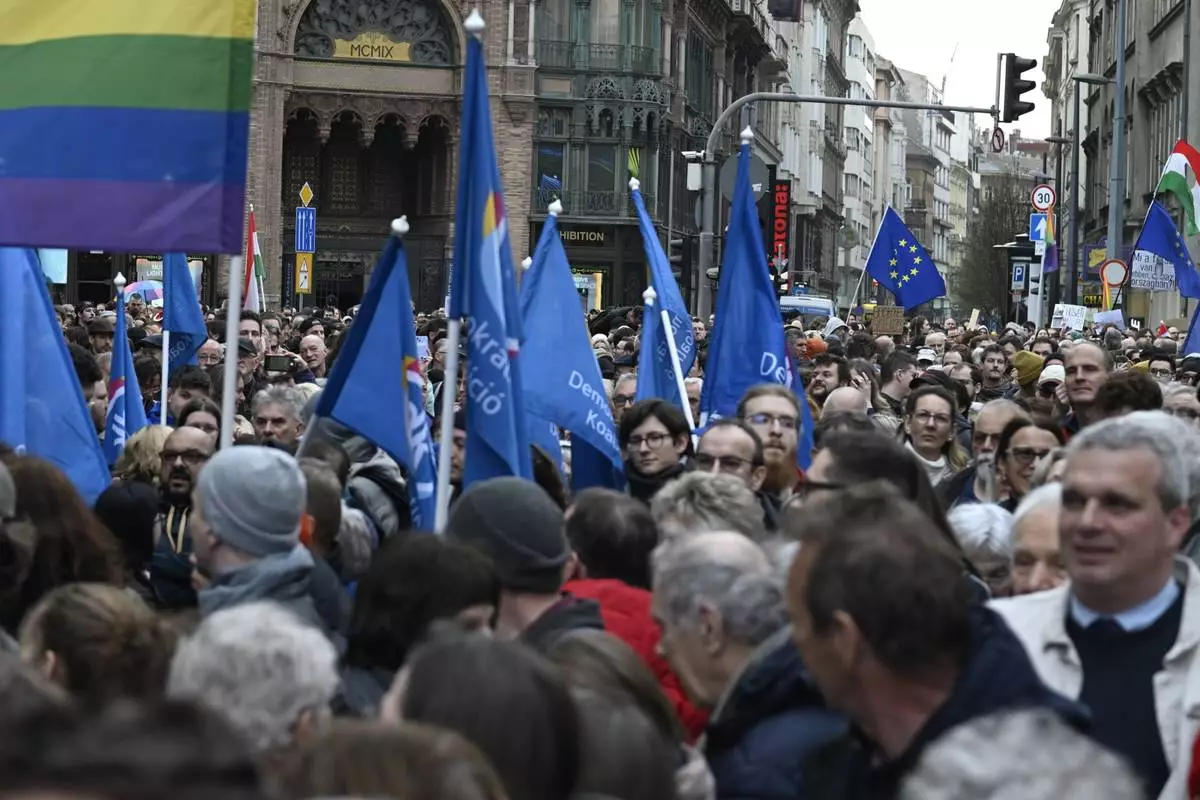
Waving EU and party flags Hungarian demonstrators protest against the amandment of the assembly law banning the Pride in downtown Budapest, Hungary, Tuesday, March 25, 2025. (Zoltan Mathe/MTI via AP)
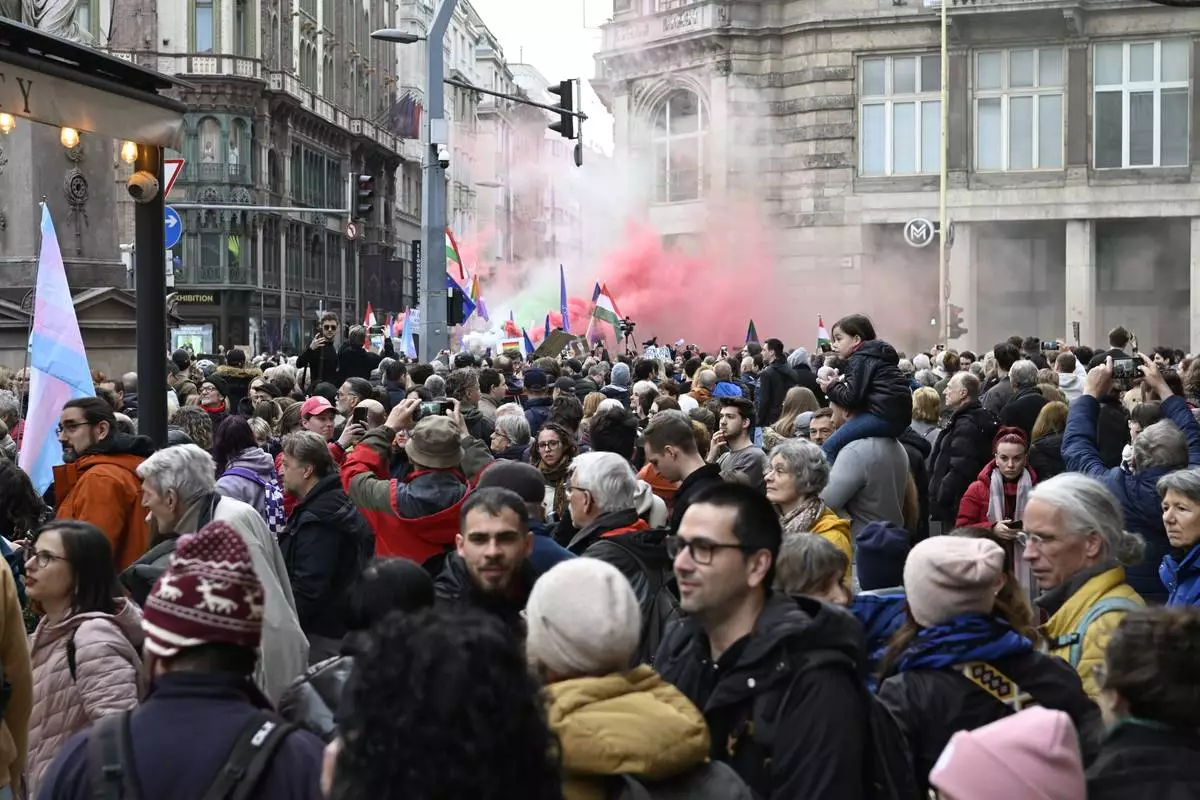
Hungarian demonstrators protest against the amendment of the assembly law banning the Pride in downtown Budapest, Hungary, Tuesday, March 25, 2025. (Zoltan Mathe/MTI via AP)

Independent Hungarian MP and co-organizer Akos Hadhazy addresses demonstrators protesting against a law that effectively bans LGBTQ+ Pride events and restricts the right to assembly in downtown Budapest, Hungary, Tuesday, March 25, 2025. (Zoltan Mathe/MTI via AP)
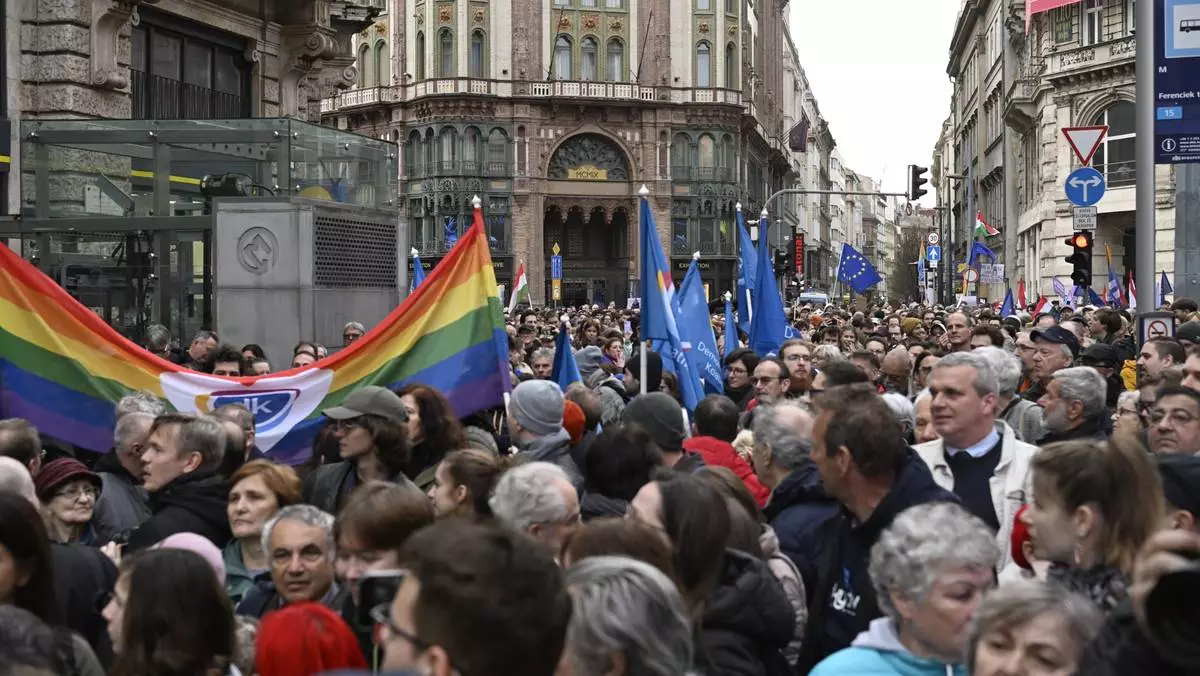
Waving EU and party flags Hungarian demonstrators protest against a law that effectively bans LGBTQ+ Pride events and restricts the right to assembly in the downtown of Budapest, Hungary, Tuesday, March 25, 2025. (Zoltan Mathe/MTI via AP)
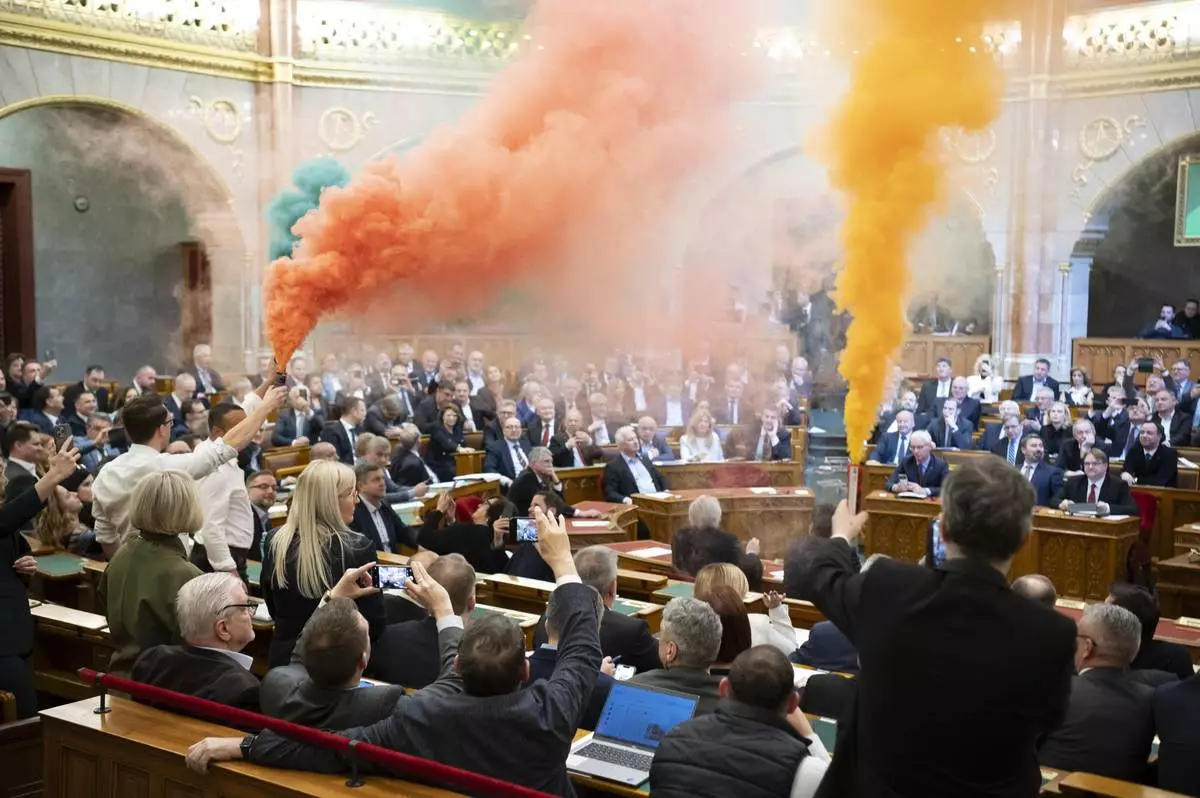
MPs of Momentum protest with flares during the plenary session of the Hungarian parliament in Budapest, Hungary, Tuesday, March 18, 2025. (Boglarka Bodnar/MTI via AP)