President Donald Trump's executive order seeking broad changes to how elections are run in the U.S. is vast in scope and holds the potential to reorder the voting landscape across the country, even as it faces almost certain litigation.
He wants to require voters to show proof that they are U.S. citizens before they can register for federal elections, count only mail or absentee ballots received by Election Day, set new rules for voting equipment and prohibit non-U.S. citizens from being able to donate in certain elections.
A basic question underlying the sweeping actions he signed Tuesday: Can he do it, given that the Constitution gives wide leeway to the states to develop their own election procedures? Here are some of the main points of the executive order and questions it raises.
Trump’s order calls for the federal voter registration form to be amended so prospective voters must provide documentary proof of citizenship, such as a U.S. passport or a birth certificate.
It also says states should turn over their voter lists and records of voter list maintenance to the Department of Homeland Security and the Department of Government Efficiency for review, and directs federal agencies to share data with states to help them identify noncitizens on their rolls.
If states refuse to collaborate with federal law enforcement to prosecute election crimes, they could potentially lose out on federal grants, the order says.
Noncitizen voting, which is already a felony in federal elections that can lead to prison time and deportation, is exceedingly rare. Still, Trump falsely claimed in 2024 that it might happen in large enough numbers to sway the outcome of the presidential race, and it has been a top conservative priority in recent months.
Republicans have been trying to get a documentary proof of citizenship requirement through Congress, a goal this order seeks to accomplish. Voting rights groups have expressed concern about such a requirement, saying it could disenfranchise the millions of Americans who do not have proof of citizenship readily available.
The order requires votes to be “cast and received” by Election Day and says federal funding should be conditional on state compliance with that deadline. Currently, 18 states and Puerto Rico accept mailed ballots received after Election Day as long they are postmarked on or before that date, according to the National Conference of State Legislatures.
Perhaps no state is more notorious for drawn-out vote counts than California, the nation’s most populous. It allows ballots to be counted if they are received up to seven days following the election as long as they are postmarked by Election Day.
Most California voters cast ballots they receive in the mail, and in the pursuit of accuracy, thoroughness and counting every vote, the state has gained a reputation for tallies that can drag on for weeks or even a month or more. In one Northern California U.S. House primary last year, a recount settled the outcome nearly two months after the election. At the time, Secretary of State Shirley Weber, who oversees elections, said in a statement: “I understand that people want finality, but accuracy is of utmost importance.”
But the extended tallies have raised fears that they could undercut, rather than bolster, voter confidence. In 2018, then-Republican House Speaker Paul Ryan described California’s election system as “bizarre” in a year when Democrats picked off a string of GOP-held House seats.
In a statement, California Democratic Sen. Alex Padilla said Trump’s order “does nothing to improve the safety of our federal elections — what it would do is disenfranchise millions of eligible American voters.”
Padilla, who formerly served as California’s chief elections officer, said Trump “lacks the authority to implement many of the changes laid out in this illegal executive order.”
The executive order instructs the Election Assistance Commission to amend its guidelines for voting systems to protect election integrity. That would include guidance that voting systems should not rely on ballots that use barcodes or QR codes in the vote-counting process.
Trump instructed the commission to “take appropriate action to review and, if appropriate, re-certify voting systems” under those new standards within six months of the order.
In Georgia, an important presidential battleground, virtually all in-person voters use voting machines with a large touchscreen to record their votes. The machines then print a paper ballot with a human-readable summary of the voter’s selections and a QR code, a type of barcode that is read by a scanner to count the votes.
It is not entirely clear how the executive order would affect Georgia and other jurisdictions throughout the country that use these machines.
Representatives for Secretary of State Brad Raffensperger did not immediately respond Tuesday evening to messages seeking comment. The Georgia Legislature last year passed a law requiring that QR codes be removed from ballots by July 2026.
The order cracks down on foreign nationals contributing or donating in U.S. elections. It’s an issue that’s been bubbling in recent years in the states, as Republicans seek to dampen the influence of Swiss billionaire Hansjörg Wyss.
Wyss, who lives in Wyoming, has donated hundreds of millions of dollars to 501(c) nonprofit organizations that support liberal causes. One of those groups, the Sixteen Thirty Fund, donated a combined $3.9 million to enshrine abortion protections in the Ohio Constitution. It also helped thwart a proposed constitutional amendment advanced by Ohio Republicans the previous summer that would have made passing future constitutional amendments harder.
During the run-up to last year’s presidential election, legislative Republicans linked then-President Joe Biden’s appearance on Ohio’s fall ballot to passing a ban on contributions from foreign individuals, companies, governments or political parties to campaigns for or against proposed amendments to the state constitution.
Other states have followed suit, most recently Kansas — which passed a nearly identical bill earlier this month after hearing testimony from Ohio’s secretary of state. Like the Ohio bill, it appears partly a response to a successful campaign to protect abortion rights in Kansas, which received money from the Sixteen Thirty Fund. Democratic Gov. Laura Kelly has not said publicly whether she’ll sign it.
In a statement Wednesday, Wyss' philanthropic arm and an affiliated fund that steers money toward political and policy goals said, “The Wyss Foundation and Berger Action Fund comply with rules and laws governing their activities and prohibit grants from being used to support or oppose political candidates or parties, or otherwise engage in electoral activities.”
The federal government plays a fairly limited role in American elections. Article I, Section 4 of the Constitution gives states the authority to determine the “times, places and manner” of how elections are run. The so-called “Elections Clause” doesn’t get into the specifics of voting or ballot-counting procedures -– those details are left to the states – but it does give Congress the power to “make or alter” election regulations, at least for federal office.
It does not mention any role for the president or the executive branch in regulating elections. Biden issued an executive order in 2021 directing federal agencies to take steps to promote voting access, but Republicans at the time argued that the order was unconstitutional and exceeded the president’s authority. Trump rescinded the Biden order earlier this year.
Voting rights advocates have begun to make similar arguments against Trump’s order.
“A president does not set election law and never will,” said Virginia Kase Solomón, president and CEO of Common Cause, a grassroots advocacy organization that supports expanded voter access.
Sophia Lin Lakin, the director of the ACLU’s Voting Rights Project, called core parts of the executive order “a blatant overreach that threatens to disenfranchise tens of millions of eligible voters.”
Given the nation’s long history of decentralized, state-run elections, any attempt to change state election laws by executive order is likely to face challenges in court. Marc Elias, a leading Democratic election and voting rights attorney, promised exactly that.
“Moments ago, Donald Trump signed a massive voter suppression executive order," he said in a social media post. "This will not stand. We will sue.”
Ultimately, the courts will decide how far Trump can go in overhauling election procedures.
Associated Press writers Michael R. Blood in Los Angeles, Kate Brumback in Atlanta, Julie Carr Smyth in Columbus, Ohio, Ali Swenson in New York and Robert Yoon in Washington contributed to this report.
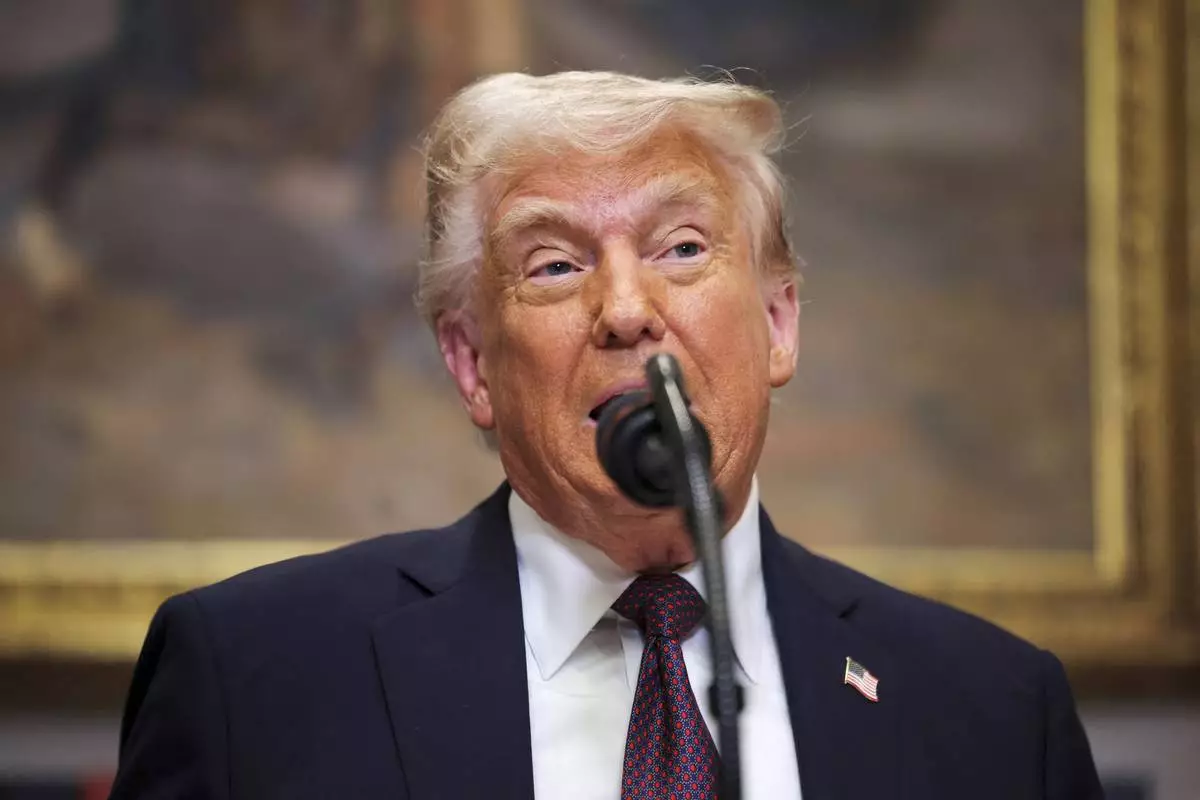
President Donald Trump delivers remarks in the Roosevelt Room at the White House in Washington, Monday, March 24, 2025. (Pool via AP)
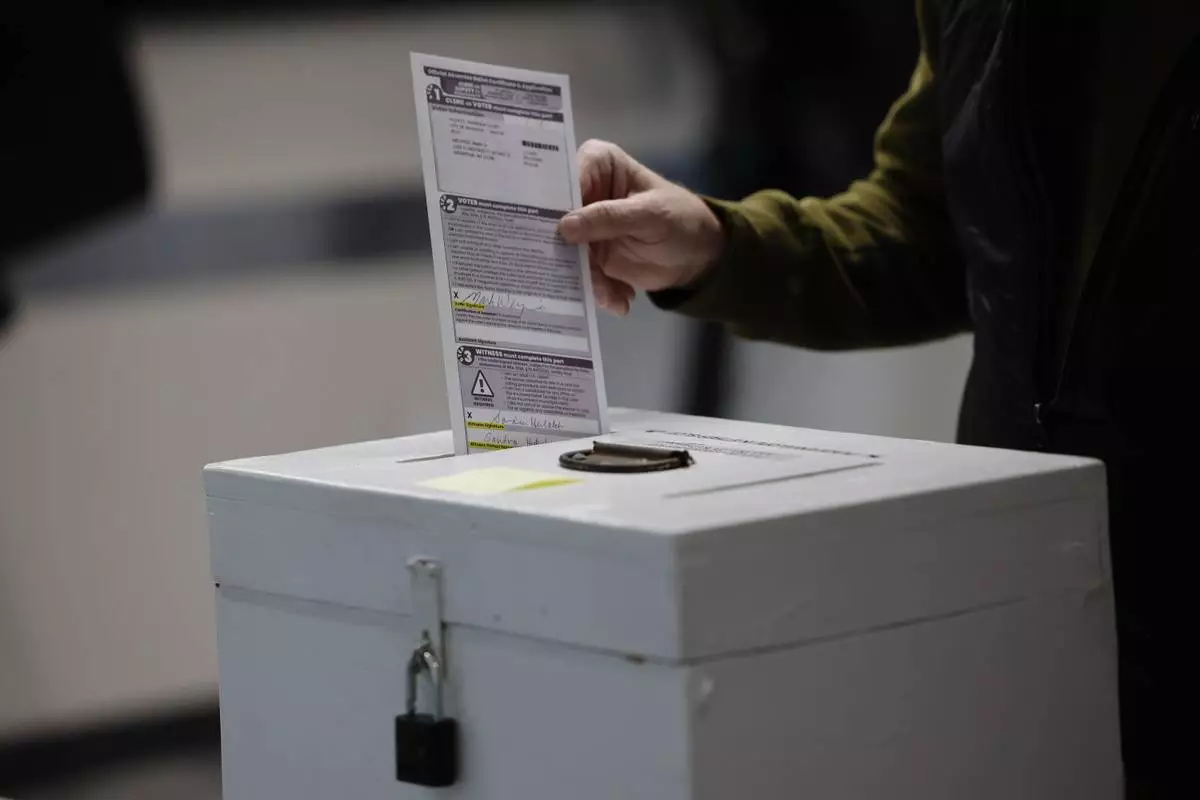
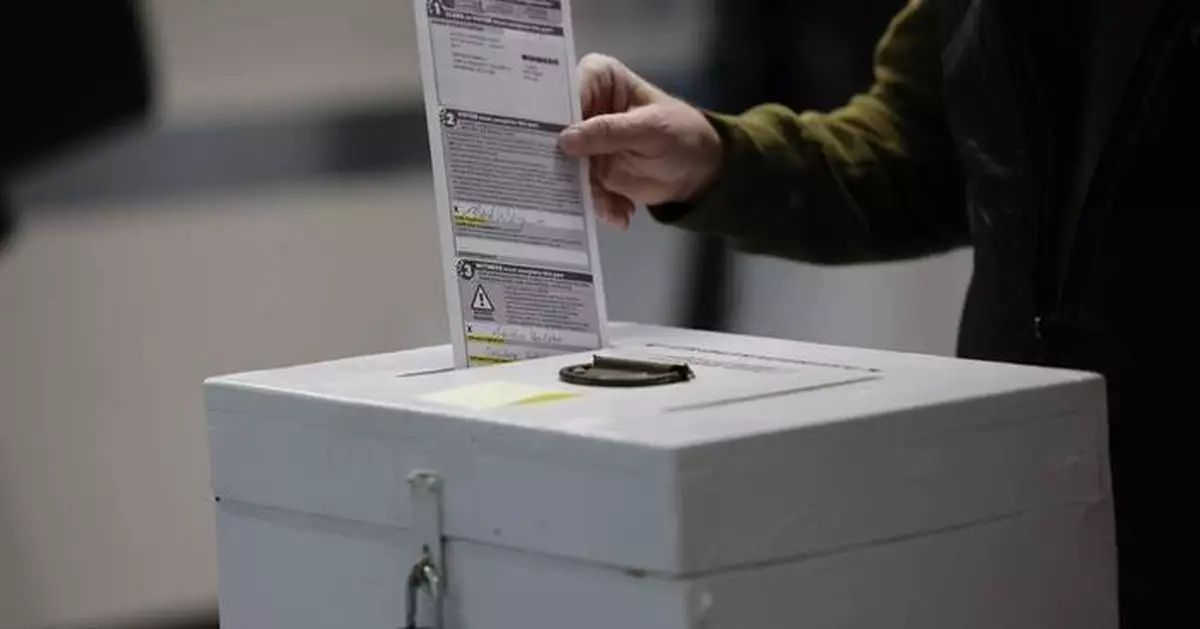
A man places his ballot in a box during early voting in Waukesha, Wis Tuesday, March 18, 2025. (AP Photo/Jeffrey Phelps)
NEW YORK (AP) — President Donald Trump scored another win Tuesday against a Republican rival, dislodging Rep. Thomas Massie in Kentucky’s primary and knocking out one of his most outspoken critics on Capitol Hill.
Massie has been a particularly difficult thorn in Trump’s side. He pushed for the release of the Jeffrey Epstein files, opposed the war with Iran and voted against Trump’s signature tax legislation last year. He lost to Trump-backed challenger Ed Gallrein following the most expensive U.S. House primary in history.
While Trump has racked up several wins this primary season, this one perhaps sends an even more forceful message to the president's Republican critics. Massie was entrenched in his deep-red Kentucky district before his feud with Trump exploded, cutting short a congressional career that began in 2012.
Still, Massie will remain in Congress until his term ends in January, and without a Republican primary on the horizon, he now has a freer hand than ever to antagonize Trump.
Massie’s defeat is another sign that Republicans give their politicians vanishingly little leeway to cross Trump, who is bent on retribution and has persuaded his voters to defeat his adversaries again and again.
Here are some things to continue watching as votes roll in across Alabama, Georgia, Idaho, Kentucky, Oregon and Pennsylvania.
Gallrein was boosted by significant spending from AIPAC and pro-Israel groups, which provided about half of the money benefiting his candidacy, according to AdImpact.
However, there's no question that Trump's role was the key factor. He has repeatedly shown that Republican primary voters will follow his lead, even as his popularity wanes with the broader electorate.
Before Massie's loss Tuesday, Republican Sen. Bill Cassidy of Louisiana failed to even make the runoff Saturday, unable to repair his relationship with Trump five years after voting to convict him during his second impeachment trial. And earlier this month, Trump successfully dislodged five of seven Indiana Republicans he targeted for voting against his redistricting plan.
Trump is flexing his influence in other places Tuesday.
In the race for Georgia governor, Trump backed Lt. Gov. Burt Jones in an unexpectedly ugly battle for the Republican nomination. Jones, who comes from a wealthy Georgia family, has given his campaign $19 million. But billionaire Rick Jackson, a health care tycoon, has put more than $83 million of his fortune into the race. Trump’s endorsement power has rarely been tested against that level of lopsided spending, and Jones and Jackson are heading for a June 16 runoff.
Trump stayed on the sidelines of Georgia’s Senate race, leaving a crowded field of hopefuls seeking to take on Democratic Sen. Jon Ossoff, who’s running unopposed for his party’s nomination. But in Alabama, Trump endorsed Rep. Barry Moore for Senate to replace Tommy Tuberville, who is running for governor.
After staying on the sidelines of a Senate runoff in Texas that's taking place next week, Trump on Tuesday endorsed Attorney General Ken Paxton over incumbent Sen. John Cornyn.
While Trump had a big night on the Republican side, Democratic Pennsylvania Gov. Josh Shapiro showed some political strength of his own.
Shapiro, who may look to succeed Trump in the White House, endorsed four Democrats running for Congress, three of them in contested primaries. And all four won their primaries.
Shapiro’s endorsed candidates included Paige Cognetti, mayor of Scranton; Bob Brooks, president of the state firefighters’ union; Bob Harvie, a Bucks County commissioner; and Janelle Stelson, a former television news personality who narrowly lost two years ago.
It was a relatively low bar in some cases — Cognetti ran unopposed — but Shapiro did not show any weakness as he plows toward a November reelection in swing-state Pennsylvania that is expected to launch him into the 2028 presidential contest.
Shapiro may have an even stronger case if the four Democrats he picked on Tuesday succeed in flipping Republican seats in the fall.
Pennsylvania’s Democratic Party chairman Eugene DePasquale told an election night crowd that “no one” is more invested in flipping seats and “taking back the country” than Shapiro.
Georgia offered a case study in just how bad it can get for Republicans who defy Trump — especially those who push back on his false claims of election fraud.
Secretary of State Brad Raffensperger and former Lt. Gov. Geoff Duncan were among the few Republicans to speak out against Trump’s attempt to overturn his 2020 loss. They were on the ballot for governor on Tuesday — Raffensperger as a Republican and Duncan as a Democrat.
Both lost decisively.
Raffensperger spent millions of his own money trying to reintroduce himself to Republicans by reminding them of his long career in conservative politics before defying Trump. Duncan, meanwhile, tried to convince Democratic voters that they can trust him after renouncing his prior opposition to abortion rights, gun control and the expansion of Georgia’s Medicaid program.
It didn't work.
The president has continued to falsely insist that he only lost the 2020 election because of fraud, and he's spread baseless fears about the upcoming November midterm elections as well.
But the results for Raffensperger and Duncan may remind Republicans of the risks of pushing back.
The leading Republican candidates in the governor’s race, Jackson and Jones, have both questioned or denied the 2020 election outcome. Jackson actually ran a political ad in the weeks leading up to the primary attacking Raffensperger for defying Trump’s effort to overturn 2020.
More than 100,000 people cast ballots in four of Alabama’s seven congressional districts that may not count.
That’s because Republican Gov. Kay Ivey moved just last week to postpone the primaries until Aug. 11, emboldened by the recent U.S. Supreme Court decision that hollowed out the Voting Rights Act. Republicans across Alabama, Louisiana and Tennessee are now scrambling to redraw congressional boundaries to eliminate some majority-Black U.S. House districts to maximize their political advantage.
Over the weekend, thousands of civil rights activists rallied in Alabama against the changes, but the redistricting plan is moving forward. That means that ballots cast Tuesday in primaries for Alabama’s 1st, 2nd, 6th and 7th congressional districts will be voided, the secretary of state says, while state officials restore a previous set of Republican-drawn district boundaries.
However, the district lines remain the subject of litigation as the NAACP Legal Defense Find and other groups try to stop the use of the new map. If they are successful, the winners of the Tuesday primaries will determine the party nominees.
You’d be excused for being confused. Alabama voters still chose nominees Tuesday as planned for the 3rd, 4th and 5th congressional districts, as well as for U.S. Senate and a full slate of state and local offices.
Oregon voters overwhelmingly rejected a 6-cent gas tax increase proposed by the state's Democratic lawmakers.
The measure was failing by huge margins in every county, crossing every political divide — liberal and conservative, urban and rural, prosperous and struggling.
Tax proponents may have fallen victim to bad timing, with the vote coming as Americans already feel stretched by high gas prices brought on by the war in Iran.
Oregon legislative Democrats voted last year for the tax increase and a series of related fee hikes to help pay for road improvements and plug a hole in the state’s transportation budget. Republicans responded by launching a successful referendum campaign to put the issue before voters.
The failure of the gas tax was no surprise to Democrats. It also ran counter to the party’s national strategy that relies on channeling voter angst about the high cost of living to win back control of Congress.
The late Rep. David Scott, D-Ga., was the fourth Democrat to die in office this term, fueling a growing restlessness on the left over the party's aging leadership. Scott, who was 80 when he died, was seeking a 13th term.
Scott's name appeared on the ballot alongside five other candidates running in the Democratic primary, but votes for him will not be counted.
State Rep. Jasmine Clark won the nomination on Tuesday night, and she is almost certain to win the general election in a district that tilts overwhelmingly toward the Democrats.
Young Democrats have been challenging their elders in primaries around the country. Although some have fallen short, the races have channeled angst that an aging generation of lawmakers is unable or unwilling to mount a bare-knuckles opposition to Trump.
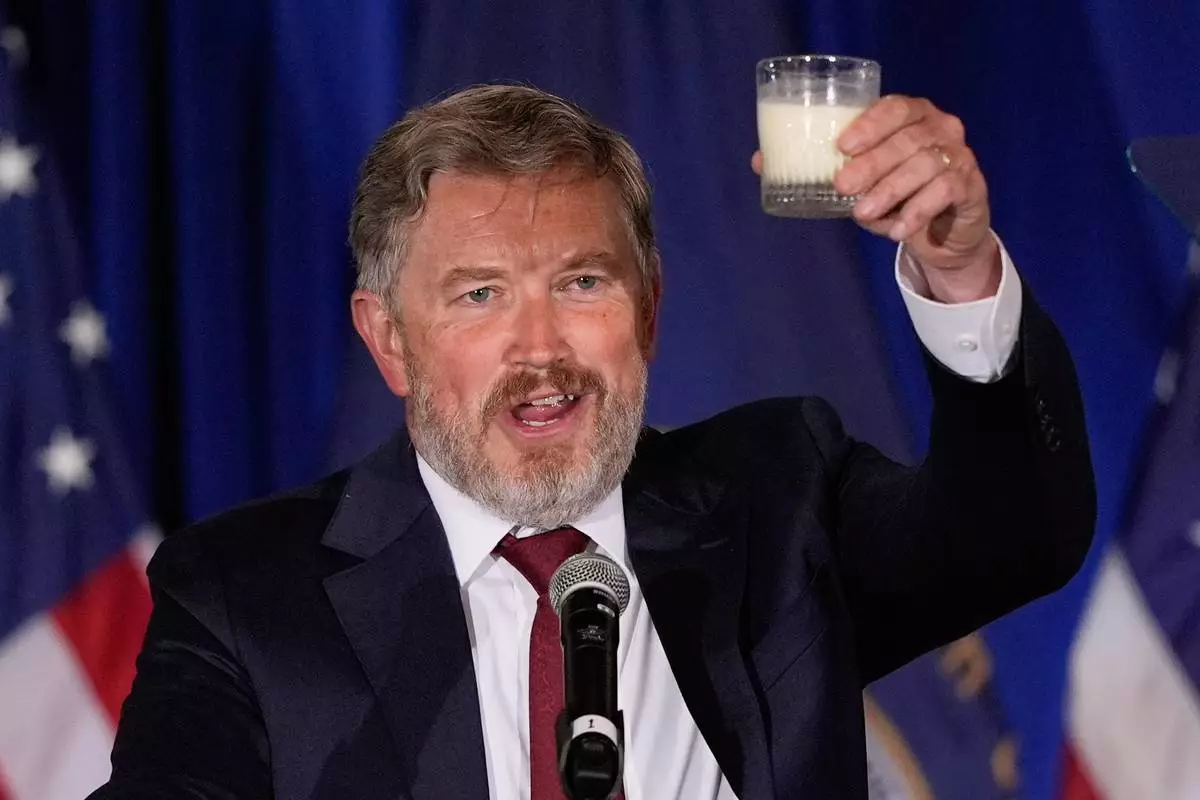
Rep. Thomas Massie, R-Ky., holds a drink as he speaks during an election night watch party after losing the Republican party's nomination at the Marriott Cincinnati Airport, Tuesday, May 19, 2026, in Hebron, Ky. (AP Photo/Carolyn Kaster)
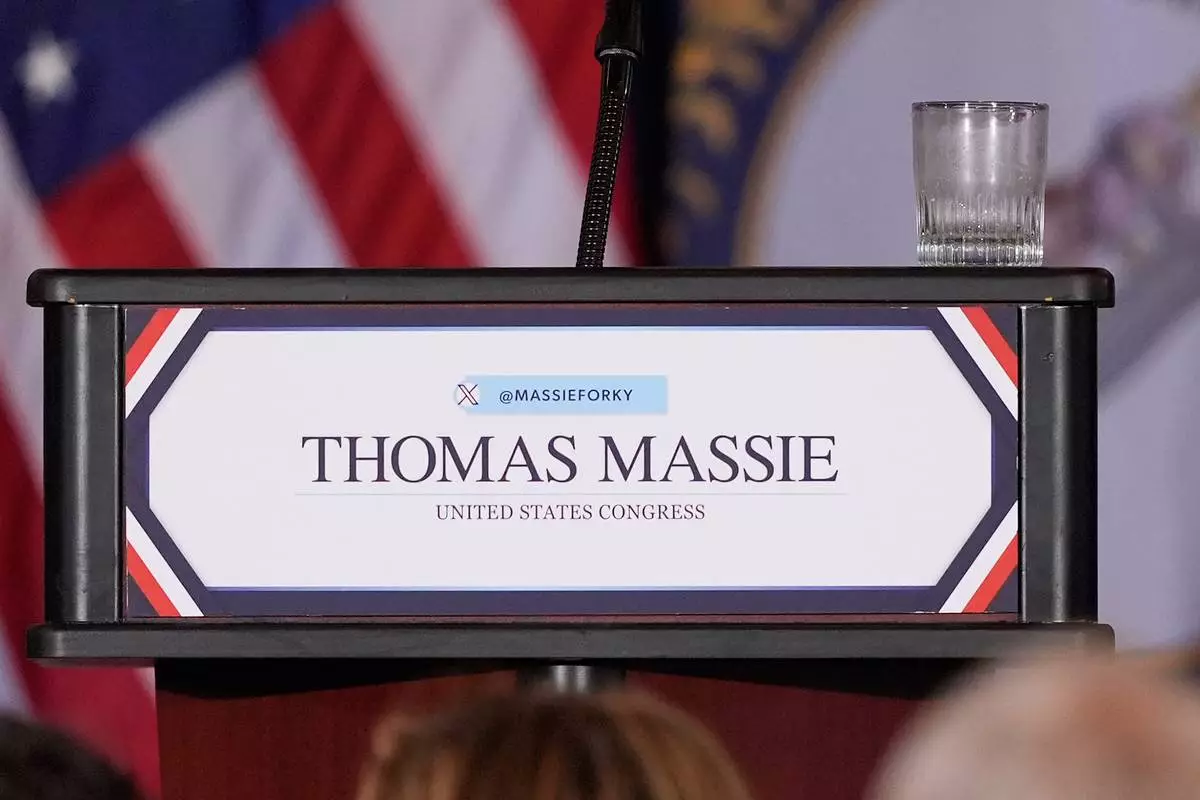
An empty glass is seen after Rep. Thomas Massie, R-Ky., spoke during an election night watch party after losing the Republican party's nomination at the Marriott Cincinnati Airport, Tuesday, May 19, 2026, in Hebron, Ky. (AP Photo/Carolyn Kaster)
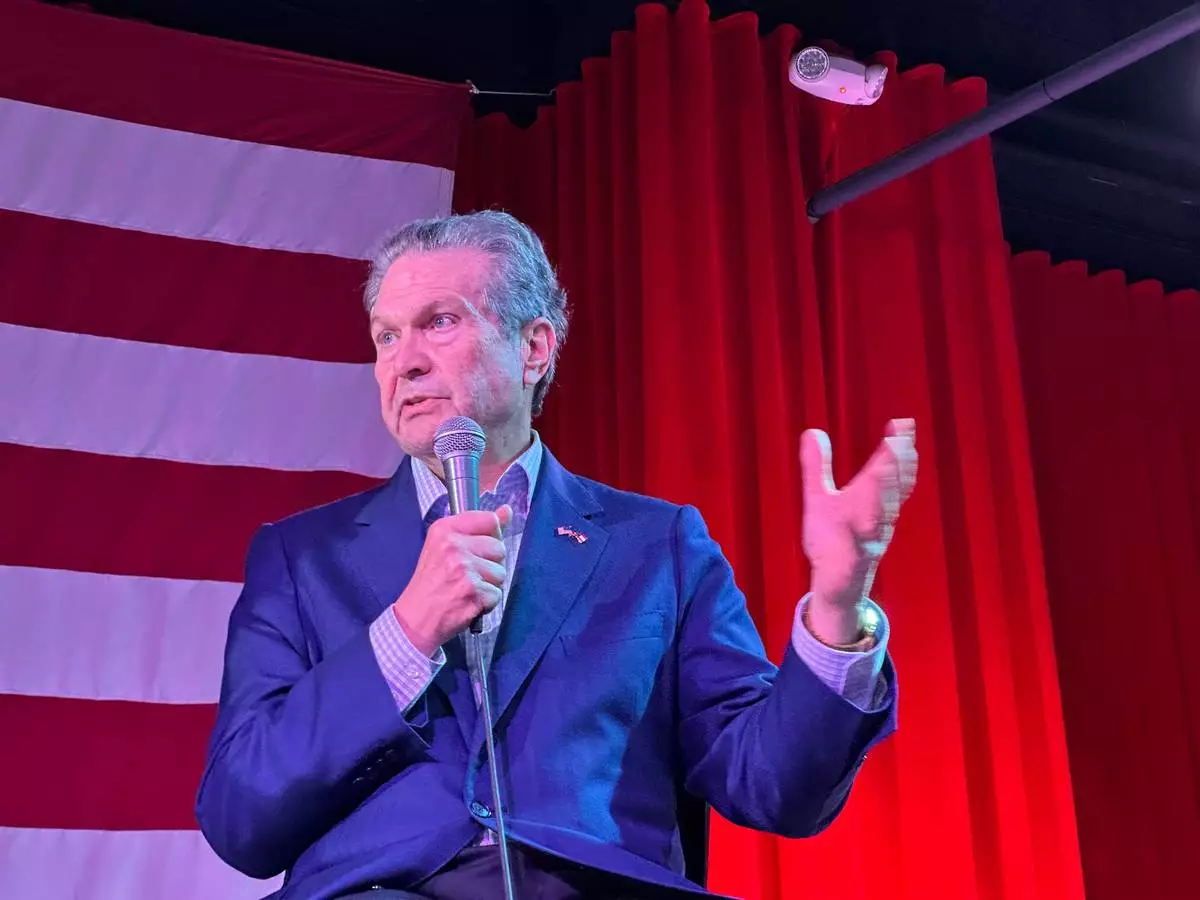
Georgia gubernatorial candidate Rick Jackson speaks to the Atlanta Young Republicans in Atlanta Thursday, May 7, 2026 (AP Photo/Jeff Amy)
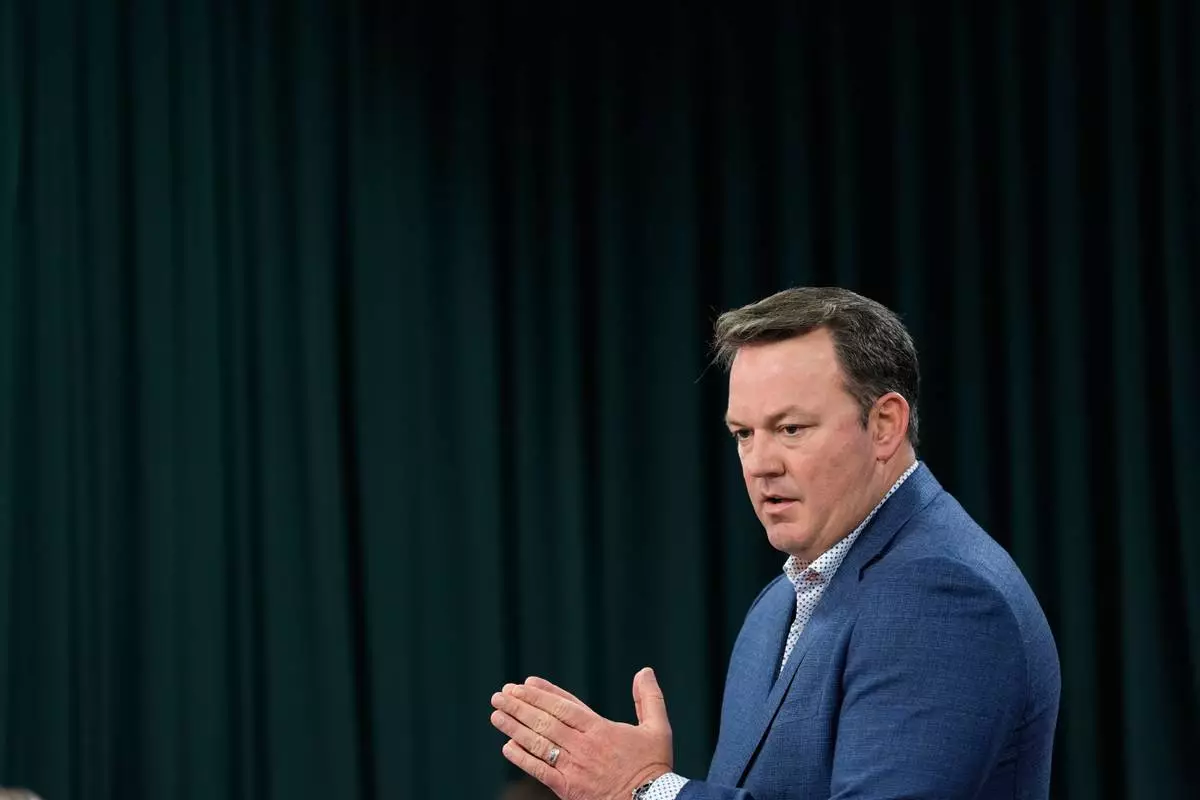
Georgia Republican candidate for governor Burt Jones speaks to supporters Tuesday, May 12, 2026, in Smyrna, Ga. (AP Photo/Brynn Anderson)

Republican congressional candidate for Kentucky, Ed Gallrein, stands for a portrait during the Kenton County Republican Party Lincoln Day Dinner, Thursday, April 30, 2026, in Covington, Ky. (AP Photo/Jon Cherry)

Rep. Thomas Massie, R-KY, sits at a table alone in the studio ahead of a Kentucky Educational Television (KET) debate, Monday, May 4, 2026, in Lexington, Ky. (AP Photo/Jon Cherry)
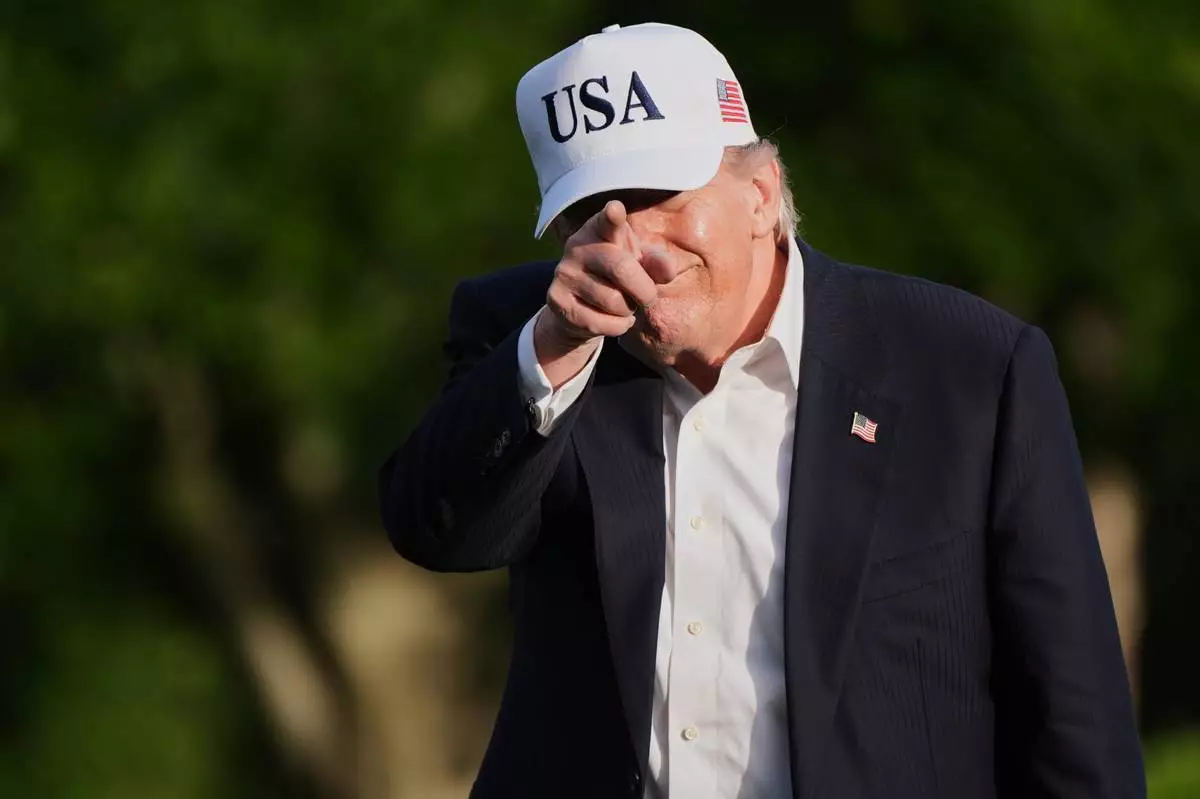
President Donald Trump gestures to reporters as he walks across the South Lawn of the White House, Friday, May 15, 2026, in Washington, on return from Beijing where he met with China's President Xi Jinping. (AP Photo/Jacquelyn Martin)