LONDON--(BUSINESS WIRE)--Mar 26, 2025--
The network security market grew 5.1% year-over-year (YoY) in Q4 2024 and 3.1% for the full year according to Omdia’s market estimates and forecast through to 2029. Palo Alto Networks retained its position as the market leader with a 28.4% share in 2024, driven by steady demand for security appliances and higher adoption of software and SASE components.
This press release features multimedia. View the full release here: https://www.businesswire.com/news/home/20250326705945/en/
Omdia’s report covers key segments of the network security market including integrated security appliances, secure routers, SSL VPN gateways, VPN and firewall software, and network based IDS/IPS.
“Palo Alto Networks, Fortinet, Cisco and Check Point continue to lead the network security market with each holding double digit share consecutively for the last five years,” said Ketaki Borade, Omdia Senior Analyst, Infrastructure Security. “The growing adoption of SASE architecture is the driving force behind network security growth accelerating software integrations. As the threat landscape evolves, next generation firewalls must integrate seamlessly with other security solutions. AI and machine learning (ML) will continue to play a critical role in enabling a more predictive and proactive security approach.”
Rik Turner, Omdia Senior Principal Analyst, Cybersecurity added: “The dominance of the top four firewall vendors is not only a clear sign that this is a mature market, but also an indication that, if they strategically position themselves well in the still early-stage SASE market, they have the potential to strengthen their grip on network security for years to come. Two of the four (Check Point and Cisco) have shifted away from internal cloud-native security (CNAPP) development, opting instead to OEM/white-label Wiz’s product. This highlights a deliberate choice of where to compete against market leader Palo Alto Networks. Their focus on SASE aligns with their firewall expertise and the rapid expansion of SaaS usage in enterprises.”
The chart illustrates the market ranking of key vendors for the total network security market for last five years. Palo Alto has retained the top position since 2021 due to its platformization strategy which emphasizes AI-driven product integration. Meanwhile, Cisco has climbed to third place while Fortinet’s targeted approach of secure networking, unified SASE and security operations has helped it to reach second place. With 25% of its FortiGate devices due for refresh, Fortinet may see a revenue surge over the next two years.
Looking ahead, Omdia anticipates strong growth for firewall vendors due to upcoming refresh cycles over the next two years according to Borade. “However, all four top vendors have issued lower guidance for 2025 compared to last year, signaling market growth concerns.”
Several factors may be contributing to this cautious outlook including enterprise cost-cutting, prioritization of essential services and a shift to cloud and SASE solutions. This transition is likely to impact demand for traditional hardware firewalls while software firewalls and firewall-as-a-platform gain traction.
Overall, Omdia forecasts a 2.8% CAGR for the total network security market from 2024 and 2029 with firewall growth projected at 5.0% CAGR over the same period.
“While the market remains growth, increased product integration and SASE adoption will continue to shape its evolution,” concludes Borade.
ABOUT OMDIA
Omdia, part of Informa TechTarget, Inc. (Nasdaq: TTGT), is a technology research and advisory group. Our deep knowledge of tech markets combined with our actionable insights empower organizations to make smart growth decisions.

Market ranking of key vendors in the total network security market
GUANARE, Venezuela (AP) — Freedom came too late for Edilson Torres.
The police officer was buried Tuesday in his humble, rural hometown following his death in a Venezuelan prison, where he was held incommunicado since his December detention on what his family said were politically motivated accusations. Before the service, a funeral procession stopped at a local jail, where his wife remains detained on disputed accusations.
Torres, 51, died of a heart attack on Saturday, just as his family awaited the government's promised release of prisoners following the U.S. capture of then-President Nicolás Maduro. His death comes as scores of families like his — who once hesitated to approach advocacy groups — are now coming forward to register their loved ones as “political prisoners.”
Alfredo Romero, director of the organization Foro Penal, a nongovernmental organization that tracks and advocates for Venezuelan prisoners, said the group has received a “flood of messages” since last week from families.
“They didn’t report it out of fear, and now they’re doing it because, in a way, they feel that there is this possibility that their families will be freed,” Romero said. “They see it as hope, but more importantly, as an opportunity.”
The head of Venezuela’s national assembly, Jorge Rodríguez, said last week that a “significant number” of Venezuelan and foreigners imprisoned in the country would be released as a gesture to “seek peace” following the explosions that rocked the South American nation in the early hours of Jan. 3.
The U.S. and Venezuela's opposition have long demanded the widespread release of detained opposition figures, activists and journalists, whom they claim are used as a political tool by the ruling party.
Venezuela’s government denies that there are prisoners unjustly detained, accusing them of plotting to destabilize Maduro’s government.
Following Torres' death, Venezuela's Attorney General Tarek William Saab said in a statement that the case had been assigned to a terrorism unit and “was linked to criminal activities detected by state security agencies.” He did not offer any details, but the vague language tracks with past accusations leveled against real or perceived government critics.
Romero explained that of the roughly 300 families who reached out, about 100 cases so far have been confirmed as politically motivated. Most of those reported over the past few days, he said, once worked for Venezuela's military. That is on top of more than 800 people that the organization says continue to be detained for political reasons in Venezuela.
As of Tuesday evening, Foro Penal had confirmed 56 prisoners it said were detained for political reasons had been freed. The group criticized the lack of government transparency over the releases. Venezuela’s government negated the organization's count, and reported a far higher figure of 400 Tuesday afternoon.
But the government did not provide evidence of the releases, a time range in which they were carried out nor identify those freed, making it impossible to determine whether those freed were behind bars for political or other reasons.
“My little brother, my little brother,” Emelyn Torres said between sobs after his casket, cloaked in Venezuela's flag, arrived at her home for the wake. A few feet away, their grandmother nearly fainted as dozens of people crammed into the living room to pay their respects.
Hours earlier, as a minivan transported the body of her brother 267 miles (430 kilometers) from the capital, Caracas, to Guanare, Torres learned that other men linked to the WhatsApp group that led to her brother's arrest had just been released from prison. She wailed.
Among those who have been released are: human rights attorney Rocío San Miguel, who immediately relocated to Spain; Biagio Pilieri, an opposition leader who was part of Nobel Peace Prize winner María Corina Machado’s 2024 presidential campaign; and Enrique Márquez, a former electoral authority and presidential candidate.
Italian businessman Marco Burlò, who was released from prison Monday, told reporters outside an international airport in Rome Tuesday that he was kept isolated throughout his detention, which he characterized as a “pure and real kidnapping.”
“I can’t say that I was physically abused, but without being able to talk to our children, without the right to defense, without being able to speak to the lawyer, completely isolated, here they thought that I might have died,” he said.
The small set of releases over the past few days continues to fuel criticisms by families, human rights watchdogs at the United Nations and U.S. politicians, who have accused the government of not following through on their word of a wider release.
But the rapid political shifts in the Latin American nation and the distant possibility of release simultaneously marked a rare moment of hope for many families who have spent years wondering if their loved ones would ever be freed.
Part of the reason that Romero said he believed so many people had not come forward is the government's ongoing crackdown on dissent since Venezuela's tumultuous 2024 election, which Maduro claimed to have won despite ample credible evidence to the contrary.
As mass street protests broke out, authorities said they detained more than 2,000 people. In the month after July elections, Venezuela's government passed a law — dubbed the “anti-NGO law” by critics — making it easier for the government to criminalize human rights groups.
That had a chilling effect, Romero said, making families hesitant to come forward — until now.
Janetsky reported from Mexico City.
Follow AP’s coverage of Latin America and the Caribbean at https://apnews.com/hub/latin-america
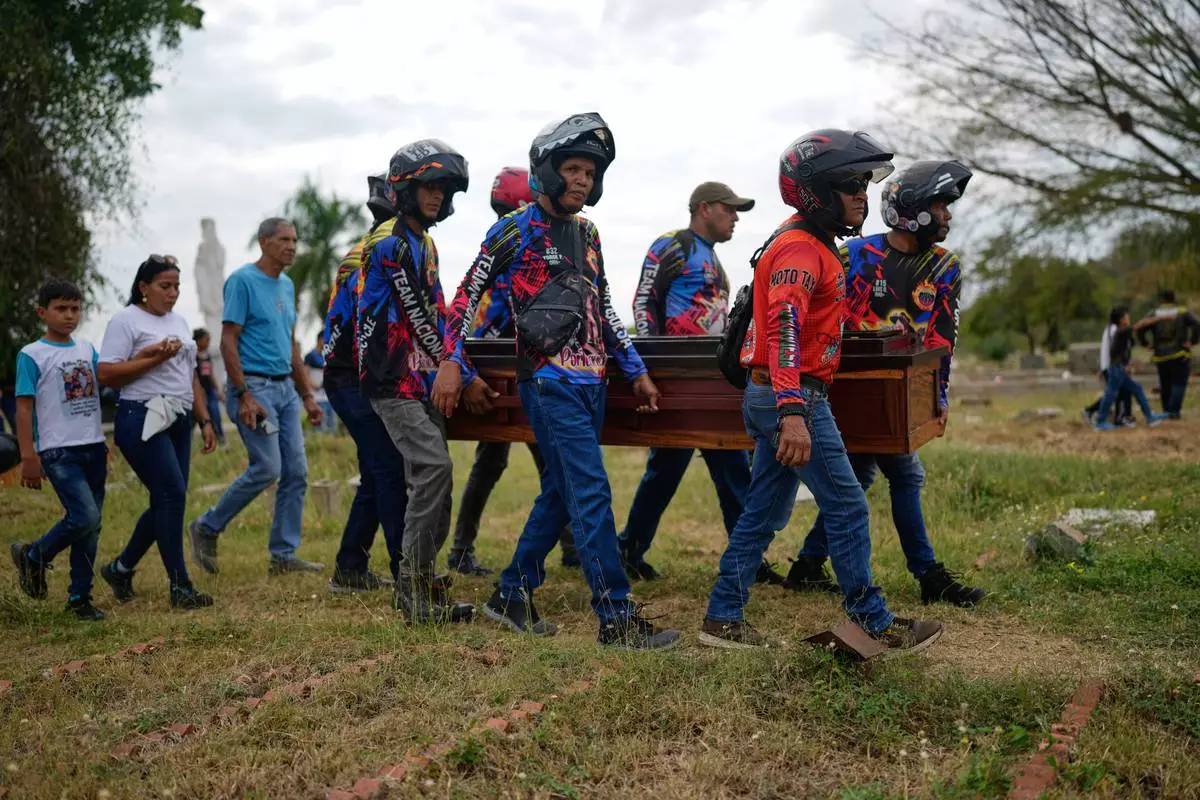
Members of a motorcycle club, friends of Edilson Torres, a Venezuelan police officer who died in prison a month after being arrested on accusations of treason, carry his coffin at a cemetery in Guanare, Venezuela, Tuesday, Jan. 13, 2026. (AP Photo/Ariana Cubillos)
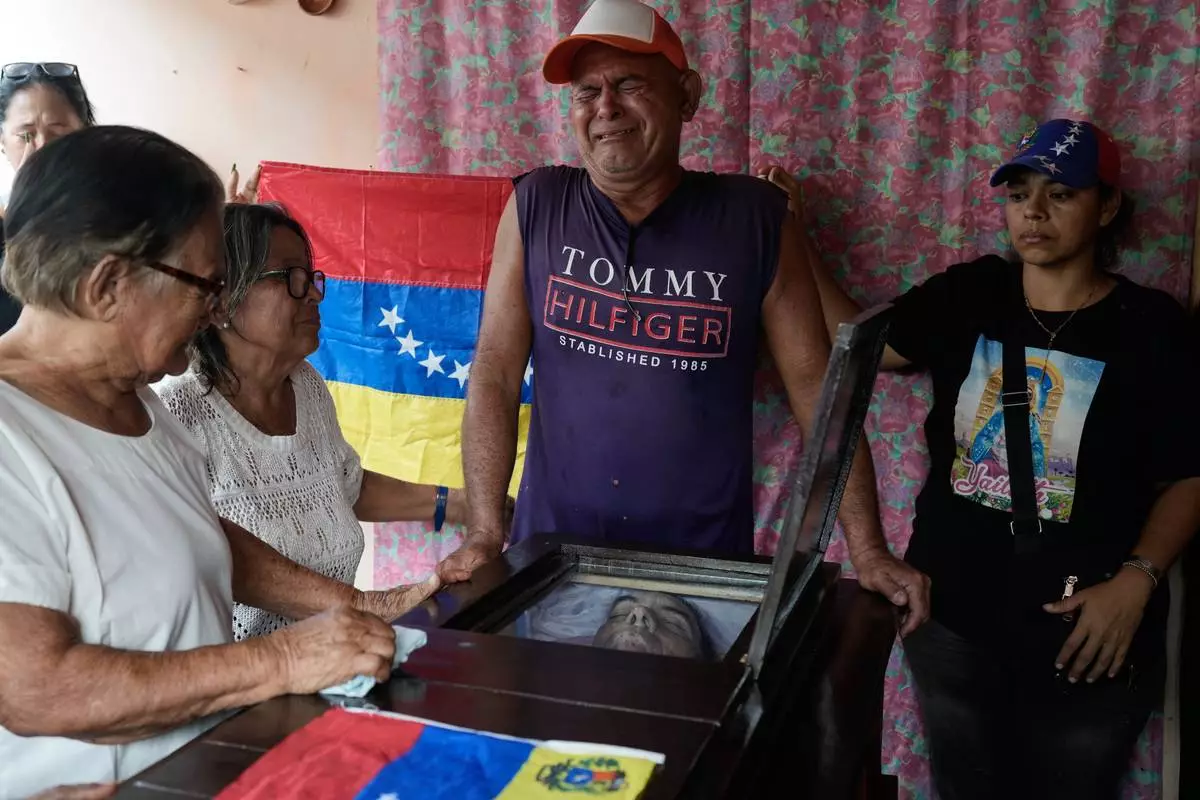
Relatives stand by the coffin of Edilson Torres, a Venezuelan police officer who died in prison a month after being arrested on accusations of treason, in Guanare, Venezuela, Tuesday, Jan. 13, 2026.. (AP Photo/Ariana Cubillos)
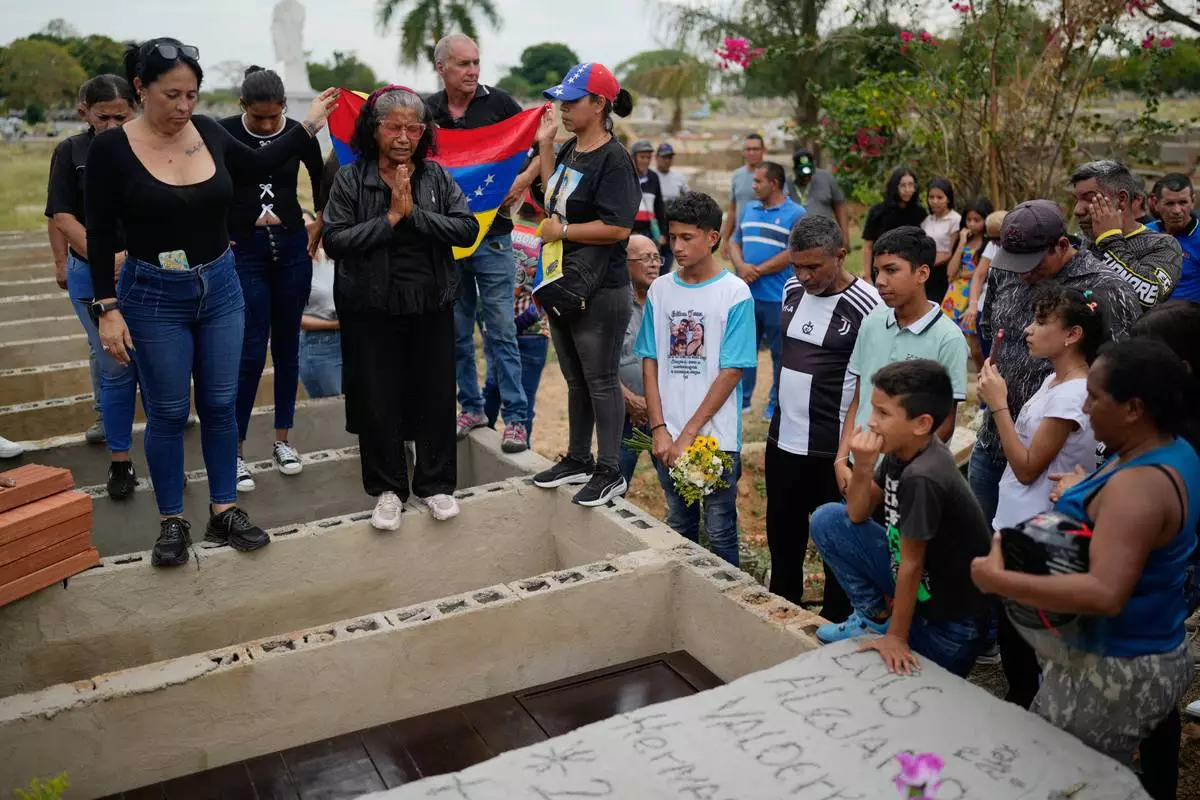
Relatives of Edilson Torres, a Venezuelan police officer who died in prison a month after being arrested on accusations of treason, gather around his grave during his funeral in Guanare, Venezuela, Tuesday, Jan. 13, 2026. (AP Photo/Ariana Cubillos)
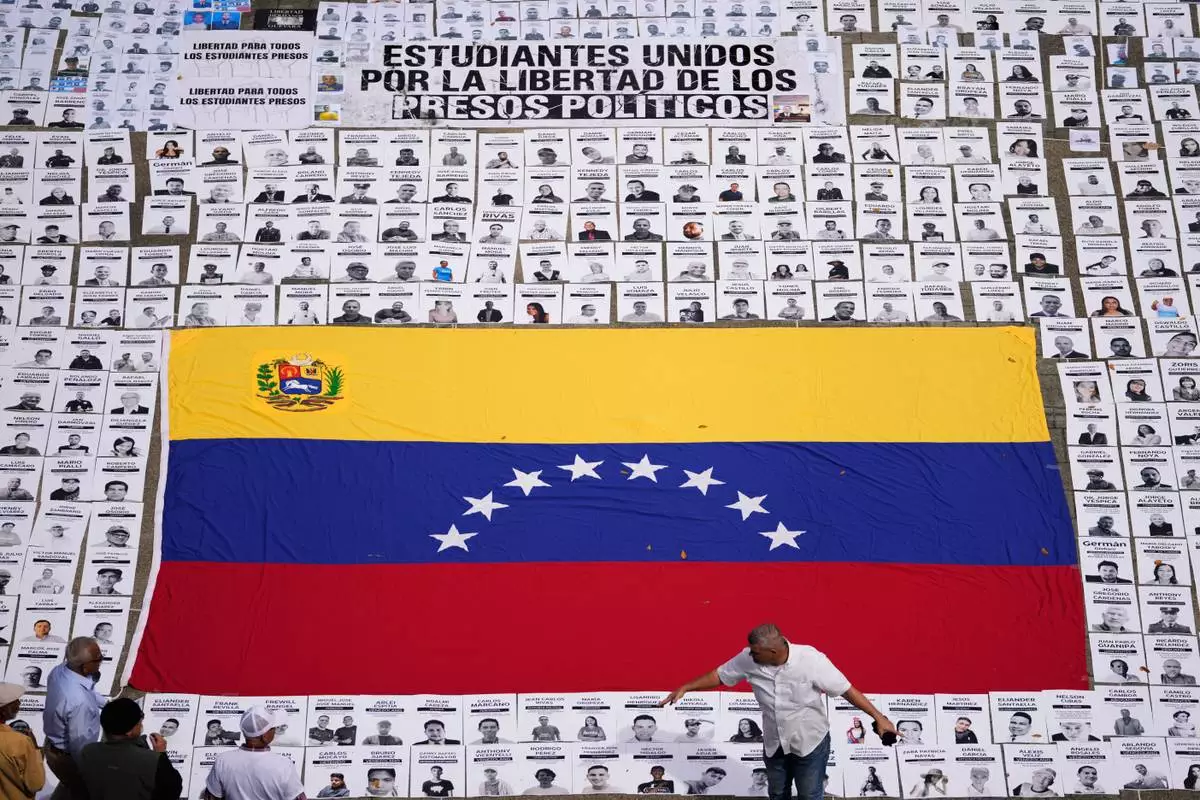
Students lay out photos of people they consider political prisoners at the Central University of Venezuela in Caracas, Venezuela, Tuesday, Jan. 13, 2026. (AP Photo/Matias Delacroix)

Jacklin Ibarreto, whose father Miguel Ibarreto is detained, waits outside the Rodeo I prison in Guatire, Venezuela, Friday, Jan. 9, 2026, after National Assembly President Jorge Rodriguez said the government would release Venezuelan and foreign prisoners. (AP Photo/Matias Delacroix)
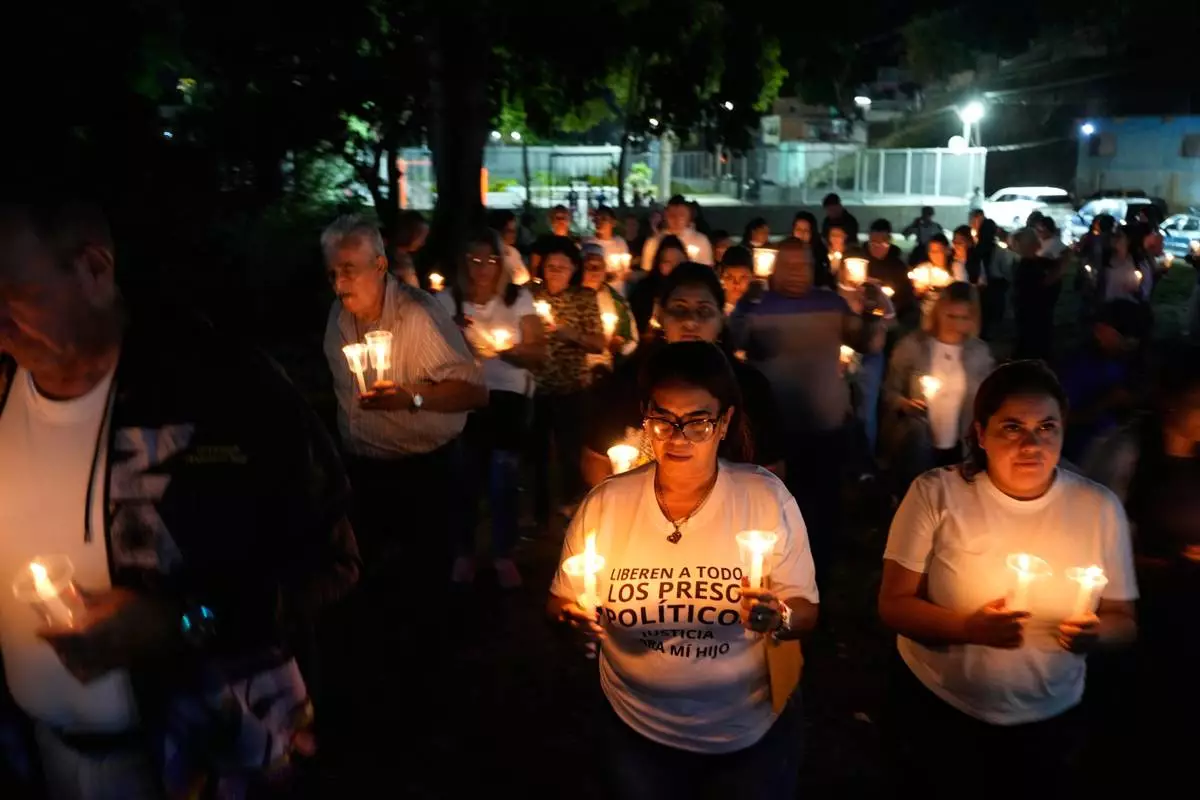
Relatives and friends of political prisoners hold candles calling for their loved ones to be set free outside the Rodeo I prison in Guatire, Venezuela, Friday, Jan. 9, 2026 after the government announced prisoners would be released. (AP Photo/Matias Delacroix)
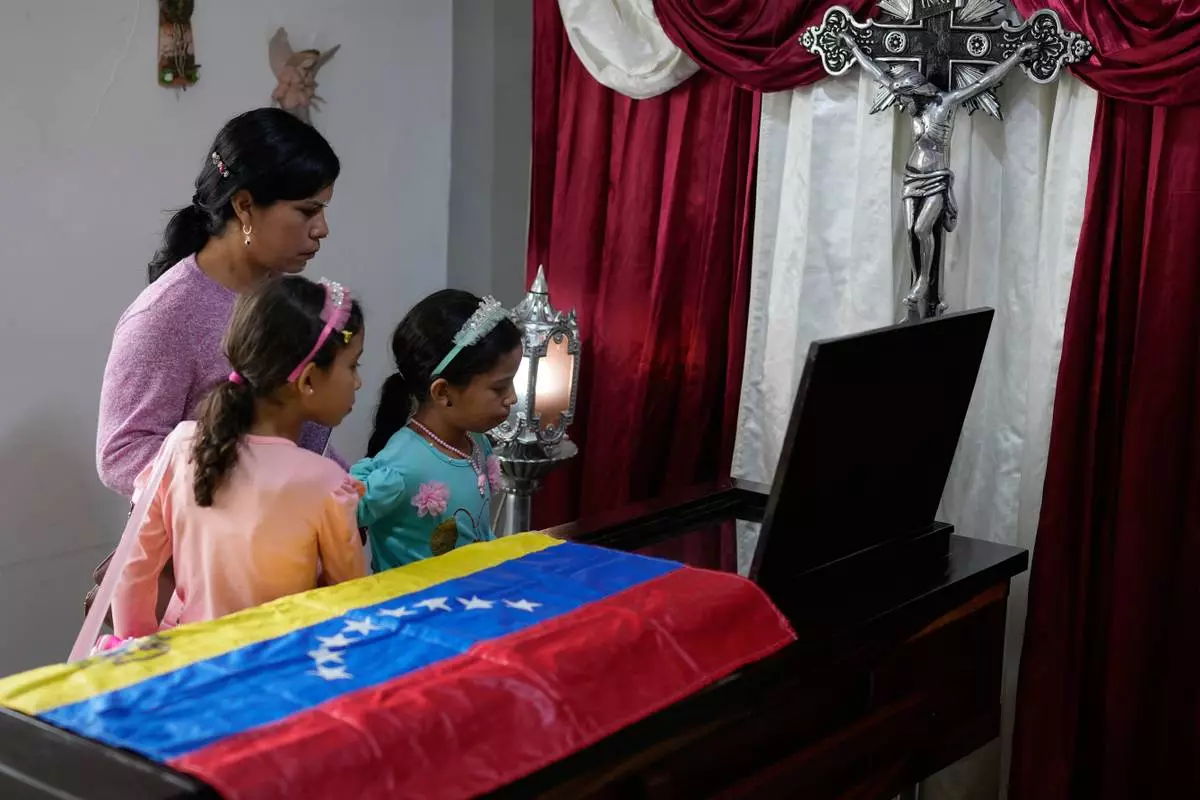
Relatives stand beside the coffin during the wake of Edilson Torres, a Venezuelan police officer who died in prison a month after being arrested on accusations of treason, in Guanare, Venezuela, Tuesday, Jan. 13, 2026. (AP Photo/Ariana Cubillos)
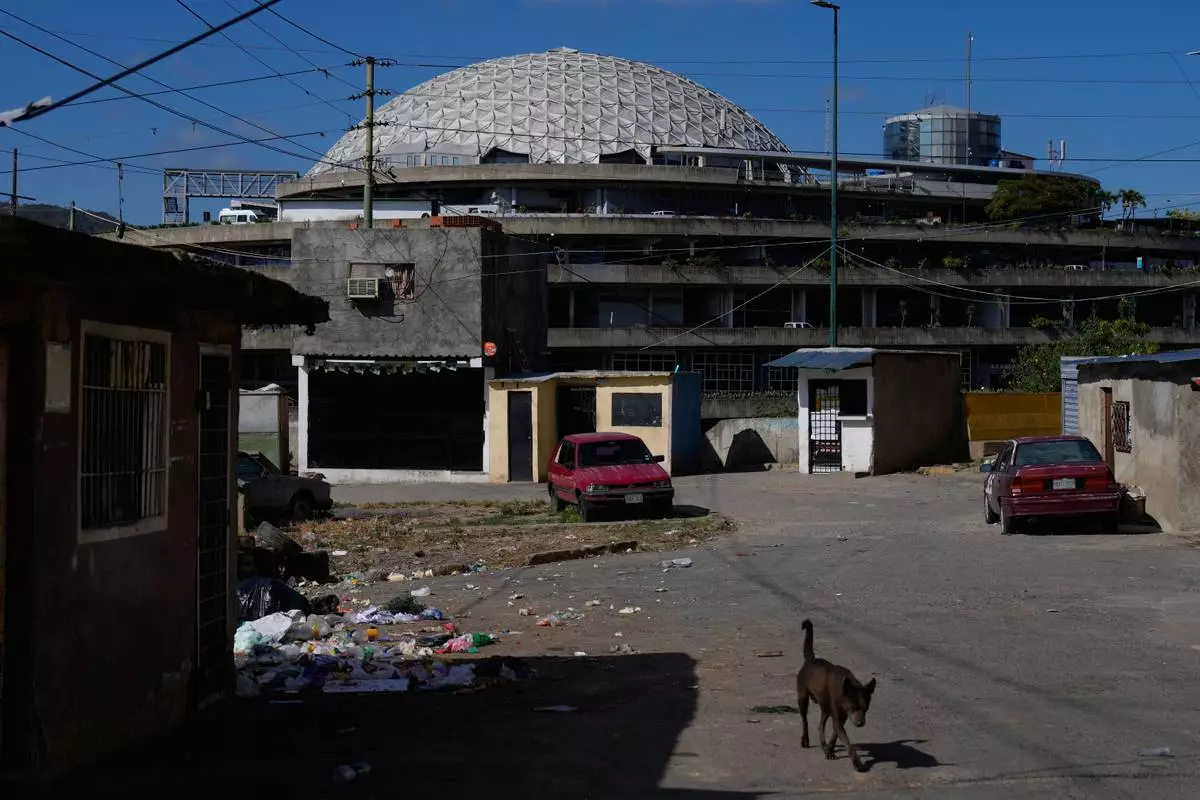
El Helicoide, the headquarters of Venezuela's intelligence service and detention center, stands in Caracas, Venezuela, Friday, Jan. 9, 2026, after National Assembly President Jorge Rodriguez said the government would release Venezuelan and foreign prisoners. (AP Photo/Ariana Cubillos)
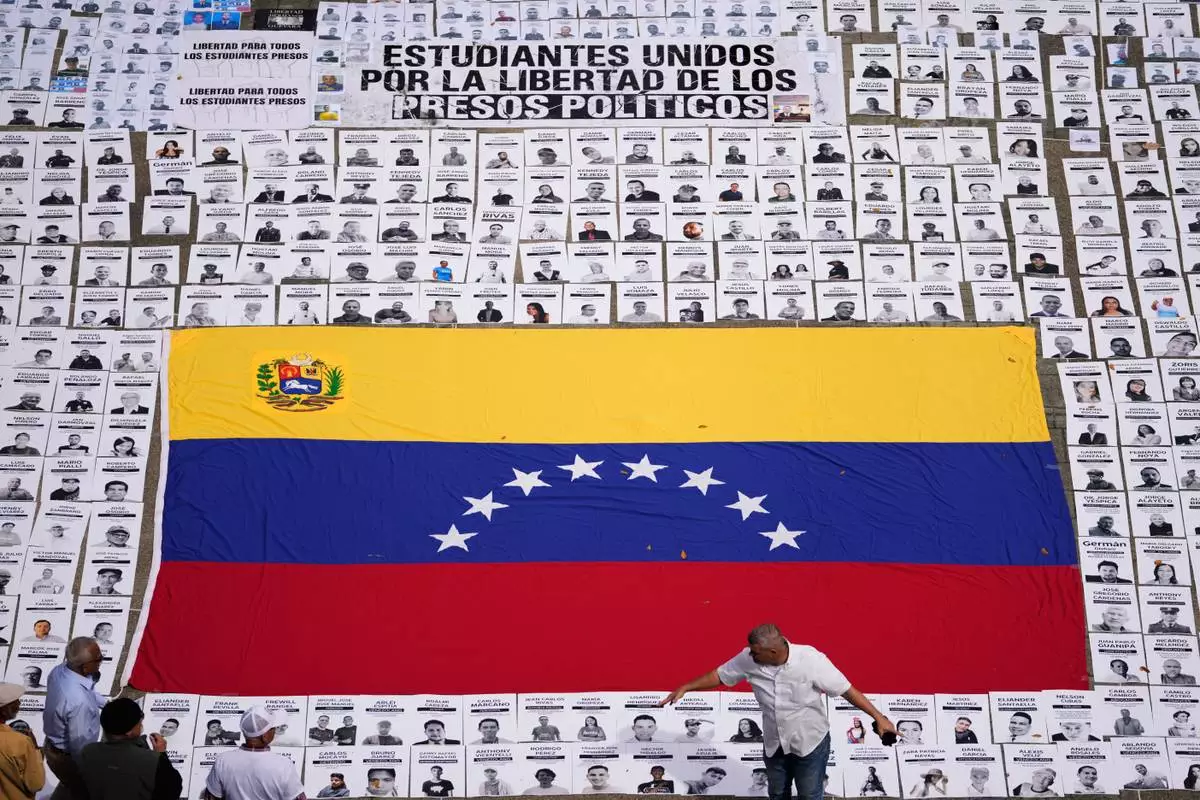
Students lay out photos of people they consider political prisoners at the Central University of Venezuela in Caracas, Venezuela, Tuesday, Jan. 13, 2026. (AP Photo/Matias Delacroix)
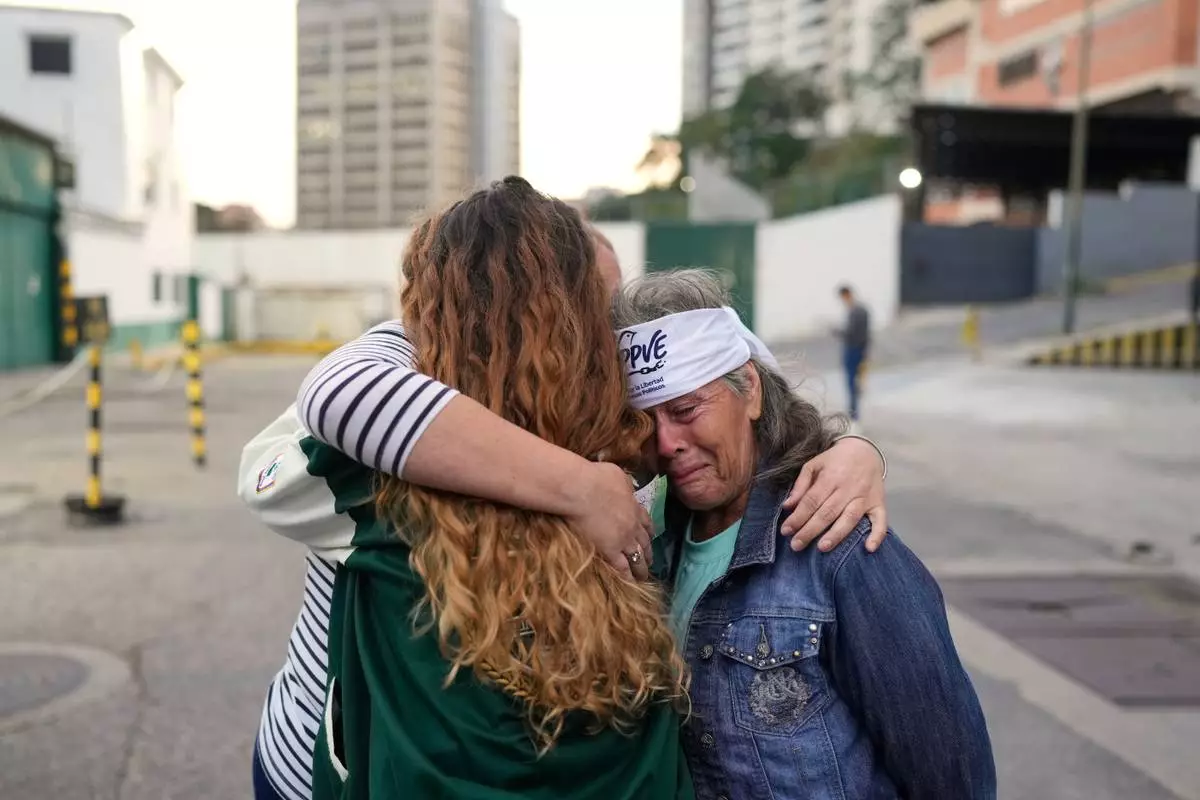
Flor Zambrano, whose son, Rene Chourio, she says is detained at Zone 7 of the Bolivarian National Police for political reasons, embraces relatives of other detainees outside the facility in Caracas, Venezuela, Monday, Jan. 12, 2026. (AP Photo/Matias Delacroix)
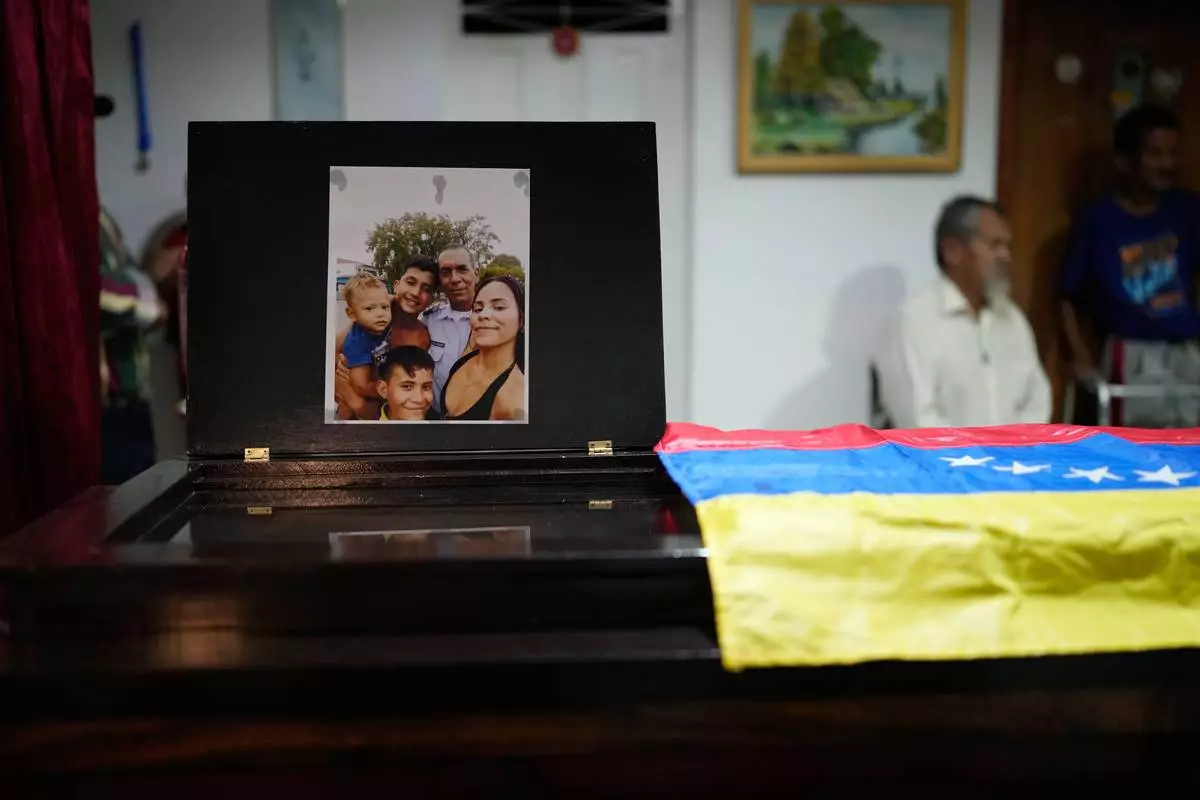
A photo of Edilson Torres, a Venezuelan police officer who died in prison a month after being arrested on accusations of treason, and his family adorns his coffin during his wake at his home in Guanare, Venezuela, Monday, Jan. 12, 2026. (AP Photo/Ariana Cubillos)
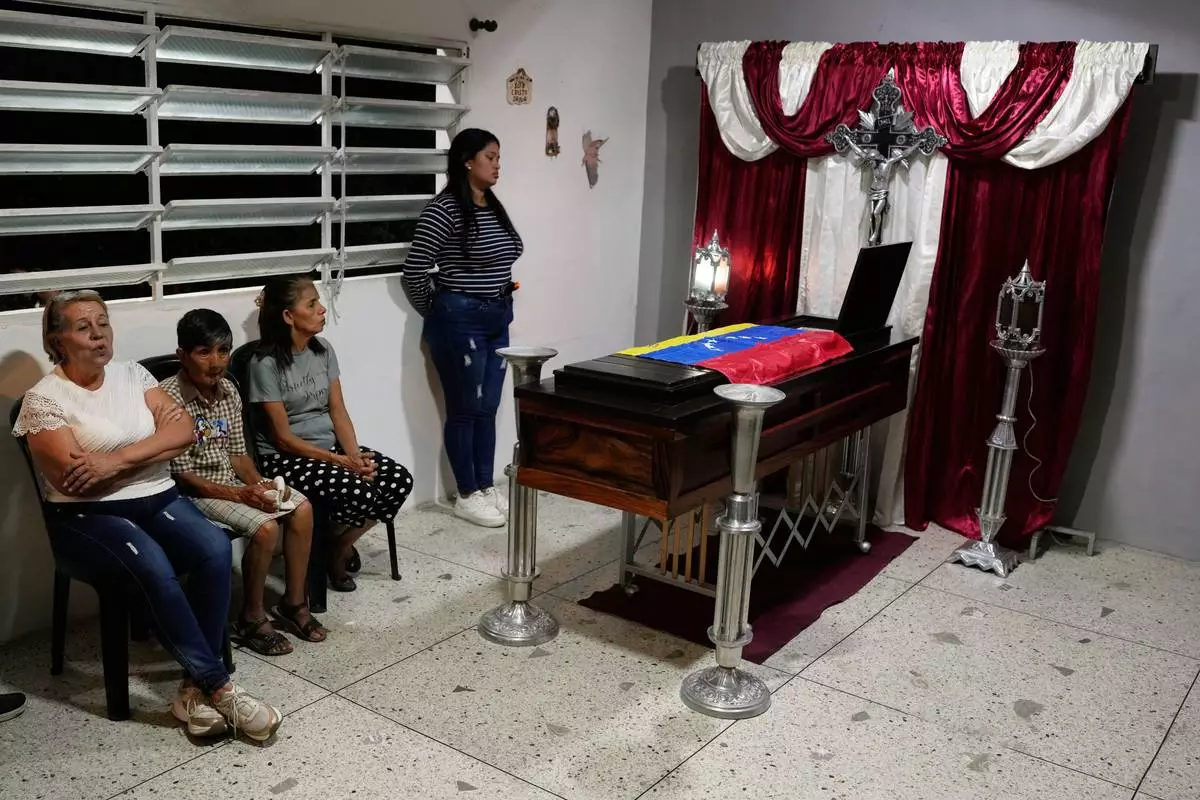
Relatives of Edilson Torres, a Venezuelan police officer who died in prison a month after being arrested on accusations of treason, sit by his coffin during his wake in Guanare, Venezuela, Monday, Jan. 12, 2026. (AP Photo/Ariana Cubillos)
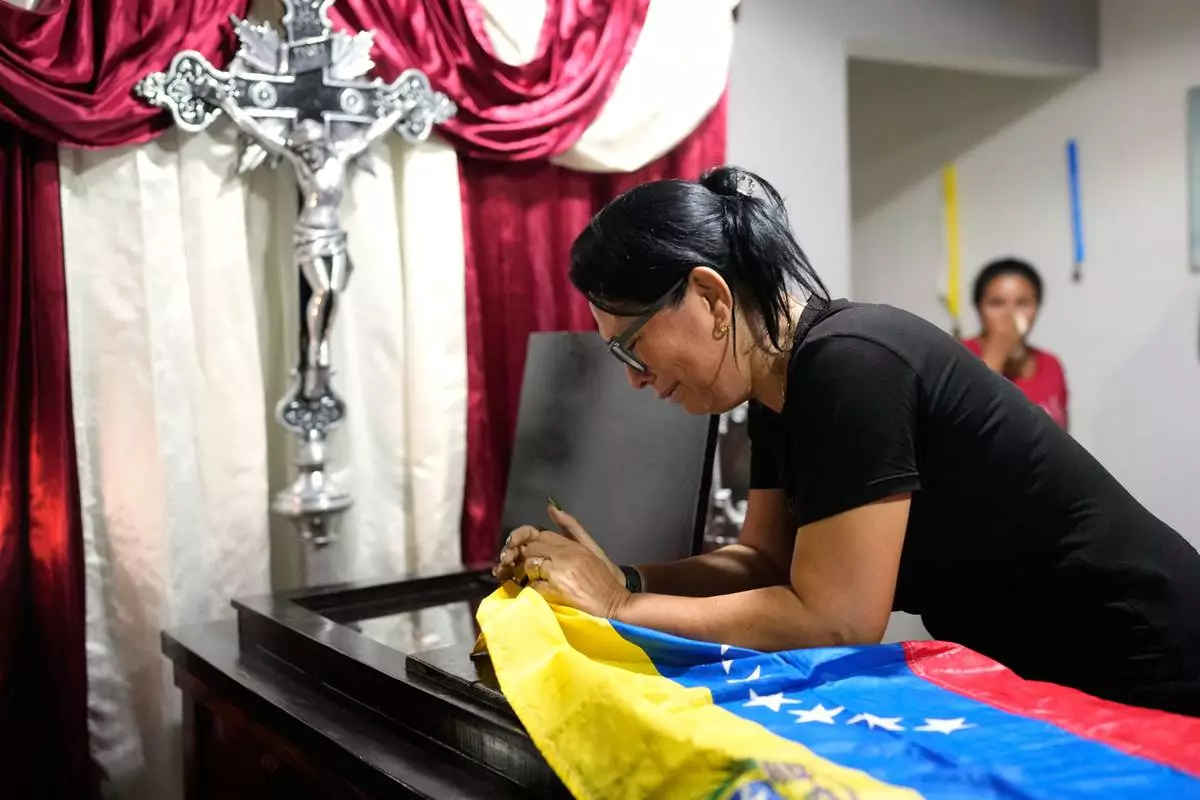
Emelyn Torres leans over the casket of her brother, Edilson Torres, a Venezuelan police officer who died in prison a month after being detained on accusations of treason, during his wake at his home in Guanare, Venezuela, Monday, Jan. 12, 2026. (AP Photo/Ariana Cubillos)
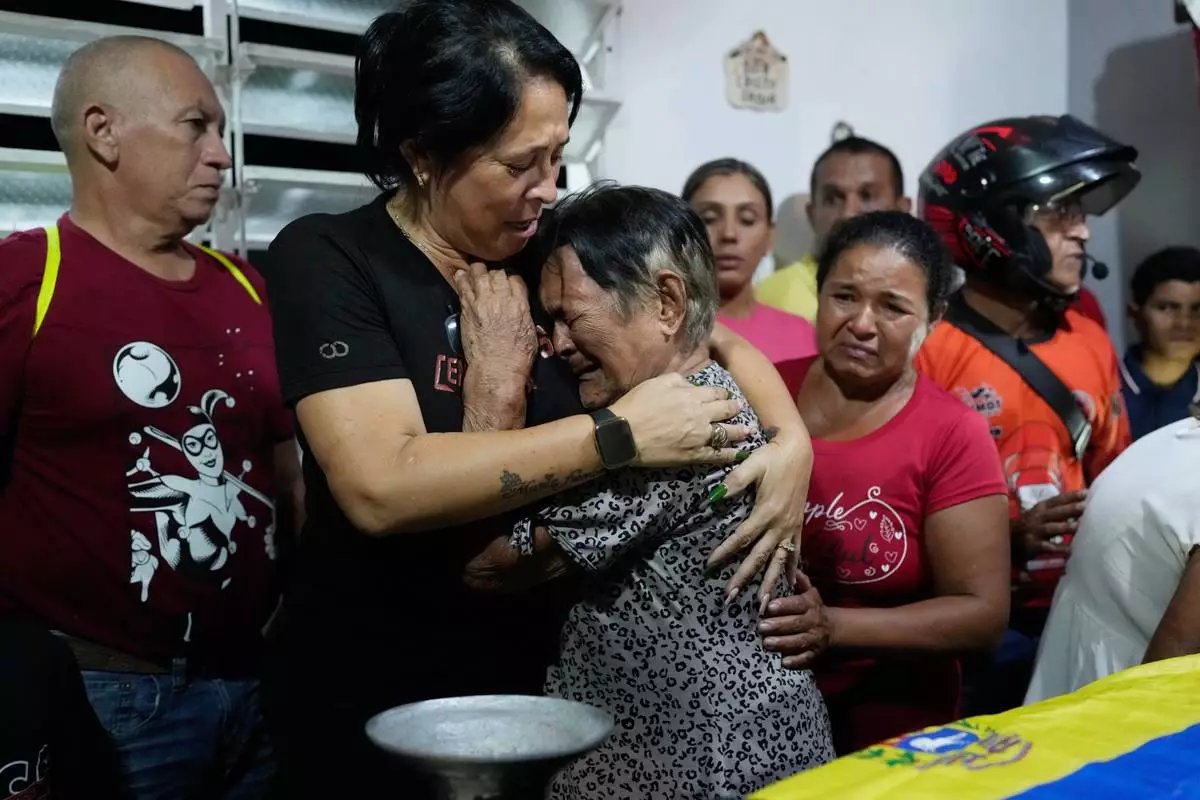
Emelyn Torres and Maria Cristina Fernandez, the sister and grandmother of Edilson Torres, a Venezuelan police officer who died in prison after being detained on accusations of treason, embrace during his wake at his home in Guanare, Venezuela, Monday, Jan. 12, 2026. (AP Photo/Ariana Cubillos)