ASSISI, Italy (AP) — Pilgrims have been pouring into this medieval hilltop town to venerate not only two of the Catholic Church’s most celebrated saints, Francis and Clare, but its newest — Carlo Acutis, the first millennial saint, who will be canonized on April 27.
“St. Francis, St. Clare, of course, important saints who marked an epoch – but that’s far removed from today’s teens. Carlo is like the kids,” said Maria Rosario Riccio, a mother and educator who was visiting Acutis’ shrine recently with a 50-strong parish youth group from southern Italy. “He’s a near-saint of our time, who can show teens that it’s possible to love Jesus while being a regular youth.”
Click to Gallery
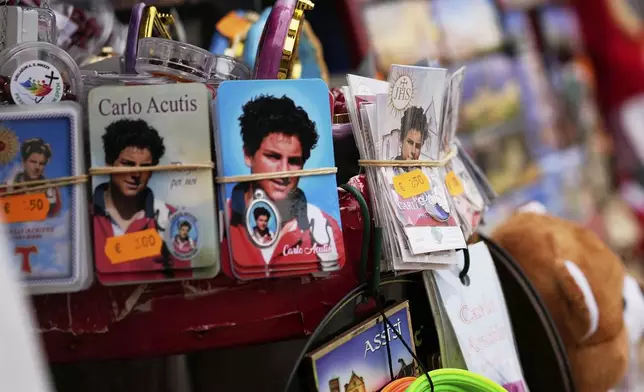
Pictures of 15-year-old Carlo Acutis, an Italian boy who died in 2006 of leukemia, are displayed for sale at a kiosk in Assisi, Italy, on Saturday, March 1, 2025. (AP Photo/Gregorio Borgia)
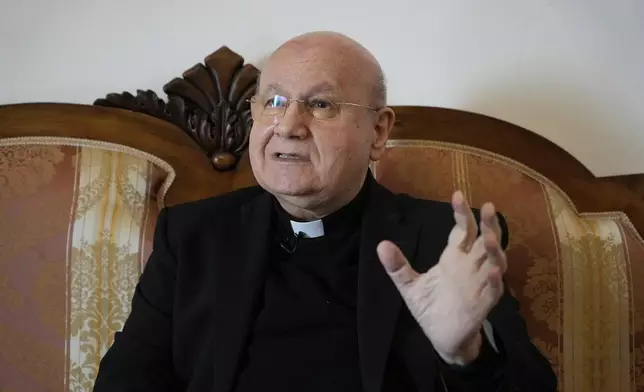
Bishop Domenico Sorrentino speaks during an interview in Assisi, Italy, on Saturday, March 1, 2025. (AP Photo/Gregorio Borgia)
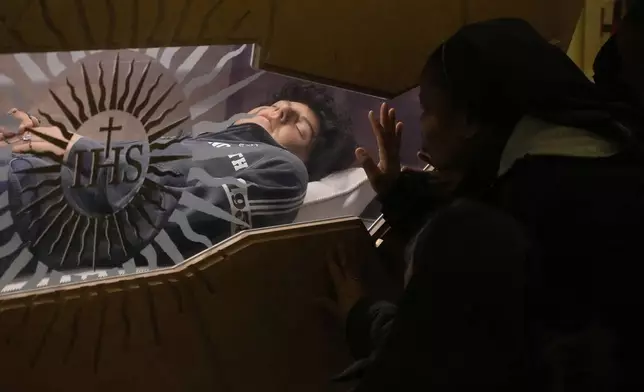
The body of Carlo Acutis, an Italian boy who died in 2006 of leukemia, lies in his tomb in Assisi, Italy, on Saturday, March 1, 2025. (AP Photo/Gregorio Borgia)
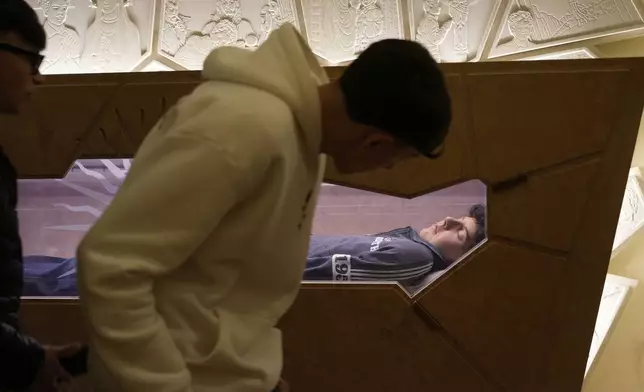
The body of Carlo Acutis, an Italian boy who died in 2006 of leukemia, lies in his tomb in Assisi, Italy, on Saturday, March 1, 2025. (AP Photo/Gregorio Borgia)
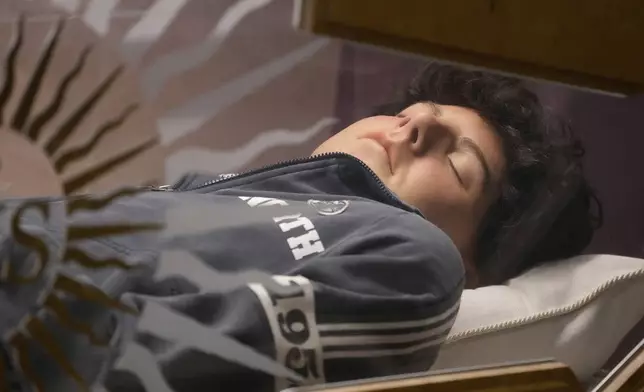
The body of Carlo Acutis, an Italian boy who died in 2006 of leukemia, lies in his tomb in Assisi, Italy, on Saturday, March 1, 2025. (AP Photo/Gregorio Borgia)
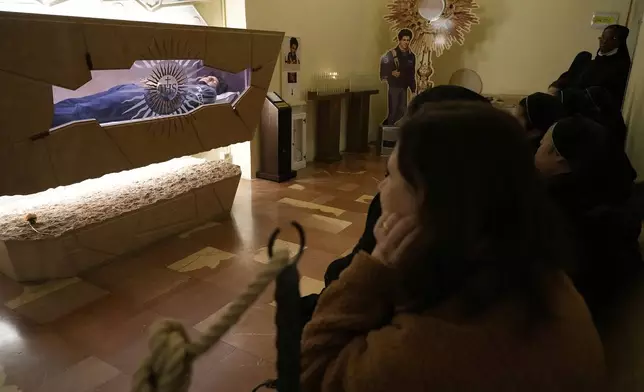
Worshippers pay their respects at the tomb of 15-year-old Carlo Acutis, an Italian boy who died in 2006 of leukemia, in Assisi, Italy, on Saturday, March 1, 2025. (AP Photo/Gregorio Borgia)
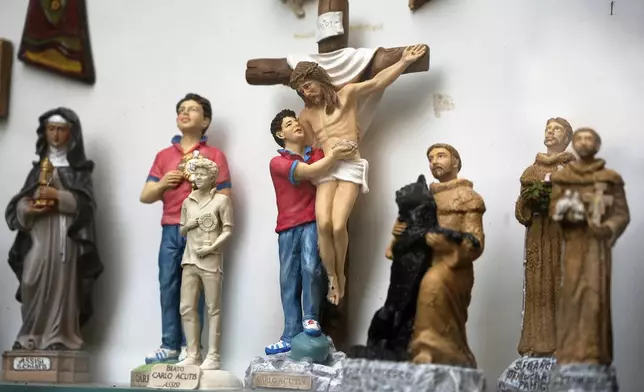
Statuettes of Carlo Acutis, an Italian boy who died in 2006 of leukemia, are displayed in a shop in Assisi, Italy, on Saturday, March 1, 2025. (AP Photo/Gregorio Borgia)
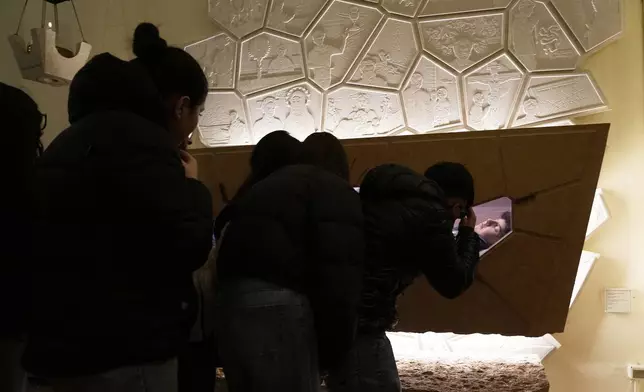
Faithful pay their homage before the tomb of 15-year-old Carlo Acutis, an Italian boy who died in 2006 of leukemia, in Assisi, Italy, on Saturday, March 1, 2025. (AP Photo/Gregorio Borgia)
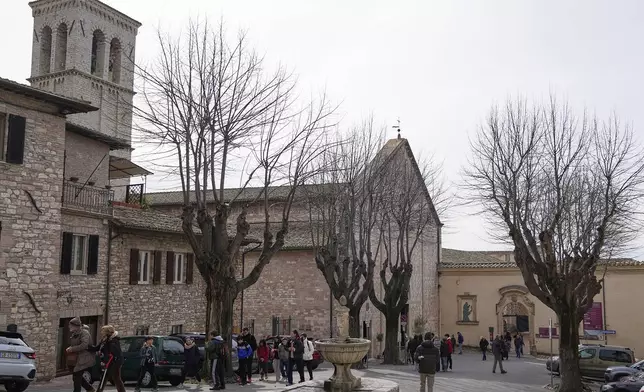
Faithful leave the the Church of Santa Maria Maggiore after visiting the tomb of 15-year-old Carlo Acutis, an Italian boy who died in 2006 of leukemia, in Assisi, Italy, on Saturday, March 1, 2025. (AP Photo/Gregorio Borgia)
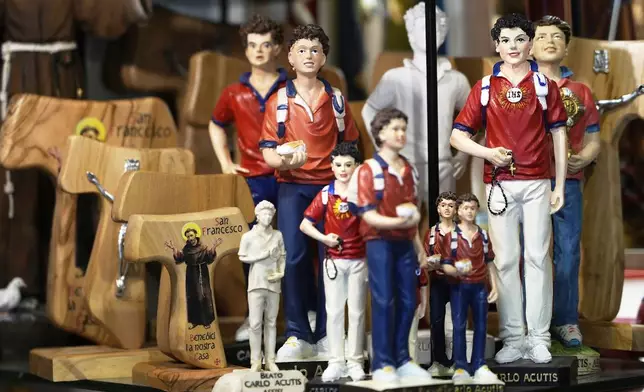
Statuettes of Carlo Acutis, an Italian boy who died in 2006 of leukemia, are displayed for sale in a shop in Assisi, Italy, on Saturday, March 1, 2025. (AP Photo/Gregorio Borgia)
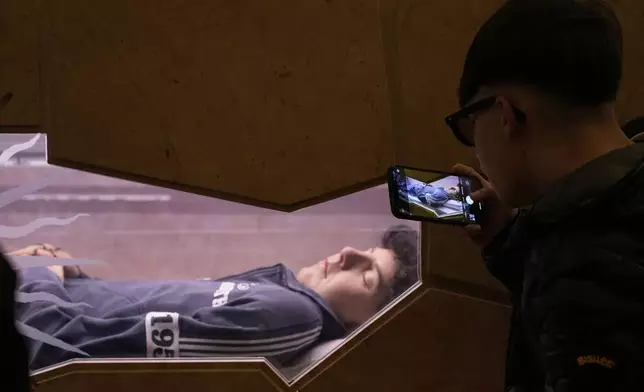
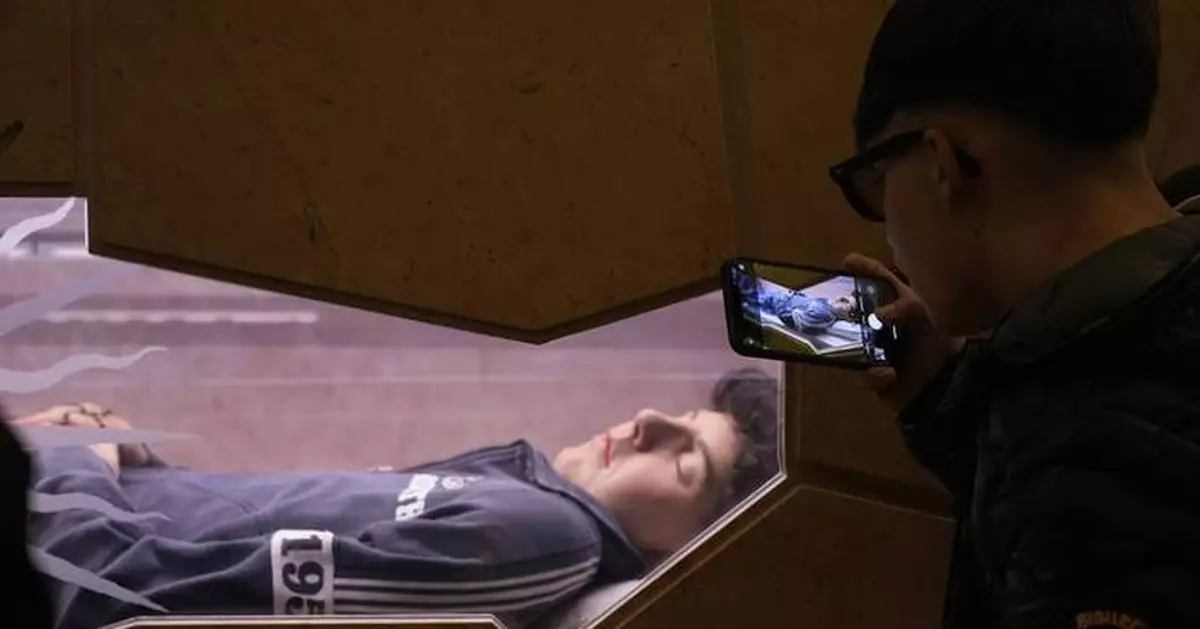
A teenager uses a smartphone to take a picture at the tomb of 15-year-old Carlo Acutis, an Italian boy who died in 2006 of leukemia, in Assisi, Italy, on Saturday, March 1, 2025. (AP Photo/Gregorio Borgia)
The group lined up to enter the Santuario della Spogliazione — a somber church, also known as Santa Maria Maggiore, marking the spot where more than 800 years ago St. Francis renounced his family’s wealth. There, they prayed by the monument where Acutis’ body is on view, wearing jeans, a sweatshirt and sneakers.
On that Saturday, hundreds filed past — a priest and his parishioners from the Azores islands, a nun from Colombia and her Passionist sisters, a family with two teens from near Venice. Some clutched rosaries, others took selfies or touched the protective glass in front of the seemingly sleeping young man, who died of leukemia at 15 in 2006 and is generating a devotion that astonishes even Assisi’s bishop.
“I’m seeing here a volcano of grace erupting … I can’t believe my eyes,” said the Rev. Domenico Sorrentino. When he became bishop two decades ago, the church next to his residence just off the main street was “forgotten” by the throngs that visited the monumental Basilica of St. Francis.
Over the last year, more than a million pilgrims paid homage to Acutis, Sorrentino said, drawn by “his smiling way of living our faith.”
The teen’s happy image, usually in a red polo shirt and carrying a backpack, is as popular in souvenir shops across town as Francis in his simple brown habit.
One store owner picked up a blessed icon the first time she went to the shrine and keeps it glued to her cash register.
“I was really curious about this new saint who attracts youth,” Silvia Balducci said.
Both the church and his family describe Acutis as an exceptionally devout but otherwise regular Italian boy, who’s working miracles after his untimely death precisely by drawing youth to faith when most of his contemporaries are abandoning organized religion.
“Carlo wasn’t an alien, he was a normal person. But if it’s illuminated by the light of Christ, a life becomes extraordinary,” his mom, Antonia Salzano Acutis, told The Associated Press. “We always pray to the saints, and in the end, what did saints do? They opened the doors of their lives to Christ.”
She quoted one of her son’s favorite phrases: “’Everyone is born an original, but many die photocopies.”
“The saint is one who didn’t die like a photocopy, who realized that project of holiness that God established in eternity for each of us, as we all should,” she said.
Not an observant Catholic herself when she had him, Acutis used to joke with her husband that their young son was “a little Buddha” because of his unselfishness, attention to others, and cheerful obedience.
He developed a precocious interest in faith, such as wanting to enter every church to “say hi” to Jesus and Mary. Later, he started attending Mass, adoring the Blessed Sacrament and praying the rosary daily — while also entertaining with jokes his friends who were less interested in religion and more into going to nightclubs with their girlfriends and smoking an occasional joint.
“This was a bit of a way of hiding his faith life, because Carlo knew that his friends couldn’t understand,” his mother said. “But Carlo was a witness, a silent witness through the value of friendship, through the value of generosity, helping his classmates in school, defending the teens who were bullied.”
Acutis often helped the homeless and was uninterested in the trappings common for a wealthy child in Milan, one of Europe’s fashion and business capitals. He asked his parents to donate to the poor what they would have spent for a second pair of sneakers for him, and insisted he wanted to teach catechism at his parish instead of going on skiing holidays at fancy resorts like his peers.
That denial of privilege is a parallel with St. Francis, to whom Acutis was so devoted that he asked to be buried in Assisi, said the Rev. Enzo Fortunato, who spent most of his religious career there and heads the pontifical committee for World Children’s Day.
“And there are more similarities with St. Francis. St. Francis left the churches and went to the squares to preach. Carlo Acutis prophetically realized that today the public squares are online, on the Web,” Fortunato said. “That’s where youth are, that’s where people are, so he lives and brings the Gospel in those squares. That’s one of the reasons why he will become the patron of the Web, Internet and social media.”
Particularly devout to the eucharist and wanting to share the Catholic belief that Jesus is literally present in it, Acutis created an online exhibit about miracles where the bread and wine became flesh and blood throughout the centuries. It’s been used in thousands of parishes worldwide, his mother said.
For her, his being “a bridge to Jesus” — even in his terminal illness, which he faced without complaining, certain of eternal life — is a more important legacy than any miracles or supernatural signs.
To become a saint, however, miracles do need to be attested. One in Acutis’ canonization process was the healing of a Costa Rican student from a bicycle accident in Italy after her mother prayed to him, Sorrentino said.
Sabina Falcetta goes often to Acutis’ shrine from the nearby city of Perugia with a group of fellow mothers to pray for their children.
“Carlo Acutis gives us peace,” she said. “Most importantly he gives us the certainty that God is a good father. And you can’t ask for more.”
As she talked outside the sanctuary, a Confirmation group from Lake Garda in northern Italy was praying in a circle by a cutout of Acutis in his jeans and backpack standing by a larger-than-life monstrance.
One of the catechists, Veronica Abraham, said she had been teaching about both St. Francis and Acutis, focusing on the teen’s charity and his custom of sitting down to chat with anyone who looked lonely, “since even a ciao is important for those who are alone.”
Her son Mario Girardi, 13, said he was really struck by the fact that Acutis — when only a couple of years older than him — “spoke with everyone, didn’t let anything bother him but helped everyone.”
While he’s not considering the priesthood, Girardi does go to church every Sunday and plans to “always stay in this mindset” — maybe even going to daily Mass.
Would he want to become a saint, too?
“Well, let’s hope. Yes, right? Never say never, who knows,” the boy said, grinning.
Associated Press religion coverage receives support through the AP’s collaboration with The Conversation US, with funding from Lilly Endowment Inc. The AP is solely responsible for this content.
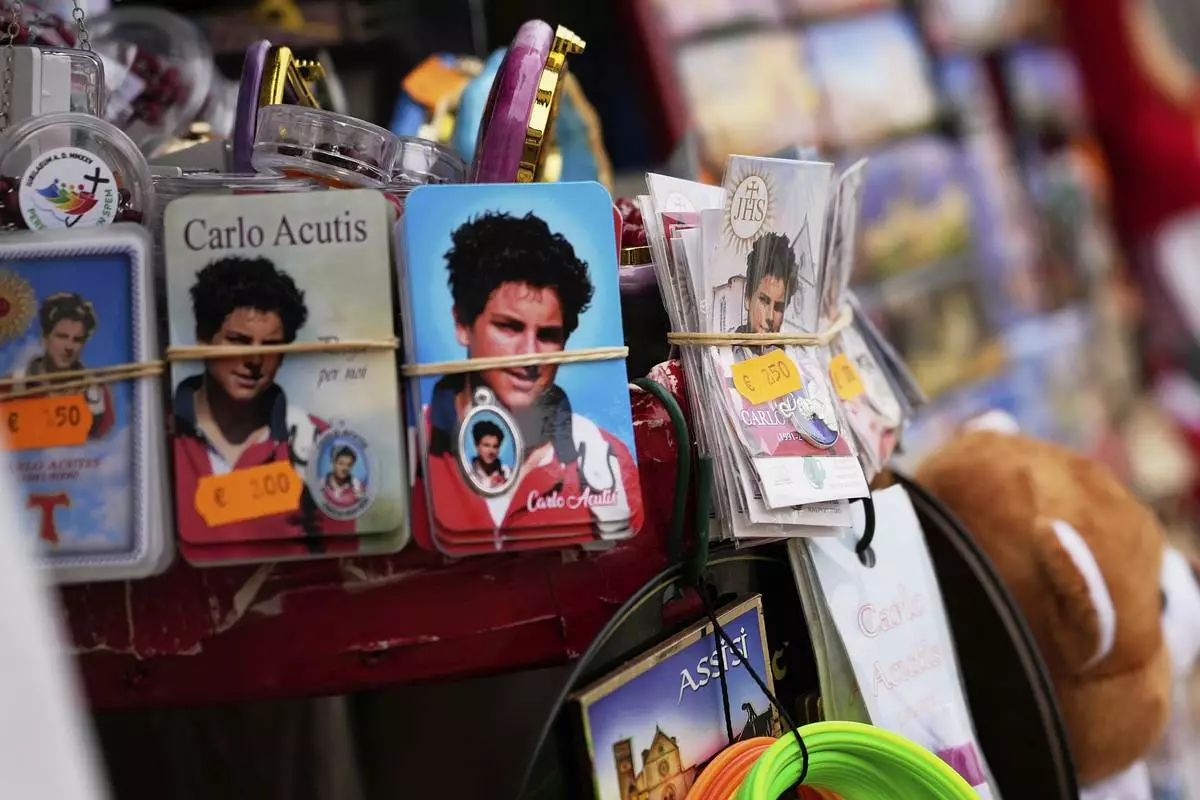
Pictures of 15-year-old Carlo Acutis, an Italian boy who died in 2006 of leukemia, are displayed for sale at a kiosk in Assisi, Italy, on Saturday, March 1, 2025. (AP Photo/Gregorio Borgia)
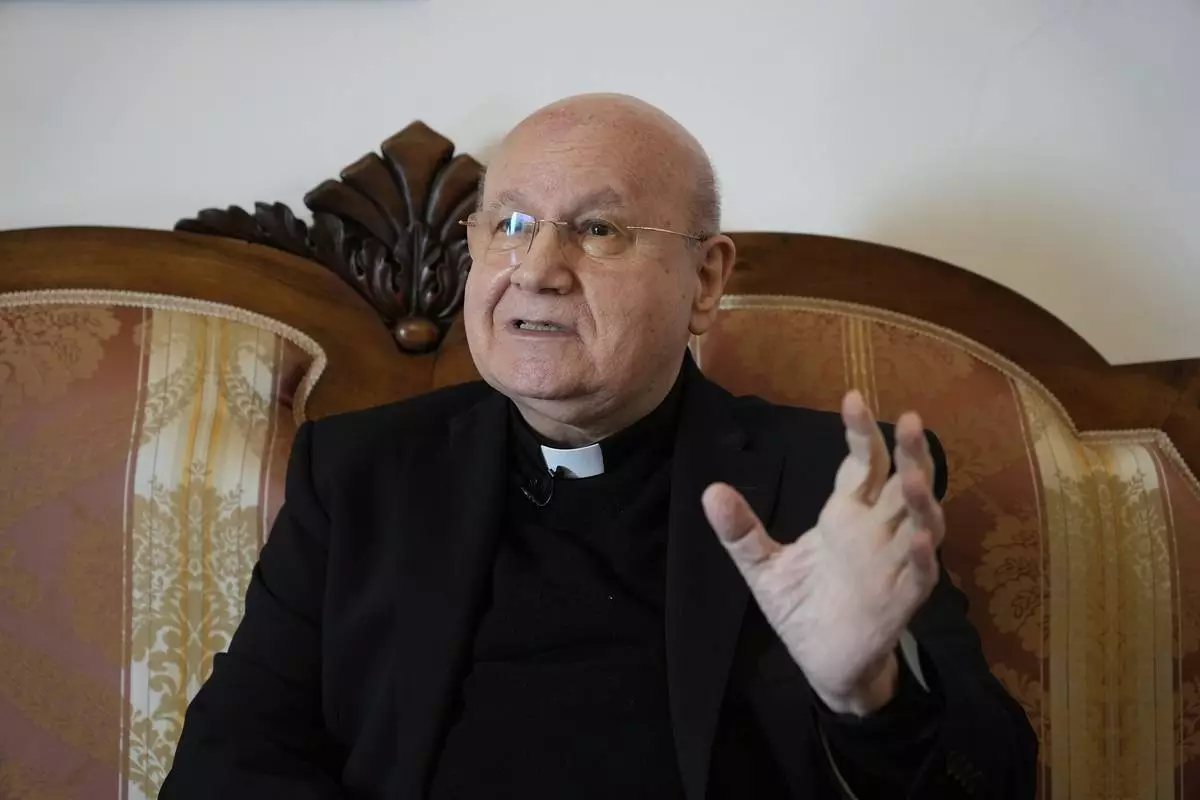
Bishop Domenico Sorrentino speaks during an interview in Assisi, Italy, on Saturday, March 1, 2025. (AP Photo/Gregorio Borgia)
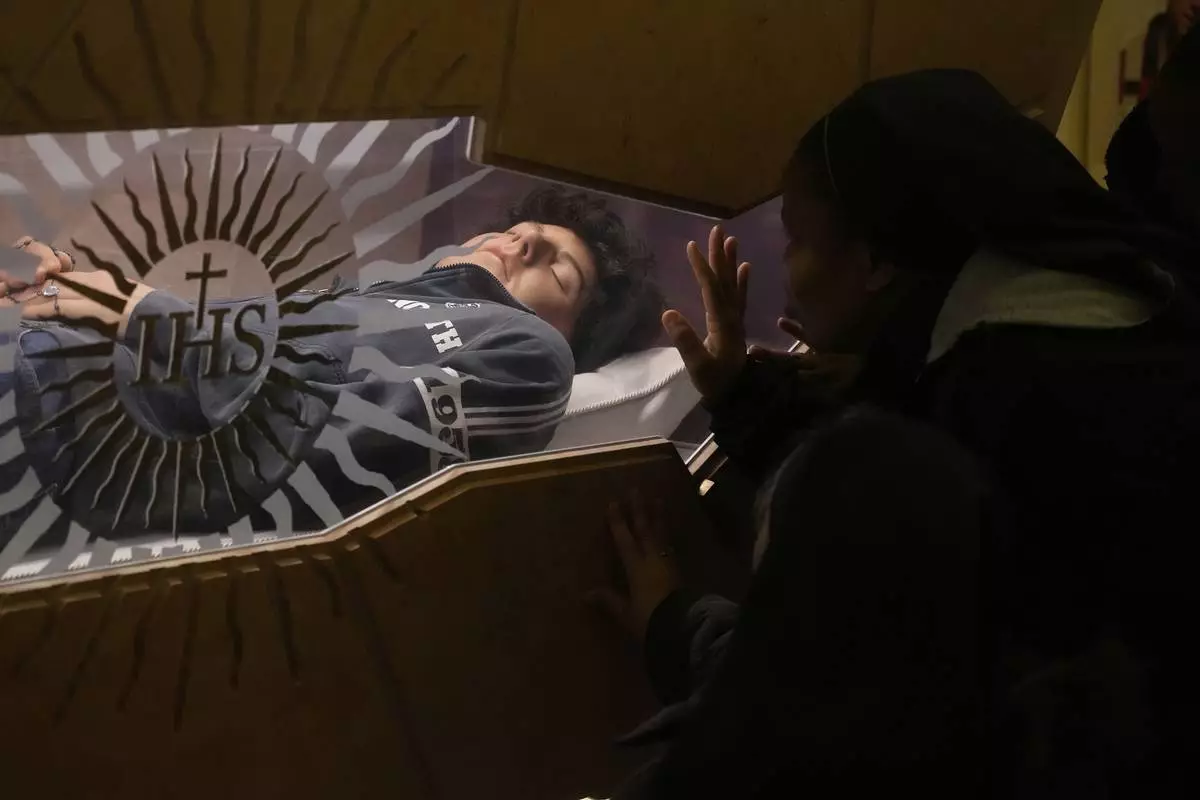
The body of Carlo Acutis, an Italian boy who died in 2006 of leukemia, lies in his tomb in Assisi, Italy, on Saturday, March 1, 2025. (AP Photo/Gregorio Borgia)
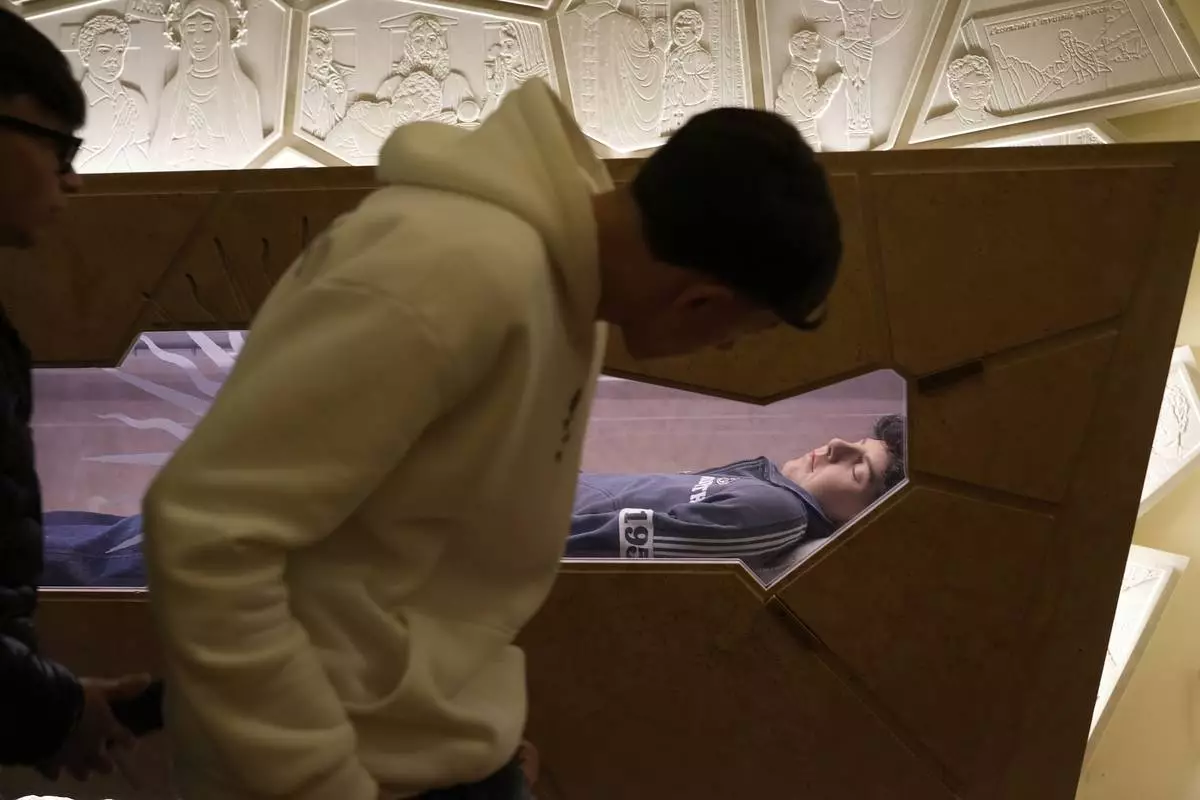
The body of Carlo Acutis, an Italian boy who died in 2006 of leukemia, lies in his tomb in Assisi, Italy, on Saturday, March 1, 2025. (AP Photo/Gregorio Borgia)
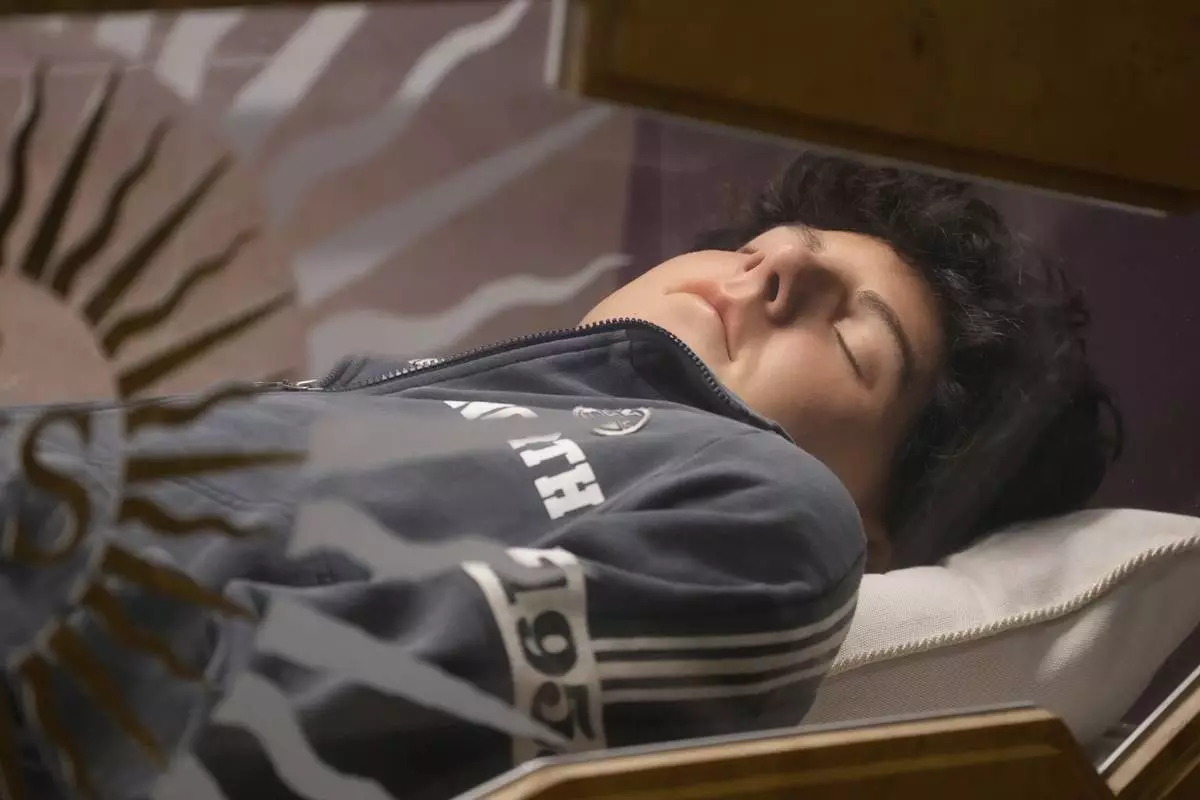
The body of Carlo Acutis, an Italian boy who died in 2006 of leukemia, lies in his tomb in Assisi, Italy, on Saturday, March 1, 2025. (AP Photo/Gregorio Borgia)
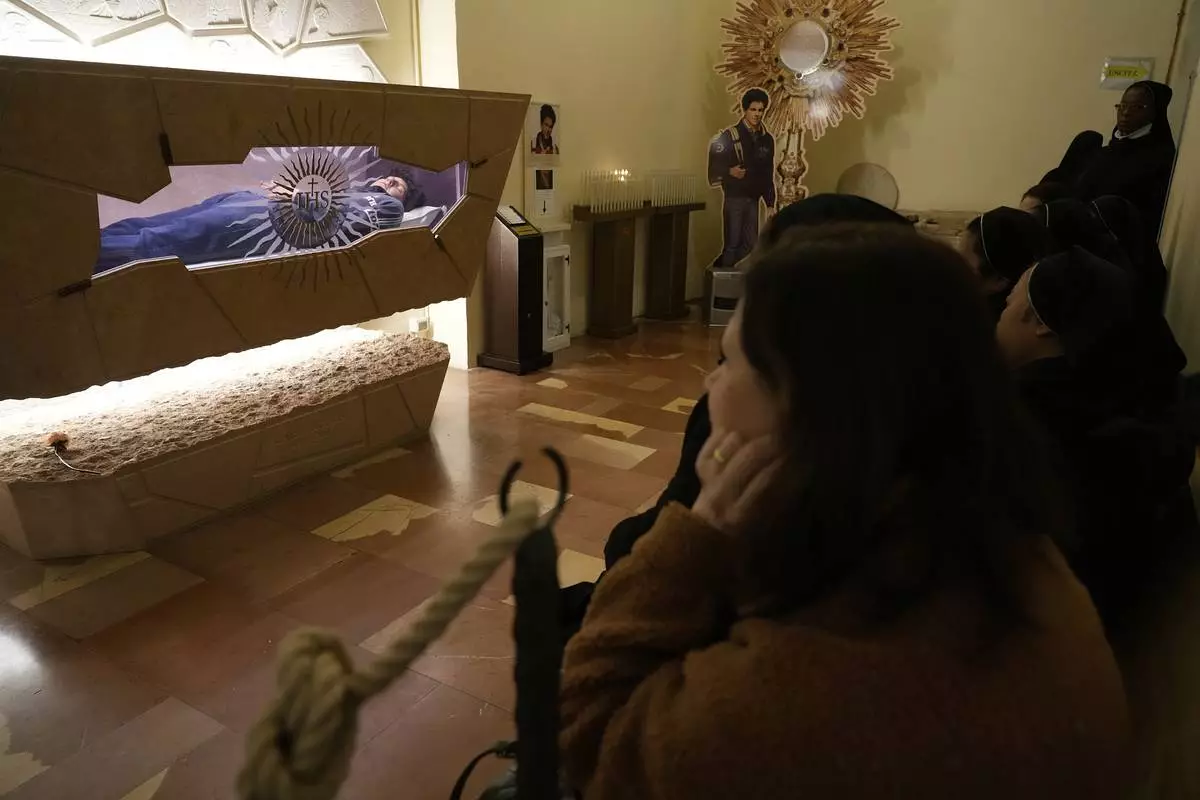
Worshippers pay their respects at the tomb of 15-year-old Carlo Acutis, an Italian boy who died in 2006 of leukemia, in Assisi, Italy, on Saturday, March 1, 2025. (AP Photo/Gregorio Borgia)
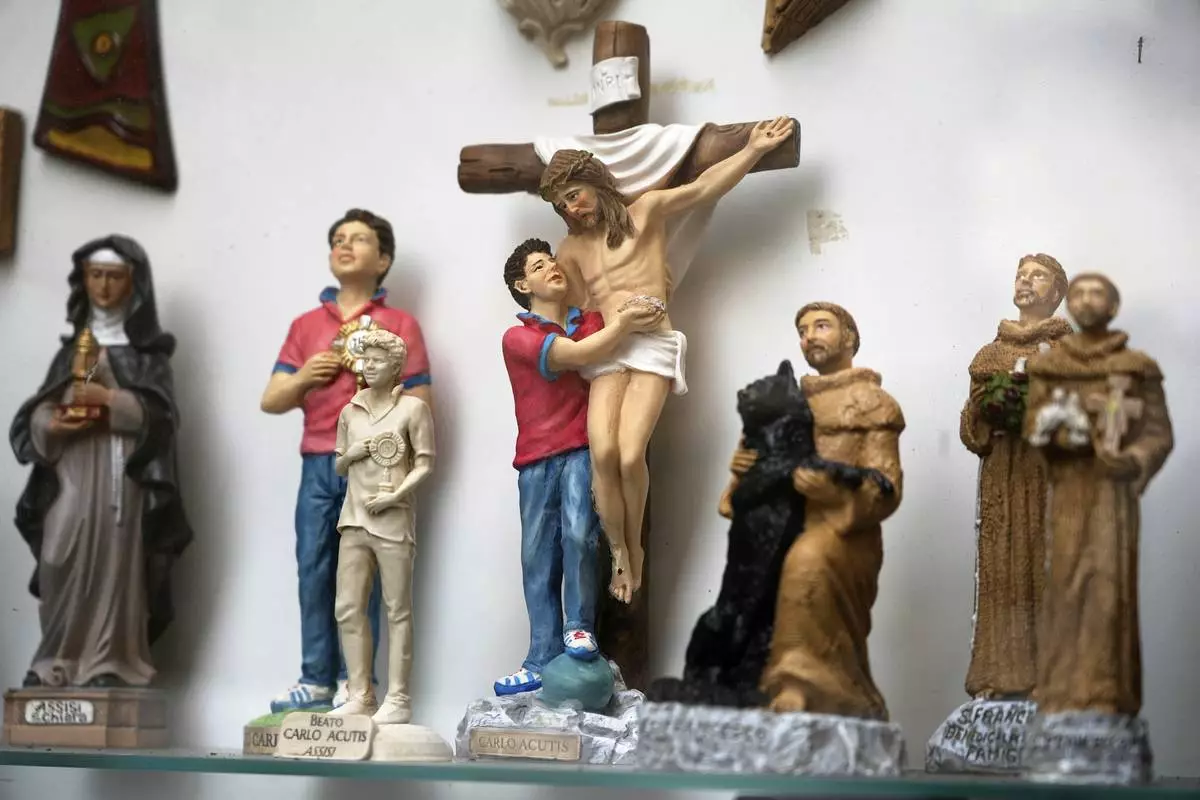
Statuettes of Carlo Acutis, an Italian boy who died in 2006 of leukemia, are displayed in a shop in Assisi, Italy, on Saturday, March 1, 2025. (AP Photo/Gregorio Borgia)
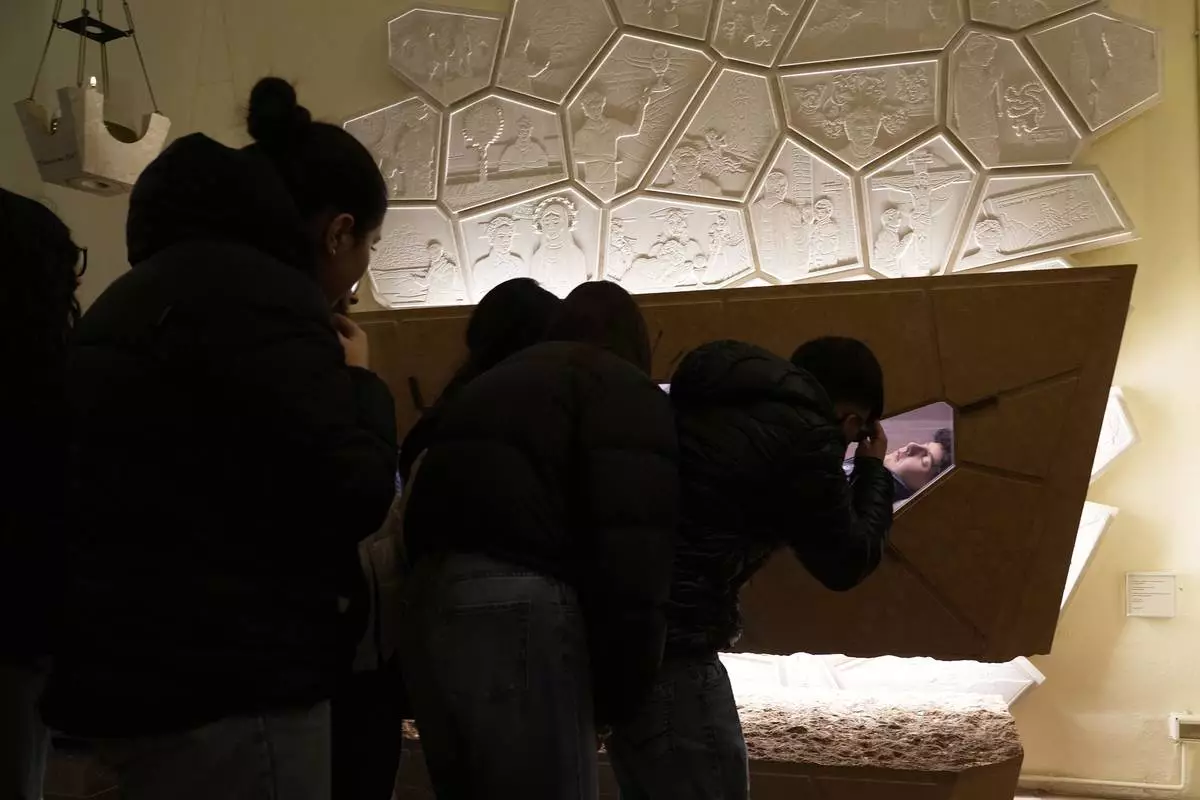
Faithful pay their homage before the tomb of 15-year-old Carlo Acutis, an Italian boy who died in 2006 of leukemia, in Assisi, Italy, on Saturday, March 1, 2025. (AP Photo/Gregorio Borgia)
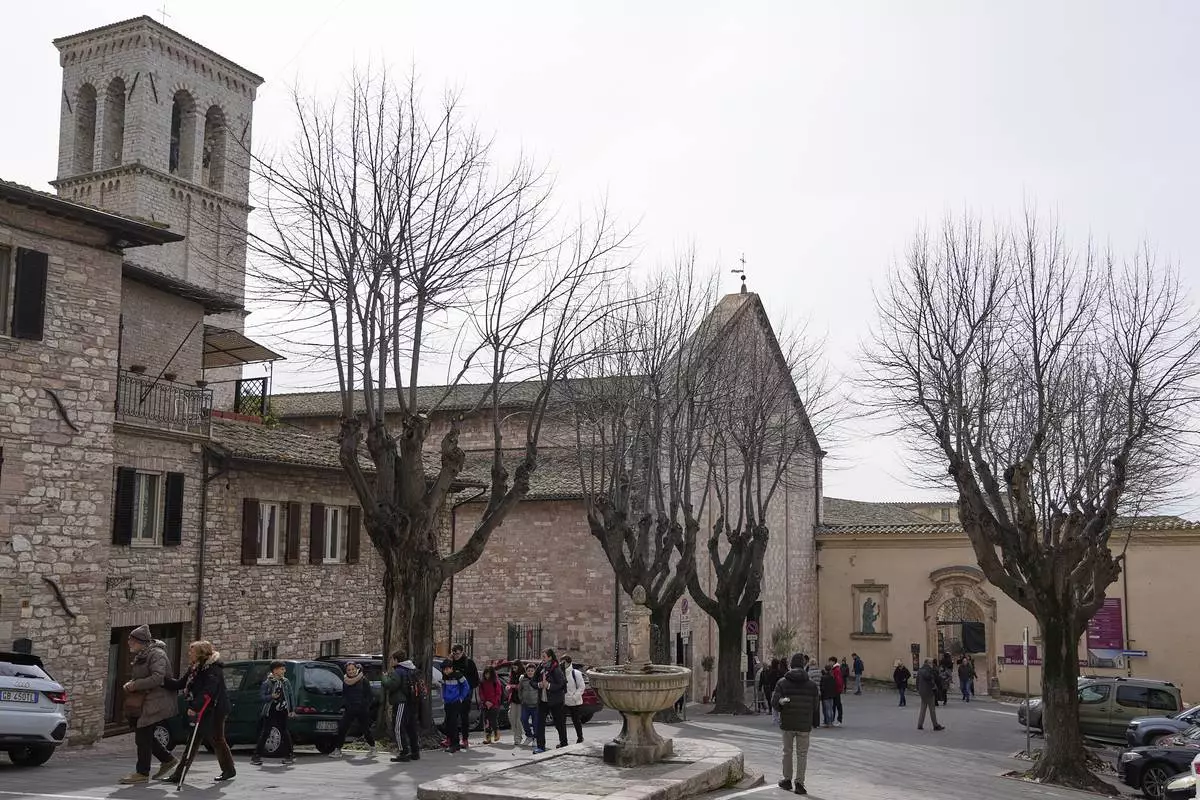
Faithful leave the the Church of Santa Maria Maggiore after visiting the tomb of 15-year-old Carlo Acutis, an Italian boy who died in 2006 of leukemia, in Assisi, Italy, on Saturday, March 1, 2025. (AP Photo/Gregorio Borgia)
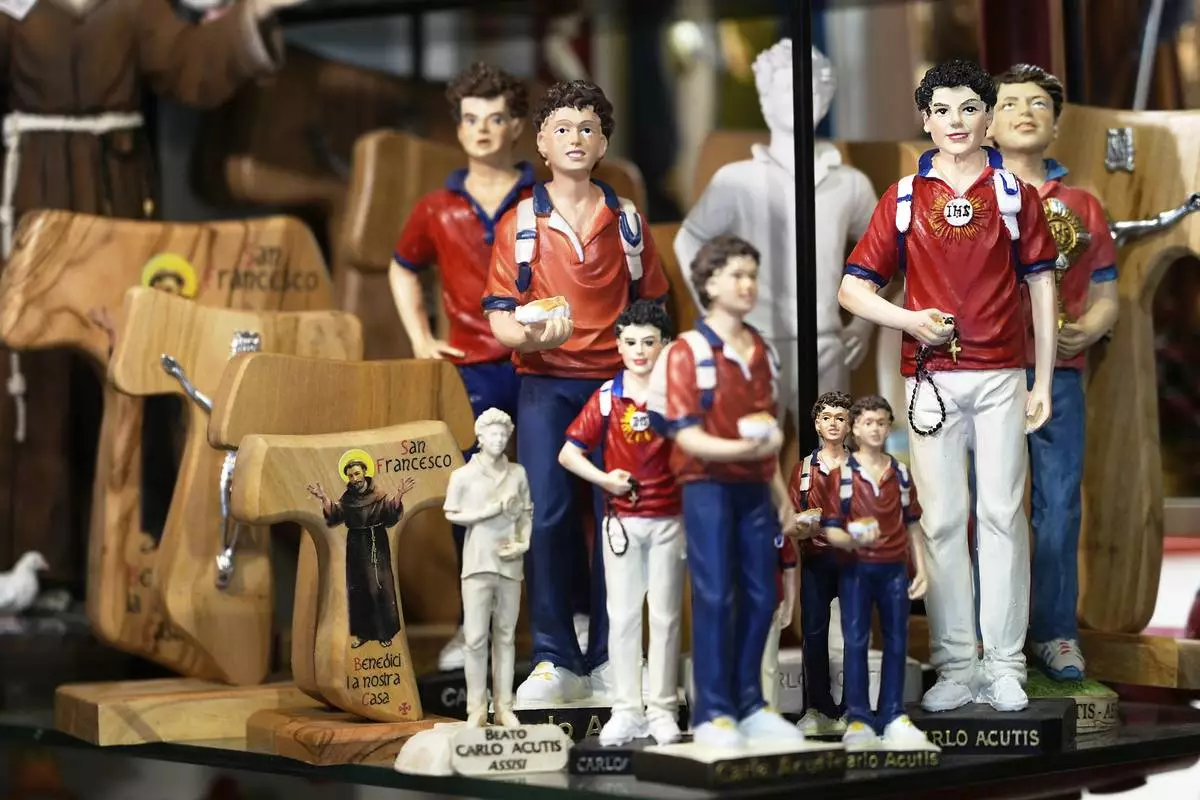
Statuettes of Carlo Acutis, an Italian boy who died in 2006 of leukemia, are displayed for sale in a shop in Assisi, Italy, on Saturday, March 1, 2025. (AP Photo/Gregorio Borgia)
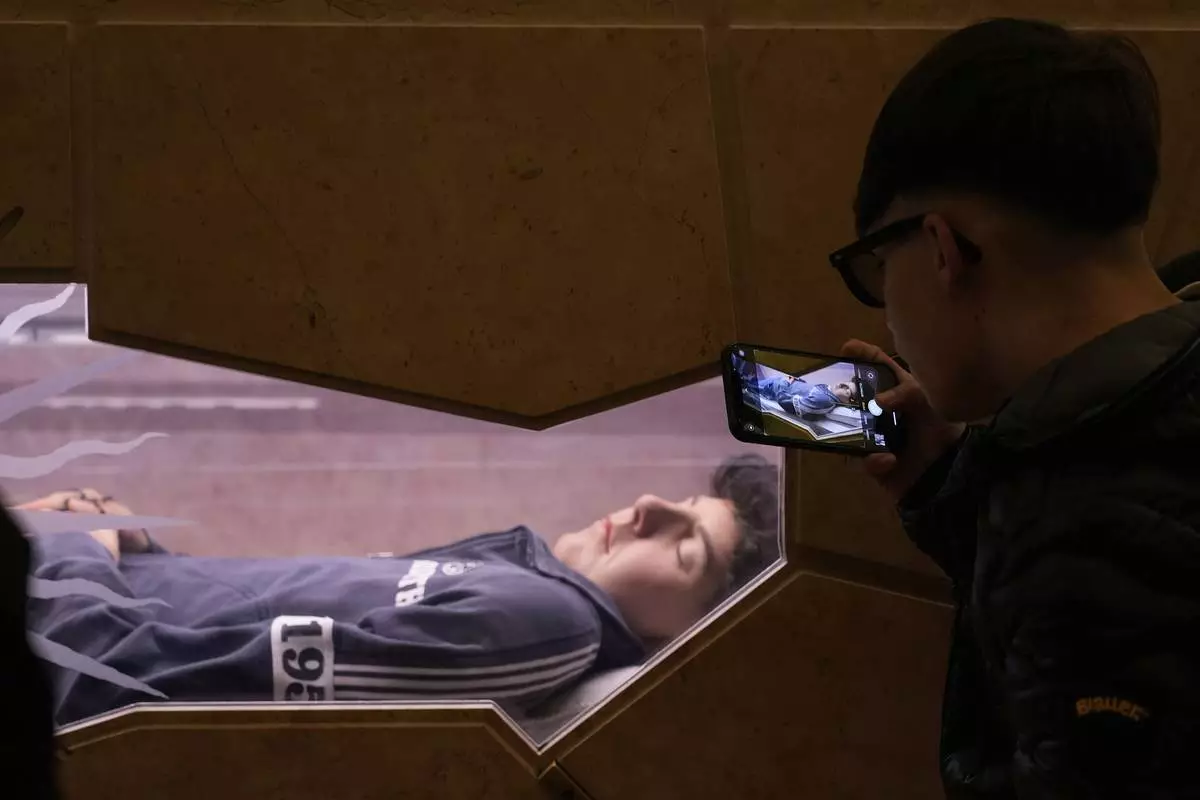
A teenager uses a smartphone to take a picture at the tomb of 15-year-old Carlo Acutis, an Italian boy who died in 2006 of leukemia, in Assisi, Italy, on Saturday, March 1, 2025. (AP Photo/Gregorio Borgia)