DUBAI, United Arab Emirates (AP) — Suspected U.S. airstrikes pummeled sites across Yemen controlled by the Houthi rebels early Friday, including neighborhoods in the capital, Sanaa.
The extent of the damage and possible casualties wasn't immediately clear, though the number of strikes appeared particularly intense compared to other days in the campaign that began March 15.
An Associated Press review has found the new American operation under President Donald Trump appears more more extensive than those under former President Joe Biden, as the U.S. moves from solely targeting launch sites to firing at ranking personnel as well as dropping bombs in cities.
Initial reports from the Houthis described at least seven people being hurt in the attacks Friday in Sanaa, Yemen's capital that the rebels have held since 2014. Other strikes hit around the Red Sea port city of Hodeida, the rebel's stronghold of Saada and in Yemen's al-Jawf, Amran and Marib governorates.
The Houthis did not immediately acknowledge what at those sites had been targeted, other than Sanaa International Airport, which is used for both civilian and military traffic. Neighborhoods in the capital also are home to military and intelligence service sites — as well as crowded with civilians.
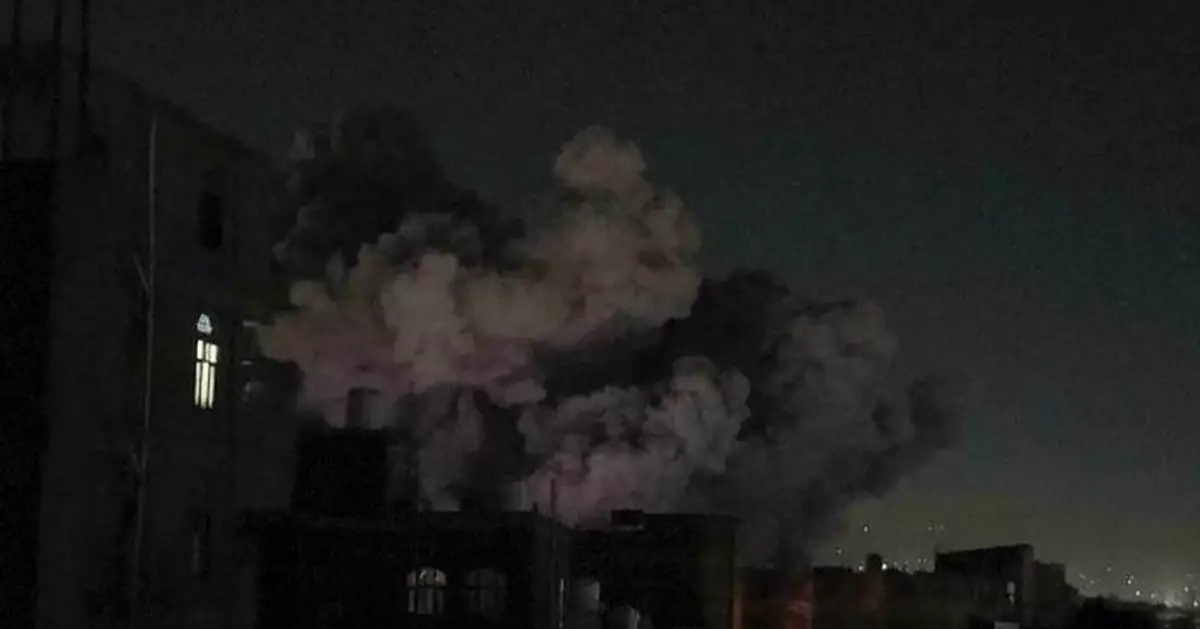
An Associated Press video showed one bomb dropping into Sanaa, with a huge plume of smoke rising into the night sky as many people were awake in the final days of the Muslim holy fasting month of Ramadan.
Other areas hit included mountainous terrain north of Sanaa in Amran, where military camps and other installations are believed to be. The Houthis' al-Masirah satellite news network described communication networks going down after the attacks, which included at least 19 strikes there alone.
The U.S. military's Central Command, which now has authority from the White House to strike offensively in Yemen without pre-approval, did not immediately acknowledge conducting any strikes. The command, which under Biden offered details on individual strikes, has not provided that information in this campaign.
The new campaign of airstrikes, which the Houthis say have killed at least 57 people, started after the rebels threatened to begin targeting “Israeli” ships again over Israel blocking aid entering the Gaza Strip. The rebels in the past have had a loose definition of what constitutes an Israeli ship, meaning other vessels could be targeted as well.
The Houthis had targeted over 100 merchant vessels with missiles and drones, sinking two vessels and killing four sailors during their campaign targeting ships from November 2023 until January of this year. They also launched attacks targeting American warships, though none have been hit so far.
The attacks greatly raised the Houthis’ profile as they faced economic problems and launched a crackdown targeting any dissent and aid workers at home amid Yemen’s decadelong stalemated war that has torn apart the Arab world’s poorest nation.
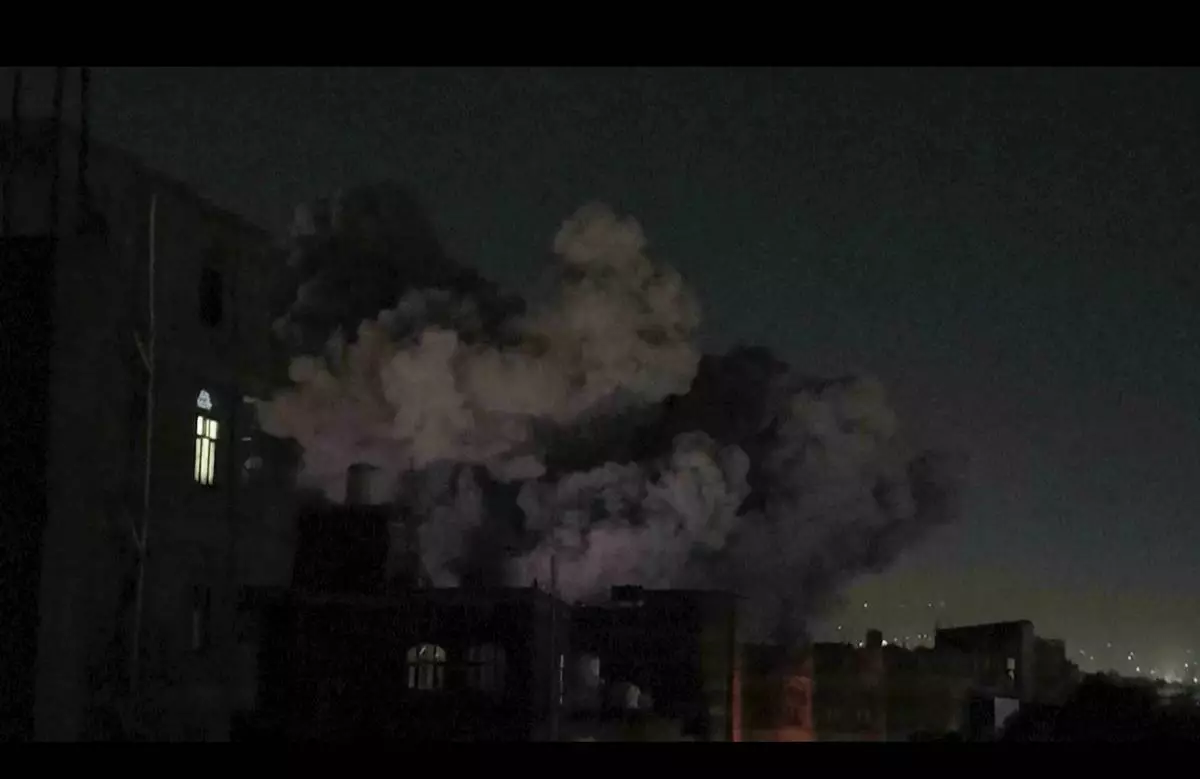
In this image made from video, smoke rises after a blast in Sanaa, Yemen, Friday, March 28, 2025. (AP Photo)
WASHINGTON (AP) — President Donald Trump is meeting with oil executives at the White House on Friday in hopes of securing $100 billion in investments to revive Venezuela’s ability to fully tap into its expansive reserves of petroleum — a plan that rides on their comfort in making commitments in a country plagued by instability, inflation and uncertainty.
Since the U.S. military raid to capture former Venezuelan leader Nicolás Maduro on Saturday, Trump has quickly pivoted to portraying the move as a newfound economic opportunity for the U.S., seizing tankers carrying Venezuelan oil, saying the U.S. is taking over the sales of 30 million to 50 million barrels of previously sanctioned Venezuelan oil and will be controlling sales worldwide indefinitely.
On Friday, U.S. forces seized their fifth tanker over the past month that has been linked to Venezuelan oil. The action reflected the determination of the U.S. to fully control the exporting, refining and production of Venezuelan petroleum, a sign of the Trump administration's plans for ongoing involvement in the sector as it seeks commitments from private companies.
It's all part of a broader push by Trump to keep gasoline prices low. At a time when many Americans are concerned about affordability, the incursion in Venezuela melds Trump’s assertive use of presidential powers with an optical spectacle meant to convince Americans that he can bring down energy prices.
The meeting, set for 2:30 p.m. EST, will be open to the news media, according to an update to the president's daily schedule. “At least 100 Billion Dollars will be invested by BIG OIL, all of whom I will be meeting with today at The White House,” Trump said Friday in a pre-dawn social media post.
Trump is set to meet with executives from 17 oil companies, according to the White House. Among the companies attending are Chevron, which still operates in Venezuela, and ExxonMobil and ConocoPhillips, which both had oil projects in the country that were lost as part of a 2007 nationalization of private businesses under Maduro’s predecessor, Hugo Chávez.
The president is meeting with a wide swath of domestic and international companies with interests ranging from construction to the commodity markets. Other companies slated to be at the meeting include Halliburton, Valero, Marathon, Shell, Singapore-based Trafigura, Italy-based Eni and Spain-based Repsol.
Large U.S. oil companies have so far largely refrained from affirming investments in Venezuela as contracts and guarantees need to be in place. Trump has suggested on social media that America would help to backstop any investments.
Venezuela’s oil production has slumped below one million barrels a day. Part of Trump's challenge to turn that around will be to convince oil companies that his administration has a stable relationship with Venezuela’s interim President Delcy Rodríguez, as well as protections for companies entering the market.
Secretary of State Marco Rubio, Energy Secretary Chris Wright and Interior Secretary Doug Burgum are slated to attend the oil executives meeting, according to the White House.
Meanwhile, the United States and Venezuelan governments said Friday they were exploring the possibility of r estoring diplomatic relations between the two countries, and that a delegation from the Trump administration arrived to the South American nation on Friday.
The small team of U.S. diplomats and diplomatic security officials traveled to Venezuela to make a preliminary assessment about the potential re-opening of the U.S. Embassy in Caracas, the State Department said in a statement.
Trump also announced on Friday he’d meet with President Gustavo Petro in early February, but called on the Colombian leader to make quick progress on stemming flow of cocaine into the U.S.
Trump, following the ouster of Maduro, had made vague threats to take similar action against Petro. Trump abruptly changed his tone Wednesday about his Colombian counterpart after a friendly phone call in which he invited Petro to visit the White House.
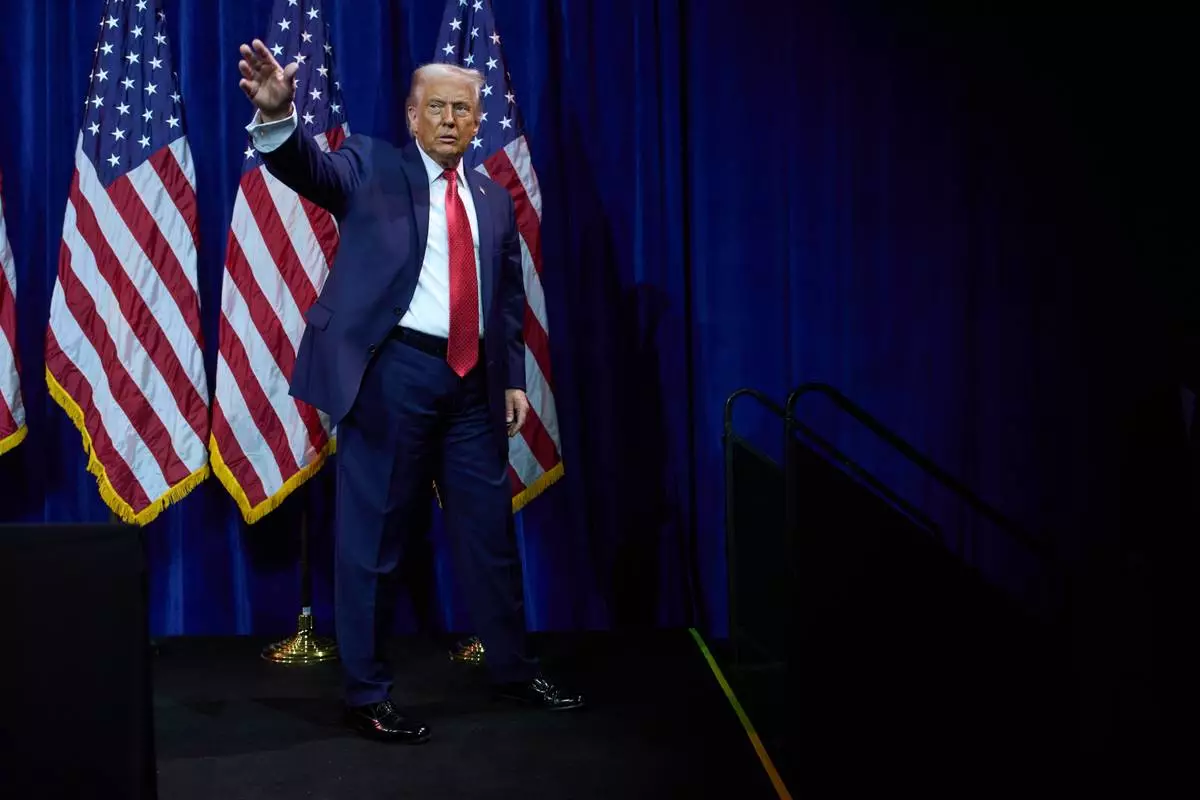
President Donald Trump waves as he walks off stage after speaking to House Republican lawmakers during their annual policy retreat, Tuesday, Jan. 6, 2026, in Washington. (AP Photo/Evan Vucci)