Skip to Content Facebook Feature Image

China's central bank targets lower financing costs to spur economic growth

China

China

China

China's central bank targets lower financing costs to spur economic growth

2025-03-28 18:03 Last Updated At:18:37

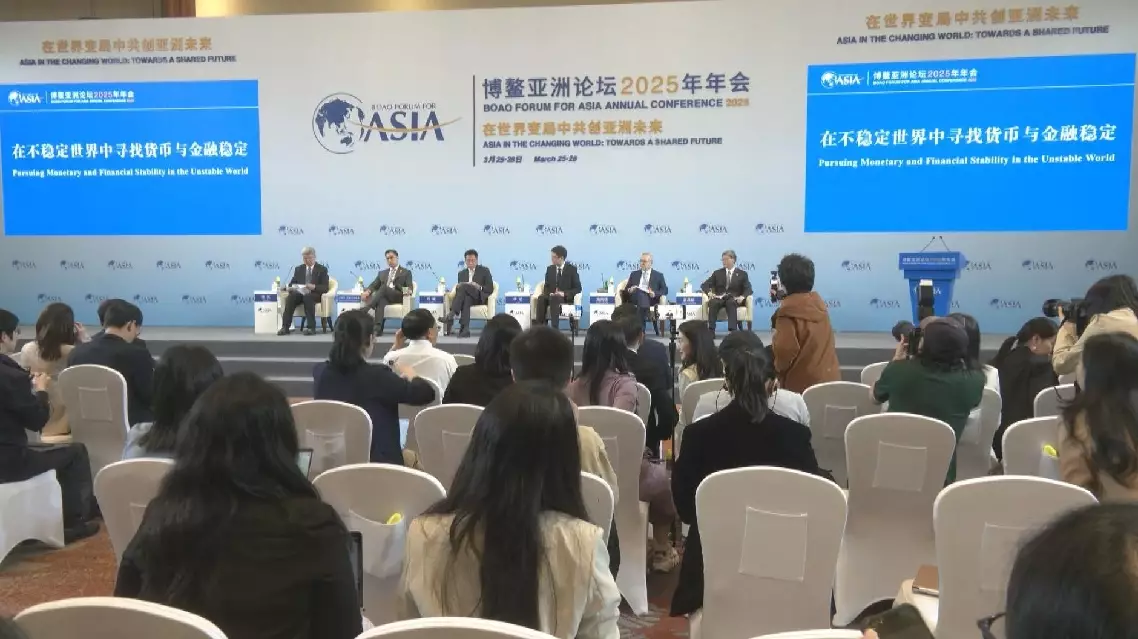
The deputy governor of the People's Bank of China (PBOC) Xuan Changneng emphasized China's commitment to lowering overall financing costs to foster sustainable growth in its real economy, during a sub-forum of the Boao Forum for Asia (BFA) Annual Conference 2025 held on Thursday.

During the sub-forum titled "Seeking Monetary and Financial Stability in an Unstable World," Xuan highlighted that the current international economic and financial situation is increasingly uncertain, posing greater challenges for the formulation of monetary policy.

To address this, the PBOC is continuously refining its monetary policy framework in four aspects: policy stance, regulatory methods, policy instruments, and communication mechanisms.

"The PBOC is gradually shifting away from quantity-based targets and placing greater emphasis on price-based regulation. To this end, the central bank has recognized the 7-day reverse repo rate in open market operations as a policy rate. Recently, the Medium-term Lending Facility (MLF) operations have been adjusted from a single-price bidding to a multi-price bidding system, so the MLF rate is no longer considered as a policy rate," Xuan said at the forum.

Through changes in the seven-day reverse repurchase operation rate, the PBOC can influence interbank certificate of deposit rates, government bond yields, and subsequently, deposit and loan rates. This, in turn, promotes consumption and investment, thereby supporting economic growth.

Xuan also noted that under a moderately loose monetary policy stance, the PBOC will seize opportunities to lower reserve requirements and interest rates, continuing to drive down comprehensive financing costs in society and further boost economic recovery.

At the forum, Li Bin, deputy director of the State Administration of Foreign Exchange (SAFE), pointed out that with the optimization of China's economic structure and the increasing highlights in technological innovation this year, foreign investment in renminbi (RMB) assets is on the rise.

"Since February, foreign capital has been significantly increasing its holdings of renminbi assets. In February alone, foreign investors had a net increase of 12.7 billion U.S. dollars in domestic stocks and bonds, and this trend has continued into March," said Li.

The BFA Annual Conference 2025 opened on Thursday in Boao, south China's Hainan Province.

Founded in 2001, the BFA is a non-governmental and non-profit international organization committed to promoting regional economic integration and bringing Asian countries closer to their development goals.

Running from March 25 to 28, this year's conference is themed "Asia in the Changing World: Towards a Shared Future."
China's central bank targets lower financing costs to spur economic growth
China's central bank targets lower financing costs to spur economic growth

The Iranian government is focusing on public concerns and maintaining stable supplies of essential goods amid recent protests, Iranian President Masoud Pezeshkian said in a televised interview on Sunday.

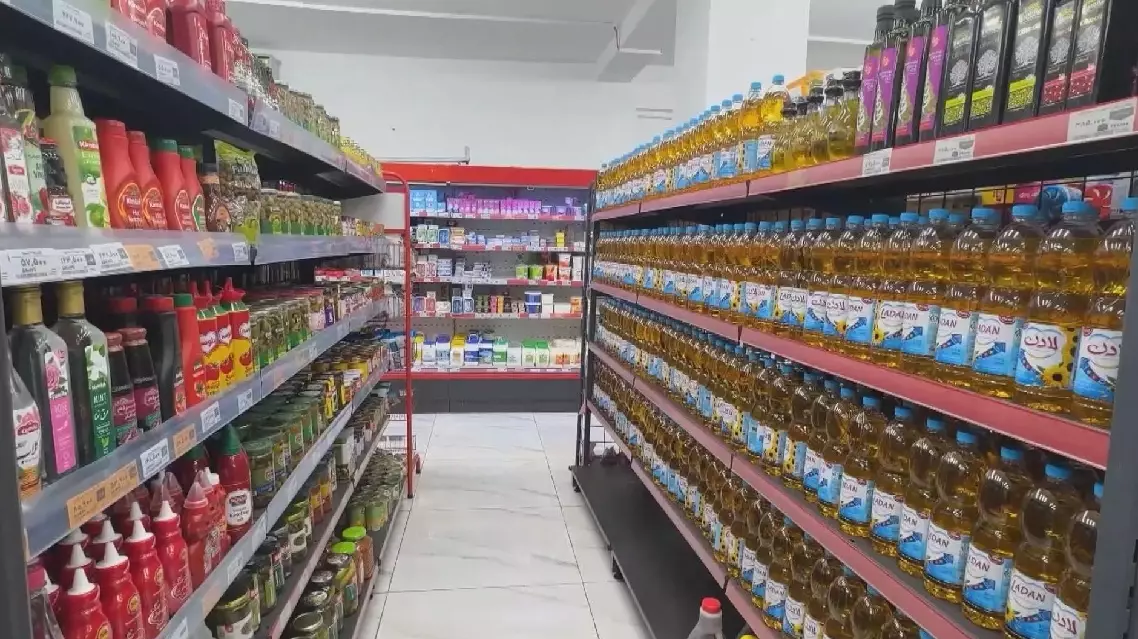
In the city of Karaj, northwest of the capital Tehran, daily life has largely continued as normal. A video filmed by a local resident on Sunday shows food stores open and grocery shelves fully stocked.

"This is the block near my home, and there are some food stores here. Daily life continues here. Last night we did not see many protests in Karaj. Right now the city is very safe. This is a grocery store close to my home. All the food is available; nothing is in shortage. Here are noodles and different types of beans. Here are dairy products, cheese, and yogurt. I also checked other grocery stores and didn't see any shortages. Everything is available," said local resident Ali Reza.

Iranian officials have described recent disturbances as acts orchestrated by the "enemy," including some carried out by well-trained and armed "terrorists." The incidents have caused casualties among security personnel and civilians, as well as property damage.

The Secretary of Iran's Supreme National Security Council Ali Larijani has directed authorities to severely punish the "terrorists."

Meanwhile, Iran's police chief Ahmad-Reza Radan said on Sunday that the police had raised alert levels and arrested several leaders of the troublemakers during the operations on Saturday.

President Pezeshkian noted in the interview that the normal demands of the Iranian people are reasonable and justified, but they must realize that triggering riots and carrying out terrorist acts are the enemy's attempts to undermine the country. He urged the public to remain vigilant.

Also on Sunday, Iranian Parliament Speaker Mohammad Baqer Qalibaf warned that Tehran would regard U.S. and Israeli bases and facilities in the Middle East as "legitimate targets" if Washington takes military action against Iran. His remarks followed media reports saying U.S. President Donald Trump is "seriously considering authorizing a strike" against Iran.

Iranian state media reported that at least 109 members of Iran's security forces have been killed in clashes since the protests began 14 days ago. Meanwhile, human rights groups based outside the country said the number of protesters killed has exceeded 200, though the figure could not be independently verified.

The protests initially erupted over a sharp depreciation of the rial and sweeping subsidy reforms. Iranian authorities have blamed the unrest on foreign-linked agents and sanctions imposed by the United States.

Iranian president says government focusing on ensuring supplies amid protests

Iranian president says government focusing on ensuring supplies amid protests

Recommended Articles