WASHINGTON (AP) — A prominent international law firm reached a deal with President Donald Trump on Friday to dedicate at least $100 million in free legal services and to review its hiring practices, averting a punishing executive order like the ones directed at nearly a half-dozen other major legal institutions in recent weeks.
The deal with Skadden, Arps, Slate, Meagher & Flom was announced just hours after two other law firms sued in federal court over executive orders that threatened the suspension of their attorneys' security clearances and their access to federal buildings. Judges on Friday evening temporarily blocked the enforcement of key parts of the executive orders against those firms, WilmerHale and Jenner & Block.
The contrasting approaches reflect divisions within the legal community on whether to fight or negotiate as Trump seeks to extract major concessions from some of the world's most significant law firms and in some cases punish them over their association with prosecutors who previously investigated him. Besides Skadden Arps, another firm, Paul Weiss, has reached an agreement with the White House, a deal that prompted major backlash last week from lawyers who said the capitulation set a bad precedent.
In a message to his firm, Skadden Arps executive partner Jeremy London said the firm had recently learned that the Trump administration intended to issue an executive order targeting it over its pro bono legal work and its diversity, equity and inclusion initiatives.
“When faced with this information, we carefully considered what the right path would be for us, and the answer was not obvious. We were thoughtful and deliberate in determining the steps we might take, knowing that the decisions we were grappling with would have fundamental consequences for our firm,” London wrote in the message, which was obtained by The Associated Press.
He added that the firm opted to enter negotiations with the administration in hopes of warding off the issuance of an executive order.
“We entered into the agreement the President announced today because, when faced with the alternatives, it became clear that it was the best path to protect our clients, our people, and our Firm,” he wrote.
As part of the deal, Skadden Arps agreed, among others things, to provide at least $100 million in pro bono legal services related to causes including veterans affairs and countering antisemitism. It also pledged a commitment to merit-based hiring and to use an independent counsel to make sure its employment practices are legal and don't rely on diversity, equity and inclusion considerations.
The two firms who sued on Friday, Jenner & Block and WilmerHale, argued in their complaints that the orders amount to an unprecedented assault on the legal system and represent an unconstitutional form of presidential retaliation.
“Our Constitution, top to bottom, forbids attempts by the government to punish citizens and lawyers based on the clients they represent, the positions they advocate, the opinions they voice, and the people with whom they associate," said the complaint from Jenner & Block, filed in federal court in Washington.
After arguments Friday, two different federal judges in Washington granted temporary restraining orders sought by the firms to block enforcement of key portions of the order dealing with access to federal buildings and government contracts. U.S. District Judge Richard Leon, ruling in the case of WilmerHale, said the firm "faces more than economic harm — it faces crippling losses and its very survival is at stake.”
“We appreciate the court’s swift action to preserve our clients’ right to counsel and acknowledgement of the unconstitutional nature of the executive order and its chilling effect on the legal system. The court’s decision to block key provisions of the order vindicates our and our clients’ foundational First Amendment rights,” a WilmerHale spokesperson said in a statement.
The firms argued the executive orders, issued earlier in the week, have already affected their business, with Jenner & Block saying that one client has been notified by the Justice Department that the firm cannot attend an upcoming meeting at the building.
“That client therefore will either need to attend the meeting without outside counsel or would need to retain new outside counsel before April 3,” the lawsuit says.
The WilmerHale complaint raises similar concerns, calling it a flagrant violation of the firm's rights.
“It imposes severe consequences without notice or any opportunity to be heard; it uses vague, expansive language that does not adequately inform WilmerHale (or its clients) of what conduct triggered these extraordinary sanctions; and it unfairly singles out WilmerHale based on its perceived connections to disfavored individuals and causes,” the lawsuit says.
Targeted law firms have taken different approaches to the executive orders that threaten to upend their business model and chill their legal practice.
Earlier this month, the law firm of Perkins Coie also challenged the Trump order in court and succeeded in getting a judge to temporarily block enforcement. The Paul Weiss firm, by contrast, cut a deal with the White House days after it was subjected to an executive order, with its chairman saying that the order presented an “existential crisis” for the firm and that he wasn't sure it could have survived a protracted fight with the Trump administration.
The executive order against Jenner & Block this week stemmed from the fact that the firm once employed Andrew Weissmann, a lawyer who served on special counsel Robert Mueller’s team that investigated Trump during his first term in office over potential connections between his 2016 campaign and Russia. Weissmann, a frequent public target of Trump's ire, left the firm several years ago.
Mueller has retired from WilmerHale, but the White House executive order from Thursday mentions him as well as another retired partner and a current partner who all served on Mueller's team.
“While most litigation requires discovery to unearth retaliatory motive, the Order makes no secret of its intent to punish WilmerHale for its past and current representations of clients before the Nation’s courts and for its perceived connection to the views that Mr. Mueller expressed as Special Counsel,” the WilmerHale lawsuit says.
The first executive order targeted Covington & Burling, a firm that has provided legal representation to special counsel Jack Smith, who investigated Trump during the Biden administration and filed two separate criminal cases that were abandoned after Trump's election win last November.
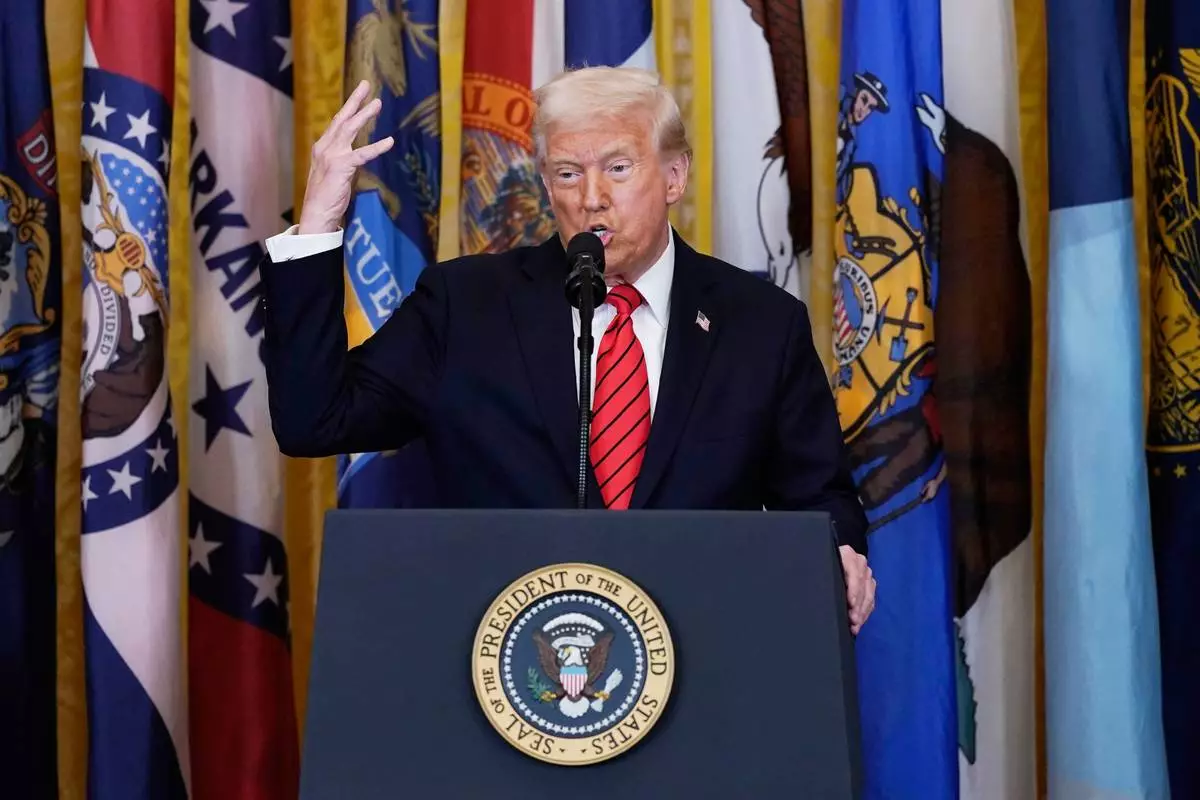
FILE - President Donald Trump speaks at an education event and executive order signing in the East Room of the White House in Washington, March 20, 2025. (AP Photo/Jose Luis Magana, File)
MINNEAPOLIS (AP) — Federal officers dropped tear gas and sprayed eye irritant at activists Tuesday during another day of confrontations in Minneapolis, while students miles away walked out of a suburban school to protest the Trump administration's bold immigration sweeps.
Meanwhile, the fallout from the fatal shooting of a Minneapolis woman by an immigration agent reached the local U.S. Attorney's Office: At least five prosecutors have resigned amid controversy over how the U.S. Justice Department is handling the investigation, according to people familiar with the matter.
Separately, a Justice Department official said Wednesday there's no basis for a criminal civil rights investigation. An FBI probe of Renee Good's death is ongoing.
Strife between federal agents and the public continues to boil, six days since Good was shot in the head while driving off in her Honda Pilot. At one scene, gas clouds filled a Minneapolis street near where she died. A man scrubbed his eyes with snow and screamed for help after agents in a Jeep sprayed an orange irritant and drove off.
It’s common for people to boo, taunt and blow orange whistles when they spot heavily armed immigration agents passing through in unmarked vehicles or walking the streets, all part of a grassroots effort to warn the neighborhood and remind the government that they’re watching.
“Who doesn't have a whistle?” a man with a bag of them yelled.
Brita Anderson, who lives nearby and came to support neighborhood friends, said she was “incensed” to see agents in tactical gear and gas masks, and wondered about their purpose.
“It felt like the only reason they’d come here is to harass people,” Anderson said.
In Brooklyn Park, Minnesota, students protesting the immigration enforcement operation walked out of school, as students in other communities have done this week.
The departures in the U.S. Attorney's Office include First Assistant U.S. Attorney Joe Thompson, who had been leading the sprawling prosecution of public fraud schemes in the state, according to people who spoke to The Associated Press on the condition of anonymity to discuss personnel matters.
With the Department of Homeland Security pledging to send more than 2,000 immigration officers into Minnesota, the state, joined by Minneapolis and St. Paul, sued President Donald Trump’s administration Monday to halt or limit the surge.
The lawsuit says Homeland Security is violating the First Amendment and other constitutional protections by focusing on a progressive state that favors Democrats and welcomes immigrants.
“What we are seeing is thousands — plural — thousands of federal agents coming into our city. And, yeah, they’re having a tremendous impact on day-to-day life,” Minneapolis Mayor Jacob Frey said.
A judge set a status conference for Wednesday.
Homeland Security says it has made more than 2,000 arrests in the state since early December and is vowing to not back down. Spokesperson Tricia McLaughlin, responding to the lawsuit, accused Minnesota officials of ignoring public safety.
In a different lawsuit, a judge said she would rule by Thursday or Friday on a request to restrict the use of force, such as chemical irritants, on people who are observing and recording agents' activities. Government attorneys argued that officers must protect themselves.
The Trump administration has repeatedly defended the immigration agent who shot Good, a 37-year-old mother of three, saying he acted in self-defense. But that explanation has been widely panned by Frey, Minnesota Gov. Tim Walz and others based on videos of the confrontation.
State and local authorities are urging the public to share video and any other evidence as they seek to separately investigate Good's death after federal authorities insisted they would approach it alone and not share information.
In Wisconsin, Lt. Gov. Sara Rodriguez is proposing that the state ban civil immigration enforcement around courthouses, hospitals, health clinics, schools, churches and other places. She is hoping to succeed Gov. Tony Evers, a fellow Democrat, who is not running for a third term.
“We can take a look at that, but I think banning things absolutely will ramp up the actions of our folks in Washington, D.C.,” Evers said, referring to the Trump administration. “They don’t tend to approach those things appropriately.”
Associated Press reporters Ed White in Detroit; Steve Karnowski in Minneapolis; and Scott Bauer in Madison, Wisconsin, contributed.
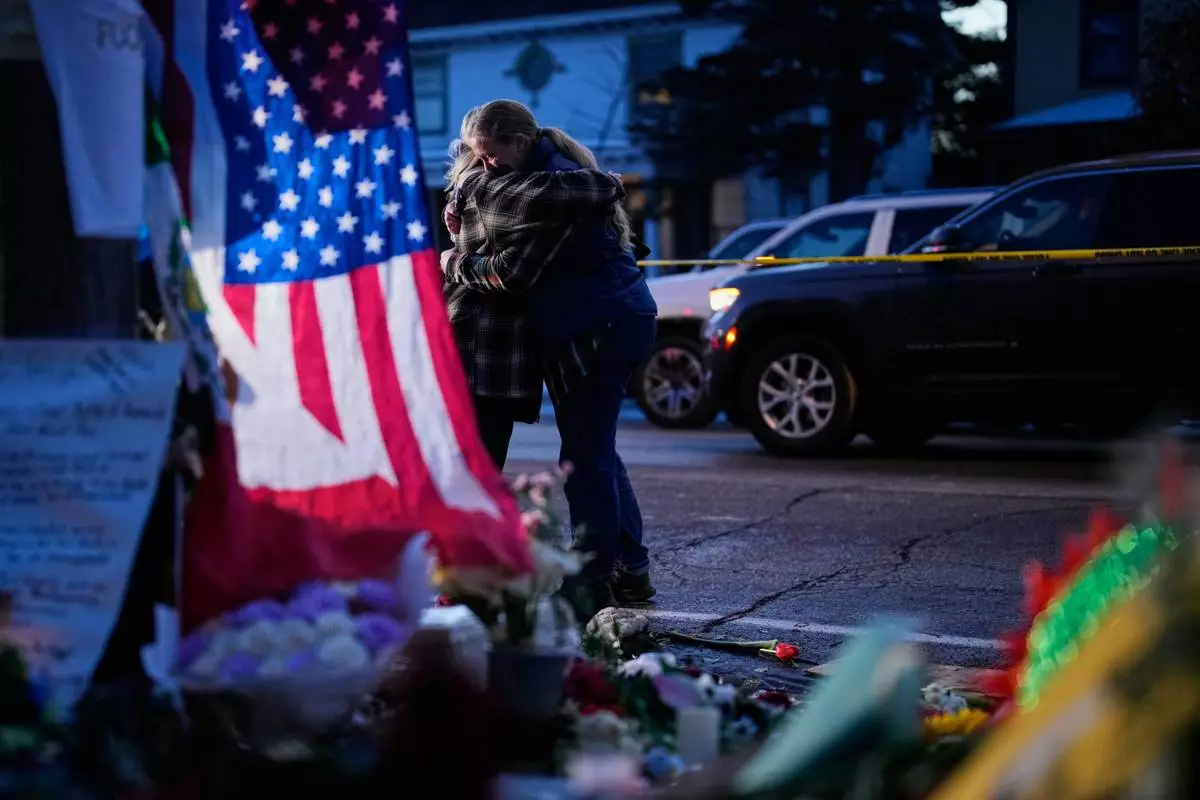
Monica Travis shares an embrace while visiting a makeshift memorial for Renee Good, who was fatally shot by an ICE officer last week, Monday, Jan. 12, 2026, in Minneapolis. (AP Photo/John Locher)

A protester is detained by Federal agents near the scene where Renee Good was fatally shot by an ICE officer last week, Tuesday, Jan. 13, 2026, in Minneapolis.(AP Photo/Adam Gray)
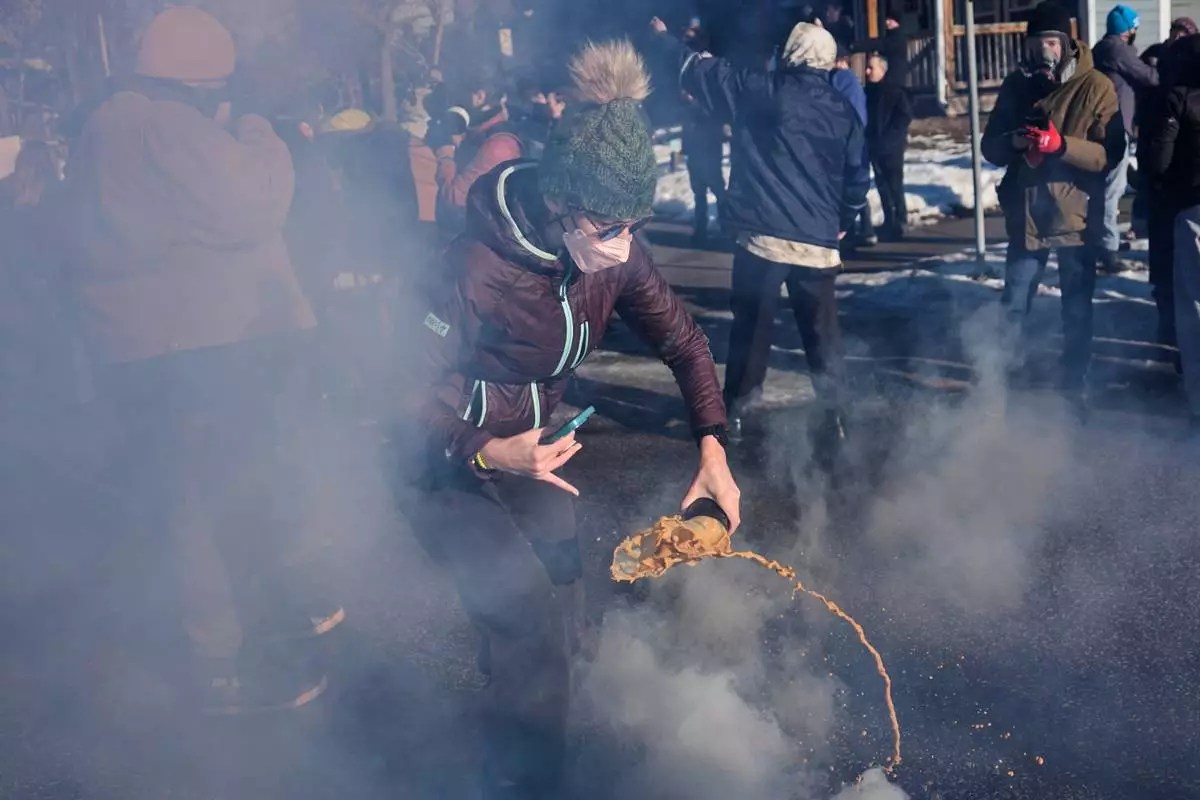
A protester grabs a tear gas grenade deployed by federal immigration officers near the scene where Renee Good was fatally shot by an ICE officer last week, Tuesday, Jan. 13, 2026, in Minneapolis. (AP Photo/John Locher)

A protester is sprayed with pepper spray by a Federal agent Tuesday, Jan. 13, 2026, in Minneapolis.(AP Photo/Adam Gray)
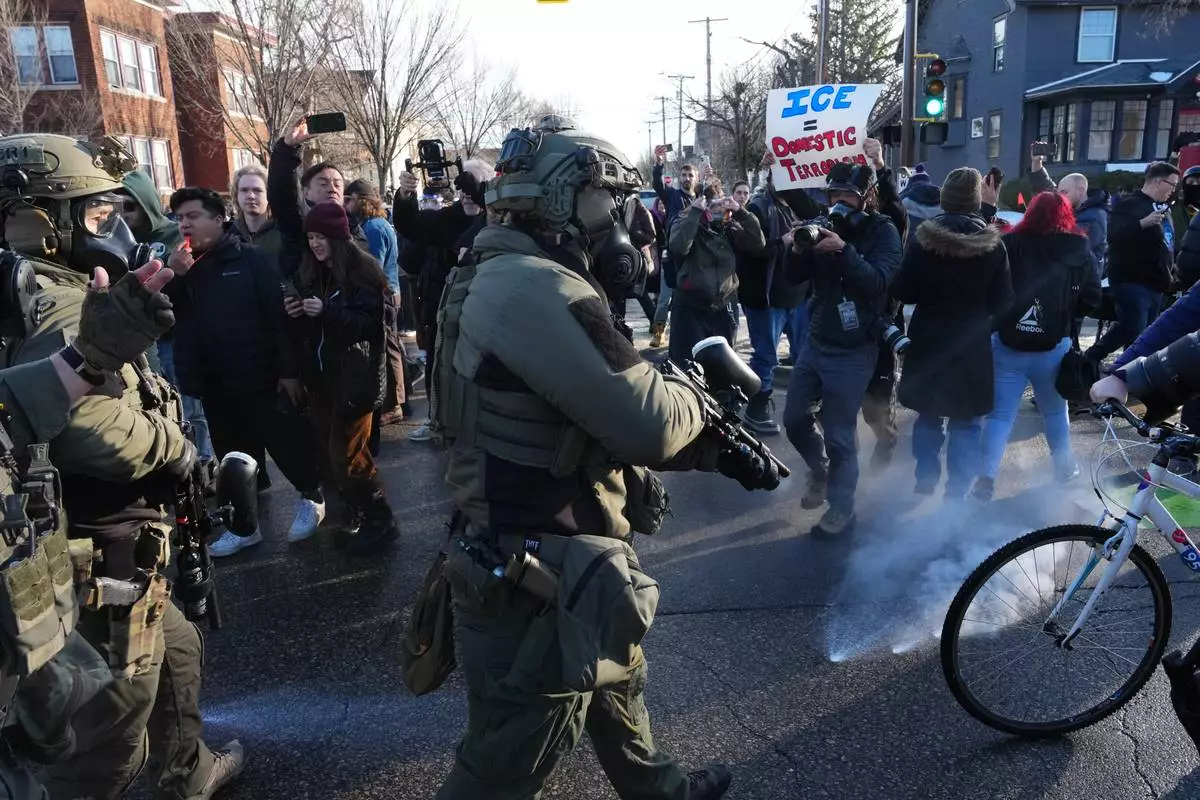
Tear gas is deployed amid protesters near the scene where Renee Good was fatally shot by an ICE officer last week, Tuesday, Jan. 13, 2026, in Minneapolis.(AP Photo/Adam Gray)
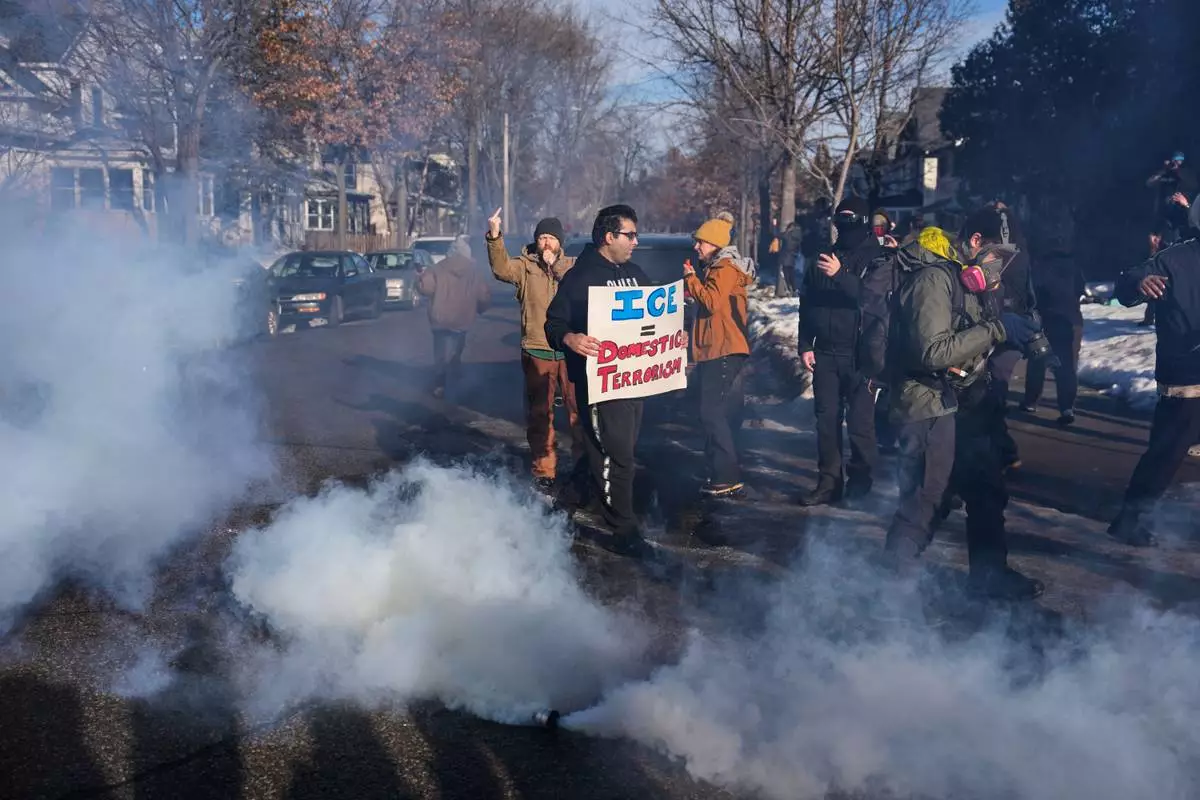
EDS NOTE: OBSCENITY - Tear gas is deployed amid protesters near the scene where Renee Good was fatally shot by an ICE officer last week, Tuesday, Jan. 13, 2026, in Minneapolis. (AP Photo/John Locher)
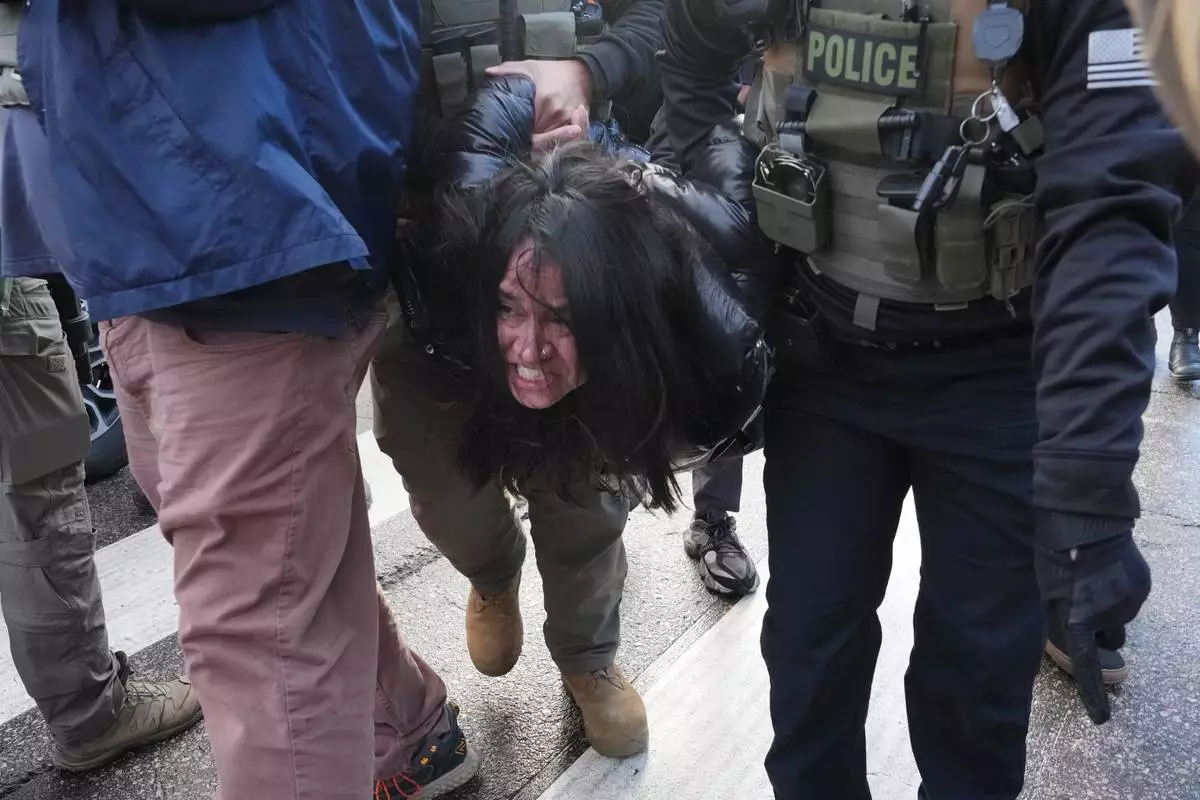
A protester is detained by Federal agents near the scene where Renee Good was fatally shot by an ICE officer last week, Tuesday, Jan. 13, 2026, in Minneapolis.(AP Photo/Adam Gray)(AP Photo/Adam Gray)
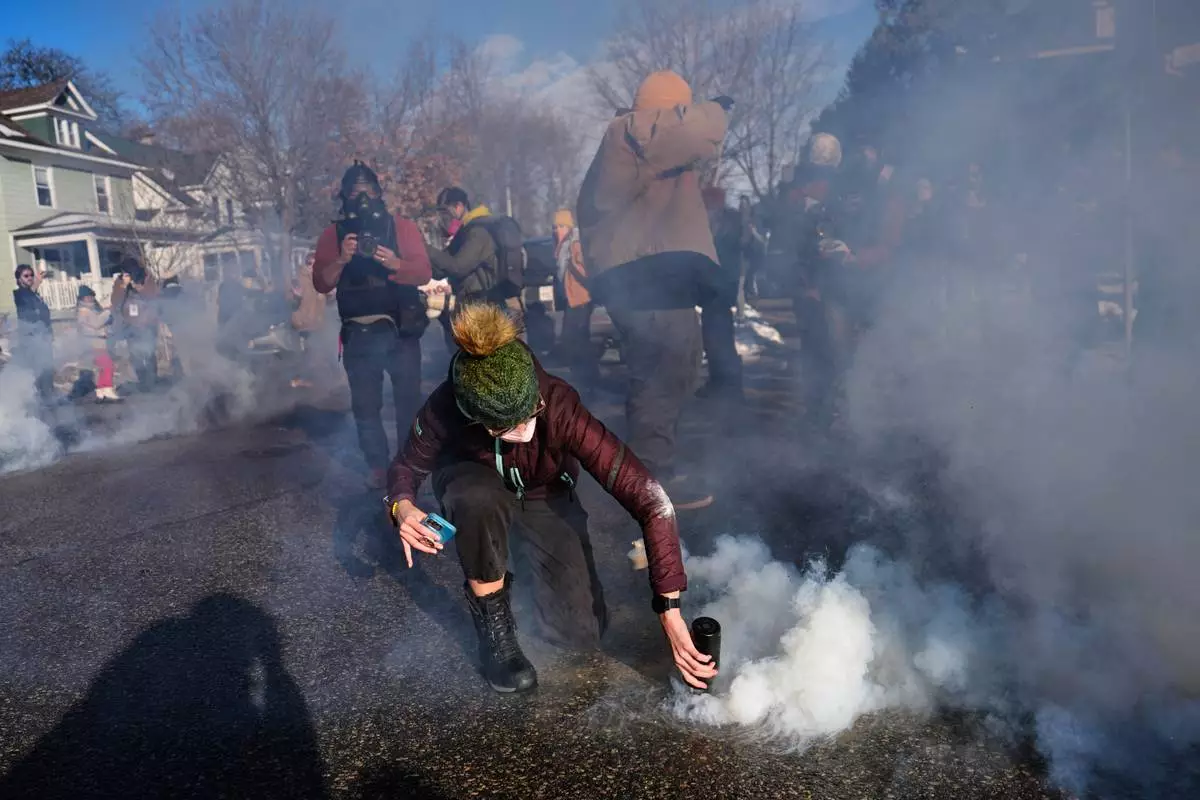
A protester grabs a tear gas grenade deployed by federal immigration officers near the scene where Renee Good was fatally shot by an ICE officer last week, Tuesday, Jan. 13, 2026, in Minneapolis. (AP Photo/John Locher)

Fireworks are set off by protesters outside the Bishop Henry Whipple Federal Building, Monday, Jan. 12, 2026, in Minneapolis. (AP Photo/Jen Golbeck)

Federal immigration officers detain a demonstrator outside Bishop Whipple Federal Building after tear gas was deployed Monday, Jan. 12, 2026, in Minneapolis. (AP Photo/Jen Golbeck)
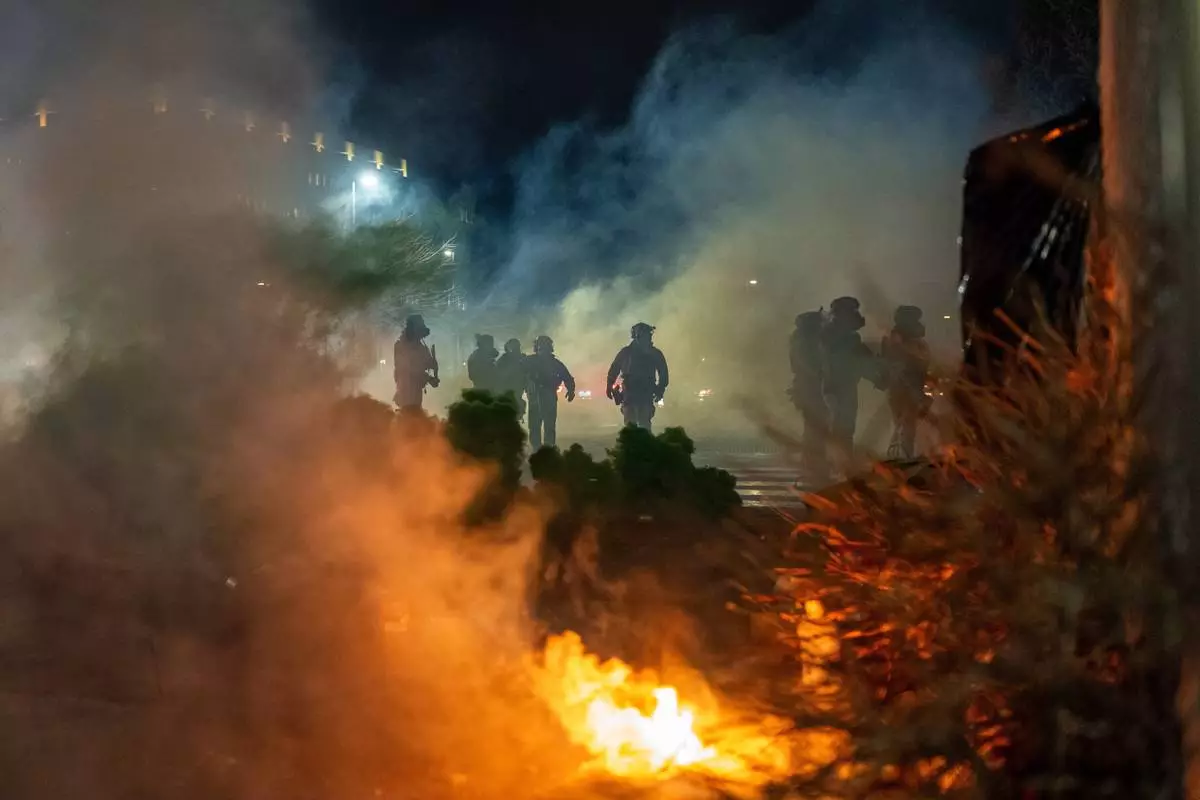
Federal immigration officers are seen outside Bishop Whipple Federal Building after tear gas was deployed Monday, Jan. 12, 2026, in Minneapolis. (AP Photo/Jen Golbeck)
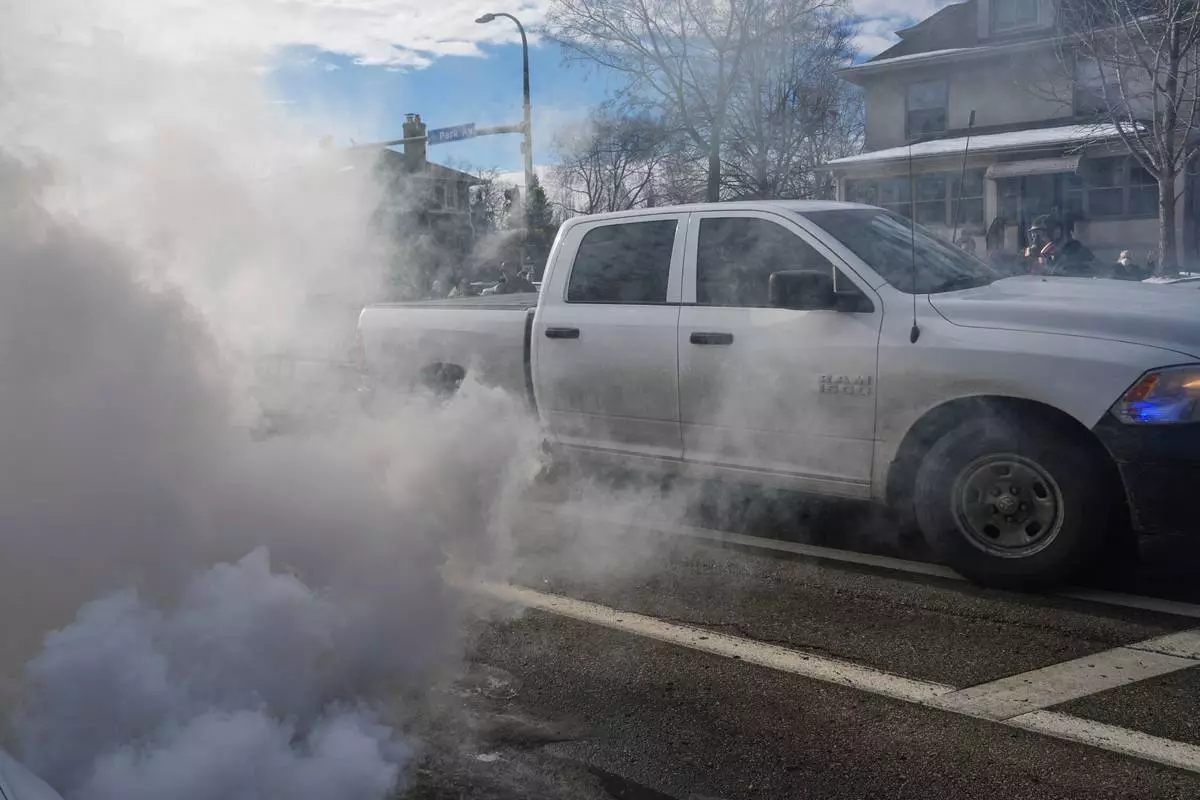
Federal agents drive through smoke from tear gas dispersed during a protest, Monday, Jan. 12, 2026 in Minneapolis (AP Photo/Adam Gray)

A protester's face is doused in water after he was pepper sprayed outside of the Bishop Whipple Federal Building, Monday, Jan. 12, 2026, in Minneapolis. (AP Photo/Jen Golbeck)

EDS NOTE: OBSCENITY - A man gestures as he walks toward a cloud of tear gas that was deployed by federal immigration officers Monday, Jan. 12, 2026, in Minneapolis. (AP Photo/John Locher)
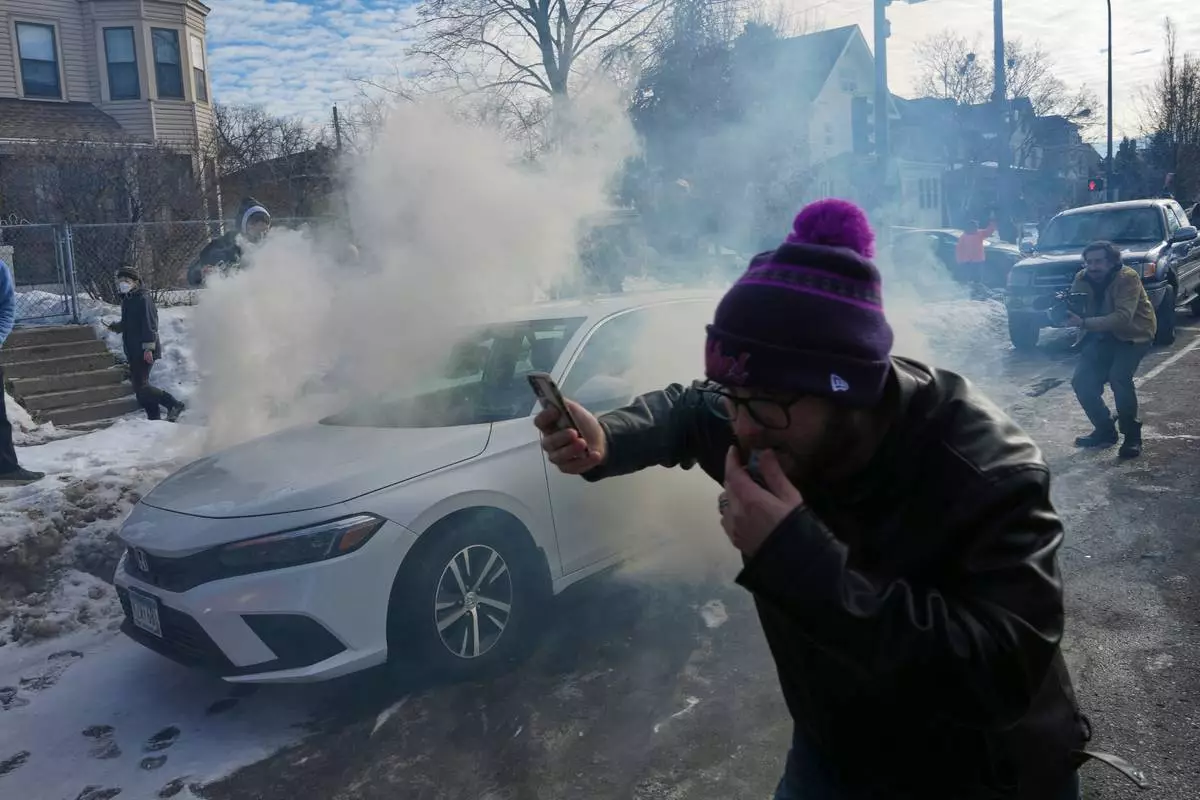
Protesters try to avoid tear gas dispersed by federal agents, Monday, Jan. 12, 2026 in Minneapolis (AP Photo/Adam Gray)

Federal agents get ready to disperse tear gas into a crowd at a protest, Monday, Jan. 12, 2026 in Minneapolis (AP Photo/Adam Gray)