TOPEKA, Kan. (AP) — The leader of a small group of self-described satanists and three other people were arrested Friday following a scuffle inside the Kansas Statehouse arising from an effort by the group's leader to start a Black Mass in the rotunda.
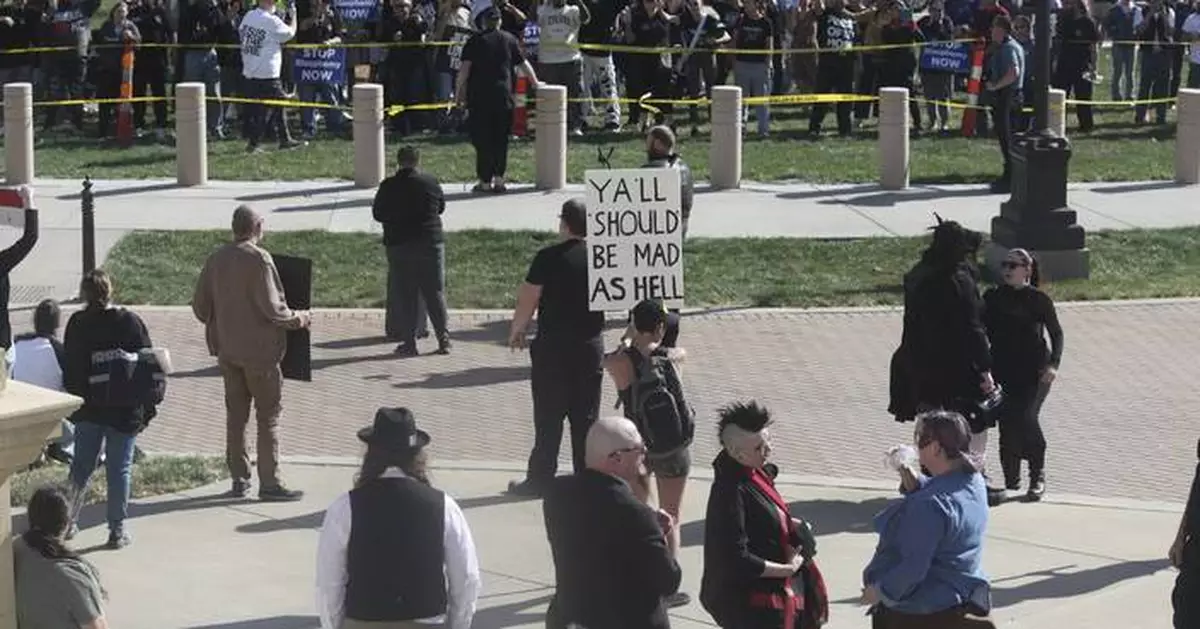
About 30 members of the Kansas City-area Satanic Grotto, led by its president, Michael Stewart, rallied outside the Statehouse for the separation of church and state. The group also protested what members called the state's favoritism toward Christians in allowing events inside. Gov. Laura Kelly temporarily banned protests inside, just for Friday, weeks after Stewart's group scheduled its indoor ceremony.
Click to Gallery
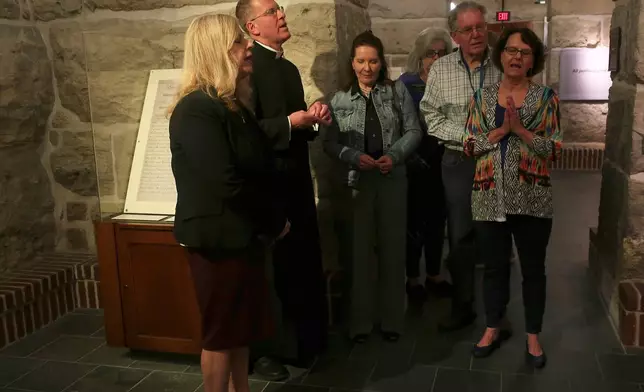
A priest and a group of Kansas legislators and visitors to the Statehouse pray the Catholic rosary on the ground floor in response to an attempt by the Satanic Grotto from the Kansas City area to hold a "Black Mass" inside, Friday, March 28, 2025, in Topeka, Kansas. (AP Photo/John Hanna)
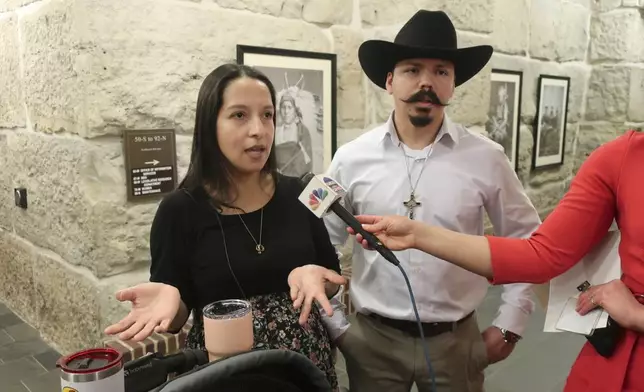
Karla Delgado, of St. Marys, Kansas, talks to reporters about a scuffle that occurred in the Kansas Statehouse following a Satanic Grotto rally outside, as her husband, Humberto, watches, Friday, March 28, 2025, in Topeka, Kansas. (AP Photo/John Hanna)
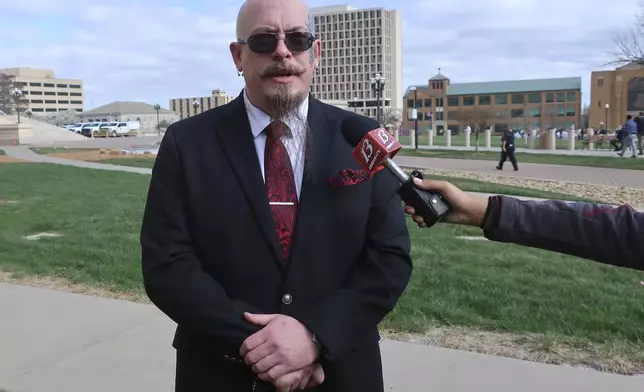
Michael Stewart, the President of the Kansas City-area Satanic Grotto, speaks with reporters as the group's rally gets started outside the Kansas Statehouse, Friday, March 28, 2025, in Topeka, Kansas. (AP Photo/John Hanna)
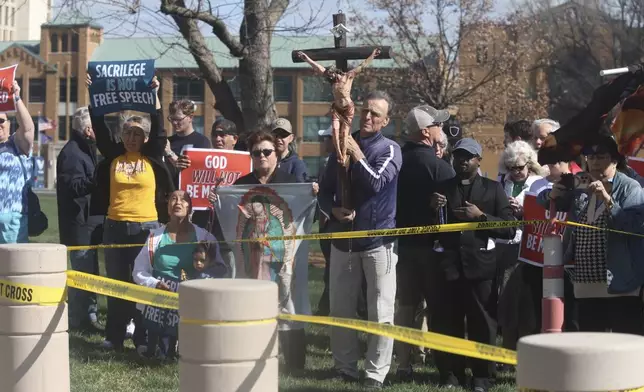
Roman Catholics are among the Christians counter-protesting at a rally by the Satanic Grotto from the Kansas City area outside the Kansas Statehouse, Friday, March 28, 2025, in Topeka, Kansas. (AP Photo/John Hanna)
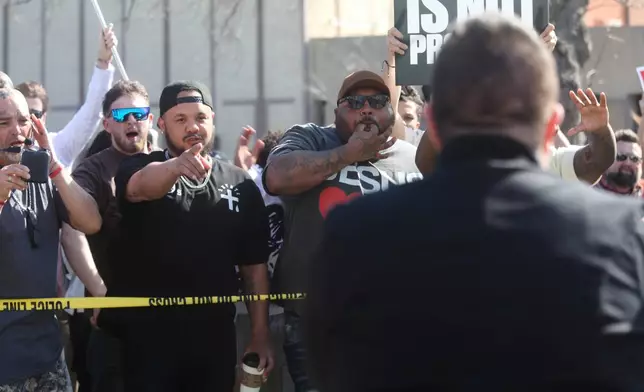
Christians counter-protest at a rally held outside the Kansas Statehouse by the Satanic Grotto from the Kansas City area, Friday, March 28, 2025, in Topeka, Kansas. (AP Photo/John Hanna)(AP Photo/John Hanna)
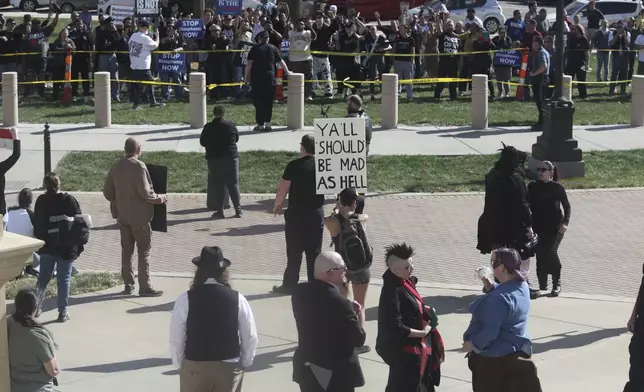
Christians counter-protest at a rally held outside the Kansas Statehouse by the Satanic Grotto from the Kansas City area, Friday, March 28, 2025, in Topeka, Kansas. (AP Photo/John Hanna)(AP Photo/John Hanna)
The Satanic Grotto's rally outside drew hundreds of Christian counterprotesters because of the Grotto's satanic imagery, and its indoor ceremony included denouncing Jesus Christ, who Christians believe is the Son of God. About 100 Christians stood against yellow police tape marking the Satanic Grotto's area. The two groups yelled at each other while the Christians also sang and called on Grotto members to accept Jesus. Several hundred more Christians rallied on the other side of the Grotto's area, but further away.
Kelly issued her order earlier this month after Roman Catholic groups pushed her to ban any Satanic Grotto event. The state’s Catholic Bishops called what the group planned “a despicable act of anti-Catholic bigotry” mocking the Catholic Mass. Both chambers of the Legislature also approved resolutions condemning it.
“The Bible says Satan comes to steal, kill and destroy, so when we dedicate a state to Satan, we’re dedicating it to death," said Jeremiah Hicks, a pastor at the Cure Church in Kansas City, Kansas.
Satanic Grotto members, who number several dozen, said they hold a variety of beliefs. Some are atheists, some use the group to protest harm they suffered as church members, and others see Satan as a symbol of independence.
Amy Dorsey, a friend of Stewart's, said she rallied with the Satanic Grotto to support free speech rights and religious freedoms guaranteed by the U.S. Constitution’s First Amendment, in part because Christian groups are allowed to meet regularly inside the Statehouse for prayer or worship meetings.
Before his arrest, Stewart said his group scheduled its Black Mass for Friday because it thought the Kansas Legislature would be in session, though lawmakers adjourned late Thursday night for their annual spring break. Stewart said the group might come back next year.
“Maybe un-baptisms, right here in the Capitol,” he said.
Video shot by KSNT-TV showed that when Stewart tried to conduct his group's ceremony in the first-floor rotunda, a young man tried to snatch Stewart's script from his hands, and Stewart punched him. Several Kansas Highway Patrol troopers wrestled Stewart to the ground and handcuffed him. They led him through hallways on the ground floor below and into a room as he yelled, “Hail, Satan!”
Stewart’s wife, Maenad Bee, told reporters, “He’s only exercising his First Amendment rights.”
Online records showed that Stewart, 42, was jailed briefly Friday afternoon on suspicion of disorderly conduct and having an unlawful assembly, then released on $1,000 bond.
The Kansas Highway Patrol, which provides security at the Statehouse, said two others who entered the building with Stewart also were arrested for unlawful assembly, Jocelyn Frazee, 32, and Sean Anderson, 50. Frazee had no bond set; information for Anderson was not available online.
Witnesses and friends identified the young man trying to snatch away the Black Mass script as Marcus Schroeder, who came to counterprotest with fellow members of a Kansas City-area church. Online records show Schroeder, 21, was arrested on suspicion of disorderly conduct, with his bond also set at $1,000.
A friend of Schroeder's, Jonathan Storms, said he was trying to help a woman who also sought to snatch away Stewart's script and “didn't throw any punches.”
The woman, Karla Delgado, said she came to the Statehouse with her three youngest children to deliver a petition protesting the Black Mass to Kelly's office. Delgado said she approached Stewart because he was violating the governor's order and Highway Patrol troopers weren't immediately arresting him. She said in the ensuing confusion, her 4-year-old daughter was knocked to the ground.
“When we saw that nobody was doing anything — I guess just in the moment of it — it was like, ‘He’s not supposed to be allowed to do this,’ so we tried to stop him," she said.
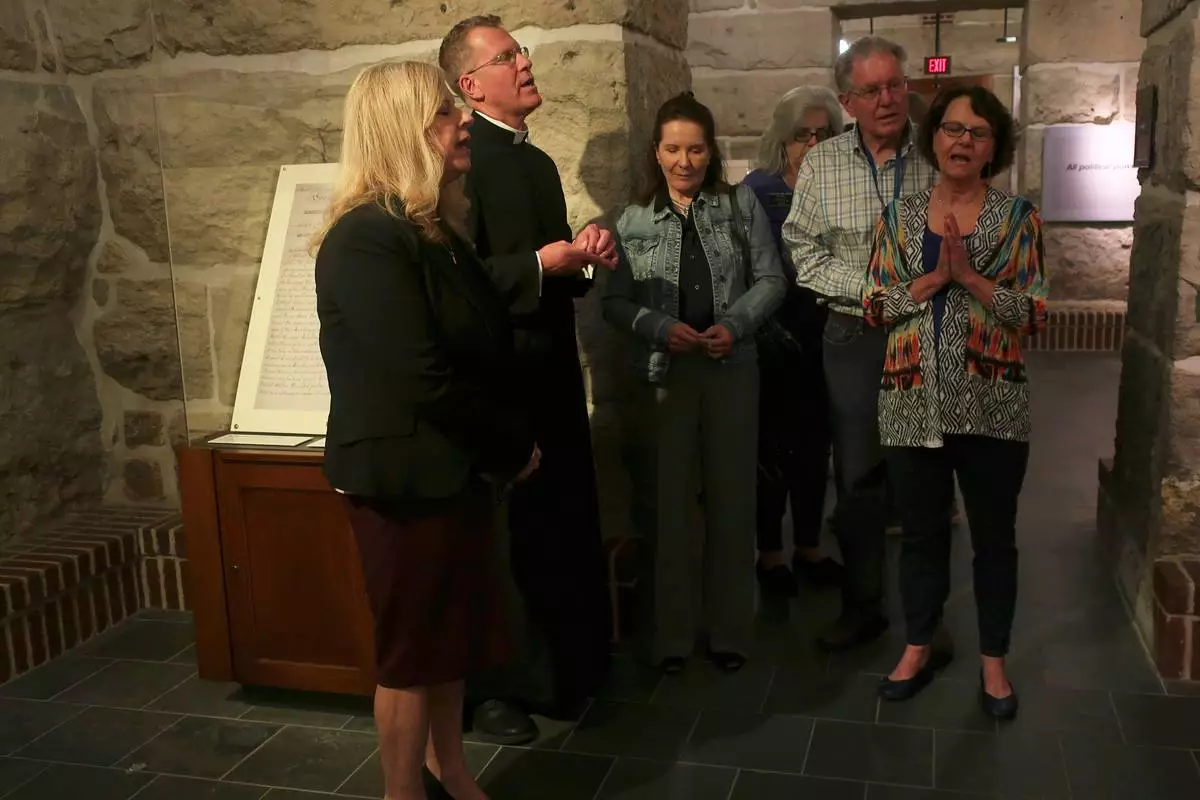
A priest and a group of Kansas legislators and visitors to the Statehouse pray the Catholic rosary on the ground floor in response to an attempt by the Satanic Grotto from the Kansas City area to hold a "Black Mass" inside, Friday, March 28, 2025, in Topeka, Kansas. (AP Photo/John Hanna)
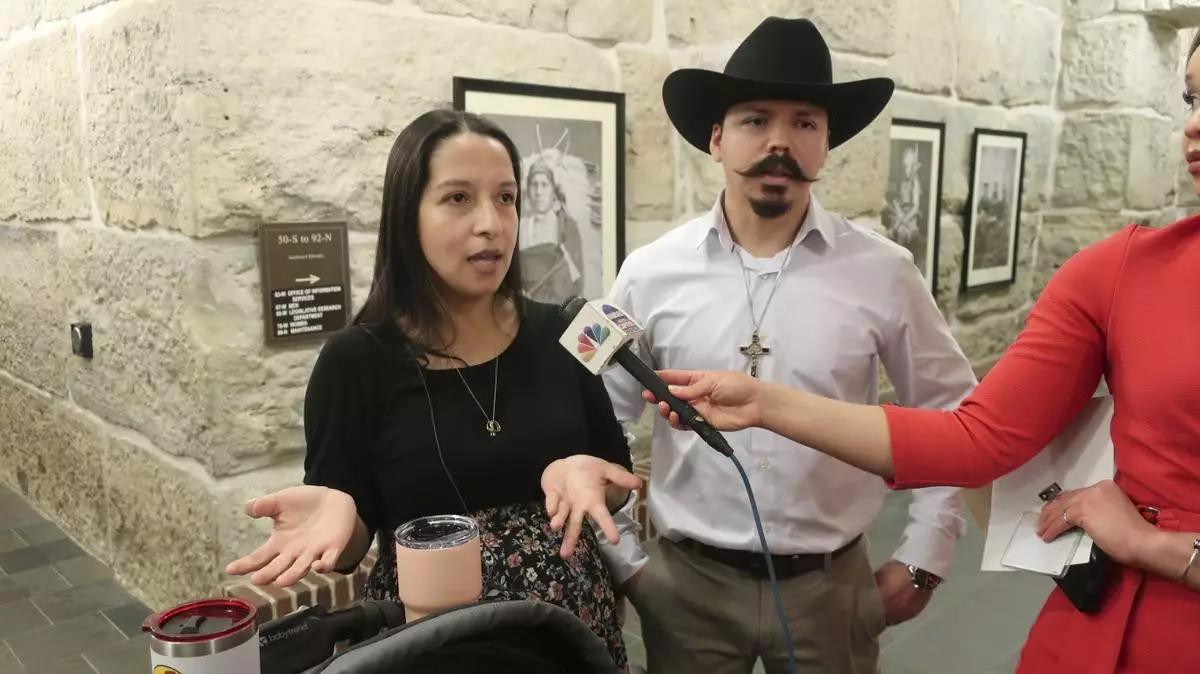
Karla Delgado, of St. Marys, Kansas, talks to reporters about a scuffle that occurred in the Kansas Statehouse following a Satanic Grotto rally outside, as her husband, Humberto, watches, Friday, March 28, 2025, in Topeka, Kansas. (AP Photo/John Hanna)
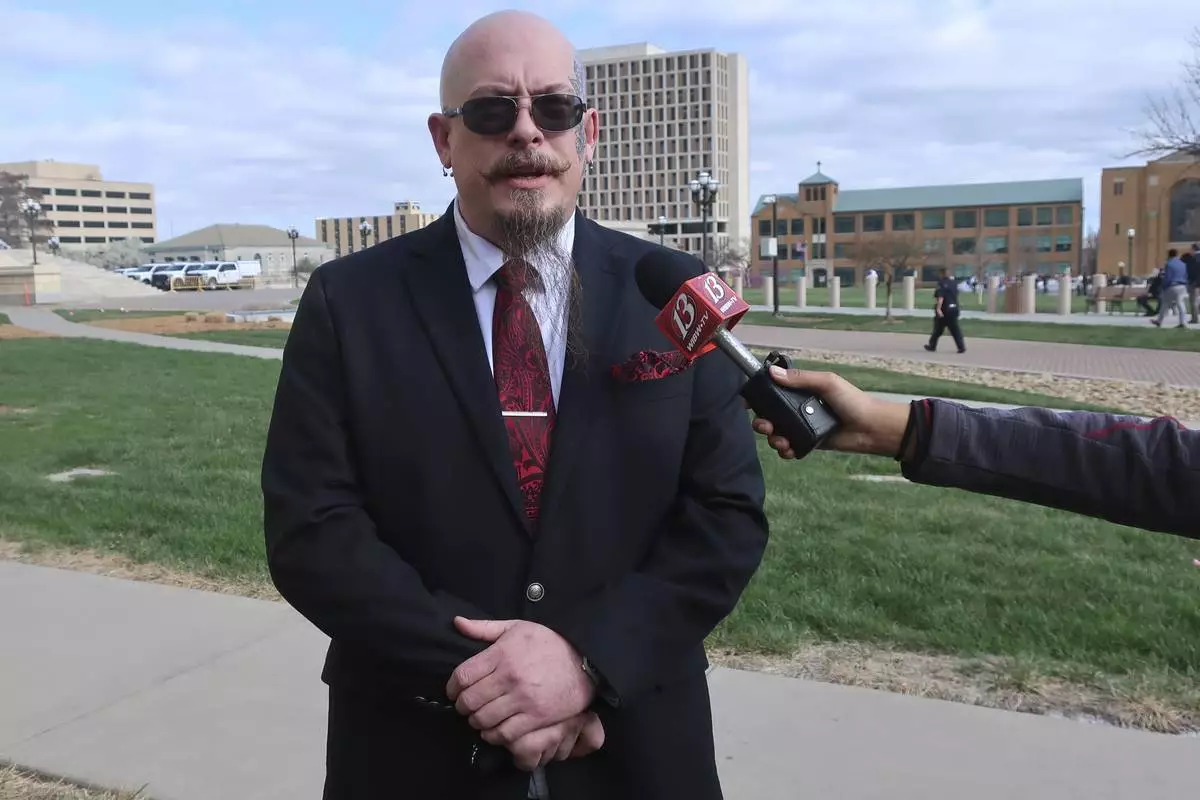
Michael Stewart, the President of the Kansas City-area Satanic Grotto, speaks with reporters as the group's rally gets started outside the Kansas Statehouse, Friday, March 28, 2025, in Topeka, Kansas. (AP Photo/John Hanna)
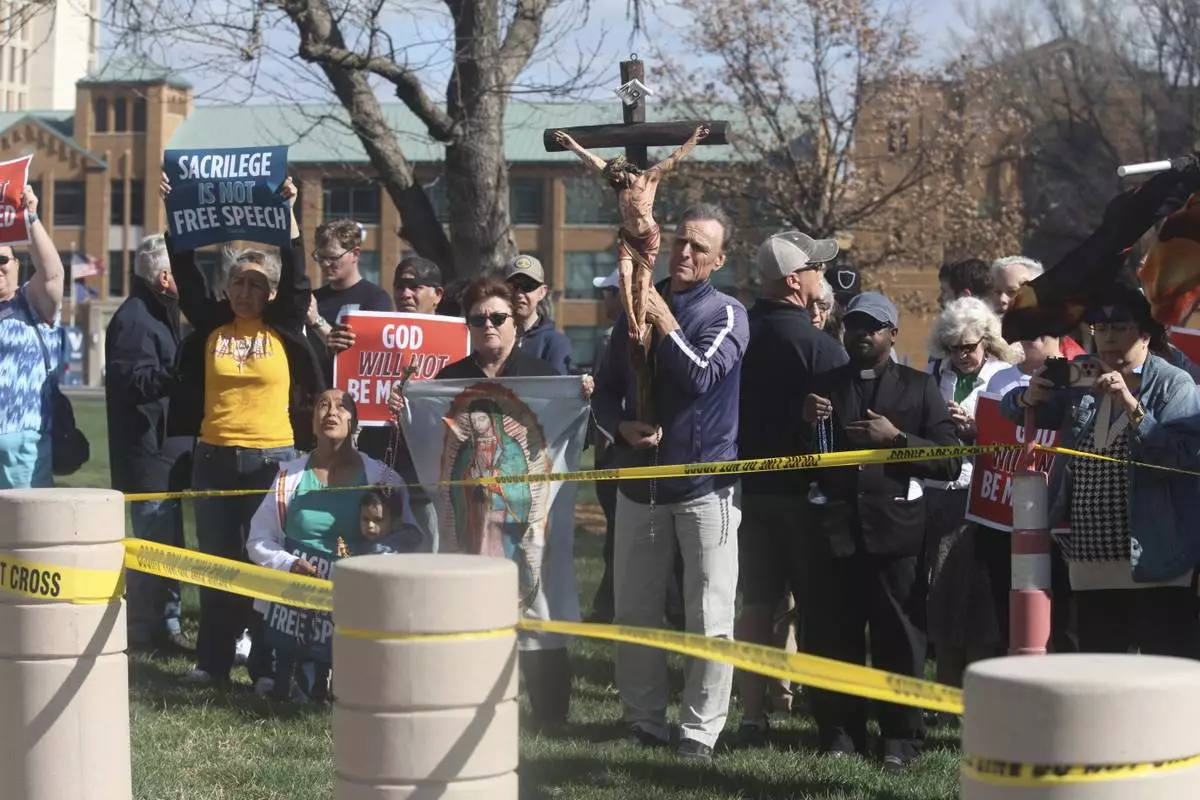
Roman Catholics are among the Christians counter-protesting at a rally by the Satanic Grotto from the Kansas City area outside the Kansas Statehouse, Friday, March 28, 2025, in Topeka, Kansas. (AP Photo/John Hanna)
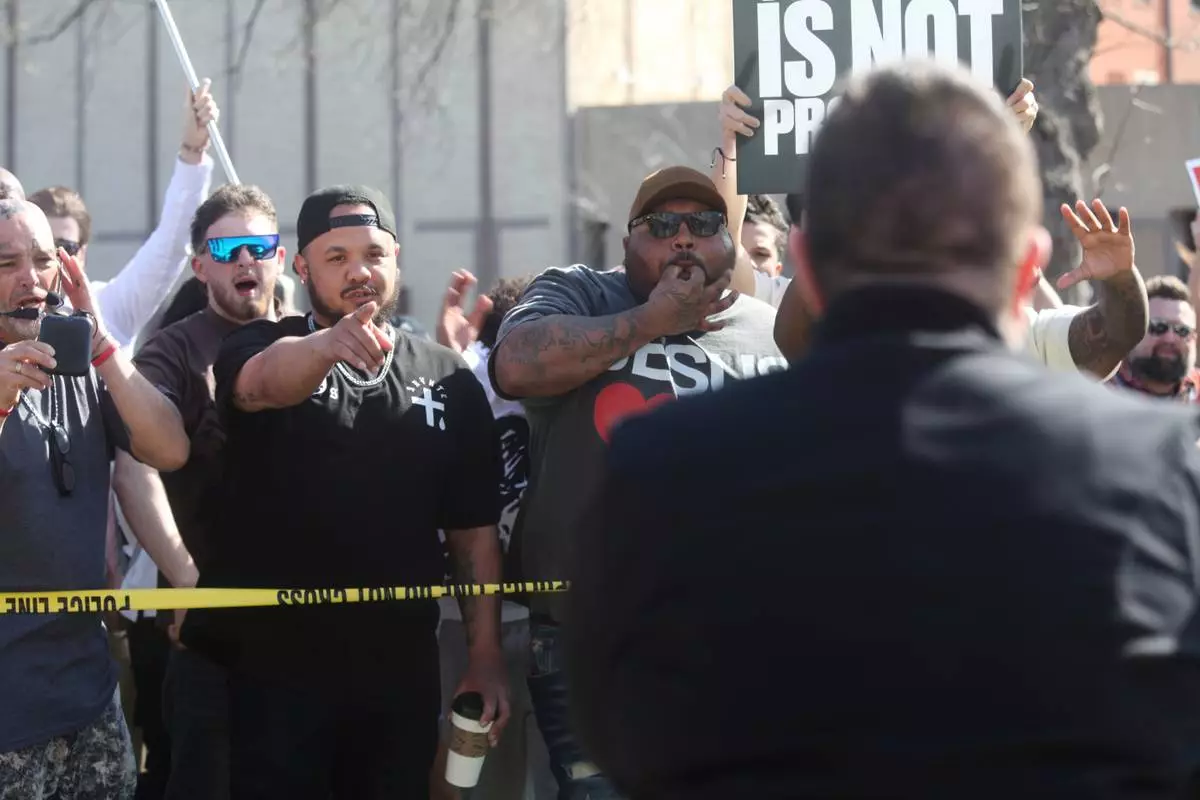
Christians counter-protest at a rally held outside the Kansas Statehouse by the Satanic Grotto from the Kansas City area, Friday, March 28, 2025, in Topeka, Kansas. (AP Photo/John Hanna)(AP Photo/John Hanna)
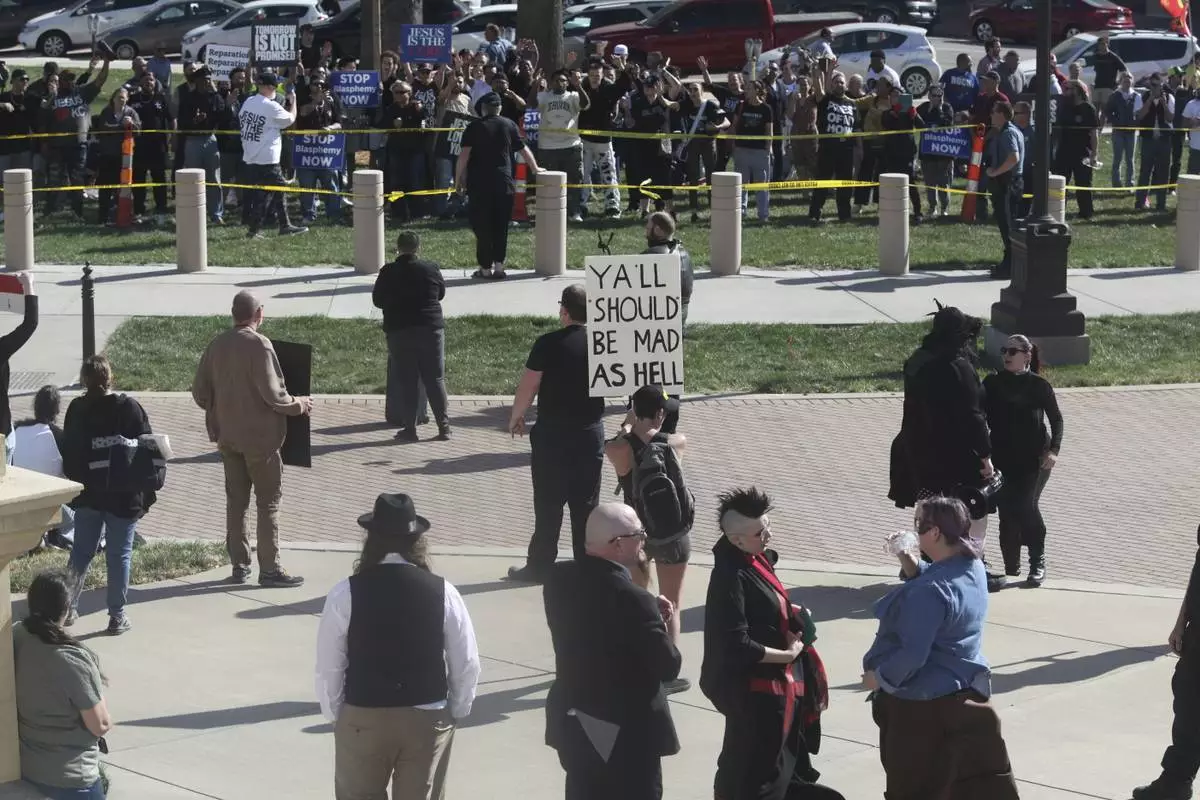
Christians counter-protest at a rally held outside the Kansas Statehouse by the Satanic Grotto from the Kansas City area, Friday, March 28, 2025, in Topeka, Kansas. (AP Photo/John Hanna)(AP Photo/John Hanna)