PARIS (AP) — Her “political death.” That's how French far-right leader Marine Le Pen described what's at stake in a verdict expected Monday that could derail her plans to run in the next presidential election scheduled for 2027.
A judge is set to rule on whether Le Pen and her National Rally party embezzled European Parliament funds. She and 24 other party officials are accused of having used money intended for European Union parliamentary aides to instead pay staff who worked for the party between 2004 and 2016, violating the 27-nation bloc’s regulations.
Click to Gallery

FILE - Jordan Bardella, member of the European Parliament for the French Rassemblement National, attends a debate about Ukraine in the European parliament in Strasbourg, France, July 17, 2024. (AP Photo/Jean-Francois Badias, File)
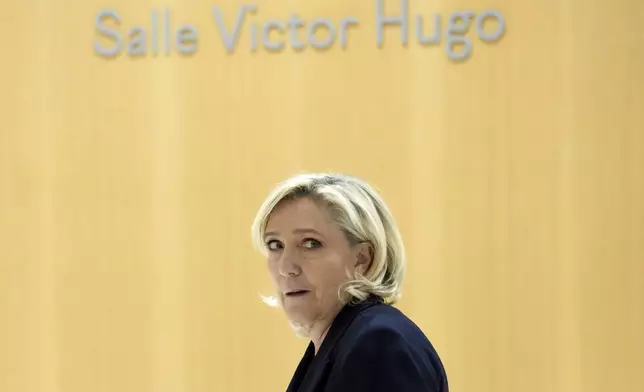
FILE - French far-right leader Marine Le Pen arrives at the courtroom for the trial over the suspected embezzlement of European Parliament funds, Wednesday, Nov. 6, 2024 in Paris. (AP Photo/Aurelien Morissard, File)
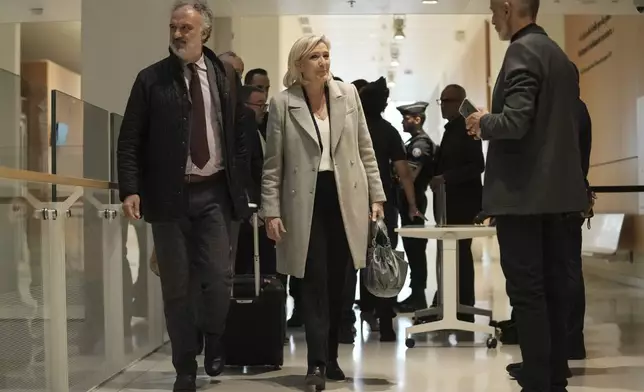
FILE - French far-right leader Marine Le Pen arrives with her legal team at the court house in Paris, Sept. 30, 2024. (AP Photo/Thibault Camus, File)
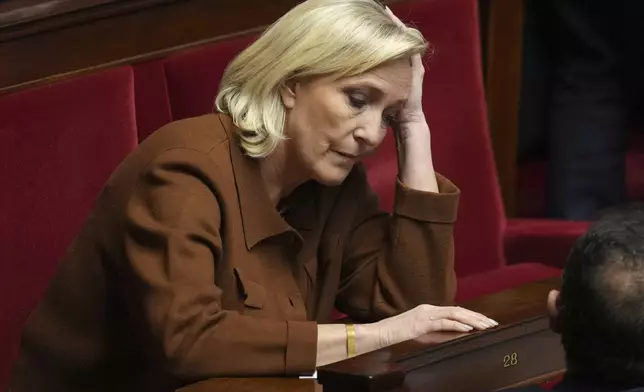
FILE - French far-right leader Marine Le Pen reacts at the National Assembly before French Prime Minister Francois Bayrou delivers his general policy speech meant to outline his top priorities, Tuesday, Jan. 14, 2025 in Paris. (AP Photo/Thibault Camus, File)
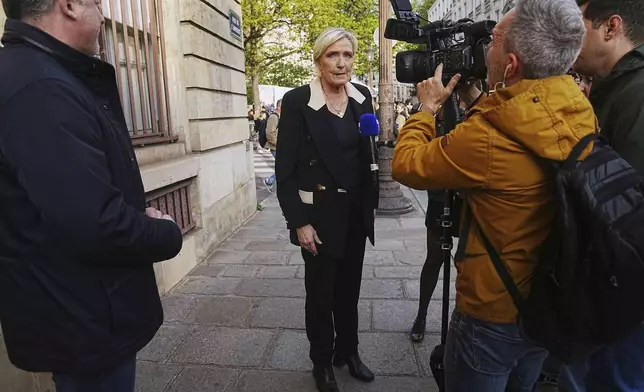
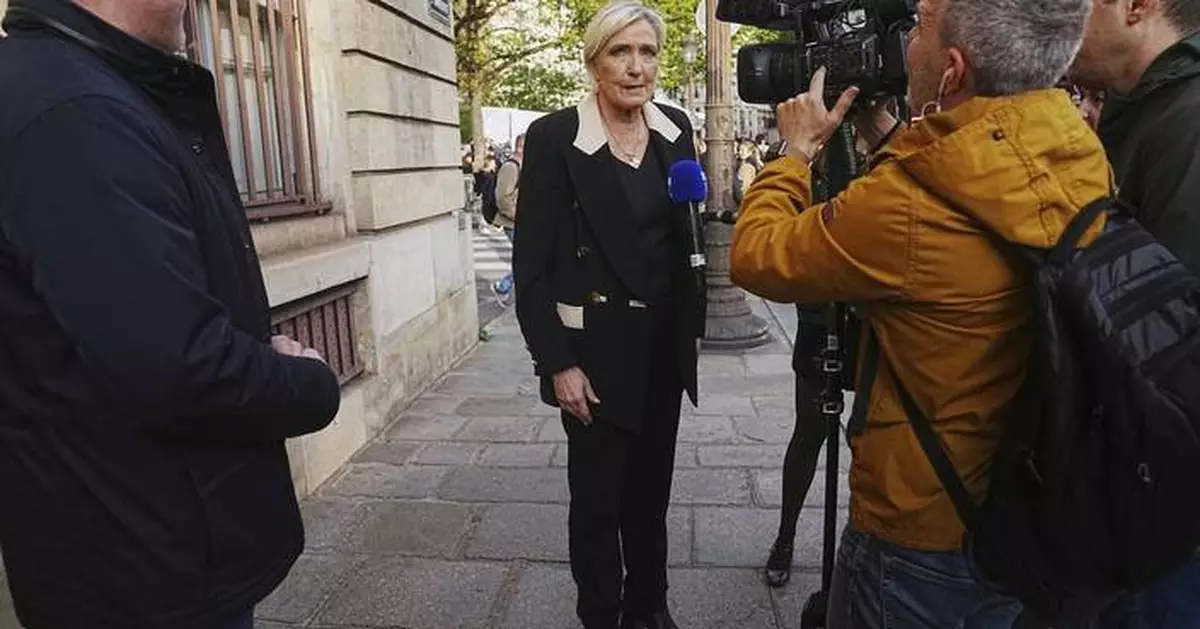
FILE - French far-right leader Marine Le Pen answers to the media during a gathering in support of detained Franco-Algerian writer Boualem Sansal, in Paris, Tuesday, March 25, 2025. (AP Photo/Thibault Camus, File)
Le Pen, 56, and other co-defendants denied wrongdoing during the nine-week trial that took place in late 2024.
Le Pen’s greatest concern is that she could be declared ineligible to seek public office, if found guilty.
In case of conviction, the court could impose a period where she is ineligible to run for office “with immediate effect” — even if she files an appeal.
The court would also decide whether to give Le Pen a prison sentence — which would be suspended during any appeal.
That could prompt another possible headache for the far-right leader. If she appeals, she will automatically be granted a new trial, but it will likely take place in 2026, just months before the presidential election.
Le Pen appears to be anticipating a guilty verdict, telling the panel of three judges: “I feel we didn’t succeed in convincing you.”
During the trial, prosecutors requested a two-year prison sentence for Le Pen and a five-year period of ineligibility. They “want my political death,” Le Pen then said.
In a key decision on Friday, the Constitutional Council ruled that a period of ineligibility with immediate effect is in line with the French Constitution.
But it also stressed that it’s up to the judges to assess the consequences of imposing such a ban right away and make sure the ruling is “proportionate” and takes into consideration “the preservation of voters’ freedom.”
The Constitutional Council rendered its ruling in a separate case that has no direct link with Le Pen's.
Yet its conclusions have been scrutinized as they provide legal guidance that judges are likely to take into consideration.
The Constitutional Council also underlined that the court can decide to not impose any period of ineligibility immediately. In that case, the ban would be suspended pending appeal.
For over a decade, Le Pen has worked at making her party more mainstream, dulling its extremist edge to broaden its appeal to voters.
She led the National Rally from 2011 to 2021. She changed its name from the National Front, as part of her efforts to distance it from the period when her father ran it and it carried a heavy stigma of racism and antisemitism.
Now a lawmaker in the National Assembly, the French parliament's powerful lower house, she has already positioned herself as a candidate to succeed President Emmanuel Macron, having twice finished runner-up to him.
In 2022, Macron won with 58.5% of the vote to Le Pen’s 41.5% — significantly closer than when they first faced off in 2017 and the best score ever of the French far right in a presidential bid.
Ineligibility “would have the effect of depriving me of being a presidential candidate," she pleaded during the trial. "Behind that, there are 11 million people who voted for the movement I represent. So tomorrow, potentially, millions and millions of French people would see themselves deprived of their candidate in the election.”
Jordan Bardella, 29, succeeded Le Pen in 2021 at the helm of the party. He would likely be her prime minister if she were to become president.
That makes him widely perceived as her natural successor if she were barred from running.
Yet observers say there's no guarantee he would be able to convince as many voters as she does. In recent months, some inside the party have criticized his management as too focused on his personal career.
Since joining the party at age 17, Bardella has risen quickly through the ranks, serving as spokesperson and president of its youth wing, before being appointed vice president and becoming the second-youngest member of the European Parliament in history, in 2019.

FILE - Jordan Bardella, member of the European Parliament for the French Rassemblement National, attends a debate about Ukraine in the European parliament in Strasbourg, France, July 17, 2024. (AP Photo/Jean-Francois Badias, File)
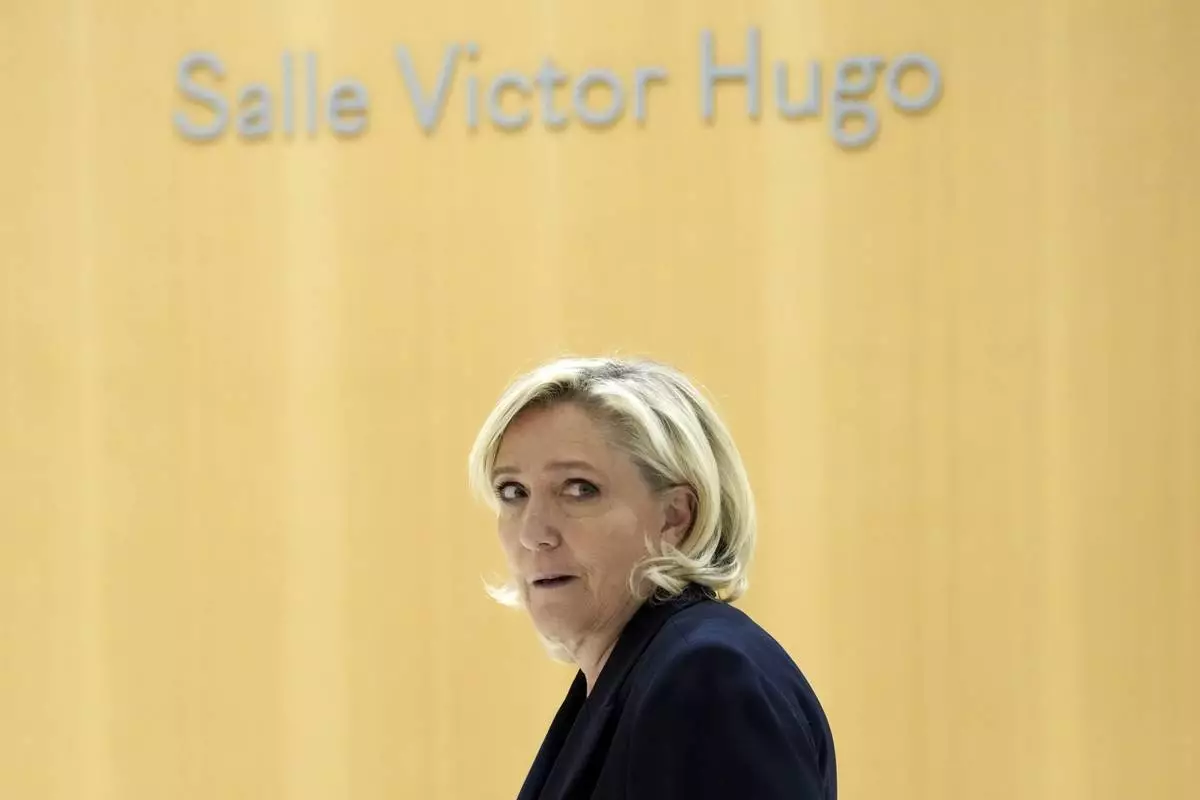
FILE - French far-right leader Marine Le Pen arrives at the courtroom for the trial over the suspected embezzlement of European Parliament funds, Wednesday, Nov. 6, 2024 in Paris. (AP Photo/Aurelien Morissard, File)
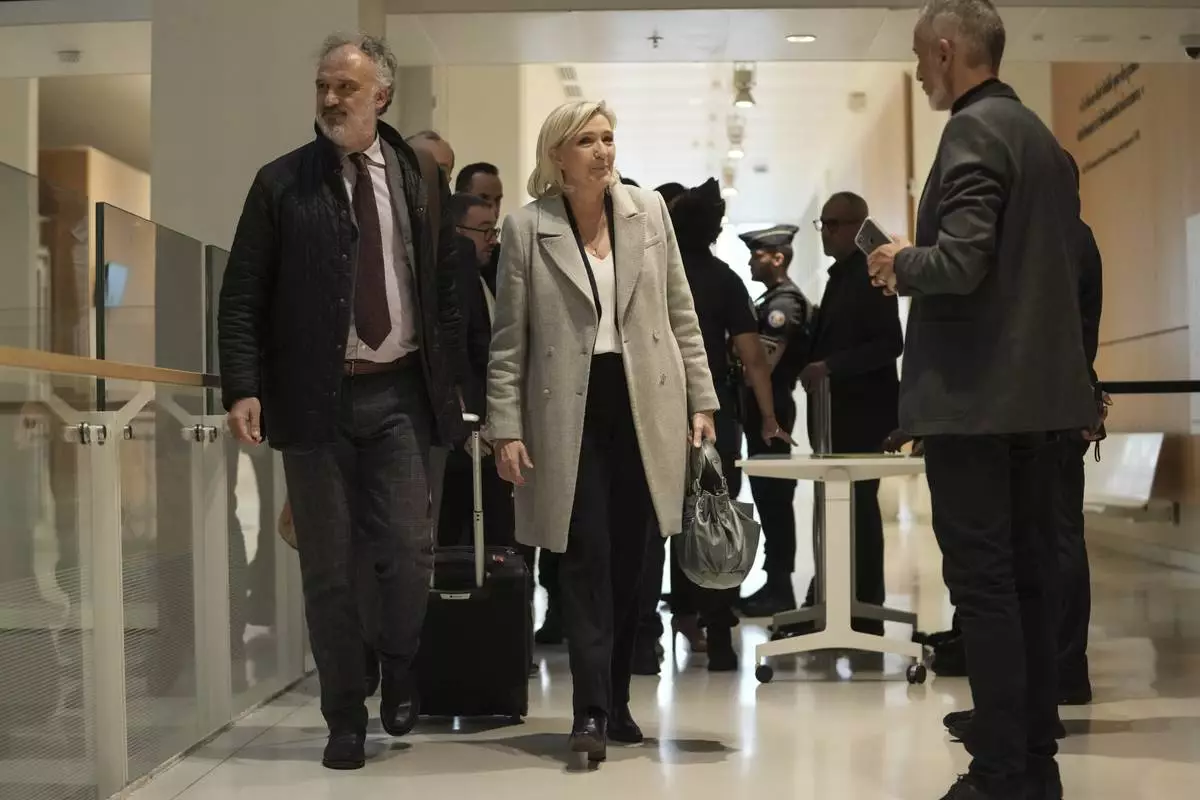
FILE - French far-right leader Marine Le Pen arrives with her legal team at the court house in Paris, Sept. 30, 2024. (AP Photo/Thibault Camus, File)
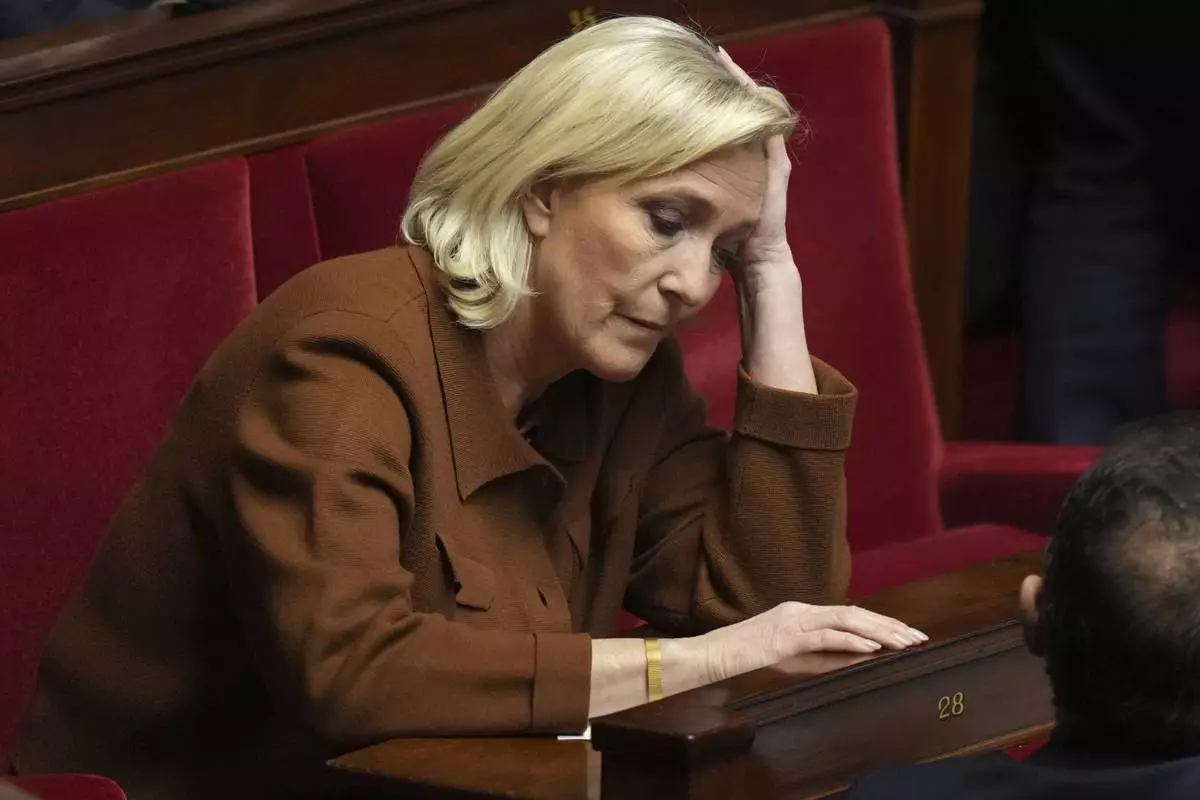
FILE - French far-right leader Marine Le Pen reacts at the National Assembly before French Prime Minister Francois Bayrou delivers his general policy speech meant to outline his top priorities, Tuesday, Jan. 14, 2025 in Paris. (AP Photo/Thibault Camus, File)
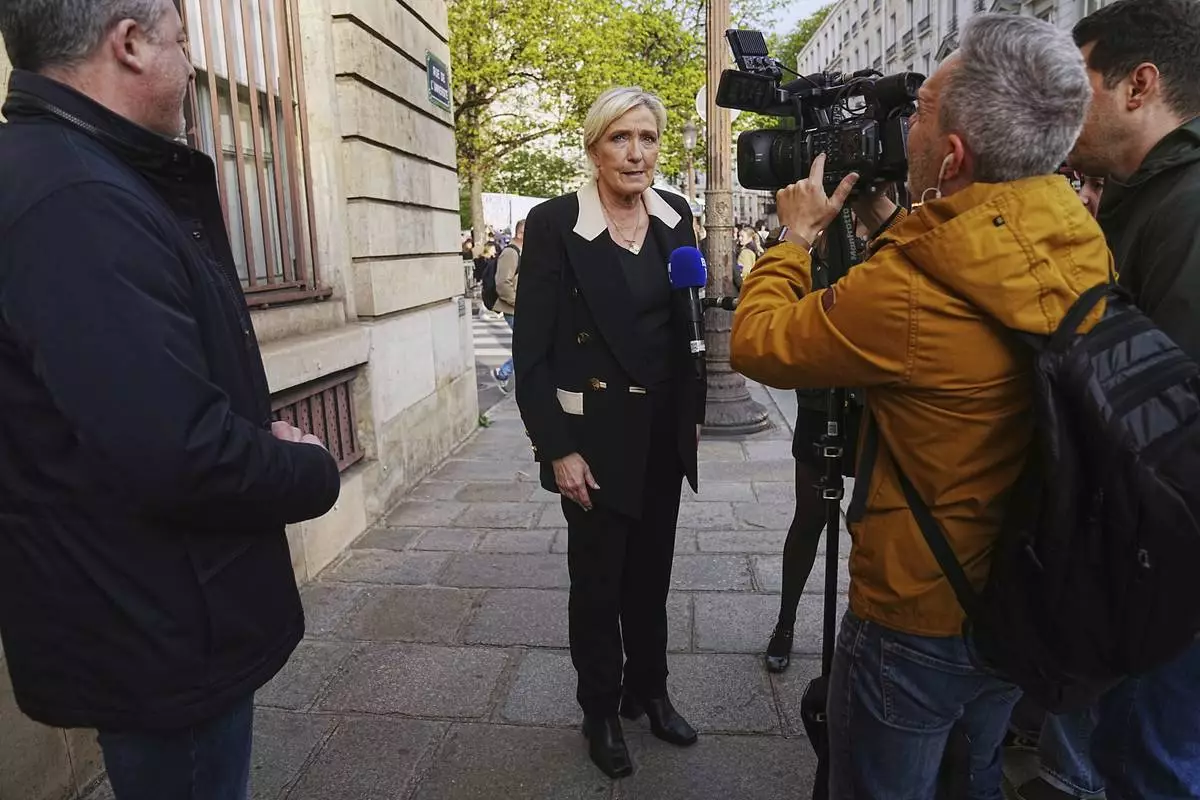
FILE - French far-right leader Marine Le Pen answers to the media during a gathering in support of detained Franco-Algerian writer Boualem Sansal, in Paris, Tuesday, March 25, 2025. (AP Photo/Thibault Camus, File)