Key roads connecting Myanmar's capital Nay Pyi Taw and Mandalay, its second-largest city, suffered severe damage following Friday's devastating earthquake.
Video footage from China Radio International (CRI) on Sunday morning reveals extensive road cracks, with drivers carefully navigating around rubble and debris.
Click to Gallery

Earthquake ravages roads, other infrastructure in Nay Pyi Taw



Reporting from Nay Pyi Taw, CRI journalist noted extensive infrastructure damage caused by the powerful earthquake, with many residents opting to sleep outdoors overnight, fearing aftershocks could further damage buildings.
Additionally, the earthquake devastated a local market in the capital city, forcing nearly all shops to close, leaving residents in despair and uncertain about their next steps. Meanwhile, rescue operations are ongoing in Nay Pyi Taw, where a Chinese team from Yunnan Province arrived Saturday evening to assist. Early Sunday morning, the team, alongside local rescuers, successfully pulled out an elderly individual who had been trapped under hospital rubble for nearly 40 hours.
The 7.7-magnitude earthquake hit Myanmar at around 12:50 local time (06:20 GMT) on Friday, with Mandalay, Bago, Magway, the northeastern Shan state, Sagaing, and Nay Pyi Taw among the hardest-hit regions.
As of noon on Sunday local time, the earthquake had claimed 1,700 lives, injured 3,400 people, and left some 300 others unaccounted for, according to Myanmar's Information Team of the State Administration Council.
Earthquake ravages roads, other infrastructure in Nay Pyi Taw
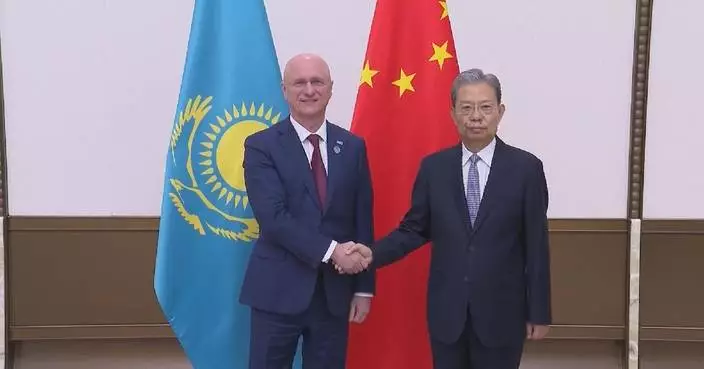

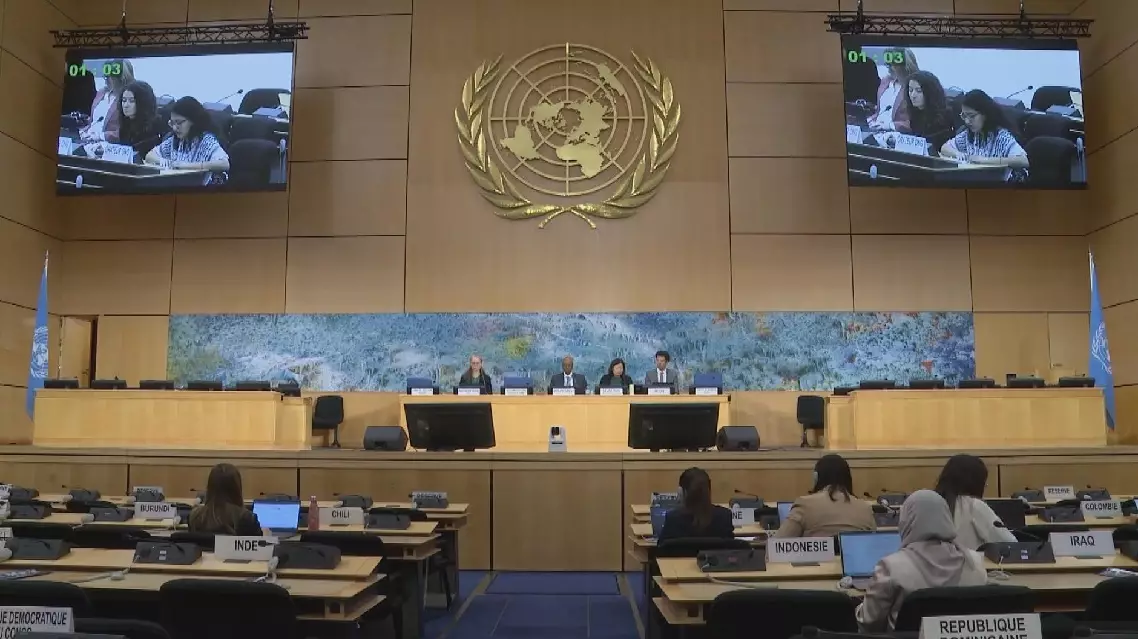
China, on behalf of 60 countries, delivered a joint statement at the 61st session of the United Nations (UN) Human Rights Council on Tuesday, elaborating on the rich human rights implications of the Global Governance Initiative and calling on all parties to jointly build a fair, just and mutually beneficial global human rights governance system.
Jia Guide, China's permanent representative to the UN Office at Geneva and other international organizations in Switzerland, said the world is currently in turbulence and transformation, with the UN and multilateralism facing headwinds, which underscores the urgent need to enhance the effectiveness of global governance.
Therefore, he put forward three proposals:
First, to uphold sovereign equality and observe international rule of law, adhere to the principle of non-interference in internal affairs, ensure the equal and uniform application of international law and rules, and jointly oppose any manipulation of double standards in the name of human rights.
Second, to practice multilateralism and jointly address challenges, steadily advance UN human rights reforms, enhance the representation and voice of developing countries, and properly respond to emerging human rights challenges.
Third, to promote a people-centered and action-oriented approach, place the right to development in a more prominent position on the multilateral human rights agenda, and provide greater capacity-building support for developing countries.
Since Chinese President Xi Jinping proposed the Global Governance Initiative in September 2025, it has received support and response from more than 150 countries and international organizations. Under its guidance, China has established the Group of Friends of Global Governance.
The Tuesday joint statement helped build a broad consensus and contributed to advancing the implementation of the Global Governance Initiative.
China calls for improved global human rights governance on behalf of 60 countries