DH offers free HPV vaccination to eligible female post-secondary students
The Centre for Health Protection (CHP) of the Department of Health (DH) announced today (April 1) that the second phase of the Human Papillomavirus (HPV) Vaccination Catch-up Programme has been launched. This Programme provides free HPV vaccination to female Hong Kong residents born between 2004 and 2008 who are currently studying at local post-secondary institutions (PSI) and are registered with eHealth.
"The CHP sent invitations to PSI in December last year to participate in the Programme. As of yesterday (March 31), all PSI have joined, and six of them have started activities in mid-March, which include offering vaccinations at campus health service or arranging outreach teams to administer the HPV vaccine to eligible female students on campus. The schedules for vaccination activities of each institution have been uploaded to the CHP's website (see Annex 1) for easy reference, and students can check with their student affairs office for details about the vaccination arrangements of their institutions," said the Controller of the CHP, Dr Edwin Tsui.
"In Hong Kong, cervical cancer was the ninth most common female cancer in 2022, with 522 new cases and 167 deaths. HPV vaccines are highly effective in preventing high-risk HPV types that are most frequently associated with cervical cancer. The DH learned that some students do not want to get vaccinated because they are worried about side effects or even misbelieve rumours that shock, early menstruation, increased sexual activity, etc, may occur after HPV vaccination, but these incorrect claims are completely unsubstantiated by scientific evidence," he added. To address unnecessary misunderstandings and concerns, the CHP hosted a webinar on March 19 with an enthusiastic response, which was attended by nearly 200 participants. Information of the webinar has been posted on the CHP's website. Furthermore, the CHP has launched promotional videos on social media to enhance public understanding of the HPV vaccine and encourage eligible females to grasp the opportunity to receive the vaccine for optimal protection.
The CHP has included HPV vaccination in the Hong Kong Childhood Immunisation Programme since the 2019/20 school year for Primary Five and Six female students. So far, approximately 97 600 girls have completed two doses of the vaccine, accounting for about 90 per cent of eligible girls, far exceeding the interim target (70 per cent) outlined in the Hong Kong Cancer Strategy 2019.
In line with the latest World Health Organization recommendations, the DH launched the first phase of the HPV Vaccination Catch-up Programme in December last year. This phase provided free vaccines to female students studying at full-time secondary schools (including the secondary section of special schools) who were in Form Five or above and registered with eHealth. As of April 1, over 510 schools (approximately 98 per cent of eligible schools) have responded or indicated their participation. Among these, nearly 280 schools have already conducted vaccination activities, with over 14 000 doses administered. Counting doses administered under the Programme and self-arranged vaccinations, the first-dose HPV vaccine coverage rate is over 70 per cent.
"The CHP has asked secondary schools that do not arrange vaccination activities to inform parents. The list of these schools (see Annex 2) has also been uploaded to the CHP's website, so that parents of students from these schools can arrange for their daughters to receive the vaccine at the DH's School Immunisation Team sub-offices or Student Health Service Centres," said Dr Tsui.
The third phase of the Programme will start in the first half of 2025. Targeted recipients are female Hong Kong residents born between 2004 and 2008 who have already completed their studies in Hong Kong. The third phase will also cover the remaining female Hong Kong residents born between 2004 and 2008 who have not yet completed their HPV vaccination. The CHP, together with the Primary Healthcare Commission, is finalising the arrangements for the third phase, with a preliminary plan to offer vaccinations at district Women Wellness Satellites and District Health Centres. Details will be announced in due course.
This HPV Vaccination Catch-up Programme is a one-off special arrangement that will last for about two years. Eligible female Hong Kong residents who do not participate in the Programme may receive the vaccine at their own expense in the future. For more information about the Programme, the public can visit the CHP's thematic website.
CFS to follow up certain batches of powdered infant and young children formula with possible presence of Cereulide produced by Bacillus cereus
The Centre for Food Safety (CFS) of the Food and Environmental Hygiene Department (FEHD) today (January 10) said that, it took initiative to meet with Nestlé Hong Kong again today, and confirmed the company's today announcement of an additional batch of powdered infant and young children formula suspected to have possibly used the raw material concerned. Nestlé Hong Kong has voluntarily stopped sales, removed from shelves the affected products and has initiated a precautionary recall. The CFS has collected samples of powdered infant and young children formula from the market for Bacillus cereus testing, the test results so far were satisfactory. The Environmental and Ecology Bureau is also closely monitoring the supply situation of other formula milk powder and maintaining communication with other major suppliers. It is noted that there is sufficient formula milk powder to meet the demand.
The Centre for Food Safety (CFS) of the Food and Environmental Hygiene Department (FEHD), Photo source: reference image
The spokesman said, the CFS has been actively following up on Nestlé company's voluntary and precautionary recalls of certain batches of its powdered infant and young children formula in certain areas in Europe due to possible presence of Cereulide produced by Bacillus cereus in the individual raw material. According to the latest information from Nestlé Hong Kong today, an additional batch of its powdered infant and young children formula imported into Hong Kong might have used the raw material concerned. The CFS had earlier enhanced surveillance in the market and collected a sample from the above batch for testing of Bacillus cereus. The test result of the sample was satisfactory. Nevertheless, as a precautionary measure, Nestlé Hong Kong has voluntarily stopped sales, removed from shelves the affected products and has initiated a precautionary recall.
Product details are as follows:
Product name (Net weight): NAN PRO 1 2 HMO (800g)
Batch number: 51670742F2
Best-before date: June 16, 2027
Place of Origin: Germany
"The CFS met Nestlé Hong Kong again today, urging them to properly handle the product recall issue and respond to public enquiries, in order to safeguard consumers' legitimate rights and interests. In addition, the CFS and Nestlé Hong Kong have jointly followed up, six suspected affected batches of infant and young children formula products that had not entered the market were marked and sealed. An additional 15 batches are currently en route to Hong Kong and will also be marked and sealed upon arrival. The CFS will continue to closely monitor the recall matters and remain fully committed to ensuring food safety, " the spokesman said.
Nestlé Hong Kong has initiated a recall of the affected batches of the products concerned. For enquiries about the recall, members of the public may contact the company through the following channels:
Consumer services hotline: 2599 8874 / 2797 6031/ 2179 8136 (Monday to Sunday, 9am to 9pm)
Email: consumerservices@hk.nestle.com
WhatsApp: 5283 4139 (NESTLÉ® NAN®) / 2599 8871 (Wyeth® Nutrition)
Online form: forms.office.com/e/BhqMhWfsUG?origin=lprLink
Consumers may choose to bring along the products (brand new or opened) for refund at place of purchase, or at exclusive service counters of Nestlé Nutrition Services from January 13 (Tuesday) onwards, to settle the recall and refund of the batches of the products concerned. Details of the exclusive service counters are as follows:
Kowloon Services Counter
Address: G/F, Park Hovan Commercial Building, 18 Hillwood Road, Tsim Sha Tsui, Kowloon (MTR Jordon Station Exit D)
Contact number: 3996 8196
Office hour: Monday to Saturday, 11am to 7.30pm; Sunday, 1pm to 5.30pm (except public holidays)
Hong Kong Services Counter
Address: 1/F, Ka Nin Wah Commercial Building, 423-425 Hennessy Road, Hong Kong (MTR Causeway Bay Station Exit B)
Contact number: 3996 8197
Office hour: Monday to Saturday, 11am to 7.30pm (except Sundays and public holidays)
The CFS, through its Food Incident Surveillance System, noted earlier that certain batches of Nestlé powdered infant formula were being voluntarily recalled in Europe due to possible contamination with Bacillus cereus. Upon learning of the incident, the CFS has immediately initiated follow up actions, published food incident posts to inform the public and the trade about the issue, and has been actively following up on the incident and enhanced surveillance.
Over the past three days (as of 4pm on January 9), the FEHD received a total of 18 food complaints and enquiries suspected to be related to the infant and young children formula products, including one anonymous complaint without contact information. The CFS and the Environmental Hygiene Branch have promptly followed up on all cases, including contacting the parties concerned to obtain details and collecting samples for testing. In addition, the CFS has referred the cases to the health department for follow-up. At present, no food poisoning cases related to the formula have been recorded.
Bacillus cereus is commonly found in the environment. Unhygienic conditions in food processing and storage may give rise to its growth. Cereulide is a heat-stable toxin produced in food by some strains of Bacillus cereus. Consuming food contaminated with excessive Bacillus cereus or its heat-stable toxins may cause gastrointestinal upset such as vomiting and diarrhoea.
The spokesman urged members of the public not to let infants and young children consume the affected batches of the products, and to seek medical treatment for infants or young children who felt unwell after taking the products concerned. The trade should also stop using or selling the affected batches of the products immediately.
"The CFS continues to closely monitor the developments of the situation, follow up and take appropriate action," the spokesman said.
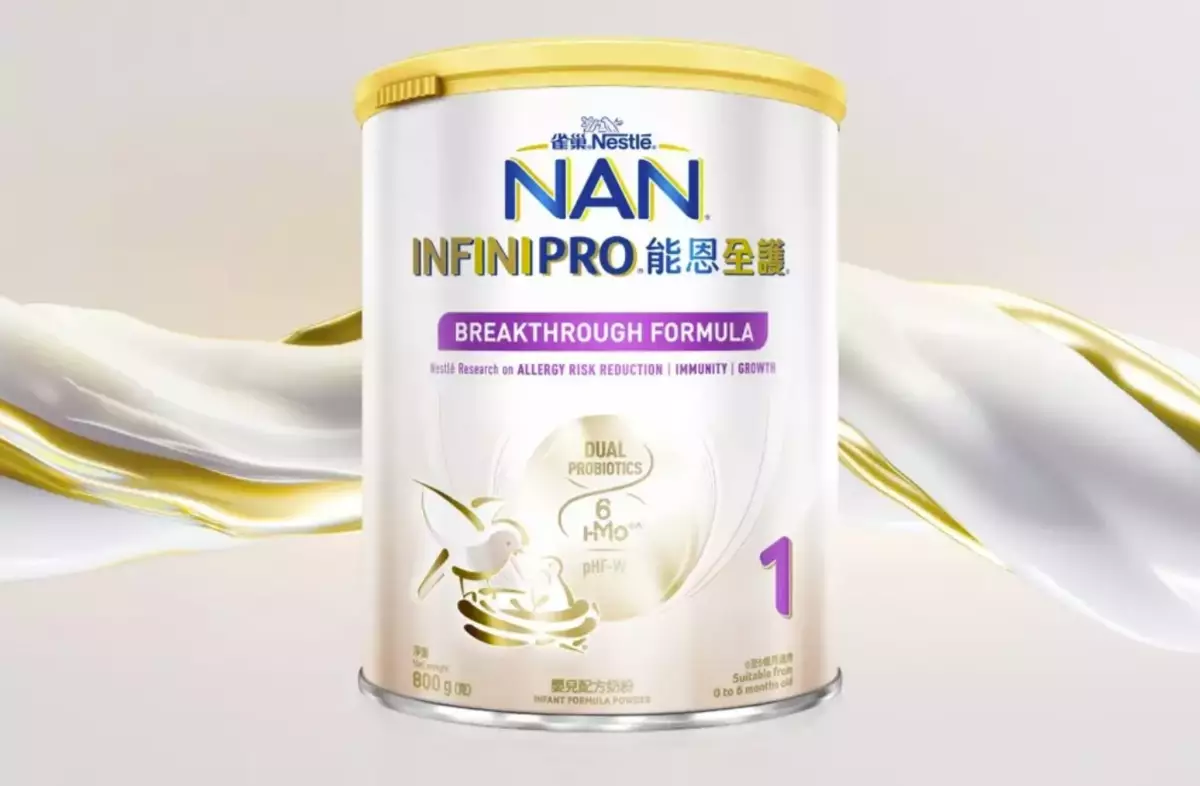
The infant formula of Nestlé, Photo source: online image