Skip to Content Facebook Feature Image

Mexico's security chief quietly forms an elite force to take on the drug cartels

News

Mexico's security chief quietly forms an elite force to take on the drug cartels
News

News

Mexico's security chief quietly forms an elite force to take on the drug cartels

2025-04-02 03:48 Last Updated At:03:51

MEXICO CITY (AP) — Six years ago Mexico’s president disbanded the country’s Federal Police and handed security responsibilities fully to the military. Now, his successor has quietly begun to build an elite civilian investigative and special operations force to fight the drug cartels.

President Claudia Sheinbaum had already shown a willingness early in her presidency to move away from former President Andrés Manuel López Obrador’s oft-criticized “hugs, not bullets” strategy. It focused on addressing the social roots of crime rather than directly confronting Mexico’s powerful cartels.

Sheinbaum's security chief, Omar García Harfuch, is drawing on his law enforcement contacts — mostly from the former ranks of the Federal Police — to claw back security capabilities from the armed forces with a civilian force under his direct command.

The government has yet to formally announce the new National Operations Unit, known by its Spanish initials UNO, but its existence is an open secret among former members of the Federal Police, where García Harfuch started his career.

Three Mexican officials, all of whom requested anonymity to speak about the still unannounced force, confirmed its existence to The Associated Press.

Security analyst David Saucedo, who has spoken with people who have joined the force, said he believes García Harfuch's main objective is to have an armed force that allows him to meet demands from Washington.

The unit began to form shortly after Sheinbaum took office and it hopes to have 800 members by the end of the year, said one federal official, who is familiar with many of the unit’s details.

On Monday, while García Harfuch was in Washington meeting with the Trump administration, the security ministry published a call for college graduates to make up “the first generation of investigative and intelligence agents,” saying only they would be part of a specialized group to strengthen the country’s security.

UNO will have three branches distributed geographically across Mexico, as well as a high-impact team that will be the “elite of the elite,” the federal official said.

Its current members are mostly former Federal Police and members of the special operations team García Harfuch created when he was Mexico City’s police chief. Most have previously received training from security forces from the United States, Colombia, Spain or France.

His challenge is rebuilding the trust of his U.S. counterparts after López Obrador limited U.S. agents’ movements in Mexico and do it as President Donald Trump pressures Mexico to step up the fight against fentanyl trafficking.

Shortly after taking office, López Obrador replaced the Federal Police with a new force, the National Guard, that he sold to the public as civilian, but that was always led by and made up of the armed forces.

He lambasted the Federal Police as too corrupt to save and made Mexico’s former security chief Genaro García Luna, then facing trial in the U.S. and eventually convicted of working for the Sinaloa cartel, the poster child. He cut funding for training and equipping local police.

What followed were six years of what critics decried as militarization that effectively concentrated unprecedented authority in the hands of the armed forces.

Despite that, levels of violence remained stubbornly high and critics said the cartels grew stronger, fueled by soaring revenue from fentanyl. One of the main criticisms of the National Guard and military was that while they had numbers and fire power they did not have the investigative skills needed to dismantle large criminal organizations.

García Harfuch was initially a “toothless tiger,” who was frequently denied resources, information and investigative files by other security entities, said Saucedo, based in Guanajuato state, Mexico’s most violent.

UNO puts an elite force under his direct command.

The Mexican federal official denied that UNO’s objective was to satisfy Trump, but noted the unit was involved in the unprecedented delivery of 29 high-profile cartel figures to the United States at the height of negotiations between the two countries to suspend threatened tariffs. They were pulled out of prisons all over Mexico, assembled and sent to the U.S. without incident.

Special operations forces, be it from the Navy, Army, Federal Police or state police, have a checkered history in Mexico, having been involved in many scandals and abuses of power, extrajudicial killings and infiltration by cartels.

“There have been a lot of cases that were bad,” said the previously quoted federal official, who added that there were also honest police. He said the security ministry is emphasizing stricter screening, exhaustive background investigations and better pay once they’re in.

García Harfuch’s influence also extends to states where Sheinbaum's party holds power. People he trusts are taking key security positions and UNO will train state special operations teams that are also made up of many former Federal Police.

The southern state of Chiapas, where Mexico’s most powerful cartels are battling for control of smuggling routes, announced a special operations force in December called the Pakal with some 500 members. Two members told the AP they were ex-Federal Police and did eight months of specialized training to join the Pakal.

But doubts remain. For Saucedo, since the new elite force doesn’t yet have effective internal controls and accountability mechanisms, “there’s no guarantee that this elite group won’t commit the excesses committed by other special operations groups.”
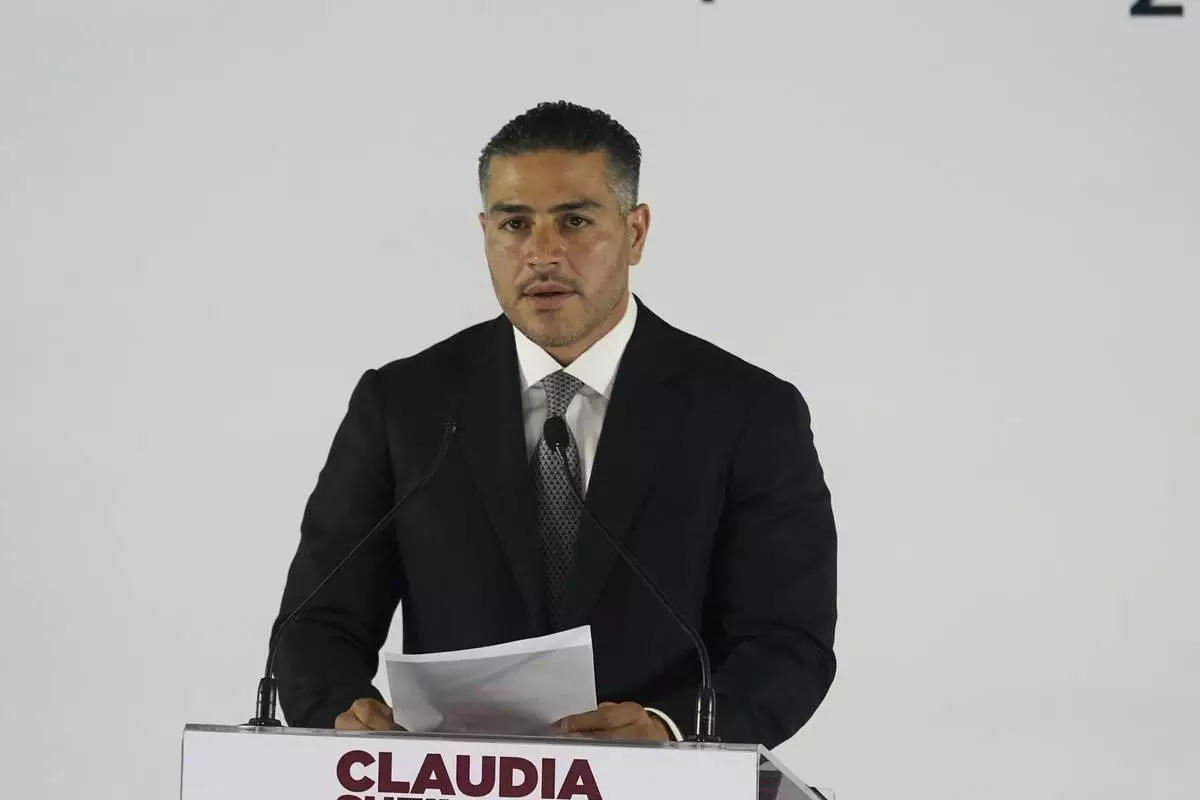
FILE - Minister of Security and Citizen Protection Omar Garcia Harfuch speaks during a presentation of incoming President Claudia Sheinbaum's Cabinet members in Mexico City, July 4, 2024. (AP Photo/Marco Ugarte, File)


FILE - Minister of Security and Citizen Protection Omar Garcia Harfuch speaks during a presentation of incoming President Claudia Sheinbaum's Cabinet members in Mexico City, July 4, 2024. (AP Photo/Marco Ugarte, File)

SAN FRANCISCO & JACKSONVILLE, Fla.--(BUSINESS WIRE)--Jan 12, 2026--

Abridge, the leading enterprise-grade AI for clinical conversations, is collaborating with Availity, the nation’s largest real-time health information network, to launch a first-of-its kind prior authorization experience. The engagement uses cutting-edge technology grounded in the clinician-patient conversation to facilitate a more efficient process between clinicians and health plans in medical necessity review.

This press release features multimedia. View the full release here: https://www.businesswire.com/news/home/20260112960386/en/

Rather than creating parallel AI systems across healthcare stakeholders, Abridge and Availity are working together to ensure shared clinical context at the point of conversation powers administrative processes, such as prior authorization review and submission, improving outcomes for patients and the teams delivering care.

This collaboration unites two trusted and scaled organizations: combining Abridge’s enterprise-grade AI platform, serving over 200 health systems and projected to support over 80 million patient-clinician conversations in 2026, with Availity’s next-generation, FHIR-native Intelligent Utilization Management solution, which helps payers and providers digitize and operationalize coverage requirements within administrative workflows.

Availity’s FHIR-native APIs enable fast, scalable, and secure connectivity of payer information across the entire healthcare ecosystem. With Abridge’s Contextual Reasoning Engine technology, clinicians can gain visibility into relevant clinical information during the conversation to support documentation aligned with prior authorization requirements.

“At Availity, we’ve invested in building AI-powered, FHIR-native APIs designed to bring clinical policy logic directly into provider workflows,” said Russ Thomas, CEO of Availity. “By embedding our technology at the point of conversation, we’re enabling faster, more transparent utilization management decisions rooted in clinical context. We’re excited to collaborate with Abridge and to demonstrate what’s possible when payer intelligence meets real-time provider workflows.”

The development of real-time prior authorization is just a component of a broader revenue cycle collaboration that is focused on applying real-time conversational intelligence across the patient, provider, and payer experiences. The companies intend to support integration by collaborating on workflow alignment between their respective platforms in the following areas:

“Abridge and Availity are each bringing national scale, deep trust, and a track record of solving important challenges across the care and claims experience to this partnership,” said Dr. Shiv Rao, CEO and Co-Founder of Abridge. “We’re building real-time bridges between patients, providers, and payers, unlocking shared understanding, focused at the point of conversation.”

About Availity

Availity empowers payers and providers to deliver transformative patient experiences by enabling the seamless exchange of clinical, administrative, and financial information. As the nation's largest real-time health information network, Availity develops intelligent, automated, and interoperable solutions that foster collaboration and shared value across the healthcare ecosystem. With connections to over 95% of payers, more than 3 million providers, and over 2,000 trading partners, Availity provides mission-critical connectivity to drive the future of healthcare innovation. For more information, including an online demonstration, please visit www.availity.com or call 1.800.AVAILITY (282.4548). Follow us on LinkedIn.

About Abridge

Abridge was founded in 2018 to power deeper understanding in healthcare. Abridge is now trusted by more than 200 of the largest and most complex health systems in the U.S. The enterprise-grade AI platform transforms medical conversations into clinically useful and billable documentation at the point of care, reducing administrative burden and clinician burnout while improving patient experience. With deep EHR integration, support for 28+ languages, and 50+ specialties, Abridge is used across a wide range of care settings, including outpatient, emergency department, and inpatient.

Abridge’s enterprise-grade AI platform is purpose-built for healthcare. Supported by Linked Evidence, Abridge is the only solution that maps AI-generated summaries to source data, helping clinicians quickly trust and verify the output. As a pioneer in generative AI for healthcare, Abridge is setting the industry standard for the responsible deployment of AI across health systems.

Abridge was awarded Best in KLAS 2025 for Ambient AI in addition to other accolades, including Forbes 2025 AI 50 List, TIME Best Inventions of 2024, and Fortune’s 2024 AI 50 Innovators.

Abridge and Availity Collaborate to Redefine Payer-Provider Synergy at the Point of Conversation

Abridge and Availity Collaborate to Redefine Payer-Provider Synergy at the Point of Conversation

Abridge and Availity Collaborate to Redefine Payer-Provider Synergy at the Point of Conversation

Abridge and Availity Collaborate to Redefine Payer-Provider Synergy at the Point of Conversation

Recommended Articles