In an escalation of tensions, Israel launched a surprise airstrike on the southern suburbs of Beirut, Lebanon early Tuesday -- its second bombardment of the area within a week -- resulting in casualties while damaging a residential building.
The sudden attack, targeting a multi-story apartment building in the Dahieh district, struck in the early hours of Tuesday morning without any prior evacuation warning to civilians. The blast's shockwave shattered windows of nearby vehicles, and the upper three floors of the building were blown out, with one side of the structure entirely collapsed.
Click to Gallery
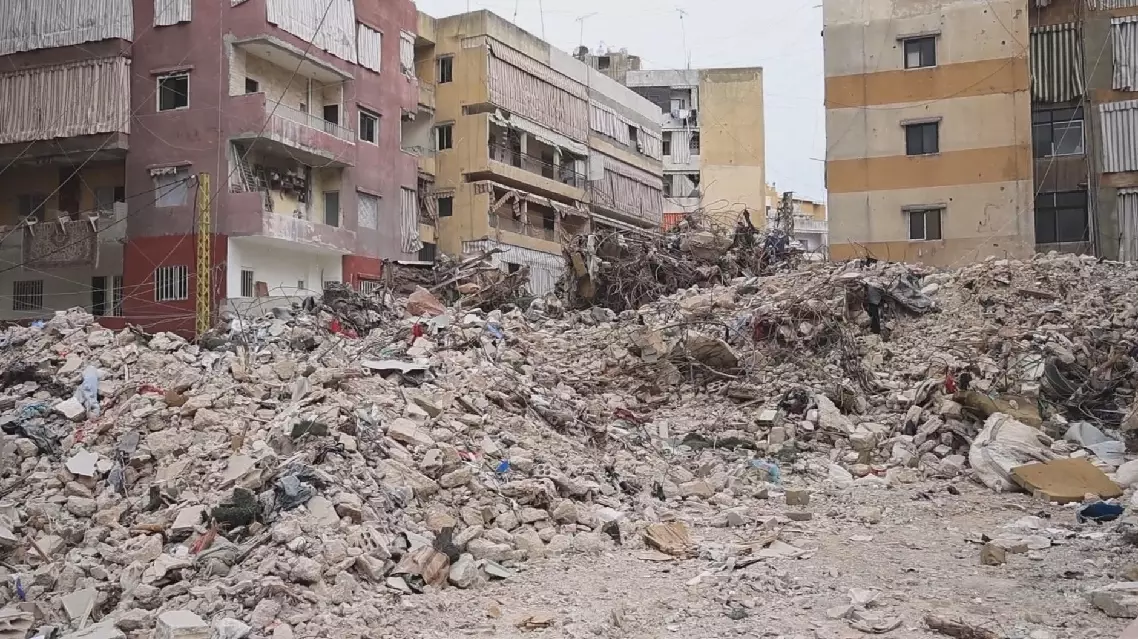
Israel's surprise airstrike damage residential building in Beirut suburbs
Israel's surprise airstrike damage residential building in Beirut suburbs
Israel's surprise airstrike damage residential building in Beirut suburbs
Israel's surprise airstrike damage residential building in Beirut suburbs
Residents combed through the wreckage, discovering what are believed to be remnants of the missiles fired by the Israel Defense Forces (IDF). Witnesses recounted the terrifying moment of the attack.
"We were sitting outside just like during the past month of Ramadan. It was a warm night, and we were chatting. Then we heard two explosions that sound like missile strikes. People panicked because no one knew where the attack had hit or what it targeted. When the dust settled, we realized that the building across the street had been destroyed," said Hussein, a resident of the southern suburbs.
The full scale of the damage became more apparent on the other side of the building. A vehicle parked nearby had its glass shattered and roof crushed by falling debris. Personal belongings of the affected families were scattered across the ground.
According to the Lebanese Ministry of Public Health, Tuesday's airstrike on the Dahieh area killed four people and wounded seven others. Unlike the previous Israeli airstrike on March 28, the IDF did not issue an evacuation order before its action. As a result, many victims were still asleep when the missiles struck.
"The attack came suddenly without any warning. As you can see, if you are familiar with the surrounding area, you'd know that this is a residential neighborhood. People were in their homes. The targets were clearly civilians," said Hussein.
On March 28, the Israeli military launched two missiles at a building in Hadath area, causing its complete destruction. Shortly after the attack, the Israel Defense Forces said it had targeted "a drone storage facility" belonging to Hezbollah near the Lebanese capital.
The strong airstrike was preceded by three warning strikes targeting the same building in Hadath, a densely populated area, after warnings were released by Israeli army spokesperson Avichay Adraee.
The attacks occurred regardless of a ceasefire agreement reached between Hezbollah and Israel in November 2024, which brought an end to more than a year of hostilities triggered by the war in Gaza.
Despite the agreement, the Israeli military has occasionally launched strikes in Lebanon, claiming they targeted Hezbollah "threats."
Israel's surprise airstrike damage residential building in Beirut suburbs
Israel's surprise airstrike damage residential building in Beirut suburbs
Israel's surprise airstrike damage residential building in Beirut suburbs
Israel's surprise airstrike damage residential building in Beirut suburbs