AMSTERDAM--(BUSINESS WIRE)--Apr 3, 2025--
As vehicle development becomes increasingly complex with the transition to electromobility and the integration of software across almost all components, seamless coordination among specialized departments involved is more critical than ever. At the same time, competitive pressures demand shorter development cycles, making traditional methods of data exchange, such as point-to-point interfaces or manual processes, less efficient and prone to inconsistencies. However, a high level of data consistency is essential to ensure smooth development, integration, and validation, particularly in the development of electric control units and onboard communication systems.
This press release features multimedia. View the full release here: https://www.businesswire.com/news/home/20250403719346/en/
Establishing a central master data hub for electrics/electronics development
To tackle these challenges, BMW Group initiated the development of a central master data hub for the E/E development process and entrusted BearingPoint with the functional conceptualization of the master data portfolio as well as the technical integration and operations. Relevant data is imported from the IT system where it is generated, and it is also harmonized both from a functional and technical perspective before being linked to other data. Then, it is distributed to all IT systems whose users require it for their product development activities. The project team built robust yet flexible standard interfaces that significantly streamline data exchange.
Together with the general platform development and technical integration of the new hub with more than 70 IT systems, BearingPoint continuously supports the BMW Group in the functional harmonization of the distributed data. This approach was crucial to meet the different needs and perspectives of various departments in developing electric control units. Additionally, the quality of processed data is proactively ensured to prevent the distribution of inaccurate records across the organization.
“By working closely with BMW Group, we’ve developed a solution that enables digital continuity and significantly strengthens cross-departmental collaboration, to address the complexities of modern vehicle development. It reflects the transformative potential of high-quality and, most importantly, available master data on business processes which originates in combining cutting-edge technology with the right data strategy,” said Patrick Kirchhof, Partner at BearingPoint.
Accelerating time-to-market and data quality improvements
The BMW Group’s centrally provisioned data hub has increased the efficiency of the product development process at the BMW Group, enabling seamless collaboration between numerous departments based on a unified, up-to-date, and high-quality data foundation. The hub supports faster development cycles in these times of constantly increasing vehicle complexity. Additionally, the central hub simplifies the IT landscape by reducing point-to-point interfaces, which helps reduce development and maintenance costs. Overall, the solution contributes to the continuous optimization of the product development process.
The full client story is available here: https://www.bearingpoint.com/en/insights-events/client-stories/bmw-group/
About BearingPoint
BearingPoint is an independent management and technology consultancy with European roots and a global reach. The company operates in three business units: Consulting, Products, and Capital. Consulting covers the advisory business with a clear focus on selected business areas. Products provides IP-driven digital assets and managed services for business-critical processes. Capital delivers M&A and transaction services.
BearingPoint’s clients include many of the world’s leading companies and organizations. The firm has a global consulting network with more than 10,000 people and supports clients in over 70 countries, engaging with them to achieve measurable and sustainable success.
BearingPoint is a certified B Corporation, meeting high standards of social and environmental impact.
For more information, please visit:
Homepage: www.bearingpoint.com
Data Quality Navigator: https://dataqualitynavigator.com
LinkedIn: www.linkedin.com/company/bearingpoint

BearingPoint is supporting BMW Group in establishing a central data hub to create a high-quality data foundation for the electrical/electronics (E/E) development process to enable cross-departmental digital continuity and shorter time-to-market.
MINNEAPOLIS (AP) — In a city that often seems to be staggering from one crisis to the next, the sudden resignation of police Chief Brian O’Hara after a finding he likely interfered in a misconduct investigation has left Minneapolis searching again for a way forward.
O’Hara was an outsider brought in with a mandate to reform the police department after the 2020 killing of George Floyd, which led to federal and state investigative findings of excessive force and racist policing practices. O’Hara had spent most of his career in Newark, New Jersey, where he instituted changes after that department was put under a federal consent decree for patterns of excessive force and unconstitutional stops and searches.
The challenges in Minneapolis were clear before O'Hara arrived in late 2022. For a time, it had seemed the department itself might not survive. In 2021, more than 43% of voters supported disbanding the department as the city reeled from Floyd’s killing and the massive protests and widespread rioting that followed.
Policing experts had noted the monumental task that faced the city’s next police chief, who would have to rebuild community trust and a department whose morale had dipped so low that it was hemorrhaging officers.
“I don’t think there was a bigger challenge to any American city than what Minneapolis faced when he arrived,” said Chuck Wexler, executive director of a Washington think tank, the Police Executive Research Forum. “They had gone from 850 to 500 officers, violent crime was significantly up, trust with the community was broken, a police station had burned down and a federal consent decree would face the next chief. Then you had the politics of Minneapolis.”
Coming in as an outsider to lead a large department is daunting, even without being asked to reform and rebuild, said Renée Hall, president of the National Organization of Black Law Enforcement Executives who moved from Detroit to lead the Dallas Police Department from 2017 to 2020.
“It’s extremely challenging to walk into an organization, where you don’t even know where the light switches are, where the bathrooms are. And that’s just the basics,” Hall said. “You have to learn the officers, the community, the politics of that particular city, and try to learn and navigate the existing relationships, like unions or officer associations and who is tied to whom and who is fighting for whom.”
Hall said outside hires can face resentment from those within an organization who supported internal candidates. They also have to earn the trust of the community, which she said takes time.
After the police disbandment measure failed, O'Hara joined the bureaucracy of a deeply progressive city that is regularly buffeted by political battles between the mayor and the City Council, and among council members.
Those battles were on full display Wednesday, when a City Council news conference about O'Hara's resignation quickly turned into an opportunity for the council's resolute progressives to attack Mayor Jacob Frey, who has long portrayed himself as a “pragmatic progressive.”
The resignation “is a symptom of a much larger problem, which is simply that Mayor Frey continues to be unable to effectively manage the Minneapolis Police Department,” said Council member Robin Wonsley, a cornerstone of the council's progressive bloc.
Frey, who just weeks ago pushed to have O'Hara reappointed as chief, fired back at criticism that he didn’t move aggressively enough when allegations of the chief's potential misconduct emerged.
“I don’t make decisions based on rumors and anonymous complaints,” he said in a statement, adding that he would work with the council to find a replacement. “I took action promptly after receiving the investigative report. … Decisions this serious have to be grounded in facts, evidence and completed investigations. Anything less would be irresponsible.”
O'Hara did not return a message seeking comment Wednesday. His attorney, Doug Kelley, released a statement touting successes during O'Hara's tenure, including diversifying and increasing the department's ranks, the decreasing violent crime rate and mitigating violent clashes during the immigration crackdown.
“The circumstances of Chief O’Hara’s departure should not define his service," Kelley wrote. "He was proud to serve Minneapolis, remains grateful to the officers and community partners who did difficult work under extraordinary pressure, and hopes the city continues moving forward. He understandably looks forward to returning to his young family in New Jersey.”
The resignation came just months after Minneapolis was plunged into the national spotlight amid a federal immigration surge that left three civilians shot, two fatally. O'Hara faced criticism he hadn't done enough to stop the crackdown.
Violence plagued the city in 2025, including deadly attacks on state politicians in the Minneapolis suburbs; gunfire that erupted at a popular city picnic spot; and a shooting during Mass at the Church of the Annunciation that left two children dead and more than a dozen people injured. O’Hara called the church attack a “ truly unthinkable tragedy. ”
Critics say dozens of complaints were filed against O'Hara, from accusations that he was rude to the public to the recent investigation into an ultimately unproven allegation he had a sexual relationship with a city employee. Most of the complaints have not been made public, and 17 complaints are still being investigated. Investigators closed 17 more without any disciplinary actions.
An independent investigator did not find evidence to substantiate the alleged sexual relationship with a city employee, but a second report released this week said O'Hara likely deleted the employee's contact from his phone during the investigation and that he talked to another employee about the probe despite being told it was not to be discussed.
That recent report led to a written reprimand; Frey told O'Hara he would be disciplined and that he could be terminated. Frey said O'Hara chose to resign instead.
Lauer reported from Philadelphia.
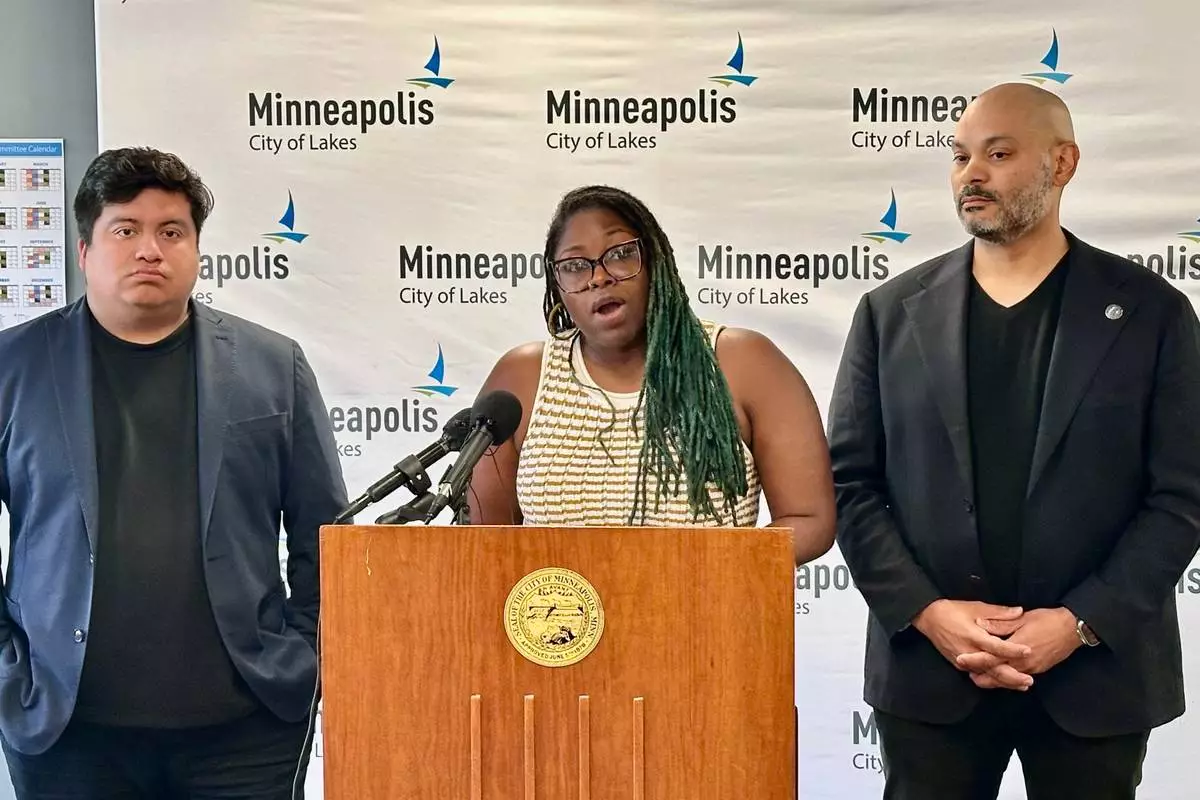
Minneapolis City Council Members, from left, Jason Chavez, Robin Wonsley and Council President Elliot Payne speak to reporters about the resignation of Police Chief Brian O'Hara on Wednesday, May 27, 2026 at City Hall in Minneapolis. (AP Photo/Mark Vancleave)
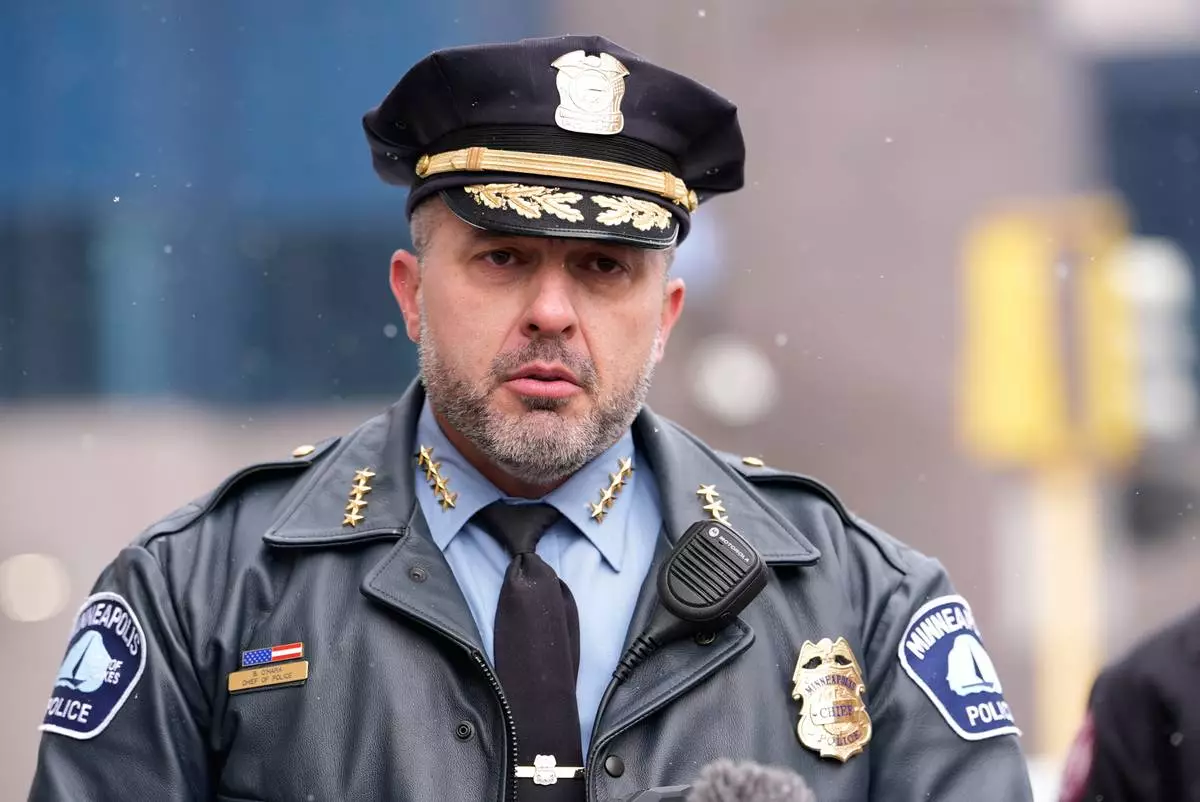
FILE - Minneapolis Police Chief Brian O'Hara speaks during a news conference, Jan. 10, 2026, in Minneapolis. (AP Photo/Jen Golbeck, File)