Skip to Content Facebook Feature Image

South Korea's ousted president belongs to a long line of troubled leaders

News

South Korea's ousted president belongs to a long line of troubled leaders
News

News

South Korea's ousted president belongs to a long line of troubled leaders

2025-04-04 12:07 Last Updated At:12:21

SEOUL, South Korea (AP) — Three years after becoming president of South Korea, Yoon Suk Yeol was formally removed from office on Friday as the Constitutional Court upheld his impeachment over an ill-fated December decision to impose martial law. Yoon's self-inflicted downfall continues a trend of troubled presidencies.

Yoon’s ouster comes eight years after the same court dismissed another conservative president, Park Geun-hye over an explosive scandal involving bribery, extortion, leaking state secrets and abuse of power. Several former presidents, their family members, or top aides have been embroiled in corruption scandals near the end of their terms or after leaving office. There have been coups, an assassination and a suicide.

More Images
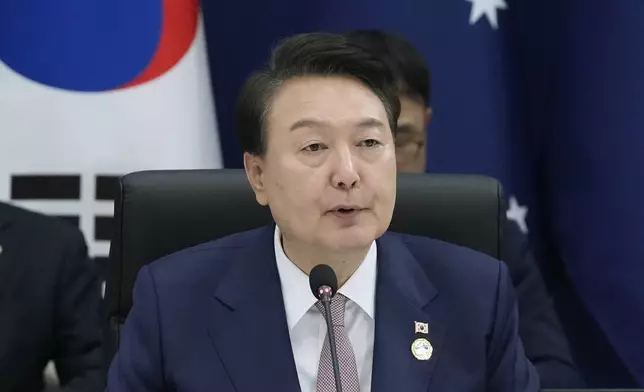
FILE - South Korea's President Yoon Suk Yeol speaks during the Korea-Pacific Islands Summit at "Cheong Wa Dae," or the Blue House, in Seoul, South Korea, on May 29, 2023. (AP Photo/Ahn Young-joon, Pool, File)
FILE - South Korea's President Yoon Suk Yeol speaks during the Korea-Pacific Islands Summit at "Cheong Wa Dae," or the Blue House, in Seoul, South Korea, on May 29, 2023. (AP Photo/Ahn Young-joon, Pool, File)

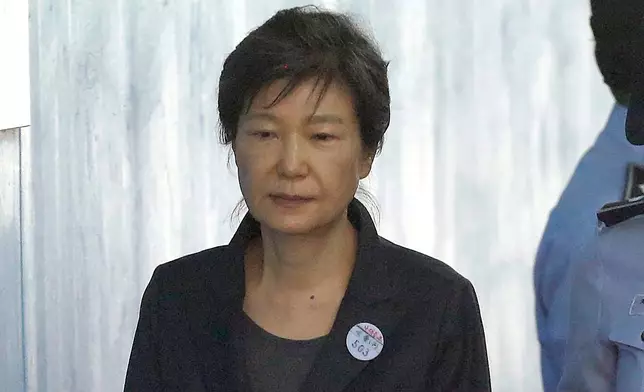
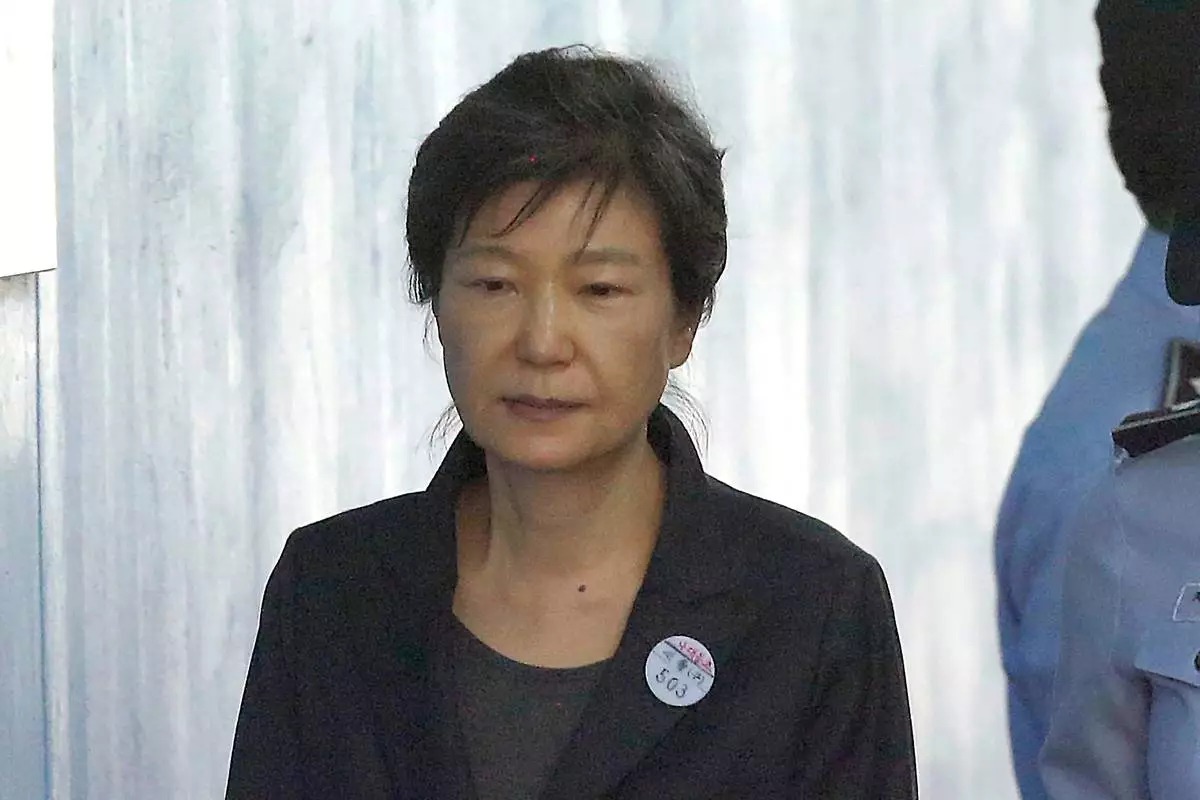
FILE - Former South Korean President Park Geun-hye arrives to attend a hearing on the extension of her detention at the Seoul Central District Court in Seoul, South Korea on Oct. 10, 2017. (AP Photo/Ahn Young-joon, File)
FILE - Former South Korean President Park Geun-hye arrives to attend a hearing on the extension of her detention at the Seoul Central District Court in Seoul, South Korea on Oct. 10, 2017. (AP Photo/Ahn Young-joon, File)

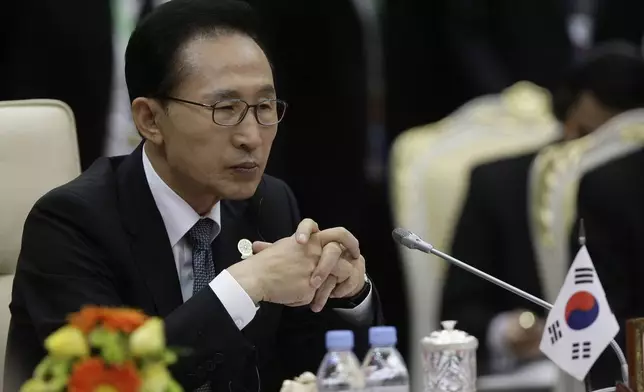
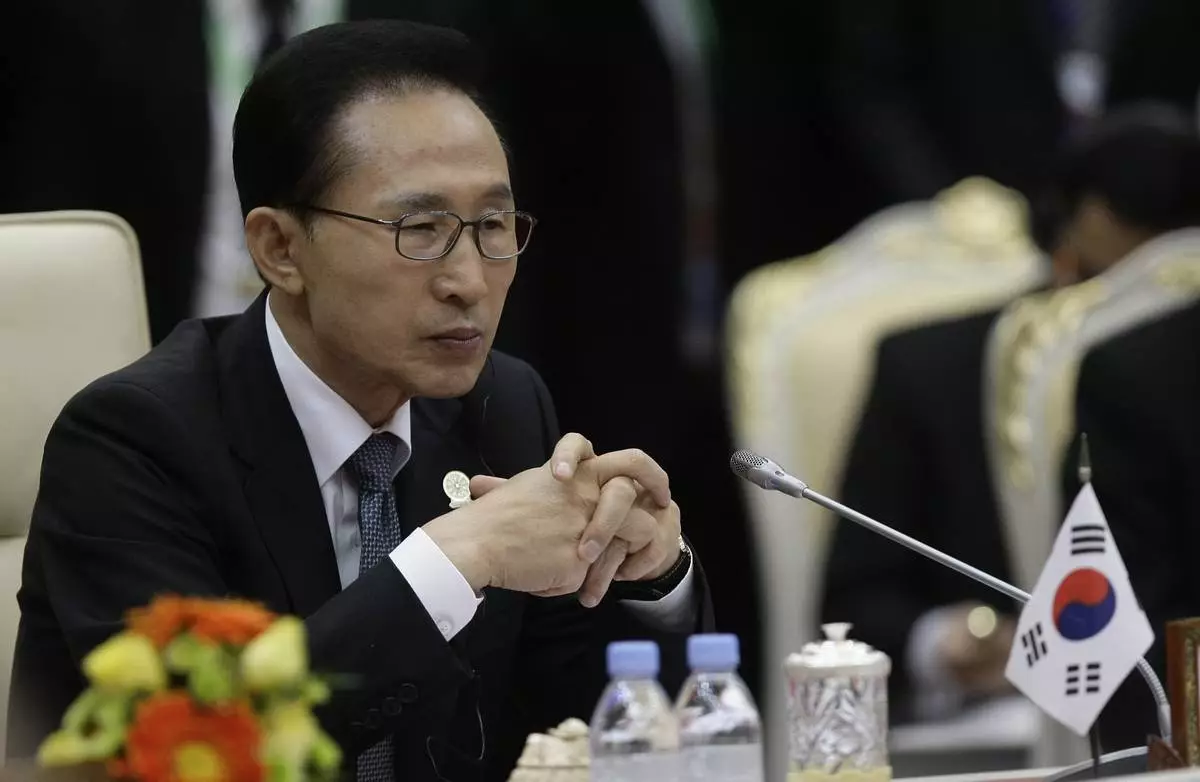
FILE - South Korea's President Lee Myung-bak attends the 15th ASEAN - South Korea Summit in Phnom Penh, Cambodia, on Nov. 19, 2012. (AP Photo/Heng Sinith, File)
FILE - South Korea's President Lee Myung-bak attends the 15th ASEAN - South Korea Summit in Phnom Penh, Cambodia, on Nov. 19, 2012. (AP Photo/Heng Sinith, File)

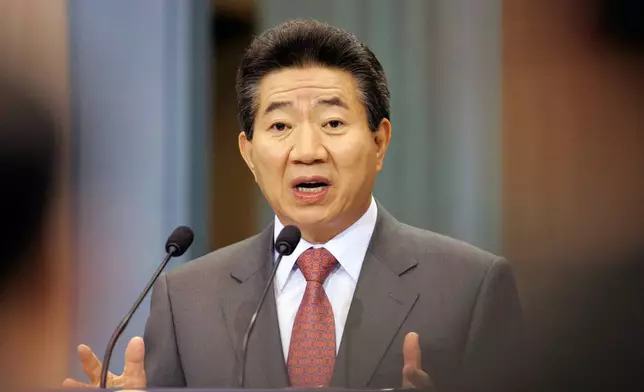
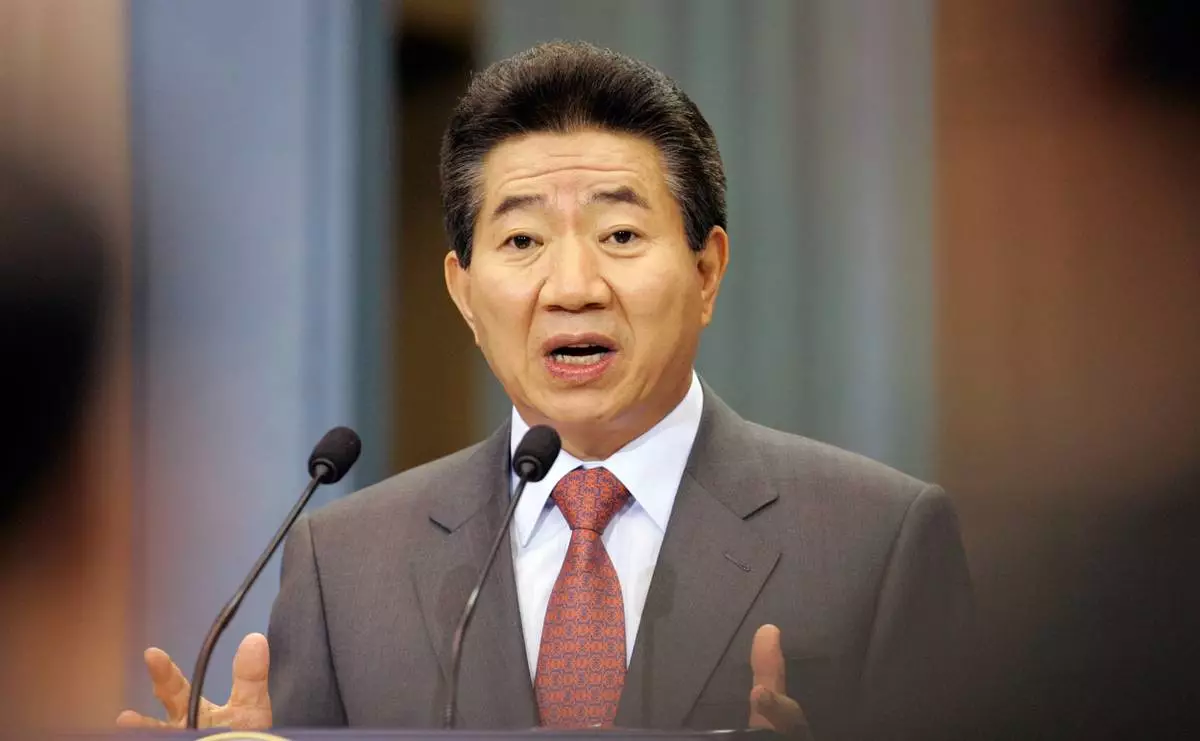
FILE - South Korean President Roh Moo-hyun delivers a speech to the nation during a news conference in Seoul, South Korea, on Nov. 27, 2007. (AP Photo/Lee Jin-man, File)
FILE - South Korean President Roh Moo-hyun delivers a speech to the nation during a news conference in Seoul, South Korea, on Nov. 27, 2007. (AP Photo/Lee Jin-man, File)

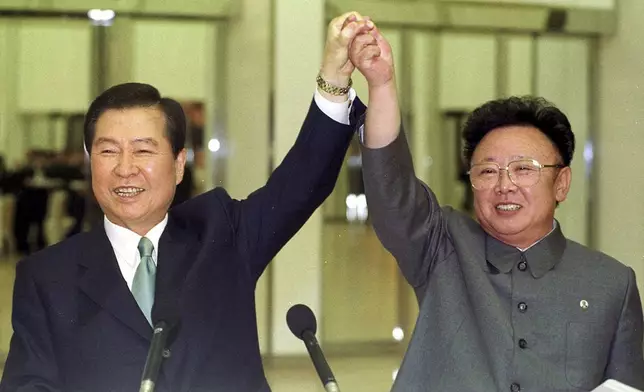
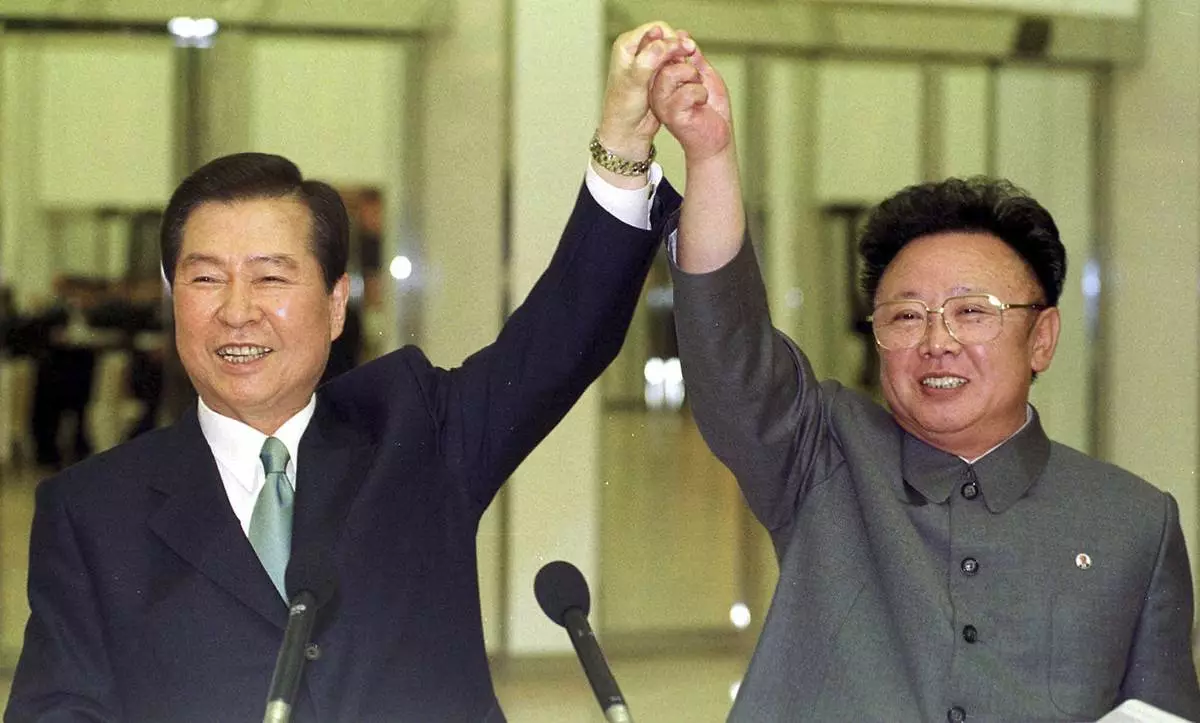
FILE -- South Korean President Kim Dae-jung, left, and North Korean leader Kim Jong Il raise their arms together before signing a joint declaration at the end of the second day of a three-day summit in Pyongyang, North Korea, on June 14, 2000. (Yonhap Pool via AP, File)
FILE -- South Korean President Kim Dae-jung, left, and North Korean leader Kim Jong Il raise their arms together before signing a joint declaration at the end of the second day of a three-day summit in Pyongyang, North Korea, on June 14, 2000. (Yonhap Pool via AP, File)

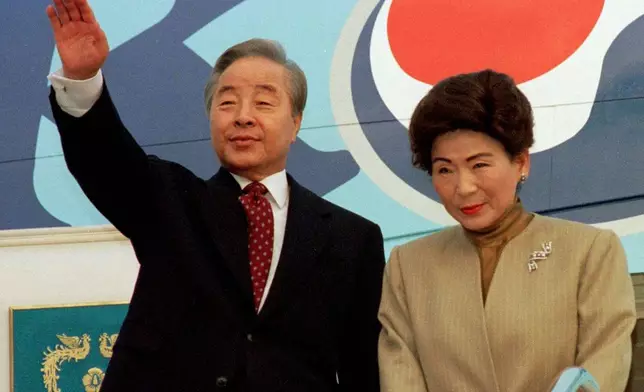
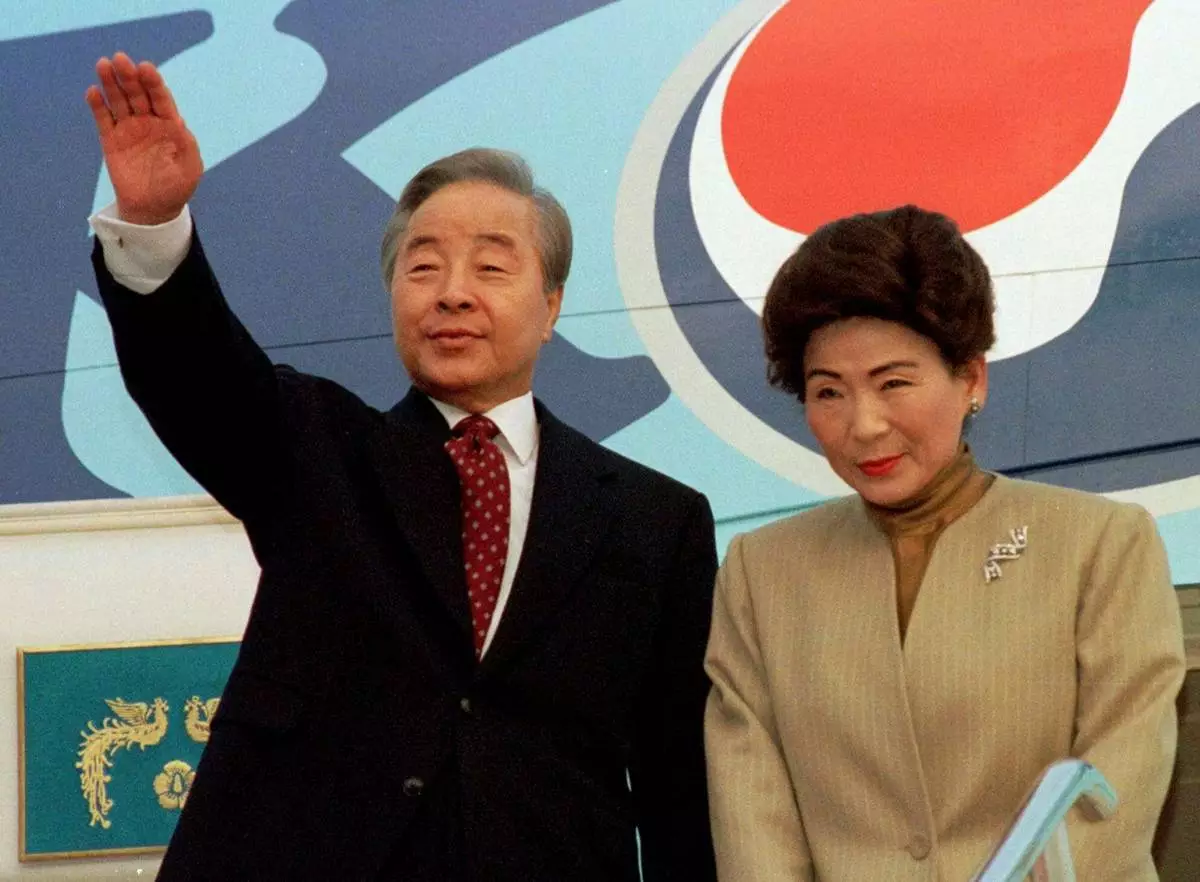
FILE - South Korean President Kim Young-sam waves his hand before leaving with his wife Son Myung-soon for the Vancouver to attend the 5th summit meeting of the Asia-Pacific Economic Cooperation at the Seoul Airport, on Nov. 22, 1997. . (Yonhap via AP, File)
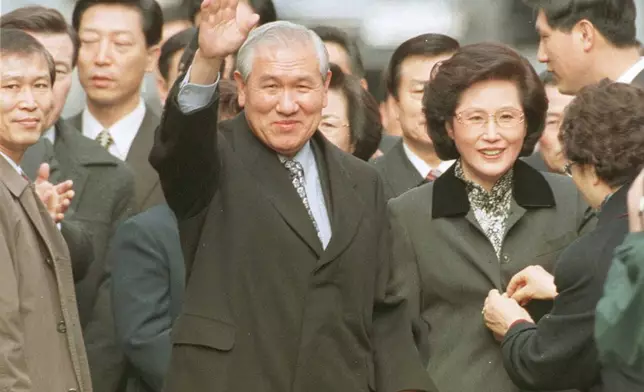
FILE - South Korean President Kim Young-sam waves his hand before leaving with his wife Son Myung-soon for the Vancouver to attend the 5th summit meeting of the Asia-Pacific Economic Cooperation at the Seoul Airport, on Nov. 22, 1997. . (Yonhap via AP, File)

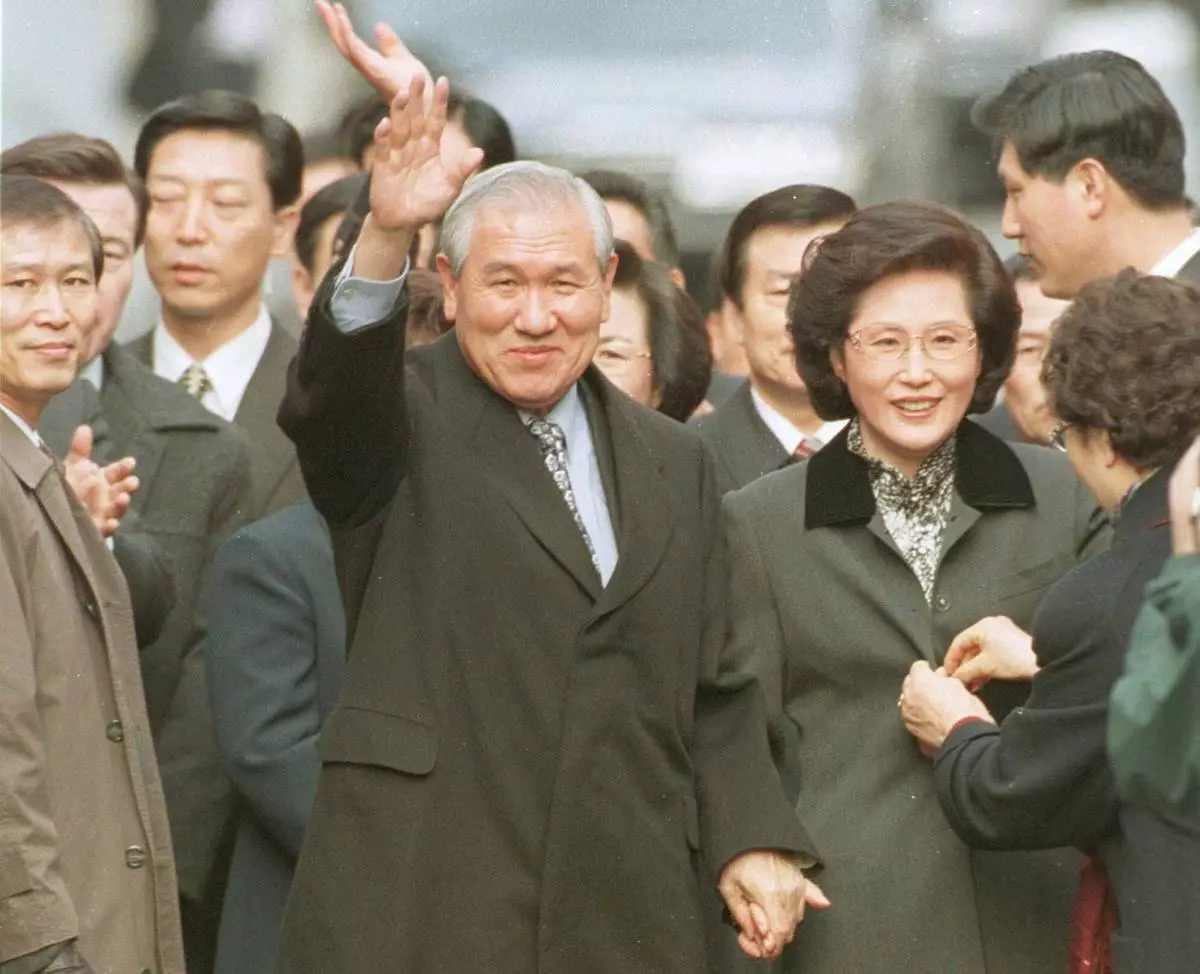
FILE - Former South Korean President Roh Tae-woo, center, with his wife Kim Ok-sook standing beside him, waves to his supporters and neighbors upon arrival at his home after he was released from the Seoul prison in a special amnesty, on Dec. 22, 1997. (Yonhap via AP, File)
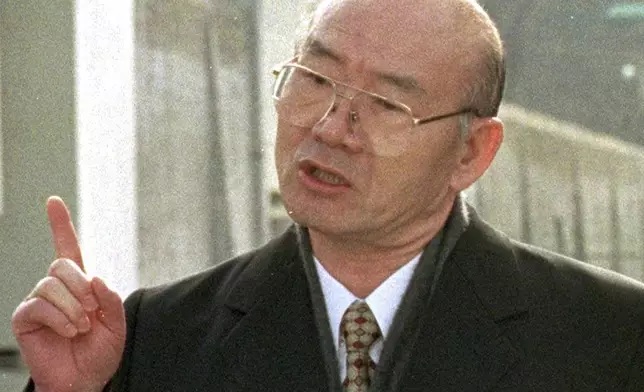
FILE - Former South Korean President Roh Tae-woo, center, with his wife Kim Ok-sook standing beside him, waves to his supporters and neighbors upon arrival at his home after he was released from the Seoul prison in a special amnesty, on Dec. 22, 1997. (Yonhap via AP, File)

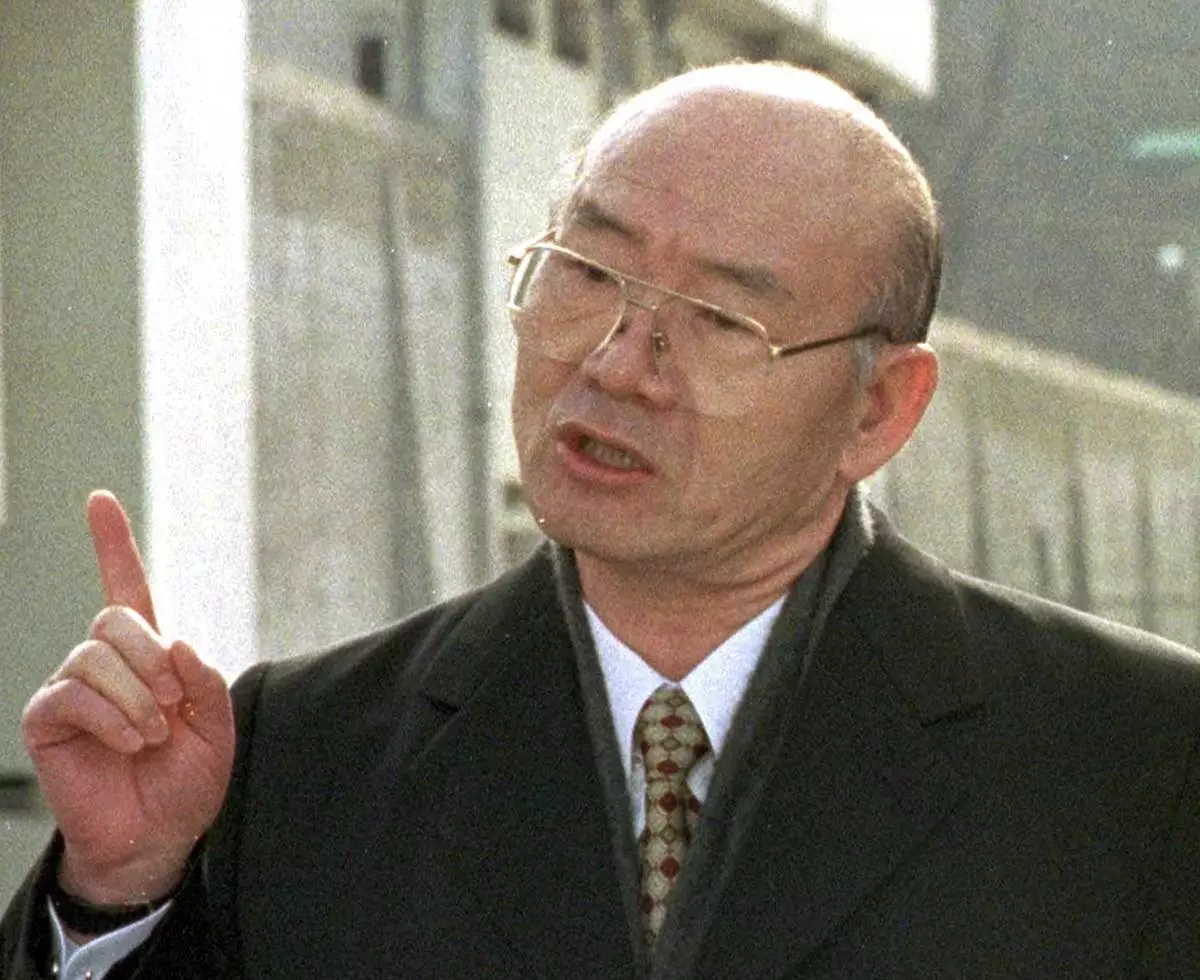
FILE - Former South Korean President Chun Doo-hwan speaks to reporters in front of the Anyang Prison on Dec. 22, 1997 following his release from prison in a special government amnesty. (AP Photo/Yun Jai-hyoung, File)
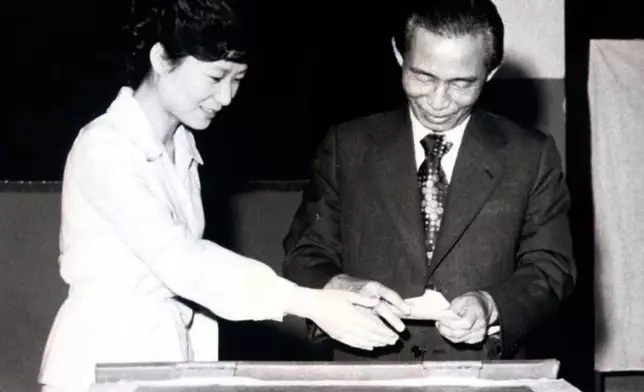
FILE - Former South Korean President Chun Doo-hwan speaks to reporters in front of the Anyang Prison on Dec. 22, 1997 following his release from prison in a special government amnesty. (AP Photo/Yun Jai-hyoung, File)

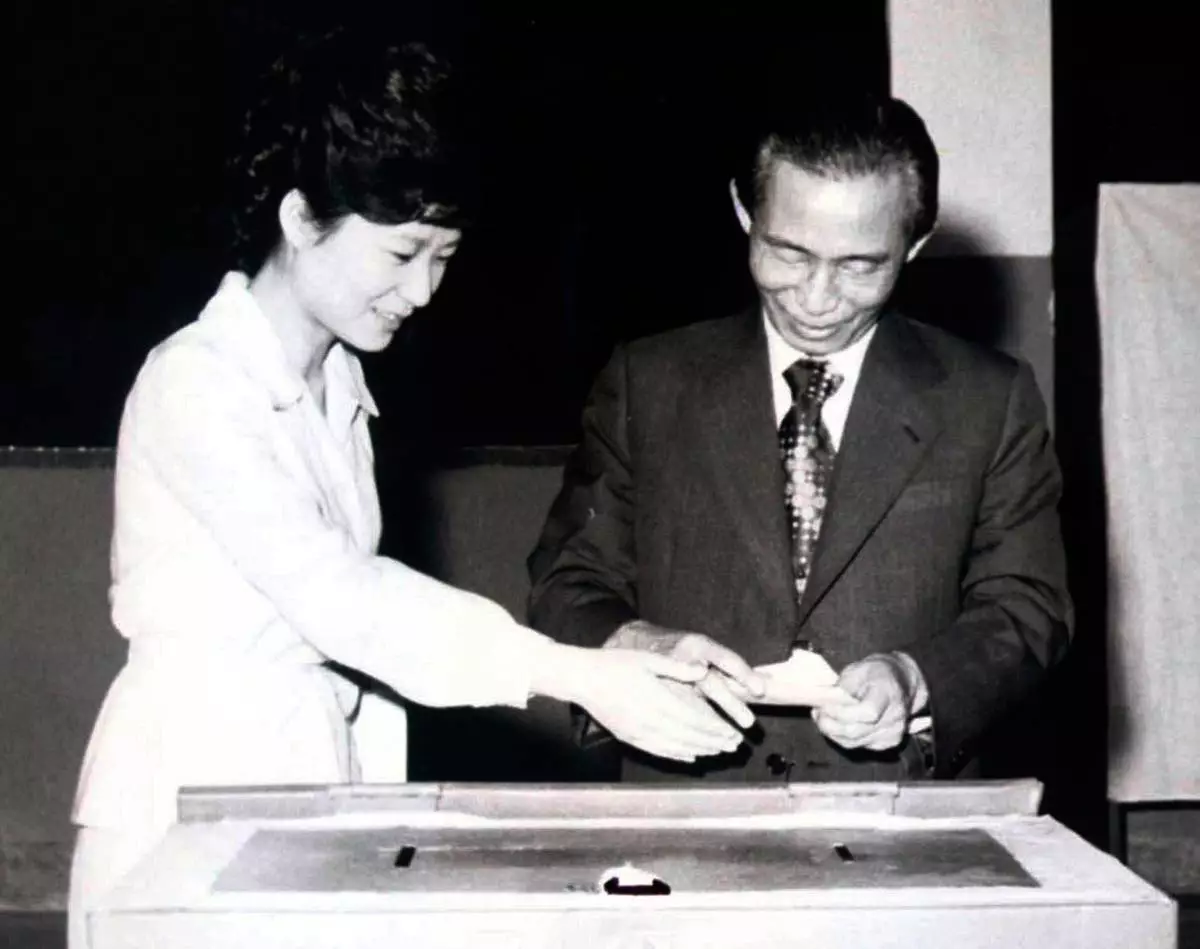
FILE - Former South Korean President Park Chung-hee, right, and his daughter, Park Geun-hye, cast ballots in Seoul, South Korea, in 1977. (Yonhap via AP, File)
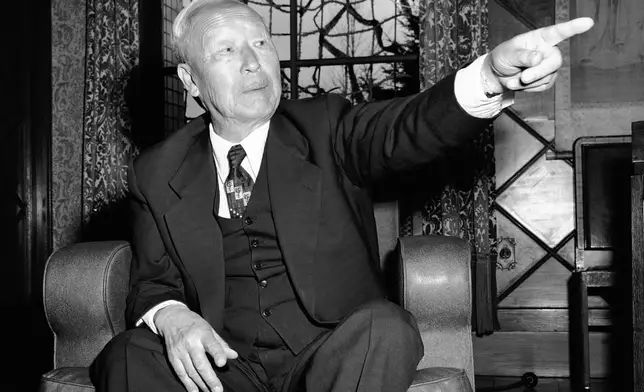
FILE - Former South Korean President Park Chung-hee, right, and his daughter, Park Geun-hye, cast ballots in Seoul, South Korea, in 1977. (Yonhap via AP, File)

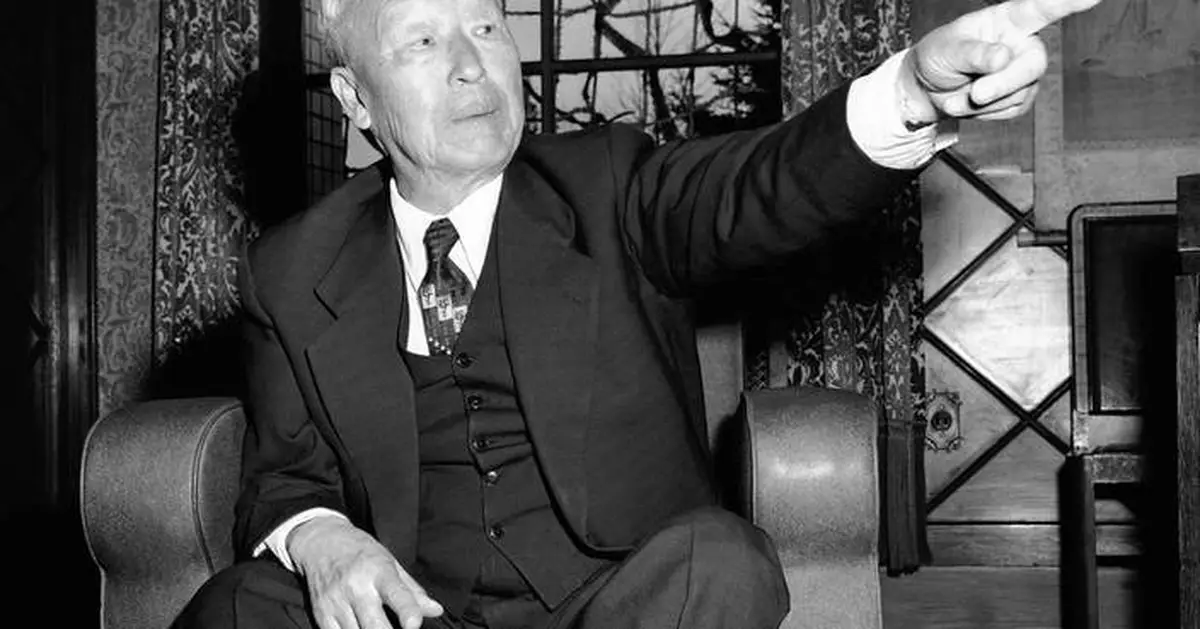
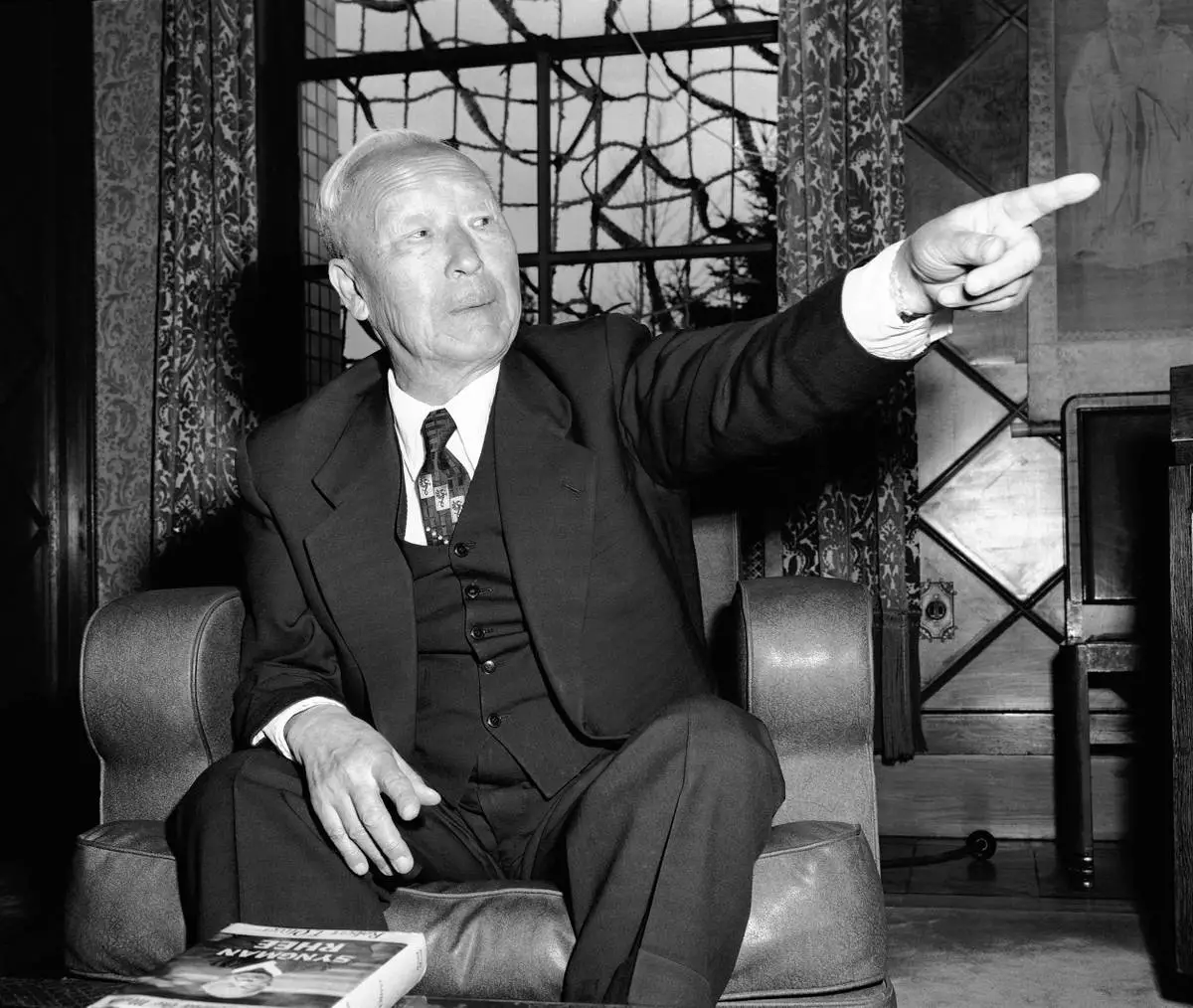
FILE - South Korean President Syngman Rhee is seated at the Presidential House in Seoul on March 17, 1955. (AP Photo/George Sweers, File)

FILE - South Korean President Syngman Rhee is seated at the Presidential House in Seoul on March 17, 1955. (AP Photo/George Sweers, File)

Here’s a look at the country’s history of troubled presidencies.

Syngman Rhee, an American-educated Christian leader and independence activist, became South Korea’s first president in 1948 with U.S. support, three years after the Korean Peninsula was liberated from Japanese colonial rule at the end of World War II. His government grew increasingly authoritarian, especially after the 1950-53 Korean War, and critics accused him of corruption and nepotism as he sought to extend his grip on power. He secured a fourth presidential term in 1960 amid widespread allegations of vote-rigging, triggering nationwide protests that forced him to flee to Hawaii, where he died in 1965.

Park Chung-hee, an army general, seized power in a 1961 coup, toppling the government that had replaced Rhee. Park is credited with industrial policies that fueled the country’s rapid economic growth in the 1960-70s, but critics remember him as a ruthless dictator who jailed, tortured, and executed dissidents. Park, also the father of future President Park Geun-hye, was assassinated by his own spy chief during a late-night drinking session in 1979.

Park was replaced by an interim government, but within months another army general and his military allies seized power in a coup in December 1979, deploying tanks and troops into Seoul. President Chun Doo-hwan ruled as a military dictator but massive pro-democracy protests forced his government to accept a constitutional revision allowing direct presidential elections in 1987. After leaving office, Chun spent two years in exile at a remote Buddhist temple amid public demands for accountability for corruption and human rights abuses, and in 1995 he was arrested for crimes including the coup that brought him to power and received a death sentence that was later commuted to life imprisoned before he was pardoned. Chun died in 2021.

Roh Tae-woo, a close associate of Chun, won the country’s first democratic, direct presidential election in decades in 1987, largely due to a split opposition vote among liberal candidates. Two years after Roh left office, both he and Chun were arrested in late 1995 on charges of accepting bribes from businessmen during their presidencies. They were also indicted for mutiny and treason over the 1979 coup that put Chun in power and the bloody crackdown on pro-democracy protests in Gwangju in 1980, which killed hundreds. In 1996, Chun was initially sentenced to death, while Roh received 22½ years in prison. In April 1997, South Korea’s Supreme Court reduced Chun’s sentence to life imprisonment and Roh’s to 12 years, before both were pardoned later that year. Roh died in 2021.

Kim Young-sam, a longtime opposition leader who fought for democratization, initially enjoyed strong public support for ambitious anti-corruption reforms and the arrests of Chun and Roh. But Kim's popularity nosedived as the late-1990s Asian financial crisis wreaked havoc on South Korea’s economy, toppling some of the country’s debt-ridden conglomerates and forcing the government to accept a $58 billion bailout from the International Monetary Fund. He pardoned Chun and Roh in December 1997, accepting a proposal from president-elect Kim Dae-jung, as a gesture for national unity. Kim Young-sam left office amid a corruption scandal that saw his son arrested and jailed. He died in 2015.

Another longtime opposition leader and democracy activist, Kim Dae-jung rose to the presidency in 1998. In 2000, he held an unprecedented summit with then-North Korean leader Kim Jong Il, ushering in an era of rapprochement between the war-divided rivals. That same year, he was awarded the Nobel Peace Prize. However, his presidency was also marred by corruption scandals involving his aides and sons. He was also accused of arranging for the Hyundai business group to pay North Korea more than $400 million ahead of the summit. Kim died in 2009.

Roh Moo-hyun, a self-taught lawyer who rose to political prominence as a reformist, won the 2002 election as a liberal candidate with vows to fight corruption. However, his direct and outspoken style contributed to constant clashes with conservatives who held the legislative majority during the early part of his presidency. In 2004, lawmakers impeached Roh over election law violations and other allegations, but the Constitutional Court reinstated him two months later, concluding that the accusations were not serious enough to justify his removal. Roh died by suicide in 2009, a year after his term ended, amid allegations that some of his family members took bribes during his presidency. His older brother received a prison term for influence-peddling in 2009 and was later pardoned.

Elected in 2008 on a promise to boost the economy, ex-Hyundai CEO Lee Myung-bak saw his popularity decline quickly due to unmet economic goals and media policies criticized as attacks on free speech, and left office with rock-bottom approval ratings amid corruption scandals involving himself, his family and key government officials. In 2018, Lee was convicted and sentenced to 15 years in prison for a range of crimes before and during his presidency, including accepting millions of dollars in bribes from major corporations, embezzling funds from his own company, and taking bribes from his ex-spy chief in exchange for favors. He was released on bail months later but was imprisoned again in 2020 after the Supreme Court upheld a 17-year sentence from an appellate court. Lee was pardoned by Yoon Suk Yeol in December 2022.

Park Geun-hye was elected as the country’s first female president in 2012, defeating her liberal rival Moon Jae-in by a million votes after securing support from conservative voters who see her father as an industrial hero who lifted the country from postwar poverty. But her popularity declined following a 2014 ferry disaster that claimed more than 300 lives, while an uncompromising leadership style led to impasses with the liberal opposition. Her presidency collapsed after allegations emerged that she had colluded with a friend to extort and accept millions of dollars in bribes from the country’s biggest business groups and allowed her friend to manipulate state affairs. Park was formally ousted from office and arrested in March 2017. She called her trial political revenge and refused to attend hearings before being convicted and sentenced. Park served less than a quarter of her 22-year sentence before Moon, who won a presidential by-election following her ouster, pardoned her in December 2021 in what he called an effort to promote political unity.

Yoon, a staunch conservative and longtime prosecutor, went from political novice to president in 2022, ending five years of liberal rule characterized by failed efforts to resolve the North Korean nuclear crisis and ongoing economic trouble. He clashed continuously with the liberal opposition, which retained its majority in the National Assembly and hindered his agenda. Aiming to quash a legislature he portrayed as a “den of criminals," Yoon declared martial law on Dec. 3, 2024 and sent hundreds of troops to the legislature and election offices. Despite troop blockades, lawmakers gathered a quorum and unanimously voted to lift martial law just hours later. The assembly impeached Yoon on Dec. 14, suspending his powers as prosecutors opened criminal investigations into the events. Yoon and his allies denied that he intended to shut down the legislature or arrest opponents, but the eight-member Constitutional Court unanimously rejected their arguments, describing his actions as unconstitutional and ordering his removal. The former president still faces a criminal trial for rebellion, and could be charged with additional crimes now that he has been stripped of presidential immunity.
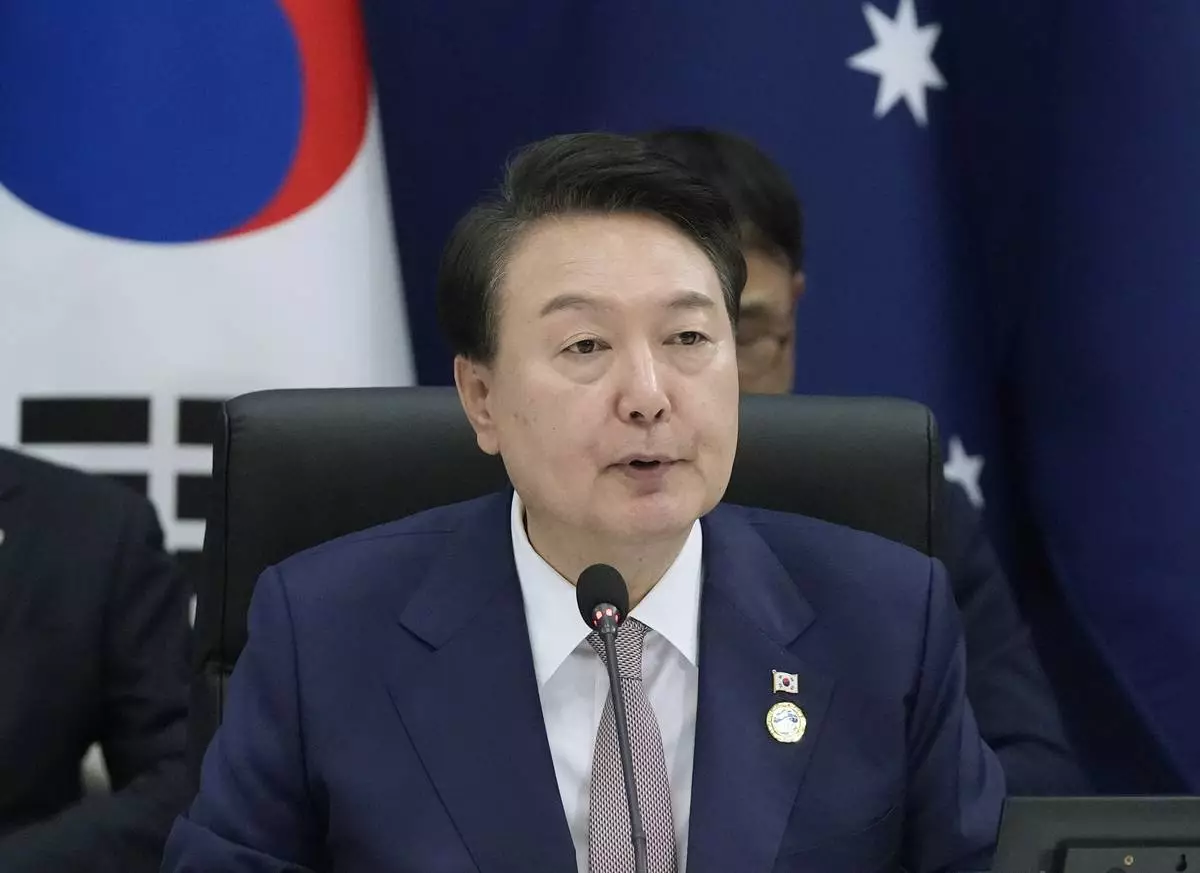
FILE - South Korea's President Yoon Suk Yeol speaks during the Korea-Pacific Islands Summit at "Cheong Wa Dae," or the Blue House, in Seoul, South Korea, on May 29, 2023. (AP Photo/Ahn Young-joon, Pool, File)
FILE - South Korea's President Yoon Suk Yeol speaks during the Korea-Pacific Islands Summit at "Cheong Wa Dae," or the Blue House, in Seoul, South Korea, on May 29, 2023. (AP Photo/Ahn Young-joon, Pool, File)

FILE - Former South Korean President Park Geun-hye arrives to attend a hearing on the extension of her detention at the Seoul Central District Court in Seoul, South Korea on Oct. 10, 2017. (AP Photo/Ahn Young-joon, File)
FILE - Former South Korean President Park Geun-hye arrives to attend a hearing on the extension of her detention at the Seoul Central District Court in Seoul, South Korea on Oct. 10, 2017. (AP Photo/Ahn Young-joon, File)

FILE - South Korea's President Lee Myung-bak attends the 15th ASEAN - South Korea Summit in Phnom Penh, Cambodia, on Nov. 19, 2012. (AP Photo/Heng Sinith, File)
FILE - South Korea's President Lee Myung-bak attends the 15th ASEAN - South Korea Summit in Phnom Penh, Cambodia, on Nov. 19, 2012. (AP Photo/Heng Sinith, File)

FILE - South Korean President Roh Moo-hyun delivers a speech to the nation during a news conference in Seoul, South Korea, on Nov. 27, 2007. (AP Photo/Lee Jin-man, File)
FILE - South Korean President Roh Moo-hyun delivers a speech to the nation during a news conference in Seoul, South Korea, on Nov. 27, 2007. (AP Photo/Lee Jin-man, File)

FILE -- South Korean President Kim Dae-jung, left, and North Korean leader Kim Jong Il raise their arms together before signing a joint declaration at the end of the second day of a three-day summit in Pyongyang, North Korea, on June 14, 2000. (Yonhap Pool via AP, File)
FILE -- South Korean President Kim Dae-jung, left, and North Korean leader Kim Jong Il raise their arms together before signing a joint declaration at the end of the second day of a three-day summit in Pyongyang, North Korea, on June 14, 2000. (Yonhap Pool via AP, File)

FILE - South Korean President Kim Young-sam waves his hand before leaving with his wife Son Myung-soon for the Vancouver to attend the 5th summit meeting of the Asia-Pacific Economic Cooperation at the Seoul Airport, on Nov. 22, 1997. . (Yonhap via AP, File)
FILE - South Korean President Kim Young-sam waves his hand before leaving with his wife Son Myung-soon for the Vancouver to attend the 5th summit meeting of the Asia-Pacific Economic Cooperation at the Seoul Airport, on Nov. 22, 1997. . (Yonhap via AP, File)

FILE - Former South Korean President Roh Tae-woo, center, with his wife Kim Ok-sook standing beside him, waves to his supporters and neighbors upon arrival at his home after he was released from the Seoul prison in a special amnesty, on Dec. 22, 1997. (Yonhap via AP, File)
FILE - Former South Korean President Roh Tae-woo, center, with his wife Kim Ok-sook standing beside him, waves to his supporters and neighbors upon arrival at his home after he was released from the Seoul prison in a special amnesty, on Dec. 22, 1997. (Yonhap via AP, File)

FILE - Former South Korean President Chun Doo-hwan speaks to reporters in front of the Anyang Prison on Dec. 22, 1997 following his release from prison in a special government amnesty. (AP Photo/Yun Jai-hyoung, File)
FILE - Former South Korean President Chun Doo-hwan speaks to reporters in front of the Anyang Prison on Dec. 22, 1997 following his release from prison in a special government amnesty. (AP Photo/Yun Jai-hyoung, File)

FILE - Former South Korean President Park Chung-hee, right, and his daughter, Park Geun-hye, cast ballots in Seoul, South Korea, in 1977. (Yonhap via AP, File)
FILE - Former South Korean President Park Chung-hee, right, and his daughter, Park Geun-hye, cast ballots in Seoul, South Korea, in 1977. (Yonhap via AP, File)

FILE - South Korean President Syngman Rhee is seated at the Presidential House in Seoul on March 17, 1955. (AP Photo/George Sweers, File)
FILE - South Korean President Syngman Rhee is seated at the Presidential House in Seoul on March 17, 1955. (AP Photo/George Sweers, File)
U.S. President Donald Trump says Iran has proposed negotiations after his threat to strike the Islamic Republic as an ongoing crackdown on demonstrators has led to hundreds of deaths.

Trump said late Sunday that his administration was in talks to set up a meeting with Tehran, but cautioned that he may have to act first as reports mount of increasing deaths and the government continues to arrest protesters.

“The meeting is being set up, but we may have to act because of what’s happening before the meeting. But a meeting is being set up. Iran called, they want to negotiate,” Trump told reporters on Air Force One on Sunday night.

Iran did not acknowledge Trump’s comments immediately. It has previously warned the U.S. military and Israel would be “legitimate targets” if America uses force to protect demonstrators.

The U.S.-based Human Rights Activists News Agency, which has accurately reported on past unrest in Iran, gave the death toll. It relies on supporters in Iran cross checking information. It said at least 544 people have been killed so far, including 496 protesters and 48 people from the security forces. It said more than 10,600 people also have been detained over the two weeks of protests.

With the internet down in Iran and phone lines cut off, gauging the demonstrations from abroad has grown more difficult. Iran’s government has not offered overall casualty figures.

The Latest:

A witness told the AP that the streets of Tehran empty at the sunset call to prayers each night.

Part of that stems from the fear of getting caught in the crackdown. Police sent the public a text message that warned: “Given the presence of terrorist groups and armed individuals in some gatherings last night and their plans to cause death, and the firm decision to not tolerate any appeasement and to deal decisively with the rioters, families are strongly advised to take care of their youth and teenagers.”

Another text, addressed “Dear parents,” which claimed to come from the intelligence arm of the paramilitary Revolutionary Guard, also directly warned people not to take part in demonstrations.

The witness spoke to the AP on condition of anonymity due to the ongoing crackdown.

—- By Jon Gambrell in Dubai, United Arab Emirates

Iran drew tens of thousands of pro-government demonstrators to the streets Monday in a show of power after nationwide protests challenging the country’s theocracy.

Iranian state television showed images of demonstrators thronging Tehran toward Enghelab Square in the capital.

It called the demonstration an “Iranian uprising against American-Zionist terrorism,” without addressing the underlying anger in the country over the nation’s ailing economy. That sparked the protests over two weeks ago.

State television aired images of such demonstrations around the country, trying to signal it had overcome the protests, as claimed by Iranian Foreign Minister Abbas Araghchi earlier in the day.

China says it opposes the use of force in international relations and expressed hope the Iranian government and people are “able to overcome the current difficulties and maintain national stability.”

Chinese Foreign Ministry spokesperson Mao Ning said Monday that Beijing “always opposes interference in other countries’ internal affairs, maintains that the sovereignty and security of all countries should be fully protected under international law, and opposes the use or threat of use of force in international relations.”

German Chancellor Friedrich Merz condemned “in the strongest terms the violence that the leadership in Iran is directing against its own people.”

He said it was a sign of weakness rather than strength, adding that “this violence must end.”

Merz said during a visit to India that the demonstrators deserve “the greatest respect” for the courage with which “they are resisting the disproportional, brutal violence of Iranian security forces.”

He said: “I call on the Iranian leadership to protect its population rather than threatening it.”

Iran’s Foreign Ministry spokesman on Monday suggested that a channel remained open with the United States.

Esmail Baghaei made the comment during a news conference in Tehran.

“It is open and whenever needed, through that channel, the necessary messages are exchanged,” he said.

However, Baghaei said such talks needed to be “based on the acceptance of mutual interests and concerns, not a negotiation that is one-sided, unilateral and based on dictation.”

The semiofficial Fars news agency in Iran, which is close to the paramilitary Revolutionary Guard, on Monday began calling out Iranian celebrities and leaders on social media who have expressed support for the protests over the past two weeks, especially before the internet was shut down.

The threat comes as writers and other cultural leaders were targeted even before protests. The news agency highlighted specific celebrities who posted in solidarity with the protesters and scolded them for not condemning vandalism and destruction to public property or the deaths of security forces killed during clashes. The news agency accused those celebrities and leaders of inciting riots by expressing their support.

Canada said it “stands with the brave people of Iran” in a statement on social media that strongly condemned the killing of protesters during widespread protests that have rocked the country over the past two weeks.

“The Iranian regime must halt its horrific repression and intimidation and respect the human rights of its citizens,” Canada’s government said on Monday.

Iran’s foreign minister claimed Monday that “the situation has come under total control” after a bloody crackdown on nationwide protests in the country.

Abbas Araghchi offered no evidence for his claim.

Araghchi spoke to foreign diplomats in Tehran. The Qatar-funded Al Jazeera satellite news network, which has been allowed to work despite the internet being cut off in the country, carried his remarks.

Iran’s foreign minister alleged Monday that nationwide protests in his nation “turned violent and bloody to give an excuse” for U.S. President Donald Trump to intervene.

Abbas Araghchi offered no evidence for his claim, which comes after over 500 have been reported killed by activists -- the vast majority coming from demonstrators.

Araghchi spoke to foreign diplomats in Tehran. The Qatar-funded Al Jazeera satellite news network, which has been allowed to work despite the internet being cut off in the country, carried his remarks.

Iran has summoned the British ambassador over protesters twice taking down the Iranian flag at their embassy in London.

Iranian state television also said Monday that it complained about “certain terrorist organization that, under the guise of media, spread lies and promote violence and terrorism.” The United Kingdom is home to offices of the BBC’s Persian service and Iran International, both which long have been targeted by Iran.

A huge crowd of demonstrators, some waving the flag of Iran, gathered Sunday afternoon along Veteran Avenue in LA’s Westwood neighborhood to protest against the Iranian government. Police eventually issued a dispersal order, and by early evening only about a hundred protesters were still in the area, ABC7 reported.

Los Angeles is home to the largest Iranian community outside of Iran.

Los Angeles police responded Sunday after somebody drove a U-Haul box truck down a street crowded with the the demonstrators, causing protesters to scramble out of the way and then run after the speeding vehicle to try to attack the driver. A police statement said one person was hit by the truck but nobody was seriously hurt.

The driver, a man who was not identified, was detained “pending further investigation,” police said in a statement Sunday evening.

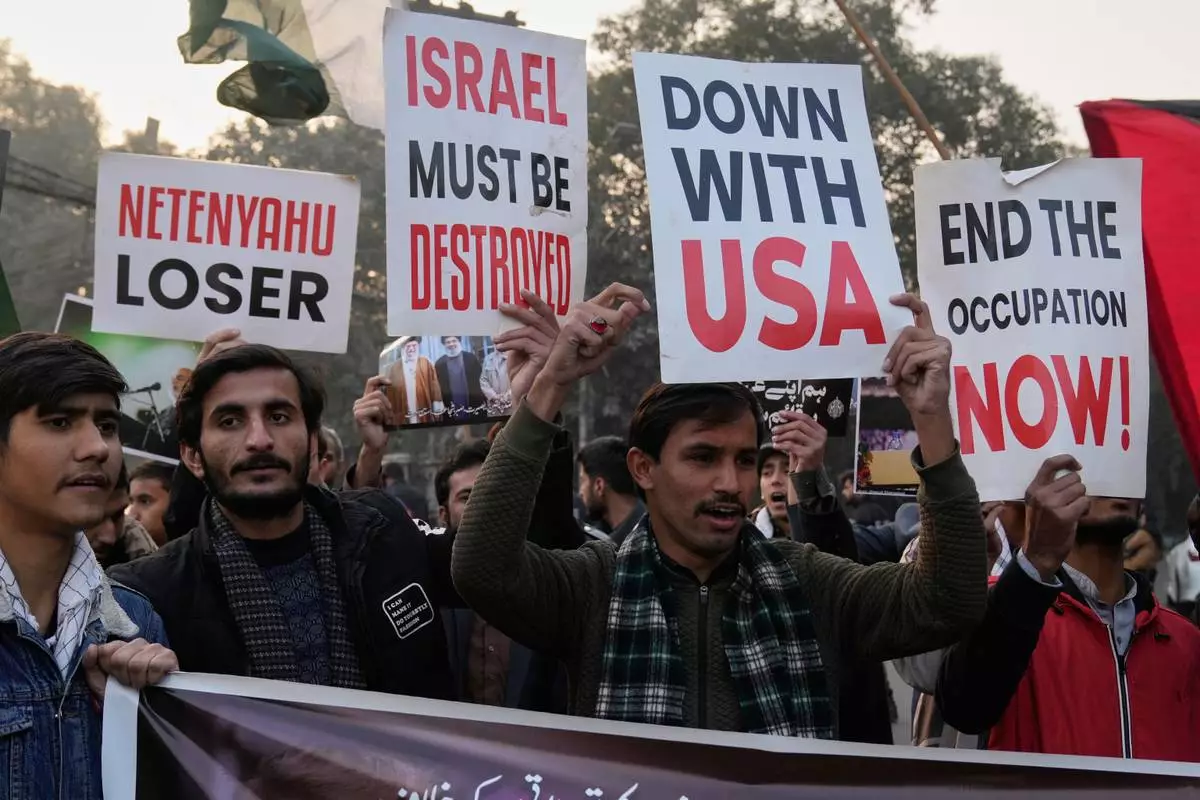
Shiite Muslims hold placards and chant slogans during a protest against the U.S. and show solidarity with Iran in Lahore, Pakistan, Sunday, Jan. 11, 2026. (AP Photo/K.M. Chaudary)

Shiite Muslims hold placards and chant slogans during a protest against the U.S. and show solidarity with Iran in Lahore, Pakistan, Sunday, Jan. 11, 2026. (AP Photo/K.M. Chaudary)

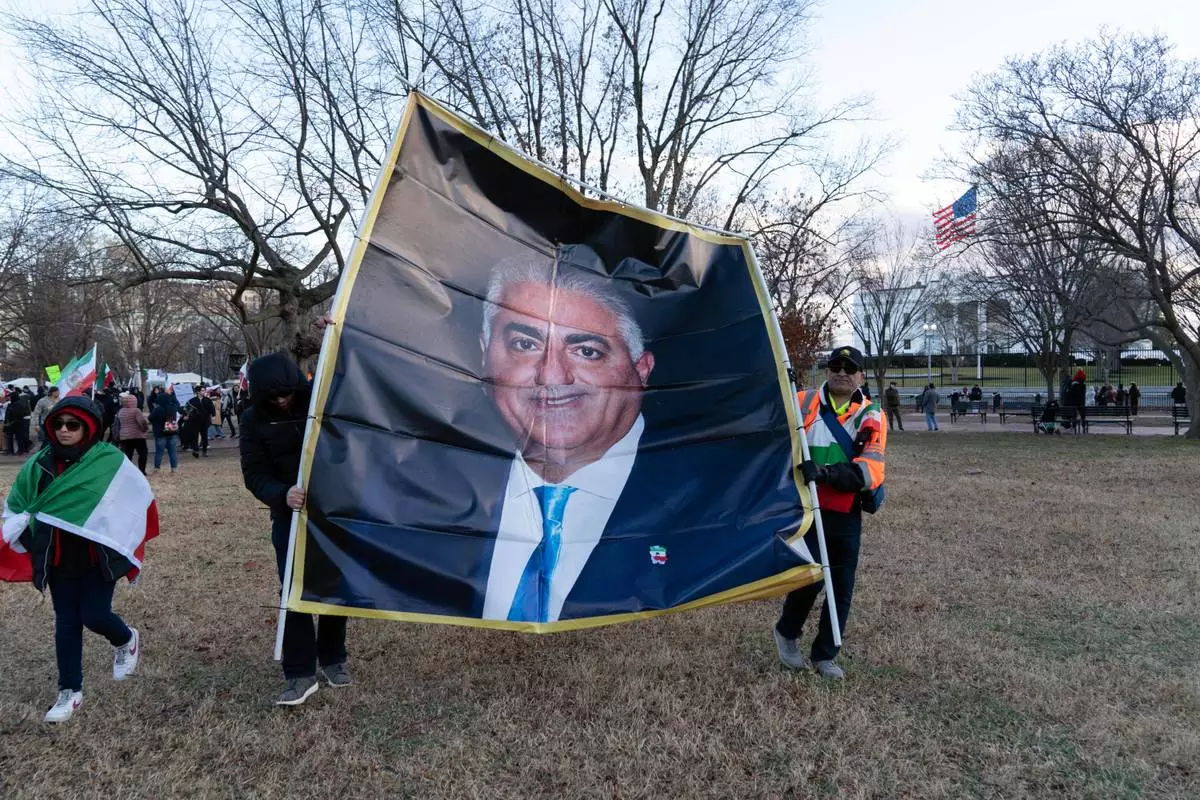
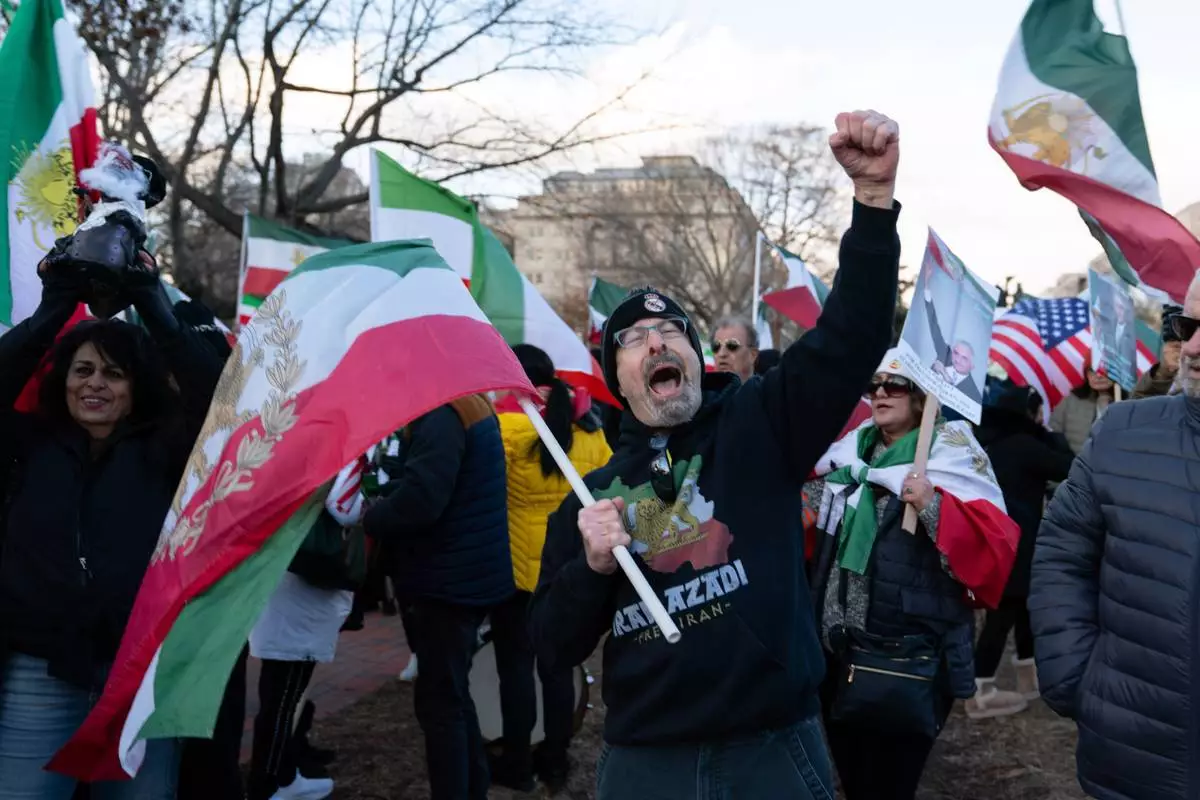
Activists carrying a photograph of Reza Pahlavi take part in a rally supporting protesters in Iran at Lafayette Park, across from the White House, in Washington, Sunday, Jan. 11, 2026. (AP Photo/Jose Luis Magana)

Activists carrying a photograph of Reza Pahlavi take part in a rally supporting protesters in Iran at Lafayette Park, across from the White House, in Washington, Sunday, Jan. 11, 2026. (AP Photo/Jose Luis Magana)

Activists take part in a rally supporting protesters in Iran at Lafayette Park, across from the White House in Washington, Sunday, Jan. 11, 2026. (AP Photo/Jose Luis Magana)

Activists take part in a rally supporting protesters in Iran at Lafayette Park, across from the White House in Washington, Sunday, Jan. 11, 2026. (AP Photo/Jose Luis Magana)

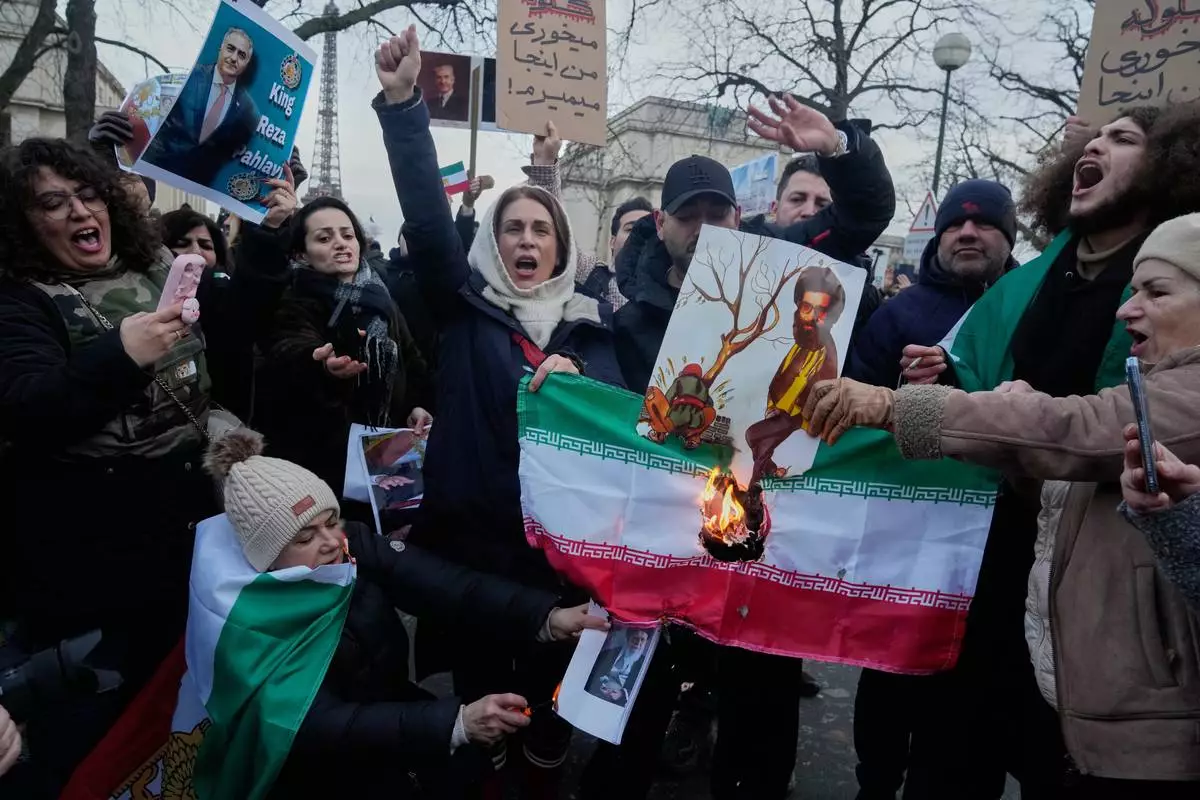
Protesters burn the Iranian national flag during a rally in support of the nationwide mass demonstrations in Iran against the government in Paris, Sunday, Jan. 11, 2026. (AP Photo/Michel Euler)

Protesters burn the Iranian national flag during a rally in support of the nationwide mass demonstrations in Iran against the government in Paris, Sunday, Jan. 11, 2026. (AP Photo/Michel Euler)

Recommended Articles