Chinese medical teams arrived at a medical aid station in Amarapura, Mandalay, one of the worst-hit areas by the recent devastating earthquake in Myanmar, on Thursday, to offer medical consultations and treatment, and provide essential supplies to those affected by the disaster.
Mandalay in central Myanmar has been the hardest hit region after a powerful 7.9-magnitude earthquake struck the country last Friday, with 2,053 people killed, 2,691 others injured and 210 people still missing as of Thursday, state-run daily Myanma Alinn reported on Friday.
As of Thursday, the death toll across the country from the earthquake had risen to 3,145, with 4,589 others injured and 221 missing, the Myanmar Radio and Television reported.
"My father was already in poor health, and when the house collapsed, his feet were injured. He was then taken to the hospital for treatment. His back and chest were also injured. He also suffers from other health problems," said a local resident.
"Currently, the most common injuries we have treated here are external wounds and fractures. At present, many locals can only stay outdoors. With the disruption of water supply, there is a high risk of diarrhea. Dengue fever is another common disease that often emerges after such a disaster. There is a severe shortage of medicines, and we were unprepared with earthquake measures or stockpiled supplies. Anti-inflammatory medications are urgently needed for external wounds and fractures. Due to prolonged exposure to the intense heat, saline solutions and energy drinks are also required. Additionally, medicines to treat diarrhea are urgently needed," said a Myanmar nurse.
Following the devastating earthquake, multiple Chinese rescue teams have arrived in the disaster-stricken areas, working with local responders to carry out relief operations.
To address the shortage of medical supplies, Chinese medical teams have brought large amounts of essential medicines with them. Meanwhile, Chinese medical personnel are collaborating with local doctors to provide assistance to quake-affected people.
"We call this a mobile pharmacy. After the earthquake, people have dispersed to various areas, making it difficult for many to access government hospitals. Today, we are here at a small medical aid station where there is an urgent need for medicines. The demand for supplies varies across different hospitals and medical stations, with some requiring more orthopedic medications, while others need more internal medicine supplies. To address these varying needs, we developed this innovative model, allowing them to select the specific medicines they require," said Xue Yu, leader of a civil medical team from China.
"Our main focus is to provide technical guidance, including conducting medical rounds and offering services at temporary settlements. Local hospitals should also pay attention to hygiene issues, as outbreaks of diseases can occur after major disasters. Simply treating patients may not be enough; efforts must also be made to prevent and control issues such as water contamination or diseases spread by mosquitoes. These are challenges need to be addressed in the later stages," said Zhang Tao, an orthopedic trauma surgeon from Tianjin Hospital, China.
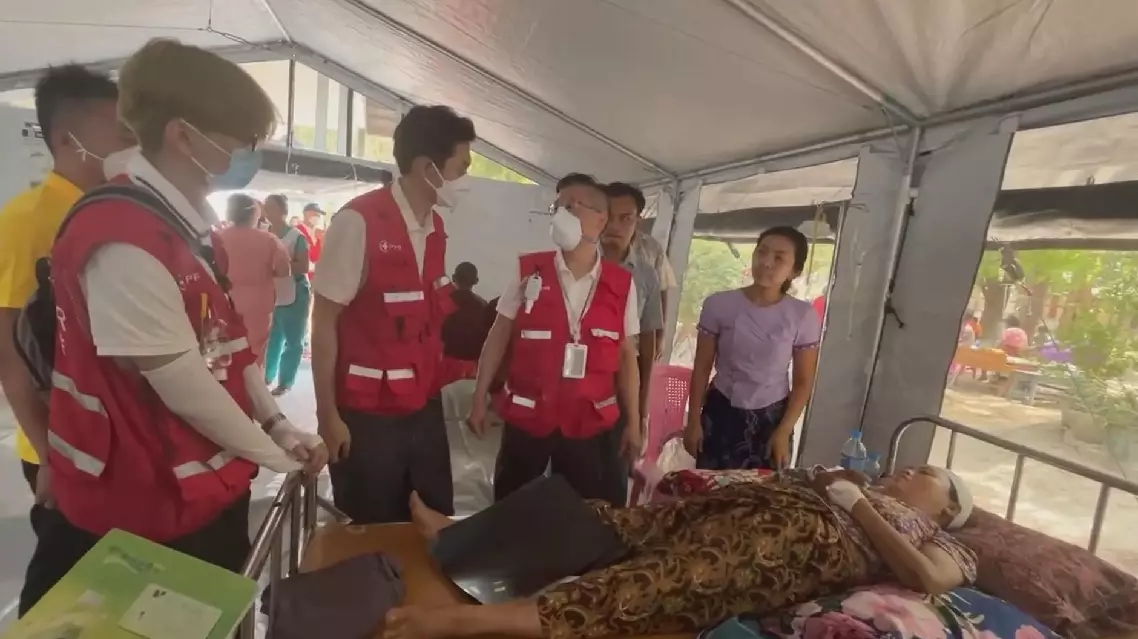
Chinese medical teams provide assistance for quake-affected people in Mandalay