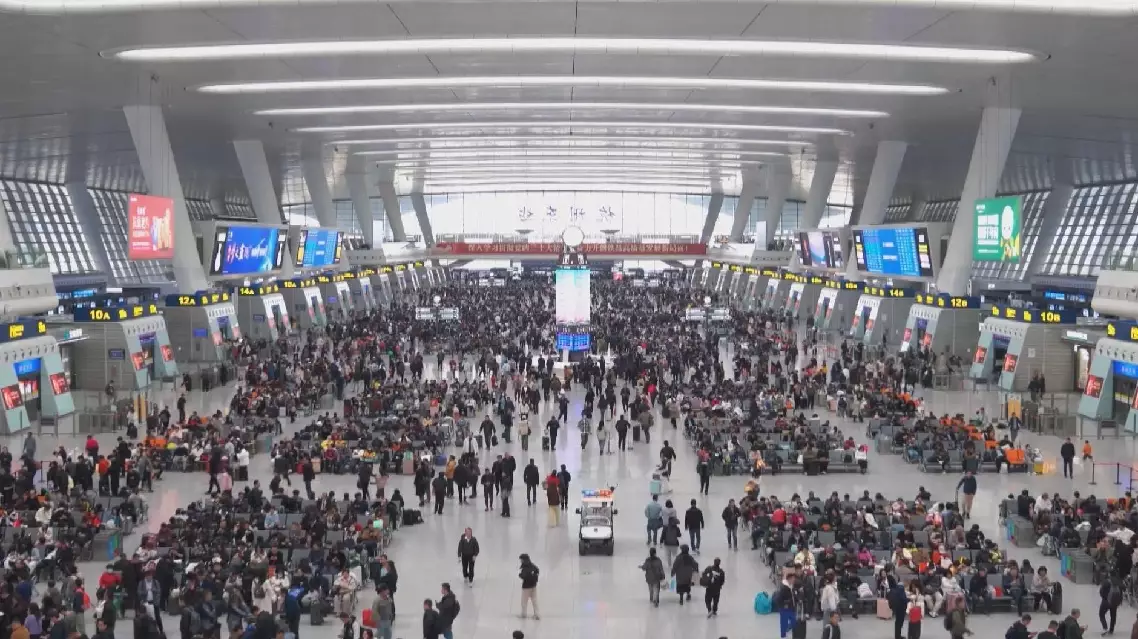
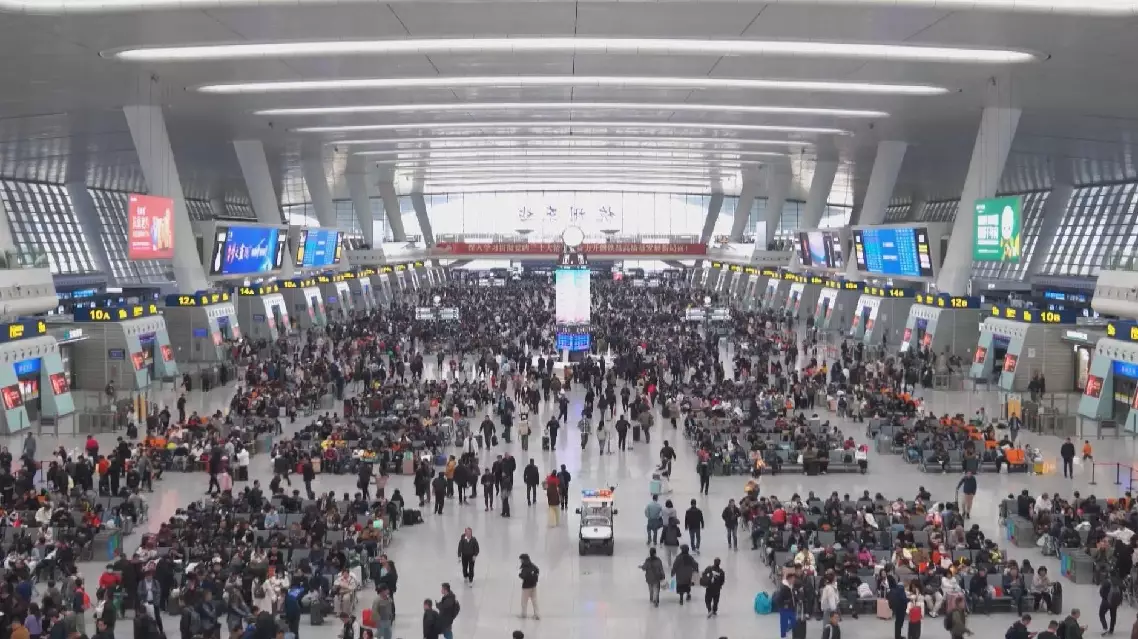
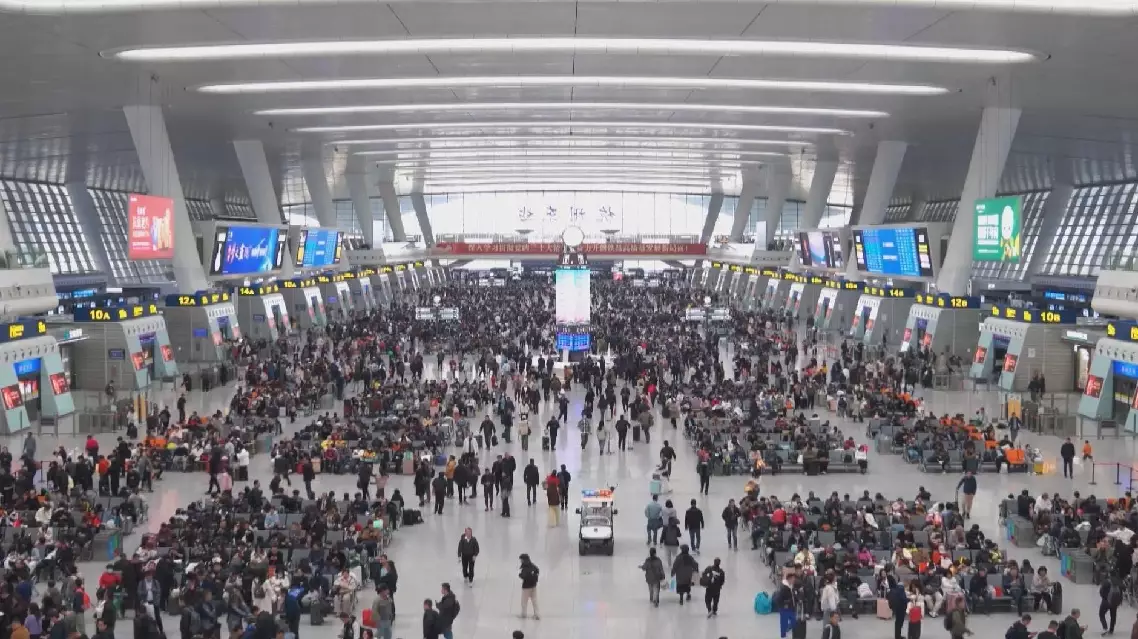
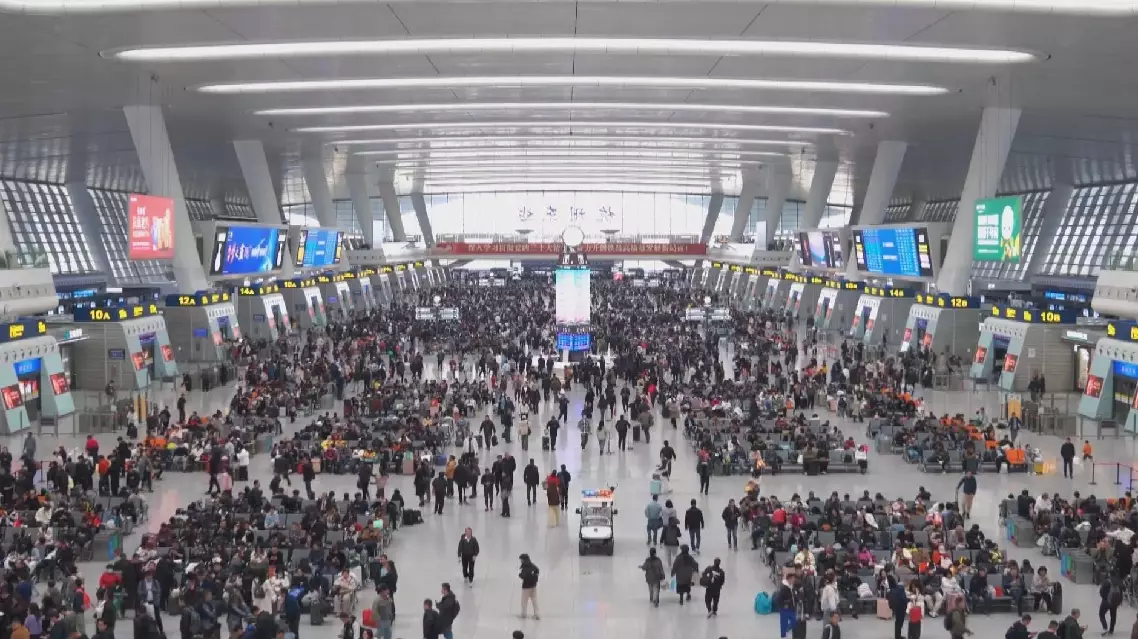
China is experiencing a significant travel boom during the ongoing three-day Qingming Festival holiday, with railways, highways, and airports operating at peak capacity to accommodate surging passenger flows.
The Qingming Festival on April 4 this year, also known as the Tomb-Sweeping Day, is a traditional Chinese festival observed to honor ancestors by visiting their graves to clean the tombstones, offer sacrifices, and pay respects.
Click to Gallery
China sees surge in traveler trips during Qingming Festival holiday
China sees surge in traveler trips during Qingming Festival holiday
China sees surge in traveler trips during Qingming Festival holiday
China sees surge in travelers during Qingming Festival holiday
According to the China State Railway Group Co., Ltd. (China Railway), railway passenger trips in China hit 20.093 million on Friday, the first day of the holiday, marking the highest single-day figure for passenger train trips since the beginning of the year.
The China Railway also estimated that the country is expected to handle 13.55 million passenger trips on Saturday, with 622 additional trains added to meet the surging demand for short-distance travel for family visits, ancestral worship, and spring outings.
Passengers are expected to make over 119,000 trips between Guangdong and Hong Kong via the Guangzhou-Shenzhen-Hong Kong high-speed railway on the same day, an increase of 11,000 passenger trips over the same period last year. Among them, passengers traveling from the mainland to Hong Kong account for nearly 60 percent.
To address overnight demand, China Railway Jinan Group and China Railway Xi'an Group have introduced nighttime high-speed rail services on select routes.
Road travel has also surged, with national expressways expected to handle approximately 60 million vehicle trips. Private cars dominate the roads, accounting for about 53 million trips, over 99 percent of all passenger vehicle traffic. Highways are expected to witness a significant rise in demand for short-distance travel within urban areas and their surrounding regions.
Air travel remains brisk, with airlines set to operate 15,465 flights on Saturday, transporting an estimated 1.68 million passengers.
China sees surge in traveler trips during Qingming Festival holiday
China sees surge in traveler trips during Qingming Festival holiday
China sees surge in traveler trips during Qingming Festival holiday
China sees surge in travelers during Qingming Festival holiday