Skip to Content Facebook Feature Image

Yemen's Houthis say US strikes kill 6 as Trump's bombing video suggests higher overall death toll

News

Yemen's Houthis say US strikes kill 6 as Trump's bombing video suggests higher overall death toll
News

News

Yemen's Houthis say US strikes kill 6 as Trump's bombing video suggests higher overall death toll

2025-04-07 08:37 Last Updated At:10:09

DUBAI, United Arab Emirates (AP) — Suspected U.S. airstrikes over the weekend targeting Yemen's Houthi rebels killed at least six people, the group said Sunday, while a bombing video posted by U.S. President Donald Trump suggested casualties in the overall campaign may be higher than the rebels acknowledge.

A strike Sunday night in Sanaa, the rebel-held capital of Yemen, hit a house, killing at least four people and wounding 16 others, the Houthis said. Their al-Masirah satellite news channel showed images of the damaged home and people receiving care in a hospital.

The strike on the house in Sanaa's Shu’ub district allegedly targeted a Houthi leader, part of a wider decapitation campaign launched by the Trump administration to kill rebel leaders. The intense campaign of U.S. airstrikes targeting the rebels over their attacks on shipping in Mideast waters — related to the Israel-Hamas war — has killed at least 73 people, according to casualty figures released by the Houthis.

Earlier Sunday, the Iranian-backed Houthis said other suspected U.S. airstrikes killed at least two people in the rebel stronghold of Saada and wounded nine others. Footage aired by al-Masirah showed a strike collapsing what appeared to be a two-story building. The rebels aired no footage from inside the building, which they described as a solar power shop.

The Houthis have not acknowledged any casualties among their security and military leadership — something challenged after an online video posted by Trump.

Early on Saturday, Trump posted what appeared to be black-and-white video from a drone showing over 70 people gathered in a circle. An explosion detonates during the 25-second video. A massive crater is left in its wake.

“These Houthis gathered for instructions on an attack,” Trump claimed, without offering a location or any other details about the strike. “Oops, there will be no attack by these Houthis! They will never sink our ships again!”

The U.S. military's Central Command, which oversees Mideast military operations, has not published the video nor offered specific details about the strikes it has conducted since March 15. The White House has said over 200 strikes have targeted the Houthis.

The rebel-controlled SABA news agency in Yemen, citing an anonymous source, described the bombing as targeting “a social Eid visit in Hodeida governorate.” Muslims around the world just celebrated Eid al-Fitr at the end of the holy Muslim fasting month of Ramadan. SABA had published images of other commanders meeting fighters during the holiday, though not any high-level Houthi officials.

“Those present at that gathering had no connection to the operations carried out by the (Houthis), which are implementing the decision to ban navigation on ships linked to the American and Israeli enemy,” the SABA report said, adding that the attack killed and wounded “dozens.”

The Houthis previously have not acknowledged any strike on Hodeida during that time with such a high casualty count. The SABA report also did not describe those killed as civilians, suggesting they did have ties to the rebels' security or military forces. Hodeida has been a site of Houthi attacks into the Red Sea.

Moammar al-Eryani, the information minister for Yemen's exiled government opposing the Houthis, claimed the strike killed some 70 Houthi fighters and leaders, as well as “experts” from Iran's paramilitary Revolutionary Guard. He offered no evidence for the claim, though Iran has backed the Houthis. Neither the Iranian government nor the Guard has acknowledged the attack.

Mohammed al-Basha, a Yemen expert of the Basha Report risk advisory firm, cited social media condolence notices suggesting a colonel overseeing police stations for the Houthis in Hodeida had been killed in the strike Trump highlighted, alongside his two brothers.

“The strikes have expanded significantly, hitting multiple governorates simultaneously, alongside telecommunications infrastructure, command nodes, properties tied to senior Houthi leadership and previously untouched tunnel networks in mountainous areas,” al-Basha told The Associated Press.

“We’ve also seen direct targeting of Houthi force gatherings, indicating a more aggressive and evolving shift in the targeting strategy,” al-Basha said.

An AP review has found the new U.S. operation against the Houthis under Trump appears more extensive than those under former President Joe Biden, as Washington moves from solely targeting launch sites to firing at ranking personnel and dropping bombs on cities.

The new campaign of airstrikes started after the rebels threatened to begin targeting “Israeli” ships again over Israel blocking aid entering the Gaza Strip. The rebels have loosely defined what constitutes an Israeli ship, meaning many vessels could be targeted.

The Houthis targeted more than 100 merchant vessels with missiles and drones, sinking two of them and killing four sailors from November 2023 until January of this year. They also launched attacks targeting American warships without success.

The attacks greatly raised the profile of the Houthis, who faced economic problems and launched a crackdown targeting dissent and aid workers in Yemen amid a decadelong stalemated war that has torn apart the Arab world’s poorest nation.

The U.S. campaign shows no signs of stopping, as the Trump administration has linked its airstrikes on the Houthis to an effort to pressure Iran over its rapidly advancing nuclear program.

Associated Press writer Samy Magdy in Cairo contributed to this report.
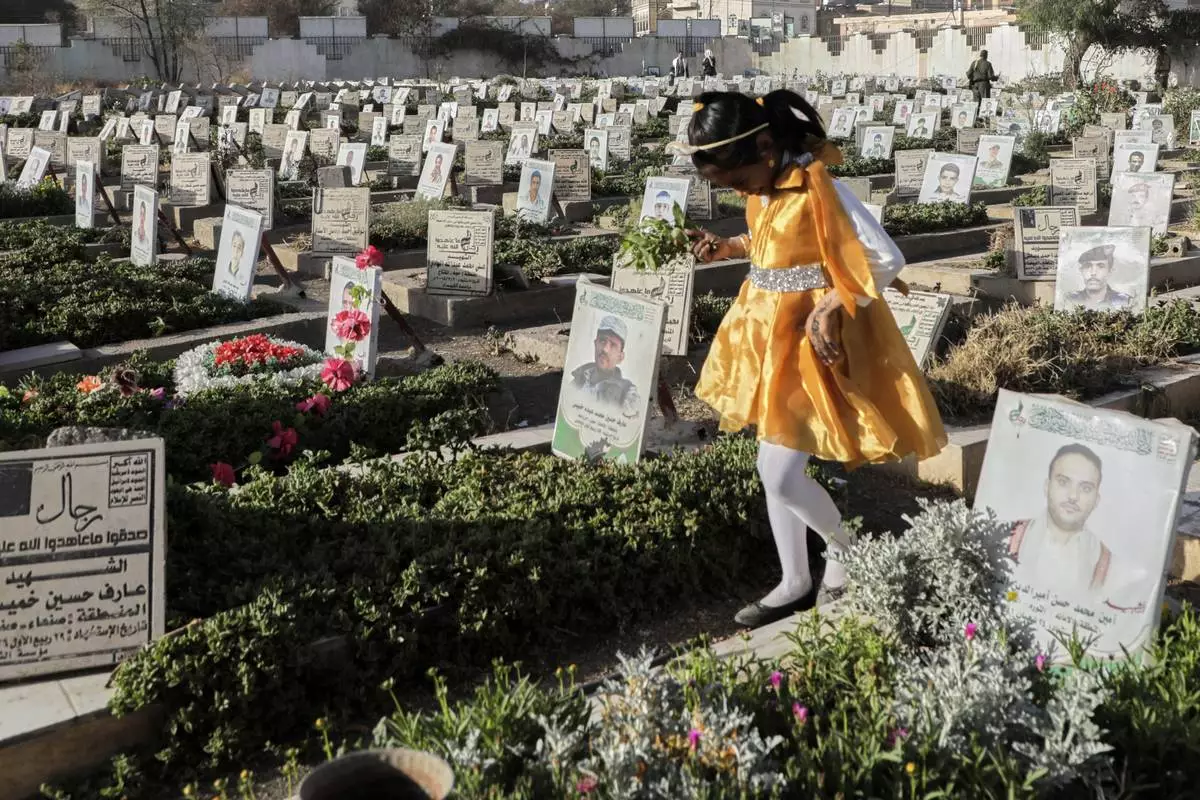
A Yemeni girl visits the graves of Houthis during Eid al-Fitr marking the end of the holy fasting month of Ramadan in Sanaa, Yemen, Sunday, March 30, 2025. (AP Photo/Osamah Abdulrahman)
A Yemeni girl visits the graves of Houthis during Eid al-Fitr marking the end of the holy fasting month of Ramadan in Sanaa, Yemen, Sunday, March 30, 2025. (AP Photo/Osamah Abdulrahman)
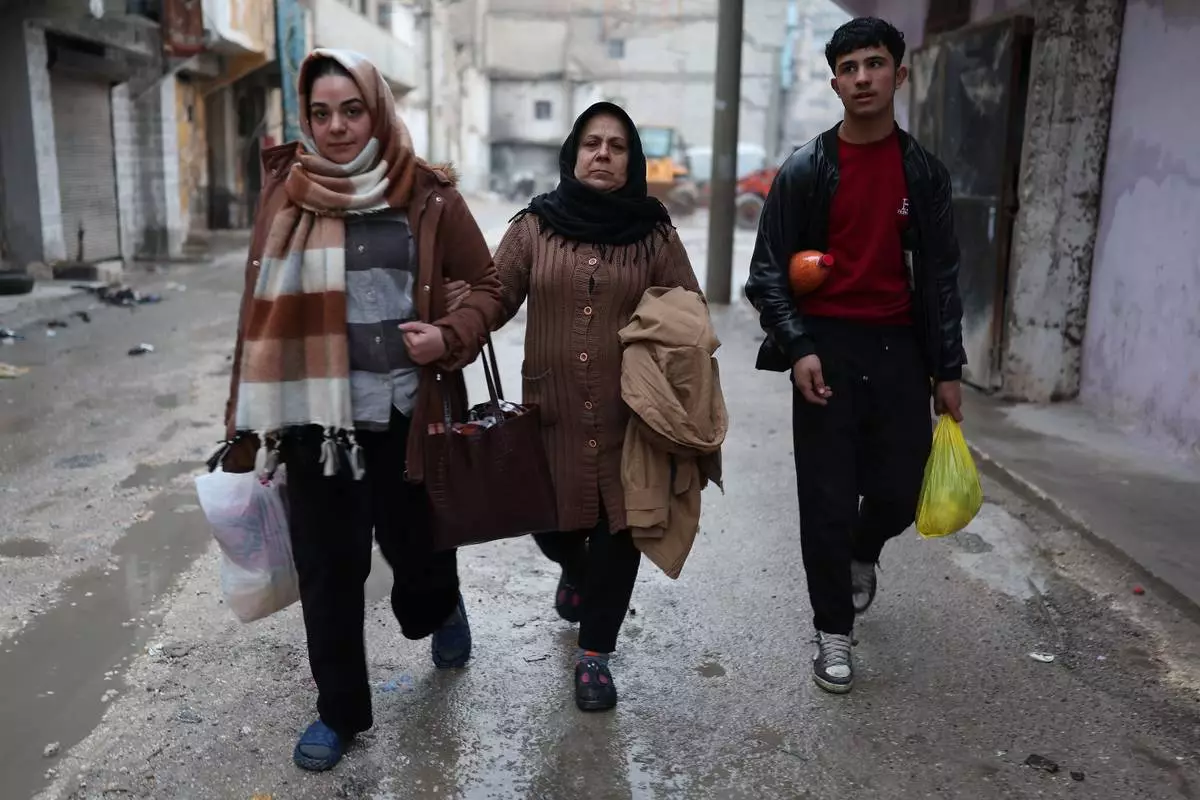
ALEPPO, Syria (AP) — First responders on Sunday entered a contested neighborhood in Syria’ s northern city of Aleppo after days of deadly clashes between government forces and Kurdish-led forces. Syrian state media said the military was deployed in large numbers.

The clashes broke out Tuesday in the predominantly Kurdish neighborhoods of Sheikh Maqsoud, Achrafieh and Bani Zaid after the government and the Syrian Democratic Forces, the main Kurdish-led force in the country, failed to make progress on how to merge the SDF into the national army. Security forces captured Achrafieh and Bani Zaid.

The fighting between the two sides was the most intense since the fall of then-President Bashar Assad to insurgents in December 2024. At least 23 people were killed in five days of clashes and more than 140,000 were displaced amid shelling and drone strikes.

The U.S.-backed SDF, which have played a key role in combating the Islamic State group in large swaths of eastern Syria, are the largest force yet to be absorbed into Syria's national army. Some of the factions that make up the army, however, were previously Turkish-backed insurgent groups that have a long history of clashing with Kurdish forces.

The Kurdish fighters have now evacuated from the Sheikh Maqsoud neighborhood to northeastern Syria, which is under the control of the SDF. However, they said in a statement they will continue to fight now that the wounded and civilians have been evacuated, in what they called a “partial ceasefire.”

The neighborhood appeared calm Sunday. The United Nations said it was trying to dispatch more convoys to the neighborhoods with food, fuel, blankets and other urgent supplies.

Government security forces brought journalists to tour the devastated area, showing them the damaged Khalid al-Fajer Hospital and a military position belonging to the SDF’s security forces that government forces had targeted.

The SDF statement accused the government of targeting the hospital “dozens of times” before patients were evacuated. Damascus accused the Kurdish-led group of using the hospital and other civilian facilities as military positions.

On one street, Syrian Red Crescent first responders spoke to a resident surrounded by charred cars and badly damaged residential buildings.

Some residents told The Associated Press that SDF forces did not allow their cars through checkpoints to leave.

“We lived a night of horror. I still cannot believe that I am right here standing on my own two feet,” said Ahmad Shaikho. “So far the situation has been calm. There hasn’t been any gunfire.”

Syrian Civil Defense first responders have been disarming improvised mines that they say were left by the Kurdish forces as booby traps.

Residents who fled are not being allowed back into the neighborhood until all the mines are cleared. Some were reminded of the displacement during Syria’s long civil war.

“I want to go back to my home, I beg you,” said Hoda Alnasiri.

Associated Press journalist Kareem Chehayeb in Beirut contributed to this report.

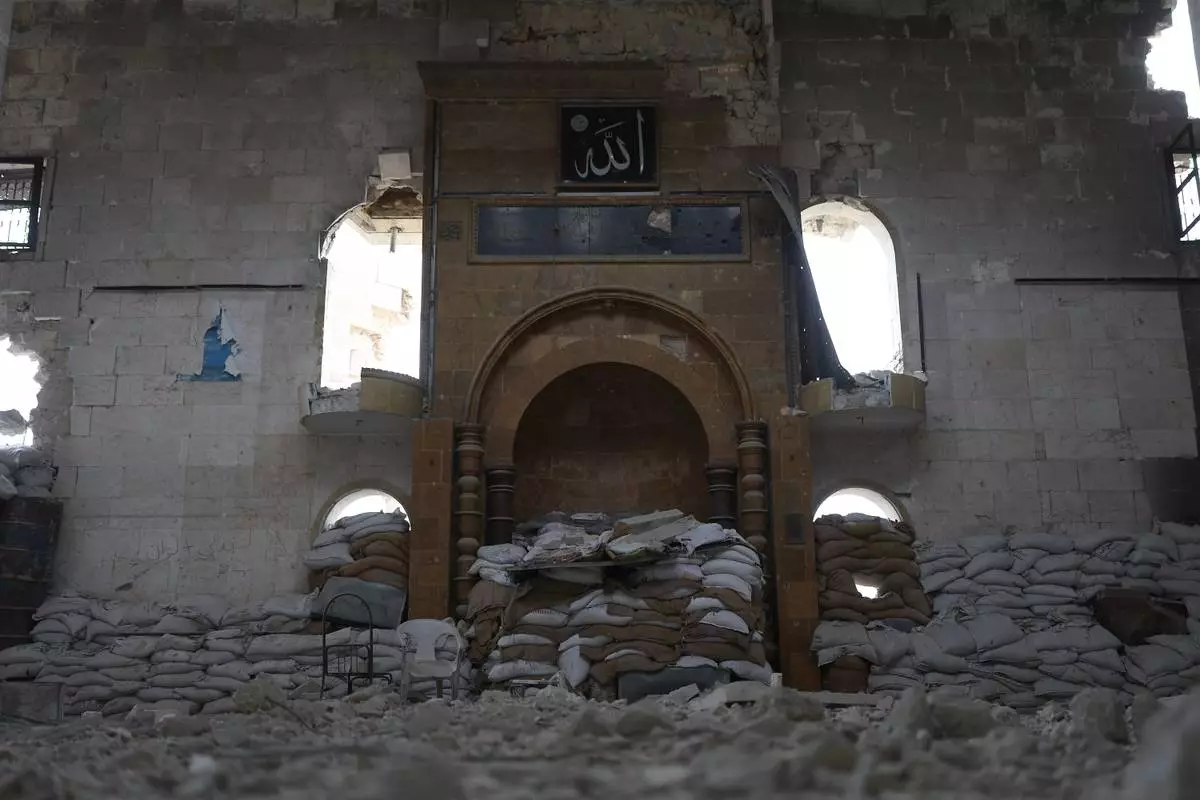
Sandbag barriers used as fighting positions by Kurdish fighters, left inside a destroyed mosque in the Sheikh Maqsoud neighborhood, where clashes between government forces and Kurdish fighters have been taking place in the northern city of Aleppo, Syria, Sunday, Jan. 11, 2026. (AP Photo/Ghaith Alsayed)

Sandbag barriers used as fighting positions by Kurdish fighters, left inside a destroyed mosque in the Sheikh Maqsoud neighborhood, where clashes between government forces and Kurdish fighters have been taking place in the northern city of Aleppo, Syria, Sunday, Jan. 11, 2026. (AP Photo/Ghaith Alsayed)

Burned vehicles at one of the Kurdish fighters positions at the Sheikh Maqsoud neighborhood, where clashes between government forces and Kurdish fighters have been taking place in the northern city of Aleppo, Syria, Sunday, Jan. 11, 2026. (AP Photo/Ghaith Alsayed)

Burned vehicles at one of the Kurdish fighters positions at the Sheikh Maqsoud neighborhood, where clashes between government forces and Kurdish fighters have been taking place in the northern city of Aleppo, Syria, Sunday, Jan. 11, 2026. (AP Photo/Ghaith Alsayed)

People flee the Sheikh Maqsoud neighborhood, where clashes between government forces and Kurdish fighters have been taking place in the northern city of Aleppo, Syria, Sunday, Jan. 11, 2026. (AP Photo/Ghaith Alsayed)

People flee the Sheikh Maqsoud neighborhood, where clashes between government forces and Kurdish fighters have been taking place in the northern city of Aleppo, Syria, Sunday, Jan. 11, 2026. (AP Photo/Ghaith Alsayed)

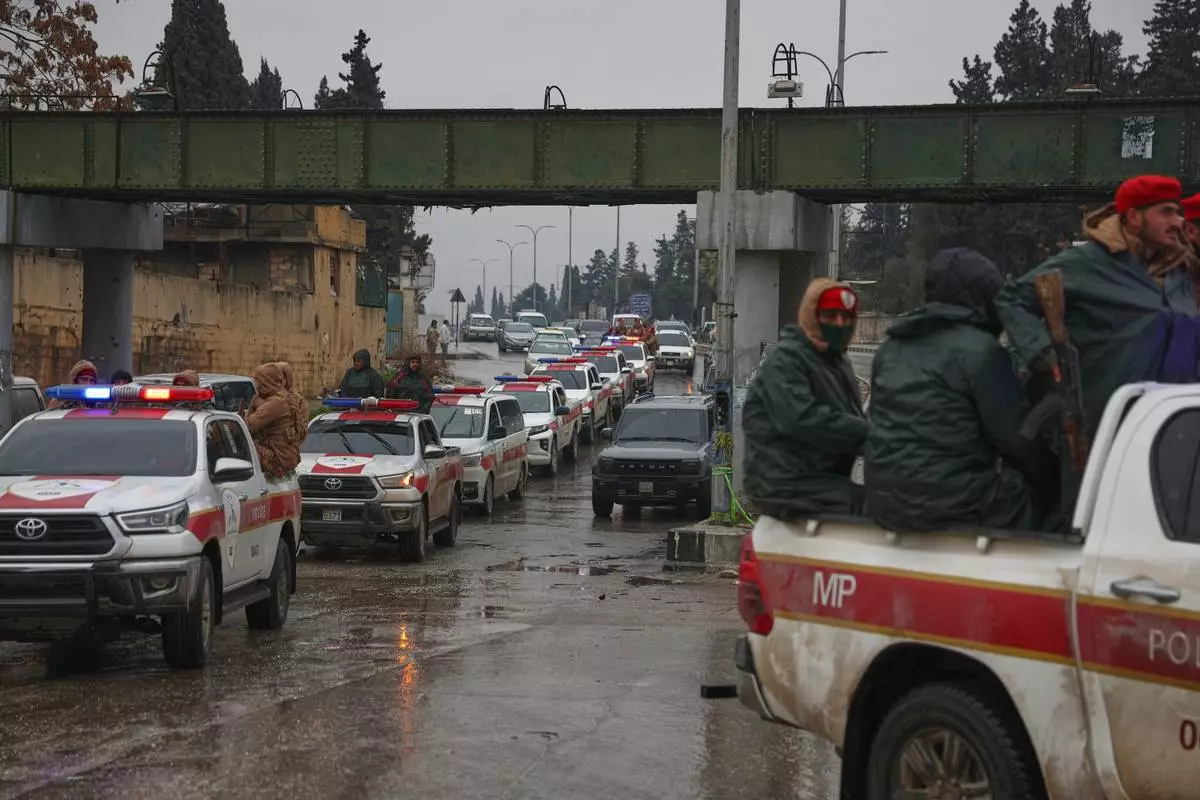
A Syrian military police convoy enters the Sheikh Maqsoud neighborhood, where clashes between government forces and Kurdish fighters have been taking place in the northern city of Aleppo, Syria, Sunday, Jan. 11, 2026. (AP Photo/Ghaith Alsayed)

A Syrian military police convoy enters the Sheikh Maqsoud neighborhood, where clashes between government forces and Kurdish fighters have been taking place in the northern city of Aleppo, Syria, Sunday, Jan. 11, 2026. (AP Photo/Ghaith Alsayed)

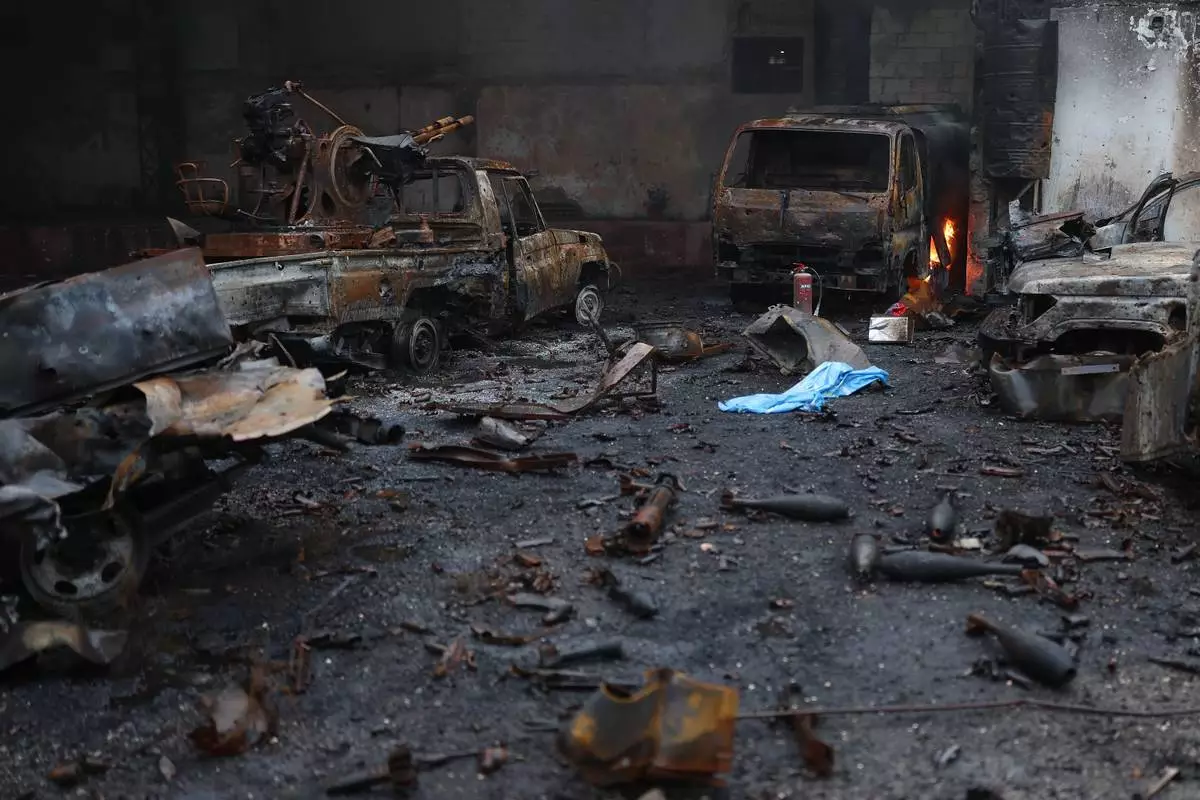
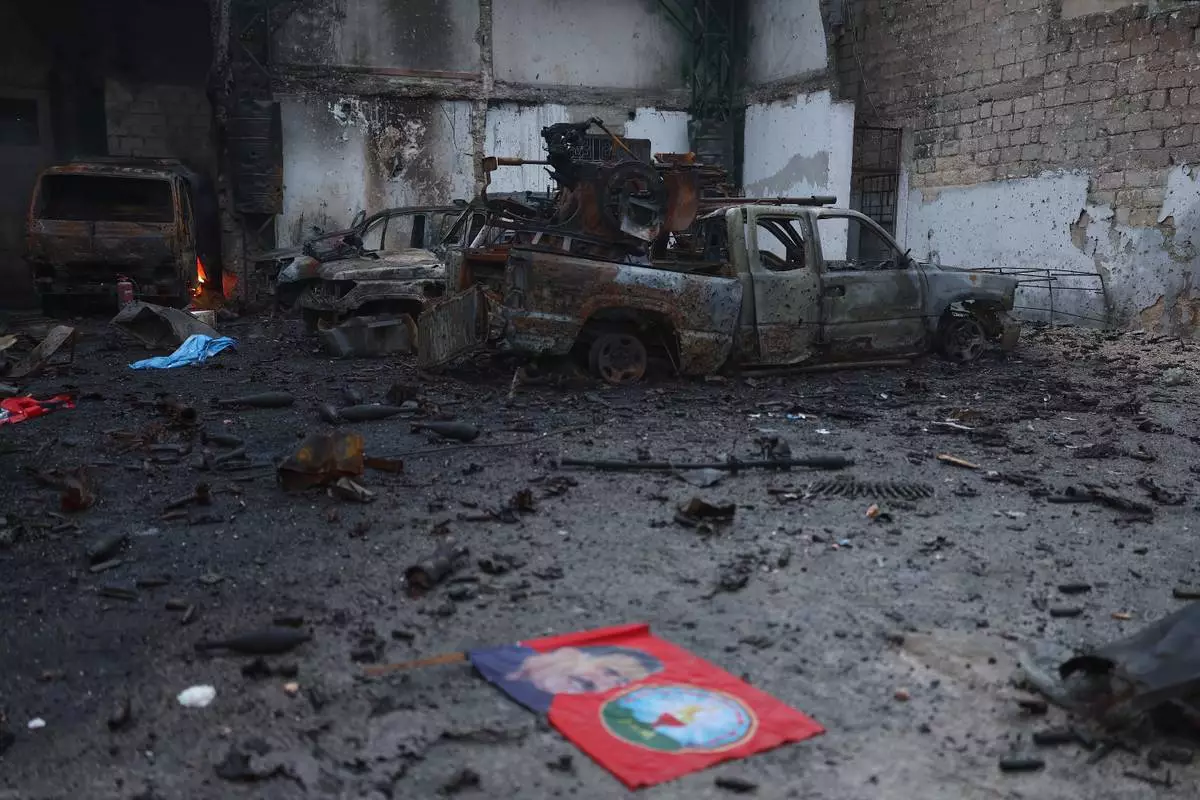
Burned vehicles and ammunitions left at one of the Kurdish fighters positions at the Sheikh Maqsoud neighborhood, where clashes between government forces and Kurdish fighters have been taking place in the northern city of Aleppo, Syria, Sunday, Jan. 11, 2026. (AP Photo/Ghaith Alsayed)

Burned vehicles and ammunitions left at one of the Kurdish fighters positions at the Sheikh Maqsoud neighborhood, where clashes between government forces and Kurdish fighters have been taking place in the northern city of Aleppo, Syria, Sunday, Jan. 11, 2026. (AP Photo/Ghaith Alsayed)

Recommended Articles