Speech by FS at Hong Kong Web3 Festival (with photos/video)
Following is the speech by the Financial Secretary, Mr Paul Chan, at the Hong Kong Web3 Festival today (April 7):
魯偉鼎董事長 (Deputy to the National People's Congress, Vice Chairman of the All-China Federation of Industry and Commerce, the Chairman and Chief Executive Officer of Wanxiang Group, Mr Lu Weiding), 肖風董事長 (the Chairman of Wanxiang Blockchain and the Chairman and Chief Executive Officer of HashKey Group, Dr Xiao Feng), Duncan (Member of the Legislative Council Mr Duncan Chiu), distinguished guests, innovators, and pioneers of the digital frontier,
Good morning. It is an immense pleasure to join you all today at the Web3 Festival of Hong Kong, a gathering of brilliant leaders and innovators to share thoughts and experiences about the future of blockchain, cryptocurrencies, decentralised finance and beyond.
For those who have come from afar, a warm welcome to Hong Kong. As a city where East meets West and tradition intertwines with innovation, we are proud to host you to collectively chart the course of Web3.
As a technology, blockchain is displaying its vast potential, significantly increasing transaction efficiency, lowering costs and enhancing market transparency. Today, we are witnessing a marked increase in the institutional adoption of Web3, with traditional banks, asset managers and brokers increasingly integrating digital assets into their offerings.
As more jurisdictions embrace cryptocurrencies, the market has been energised with optimism, marked by a bullish trend over the past year or so.
But beyond finance and the enthusiasm on cryptocurrency, we all agree that blockchain can bring real benefits to the people. For example, ReFi (regenerative finance) is gaining traction. Tokenised carbon credits enable the transparent tracking of emissions reductions, reinforcing trust in voluntary carbon markets.
Meanwhile, the convergence of Web3 and AI is unlocking new frontiers. In finance, decentralised AI algorithms enhance credit assessments, audit smart contracts with greater precision, and deliver hyper-personalised investment strategies. Beyond finance, this synergy streamlines supply chains, revolutionises healthcare data management, and creates new immersive gaming experiences. Web3 and AI are transforming businesses and public services, driving innovation and efficiency at every turn.
Hong Kong: driving Web3 innovation
Allow me to take a few minutes to talk about Web3 in Hong Kong, our attitude and approach towards Web3 and our role in this global transformation.
Hong Kong is pro-Web3. Over two years ago, we published a high-level policy statement on the development of virtual assets, affirming our commitment to a dynamic Web3 ecosystem. Central to this is the principle of the "same activity, same risk, same regulation". Through a balanced and pro-innovation regulatory approach, we seek to maintain a level playing field for market participants and encourage innovative activities in this space.
We have been walking the talk, and have delivered a number of initiatives. We were among the first in the world to have established clear licensing frameworks for virtual asset trading platforms, or VATPs. Indeed, the Securities and Futures Commission has already issued 10 VATP licences. We have also authorised VA spot ETFs (exchange-traded funds) last year, and Hong Kong now hosts the largest VA ETF market in the Asia Pacific, bridging traditional finance with crypto innovation.
Meanwhile, legislation for stablecoin regulation is set for imminent passage. My colleagues at the Financial Services and the Treasury Bureau and the Hong Kong Monetary Authority (HKMA) are working hard to get the relevant licensing regime to go live within this year.
The Government will also conduct consultations on the licensing regimes of over-the-counter trading services and custodian services for VA (virtual assets). This will solidify Hong Kong's comprehensive regulatory architecture.
Let me make clear that Hong Kong's approach to Web3 is not simply about regulation. We aim to strike a balance, ensuring market integrity without stifling innovation. After all, innovation entails risks. The lesson we have learnt is that we need to put it under a balanced regulatory framework so as to enable the sector to grow in a responsible and sustainable manner.
One essential element in our regulatory regime is sandboxes, such as the HKMA's Project Ensemble. Project Ensemble allows innovators to test various use cases, such as tokenised real-world assets, with early regulatory feedback. This signifies our pro-innovation approach, as we put regulators and innovators in a co-creation process.
Later this year, we will unveil a second policy statement on the development of virtual assets. It will cover how to make use of Web3 to fast-track the development of traditional financial services, empower the real economy and strengthen the application of digital asset technologies.
A few thoughts on Web3
Now, looking ahead, allow me to share a few thoughts we consider important for the future development and success of Web3.
First, it is the very vision of Web3 to enable more equitable use of the Internet, and make transactions more efficient and less costly. Innovation is core to this goal, and regulators should adopt a technology-neutral approach. It would only be counterproductive if jurisdictions or regulatory authorities favour particular types of cryptocurrencies, or rule out technologies or applications at the outset. Markets, not mandates, should decide which innovations prevail.
Second, we all know Web3's true potential lies well beyond digital assets or cryptocurrencies. Combined with AI, it can be a valuable tool to optimise impact investments, promote inclusive finance, support decarbonisation initiatives, advance sustainable development goals, and more. The global Web3 community should and can strengthen collaboration to support these worthy causes.
Finally, it is essential that new technologies be developed and applied responsibly. AI, for instance, is evolving at speeds that are unexpectedly faster. Decentralised networks bring enormous benefits, but when coupled with AI, challenges such as algorithmic bias, deepfakes and cybersecurity require attention and co-operation at the regional and global levels. Here in Hong Kong, we advocate for suitable guardrails - frameworks that protect investors, consumers and users while encouraging innovation activities. We support a multi-stakeholder approach where governments, regulators and market players across different territories and regions come together to drive forward the sustainable development of Web3.
Concluding remarks
Ladies and gentlemen, to secure a promising and successful future for Web3, we need not just technological innovation, but also a common will to harness creativity and innovation for the benefit of the people. Let me assure you that Hong Kong is committed to this goal. We are here to collaborate with innovators and entrepreneurs from around the world, pushing the boundaries of what is possible, and leveraging the transformative power of Web3 for the greater good. Thank you very much.
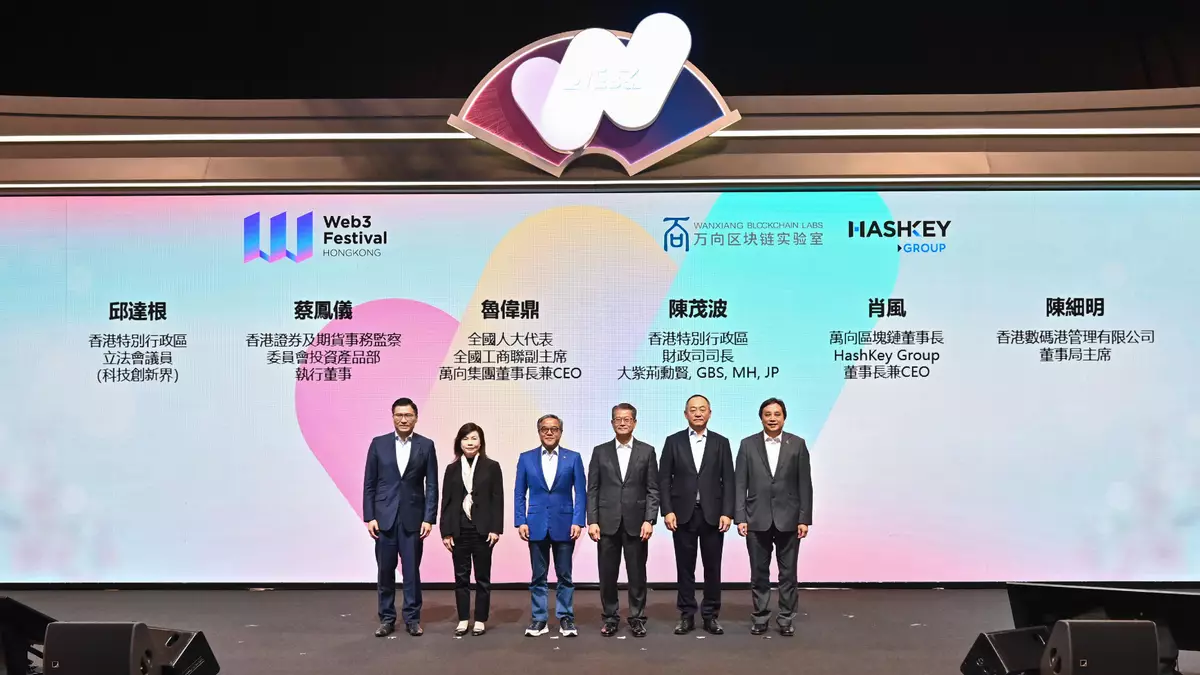
Speech by FS at Hong Kong Web3 Festival Source: HKSAR Government Press Releases
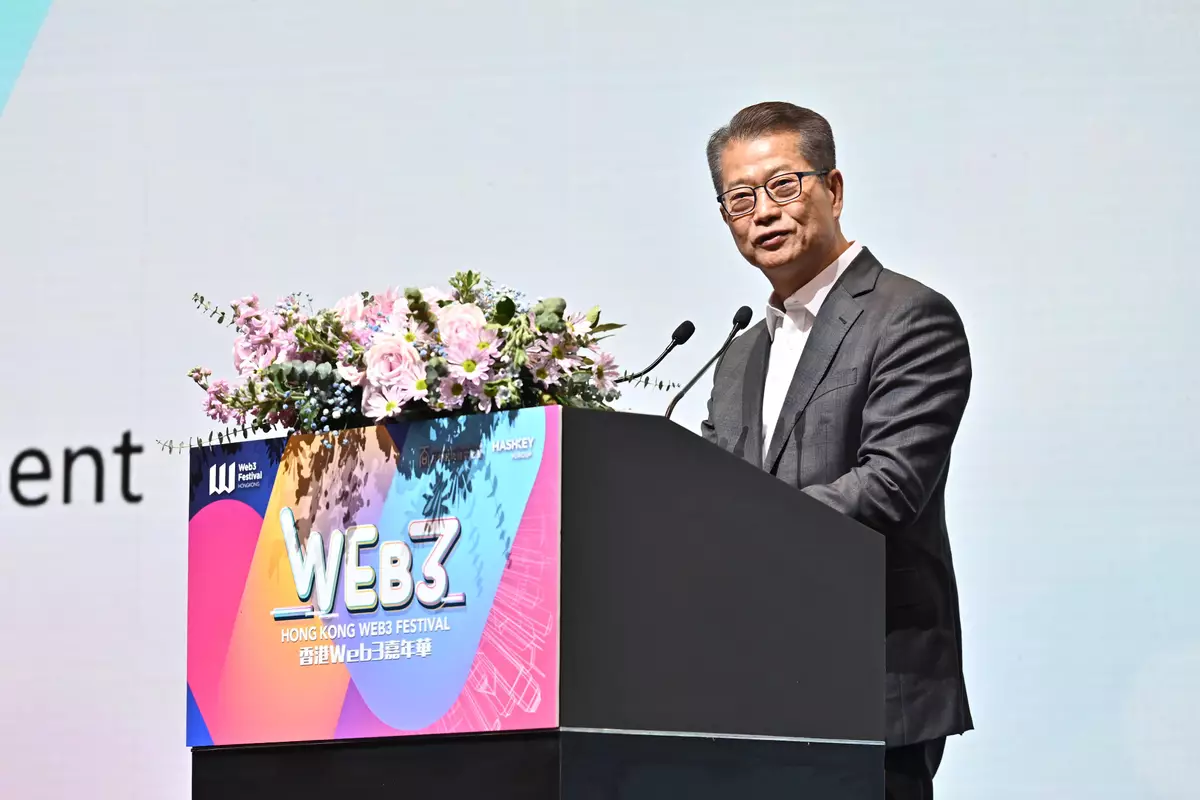
Speech by FS at Hong Kong Web3 Festival Source: HKSAR Government Press Releases