Skip to Content Facebook Feature Image

China's Shanghai, Jiangsu boost home appliance sales with trade-in program

China

China

China

China's Shanghai, Jiangsu boost home appliance sales with trade-in program

2025-04-08 21:59 Last Updated At:22:37

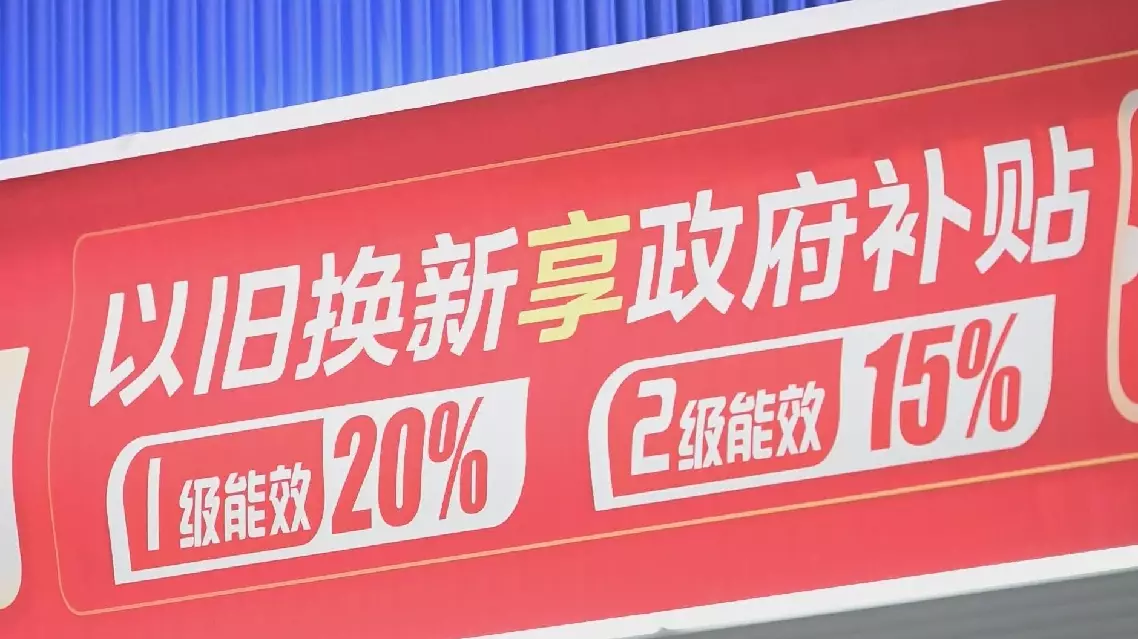
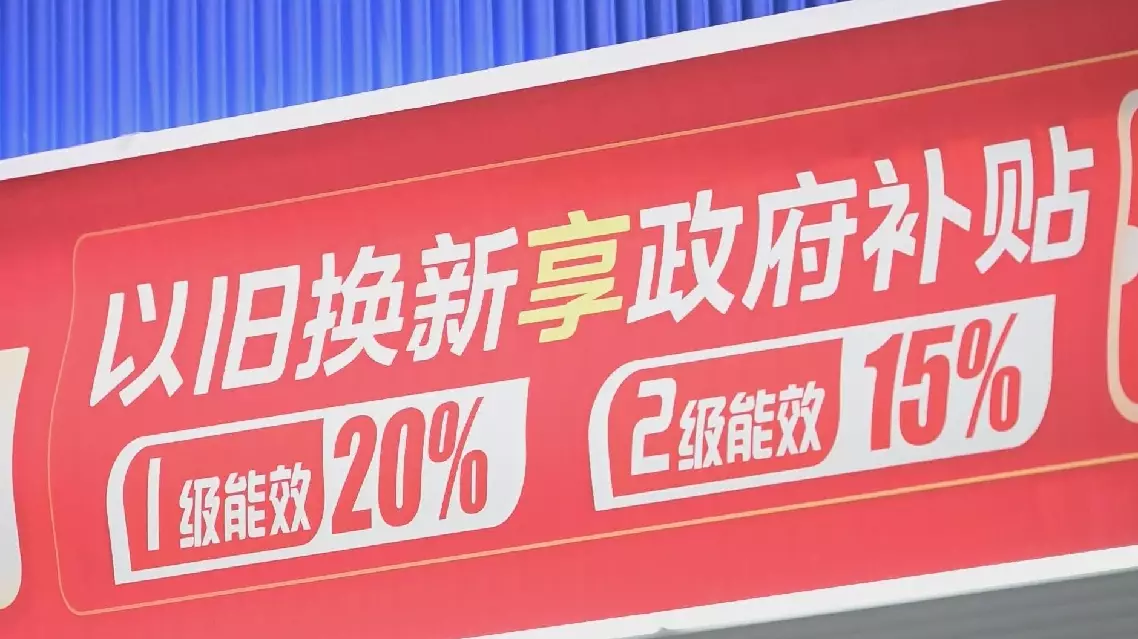
Shanghai and Jiangsu Province in eastern China have seen surge in household appliance and furniture sales with the implementation of the expanded trade-in program, bolstered by a variety of subsidies including government incentives.

In Shanghai, a residential community service station offers a range of top-selling new home appliances, allowing residents to conveniently trade in old items and purchase the latest products right at their doorstep, eliminating the need to visit physical stores.

"My door lock is broken, so I want to buy a new one. It's convenient here because we don't have to go to a physical store. There's also a promotion going on here, so the prices are reasonable," said a resident.

Beyond selling new home appliances, the service station also provides a range of services such as appliance cleaning and home renovation, offering residents a convenient one-stop solution for household needs.

Resident Zhang Yue has booked an air conditioner cleaning service at the station. Her morning appointment ensures the cleaning will be completed in the afternoon.

"As it is about to get hot soon, I have decided to have the air conditioner in my kid's room cleaned first. The service is really thorough," Zhang said.

At the beginning of this year, Shanghai launched six major initiatives aimed at boosting consumption, with a particular emphasis on supporting the replacement of old home appliances and furniture.

Aligned with the expanded categories of home appliances eligible for government subsidies, the city has incorporated quality-of-life appliances such as garment care machines and floor washers into the extended-trade-in program. This initiative not only caters to consumers' diverse needs, but also stimulates sales growth for related products.

"Our sales of robotic vacuum cleaners, floor scrubbers, and vacuum cleaners collectively are expected to increase by around 300 percent," said Zhao Hongfu, manager of a home appliance store in Changning District, Shanghai.

As subsidy-eligible categories continue to expand, green smart home appliances featuring cutting-edge technologies such as artificial intelligence and the Internet of Things have emerged as consumer favorites.

An example is the AI-powered smart washing machine at an appliance store in Huai'an City, east China's Jiangsu Province. Combining comprehensive functionality with competitive pricing, it has become one of the store's hottest products.

"This time, the trade-in program is particularly generous, saving me nearly over 1,000 yuan (around 136 U.S. dollars), which is quite cost-effective. The washing machine can also be controlled via a mobile phone, making it very convenient," said Zhang Erhong, a resident in Huai'an.

A wave of AI-powered smart home appliances has flooded the market, offering consumers more intelligent and premium products and services. Retailers have partnered with manufacturers to launch multiple subsidy programs, delivering tangible savings directly to consumers.

"In addition to the government subsidies, the store also provides bundle purchase incentives, offering a maximum subsidy of up to 2,000 yuan (around 273 U.S. dollars) per item. Recently, the store has experienced a notable surge in appliance sales, especially in smart home appliances, with a more pronounced growth in sales volume," said Liu Xiaoping, a saleswoman at the appliance store.

According to the latest data from the Ministry of Commerce, from the beginning of this year until Tuesday, consumers have purchased 35.709 million units of 12 major categories of home appliances through the trade-in program, driving sales of 124.74 billion yuan (around 19.6 billion U.S. dollars).
China's Shanghai, Jiangsu boost home appliance sales with trade-in program
China's Shanghai, Jiangsu boost home appliance sales with trade-in program
China's Shanghai, Jiangsu boost home appliance sales with trade-in program

China's Shanghai, Jiangsu boost home appliance sales with trade-in program

The Israeli government is set to prohibit 37 international aid organizations from operating in the Gaza Strip and the West Bank effective Jan 1, 2026, after authorities stated the groups failed to comply with stricter registration requirements, according to an Israeli media report on Tuesday.

The report from The Times of Israel cited the statement from Israel's Ministry of Diaspora Affairs and Combating Antisemitism, saying that the new regulations are based on security concerns aimed at removing non-government organizations' staff allegedly linked to so-called "terrorist organizations."

The report came after the Israeli government announced the same day that it would suspend the activities of several international aid organizations, including Doctors Without Borders, in the Gaza Strip starting January 1, 2026, citing the organizations' failure to submit information on their Palestinian staff as required.

Last year, Israel rolled out new regulations on registration requiring international aid groups to provide detailed information of their staff's names, funding sources, and operation status.

On Wednesday, Israel's Coordinator of Government Activities in the Territories stated that the registration mandates were necessary to prevent humanitarian supplies from being exploited by Hamas.

In an online interview with China Global Television Network (CGTN) on Wednesday, Bushra Khalidi, policy lead at Oxfam, a global organization that fights inequality to end poverty and injustice, said the impact of the ban will be "devastating."

"It is devastating. We've seen the numbers from the IPC (Integrated Food Security Phase Classification) a few weeks ago. We saw them in the summer. There's been a slight improvement, but that's not good enough for the time of a ceasefire. And six months after the famine was declared, we should have seen much more improvement in Gaza," said Khalidi.

"It's winter here in Palestine. It was raining. It rained a record (amount) of rain per millimeter yesterday in Palestine since 1992. So, the impact is devastating. But the fact that shelter materials, for example, cannot enter. For families, this will mean slower repairs. It will mean fewer supplies. It will mean a longer wait for basic services. It will directly affect the access to clean water, to sanitation, to shelter materials, to public health interventions. Aid that should be moving predictably will remain delayed, it will remain restricted and it will remain stranded," she added.

She also emphasized that the operating environment became nearly impossible for organizations to navigate long before the new ban was announced.

"We have been obstructed and blocked from operating freely and unobstructedly for the last two years by Israel. Israel has killed a record number of humanitarian workers in the last two years. It has bombed our premises, it has bombed our convoys, it has blocked our items. It has driven famine like conditions in Gaza because of blocking humanitarian access. So, I think it's really important to set that scene, is that what is happening now is nothing new. It only continues within the kind of campaign that Israel has orchestrated to drive basically the population of Gazans' survival. So, we are, we have not been able to enter any materials in since March, in fact, us and many other organizations. And of course that has severely restricted our ability to scale up our operations," said Khalidi.

Hadja Lahbib, European Commissioner for Equality, Preparedness and Crisis Management, said on Wednesday that Israel's move is no different from cutting off lifesaving supplies for the local population, adding that the European Union has made clear that all obstacles to humanitarian access must be lifted.

Israel bans operations of 37 int'l aid groups in Gaza Strip, West Bank

Israel bans operations of 37 int'l aid groups in Gaza Strip, West Bank

Recommended Articles