These are the coaches who won NBA championships in the last six years: Joe Mazzulla with Boston, Michael Malone with Denver, Steve Kerr with Golden State, Mike Budenholzer with Milwaukee, Frank Vogel with the Los Angeles Lakers and Nick Nurse with Toronto.
Mazzulla is still with Boston. Kerr is still with Golden State.
Everybody else got fired. They packed up their ring and left.
Malone became the latest name on that list Tuesday, when the Denver Nuggets — the 2023 NBA champions — fired him with three games left in the season, an unprecedented move for a postseason-bound team. And around the league, in the hours that followed, coaches reacted in basically the same stunned, surprised manners.
The Nuggets enter Wednesday holding the fifth spot in the Western Conference playoff chase.
“Just disappointment,” New York coach Tom Thibodeau said. "It’s the unfortunate part of the business. I’ve known Michael for decades. ... Michael just did a phenomenal job there.”
Championships no longer guarantee job security. Same goes for individual awards. Mike Brown was the unanimous coach of the year in 2023; he got fired by Sacramento earlier this year. Phoenix's Monty Williams and Memphis' Taylor Jenkins were first and second in the coach of the year voting in 2022; they've both been fired now as well.
“I wake up every day saying this could be my last day,” Mazzulla said. “You have to have that type of perspective because it gives you gratitude and it keeps you hungry. You have to have a healthy balance if you want this for as long as you can. At the same time, you’re very much replaceable because that’s just how it works. Every day I remind myself of my own mortality.”
Indiana coach Rick Carlisle knows there's not really any such thing as true job security for coaches. But he didn't see the likes of Brown, Jenkins and Malone being let go this season.
“If anyone would’ve told me that any of these three guys would get let go during the season this year, I would’ve been shocked. ... It's disappointing,” said Carlisle, who doubles as president of the National Basketball Coaches Association. “It’s kind of numbing to be honest. But teams have the ability to do what they want and coaches have contracts. But these were head-scratchers.”
Jenkins was fired late last month with nine games left in Memphis' season. Now Malone is out, with three games left in Denver's season. Before this season, there had been one other instance in NBA history of a team changing coaches with less than 10 games left in a postseason-bound year — Larry Brown leaving New Jersey with six games left in 1982-83.
It's now happened twice in the last two weeks.
“Between Taylor and between a guy like Mike Malone, they’ve done such a great job in their careers of building an identity,” Charlotte coach Charles Lee said. “I have a ton of respect for both guys."
More than half of the current NBA coaches — 17 of the 30 — have been in their jobs for less than three years. And in the WNBA, eight of the current 13 coaches (in fairness, one is an expansion team) have had their job for less than one year; seven of the 13 have a career record of 0-0 going into this season, after simply massive amounts of turnover following last season.
“That’s a sobering reality of this profession,” Miami coach Erik Spoelstra said earlier this season when told he has the second-longest current tenure in the NBA behind only San Antonio's Gregg Popovich.
Malone's firing was the 302nd coaching change in the NBA since Popovich became coach in San Antonio in 1996. That means, on average, the other 29 teams in the league have all had more than 10 coaching changes in the Popovich era.
Milwaukee coach Doc Rivers — who has coached five different clubs — said Tuesday that he's still fighting for what he thinks he's owed on his contract from Philadelphia, which fired him two years ago. And he was livid over what happened to both Jenkins and Malone.
“It’s always, ‘Whose fault?’ and the first guy that gets blamed is the coach,” Rivers said. “It’s tough. We sign on for it. There’s a lot of other guys that will sign up for it as well. That doesn’t make it fair, and that doesn’t make it right. What happened in Memphis in my opinion was wrong. What happened today was wrong."
Malone was the fourth-longest tenured coach in the NBA right now behind Popovich, Spoelstra and Kerr.
And it is puzzling to coaches: four of the last six championship-winning coaches, five of the last seven winners of the Coach of the Year award and seven of the last 11 coaches to take a team to the NBA Finals all have something in common.
They all got fired.
“In situations like this ... you look and as a coach you understand the job that we’ve signed up for," Orlando coach Jamahl Mosley said. "And that’s very apparent. We know what comes with the territory.”
Los Angeles Clippers coach Tyronn Lue — who won a title with Cleveland in 2016 and eventually got fired from there, too — half-seriously said coaches might want to stop winning awards.
“You see the trick now — don’t win coach of the year, don’t win a championship, because you’re going to get fired in two years. … The criteria for getting hired and fired, I don’t know what it is anymore,” Lue said.
And Kerr was even more succinct. Coaches are making more than ever, he noted, but billionaire owners have no problem paying off those contracts if they want to make a change.
“Doesn’t seem right, but this is the business we’re in,” Kerr said. "We’re all going to suffer a similar fate at some point. That’s kind of the way it is.”
This story has been corrected to show Budenholzer's title was with Milwaukee against Phoenix.
AP Basketball Writer Brian Mahoney in New York and AP Sports Writers Steve Megargee in Milwaukee, Greg Beacham in Inglewood, California and David Brandt in Phoenix contributed to this report.
AP NBA: https://apnews.com/hub/nba
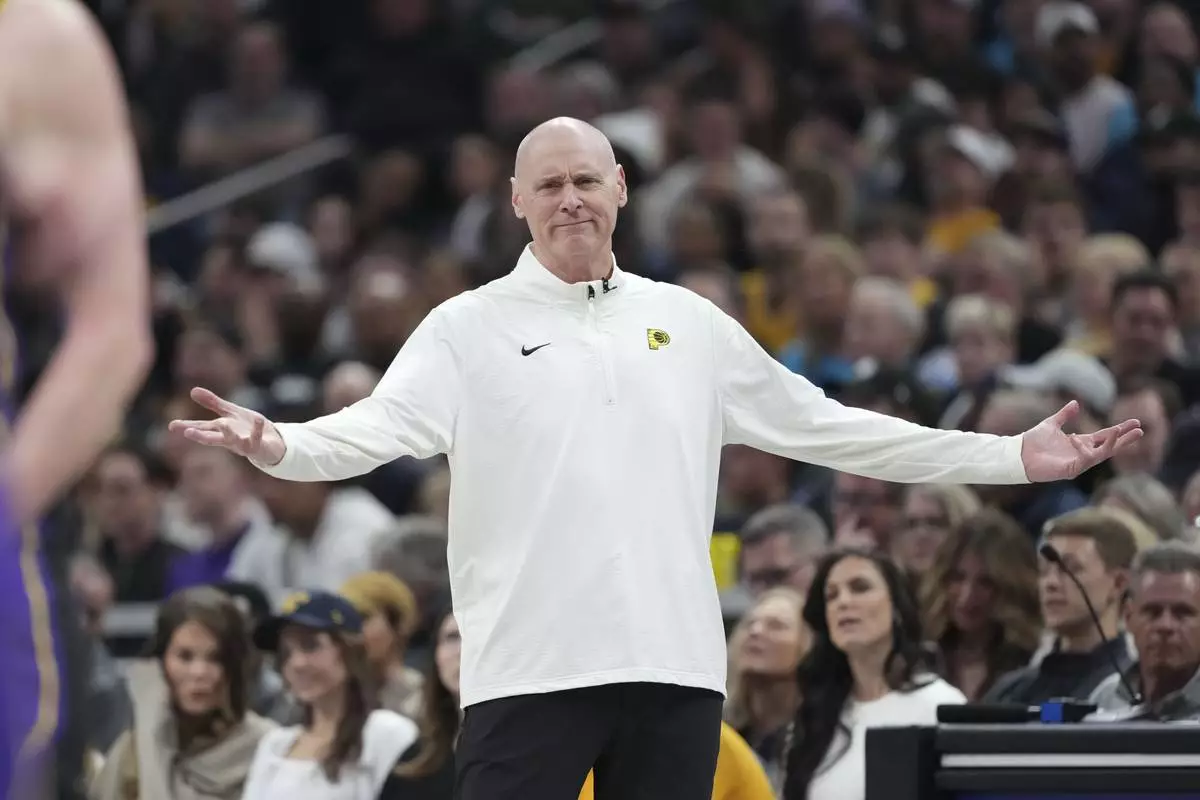
Indiana Pacers head coach Rick Carlisle reacts to being called for a technical foul as his team plays the Los Angeles Lakers during the first half of an NBA basketball game in Indianapolis, Wednesday, March 26, 2025. (AP Photo/AJ Mast)
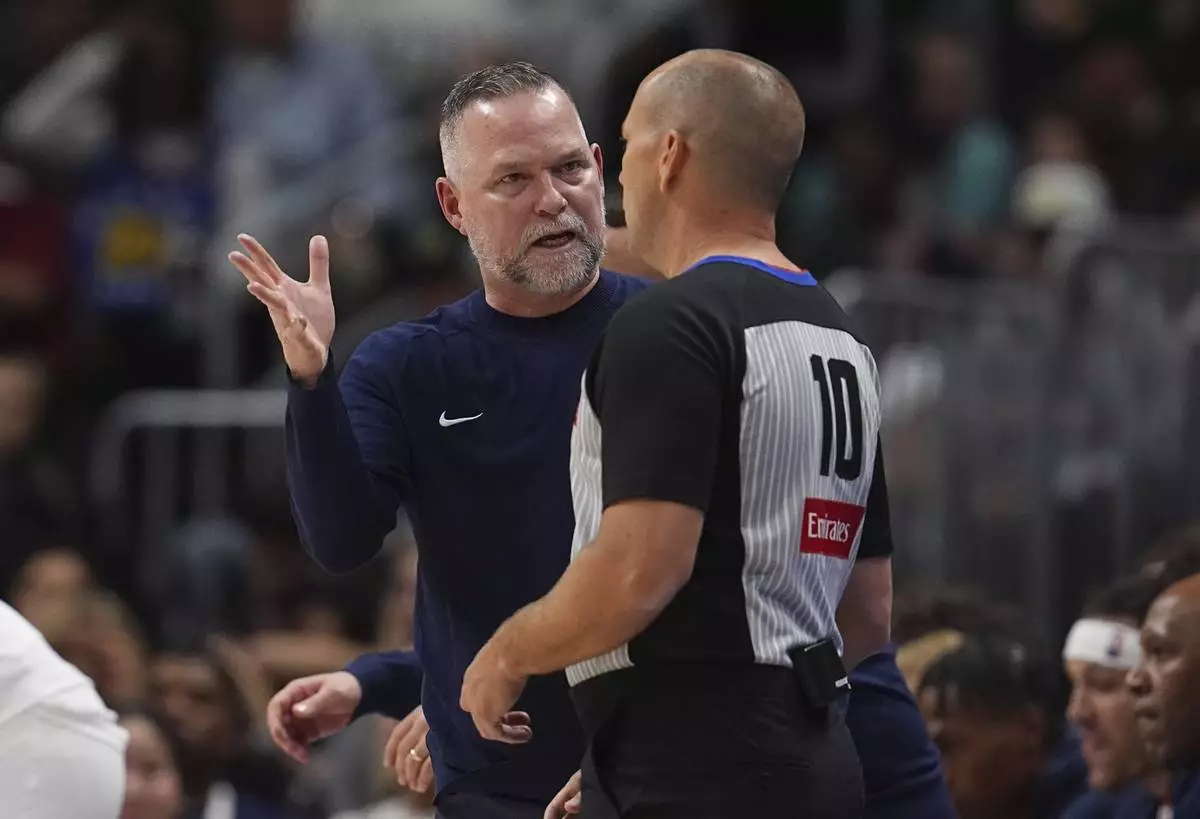
Denver Nuggets head coach Michael Malone, left, argues for a call with referee John Goble (10) in the first half of an NBA basketball game against the Utah Jazz, Friday, March 28, 2025, in Denver. (AP Photo/David Zalubowski)