The death toll from the nightclub roof collapse on Tuesday in Santo Domingo, the capital of the Dominican Republic, has climbed to 98, authorities confirmed on Wednesday early morning.
The collapse occurred during a party at the Jet Set nightclub in the capital in the early hours Tuesday. Jet Set is a well-known nightclub in Santo Domingo and often hosts live performances during the week.
Emergency officials said 255 people were rescued with injuries and taken to local hospitals.
Rescue operations are ongoing, said Juan Manuel Mendez, director of the Emergency Operations Center, describing the tragedy as one that has plunged into mourning not only the affected families but also the entire nation.
Luis Abinader, President of the Dominican Republic, has declared three days of national mourning starting April 8 to honor the victims.
Investigation is under way to determine the cause of the collapse.

Death toll from Dominican Republic nightclub collapse rises to 98
The Italian capital Rome, one of the world's most famous tourism destinations, is looking to live up to its nickname of the "Eternal City" by doubling down on efforts to protect and promote its historical sites as visitor numbers rise.
The city welcomed a record number of 22.9 million tourist arrivals last year as its popularity as a premier tourism spot continued to climb. But as more and more people flock to Rome's landmark sites, authorities are taking steps to keep things under control.
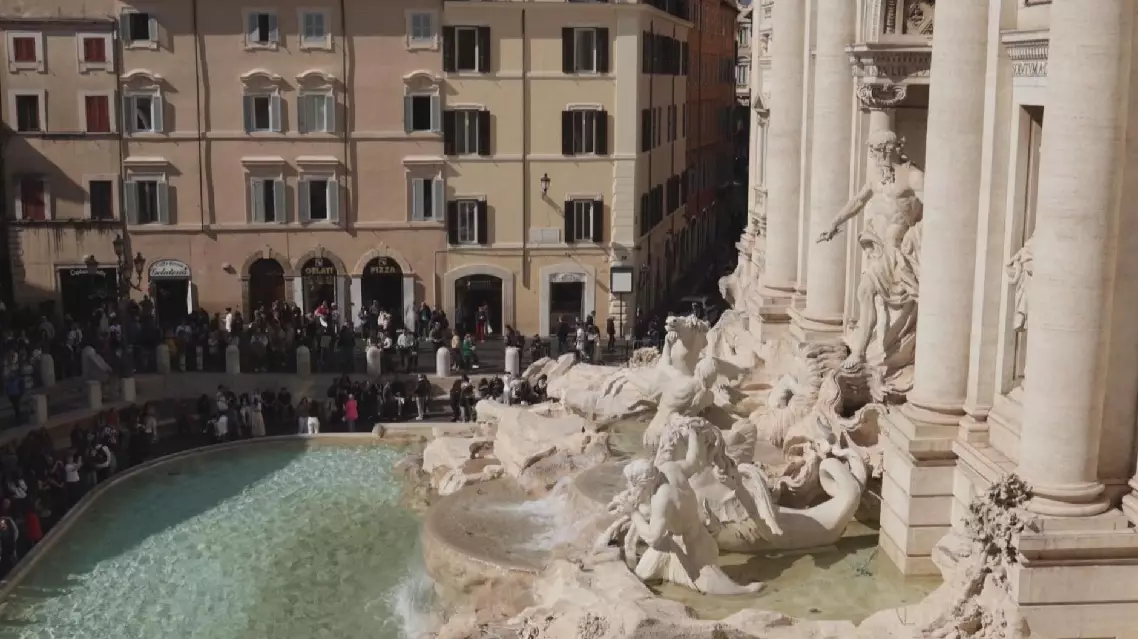
Visitors hoping to get up close to the city's 264-year-old Trevi Fountain, a masterpiece of Roman Baroque architecture and one of the world's most famous landmarks, must now pay a small fee after Rome Council introduced a 2-euro entry price to access the fountain's lower basin
"During February, we had around 230,000 tickets sold. This system guarantees a much more orderly access for tourists," said Giorgio Trabucco, vice president of the Rome Tourism Commission.
The measure was brought in to combat overcrowding, and also follows a series of incidents involving tourists sitting, eating, and even jumping into the historic waters.
"It's clear there have been episodes of disrespect. It's a difficult challenge, but our administration, with interventions like this – managing tourism not limiting it – is an added value for our city," said Trabucco.
The funds raised by the entrance tickets will go towards security, cleaning and maintenance of the ancient site, and while some tourists are annoyed at having to fork out, the majority believe it's money well spent.
"I would pay 2 euros, it's not breaking the bank and it's lovely to see," said a tourist.
Meanwhile, at the newly-upgraded Colosseum Metro Station, history is very much part of the journey, with ancient artifacts which were uncovered during the subway line's construction on display to the public for free.
It points to the fine balancing act facing city management, as it looks to preserve its cultural heritage while also keeping it open to everyone.
Paolo Aielli, head of Rome's public transport company ATAC, said conserving the past while building for the future depends on close cooperation across different interest groups.
"(We have adopted a very co-operative model) because we have the responsibility in terms of engineering but at the same time we have a very important interaction with the archaeological authority," he said.
The new "museum station" -- which opened late last year -- is part of Rome's expanding rail network, and has quickly become an attraction in its own right. According to Aielli, the station received more than 1 million visitors in its first month.
For now, officials say there are no plans to introduce fees at other major sites, though the option remains on the table as tourism continues to rise.
Rome steps up efforts to protect historical sites amid tourism boom