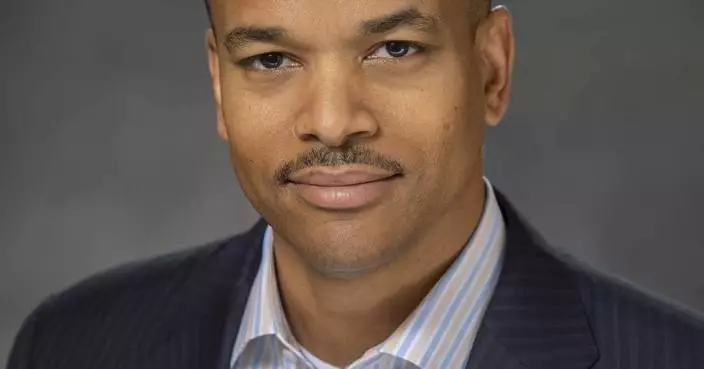
SEOUL, South Korea (AP) — Kim Shin-jo, a prominent ex-North Korean commando who resettled in South Korea as a pastor after his daring mission to assassinate then South Korean President Park Chung-hee in 1968 failed, died on Wednesday. He was 82.
Kim died of old age after two months of stay at a nursing home and his official funeral is set for Saturday, Kim’s Sungrak Church in Seoul said. It said Kim was survived by his wife, whom he met after resettling in South Korea, and a son and a daughter.
Kim was among a team of 31 North Korean commandos who tried to storm South Korea’s mountainside presidential palace to assassinate Park, an authoritarian president who had been ruling South Korea with an iron-fist since 1961.
The North Koreans had slipped undetected through the Koreas’ heavily fortified border and came within striking distance of Park’s palace. After battles that raged for two weeks in the nearby hills, all but three of the intruders were killed. Two survivors were believed to have returned to North Korea, while Kim was the only one captured alive by South Korean forces.
In a news conference arranged by South Korean authorities, Kim stunned the nation by saying that his team came “to slit the throat of Park Chung-hee.”
The attack, which also killed about 30 South Koreans, happened at the height of Cold War rivalry between the rival Koreas which were split into the U.S.-backed South and the Soviet-supported North at the end of World War II in 1945. Afterward, Park’s government launched reservist forces, established a military unit tasked with attacking North Korea, had students take military training at schools and introduced residential registration card systems.
In media interviews, Kim said he was pardoned because he didn’t fire a single bullet during the shootouts and was persuaded by South Korean officials to disavow communism. He said South Korean intelligence authorities later had him travel across the country to make speeches critical of North Korean systems at schools, companies and other places.
Kim said he later learned that his parents in North Korea were executed. Kim was ordained as a pastor in 1997.
Kim said the 1968 attack was made at the order of North Korea founder and then-leader Kim Il Sung, the grandfather of current ruler Kim Jong Un. Kim Il Sung died of heart attack in 1994, handing over power to his son Kim Jong Il, the father of Kim Jong Un.
“I earlier didn’t know why Kim Il Sung wanted to kill President Park,” Kim Shin-jo said in a 2009 interview with the JoongAng Ilbo newspaper. “But I came to know the reason as I spent time here. Kim must have been afraid of a poor country such as South Korea becoming rich. As the economy improved, South Korea would secure more money to buy weapons. From Kim Il Sung’s perspective, he couldn’t help killing President Park to achieve communization of South Korea.”
But in a 2007 autobiography by Park Geun-hye, daughter of Park Chung-hee who became South Korea's first woman president in 2013, the younger Park said when she met Kim Jong Il in Pyongyang in 2002, he said the 1968 attack was orchestrated by “extremists” and he apologized for it. Park Geun-hye said Kim Jong Il told her that they all received unspecified due punishments.
Those comments couldn't be independently verified.
This story has corrected that Park Geun-hye and Kim Jong Il met in 2002, not 2022.
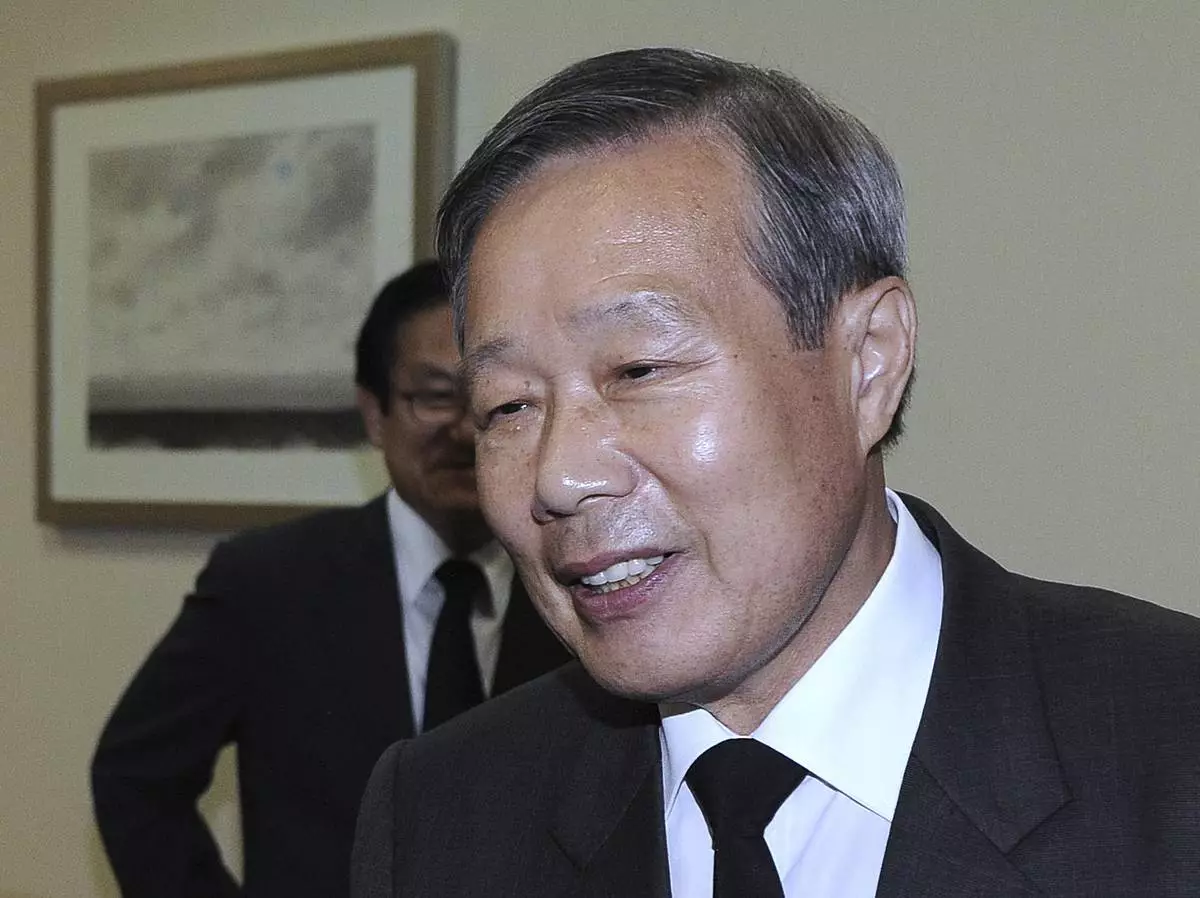
Kim Shin-jo, a prominent ex-North Korean commando who resettled in South Korea as a pastor after his daring mission to assassinate then South Korean President Park Chung-hee in 1968 failed, attends a funeral service for Hwang Jang-yop, who was the intellectual force behind North Korea's philosophy of self-reliance, at a hospital in Seoul, South Korea, on Oct. 11, 2010. (Yonhap via AP)
NEW YORK (AP) — Thousands of nurses in three hospital systems in New York City went on strike Monday after negotiations through the weekend failed to yield breakthroughs in their contract disputes.
The strike was taking place at The Mount Sinai Hospital and two of its satellite campuses, with picket lines forming. The other affected hospitals are NewYork-Presbyterian and Montefiore Medical Center in the Bronx.
About 15,000 nurses are involved in the strike, according to New York State Nurses Association.
“After months of bargaining, management refused to make meaningful progress on core issues that nurses have been fighting for: safe staffing for patients, healthcare benefits for nurses, and workplace violence protections,” the union said in a statement issued Monday. “Management at the richest hospitals in New York City are threatening to discontinue or radically cut nurses’ health benefits.”
The strike, which comes during a severe flu season, could potentially force the hospitals to transfer patients, cancel procedures or divert ambulances. It could also put a strain on city hospitals not involved in the contract dispute, as patients avoid the medical centers hit by the strike.
The hospitals involved have been hiring temporary nurses to try and fill the labor gap during the walkout, and said in a statement during negotiations that they would “do whatever is necessary to minimize disruptions.” Montefiore posted a message assuring patients that appointments would be kept.
“NYSNA’s leaders continue to double down on their $3.6 billion in reckless demands, including nearly 40% wage increases, and their troubling proposals like demanding that a nurse not be terminated if found to be compromised by drugs or alcohol while on the job," Montefiore spokesperson Joe Solmonese said Monday after the strike had started. "We remain resolute in our commitment to providing safe and seamless care, regardless of how long the strike may last.”
New York-Presbyterian accused the union of staging a strike to “create disruption,” but said in a statement that it has taken steps to ensure patients receive the care they need.
"We’re ready to keep negotiating a fair and reasonable contract that reflects our respect for our nurses and the critical role they play, and also recognizes the challenging realities of today’s healthcare environment,” the statement said.
The work stoppage is occurring at multiple hospitals simultaneously, but each medical center is negotiating with the union independently. Several other hospitals across the city and in its suburbs reached deals in recent days to avert a possible strike.
The nurses’ demands vary by hospital, but the major issues include staffing levels and workplace safety. The union says hospitals have given nurses unmanageable workloads.
Nurses also want better security measures in the workplace, citing incidents like a an incident last week, when a man with a sharp object barricaded himself in a Brooklyn hospital room and was then killed by police.
The union also wants limitations on hospitals’ use of artificial intelligence.
The nonprofit hospitals involved in the negotiations say they’ve been working to improve staffing levels, but say the union’s demands overall are too costly.
Nurses voted to authorize the strike last month.
Both New York Gov. Kathy Hochul and Mayor Zohran Mamdani had expressed concern about the possibility of the strike. As the strike deadline neared, Mamdani urged both sides to keep negotiating and reach a deal that “both honors our nurses and keeps our hospitals open.”
“Our nurses kept this city alive through its hardest moments. Their value is not negotiable,” Mamdani said.
State Attorney General Letitia James voiced similar support, saying "nurses put their lives on the line every day to keep New Yorkers healthy. They should never be forced to choose between their own safety, their patients’ well-being, and a fair contract.”
The last major nursing strike in the city was only three years ago, in 2023. That work stoppage, at Mount Sinai and Montefiore, was short, lasting three days. It resulted in a deal raising pay 19% over three years at those hospitals.
It also led to promised staffing improvements, though the union and hospitals now disagree about how much progress has been made, or whether the hospitals are retreating from staffing guarantees.
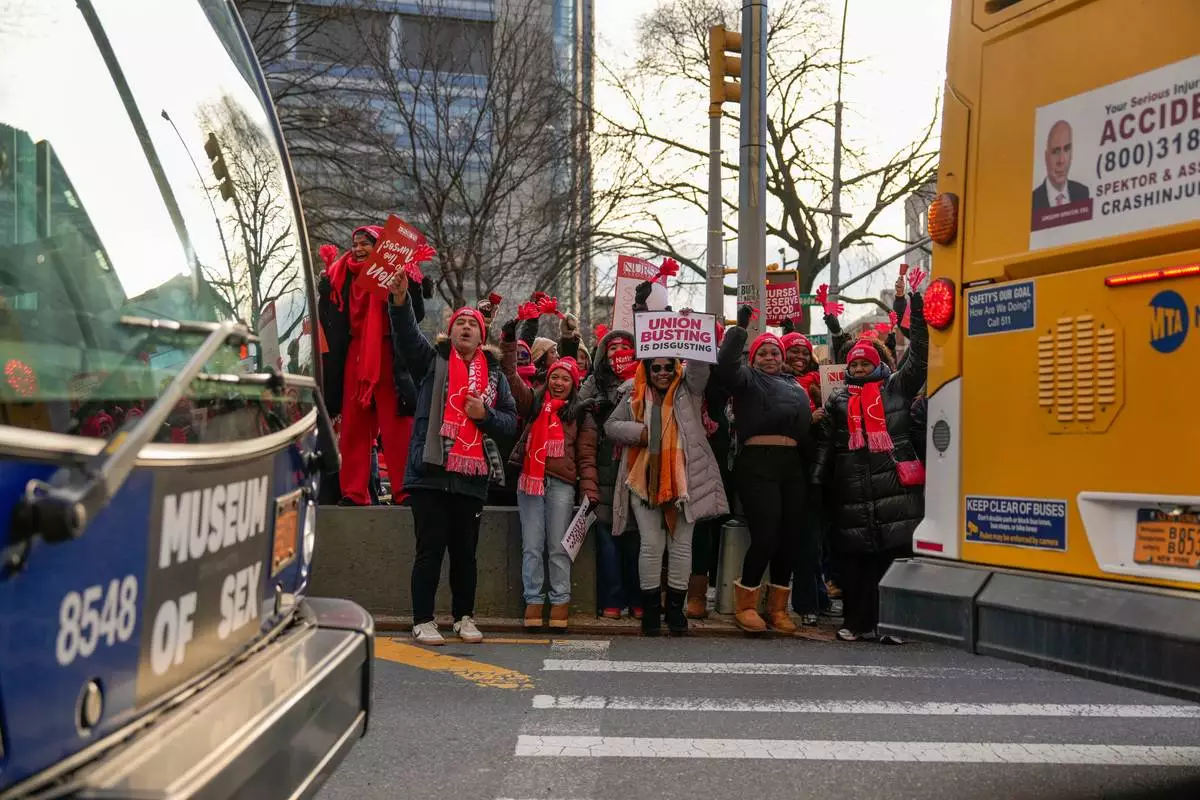
Nurses strike outside New York-Presbyterian Hospital, Monday, Jan. 12, 2026, in New York. (AP Photo/Yuki Iwamura)
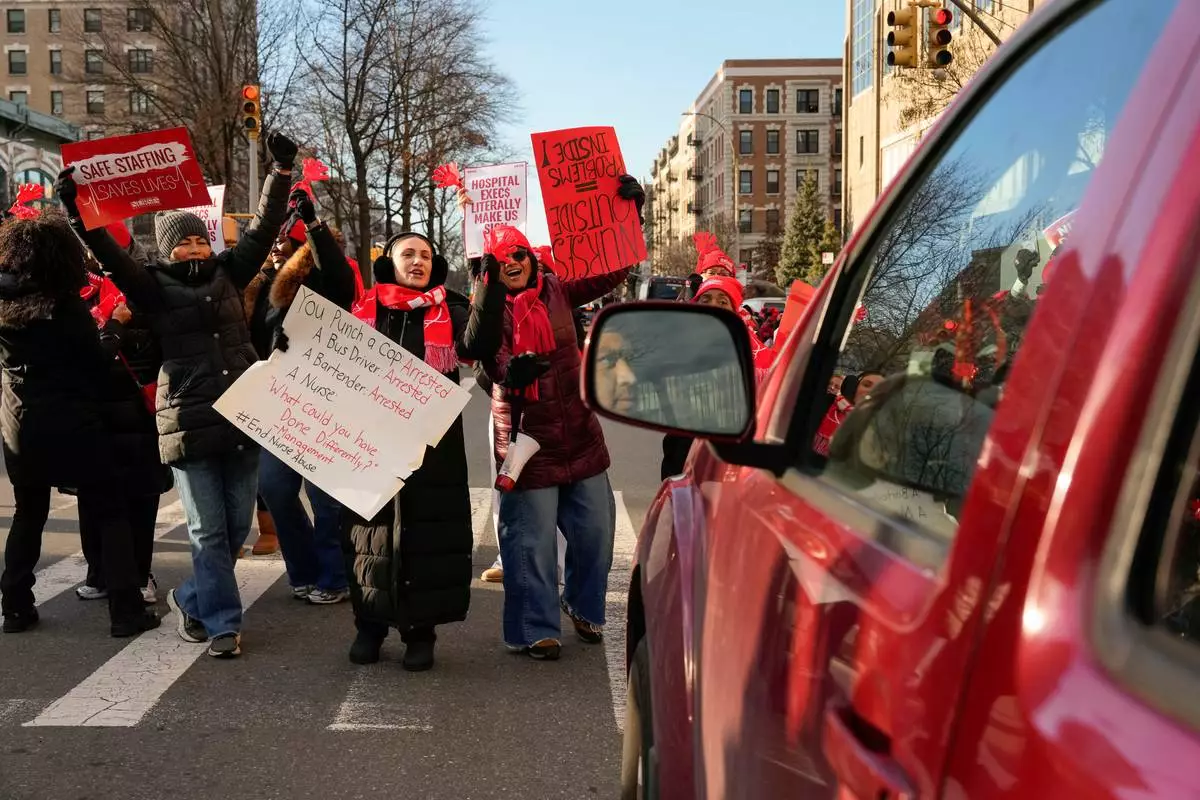
Nurses strike outside New York-Presbyterian Hospital, Monday, Jan. 12, 2026, in New York. (AP Photo/Yuki Iwamura)
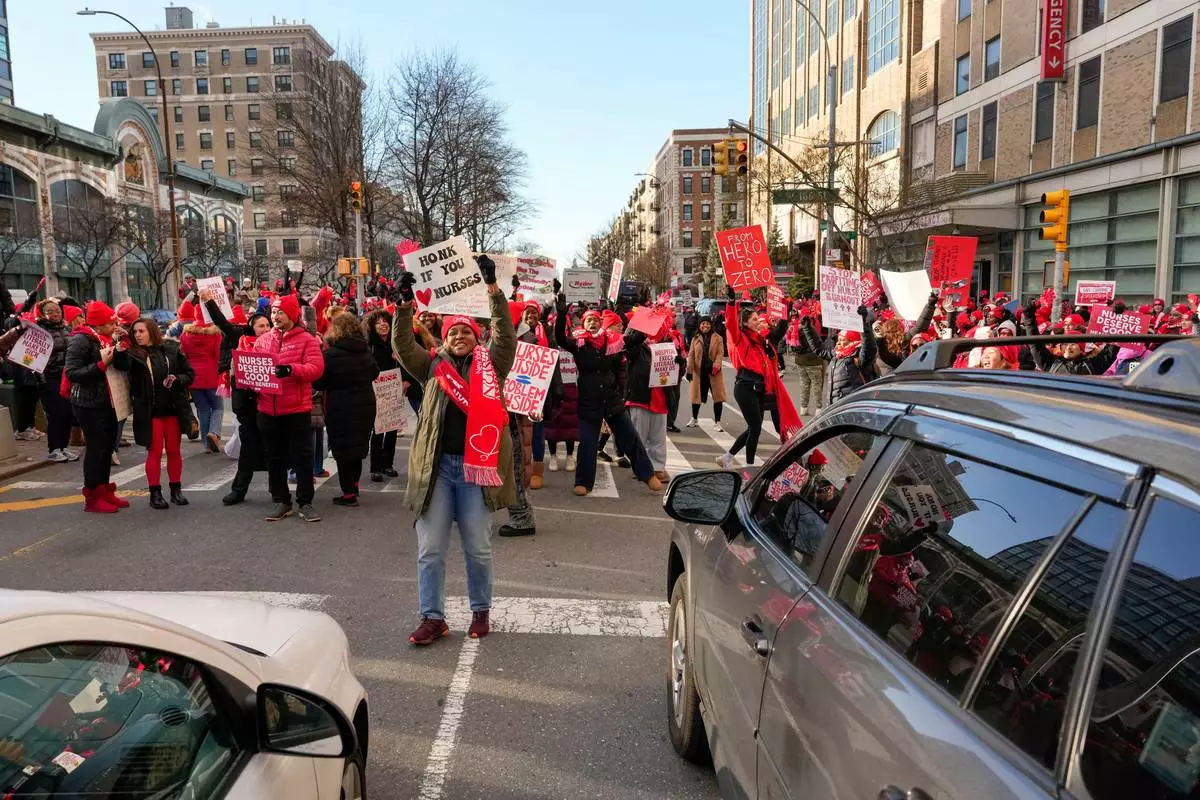
Nurses strike outside New York-Presbyterian Hospital, Monday, Jan. 12, 2026, in New York. (AP Photo/Yuki Iwamura)
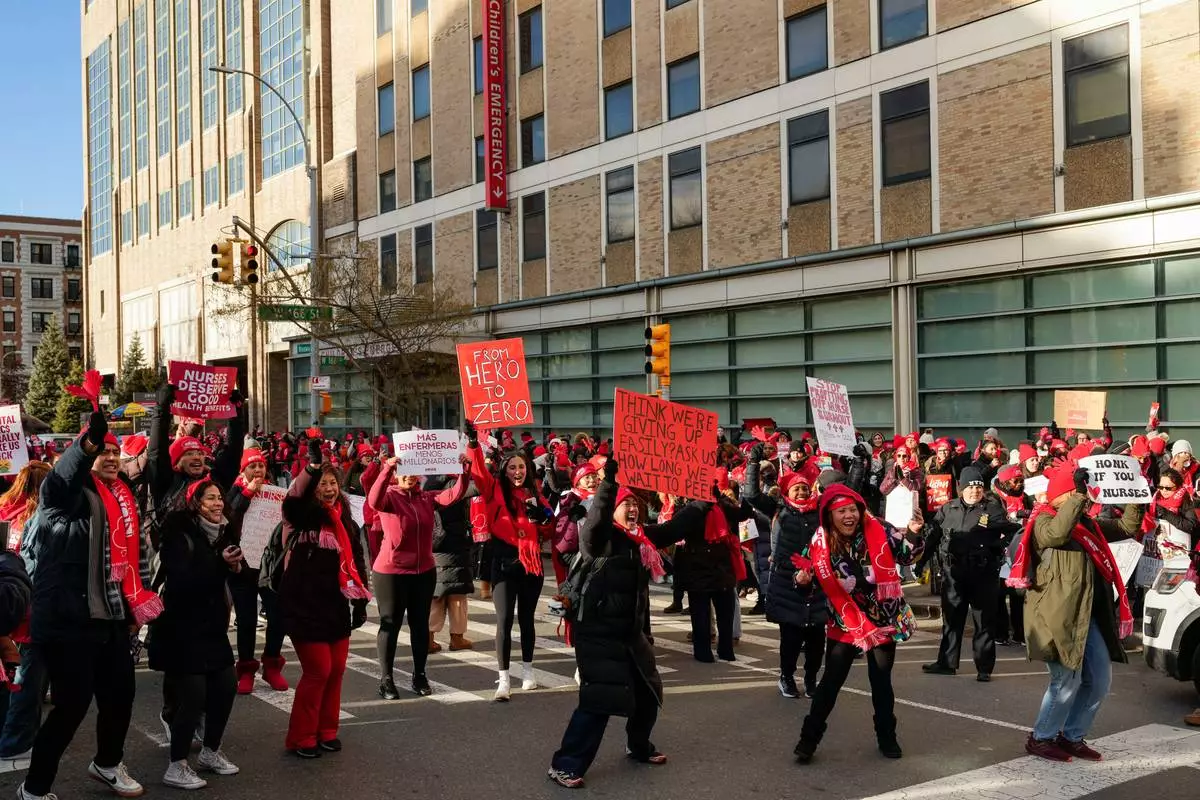
Nurses strike outside New York-Presbyterian Hospital, Monday, Jan. 12, 2026, in New York. (AP Photo/Yuki Iwamura)
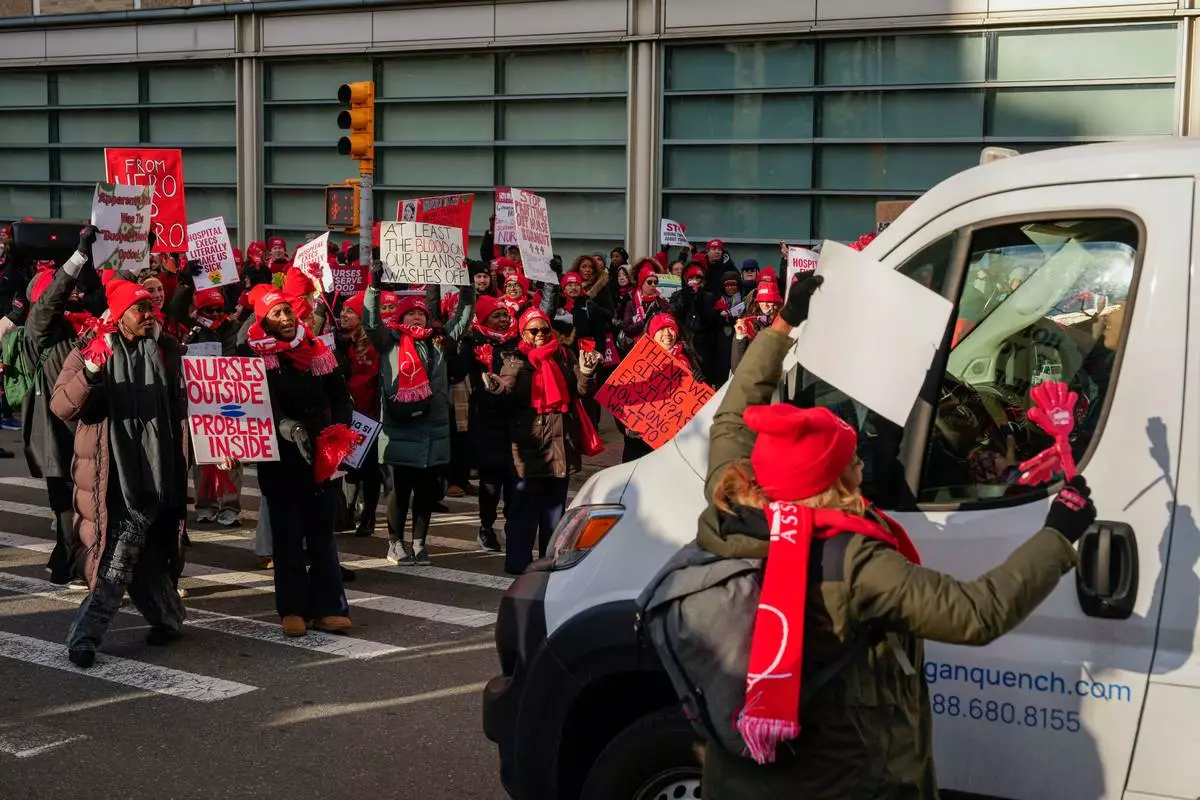
Nurses strike outside New York-Presbyterian Hospital, Monday, Jan. 12, 2026, in New York. (AP Photo/Yuki Iwamura)
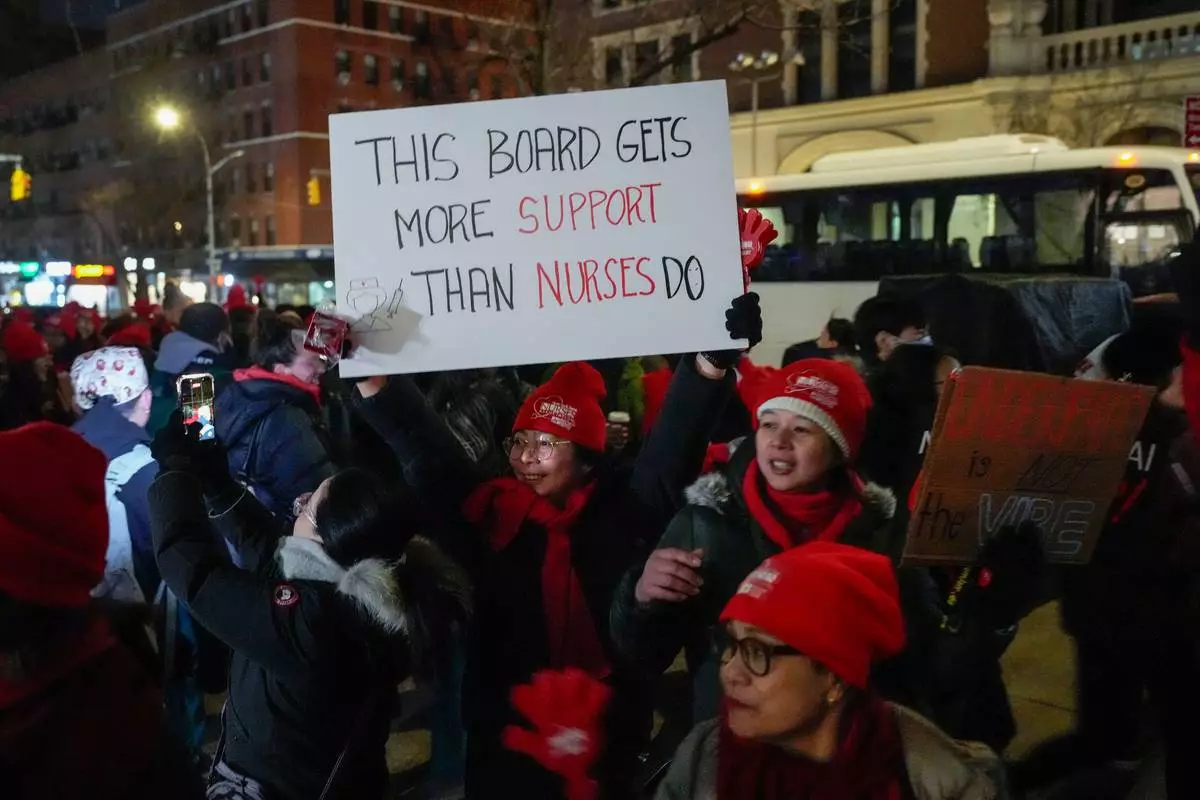
Nurses strike outside Mount Sinai West Hospital, Monday, Jan. 12, 2026, in New York. (AP Photo/Yuki Iwamura)
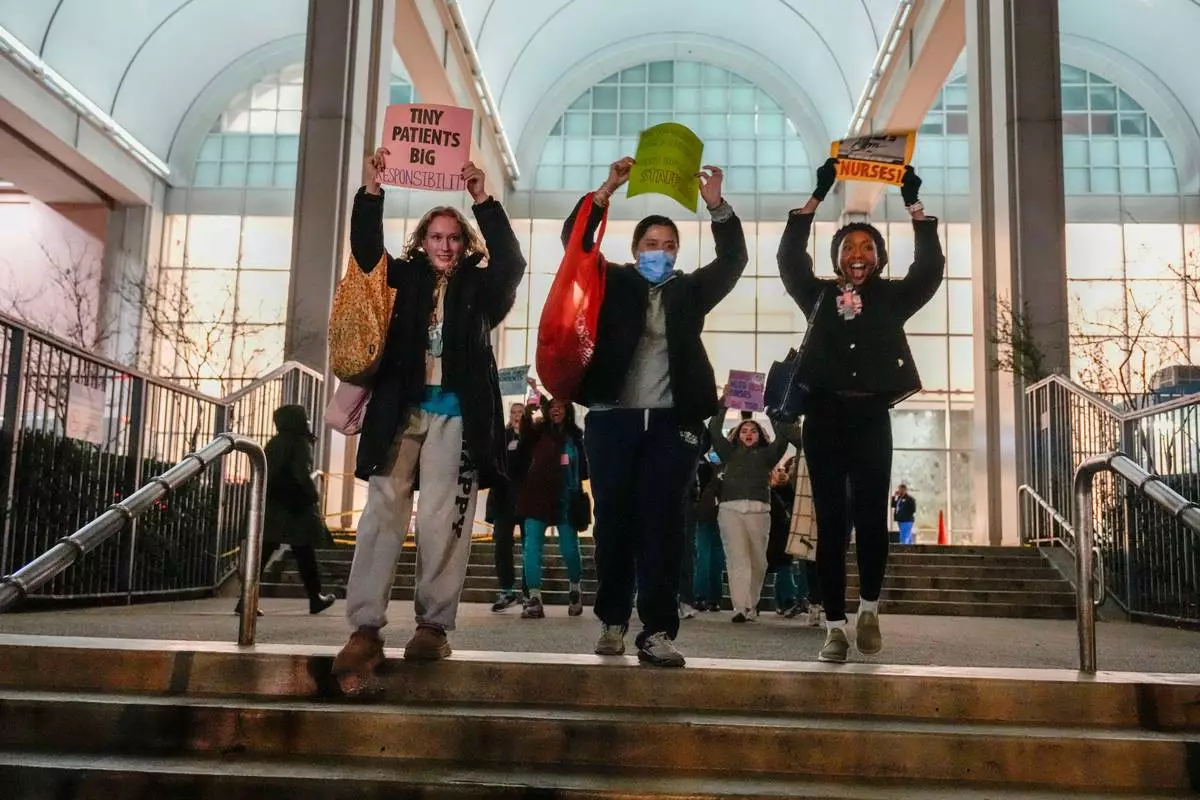
Nurses strike outside Mount Sinai West Hospital, Monday, Jan. 12, 2026, in New York. (AP Photo/Yuki Iwamura)
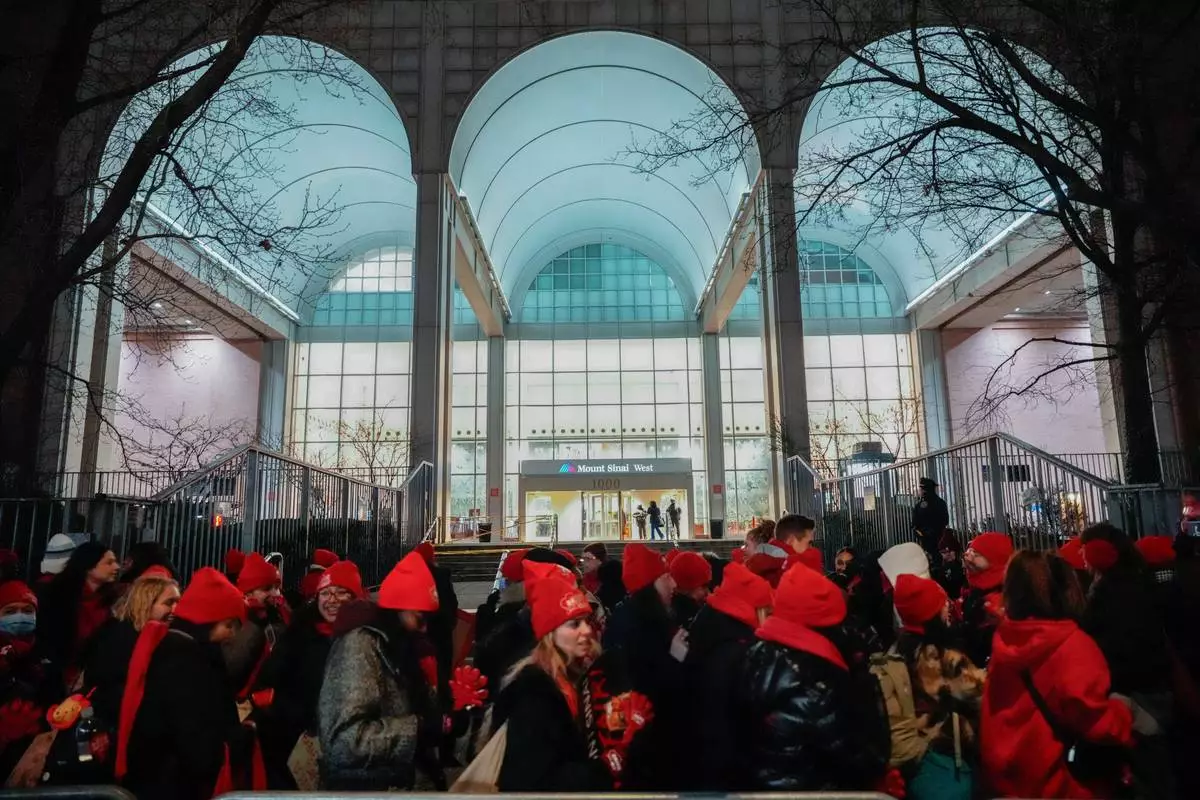
Nurses strike outside Mount Sinai West Hospital, Monday, Jan. 12, 2026, in New York. (AP Photo/Yuki Iwamura)
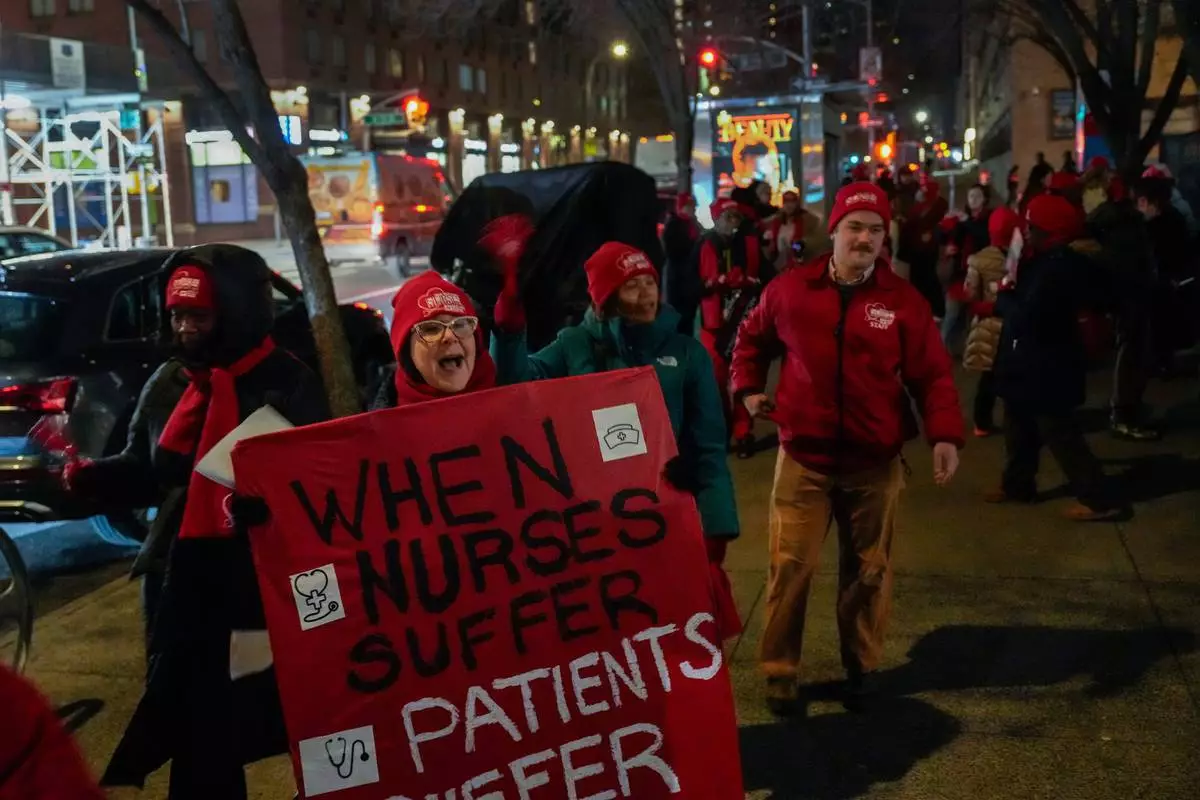
Nurses strike outside Mount Sinai West Hospital, Monday, Jan. 12, 2026, in New York. (AP Photo/Yuki Iwamura)

FILE - A medical worker transports a patient at Mount Sinai Hospital, April 1, 2020, in New York. (AP Photo/Mary Altaffer, File)