HO CHI MINH CITY, Vietnam (AP) — Hamburger Hill, Hue, the Ia Drang Valley, Khe Sanh: Some remember the Vietnam War battles from the headlines of the 1960s and 1970s, others from movies and history books. And thousands of Americans and Vietnamese know them as the graveyards of loved ones who died fighting more than a half-century ago.
Today the battlefields of Vietnam are sites of pilgrimage for veterans from both sides who fought there, and tourists wanting to see firsthand where the war was waged.
Click to Gallery
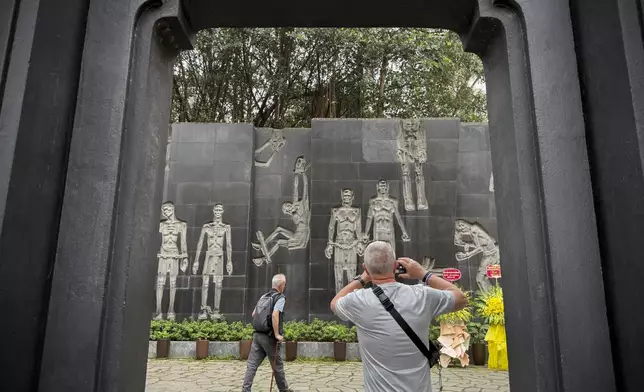
A tourist takes photos of a mural at the Hoa Lo prison museum in Hanoi, Vietnam, March 26, 2025. (AP Photo/Hau Dinh)
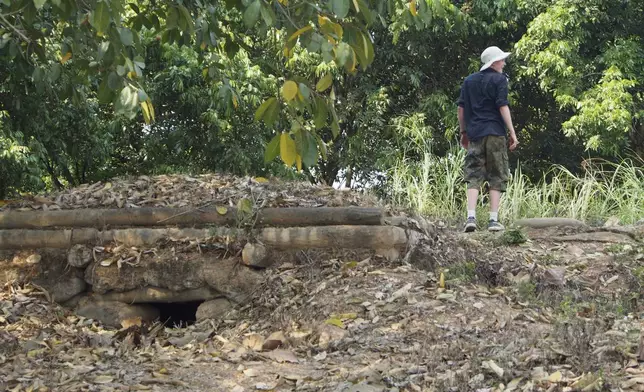
A tourist looks over old French fortifications in Dien Bien Phu, Vietnam, April 22, 2019. (AP Photo/David Rising)
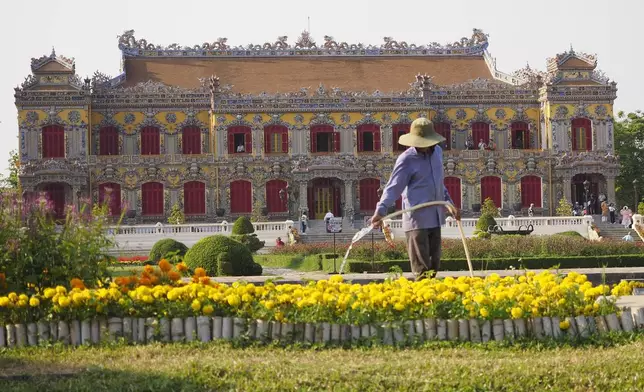
A gardener waters flowers outside the newly rebuilt Kien Trung Palace in the Imperial City within the Citadel of Hue, Vietnam, Feb. 21, 2024. (AP Photo/David Rising)
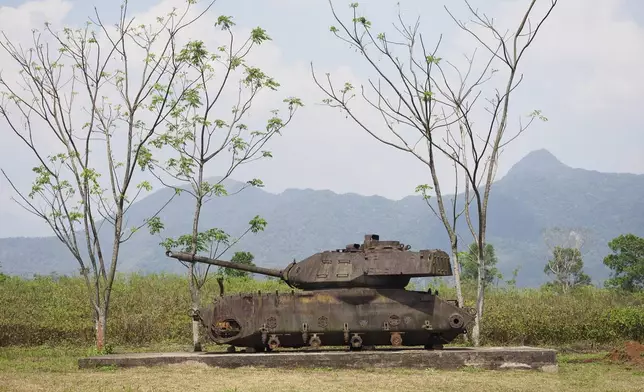
The wreckage of an American tank on display at the Khe Sanh Combat Base in Vietnam, Feb. 22, 2024. (AP Photo/David Rising)
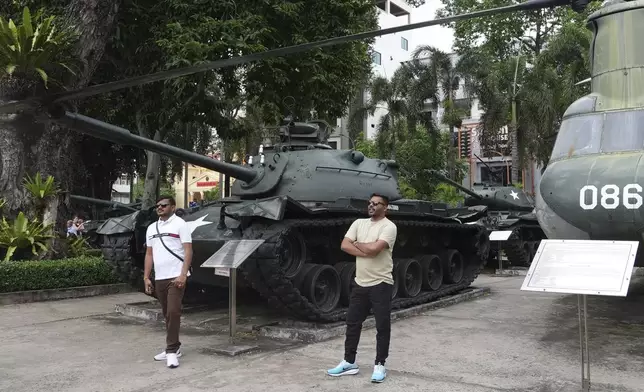
Tourists stand in front of armor combat vehicles on display at the War Remnants Museum in Ho Chi Minh City, Vietnam, Feb. 22, 2025. (AP Photo/Hau Dinh)
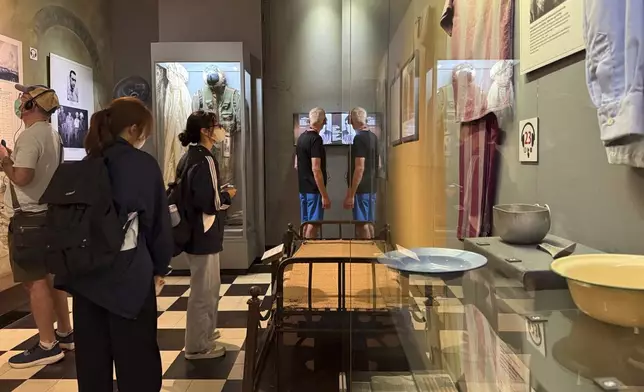
Tourists visit Hoa Lo prison museum in Hanoi, Vietnam, March 26, 2025. (AP Photo/Hau Dinh)
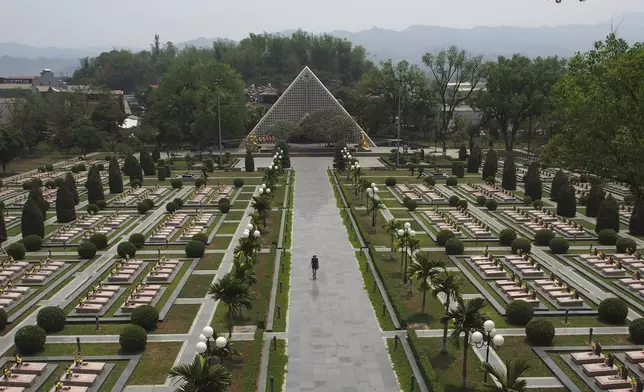
A tourist walks through the Dien Bien Phu Military Cemetery in Dien Bien Phu, Vietnam, April 22, 2019. (AP Photo/David Rising)
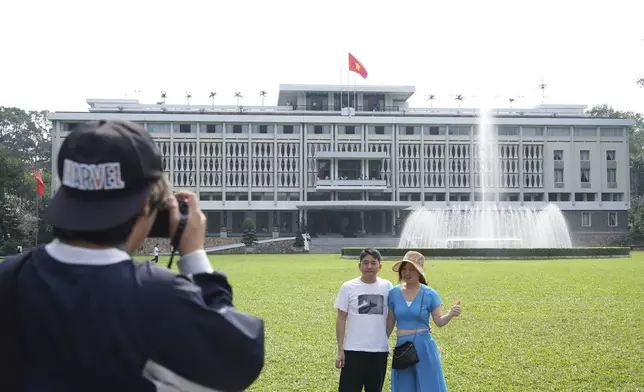
Tourists pose for photos in front of Independence Palace in Ho Chi Minh City, Vietnam, Feb. 20, 2025. (AP Photo/Hau Dinh)
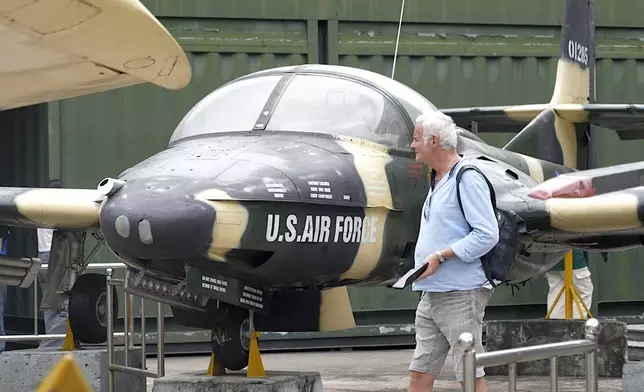
A tourist looks at a U.S Air Force fighter jet used during the Vietnam war on display at the War Remnants Museum in Ho Chi Minh City, Vietnam, Feb. 22, 2025. (AP Photo/Hau Dinh)
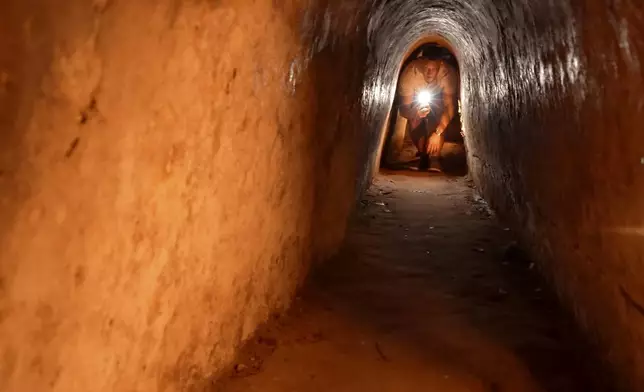
A tourist moves in a narrow tunnel passage in the relic site of Cu Chi tunnels in Ho Chi Minh City, Vietnam, Feb. 23, 2025. (AP Photo/Hau Dinh)
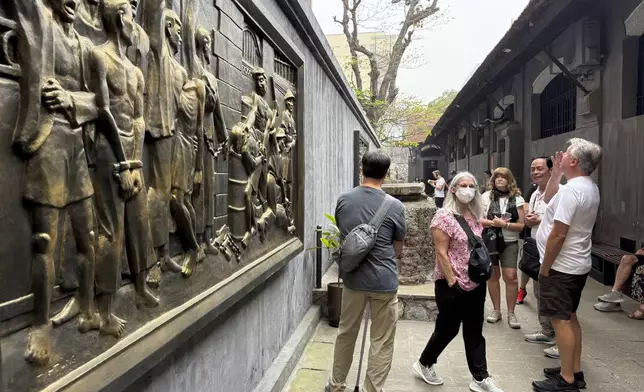
Tourists look at a mural at the Hoa Lo prison museum in Hanoi, Vietnam, March. 26, 2025. (AP Photo/Hau Dinh)
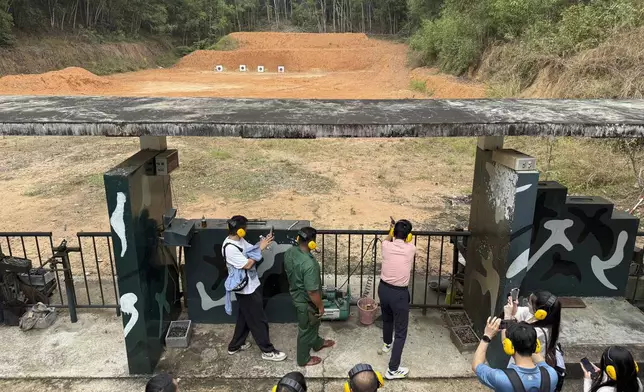
A tourist shoots targets with a war-era weapon at a firing range near Cu Chi tunnels in Ho Chi Minh City, Vietnam, Feb. 23, 2025. (AP Photo/Hau Dinh)
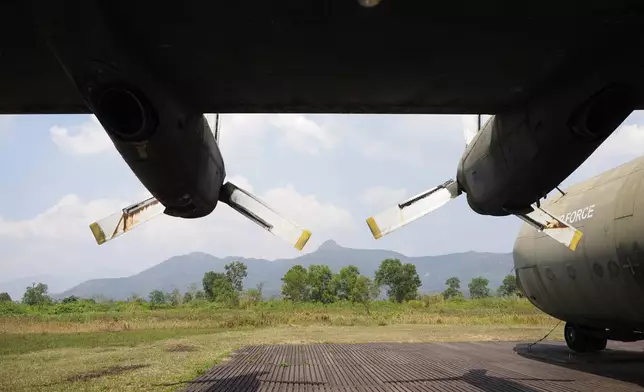
An American transport aircraft stands at the edge of the runway at the Khe Sanh Combat Base in Vietnam. Feb. 22, 2024. (AP Photo/David Rising)
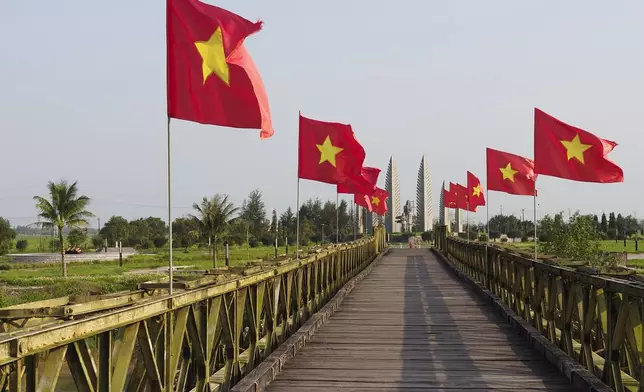
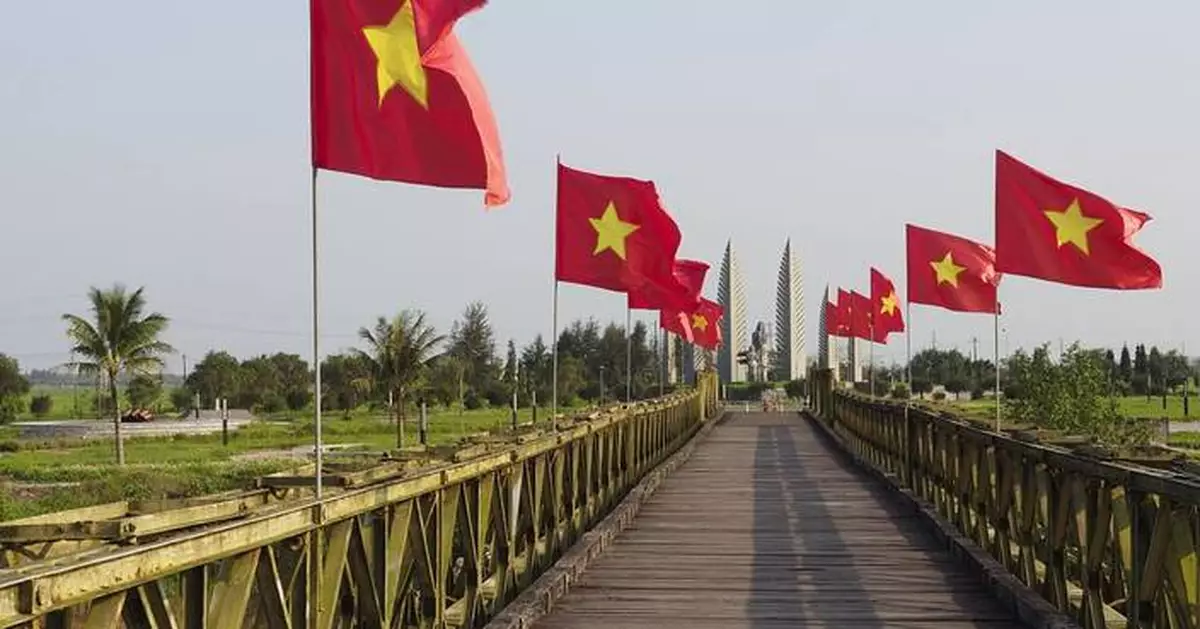
Vietnamese flags fly on the Hien Luong Bridge, with a memorial in the distance, at the former border between North and South Vietnam, Quang Tri province, Feb. 22, 2024. (AP Photo/David Rising)
“It was a war zone when I was here before,” reflected U.S. Army veteran Paul Hazelton as he walked with his wife through the grounds of the War Remnants Museum in Ho Chi Minh City, which was known as Saigon when he served there.
Hazelton’s tour just shy of his 80th birthday took him back for the first time to places he served as a young draftee, including Hue, the former Phu Bai Combat Base on the city's outskirts, and Da Nang, which was a major base for both American and South Vietnamese forces.
“Everywhere you went, you know, it was occupied territory with our military, now you just see the hustle and bustle and the industry, and it's remarkable," he said.
“I’m just glad that we’re now trading and friendly with Vietnam. And I think both sides are benefiting from it.”
Vietnam's war with the United States lasted for nearly 20 years from 1955 to 1975, with more than 58,000 Americans killed and many times that number of Vietnamese.
For Vietnam, it started almost immediately after the nearly decadelong fight to expel the colonial French, who were supported by Washington, which culminated with the decisive defeat of French forces at Dien Bien Phu in 1954.
The end of French Indochina meant major changes in the region, including the partitioning of Vietnam into Communist North Vietnam under Ho Chi Minh, and U.S.-aligned South Vietnam.
This year marks the 50th anniversary of the fall of Saigon to North Vietnamese and Viet Cong guerrilla troops, and the 30th anniversary of the reestablishment of diplomatic relations between the U.S. and Vietnam.
Tourism has rebounded rapidly since the COVID-19 pandemic and is now a critical driver of Vietnam's growth, the fastest in the region, accounting for roughly one in nine jobs in the country. Vietnam had more than 17.5 million foreign visitors in 2024, close to the record 18 million set in 2019 before the pandemic.
The War Remnants Museum attracts some 500,000 visitors a year, about two-thirds of whom are foreigners. Its exhibits focus on American war crimes and atrocities like the My Lai massacre and the devastating effects of Agent Orange, a defoliant widely used during the war.
The U.S. was to open the first exhibit of its own at the museum this year, detailing Washington's extensive efforts to remediate wartime damage, but it is indefinitely on hold after the Trump administration slashed foreign aid.
Other wartime sites in Saigon, which was the capital of South Vietnam, include the South Vietnamese president's Independence Palace where North Vietnamese tanks famously crashed through the gates as they took the city and the Rex Hotel where the U.S. held press briefings derisively dubbed the Five O'clock Follies for their paucity of credible information.
On the northern outskirts of the city are the Cu Chi tunnels, an underground warren used by Viet Cong guerrillas to avoid detection from American planes and patrols, which attracts some 1.5 million people annually.
Today visitors can climb and crawl through some of the narrow passages and take a turn at a firing range shooting targets with war-era weapons like the AK-47, M-16 and the M-60 machine gun known as "the pig" by American troops for its bulky size and high rate of fire.
“I can understand a bit better now how the war took place, how the Vietnamese people managed to fight and protect themselves,” said Italian tourist Theo Buono after visiting the site while waiting for others in his tour group to finish at the firing range.
Former North Vietnamese Army artilleryman Luu Van Duc remembers the fighting firsthand, but his visit to the Cu Chi tunnels with a group of other veterans provided an opportunity to see how their allies with the Viet Cong lived and fought.
“I'm so moved visiting the old battlefields — it was my last dying wish to be able to relive those hard but glorious days together with my comrades,” the 78-year-old said.
“Relics like this must be preserved so the next generations will know about their history, about the victories over much stronger enemies.”
The former Demilitarized Zone where the country was split between North and South in Quang Tri province saw the heaviest fighting during the war, and drew more than 3 million visitors in 2024.
On the north side of the DMZ, visitors can walk through the labyrinthine Vinh Moc tunnel complex, where civilians took shelter from bombs that the U.S. dropped in an effort to disrupt supplies to the North Vietnamese.
The tunnels, along with a memorial and small museum at the border, can be reached on a day trip from Hue, which typically also includes a stop at the former Khe Sanh combat base, the site of a fierce battle in 1968 in which both sides claimed victory.
Today, Khe Sanh boasts a small museum and some of the original fortifications, along with tanks, helicopters and other equipment left by U.S. forces after their withdrawal.
Hue itself was the scene of a major battle during the Tet Offensive in 1968, one of the longest and most intense of the war. Today the city's ancient Citadel and Imperial City, a UNESCO site on the north bank of the Perfume River, still bears signs of the fierce fighting but has largely been rebuilt. West of Hue, a little off the beaten path near the border with Laos, is Hamburger Hill, the scene of a major battle in 1969.
About 500 kilometers (300 miles) to the southwest near the Cambodian border is the Ia Drang valley, where the first major engagement between American and North Vietnamese forces was fought in 1965.
Fighting in North Vietnam was primarily an air war, and today the Hoa Lo Prison museum tells that story from the Vietnamese perspective.
Sardonically dubbed the “Hanoi Hilton” by inmates, the former French prison in Hanoi was used to hold American prisoners of war, primarily pilots shot down during bombing raids. Its most famous resident was the late Sen. John McCain after he was shot down in 1967.
“It was kind of eerie but fascinating at the same time,” said Olivia Wilson, a 28-year-old from New York, after a recent visit.
“It's an alternative perspective on the war.”
Rising reported from Bangkok.
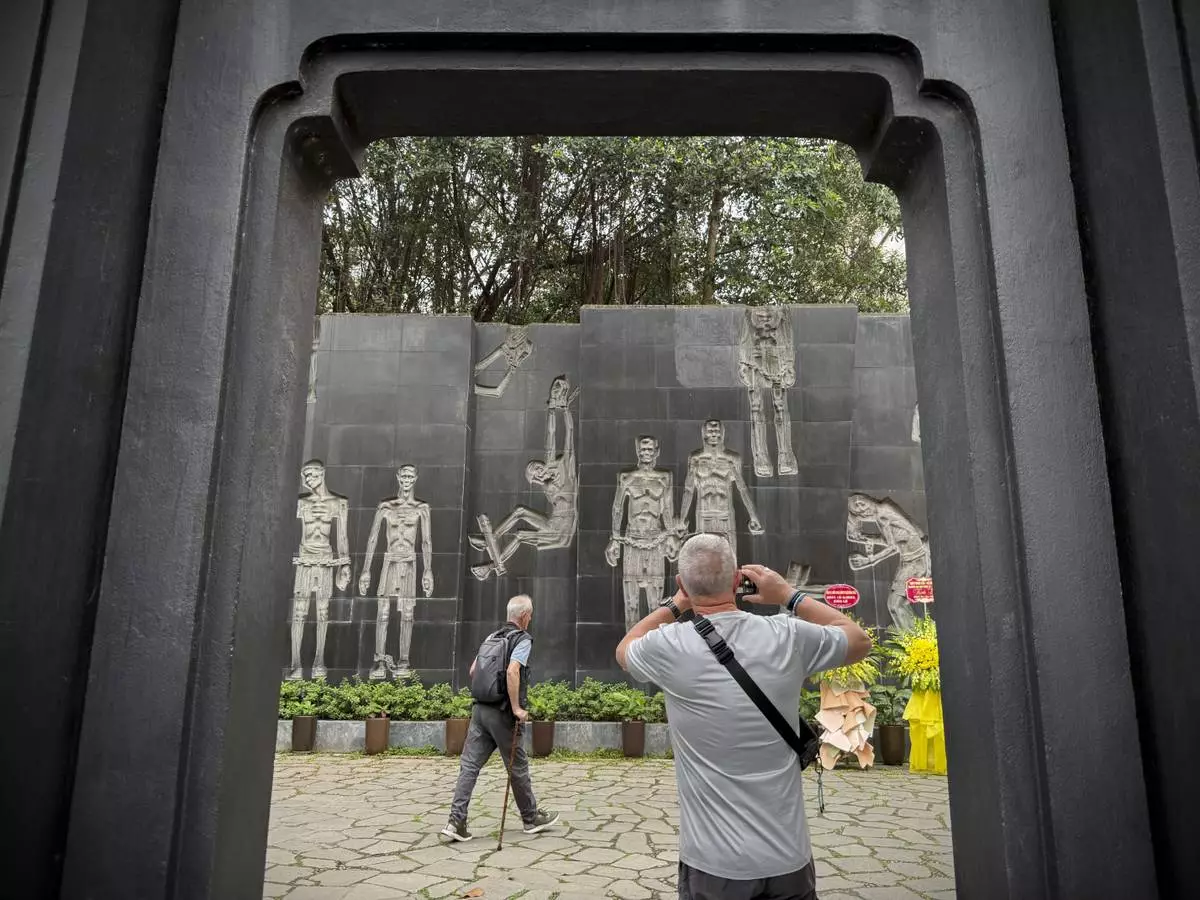
A tourist takes photos of a mural at the Hoa Lo prison museum in Hanoi, Vietnam, March 26, 2025. (AP Photo/Hau Dinh)
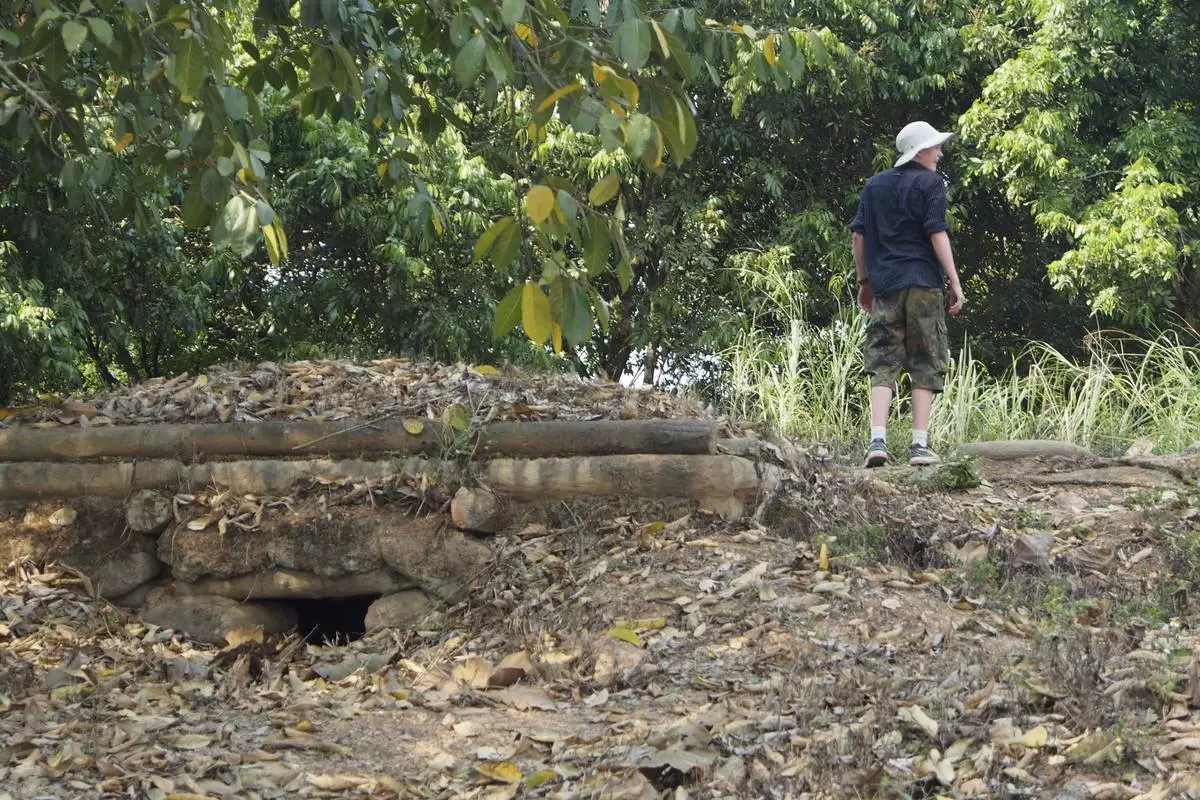
A tourist looks over old French fortifications in Dien Bien Phu, Vietnam, April 22, 2019. (AP Photo/David Rising)
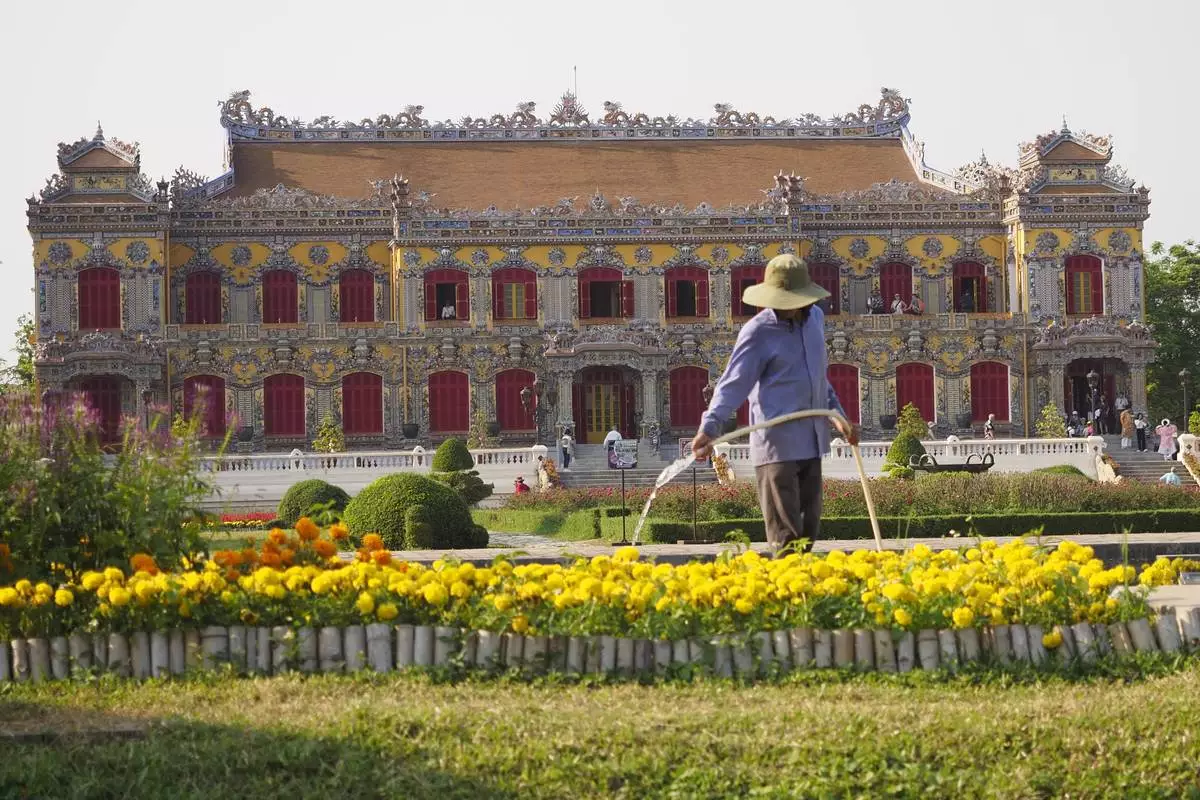
A gardener waters flowers outside the newly rebuilt Kien Trung Palace in the Imperial City within the Citadel of Hue, Vietnam, Feb. 21, 2024. (AP Photo/David Rising)

The wreckage of an American tank on display at the Khe Sanh Combat Base in Vietnam, Feb. 22, 2024. (AP Photo/David Rising)
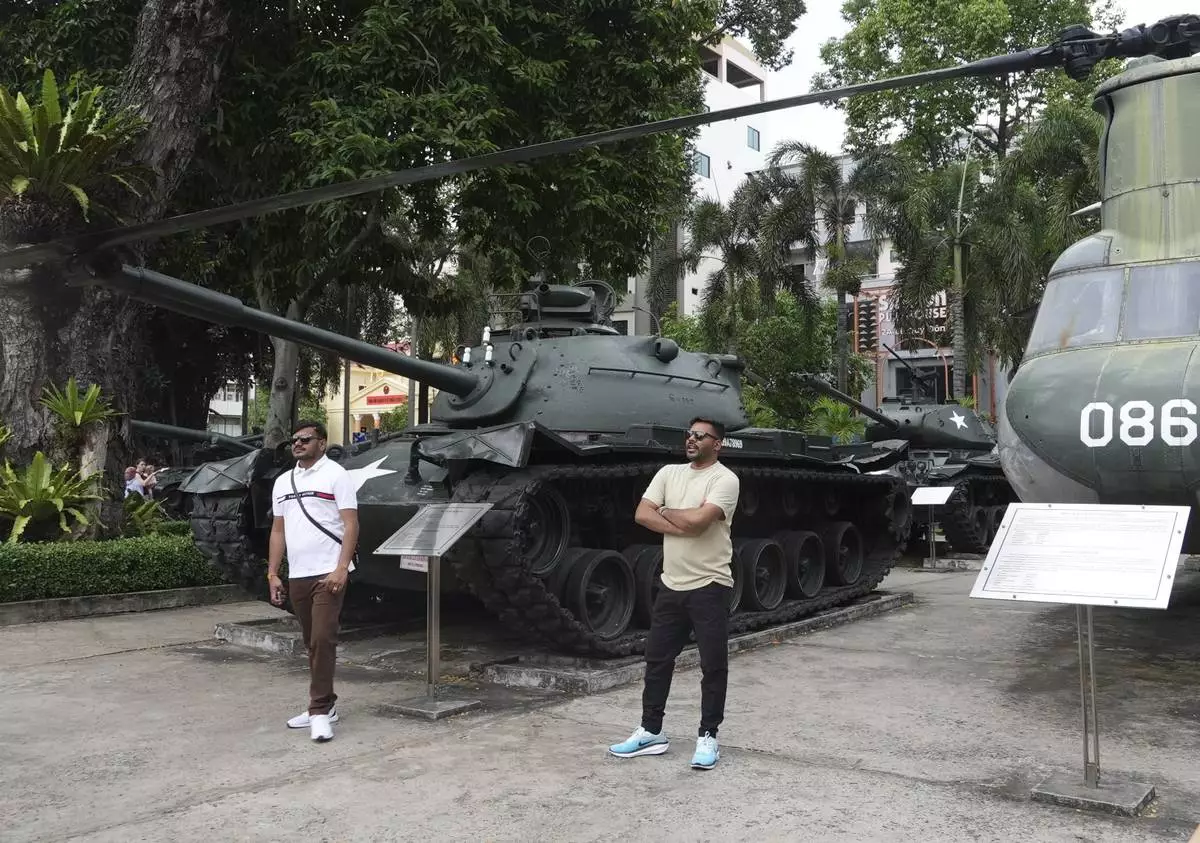
Tourists stand in front of armor combat vehicles on display at the War Remnants Museum in Ho Chi Minh City, Vietnam, Feb. 22, 2025. (AP Photo/Hau Dinh)
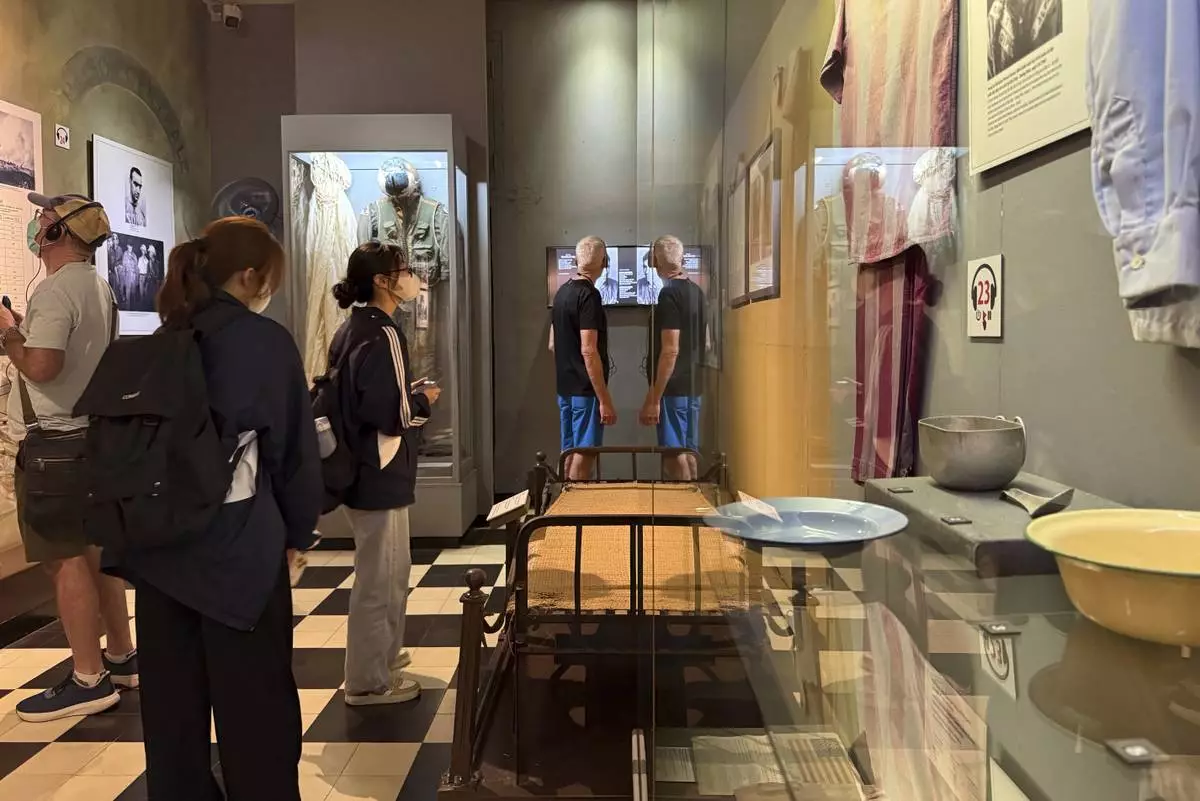
Tourists visit Hoa Lo prison museum in Hanoi, Vietnam, March 26, 2025. (AP Photo/Hau Dinh)
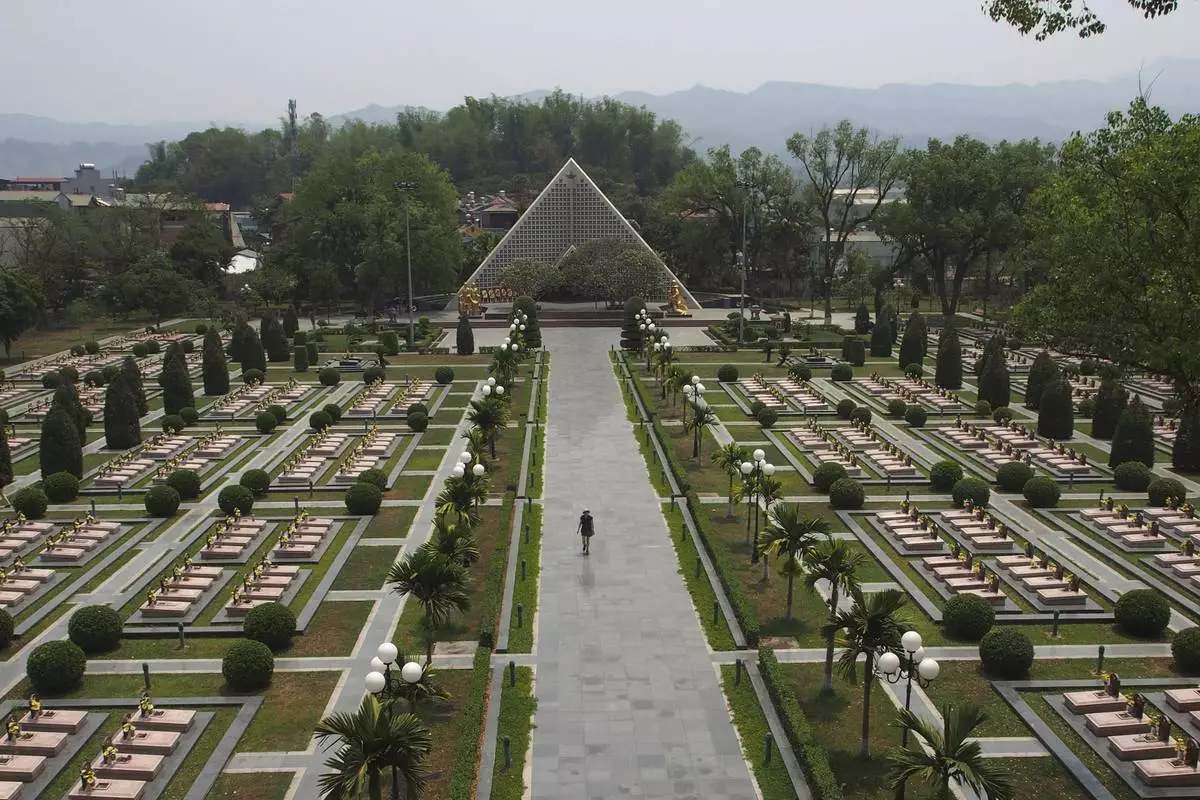
A tourist walks through the Dien Bien Phu Military Cemetery in Dien Bien Phu, Vietnam, April 22, 2019. (AP Photo/David Rising)
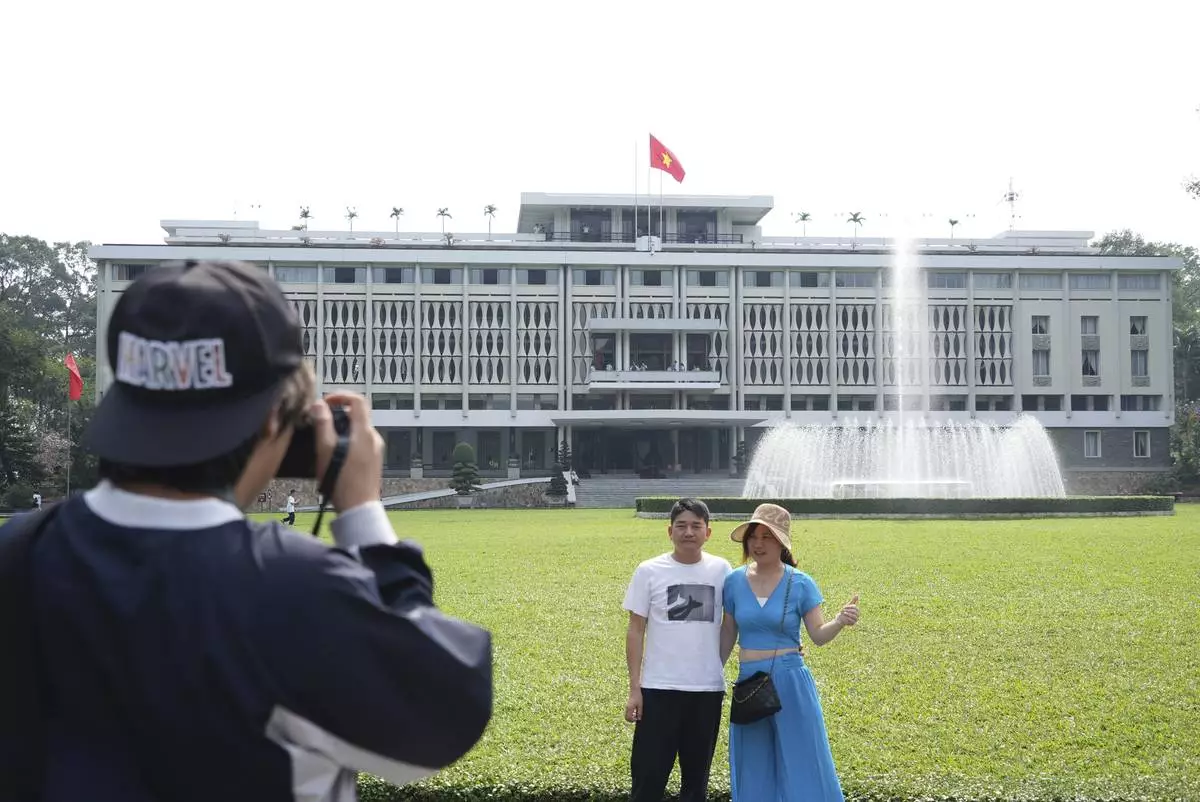
Tourists pose for photos in front of Independence Palace in Ho Chi Minh City, Vietnam, Feb. 20, 2025. (AP Photo/Hau Dinh)
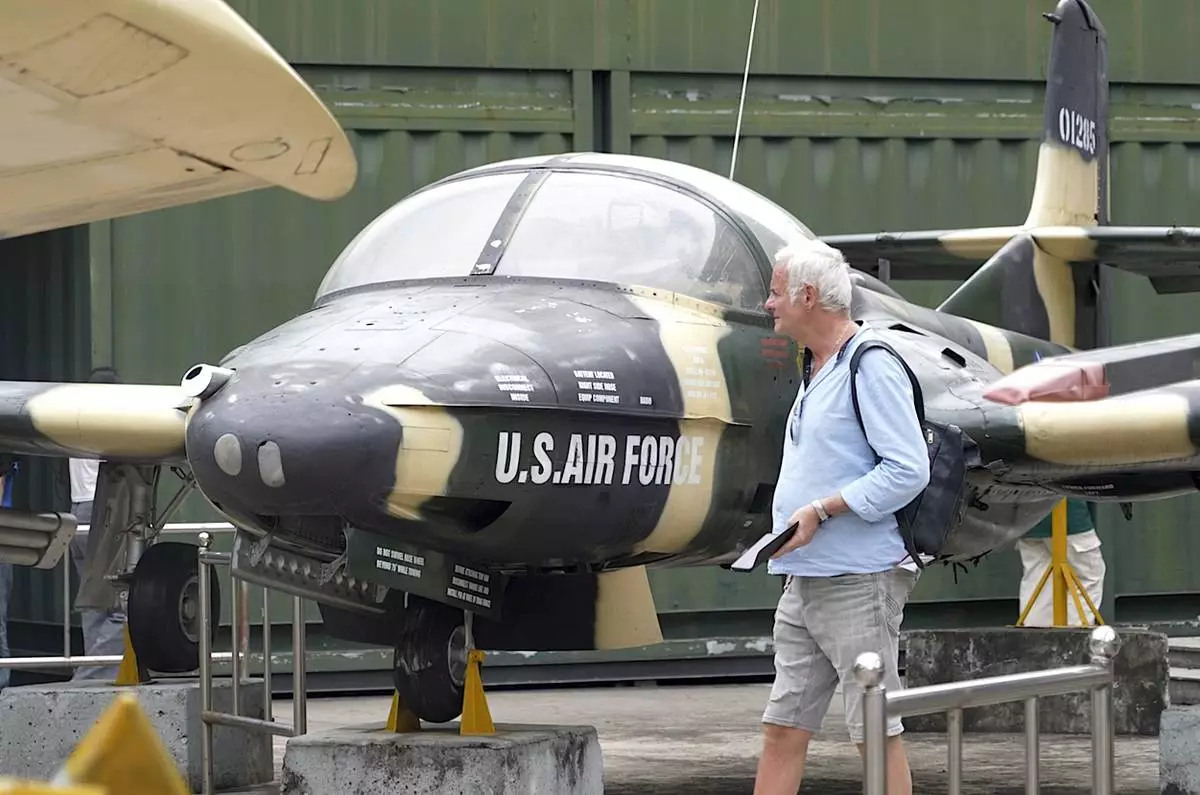
A tourist looks at a U.S Air Force fighter jet used during the Vietnam war on display at the War Remnants Museum in Ho Chi Minh City, Vietnam, Feb. 22, 2025. (AP Photo/Hau Dinh)
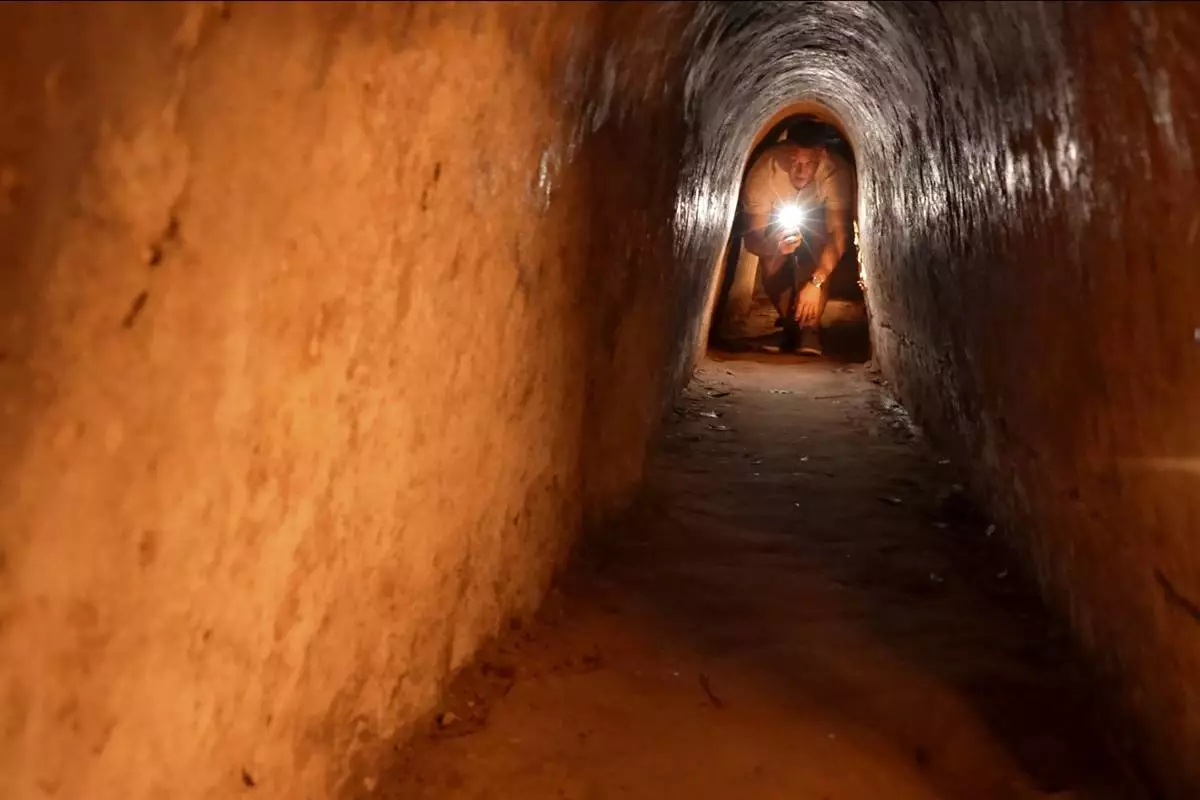
A tourist moves in a narrow tunnel passage in the relic site of Cu Chi tunnels in Ho Chi Minh City, Vietnam, Feb. 23, 2025. (AP Photo/Hau Dinh)
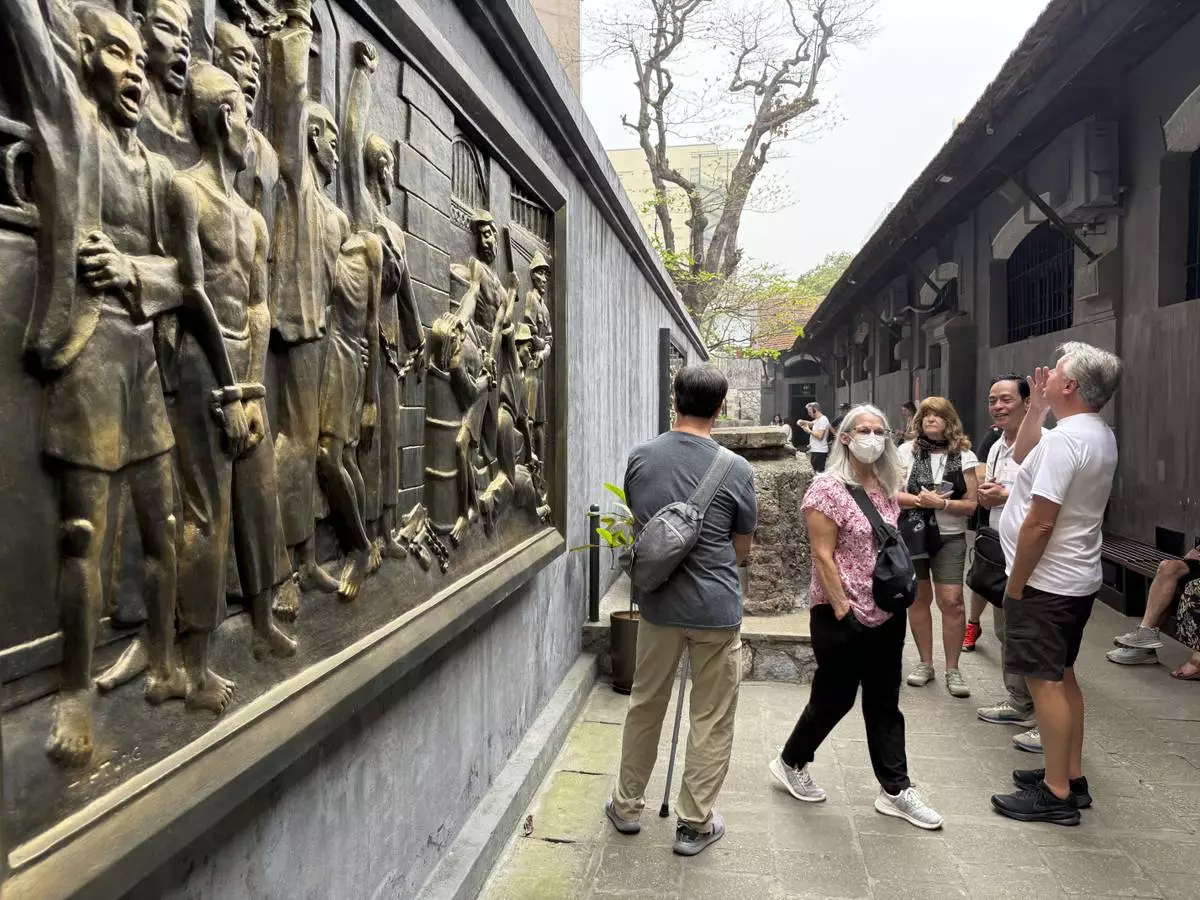
Tourists look at a mural at the Hoa Lo prison museum in Hanoi, Vietnam, March. 26, 2025. (AP Photo/Hau Dinh)

A tourist shoots targets with a war-era weapon at a firing range near Cu Chi tunnels in Ho Chi Minh City, Vietnam, Feb. 23, 2025. (AP Photo/Hau Dinh)
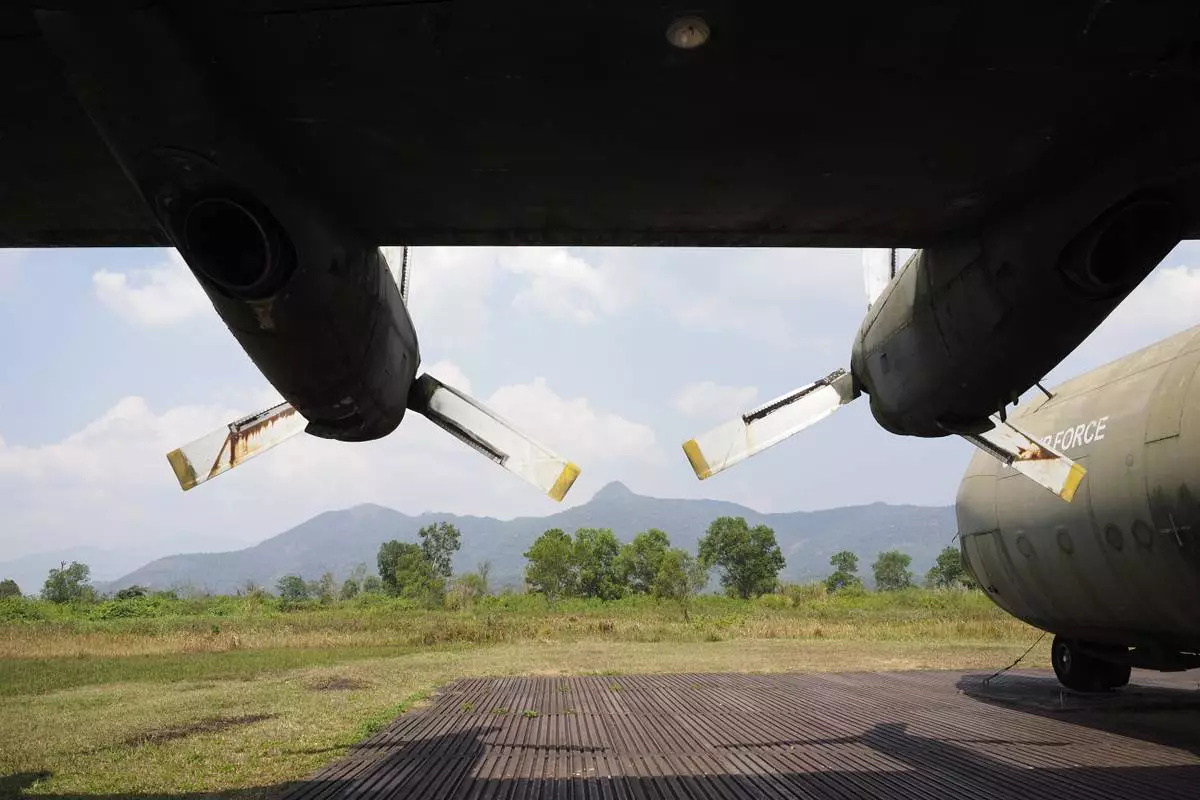
An American transport aircraft stands at the edge of the runway at the Khe Sanh Combat Base in Vietnam. Feb. 22, 2024. (AP Photo/David Rising)
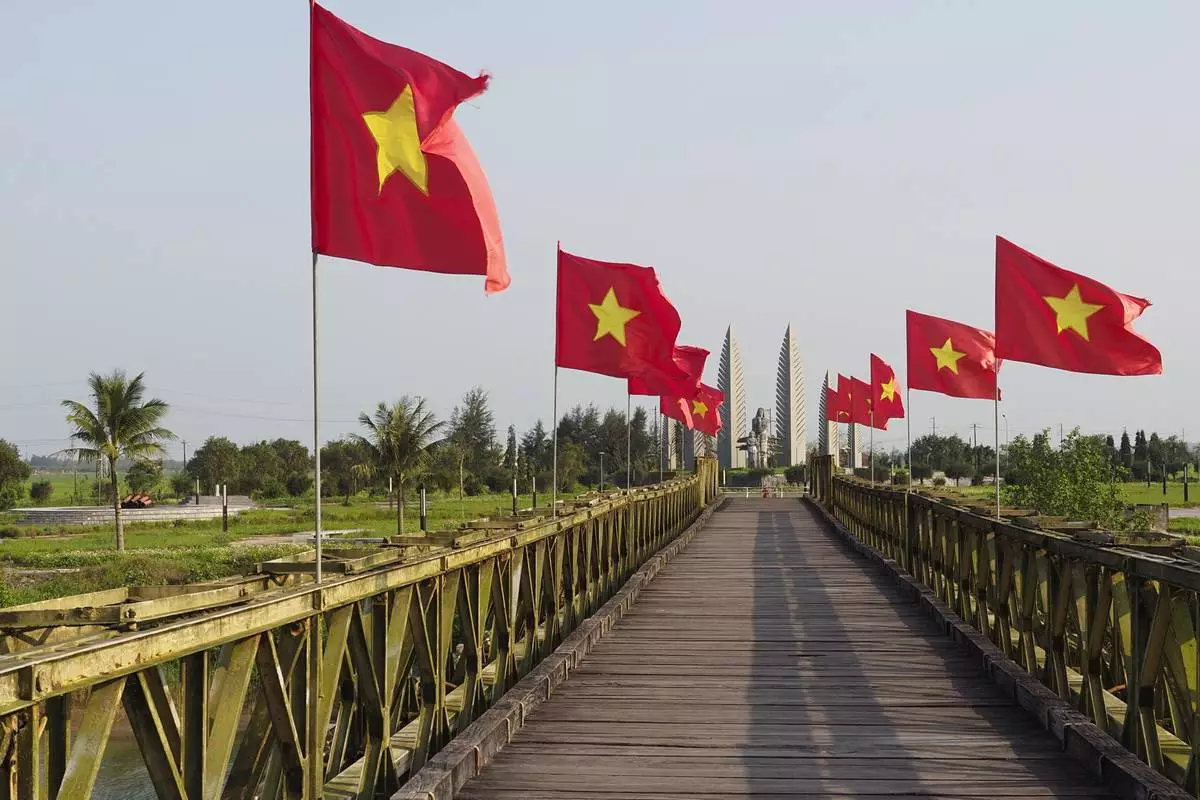
Vietnamese flags fly on the Hien Luong Bridge, with a memorial in the distance, at the former border between North and South Vietnam, Quang Tri province, Feb. 22, 2024. (AP Photo/David Rising)