BRUSSELS (AP) — The European Union’s executive commission said Thursday it will put trade retaliation measures on hold for 90 days to match President Donald Trump’s pause on his sweeping new tariffs and leave room for a negotiated solution.
European Commission President Ursula von der Leyen said that the commission, which handles trade for the bloc's 27 member countries, “took note of the announcement by President Trump.”
New tariffs on 20.9 billion euros ($23 billion) of US goods will be put on hold for 90 days because “we want to give negotiations a chance,” she said in a statement.
But she warned: “If negotiations are not satisfactory, our countermeasures will kick in.”
Trump imposed a 20% levy on goods from the EU as part of his onslaught of tariffs of 10% and upward against global trading partners but said Wednesday he will pause them for 90 days to give countries a chance to negotiate solutions to U.S. trade concerns.
Countries subject to the pause will face Trump's 10% baseline tariff.
Before Trump’s announcement, EU member countries voted to approve a set of retaliatory tariffs on $23 billion in goods in response to his 25% tariffs on imported steel and aluminum that took effect in March. The EU, the largest trading partner of the U.S., described them as “unjustified and damaging.”
The EU tariffs were set to go into effect in stages, some on April 15 and others on May 15 and Dec. 1. The EU commission didn’t immediately provide a list of the goods.
Members of the EU — the world’s largest trading bloc — have said they prefer a negotiated deal to resolve a trade war that damages the economies on both sides. The bloc’s top trade official has shuttled between Brussels and Washington for weeks trying to head off a conflict. The EU has offered Trump a “zero for zero” deal in which both sides would eliminate tariffs on industrial goods including autos. Trump has said that's not enough to answer U.S. concerns and raised the possibility of Europe buying large additional amounts of U.S. liquefied natural gas.
The targeted goods are a tiny fraction of the 1.6 trillion euros ($1.8 trillion) in U.S.-EU annual trade. Some 4.4 billion euros in goods and services crosses the Atlantic each day in what the European Commission calls “the most important commercial relationship in the world.”
The EU has targeted smaller lists of goods in hopes of exerting political pressure and avoiding economic damage from a wider escalation of tit-for-tat tariffs.
The EU is also working on a further set of countermeasures in response to Trump’s blanket 20% tariff on all European goods, now suspended. That could include measures aimed at U.S. tech companies and the services sector as well as trade in goods.
Still, von der Leyen said that Europe intends to diversify its trade partnerships.
She said that the EU will continue “engaging with countries that account for 87% of global trade and share our commitment to a free and open exchange of goods, services, and ideas,” and to lift barriers to commerce inside its own single market.
“Together, Europeans will emerge stronger from this crisis,” von der Leyen said.
—-
McHugh reported from Frankfurt, Germany
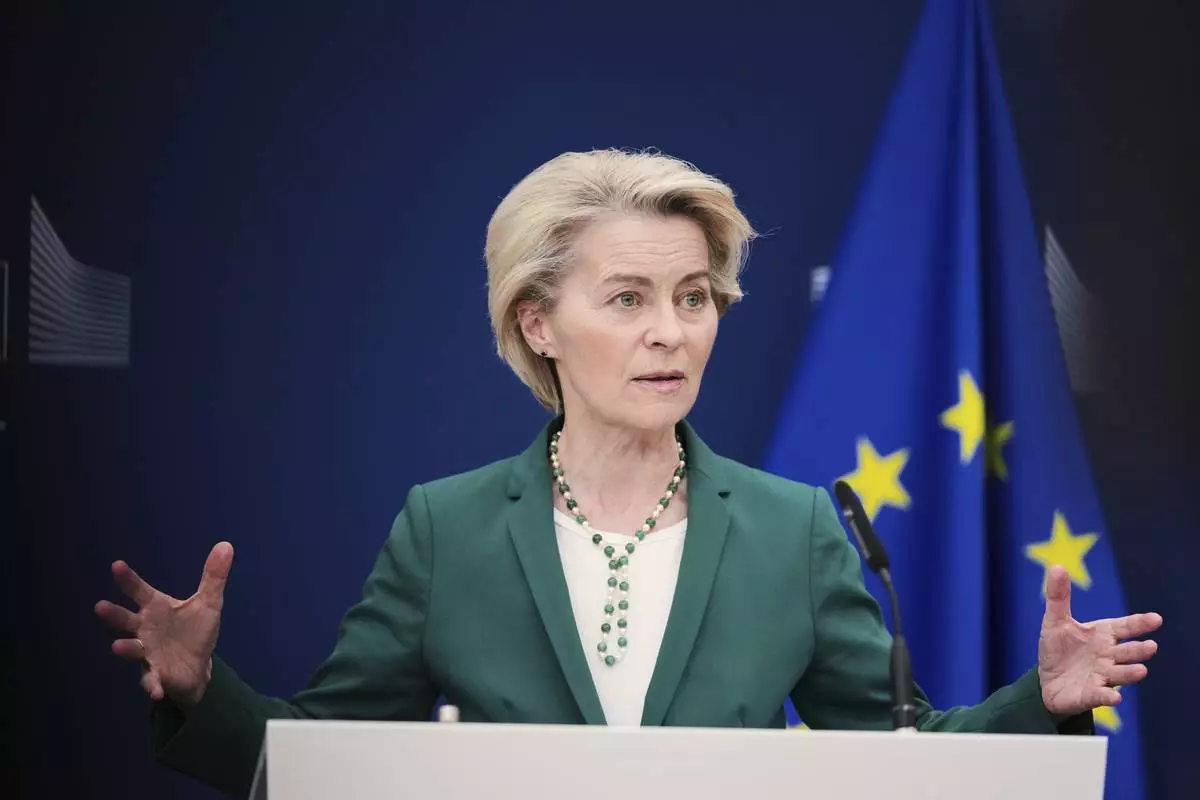
European Commission President Ursula von der Leyen addresses journalists during a media conference at EU headquarters in Brussels, Monday, April 7, 2025. (AP Photo/Virginia Mayo)
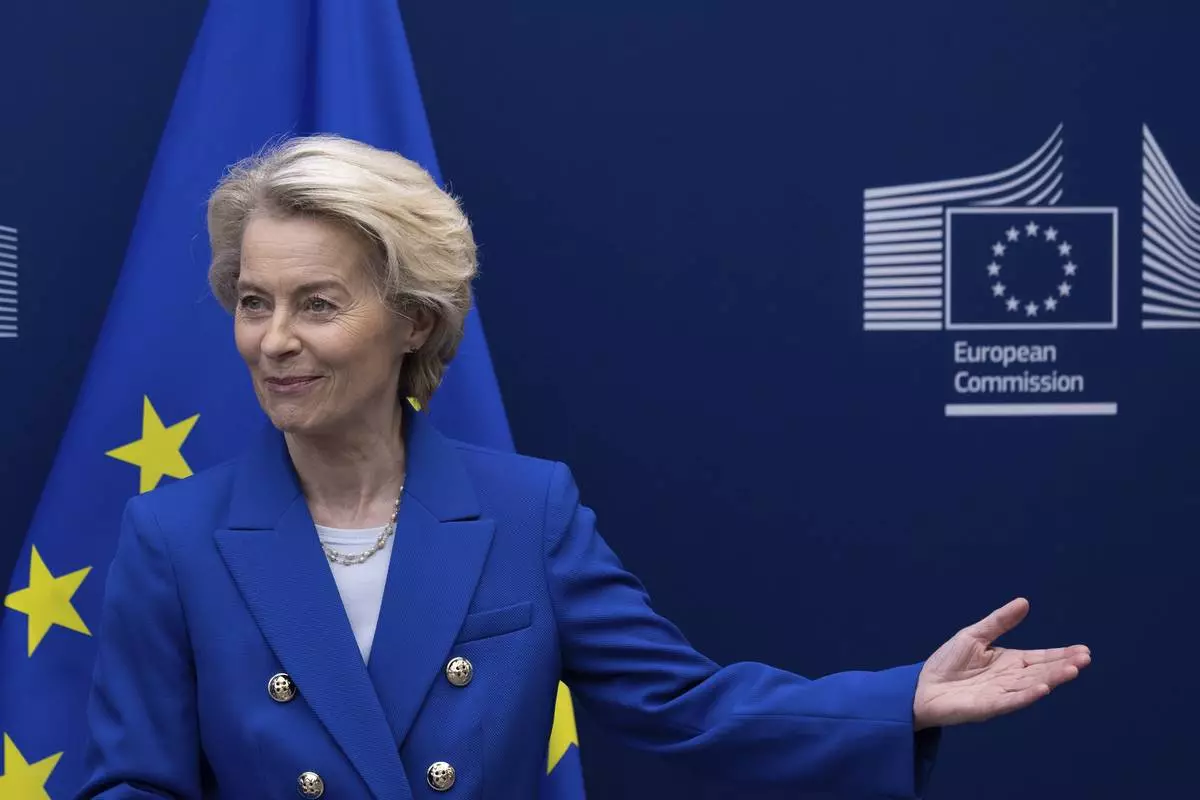
European Commission President Ursula von der Leyen stands prior to a meeting with Iceland's Prime Minister Kristrun Frostadottir at the EU headquarters in Brussels, Wednesday, April 9, 2025. (AP Photo/Omar Havana)
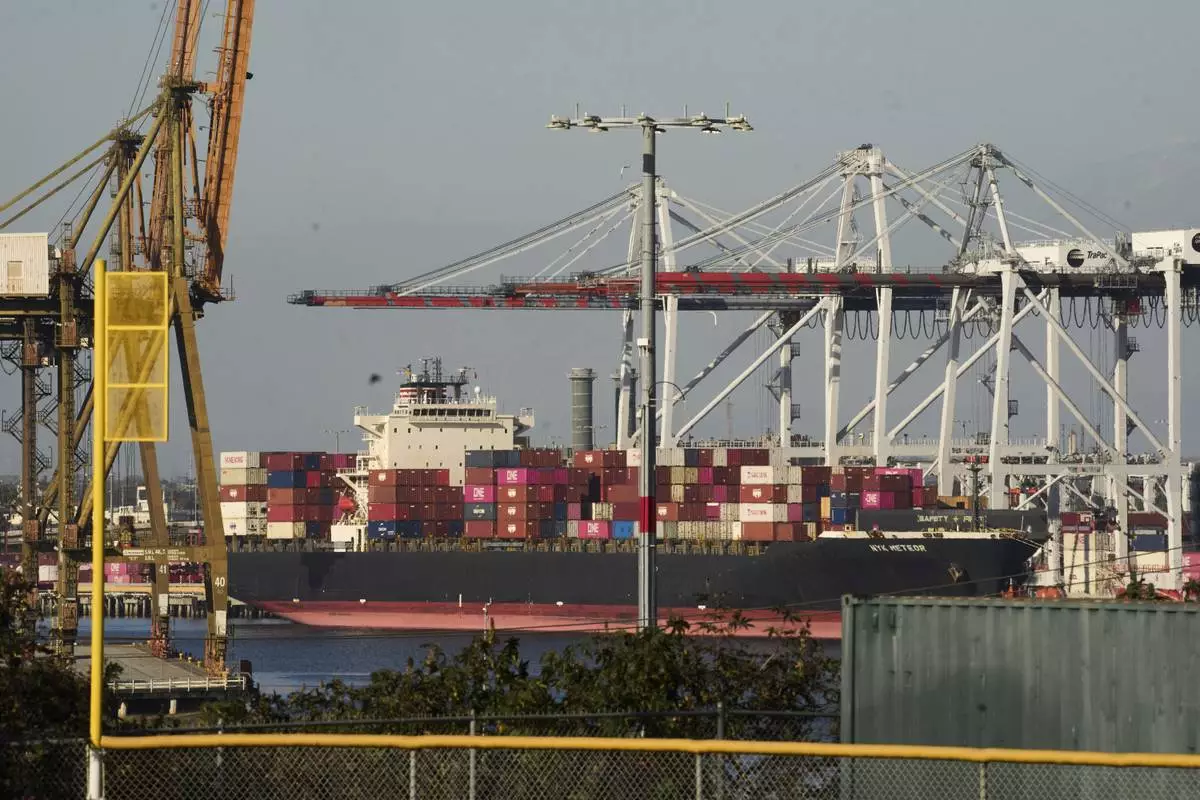
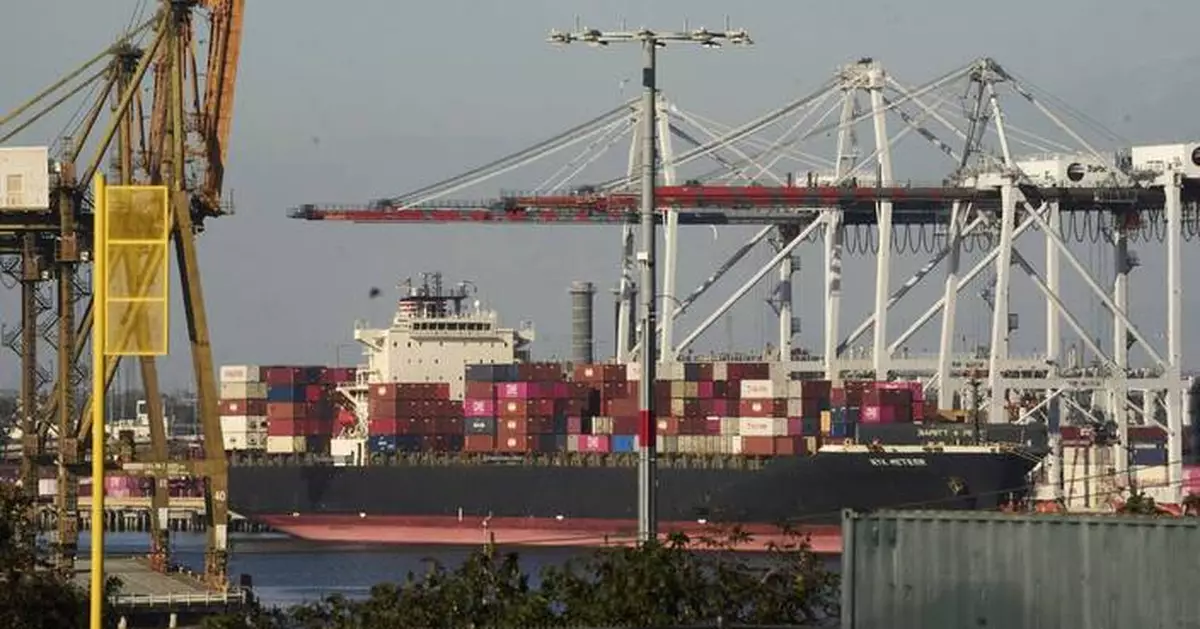
The NYK Meteor container ship is moored at the Port of Los Angeles, Wednesday, April 9, 2025, in Los Angeles. (AP Photo/Damian Dovarganes)
WASHINGTON (AP) — President Donald Trump is meeting with oil executives at the White House on Friday in hopes of securing $100 billion in investments to revive Venezuela’s ability to fully tap into its expansive reserves of petroleum — a plan that rides on their comfort in making commitments in a country plagued by instability, inflation and uncertainty.
Since the U.S. military raid to capture former Venezuelan leader Nicolás Maduro on Saturday, Trump has quickly pivoted to portraying the move as a newfound economic opportunity for the U.S., seizing tankers carrying Venezuelan oil, saying the U.S. is taking over the sales of 30 million to 50 million barrels of previously sanctioned Venezuelan oil and will be controlling sales worldwide indefinitely.
On Friday, U.S. forces seized their fifth tanker over the past month that has been linked to Venezuelan oil. The action reflected the determination of the U.S. to fully control the exporting, refining and production of Venezuelan petroleum, a sign of the Trump administration's plans for ongoing involvement in the sector as it seeks commitments from private companies.
It's all part of a broader push by Trump to keep gasoline prices low. At a time when many Americans are concerned about affordability, the incursion in Venezuela melds Trump’s assertive use of presidential powers with an optical spectacle meant to convince Americans that he can bring down energy prices.
The meeting, set for 2:30 p.m. EST, will be open to the news media, according to an update to the president's daily schedule. “At least 100 Billion Dollars will be invested by BIG OIL, all of whom I will be meeting with today at The White House,” Trump said Friday in a pre-dawn social media post.
Trump is set to meet with executives from 17 oil companies, according to the White House. Among the companies attending are Chevron, which still operates in Venezuela, and ExxonMobil and ConocoPhillips, which both had oil projects in the country that were lost as part of a 2007 nationalization of private businesses under Maduro’s predecessor, Hugo Chávez.
The president is meeting with a wide swath of domestic and international companies with interests ranging from construction to the commodity markets. Other companies slated to be at the meeting include Halliburton, Valero, Marathon, Shell, Singapore-based Trafigura, Italy-based Eni and Spain-based Repsol.
Large U.S. oil companies have so far largely refrained from affirming investments in Venezuela as contracts and guarantees need to be in place. Trump has suggested on social media that America would help to backstop any investments.
Venezuela’s oil production has slumped below one million barrels a day. Part of Trump's challenge to turn that around will be to convince oil companies that his administration has a stable relationship with Venezuela’s interim President Delcy Rodríguez, as well as protections for companies entering the market.
Secretary of State Marco Rubio, Energy Secretary Chris Wright and Interior Secretary Doug Burgum are slated to attend the oil executives meeting, according to the White House.
Meanwhile, the United States and Venezuelan governments said Friday they were exploring the possibility of r estoring diplomatic relations between the two countries, and that a delegation from the Trump administration arrived to the South American nation on Friday.
The small team of U.S. diplomats and diplomatic security officials traveled to Venezuela to make a preliminary assessment about the potential re-opening of the U.S. Embassy in Caracas, the State Department said in a statement.
Trump also announced on Friday he’d meet with President Gustavo Petro in early February, but called on the Colombian leader to make quick progress on stemming flow of cocaine into the U.S.
Trump, following the ouster of Maduro, had made vague threats to take similar action against Petro. Trump abruptly changed his tone Wednesday about his Colombian counterpart after a friendly phone call in which he invited Petro to visit the White House.
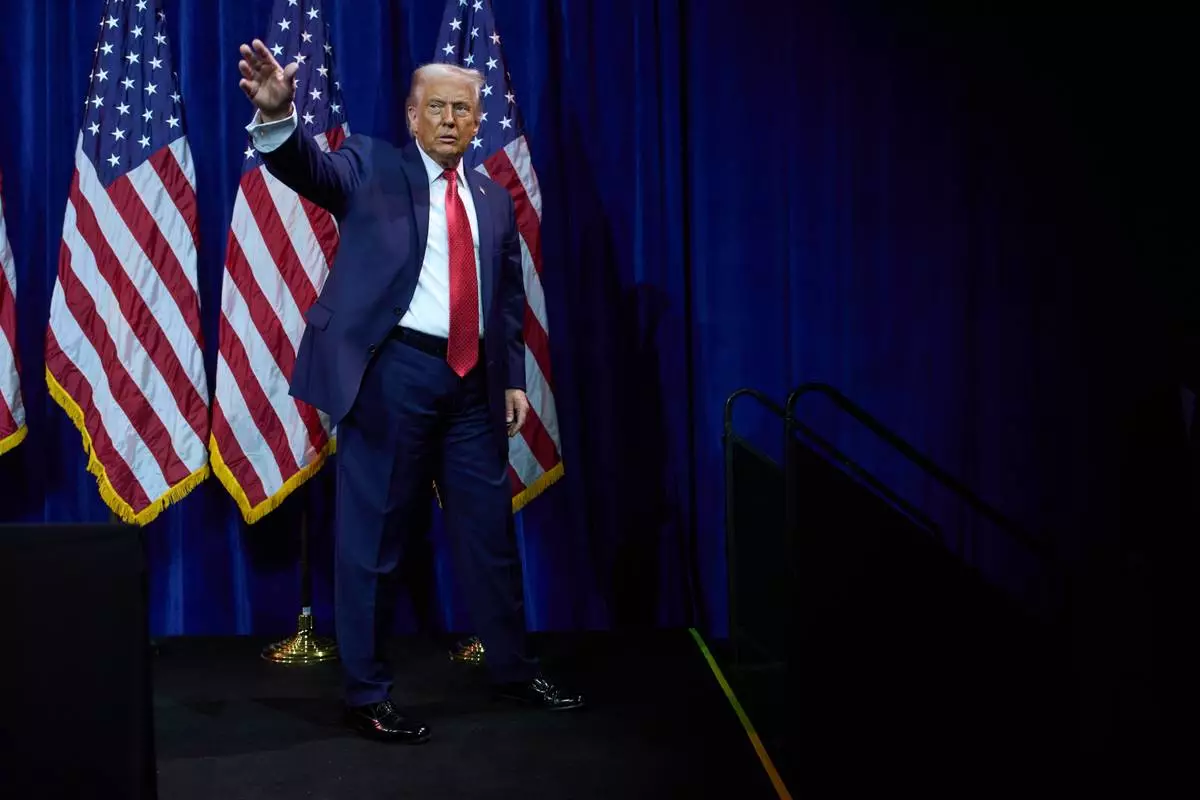
President Donald Trump waves as he walks off stage after speaking to House Republican lawmakers during their annual policy retreat, Tuesday, Jan. 6, 2026, in Washington. (AP Photo/Evan Vucci)