China's commercial banks have ramped up their support for stock repurchase and share increase initiatives, with total credit now exceeding 300 billion yuan (about 41 billion U.S. dollars), aimed at helping listed companies manage market value, optimize their capital structures, and contribute to broader efforts to stabilize the capital market. The Industrial and Commercial Bank of China (ICBC), one of the world's largest banks and China's top four by assets, has supported over 400 stock repurchase and share increase projects, with a total transaction value exceeding 100 billion yuan (about 14 billion U.S. dollars).
These projects cover various markets, including the main board, ChiNext, and the STAR Market. ICBC is also processing additional requests totaling 50 billion yuan (over 6.8 billion U.S. dollars) to support further market value management.
Similarly, the Agricultural Bank of China (ABC), another member of the "big four," has provided over 15 billion yuan (over 2 billion U.S. dollars) in stock repurchase and increase loans to 53 companies across sectors such as agriculture, advanced manufacturing, and green finance.
ABC has tailored its services to meet the rising demand from both state-owned and private companies, demonstrating a flexible approach in providing financial support to businesses across different sectors.
The Bank of China (BOC), another major player in China's banking sector, has supported 73 stock repurchase and increase plans, with loan intentions totaling 25.36 billion yuan (about 3.5 billion U.S. dollars).
The bank has streamlined its loan processes and introduced customized loan products to ensure quick implementation and compliance.
China Construction Bank (CCB) has extended credit to nearly 70 listed companies, with loans totaling nearly 14 billion yuan (about 2 billion U.S. dollars).
CCB continues to engage with more than 80 companies, providing comprehensive financial support to maintain market stability.
Bank of Communications (BoCom) has extended nearly 25 billion yuan (over 3.4 billion U.S. dollars) in credit to around 80 companies across sectors such as integrated circuits and biomedicine.
Postal Savings Bank of China (PSBC) has also been active, disbursing 457 million yuan billion (over 62 million U.S. dollars) in stock repurchase-related loans, with agreements signed involving 580 million yuan (about 79 million U.S. dollars).
The bank is working closely with businesses to meet their financing needs through tailored solutions.
Other banks, such as Industrial Bank and Zhejiang Merchants Bank, have committed significant resources to stock repurchase and loan increase.
Industrial Bank has reached agreements with 44 companies, involving a total of 6.6 billion yuan (about 898 million U.S. dollars) in loans, with over 80 percent of these companies being private and more than 60 percent in the technology sector.
Zhejiang Merchants Bank has secured loan intentions from nearly 60 companies, amounting to over five billion yuan (over 680 million U.S. dollars) in credit.
As of April 6, China Merchants Bank had launched 288 stock repurchase and increase projects, involving a total of 104.8 billion yuan (over 14 billion U.S. dollars), while Everbright Bank had extended 864 million yuan (about 118 million U.S. dollars) by April 10.
These initiatives are part of the special re-loan program introduced by the People’s Bank of China (PBOC) in September 2024.
Under the program, the PBOC offers re-loans to commercial banks at an interest rate of 1.75 percent, with an initial quota of 300 billion yuan (about 41 billion U.S. dollars). Commercial banks, in turn, charge loan rates of around 2.25 percent.
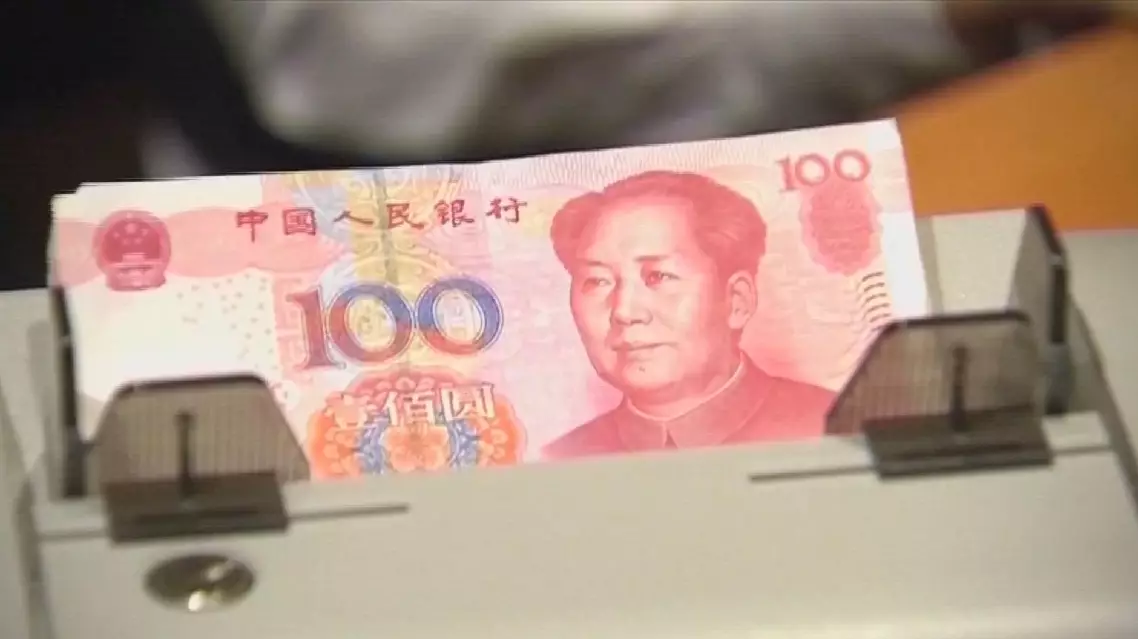
Chinese banks extend over 300 bln yuan in stock repurchase credit