WASHINGTON--(BUSINESS WIRE)--Apr 10, 2025--
This press release features multimedia. View the full release here: https://www.businesswire.com/news/home/20250410380135/en/
Why is laundry important? In our latest survey conducted by Wakefield Research - 47% of respondents reported prioritizing doing laundry as a way to stay healthy. One way laundry promotes better health is by reducing allergens, dust mites, and bacteria that accumulate on clothing and linens. However, there seems to be a perception that removing these germs and allergens requires hot water.
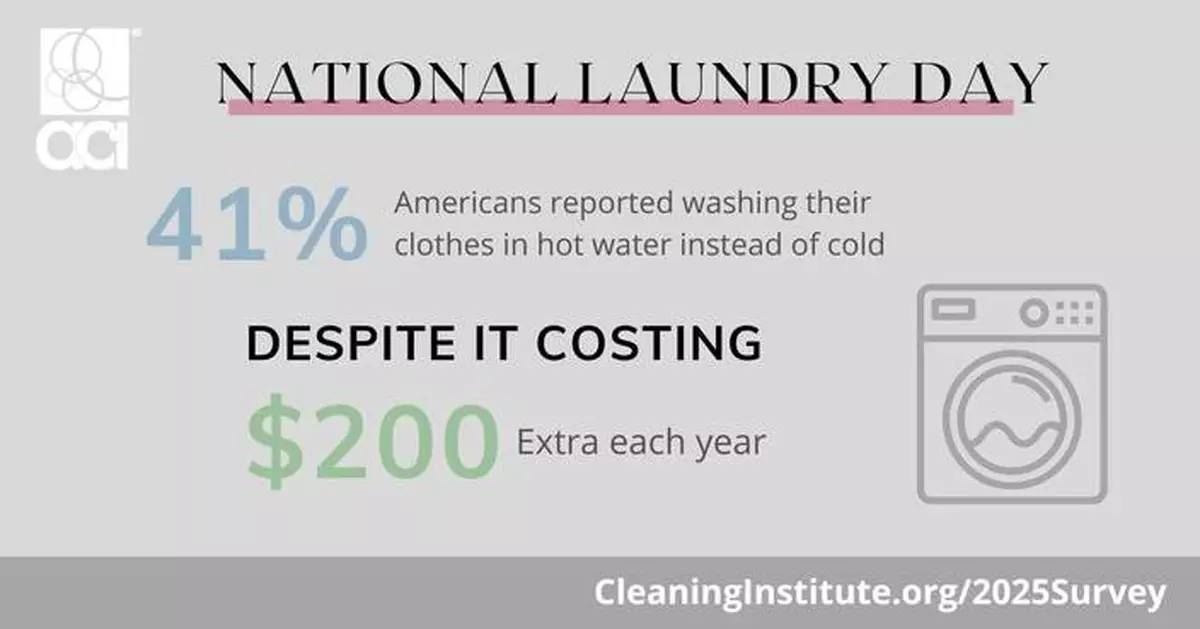
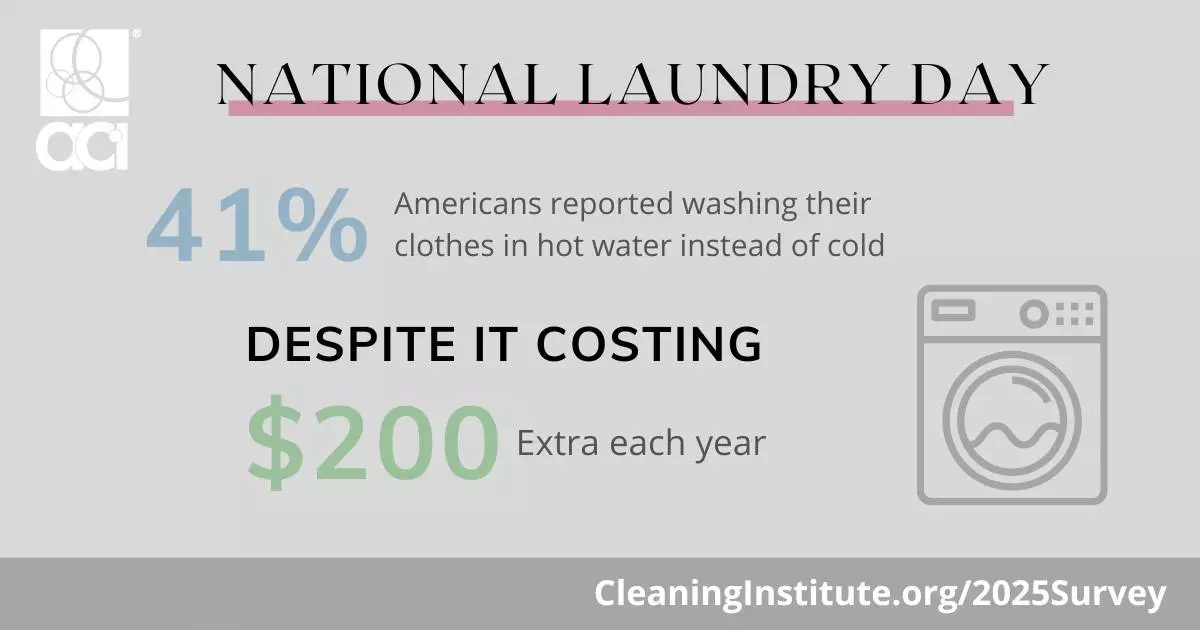
A surprising 41% of survey respondents reported washing their clothes in hot water most of the time. This percentage has been trending upward over the last four years and highlights the need for increased awareness of the advantages of cold water washing. While warmer water temperatures may be warranted if someone in the home is sick or immunocompromised, for most healthy households' laundry this is not necessary, as shown in ACI’s Levels of Laundry.
Cold water washing also helps preserve the quality and longevity of clothes. It can prevent them from fading or shrinking and is best at removing a variety of stains and preventing them from setting. In addition, the average home will save approximately $200 a year on electricity bills by washing in cold instead of hot water, making it a win-win for both wallet and wardrobe.
“Every small action counts in keeping the earth healthy and reducing our carbon footprint,” said Nathan Sell, Senior Director, Sustainability, ACI. “By adopting cold water washing, we can collectively make a positive impact on the environment as well as our clothes.”
For more information on the impact of washing clothes in cold water, visit ColdWaterSaves.org.
About the Survey
The ACI Spring Cleaning Survey was conducted by Wakefield Research ( www.wakefieldresearch.com ) among 1,000 nationally representative U.S. adults ages 18+, between February 10th and February 18th, 2025, using an email invitation and an online survey. The data has been weighted to ensure an accurate representation of nationally representative U.S. adults ages 18+.
Results of any sample are subject to sampling variation. The magnitude of the variation is measurable and is affected by the number of interviews and the level of the percentages expressing the results. For the interviews conducted in this particular study, the chances are 95 in 100 that a survey result does not vary, plus or minus, by more than 3.1 percentage points from the result that would be obtained if interviews had been conducted with all persons in the universe represented by the sample.
American Cleaning Institute
The American Cleaning Institute® (ACI – www.cleaninginstitute.org ) is the Home of the U.S. Cleaning Products Industry® and represents the $60 billion U.S. cleaning product supply chain. ACI members include the manufacturers and formulators of soaps, detergents, and general cleaning products used in household, commercial, industrial and institutional settings; companies that supply ingredients and finished packaging for these products; and chemical distributors. ACI serves the growth and innovation of the U.S. cleaning products industry by advancing the health and quality of life of people and protecting our planet. ACI achieves this through a continuous commitment to sound science and being a credible voice for the cleaning products industry.
April 15 is not just Tax Day, but it’s also National Laundry Day. It is the perfect opportunity to reflect on our laundry habits, especially since 80% of Americans prefer cleaning to doing their taxes, according to the American Cleaning Institute.
ALEPPO, Syria (AP) — First responders on Sunday entered a contested neighborhood in Syria’ s northern city of Aleppo after days of deadly clashes between government forces and Kurdish-led forces. Syrian state media said the military was deployed in large numbers.
The clashes broke out Tuesday in the predominantly Kurdish neighborhoods of Sheikh Maqsoud, Achrafieh and Bani Zaid after the government and the Syrian Democratic Forces, the main Kurdish-led force in the country, failed to make progress on how to merge the SDF into the national army. Security forces captured Achrafieh and Bani Zaid.
The fighting between the two sides was the most intense since the fall of then-President Bashar Assad to insurgents in December 2024. At least 23 people were killed in five days of clashes and more than 140,000 were displaced amid shelling and drone strikes.
The U.S.-backed SDF, which have played a key role in combating the Islamic State group in large swaths of eastern Syria, are the largest force yet to be absorbed into Syria's national army. Some of the factions that make up the army, however, were previously Turkish-backed insurgent groups that have a long history of clashing with Kurdish forces.
The Kurdish fighters have now evacuated from the Sheikh Maqsoud neighborhood to northeastern Syria, which is under the control of the SDF. However, they said in a statement they will continue to fight now that the wounded and civilians have been evacuated, in what they called a “partial ceasefire.”
The neighborhood appeared calm Sunday. The United Nations said it was trying to dispatch more convoys to the neighborhoods with food, fuel, blankets and other urgent supplies.
Government security forces brought journalists to tour the devastated area, showing them the damaged Khalid al-Fajer Hospital and a military position belonging to the SDF’s security forces that government forces had targeted.
The SDF statement accused the government of targeting the hospital “dozens of times” before patients were evacuated. Damascus accused the Kurdish-led group of using the hospital and other civilian facilities as military positions.
On one street, Syrian Red Crescent first responders spoke to a resident surrounded by charred cars and badly damaged residential buildings.
Some residents told The Associated Press that SDF forces did not allow their cars through checkpoints to leave.
“We lived a night of horror. I still cannot believe that I am right here standing on my own two feet,” said Ahmad Shaikho. “So far the situation has been calm. There hasn’t been any gunfire.”
Syrian Civil Defense first responders have been disarming improvised mines that they say were left by the Kurdish forces as booby traps.
Residents who fled are not being allowed back into the neighborhood until all the mines are cleared. Some were reminded of the displacement during Syria’s long civil war.
“I want to go back to my home, I beg you,” said Hoda Alnasiri.
Associated Press journalist Kareem Chehayeb in Beirut contributed to this report.
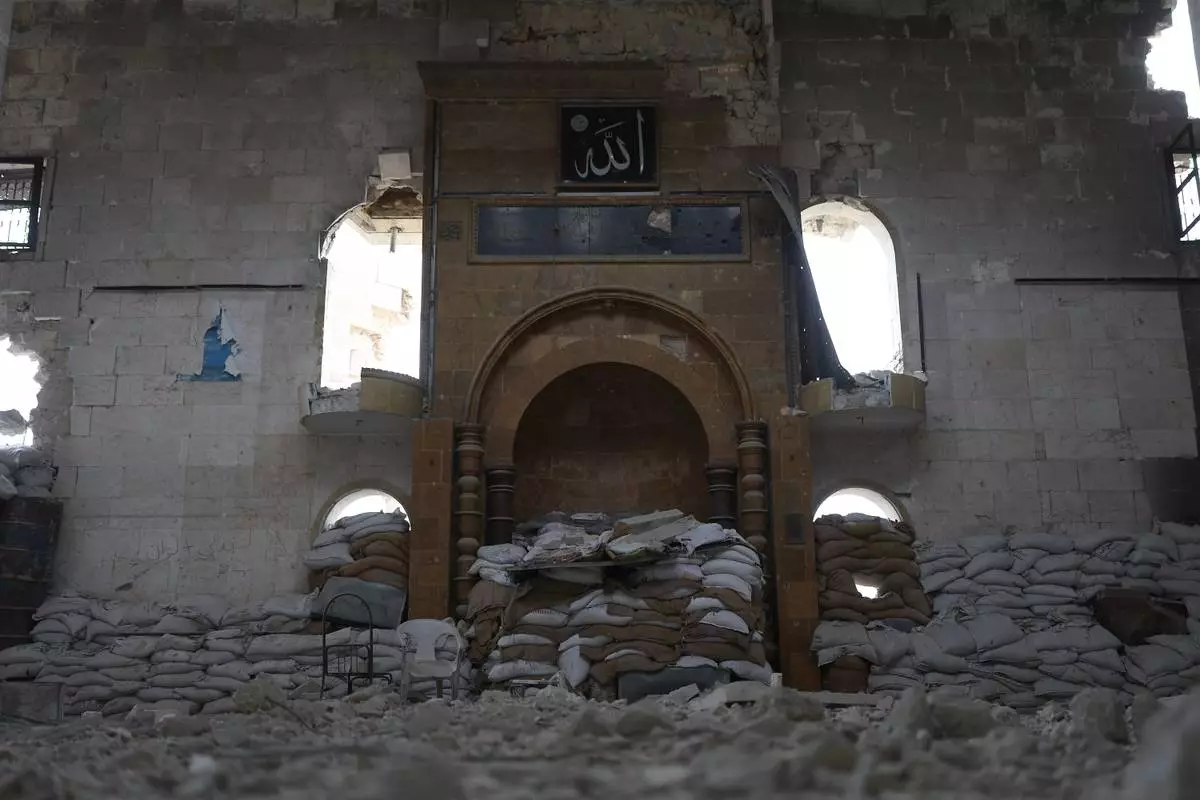
Sandbag barriers used as fighting positions by Kurdish fighters, left inside a destroyed mosque in the Sheikh Maqsoud neighborhood, where clashes between government forces and Kurdish fighters have been taking place in the northern city of Aleppo, Syria, Sunday, Jan. 11, 2026. (AP Photo/Ghaith Alsayed)
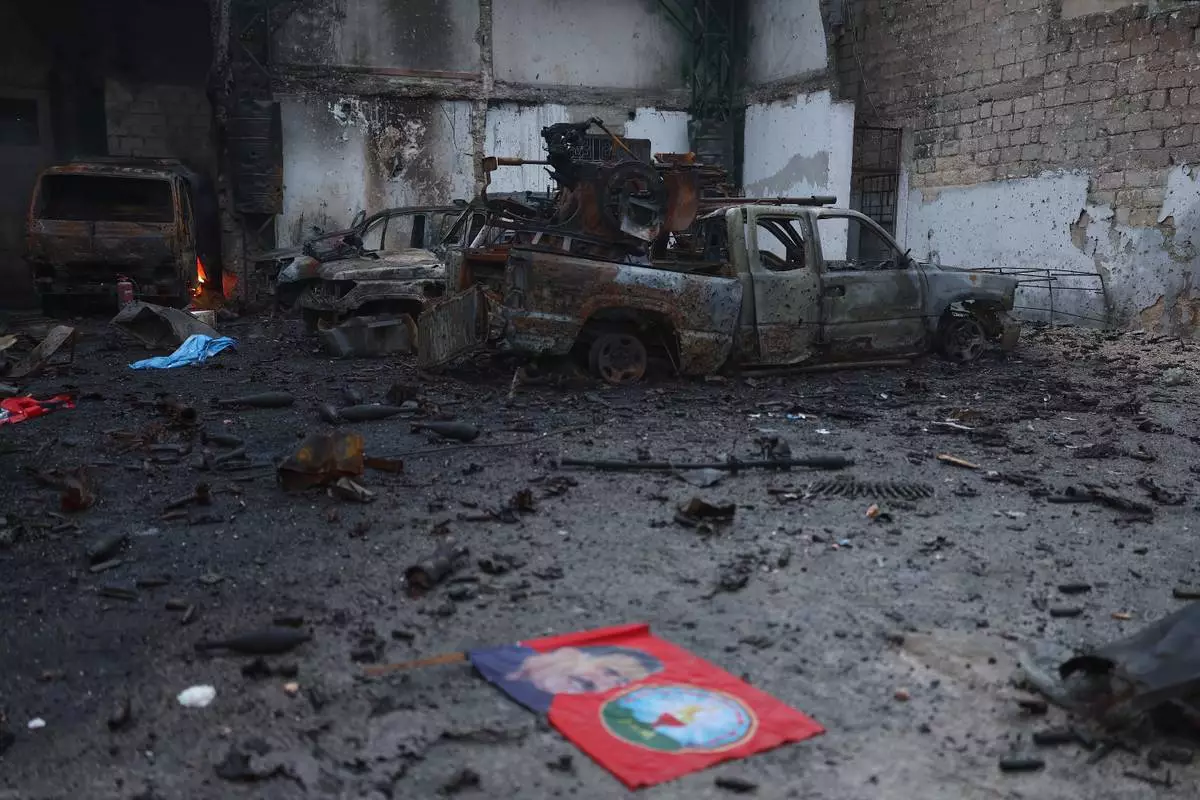
Burned vehicles at one of the Kurdish fighters positions at the Sheikh Maqsoud neighborhood, where clashes between government forces and Kurdish fighters have been taking place in the northern city of Aleppo, Syria, Sunday, Jan. 11, 2026. (AP Photo/Ghaith Alsayed)
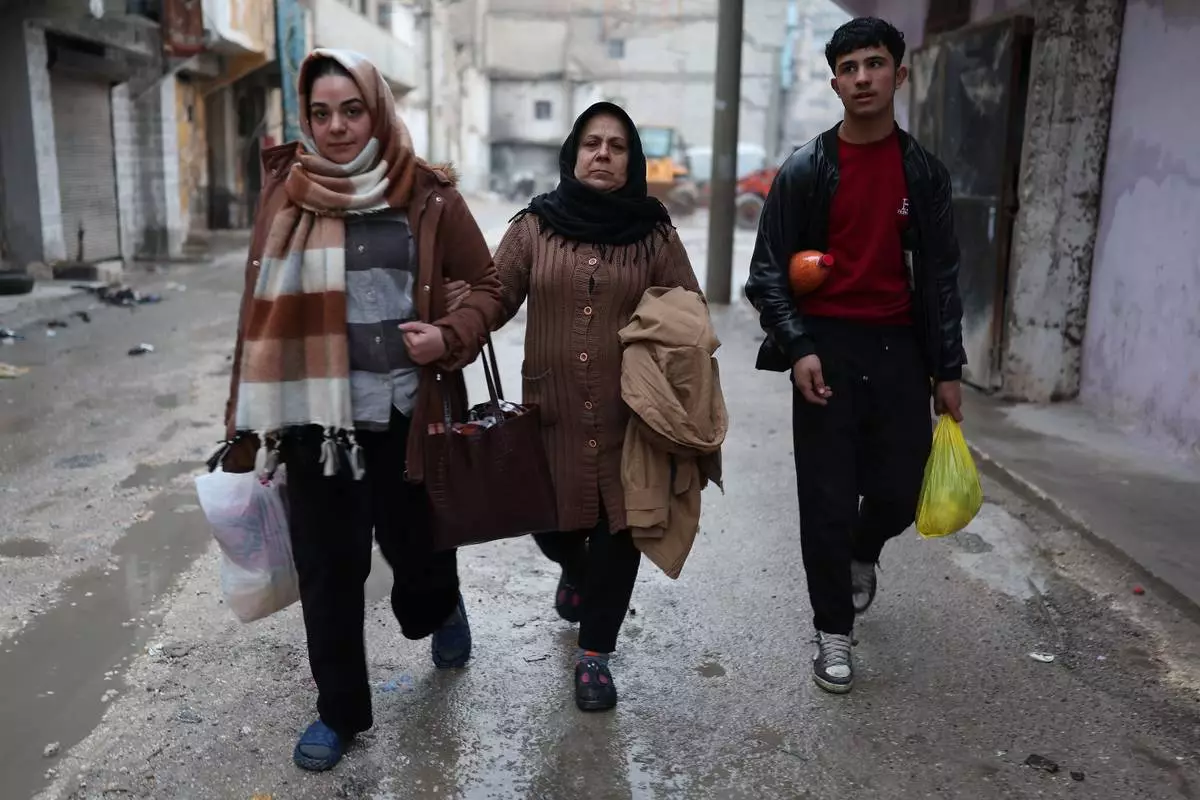
People flee the Sheikh Maqsoud neighborhood, where clashes between government forces and Kurdish fighters have been taking place in the northern city of Aleppo, Syria, Sunday, Jan. 11, 2026. (AP Photo/Ghaith Alsayed)
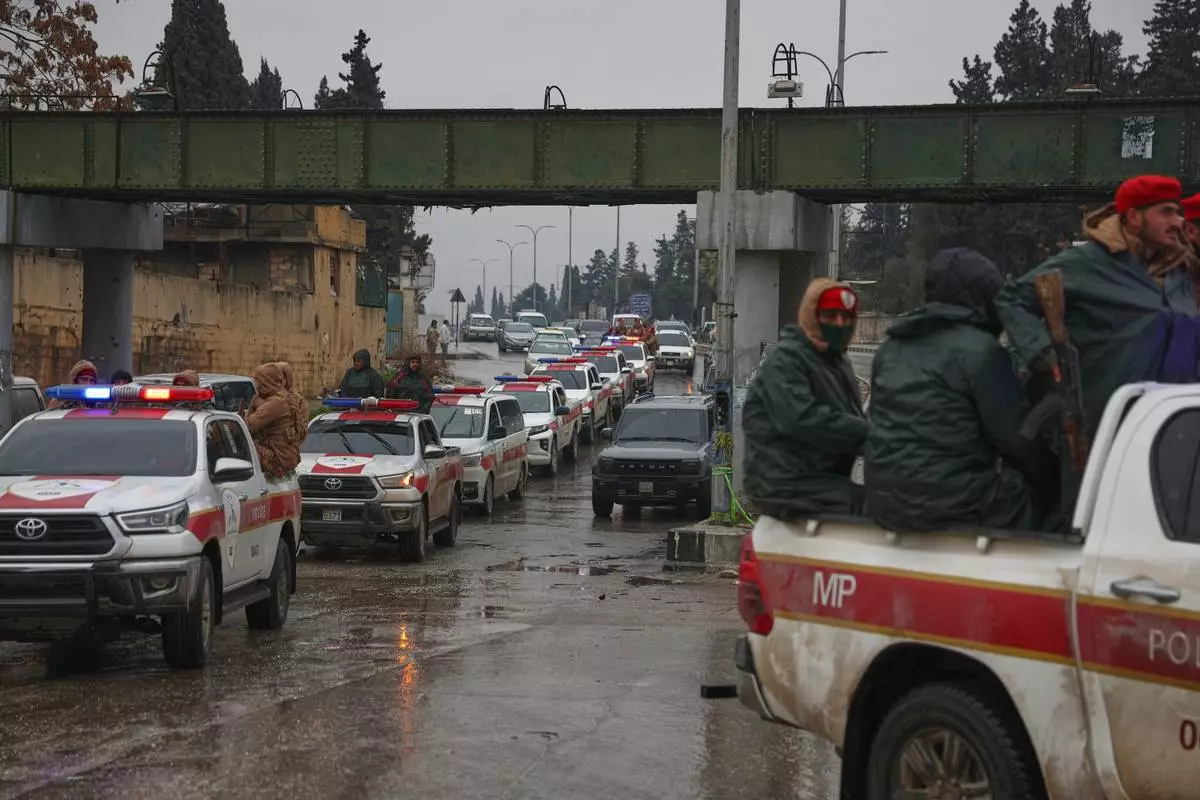
A Syrian military police convoy enters the Sheikh Maqsoud neighborhood, where clashes between government forces and Kurdish fighters have been taking place in the northern city of Aleppo, Syria, Sunday, Jan. 11, 2026. (AP Photo/Ghaith Alsayed)
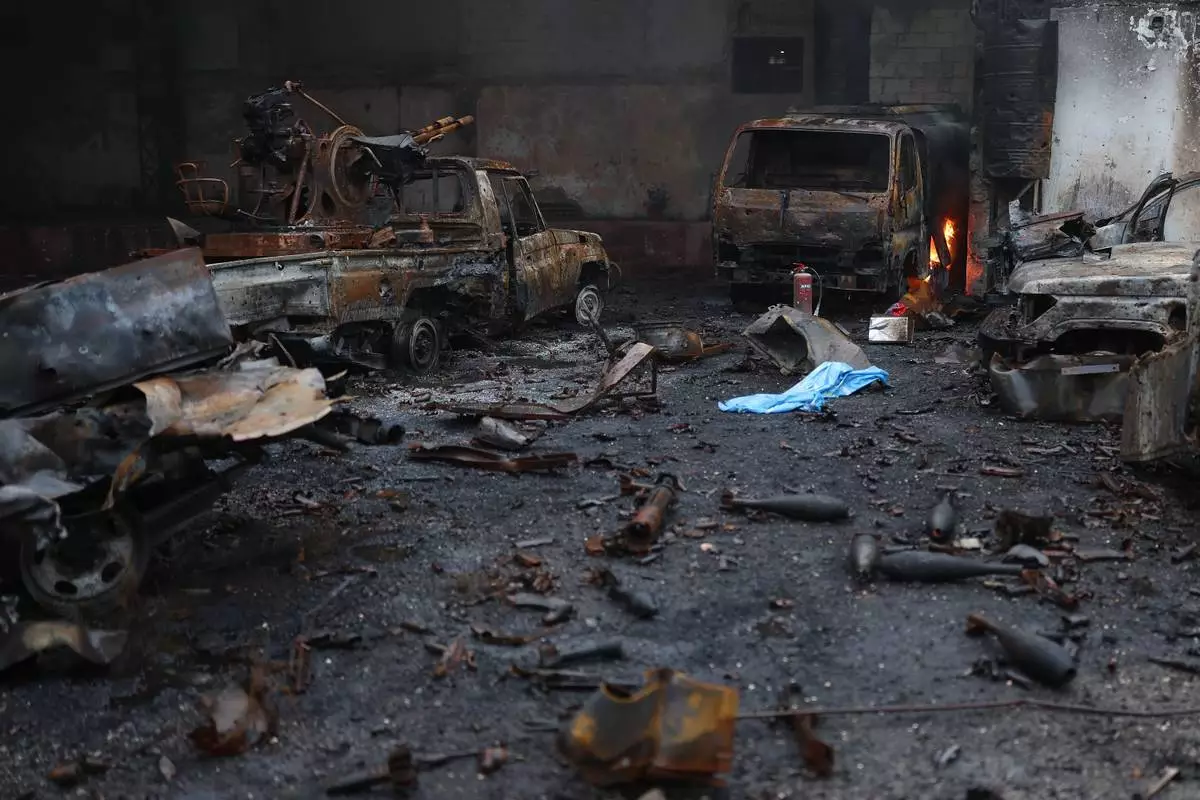
Burned vehicles and ammunitions left at one of the Kurdish fighters positions at the Sheikh Maqsoud neighborhood, where clashes between government forces and Kurdish fighters have been taking place in the northern city of Aleppo, Syria, Sunday, Jan. 11, 2026. (AP Photo/Ghaith Alsayed)