Skip to Content Facebook Feature Image

Gambian torture victims testify in US against a member of former dictator's military

News

Gambian torture victims testify in US against a member of former dictator's military
News

News

Gambian torture victims testify in US against a member of former dictator's military

2025-04-11 07:18 Last Updated At:07:21

DENVER (AP) — Suspected of backing a coup plot against the longtime dictator of Gambia nearly 20 years ago, Pharing Sanyang described Thursday how he was beaten with pipes and palm tree branches, pistol-whipped and hit in the face with a hammer.

Particles from the sandy ground of a courtyard in the West Africa nation where the military officer fell during one of the 2006 beatings lodged in his eyes, causing damage requiring several surgeries, he testified.

Sanyang, a former military officer in Gambia, took the stand in federal court in Denver against one of the former soldiers he said beat him — Michael Sang Correa.

Correa is on trial after being indicted in 2020 under a rarely used law that allows people to be prosecuted in the U.S. judicial system for torture allegedly committed abroad.

He is charged with torturing Sanyang and four others and being part of a conspiracy to torture alleged coup plotters while serving with the Junglers, a military unit that reported directly to former Gambian president Yahya Jammeh.

Sanyang told jurors he eventually agreed to sign a false confession but wiped blood from his head onto the paper to show he had been tortured. Then, after refusing to confess on television, he was shocked with wires plugged into a wall socket and beaten again, he said.

Bleeding, he read his confession for the television camera, but only the audio was recorded to conceal the torture, he told the court.

“I had to save my body,” Sanyang said of why he agreed to confess, adding he did not join the failed insurrection against Jammeh, who ousted the previous president of Gambia in a coup of his own in 1994.

Sanyang spent nearly a decade in prison after being convicted of treason and fled to nearby Senegal after his release.

Correa came to the U.S. to serve as a bodyguard for Jammeh in December 2016 and overstayed his visa after Jammeh was ousted in 2017, according to prosecutors. Since sometime after arriving, Correa had been living in Denver and working as a day laborer, they said.

Sanyang and other alleged victims traveled from Gambia, Europe and elsewhere in the U.S. to testify this week about their torture. Prosecutors showed the jury photos of victims with scars left by things including a bayonet, a burning cigarette and ropes. The men were asked to circle scars on photos and explain how they received them.

Correa's lawyers have not disputed that the defendant was involved in Sanyang's torture even though Sanyang said Correa, like the other Junglers, was wearing a face mask. Sanyang said he knew Correa from working with him at the president's official home and recognized his “walking gait.”

But his lawyers argue Correa was a low-ranking private who risked being tortured himself or even killed if he refused Jammeh's orders.

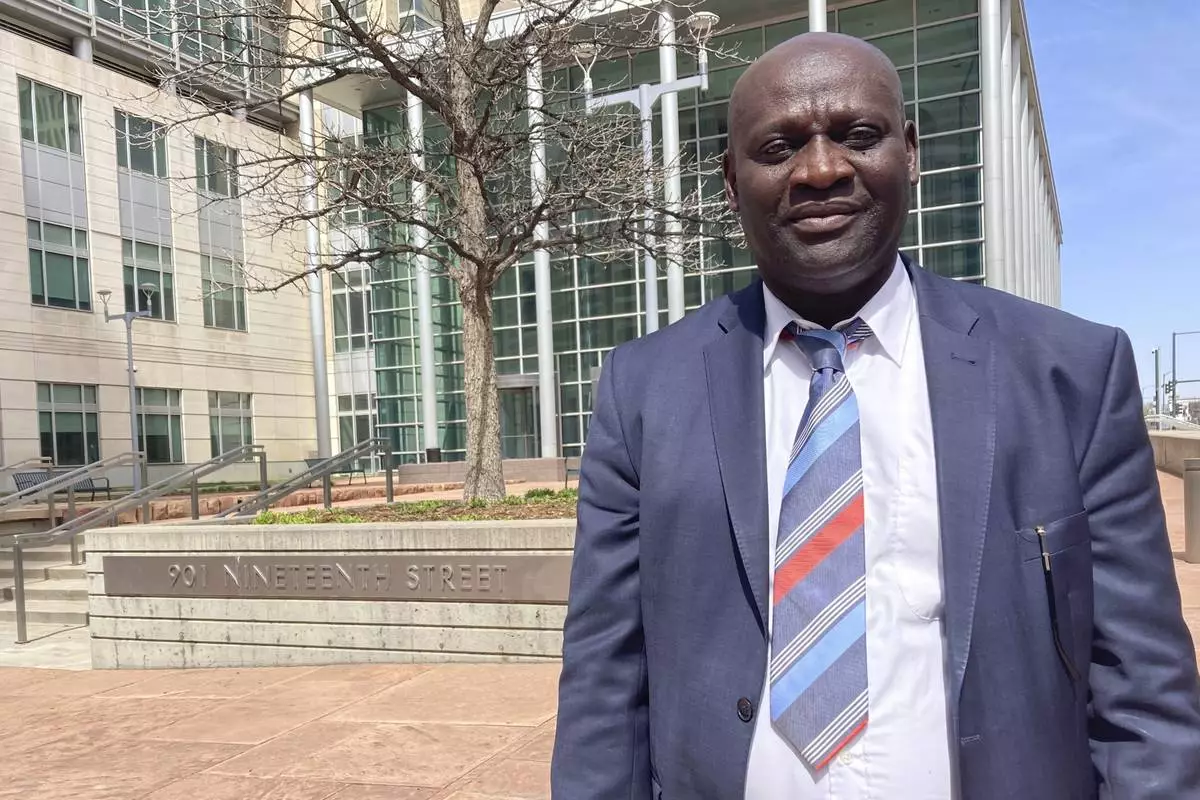
Demba Dem testified Wednesday that his torturers put a black plastic shopping bag over his head and beat him as he was handcuffed.

Another time, they put a heavy bag of sand on his back and then held a piece of hot metal close to his nose. Then they hung him upside down, his wrists and ankles tied, beating him again.

The former teacher who became a member of the Gambian parliament as part of Jammeh's political party said Correa used a stick to beat him.

Dem, who said he was not part of the planned coup, later moved to the Netherlands with his family after seeking asylum and was diagnosed with post-traumatic stress disorder. He was reluctant to talk on the witness stand about the impact the torture had on his life other than saying it was “very bad” and asking a prosecutor to move on.

Still, Dem said he was “happy” to be in court to try to hold one of his abusers accountable.

“I have to do it but I feel satisfied,” he said.

The trial is scheduled to continue into next week.

In 2021, a truth commission in Gambia urged that the perpetrators of crimes committed under Jammeh's regime be prosecuted by the government. Other countries have also tried people connected with his rule.

Last year, Jammeh’s former interior minister was sentenced to 20 years behind bars by a Swiss court for crimes against humanity. In 2023, a German court convicted a Gambian man who was also a member of the Junglers of murder and crimes against humanity for involvement in the killing of government critics in Gambia.
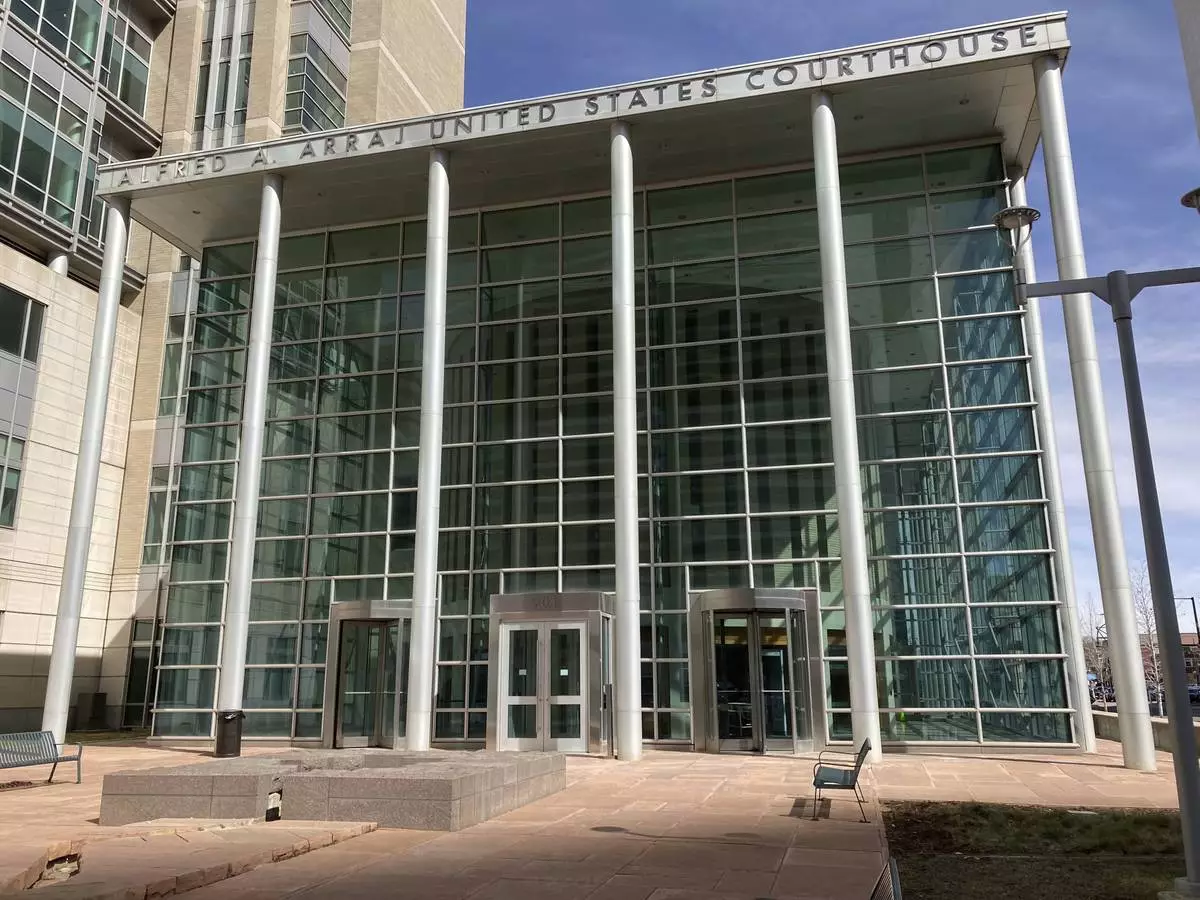
FILE - This photo shows the Alfred A. Arraj United States Courthouse in Denver on March 11, 2025. (AP Photo/Colleen Slevin, file)
FILE - This photo shows the Alfred A. Arraj United States Courthouse in Denver on March 11, 2025. (AP Photo/Colleen Slevin, file)

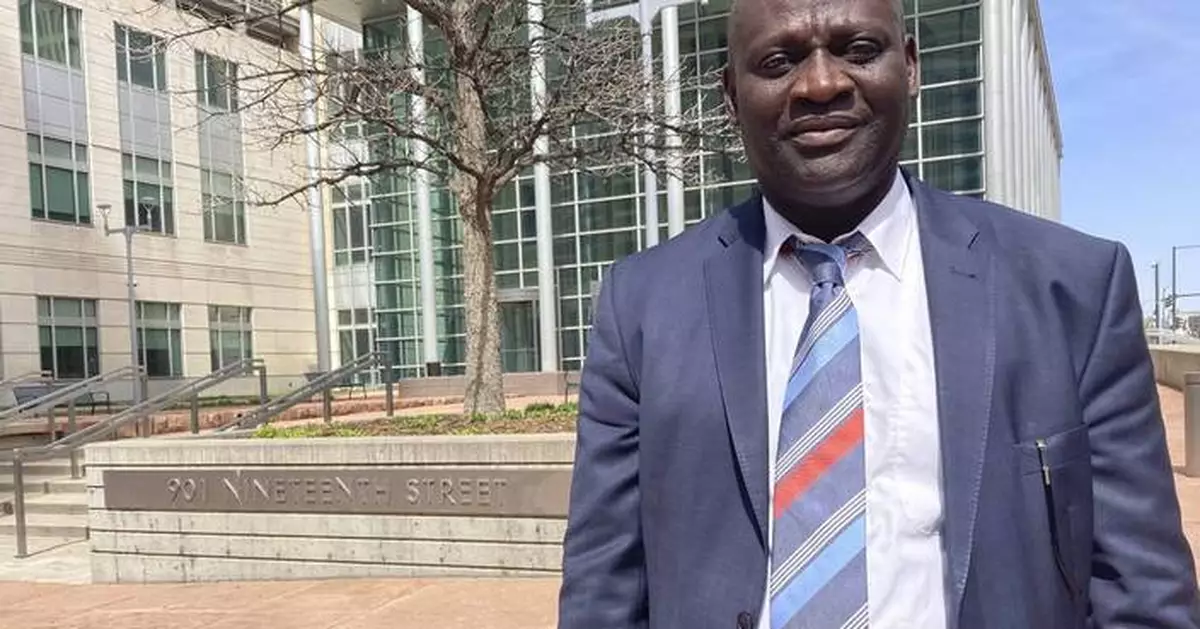
Demba Dem is photographed outside Denver federal court in Denver, Wednesday, April 9, 2025, after he testifying in the trial of Michael Sang Correa. (AP Photo/Colleen Slevin)
Demba Dem is photographed outside Denver federal court in Denver, Wednesday, April 9, 2025, after he testifying in the trial of Michael Sang Correa. (AP Photo/Colleen Slevin)
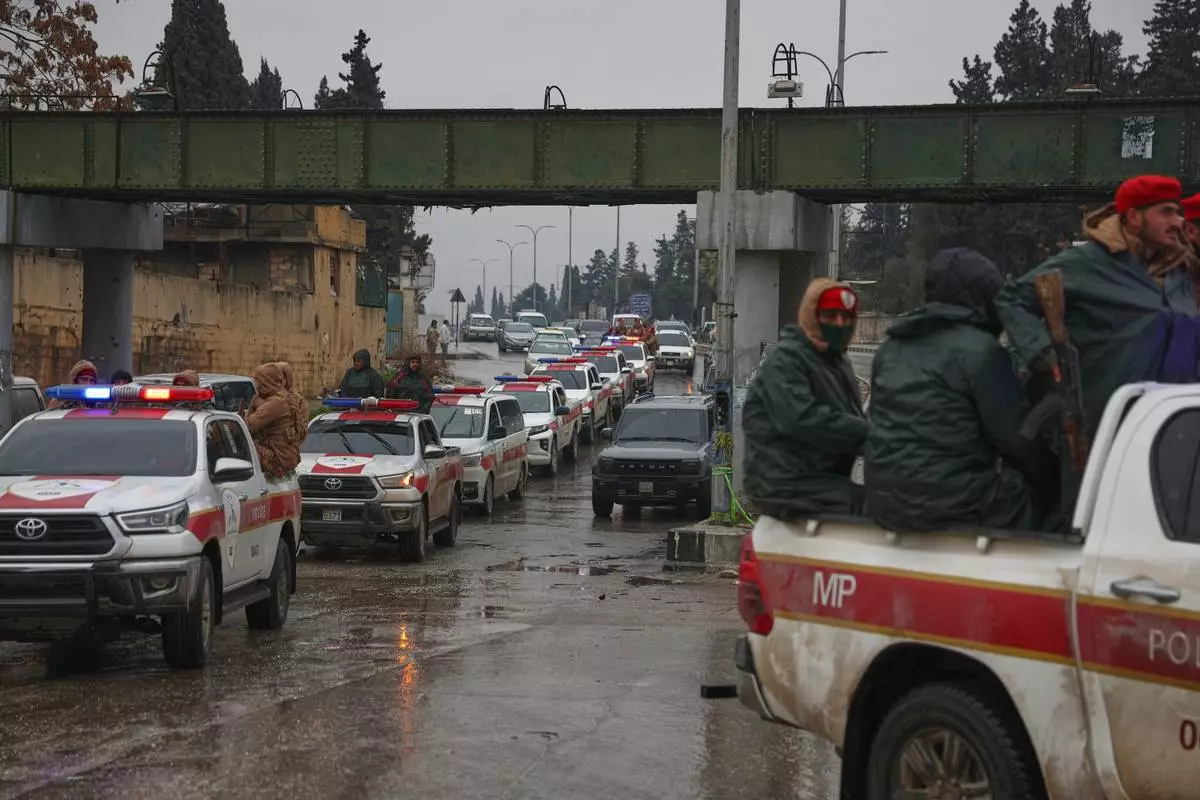
ALEPPO, Syria (AP) — First responders on Sunday entered a contested neighborhood in Syria’ s northern city of Aleppo after days of deadly clashes between government forces and Kurdish-led forces. Syrian state media said the military was deployed in large numbers.

The clashes broke out Tuesday in the predominantly Kurdish neighborhoods of Sheikh Maqsoud, Achrafieh and Bani Zaid after the government and the Syrian Democratic Forces, the main Kurdish-led force in the country, failed to make progress on how to merge the SDF into the national army. Security forces captured Achrafieh and Bani Zaid.

The fighting between the two sides was the most intense since the fall of then-President Bashar Assad to insurgents in December 2024. At least 23 people were killed in five days of clashes and more than 140,000 were displaced amid shelling and drone strikes.

The U.S.-backed SDF, which have played a key role in combating the Islamic State group in large swaths of eastern Syria, are the largest force yet to be absorbed into Syria's national army. Some of the factions that make up the army, however, were previously Turkish-backed insurgent groups that have a long history of clashing with Kurdish forces.

The Kurdish fighters have now evacuated from the Sheikh Maqsoud neighborhood to northeastern Syria, which is under the control of the SDF. However, they said in a statement they will continue to fight now that the wounded and civilians have been evacuated, in what they called a “partial ceasefire.”

The neighborhood appeared calm Sunday. The United Nations said it was trying to dispatch more convoys to the neighborhoods with food, fuel, blankets and other urgent supplies.

Government security forces brought journalists to tour the devastated area, showing them the damaged Khalid al-Fajer Hospital and a military position belonging to the SDF’s security forces that government forces had targeted.

The SDF statement accused the government of targeting the hospital “dozens of times” before patients were evacuated. Damascus accused the Kurdish-led group of using the hospital and other civilian facilities as military positions.

On one street, Syrian Red Crescent first responders spoke to a resident surrounded by charred cars and badly damaged residential buildings.

Some residents told The Associated Press that SDF forces did not allow their cars through checkpoints to leave.

“We lived a night of horror. I still cannot believe that I am right here standing on my own two feet,” said Ahmad Shaikho. “So far the situation has been calm. There hasn’t been any gunfire.”

Syrian Civil Defense first responders have been disarming improvised mines that they say were left by the Kurdish forces as booby traps.

Residents who fled are not being allowed back into the neighborhood until all the mines are cleared. Some were reminded of the displacement during Syria’s long civil war.

“I want to go back to my home, I beg you,” said Hoda Alnasiri.

Associated Press journalist Kareem Chehayeb in Beirut contributed to this report.

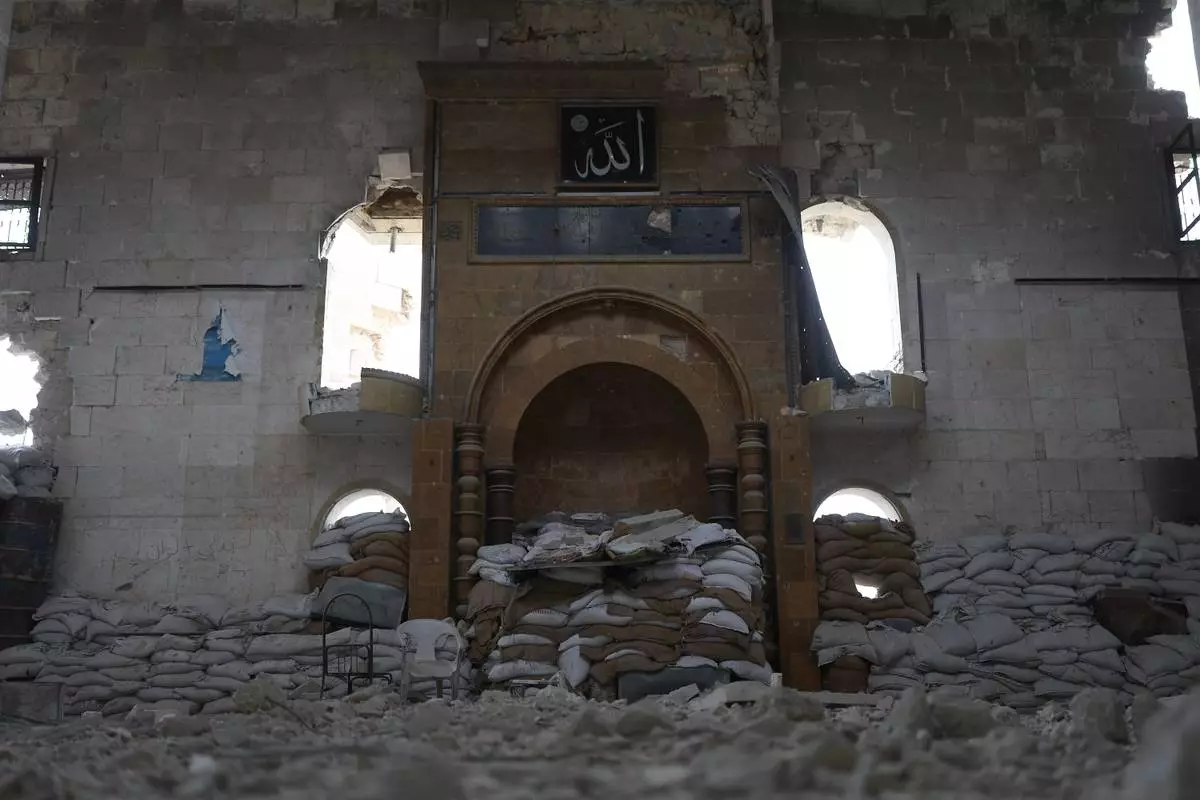
Sandbag barriers used as fighting positions by Kurdish fighters, left inside a destroyed mosque in the Sheikh Maqsoud neighborhood, where clashes between government forces and Kurdish fighters have been taking place in the northern city of Aleppo, Syria, Sunday, Jan. 11, 2026. (AP Photo/Ghaith Alsayed)

Sandbag barriers used as fighting positions by Kurdish fighters, left inside a destroyed mosque in the Sheikh Maqsoud neighborhood, where clashes between government forces and Kurdish fighters have been taking place in the northern city of Aleppo, Syria, Sunday, Jan. 11, 2026. (AP Photo/Ghaith Alsayed)

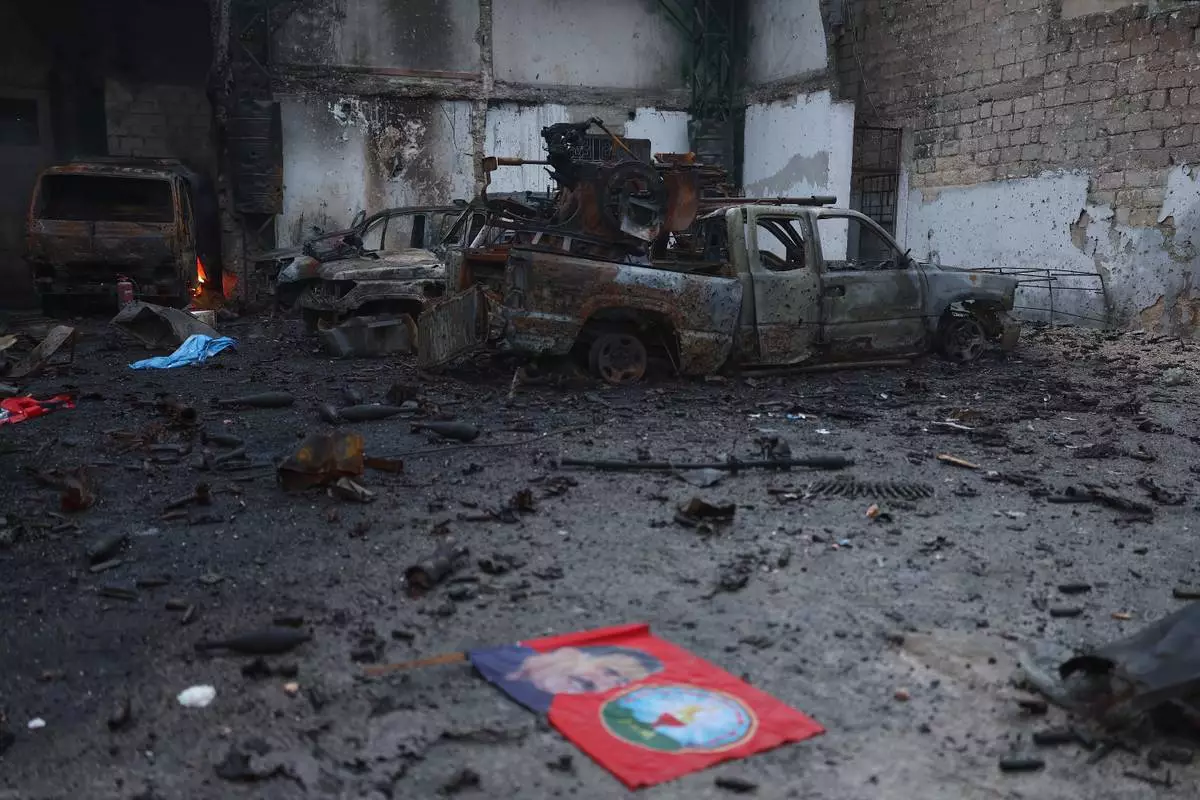
Burned vehicles at one of the Kurdish fighters positions at the Sheikh Maqsoud neighborhood, where clashes between government forces and Kurdish fighters have been taking place in the northern city of Aleppo, Syria, Sunday, Jan. 11, 2026. (AP Photo/Ghaith Alsayed)

Burned vehicles at one of the Kurdish fighters positions at the Sheikh Maqsoud neighborhood, where clashes between government forces and Kurdish fighters have been taking place in the northern city of Aleppo, Syria, Sunday, Jan. 11, 2026. (AP Photo/Ghaith Alsayed)

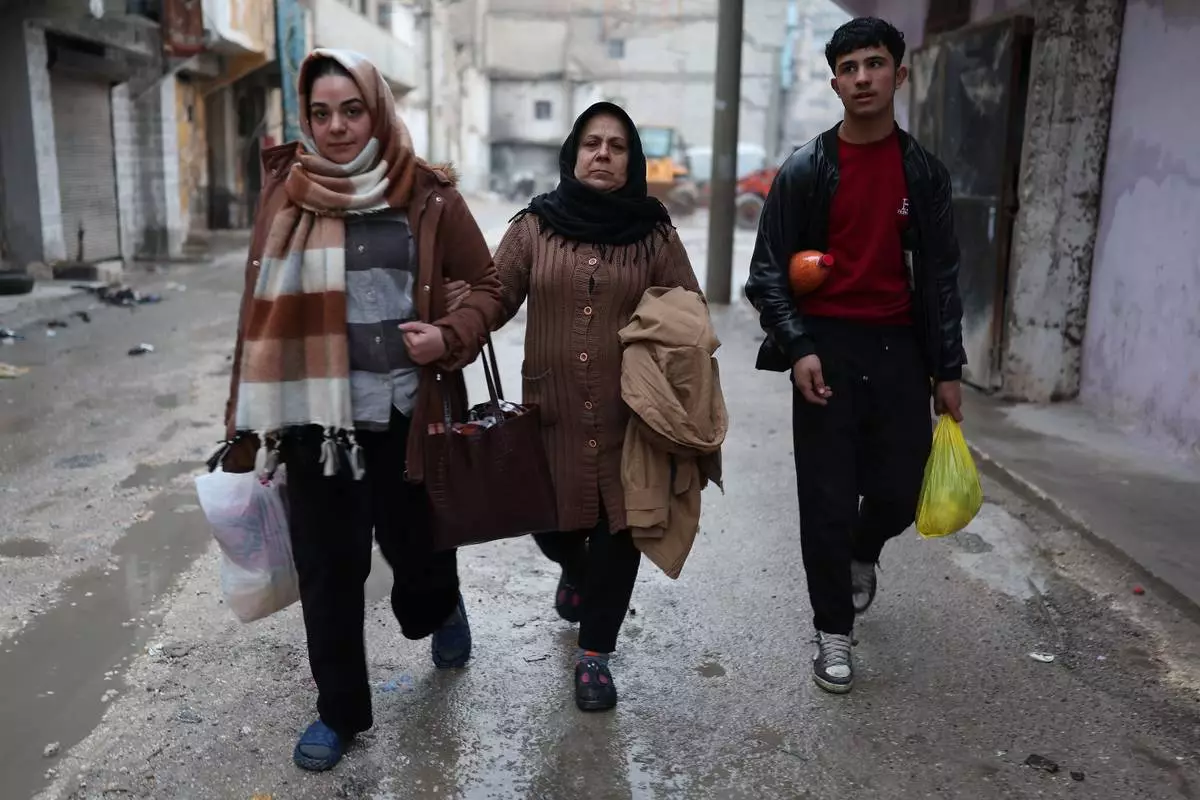
People flee the Sheikh Maqsoud neighborhood, where clashes between government forces and Kurdish fighters have been taking place in the northern city of Aleppo, Syria, Sunday, Jan. 11, 2026. (AP Photo/Ghaith Alsayed)

People flee the Sheikh Maqsoud neighborhood, where clashes between government forces and Kurdish fighters have been taking place in the northern city of Aleppo, Syria, Sunday, Jan. 11, 2026. (AP Photo/Ghaith Alsayed)

A Syrian military police convoy enters the Sheikh Maqsoud neighborhood, where clashes between government forces and Kurdish fighters have been taking place in the northern city of Aleppo, Syria, Sunday, Jan. 11, 2026. (AP Photo/Ghaith Alsayed)

A Syrian military police convoy enters the Sheikh Maqsoud neighborhood, where clashes between government forces and Kurdish fighters have been taking place in the northern city of Aleppo, Syria, Sunday, Jan. 11, 2026. (AP Photo/Ghaith Alsayed)

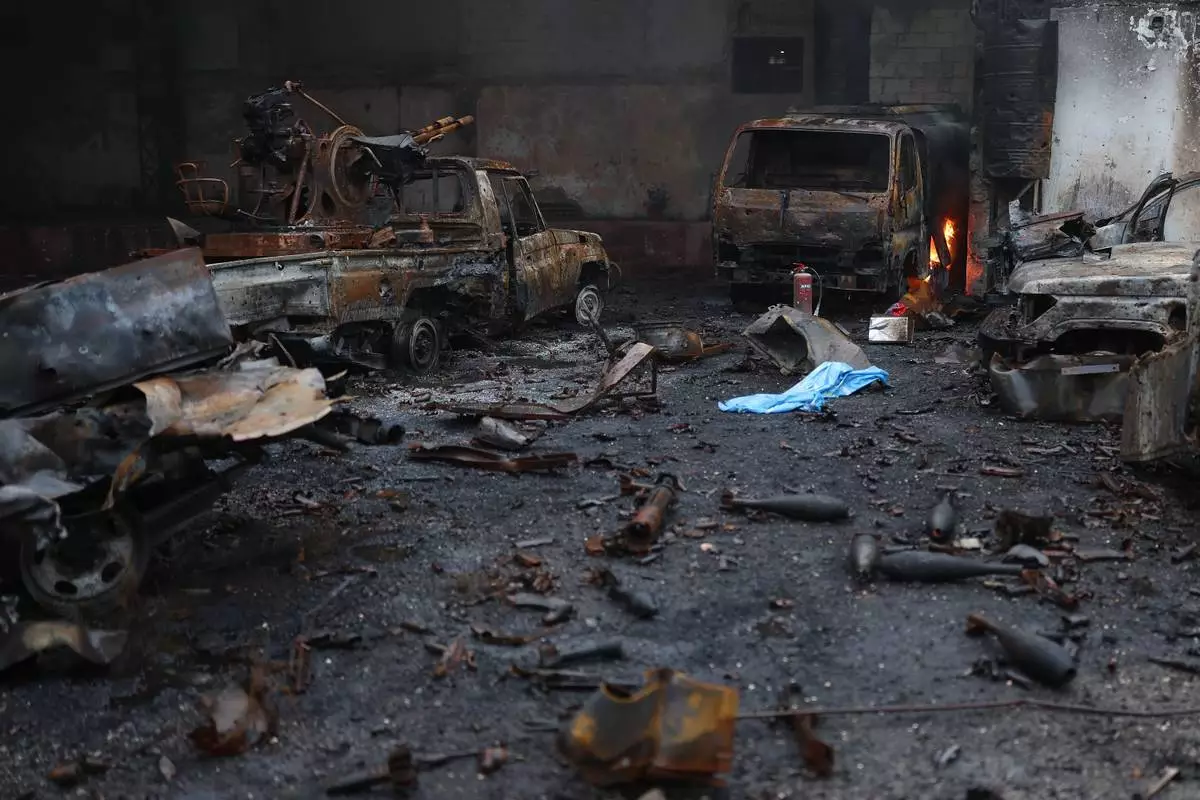
Burned vehicles and ammunitions left at one of the Kurdish fighters positions at the Sheikh Maqsoud neighborhood, where clashes between government forces and Kurdish fighters have been taking place in the northern city of Aleppo, Syria, Sunday, Jan. 11, 2026. (AP Photo/Ghaith Alsayed)

Burned vehicles and ammunitions left at one of the Kurdish fighters positions at the Sheikh Maqsoud neighborhood, where clashes between government forces and Kurdish fighters have been taking place in the northern city of Aleppo, Syria, Sunday, Jan. 11, 2026. (AP Photo/Ghaith Alsayed)

Recommended Articles