QUITO, Ecuador (AP) — In a polarized political landscape, Ecuadorian voters will choose Sunday between an incumbent young millionaire and a leftist lawyer to lead the South American country for the next four years.
President Daniel Noboa and leftist challenger Luisa González will face off in a presidential runoff as Ecuadorians once again try to find a solution to the extortions, killings, kidnappings and other crimes that have accompanied them since the country emerged from the pandemic.
Click to Gallery

Incumbent presidential candidate Daniel Noboa speaks at a campaign rally in Guayaquil, Ecuador, Thursday, April 10, 2025. (AP Photo/Cesar Munoz)

Luisa Gonzalez, presidential candidate for the Citizen Revolution party, addresses supporters during a campaign event in Guayaquil, Ecuador, Thursday, April 10, 2025. (AP Photo/Fernando Vergara)
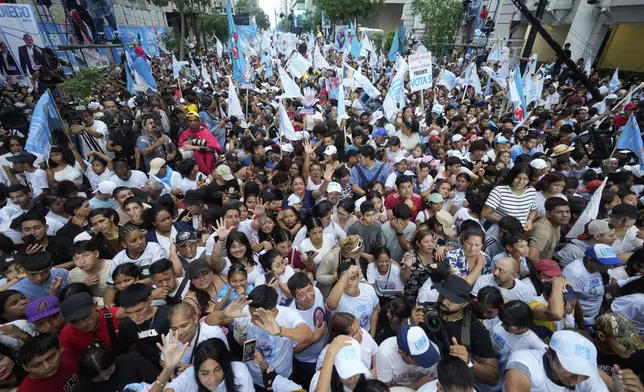
Supporters of Luisa Gonzalez, presidential candidate for the Citizen Revolution party, attend a campaign event in Guayaquil, Ecuador, Thursday, April 10, 2025. (AP Photo/Fernando Vergara)
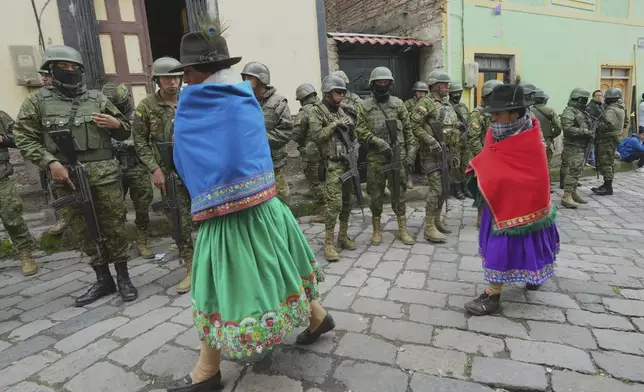
Indigenous people arrive at a rally for presidential candidate Luisa Gonzalez in Tixan, Ecuador, Sunday, March 30, 2025. (AP Photo/Dolores Ochoa)
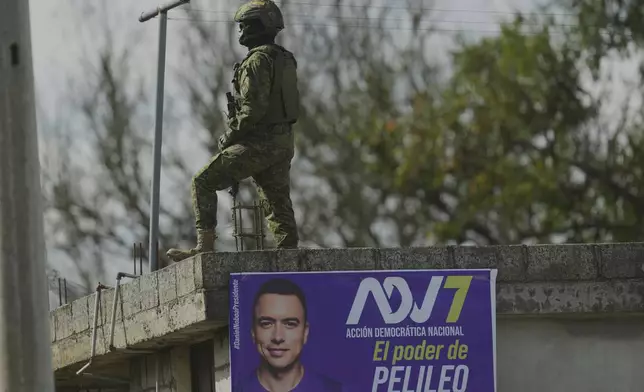
A soldier stands guard during a campaign rally for Ecuador's President Daniel Noboa, who is running for re-election, in Pelileo, Ecuador, Wednesday, April 2, 2025. (AP Photo/Dolores Ochoa)
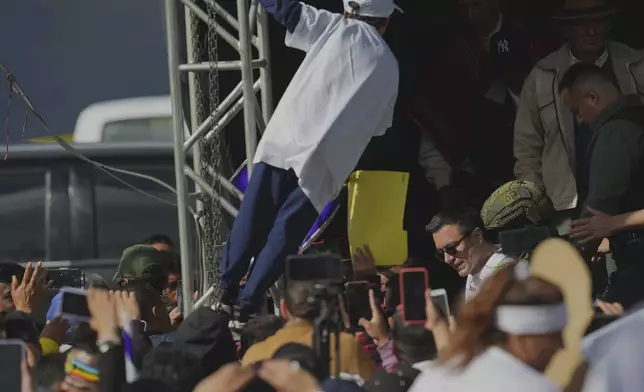
Ecuador's President Daniel Noboa, who is running for re-election, campaigns in Pelileo, Ecuador, Wednesday, April 2, 2025. (AP Photo/Dolores Ochoa)
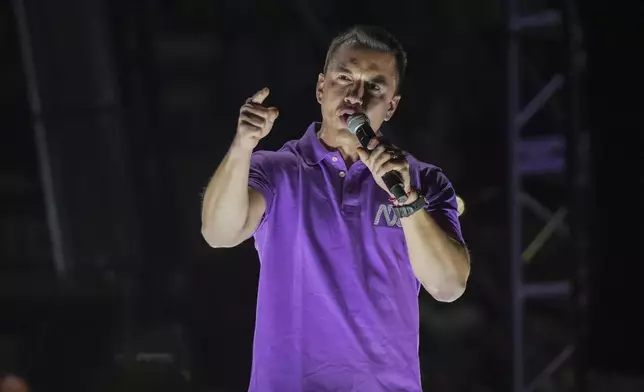
Incumbent presidential candidate Daniel Noboa speaks at a campaign rally in Quito, Ecuador, Wednesday, April 9, 2025. (AP Photo/Carlos Noriega)
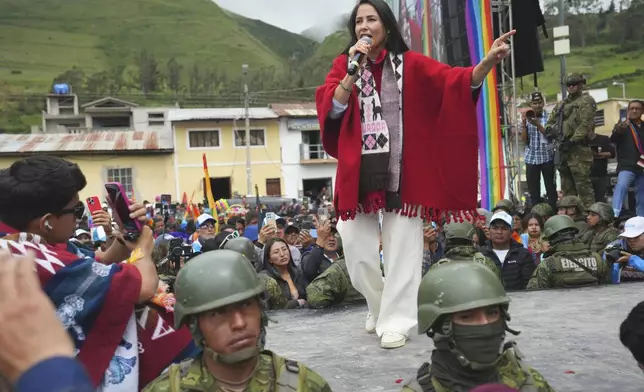
Presidential candidate Luisa Gonzalez gives a speech at a rally after receiving support from Indigenous organizations during a rally in Tixan, Ecuador, Sunday, March 30, 2025. (AP Photo/Dolores Ochoa)
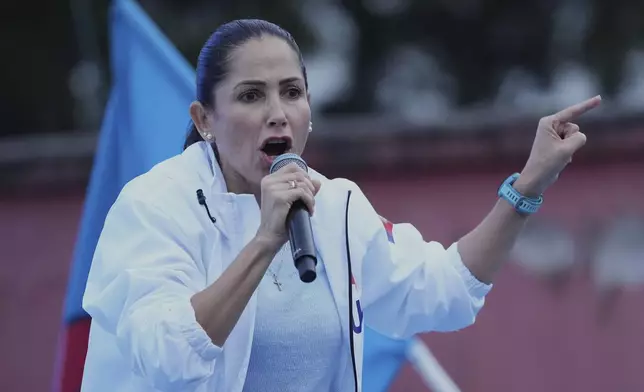
Luisa Gonzalez, presidential candidate for the Citizen Revolution party, gives a speech at a campaign rally in Quito, Ecuador, Wednesday, April 9, 2025. (AP Photo/Dolores Ochoa)
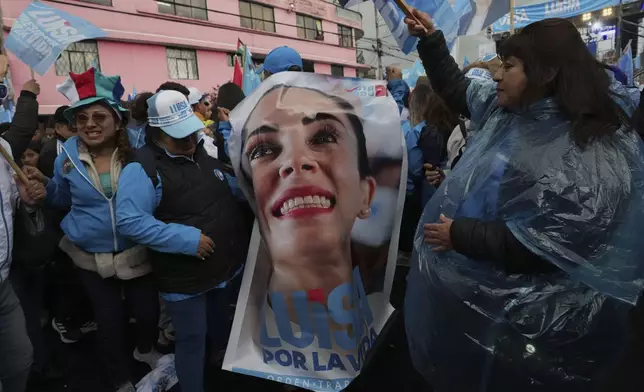
Supporters of Luisa Gonzalez, presidential candidate for the Citizen Revolution party, attend a campaign rally in Quito, Ecuador, Wednesday, April 9, 2025. (AP Photo/Dolores Ochoa)
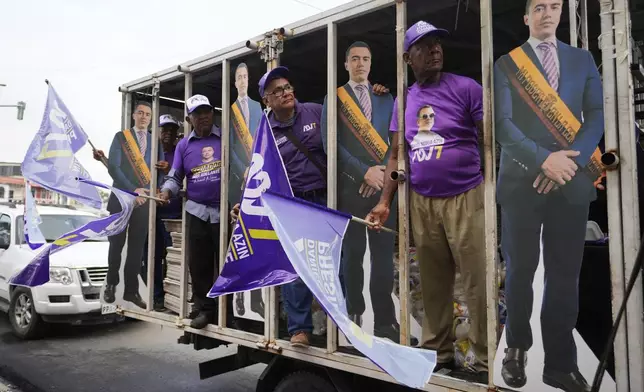
Supporters of incumbent presidential candidate Daniel Noboa prepare for his closing campaign rally in Guayaquil, Ecuador, Thursday, April 10, 2025. Ecuadoreans go to the polls on April 13 to elect a new president. (AP Photo/Fernando Vergara)
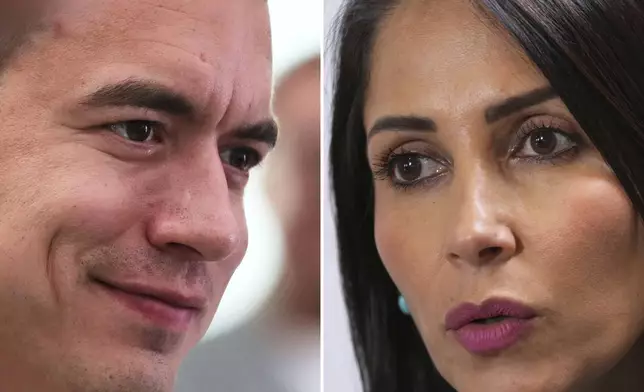
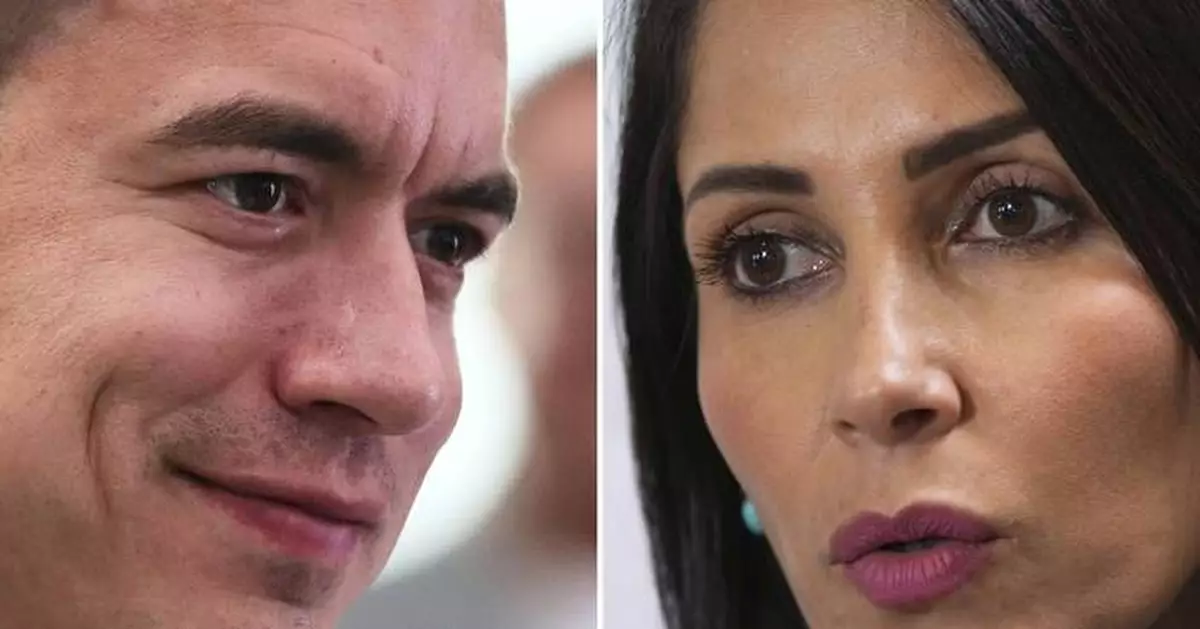
FILES - This combo shows Daniel Noboa, left, at a campaign event in Quito, Ecuador during his first bid for president on Sept. 29, 2023, and Luisa Gonzalez, right, presidential candidate with the Citizen Revolution party, during an interview in Quito, Ecuador on Aug. 14, 2023. (AP Photo/Dolores Ochoa, Files)
Noboa and González advanced to the runoff after being the top vote-getters in February’s first-round election. He obtained 44.17% of support while she earned 44%.
Sunday’s vote will be a repeat of the October 2023 snap election that earned Noboa a 16-month presidency. It will also test the lasting influence of González’s mentor, former President Rafael Correa.
Here is what to know ahead of the vote:
The persistent violence Ecuador began experiencing four years ago. The spike in crime is tied to the trafficking of cocaine produced in neighboring Colombia and Peru.
Noboa, who took office in November 2023, declared Ecuador to be in a state of “internal armed conflict” in January 2024, allowing him to deploy thousands of soldiers to the streets to combat gangs and to charge people with terrorism counts for alleged ties to organized crime groups. The homicide rate dropped from 46.18 per 100,000 people in 2023 to 38.76 per 100,000 people in 2024.
But despite the decrease, the rate remained far higher than the 6.85 homicides per 100,000 people seen in 2019. Other crimes, such as kidnapping and extortion, have also skyrocketed, making people fearful of leaving their homes. Some of Noboa’s heavy-handed crime fighting tactics have come under scrutiny inside and outside the country for testing the limits of laws and norms of governing.
The crime spike is tied to the trafficking of cocaine produced in neighboring Colombia and Peru.
Despite their opposing political ideology, both candidates have promised tough-on-crime policies, better equipment for law enforcement and international help to fight cartels and local criminal groups.
Voters are also concerned about what is in their wallets.
Only 33.7% of working-aged Ecuadorians were formally employed at the end of last year, according to the country’s Institute of Statistics and Census.
Noboa, a free-market supporter, has promised to create a million jobs in four years by offering incentives to hire young people and modifying the educational system to improve employment opportunities. González, meanwhile, has said she will create 2 million jobs through a strategy that includes increasing spending in public works projects.
Noboa, 37, is an heir to a fortune built on the banana trade. He opened an event organizing company when he was 18 and then joined his father’s Noboa Corp., where he held management positions in the shipping, logistics and commercial areas. His political career began in 2021, when he won a seat in the National Assembly and chaired its Economic Development Commission.
Noboa, like González, was a lawmaker until May 2023, when then-President Guillermo Lasso dissolved the National Assembly, shortening his own mandate as a result and triggering that year’s snap election. Noboa defeated González in the runoff.
González, 47, held various government jobs during the presidency of Correa, who led Ecuador from 2007 through 2017 with free-spending socially conservative policies and grew increasingly authoritarian in his last years as president.
She was unknown to most voters until Correa’s party picked her as its presidential candidate for the snap election.
Much of her support comes from people who long for the low crime and unemployment rates of Correa’s presidency but gloss over his authoritarian tendencies, the huge debt he ran up and the corruption-related sentence handed down to him in absentia in 2020.
Many people who support Noboa say their vote is more a rejection of Correa’s movement than a resounding endorsement of the president’s performance.
More than 13 million people are eligible to vote, which is mandatory for adults up to the age of 65. It is optional for people aged 16 and 17 and over 65. Failure to vote results in a fine of $46.
Electoral authorities have prohibited voters from taking photos of their ballots during this election. The National Electoral Council said it adopted the measure because criminal groups had coerced many voters. Anyone who violates the prohibition faces a maximum fine of $32,000.
Inmates awaiting sentence cast ballots on Thursday.

Incumbent presidential candidate Daniel Noboa speaks at a campaign rally in Guayaquil, Ecuador, Thursday, April 10, 2025. (AP Photo/Cesar Munoz)

Luisa Gonzalez, presidential candidate for the Citizen Revolution party, addresses supporters during a campaign event in Guayaquil, Ecuador, Thursday, April 10, 2025. (AP Photo/Fernando Vergara)
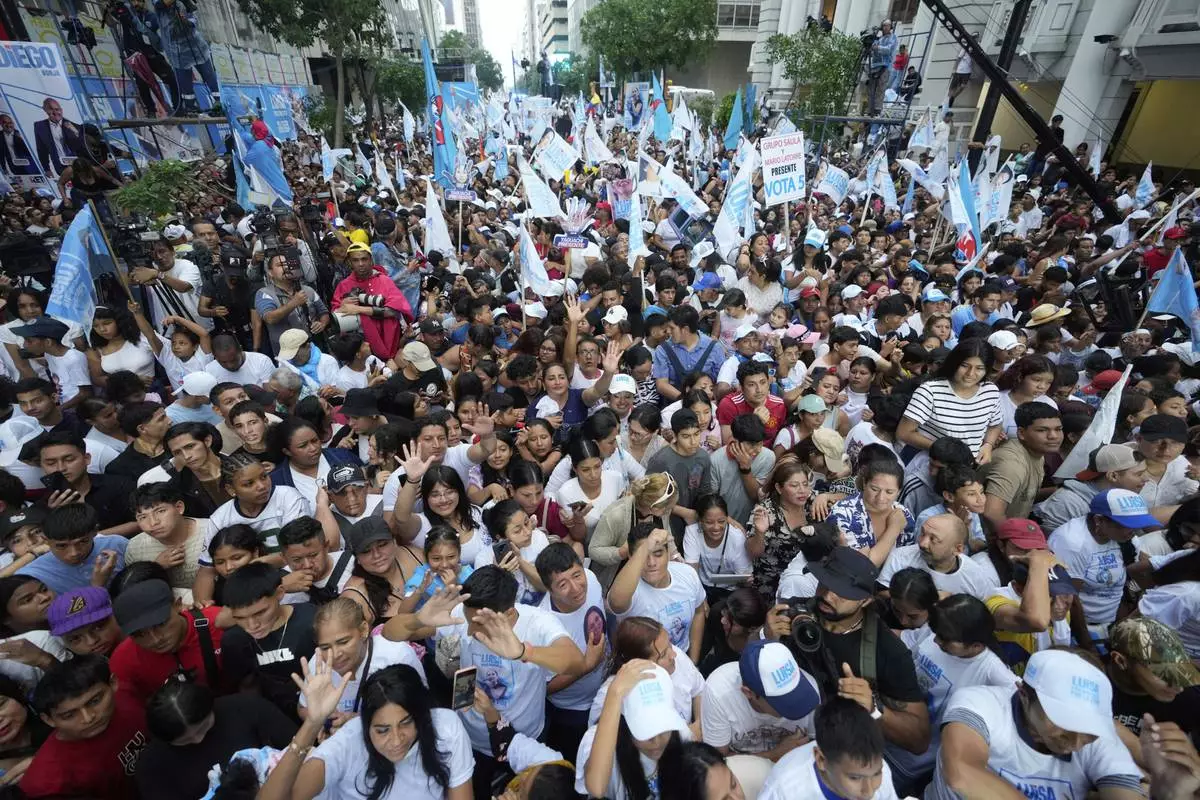
Supporters of Luisa Gonzalez, presidential candidate for the Citizen Revolution party, attend a campaign event in Guayaquil, Ecuador, Thursday, April 10, 2025. (AP Photo/Fernando Vergara)
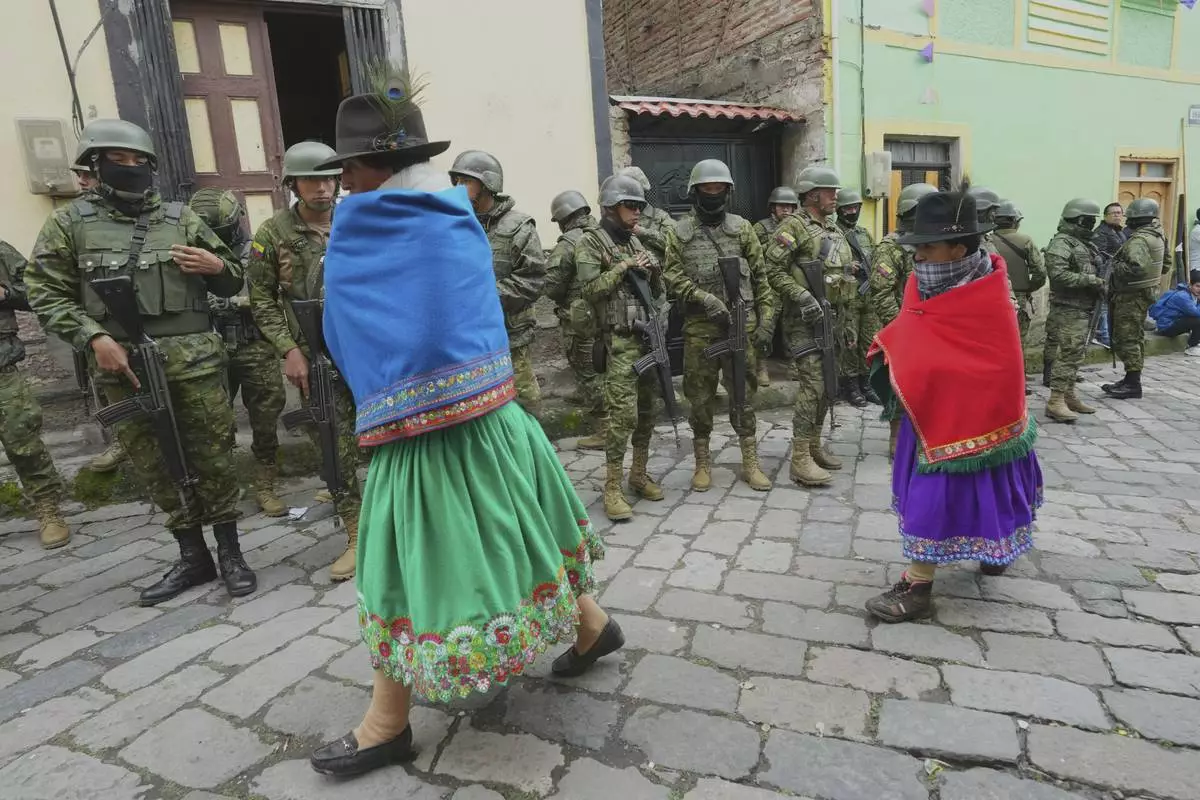
Indigenous people arrive at a rally for presidential candidate Luisa Gonzalez in Tixan, Ecuador, Sunday, March 30, 2025. (AP Photo/Dolores Ochoa)
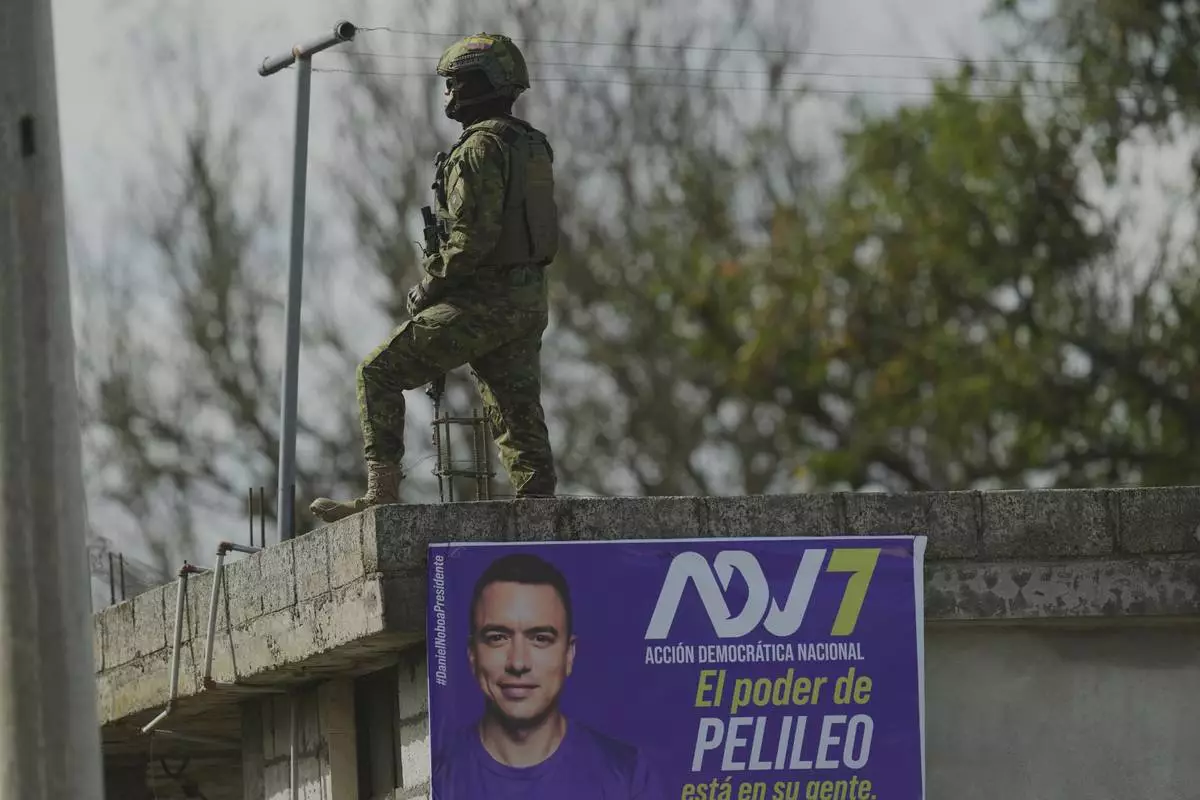
A soldier stands guard during a campaign rally for Ecuador's President Daniel Noboa, who is running for re-election, in Pelileo, Ecuador, Wednesday, April 2, 2025. (AP Photo/Dolores Ochoa)
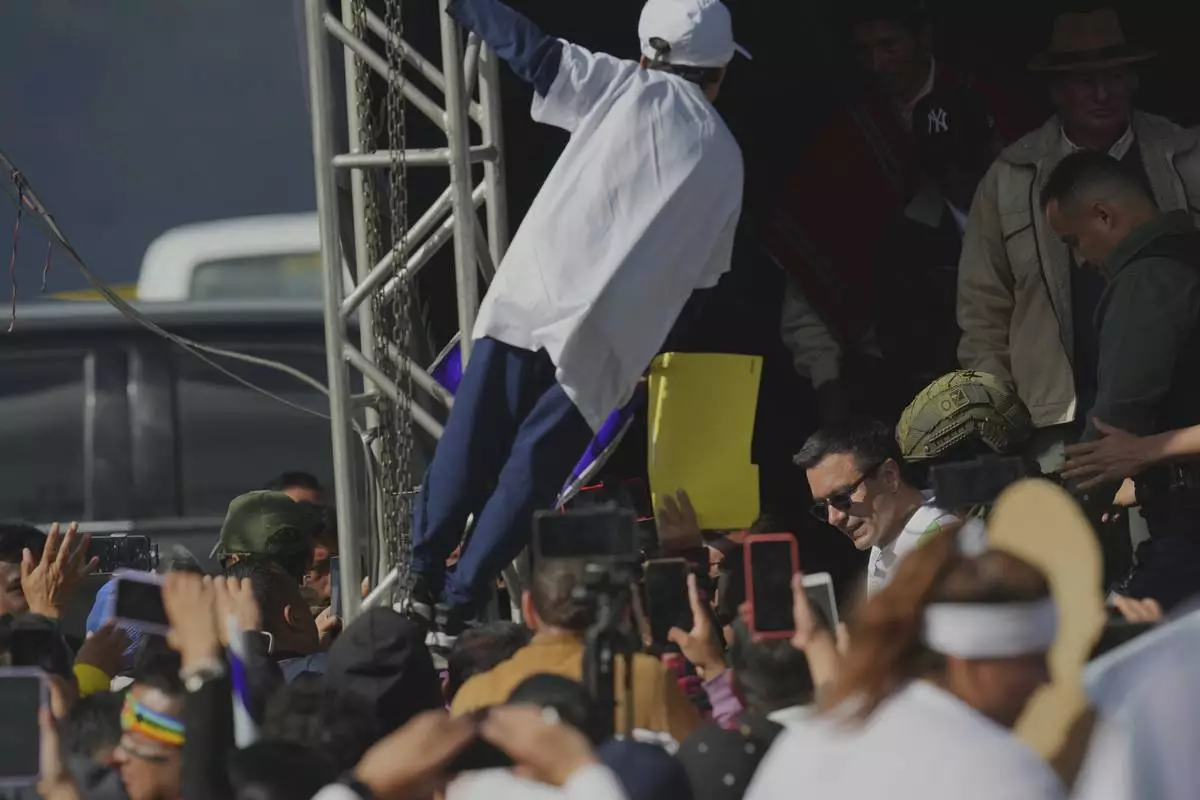
Ecuador's President Daniel Noboa, who is running for re-election, campaigns in Pelileo, Ecuador, Wednesday, April 2, 2025. (AP Photo/Dolores Ochoa)
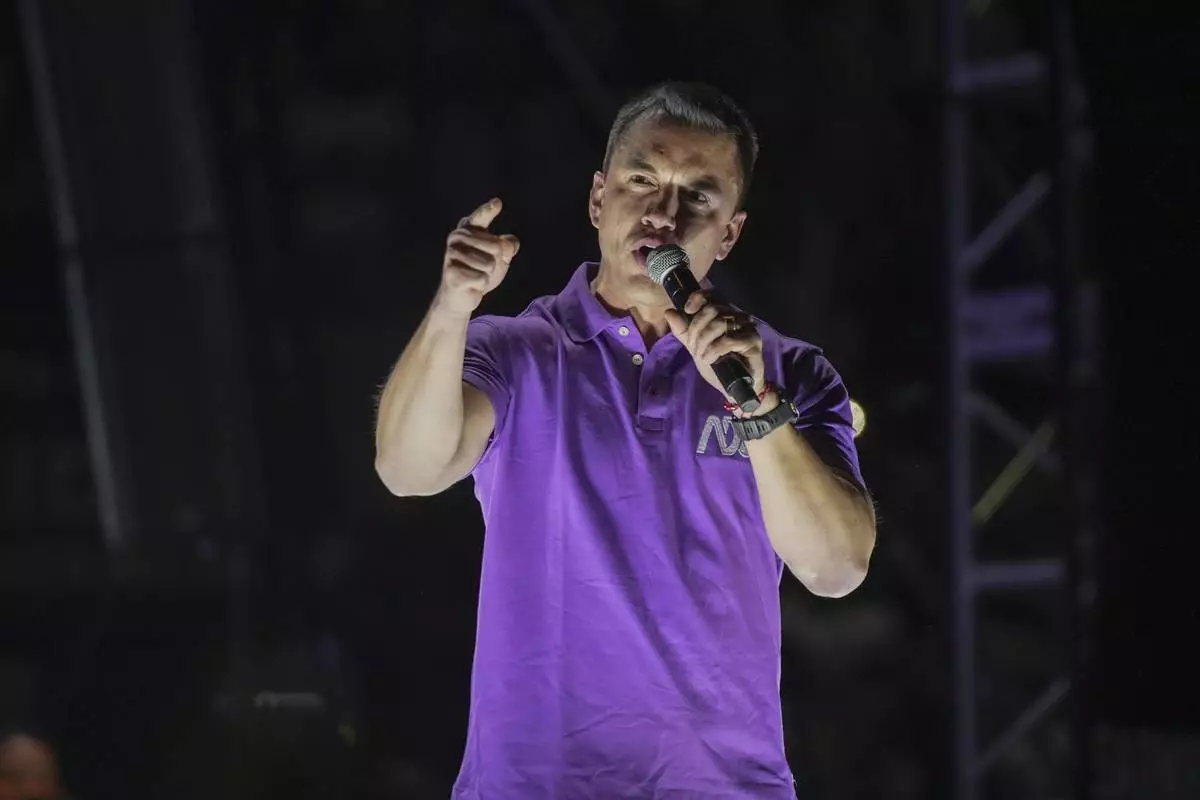
Incumbent presidential candidate Daniel Noboa speaks at a campaign rally in Quito, Ecuador, Wednesday, April 9, 2025. (AP Photo/Carlos Noriega)
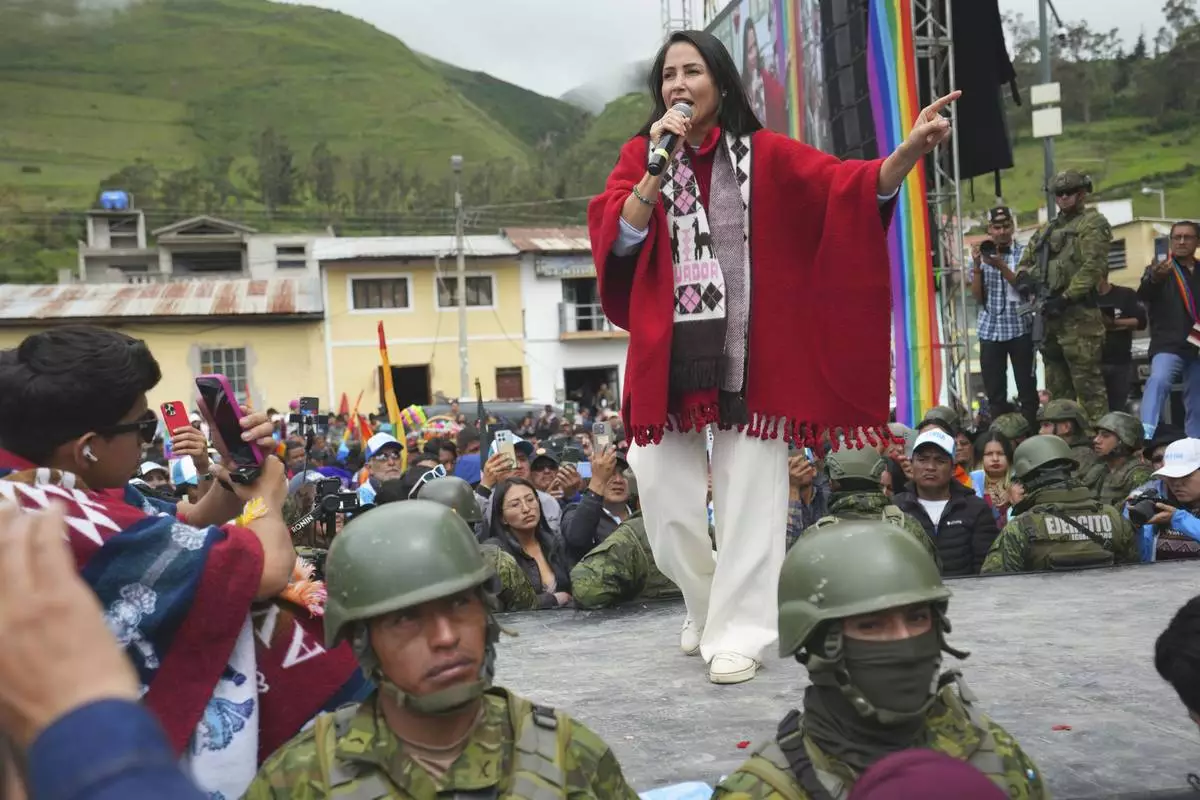
Presidential candidate Luisa Gonzalez gives a speech at a rally after receiving support from Indigenous organizations during a rally in Tixan, Ecuador, Sunday, March 30, 2025. (AP Photo/Dolores Ochoa)
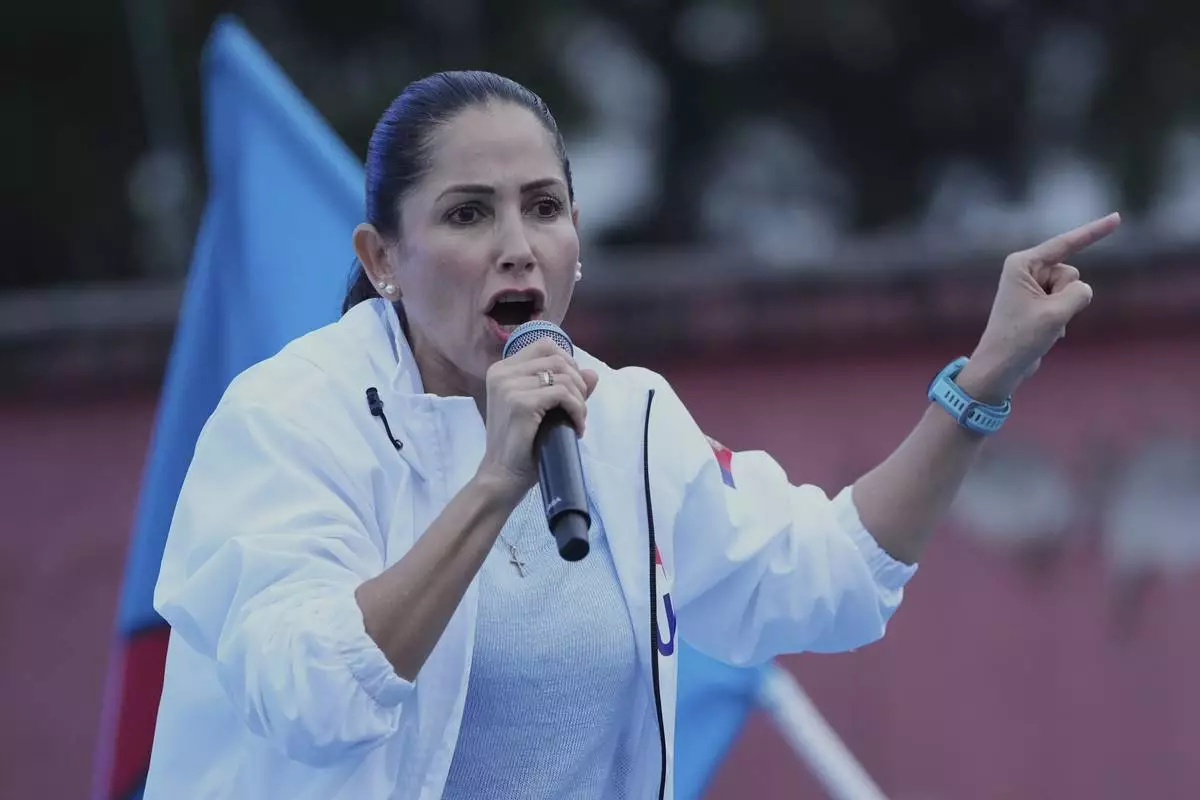
Luisa Gonzalez, presidential candidate for the Citizen Revolution party, gives a speech at a campaign rally in Quito, Ecuador, Wednesday, April 9, 2025. (AP Photo/Dolores Ochoa)
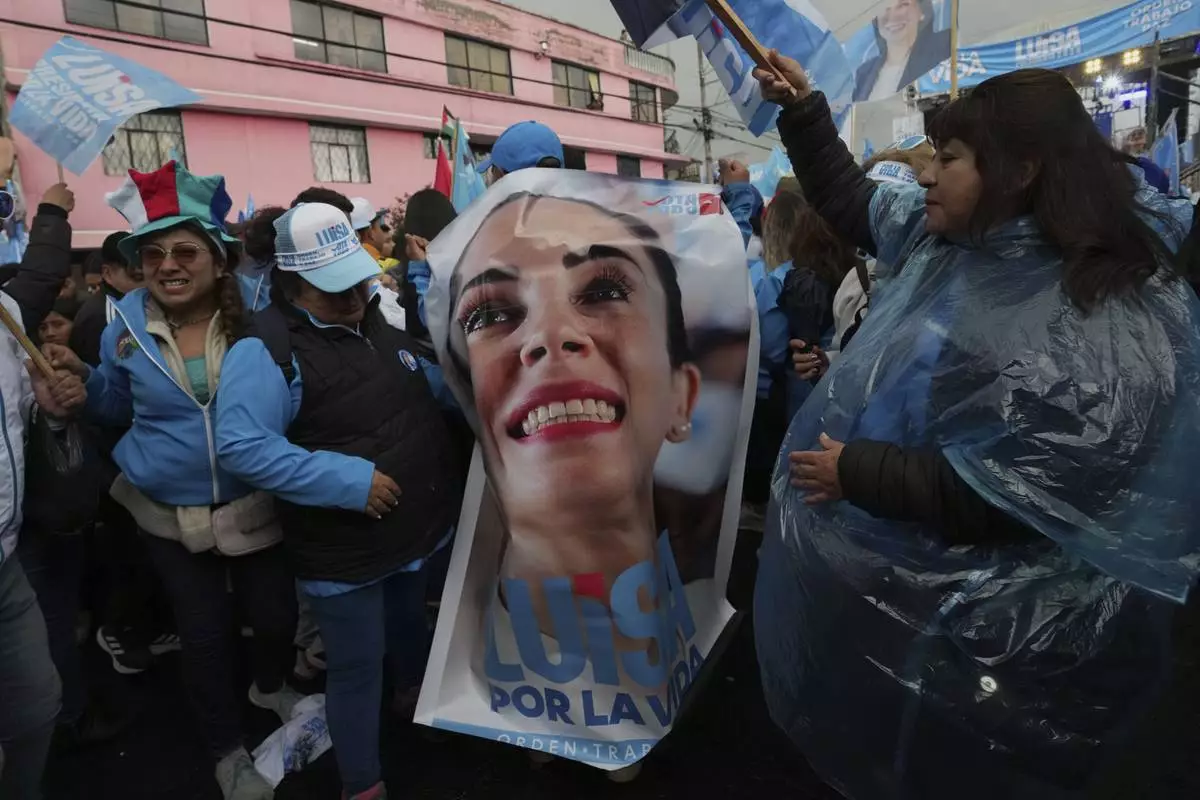
Supporters of Luisa Gonzalez, presidential candidate for the Citizen Revolution party, attend a campaign rally in Quito, Ecuador, Wednesday, April 9, 2025. (AP Photo/Dolores Ochoa)
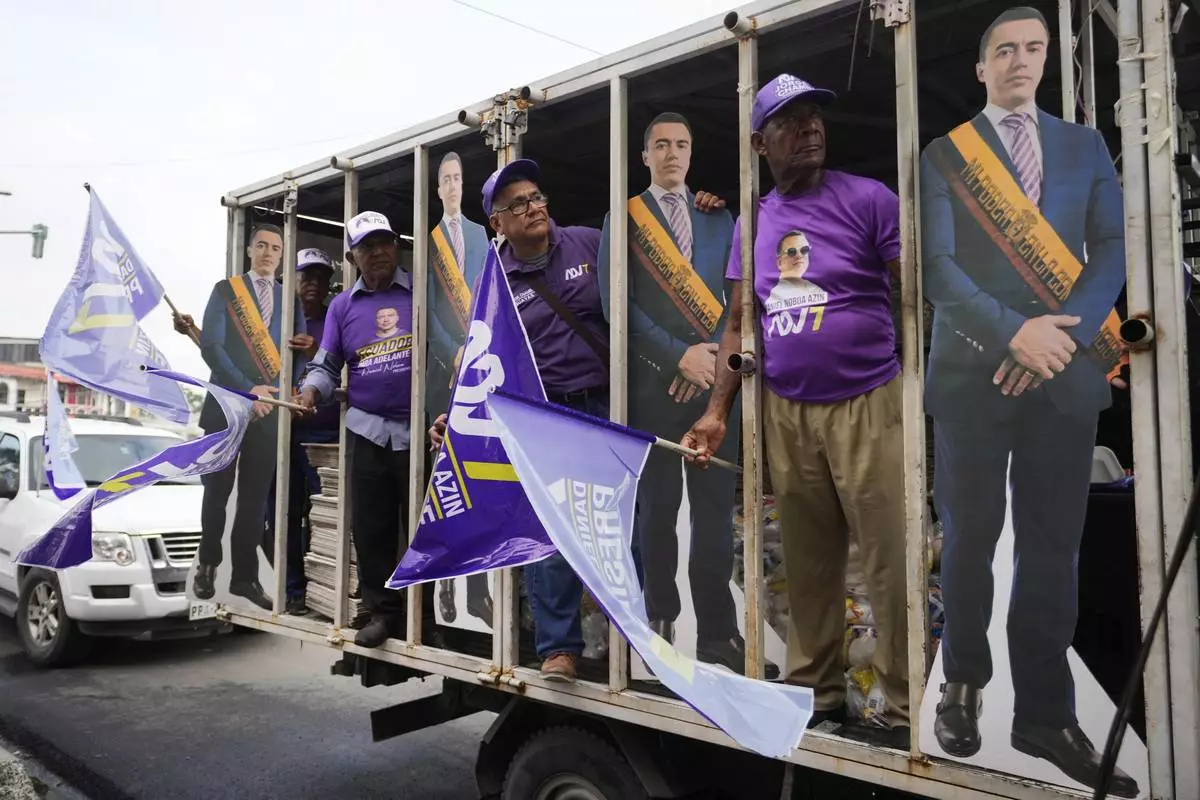
Supporters of incumbent presidential candidate Daniel Noboa prepare for his closing campaign rally in Guayaquil, Ecuador, Thursday, April 10, 2025. Ecuadoreans go to the polls on April 13 to elect a new president. (AP Photo/Fernando Vergara)
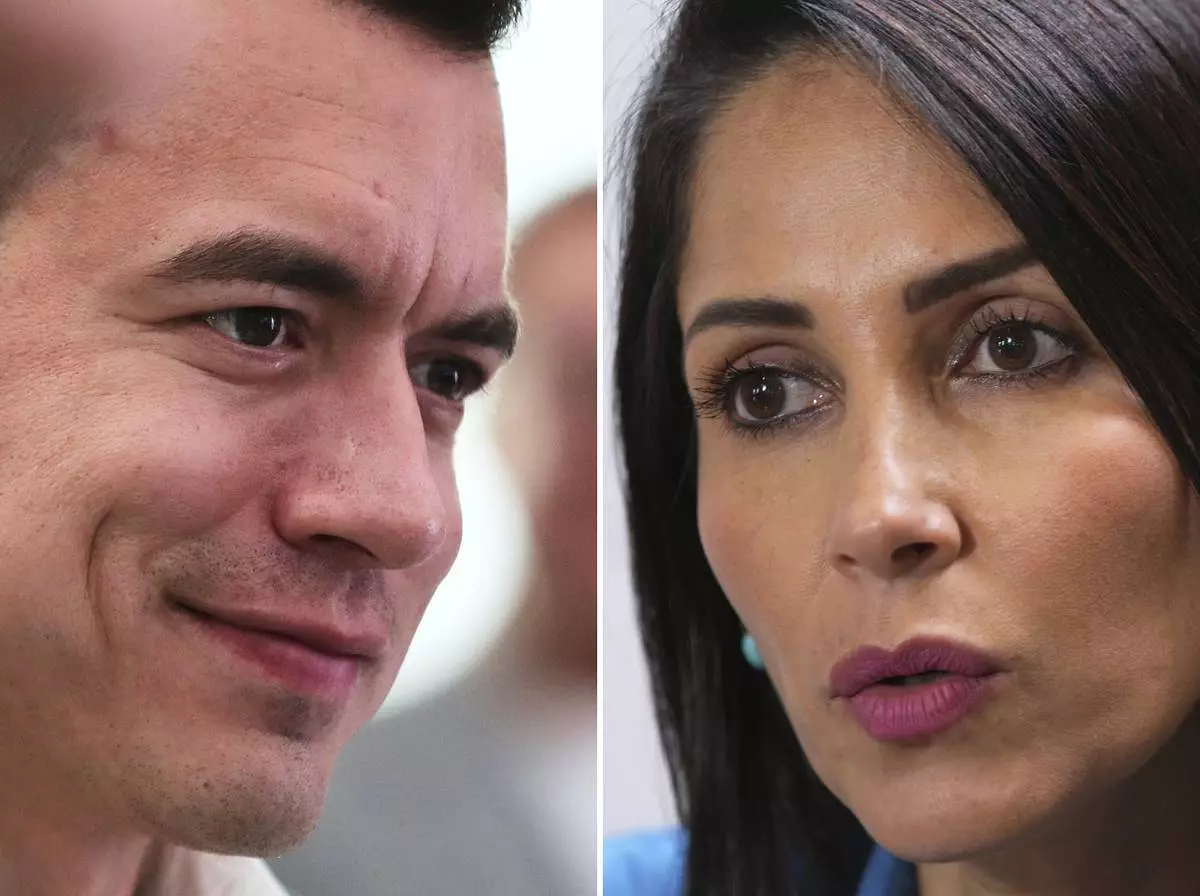
FILES - This combo shows Daniel Noboa, left, at a campaign event in Quito, Ecuador during his first bid for president on Sept. 29, 2023, and Luisa Gonzalez, right, presidential candidate with the Citizen Revolution party, during an interview in Quito, Ecuador on Aug. 14, 2023. (AP Photo/Dolores Ochoa, Files)