NEW YORK (AP) — The upheaval in stocks has been grabbing all the headlines, but there is a bigger problem looming in another corner of the financial markets that rarely gets headlines: Investors are dumping U.S. government bonds.
Normally, investors rush into Treasurys at a whiff of economic chaos but now they are selling them as not even the lure of higher interest payments on the bonds is getting them to buy. The freak development has experts worried that big banks, funds and traders are losing faith in America as a stable, predictable, good place to store their money.
“The fear is the U.S. is losing its standing as the safe haven,” said George Cipolloni, a fund manager at Penn Mutual Asset Management. “Our bond market is the biggest and most stable in the world, but when you add instability, bad things can happen.”
That could be bad news for taxpayers paying interest on the ballooning U.S. debt, consumers taking out mortgages or car loans — and for President Donald Trump, who had hoped his tariff pause earlier this week would restore confidence in the markets.
A week ago, the yield on the 10-year Treasury was 4.01%. On Friday, the yield shot as high as 4.58% before sliding back to around 4.50%. That’s a major swing for the bond market, which measures moves by the hundredths of a percentage point.
Among the possible knock-on effects is a big hit to ordinary Americans in the form of higher interest rates on mortgages and car financing and other loans.
“As yields move higher, you’ll see your borrowing rates move higher, too,” said Brian Rehling, head of fixed income strategy at Wells Fargo Investment Institute. "And every corporation uses these funding markets. If they get more expensive, they’re going to have to pass along those costs customers or cut costs by cutting jobs.”
Treasury bonds are essentially IOUs from the U.S. government, and they’re how Washington pays its bills despite collecting less in revenue than it spends.
To be sure, no one can say exactly what mix of factors is behind the developing bond bust or how long it will last, but it’s rattling Wall Street nonetheless.
Bonds are supposed to move in the opposite direction as stocks, rising when stocks are falling. In this way, they act like shock absorbers to 401(k)s and other portfolios in stock market meltdowns, compensating somewhat for the losses.
“This is Econ 101,” said Jack McIntyre, portfolio manager for Brandywine Global, adding about the bond sell-off now, “It’s left people scratching their heads.”
The latest trigger for bond yields to go up was Friday's worse-than-expected reading on sentiment among U.S. consumers, including expectations for much higher inflation ahead. But the unusual bond yield spike this week also reflects deeper worries as Trump’s tariffs threats and erratic policy moves have made America seem hostile and unstable — fears that are not likely to go away even after the tariff turmoil ends.
“When the issue is a broader loss of confidence in the United States, even a much fuller retreat on trade might not work” to bring yields down, wrote Sarah Bianchi and other analysts at investment bank Evercore ISI. “We’re not sure any of the tools remaining in Trump’s toolkit will be sufficient to fully staunch the bleeding.”
U.S. Treasury Secretary Scott Bessent has said the yield spike is not unusual or worrisome, pinning the blame on professional investors who had borrowed too much and needed to sell.
“I think that it is an uncomfortable but normal deleveraging that's going on,” he told Fox News Thursday, adding that it “happens every couple of years.”
Speaking to reporters on Air Force One Friday night, Trump said "The bond market’s going good. It had a little moment, but I solved that problem very quickly. I’m very good at this.”
Trump acknowledged that the bond market played a role in his decision Wednesday to put a 90-day pause on many tariffs, saying investors “were getting a little queasy.”
If indeed it was the bond market, and not stocks, that made him change course, it wouldn't come as a surprise.
The bond market's reaction to her tax and budget policy was behind the ouster of United Kingdom’s Liz Truss in 2022, whose 49 days made her Britain’s shortest-serving prime minister. James Carville, adviser to former U.S. President Bill Clinton, also famously said he’d like to be reincarnated as the bond market because of how much power it wields.
The instinctual rush into U.S. debt is so ingrained in investors it even happens when you’d least expect.
People poured money into U.S. Treasury bonds during 2009 Financial Crisis, for instance, even though U.S. was the source of the problem, specifically its housing market.
But to Wall Street pros it made sense: U.S. Treasurys are liquid, stable in price and you can buy and sell them with ease even during a panic, so of course businesses and traders would rush into them to wait out the storm.
Yields on U.S bonds quickly fell during that crisis, which had a benefit beyond cushioning personal financial portfolios. It also lowered borrowing costs, which helped businesses and consumers recover.
This time that natural corrective isn’t kicking in.
Aside from sudden jitters about the U.S., several other things could be triggering the bond sell-off.
Some experts speculate that China, a vast holder of U.S. government bonds, is dumping them in retaliation. But that seems unlikely since that would hurt the country, too. Selling Treasurys, or essentially exchanging U.S. dollars for Chinese yuan, would make China's currency strengthen and its exports more expensive.
Another explanation is that a favored strategy of some hedge funds involving U.S. debt and lots of borrowing — called the basis trade — is going against them. That means their lenders are asking to get repaid and they need to raise cash.
“They are selling Treasurys and that is pushing up yields — that’s part of it,” said Mike Arone, chief investment strategist at State Street Global Advisors. “But the other part is that U.S. has become a less reliable global partner.”
Wells Fargo's Rehling said he’s worried about a hit to confidence in the U.S., too, but that it's way too early to be sure and that the sell-off may stop soon, anyway.
“If Treasurys are no longer the place to park your cash, where do you go?,” he said. “Is there another bond out there that is more liquid? I don’t think so.”
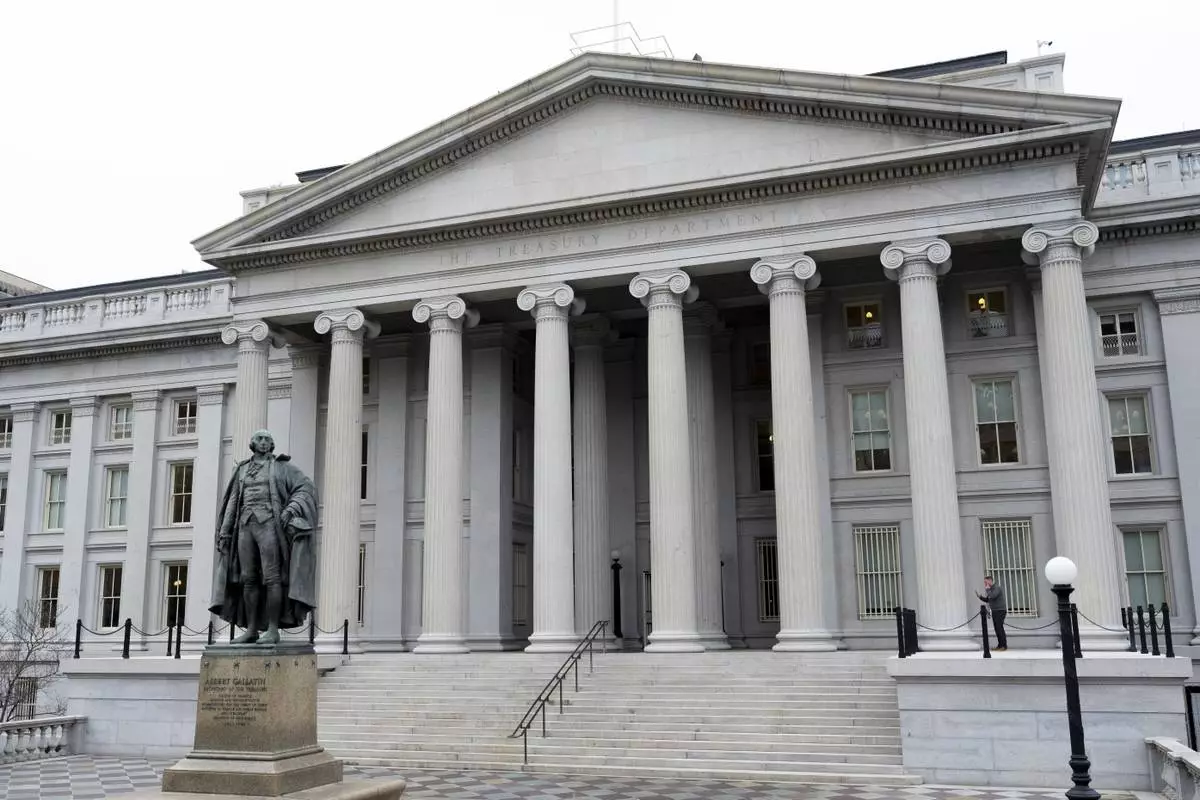
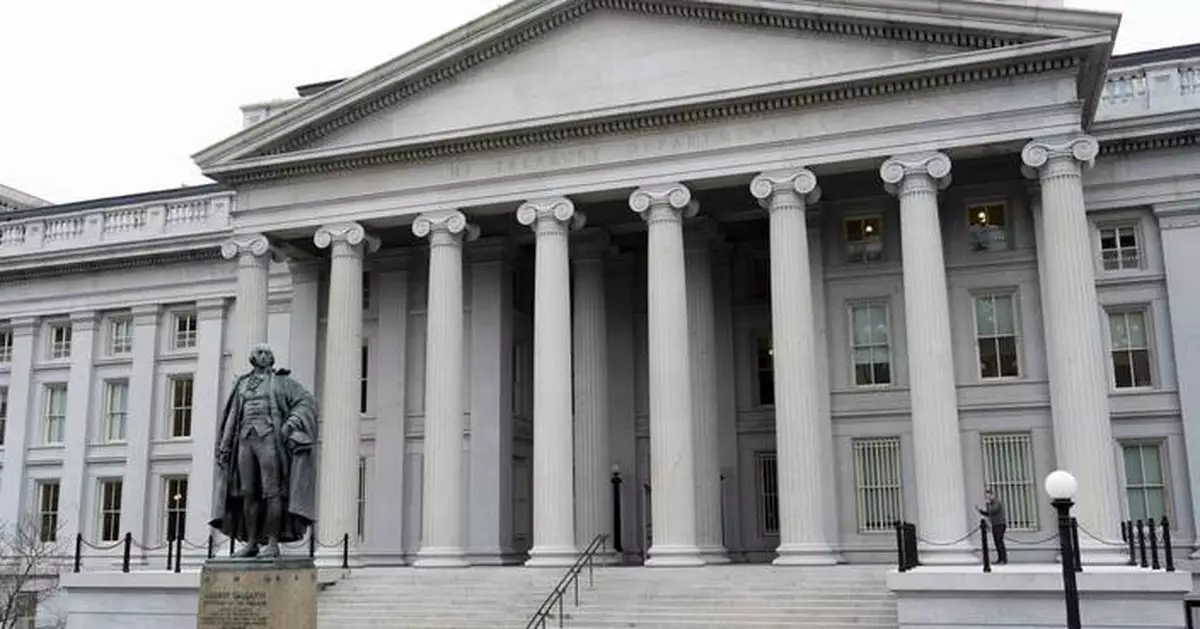
FILE - The Treasury Department building is seen, March 13, 2025, in Washington. (AP Photo/Alex Brandon, File)
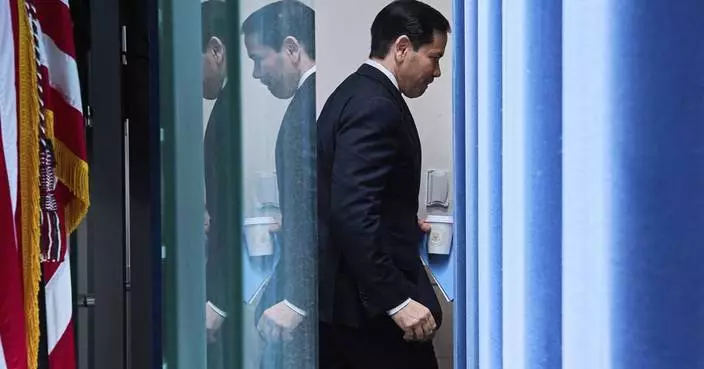
U.S. Secretary of State Marco Rubio discussed “efforts to achieve a durable peace in the Middle East” in talks at the Vatican on Thursday aimed at easing tensions following U.S. President Donald Trump’s criticisms of Pope Leo XIV.
Rubio met with Leo and then Vatican Secretary of State Cardinal Pietro Parolin in a visit that lasted 2½ hours.
Also, Iran said it was reviewing the latest American proposals on ending the war, as Trump threatened the country with a new wave of bombing unless a deal is reached that includes reopening the crucial Strait of Hormuz to international shipping. The developments followed days of mixed messaging from the Trump administration over its strategy to end the war.
Here's the latest:
The official, who spoke on condition of anonymity to discuss plans for the closed-door talks, said the meeting would take place next week on May 14 and 15. The official did not specify the venue but the previous two rounds have taken place at the State Department and the White House.
The earlier rounds were led by the U.S. ambassador to Lebanon and the Israeli and Lebanese ambassadors to the United States, although Secretary of State Marco Rubio participated in both and President Trump greeted the participants at the second.
— Matthew Lee
The U.S. Treasury Department announced new sanctions on an Iraqi oil official, several Iraqi firms and leaders of Iran-backed militias accused of helping Iran evade U.S. sanctions and finance militants.
The Treasury Department alleges that Iraq’s deputy oil minister, Ali Maarij Al-Bahadly, helped divert Iraqi oil and falsify documents so Iranian oil could be sold as Iraqi oil, benefiting Iran and allied militias.
“Treasury will not stand idly by as Iran’s military exploits Iraqi oil to fund terrorism against the United States and our partners,” Treasury Secretary Scott Bessent said in a statement Thursday.
The Vatican said the “need to work tirelessly in favor of peace” was discussed in talks Thursday with U.S. Secretary of State Marco Rubio, who came to Rome on a fence-mending visit after President Trump’s criticisms of Pope Leo XIV.
During Rubio’s meeting with Leo, and the Vatican secretary of state, Cardinal Pietro Parolin, “the shared commitment to fostering good bilateral relations between the Holy See and the United States of America was reaffirmed,” the Vatican said.
In a statement, the Vatican said the two sides then exchanged views on current events “with particular attention to countries marked by war, political tensions, and difficult humanitarian situations, as well as on the need to work tirelessly in favor of peace.”
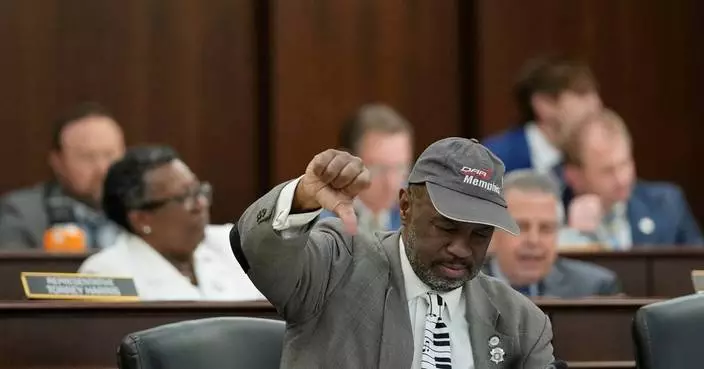
Republican lawmakers in Tennessee are debating a plan that could carve up a majority-Black congressional district, reshaping it to the GOP’s advantage as part of President Trump’s strategy to try to hold on to a slim House majority in the November midterm elections.
Protesters shouted “No Jim Crow” outside the House and Senate chambers as lawmakers convened to consider the legislation. The redistricting effort in Tennessee is one of several rapidly advancing plans in Southern states as Republicans try to leverage a U.S. Supreme Court ruling that weakened the federal Voting Rights Act.
▶ Read more
The U.S. stock market is holding near its records as oil prices keep dropping on hopes that a deal may be nearing to allow tankers to carry crude once again from the Persian Gulf.
The S&P 500 added 0.1% early Thursday to its all-time high set the day before. The Dow Jones Industrial Average rose 193 points, and the Nasdaq composite added 0.1%.
DoorDash jumped after reporting better results than expected. Whirlpool tumbled after reporting much weaker results than expected. The seller of home appliances said it would raise prices by at least 10% for some of its offerings, while accelerating cost cuts.
▶ Read more
Supreme Court justices are not “political actors,” Chief Justice John Roberts said Wednesday, insisting unpopular court decisions are based solely on the law.
“I think, at a very basic level, people think we’re making policy decisions, we’re saying we think this is how things should be, as opposed to what the law provides,” he said. “I think they view us as purely political actors, which I don’t think is an accurate understanding of what we do.”
His remarks to a conference of judges and lawyers from the 3rd U.S. Circuit in Pennsylvania came at a time of low public confidence in the court, and about a week after the court handed down a decision that hollowed out the Voting Rights Act.
▶ Read more
Republican lawmakers in Tennessee are poised to take up a plan Thursday that could carve up a majority-Black congressional district, reshaping it to the GOP’s advantage as part of President Trump’s strategy to try to hold on to a slim House majority in the November midterm elections.
The redistricting effort in Tennessee is one of several rapidly advancing plans in Southern states as Republicans try to leverage a U.S. Supreme Court ruling that weakened the federal Voting Rights Act.
The court ruled Louisiana relied too heavily on race when creating a second Black-majority House district as it attempted to comply with the federal law. The high court’s decision altered a decades-old understanding of the law, giving Republicans grounds to try to eliminate majority-Black districts that have elected Democrats.
▶ Read more
U.S. Secretary of State Marco Rubio met with Pope Leo XIV and then Vatican Secretary of State Cardinal Pietro Parolin in a visit that lasted 2½ hours.
U.S. State Department spokesperson Tommy Pigott said Rubio and Leo discussed the situation in the Middle East “and topics of mutual interest in the Western Hemisphere. The meeting underscored the strong relationship between the United States and the Holy See and their shared commitment to promoting peace and human dignity,” he said.
In a separate statement about the Parolin meeting, Pigott said the two diplomats discussed “ongoing humanitarian efforts in the Western Hemisphere and efforts to achieve a durable peace in the Middle East. The discussion reflected the enduring partnership between the United States and the Holy See in advancing religious freedom,” the statement said.
▶ Read more
Trump’s lawyer, hoping for an eventual Supreme Court victory, has asked a federal appeals court in New York to temporarily block a longtime columnist from collecting an $83 million defamation award.
The lawyer told the 2nd U.S. Circuit Court of Appeals in a filing Tuesday to stay its decision supporting the award so that Trump won’t have to pay writer E. Jean Carroll while he appeals to the high court.
A Manhattan jury awarded Carroll the payout in January 2024. Another jury in May 2023 awarded Carroll $5 million after concluding Trump sexually abused her in a Manhattan luxury department store dressing room in 1996 and then defamed her after she published her account of it in 2019.
Trump has vehemently denied sexually abusing Carroll or ever knowing her and has repeatedly accused her of making accusations against him for political purposes or to promote her memoir.
Attorney Roberta Kaplan, who represents Carroll, declined to comment through a spokesperson.
▶ Read more
Trump’s proposal to put a coat of white paint on the exterior of a 19th-century historic landmark building next to the White House is slated for a hearing Thursday by a key federal agency, which he expects to approve what would be a dramatic makeover.
The National Capital Planning Commission is scheduled to begin considering the plan on Thursday, according to its meeting agenda. Trump calls for painting all or most of the Eisenhower building’s gray granite exterior with white paint. He last year called the gray a “really bad color.”
But the proposal has alarmed preservationists, architects, historians and others who argue that granite is not meant to be painted and that paint would trap moisture, deteriorate the stone and not solve problems the administration wants to fix.
▶ Read more
The Trump administration’s approach to the Iran war over the past 24 hours has pinballed from declarations that a tenuous ceasefire was holding and military operations were over to new threats of bombing the Islamic Republic.
Tuesday started with Defense Secretary Pete Hegseth explaining how the U.S. military was protecting stranded ships so they could traverse the Strait of Hormuz.
That afternoon, Secretary of State Marco Rubio told reporters at the White House that the military operation was “concluded” and that the U.S. achieved its objectives. But in almost the same breath, he said Trump was still seeking a “path of peace” that required Iran to agree to a deal to reopen the vital oil shipping corridor.
By Tuesday evening, Trump announced that the effort to protect ships was paused to see if an agreement could be reached. Then on Wednesday morning, he again warned that bombing would resume if Tehran didn’t agree to U.S. terms.
▶ Read more
Iran said it was reviewing the latest American proposals on ending the war, as Trump threatened the country with a new wave of bombing unless a deal is reached that includes reopening the crucial Strait of Hormuz to international shipping.
Hope that the two-month conflict could soon end buoyed international markets on Thursday, even as the U.S. military fired on an Iranian oil tanker attempting to breach an American blockade of Iran’s ports hours earlier. The developments followed days of mixed messaging from the Trump administration over its strategy to end the war.
Trump posted on social media that the two-month war could soon end and that oil and natural gas shipments disrupted by the conflict could restart. But he said that depends on Iran accepting a reported agreement that he did not detail.
“If they don’t agree, the bombing starts,” Trump wrote.
▶ Read more
U.S. Secretary of State Marco Rubio opened a fence-mending visit to the Vatican on Thursday after President Donald Trump’s broadsides against Pope Leo XIV and the U.S.-Israeli war in Iran angered the Holy See and sparked ongoing sparring between the two American leaders.
Rubio, a practicing Catholic, had an audience scheduled with Leo, which was complicated at the last minute by Trump’s latest criticism of the Chicago-born pope. Leo has pushed back, calling out Trump’s misrepresentations of his views on Iran and nuclear weapons and insisting that he is merely preaching the biblical message of peace.
Rubio was also due to meet with the Vatican secretary of state, Cardinal Pietro Parolin, who on the eve of his visit strongly defended Leo and criticized Trump’s attacks in understated diplomatic terms. “Attacking him like that or criticizing what he does seems a bit strange to me, to say the least,” Parolin said Wednesday.
Parolin said Washington had requested Rubio’s audience, and that the pope was open to continued dialogue.
▶ Read more
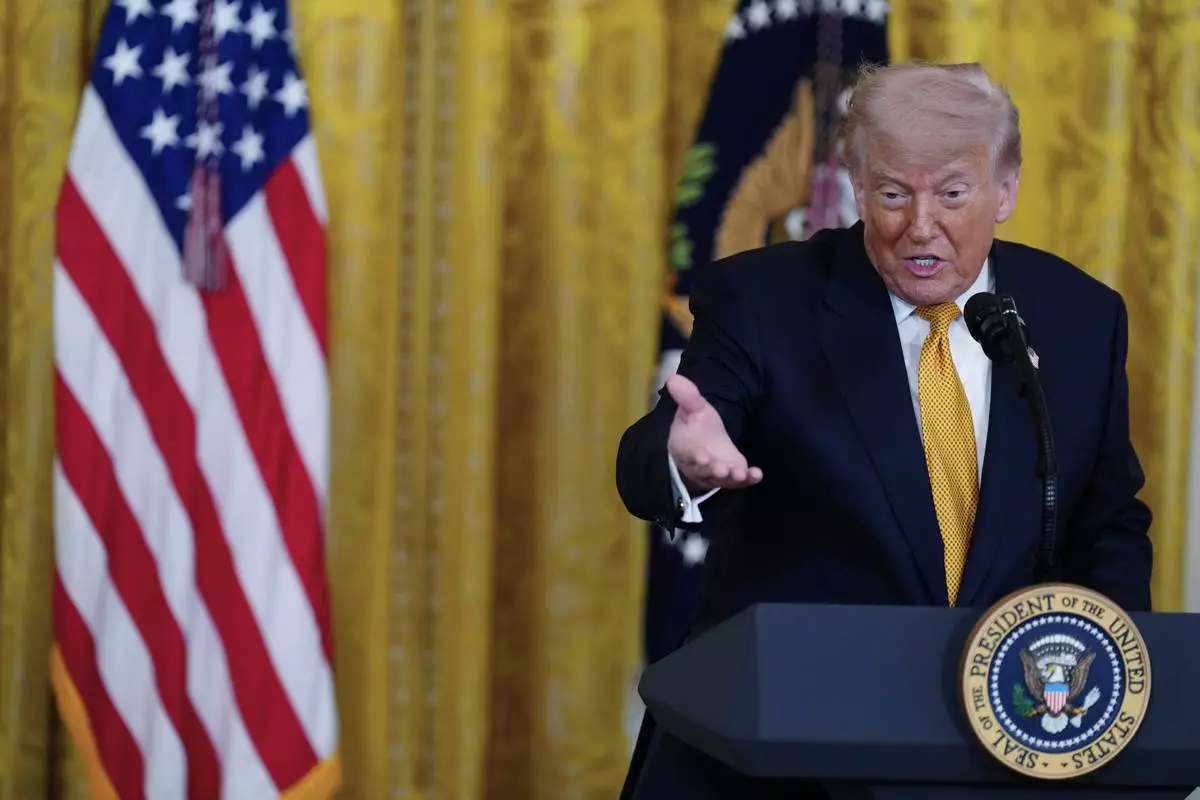
President Donald Trump speaks during a Mother's Day event for members of the military, Wednesday, May 6, 2026, in the East Room of the White House, in Washington. (AP Photo/Jacquelyn Martin)
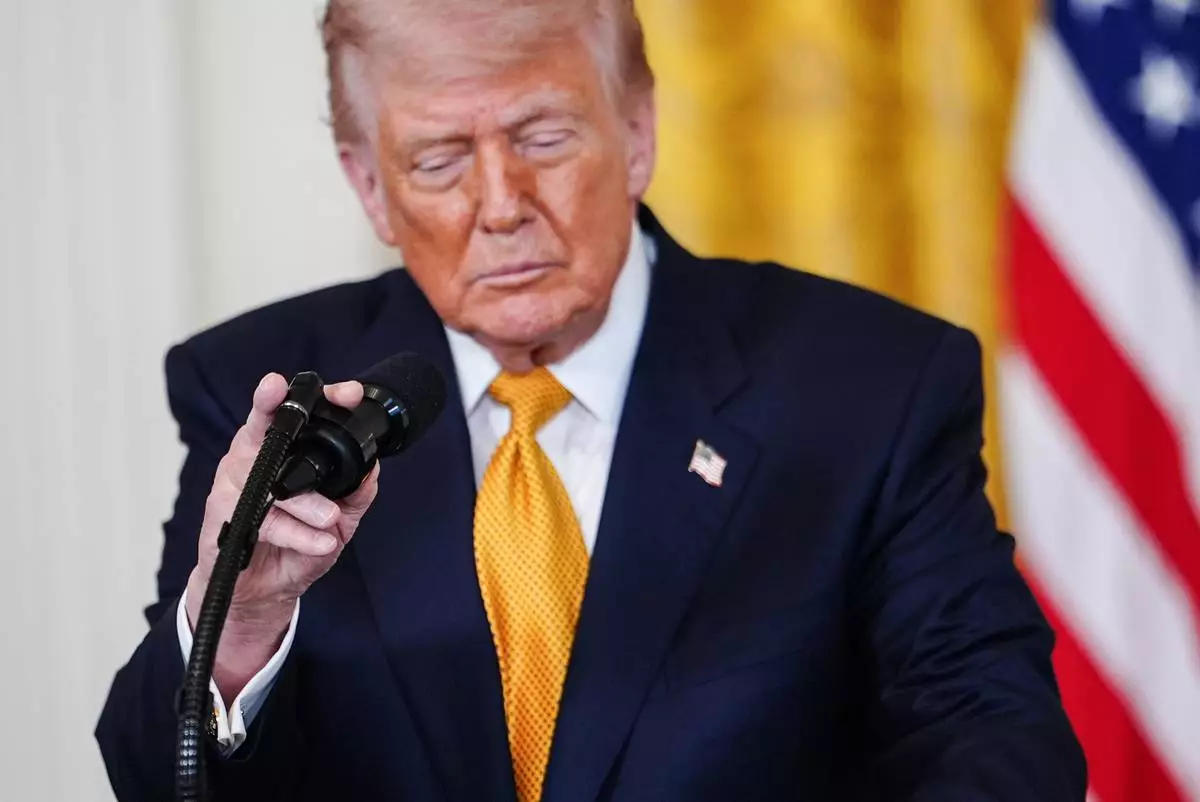
President Donald Trump adjusts his microphone while speaking during an event for military mothers in the East Room of the White House, Wednesday, May 6, 2026, in Washington. (AP Photo/Julia Demaree Nikhinson)