Skip to Content Facebook Feature Image

Trump's commerce secretary says new electronics tariff exemptions are temporary, chip tariffs coming

News

Trump's commerce secretary says new electronics tariff exemptions are temporary, chip tariffs coming
News

News

Trump's commerce secretary says new electronics tariff exemptions are temporary, chip tariffs coming

2025-04-14 06:31 Last Updated At:06:40

NASHVILLE, Tenn. (AP) — Tariff exemptions announced Friday on electronics like smartphones and laptops are only a temporary reprieve until the Trump administration develops a new tariff approach specific to the semiconductor industry, U.S. Commerce Secretary Howard Lutnick said Sunday.

White House officials, including President Donald Trump himself, spent Sunday downplaying the significance of exemptions that lessen but won't eliminate the effect of U.S. tariffs on imports of popular consumer devices and their key components.

More Images
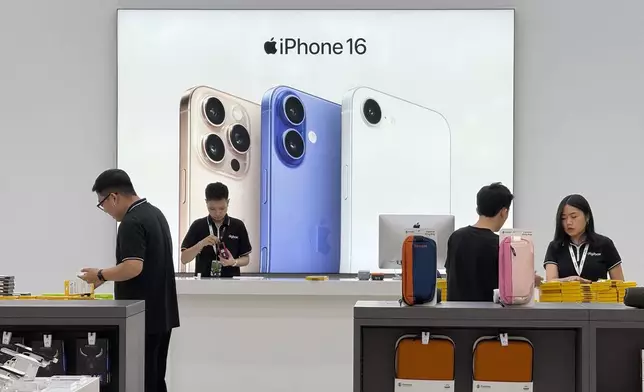
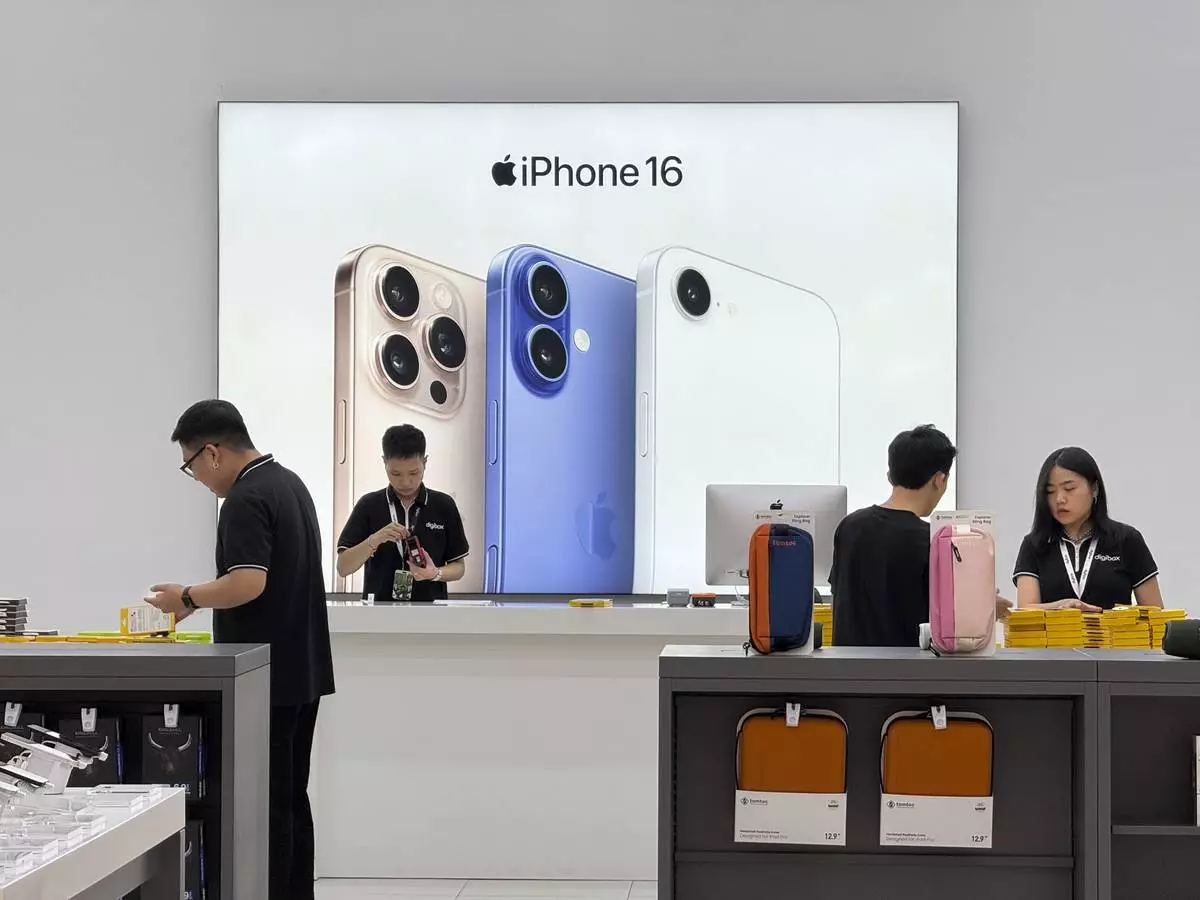
Sales staffs work at an Apple shop in Hanoi, Vietnam Thursday, April 10, 2025. (AP Photo/Hau Dinh)
Sales staffs work at an Apple shop in Hanoi, Vietnam Thursday, April 10, 2025. (AP Photo/Hau Dinh)

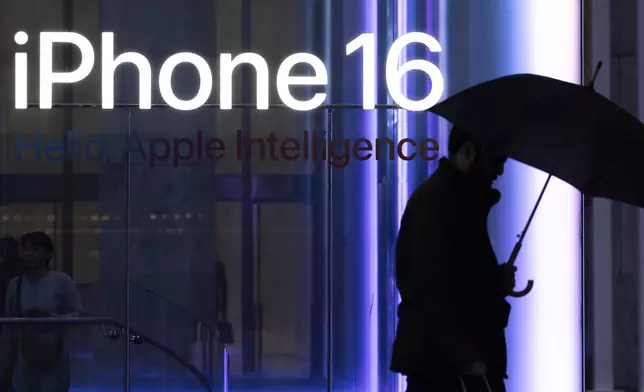
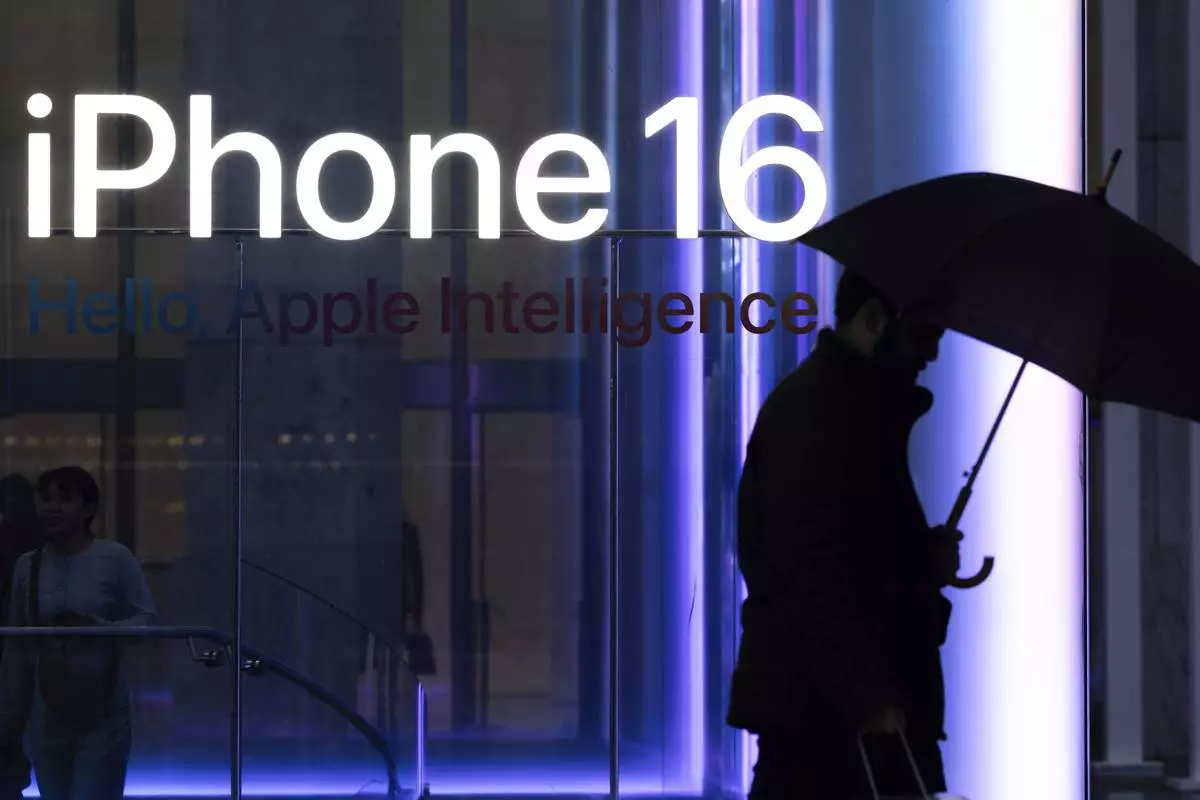
A person carrying an umbrella walks past the Apple Store on the 5th Avenue, Monday, April 7, 2025, in New York. (AP Photo/Yuki Iwamura)
A person carrying an umbrella walks past the Apple Store on the 5th Avenue, Monday, April 7, 2025, in New York. (AP Photo/Yuki Iwamura)

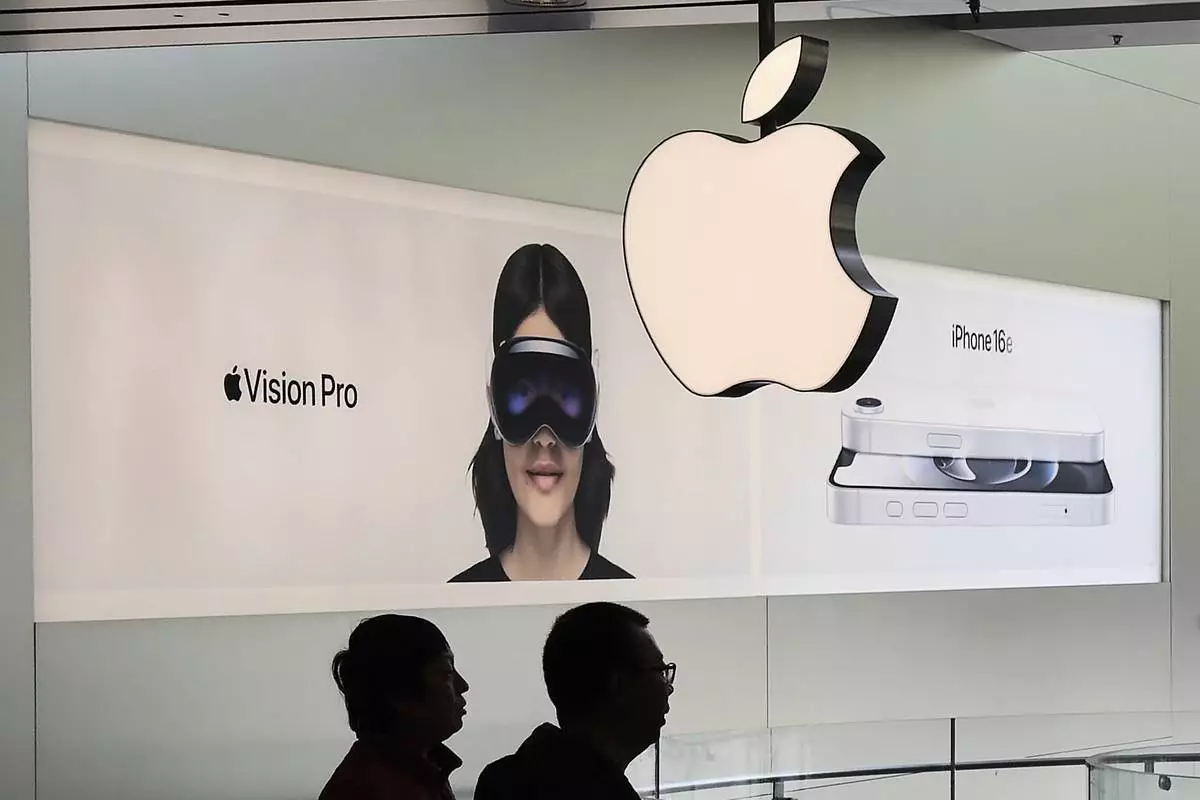
Chinese people visit an Apple Store, inside a shopping mall, in Beijing, Thursday, April 10, 2025. (AP Photo/Andy Wong)
Chinese people visit an Apple Store, inside a shopping mall, in Beijing, Thursday, April 10, 2025. (AP Photo/Andy Wong)

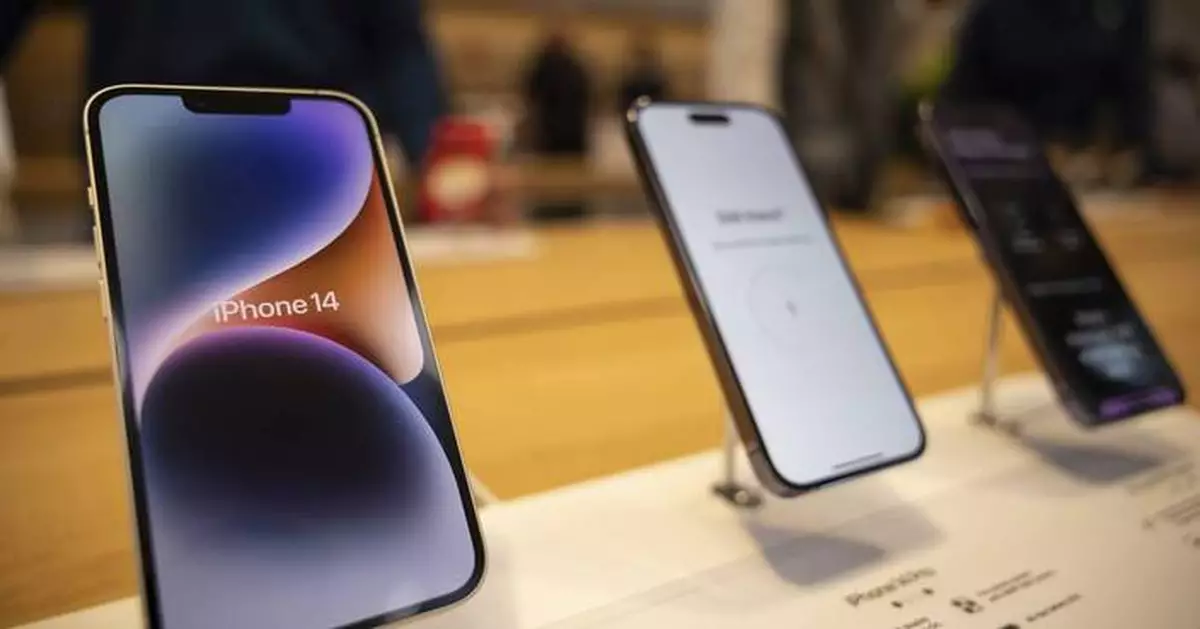
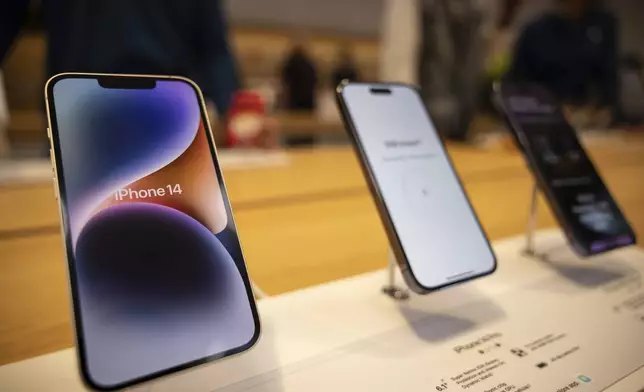
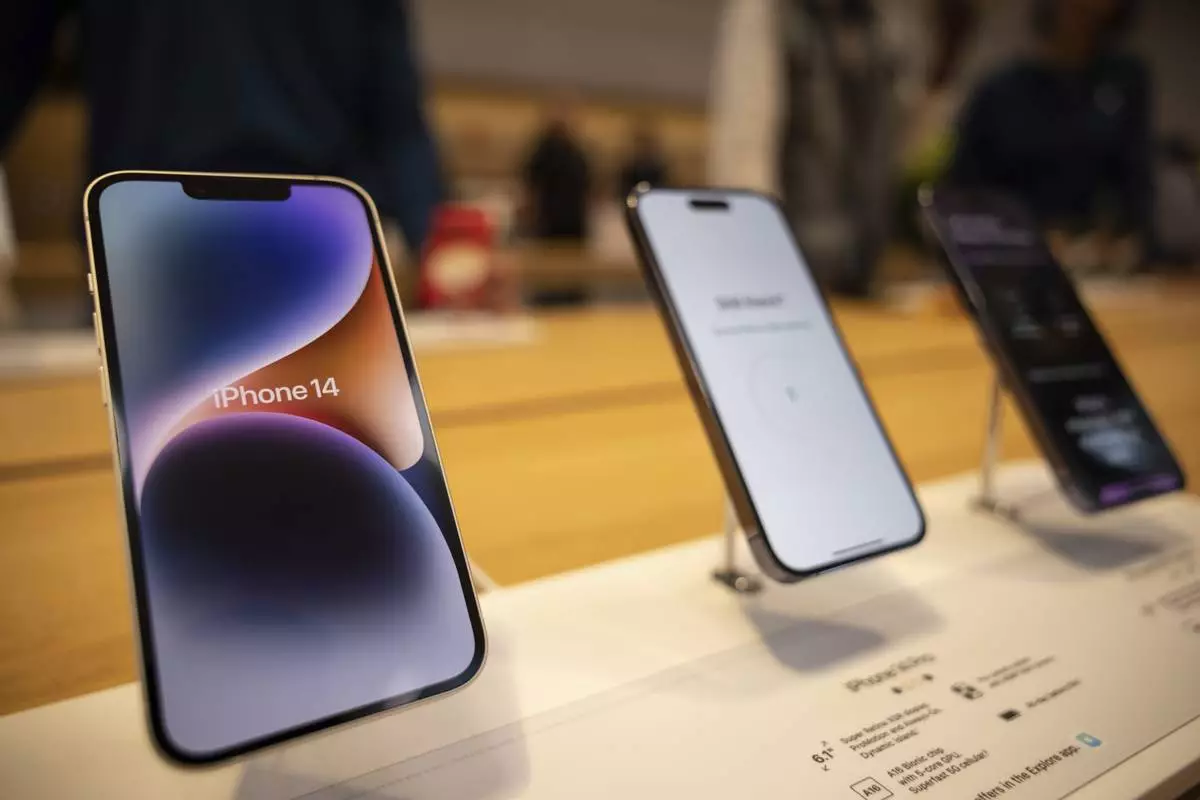
FILE - The iPhone 14, iPhone 14 Pro and iPhone 14 Pro Max are displayed at the Apple Fifth Avenue store, Friday, Sept. 16, 2022, in New York. (AP Photo/Yuki Iwamura, File)

FILE - The iPhone 14, iPhone 14 Pro and iPhone 14 Pro Max are displayed at the Apple Fifth Avenue store, Friday, Sept. 16, 2022, in New York. (AP Photo/Yuki Iwamura, File)

“They’re exempt from the reciprocal tariffs but they’re included in the semiconductor tariffs, which are coming in probably a month or two,” Lutnick told ABC's “This Week” on Sunday.

Trump added to the confusion hours later, declaring on social media that there was no “exception” at all because the goods are “just moving to a different" bucket and will still face a 20% tariff as part of his administration's move to punish China for its role in fentanyl trafficking.

The Trump administration late Friday had said it would exclude electronics from broader so-called reciprocal tariffs, a move that could help keep the prices down for phones and other consumer products that aren’t usually made in the U.S.

China's commerce ministry in a Sunday statement welcomed the change as a small step even as it called for the U.S. to completely cancel the rest of its tariffs.

Sparing electronics was expected to benefit big tech companies like Apple and Samsung and chip makers like Nvidia, though the uncertainty of future tariffs may rein in an anticipated tech stock rally on Monday.

U.S. Customs and Border Protection said items like smartphones, laptops, hard drives, flat-panel monitors and some chips would qualify for the exemption. Machines used to make semiconductors are excluded too. That means they won’t be subject to most of the tariffs levied on China or the 10% baseline tariffs elsewhere.

It was the latest tariff change by the Trump administration, which has made several U-turns in its massive plan to put tariffs in place on goods from most countries. White House officials sought to dismiss any suggestion of a reprieve as the weekend progressed.

“It’s not really an exception. That's not even the right word for it,” U.S. Trade Representative Jamieson Greer told CBS’ “Face the Nation” on Sunday. “This type of supply chain moved from the tariff regime for the global tariff, the reciprocal tariff, and it moved to the national security tariff regime.”

Greer added that “the president decided that we’re not going to have exemptions. We can’t have a Swiss cheese solution to this universal problem that we’re facing.”

On Air Force One Saturday night, President Donald Trump told reporters he would get into more specifics on exemptions on Monday. In his post Sunday on TruthSocial, he promised the White House was “taking a look at Semiconductors and the WHOLE ELECTRONICS SUPPLY CHAIN.”

Some had assumed the exemption filed Friday night reflected the president’s realization that his China tariffs are unlikely to shift more manufacturing of smartphones, computers and other gadgets to the U.S. any time soon, if ever.

The administration has predicted that the trade war prod Apple to make iPhones in the U.S. for the first time, but that was an unlikely scenario after Apple spent decades building up a finely calibrated supply chain in China.

It would take several years and cost billions of dollars to build new plants in the U.S., burdening Apple with economic forces that could triple the price of an iPhone and torpedo sales of its marquee product.

The turmoil has battered the stocks of tech’s “Magnificent Seven” -- Apple, Microsoft, Nvidia, Amazon, Tesla, Google parent Alphabet and Facebook parent Meta Platforms.

At one point, the Magnificent Seven’s combined market value had plunged by $2.1 trillion, or 14%, from April 2 when Trump unveiled sweeping tariffs on a wide range of countries. When Trump paused the tariffs outside of China on Wednesday, the lost value in those companies was pared to $644 billion, or a 4% decline.

An electronics exemption would fulfill the kind of friendly treatment that industry was envisioning when Apple CEO Tim Cook, Tesla CEO Elon Musk, Google CEO Sundar Pichai, Facebook founder Mark Zuckerberg and Amazon founder Jeff Bezos assembled behind the president during his Jan. 20 inauguration.

That united display of fealty reflected Big Tech’s hopes that Trump would be more accommodating than President Joe Biden’s administration.

Apple won praise from Trump in late February when the Cupertino, California, company committed to invest $500 billion and add 20,000 jobs in the U.S. during the next four years. The pledge was an echo of a $350 billion investment commitment in the U.S. that Apple made during Trump’s first term when the iPhone was exempted from China tariffs.

An electronics exemption would remove “a huge black cloud overhang for now over the tech sector and the pressure facing U.S. Big Tech,” said Wedbush analyst Dan Ives in a research note. Ives amended that note after Lutnick's comments Sunday, saying the confusing news out of the White House “is dizzying for the industry and investors and creating massive uncertainty and chaos for companies trying to plan their supply chain, inventory, and demand.”

Neither Apple nor Samsung responded to requests for comment over the weekend. Nvidia declined to comment.

O'Brien reported from Providence, Rhode Island. AP White House correspondent Darlene Superville in West Palm Beach, Florida, and AP Technology Writer Michael Liedtke in Berkeley, California contributed to this report.
Sales staffs work at an Apple shop in Hanoi, Vietnam Thursday, April 10, 2025. (AP Photo/Hau Dinh)
Sales staffs work at an Apple shop in Hanoi, Vietnam Thursday, April 10, 2025. (AP Photo/Hau Dinh)

A person carrying an umbrella walks past the Apple Store on the 5th Avenue, Monday, April 7, 2025, in New York. (AP Photo/Yuki Iwamura)
A person carrying an umbrella walks past the Apple Store on the 5th Avenue, Monday, April 7, 2025, in New York. (AP Photo/Yuki Iwamura)

Chinese people visit an Apple Store, inside a shopping mall, in Beijing, Thursday, April 10, 2025. (AP Photo/Andy Wong)
Chinese people visit an Apple Store, inside a shopping mall, in Beijing, Thursday, April 10, 2025. (AP Photo/Andy Wong)

FILE - The iPhone 14, iPhone 14 Pro and iPhone 14 Pro Max are displayed at the Apple Fifth Avenue store, Friday, Sept. 16, 2022, in New York. (AP Photo/Yuki Iwamura, File)

FILE - The iPhone 14, iPhone 14 Pro and iPhone 14 Pro Max are displayed at the Apple Fifth Avenue store, Friday, Sept. 16, 2022, in New York. (AP Photo/Yuki Iwamura, File)

PROVIDENCE, R.I. (AP) — Investigations into the Brown University mass shooting and the slaying of a Massachusetts Institute of Technology professor shifted Thursday when authorities discovered evidence they say indicates they were committed by the same man, who was then found dead from a self-inflicted gunshot wound.

The attacker at Brown killed two students and wounded nine others in an engineering building on Saturday. Some 50 miles (80 kilometers) away MIT professor Nuno F.G. Loureiro was killed Monday night in his home in the Boston suburb of Brookline.

The FBI had earlier said it knew of no links between the cases.

Here are some answers to questions about the attacks and investigations:

Claudio Neves Valente, 48, a former Brown student and Portuguese national, was found dead in a New Hampshire storage facility after a six-day search that spanned several New England states.

Brown University President Christina Paxson said Neves Valente was enrolled at Brown from the fall of 2000 to the spring of 2001. He was admitted to the graduate school to study physics beginning in September 2000.

“He has no current affiliation with the university,” she said.

Neves Valente had studied at Brown on a student visa. He eventually obtained legal permanent residence status in September 2017. His last known residence was in Miami.

There are still “a lot of unknowns” in regard to motive, Rhode Island Attorney General Peter Neronha said. “We don’t know why now, why Brown, why these students and why this classroom,” he said.

Loureiro, 47, who was married, joined MIT in 2016 and was named last year to lead the school’s Plasma Science and Fusion Center, where he worked to advance clean energy technology and other research. The center, one of MIT’s largest labs, had more than 250 people working across seven buildings when he took the helm. He was a professor of physics and nuclear science and engineering.

Valente and Loureiro attended the same academic program at a university in Portugal between 1995 and 2000, Foley said. Loureiro graduated from the physics program at Instituto Superior Técnico, Portugal’s premier engineering school, in 2000, according to his MIT faculty page.

The same year, Neves Valente was let go from a position at the Lisbon university, according to an archive of a termination notice from the school’s then-president in February 2000.

Authorities released several security videos of a person thought might have carried out the Brown attack. They showed the individual standing, walking and even running along the streets, but their face is masked or turned away in all of them.

Police say a witness then gave investigators a key tip: he saw someone who looked like the person of interest with a Nissan sedan displaying Florida plates. That enabled Providence police officers to tap into a network of more than 70 street cameras operated around the city by surveillance company Flock Safety. Those cameras track license plates and other vehicle details.

After leaving Rhode Island for Massachusetts, Providence officials said the suspect stuck a Maine license plate over the rental car’s plate to help conceal his identity.

Video footage showed Neves Valente entering an apartment building near Loureiro’s. About an hour later, he was seen entering the New Hampshire storage facility where he was later found dead, Foley said.

The two students who were killed and the nine others wounded were studying for a final in a first-floor classroom in an older section of the engineering building when the shooter walked in and opened fire.

Those killed were 19-year-old sophomore Ella Cook and 18-year-old freshman MukhammadAziz Umurzokov. Cook, whose funeral is Monday, was active in her Alabama church and served as vice president of the Brown College Republicans. Umurzokov’s family immigrated to the U.S. from Uzbekistan when he was a child, and he aspired to be a doctor.

As for the wounded, six were in stable condition Thursday, officials said. The other three were discharged.

Neves Valiente gained permanent residency status through a green card lottery program, Homeland Security Secretary Kristi Noem said in a post on X.

She said President Donald Trump ordered her to pause the United States Citizenship and Immigration Services program.

The diversity visa program makes up to 50,000 green cards available each year by lottery to people from countries that are little represented in the United States, many of them in Africa.

The lottery was created by Congress, and the move is almost certain to invite legal challenges.

Whittle reported from Portland, Maine. Contributing were Associated Press reporters Kimberlee Kruesi, Amanda Swinhart, Robert F. Bukaty, Matt O’Brien and Jennifer McDermott in Providence; Michael Casey in Boston; Heather Hollingsworth in Mission, Kansas; Kathy McCormack and Holly Ramer in Concord, New Hampshire; Christopher Weber in Los Angeles; and Alanna Durkin Richer, Mike Balsamo and Eric Tucker in Washington.

This combo image made with photos provided by the FBI and the Providence, Rhode Island, Police Department shows a person of interest in the shooting that occurred at Brown University in Providence, R.I., Saturday, Dec. 13, 2025. (FBI/Providence Police Department via AP)

This combo image made with photos provided by the FBI and the Providence, Rhode Island, Police Department shows a person of interest in the shooting that occurred at Brown University in Providence, R.I., Saturday, Dec. 13, 2025. (FBI/Providence Police Department via AP)

A memorial of flowers and signs lay outside the Barus and Holley engineering building at Brown University, on Hope Street in Providence, R.I., on Tuesday, Dec 16, 2025. (AP Photo/Matt OBrien)

A memorial of flowers and signs lay outside the Barus and Holley engineering building at Brown University, on Hope Street in Providence, R.I., on Tuesday, Dec 16, 2025. (AP Photo/Matt OBrien)

A Brown University student leaves campus, Tuesday, Dec. 16, 2025, after all classes, exams and papers were canceled for the rest of the Fall 2025 semester following the school shooting, in Providence, R.I. (AP Photo/Robert F. Bukaty)

A Brown University student leaves campus, Tuesday, Dec. 16, 2025, after all classes, exams and papers were canceled for the rest of the Fall 2025 semester following the school shooting, in Providence, R.I. (AP Photo/Robert F. Bukaty)

Recommended Articles