ATLANTA (AP) — Trump administration officials were out in force across the television networks Sunday defending President Donald Trump’s economic policies after another week of reeling markets that saw the Republican administration reverse course on some of its steepest tariffs.
Trump, meanwhile, said on his social media platform that there ultimately will be no exemptions for his sweeping tariff agenda, disputing characterizations that he has granted tariff exceptions for certain electronics, including smart phones, whose production is concentrated in China. Rather, Trump said, “those products are subject to the existing 20% Fentanyl Tariffs, and they are just moving to a different Tariff ‘bucket.’”
Click to Gallery
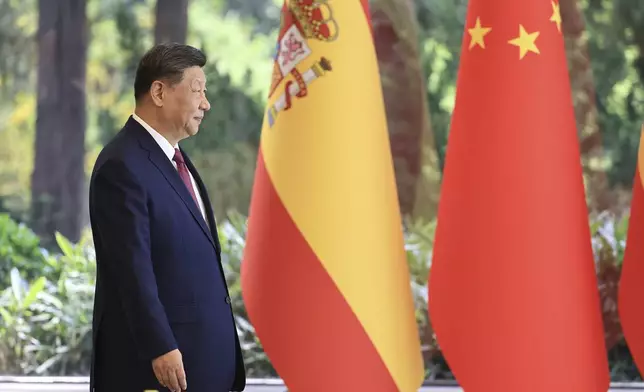
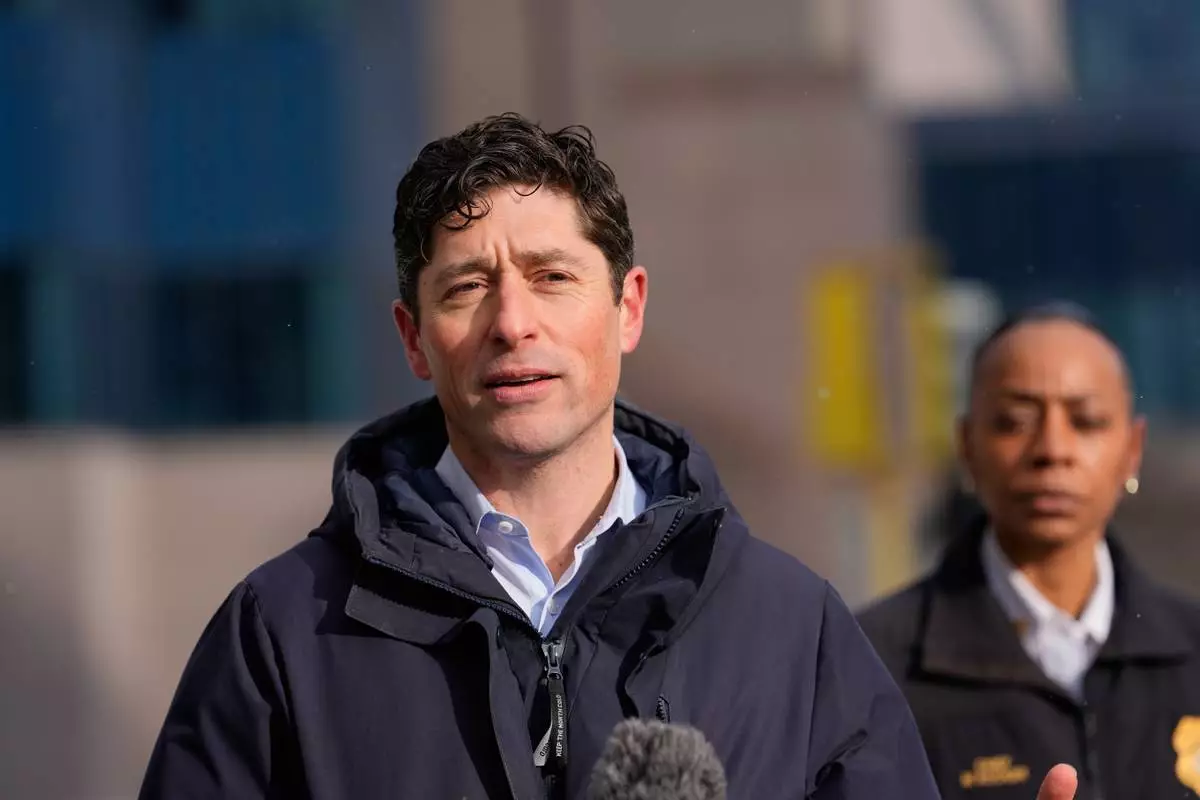
Chinese President Xi Jinping arrives for a bilateral meeting with Spanish Prime Minister Pedro Sanchez, unseen, at Diaoyutai Guest House in Beijing, China, Friday, April 11, 2025. (Andres Martinez Casares/Pool Photo via AP)
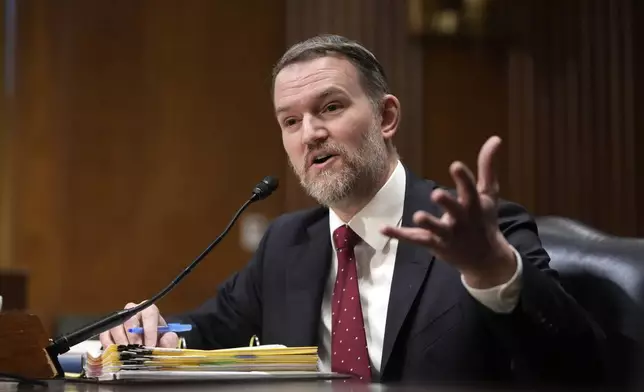
U.S. Trade Representative Jamieson Greer testifies before the Senate Finance Committee on Capitol Hill in Washington, Tuesday, April 8, 2025. (AP Photo/Mark Schiefelbein)
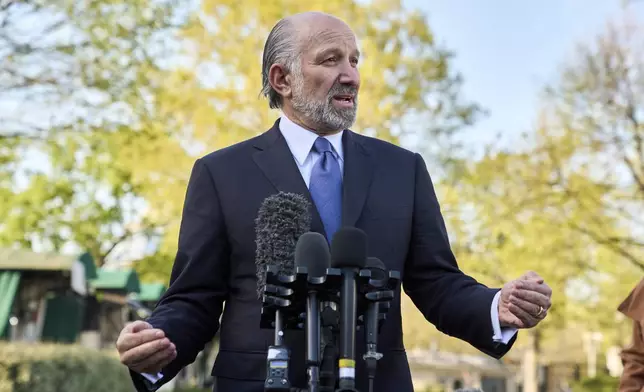
Commerce Secretary Howard Lutnick speaks to reporters outside the West Wing of the White House, Wednesday, April 9, 2025, in Washington. (AP Photo/Jacquelyn Martin)
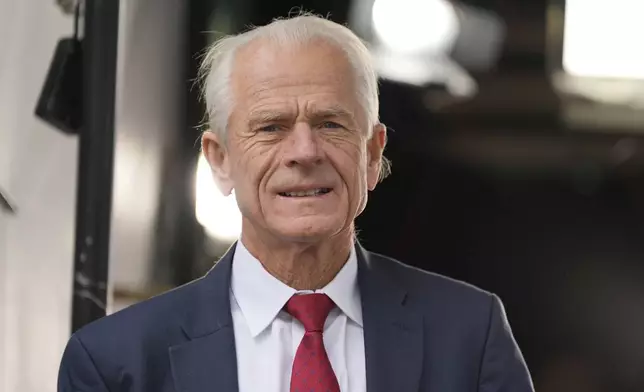
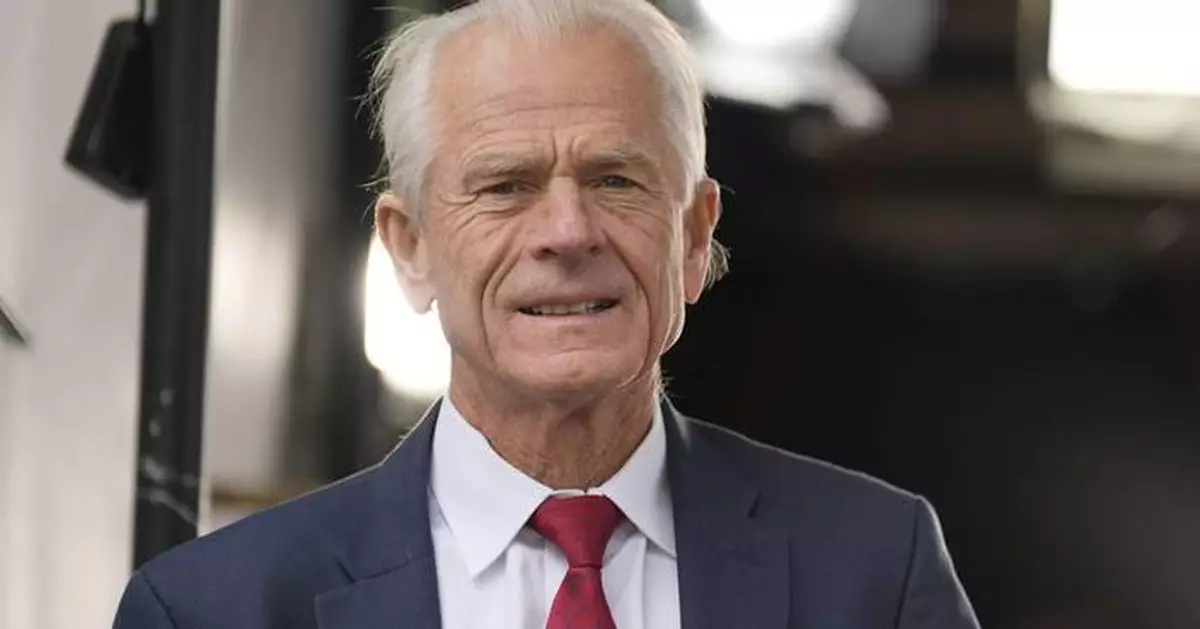
White House trade adviser Peter Navarro is pictured before participating in an interview outside the White House, Thursday, April 10, 2025, in Washington. (AP Photo/Alex Brandon)
White House advisers and Cabinet members tried to project confidence and calm amid Trump’s on-again, off-again approach to tariffs on imported goods from around the world. But their explanations about the overall agenda, coupled with Trump's latest statements, also reflected shifting narratives from a president who, as a candidate in 2024, promised an immediate economic boost and lower prices but now asks American businesses and consumers for patience.
A week ago, Trump’s team stood by his promise to leave the impending tariffs in place without exceptions. They used their latest news show appearances to defend his move to ratchet back to a 10% universal tariff for most nations except China (145%), while seeming to grant exemptions for certain electronics like smartphones, laptops, hard drives, flat-panel monitors and semiconductor chips.
Here are the highlights of what Trump lieutenants said last week vs. Sunday:
Long before launching his first presidential campaign in 2015, Trump bemoaned the offshoring of U.S. manufacturing. His promise is to reindustrialize the United States and eliminate trade deficits with other countries.
LAST WEEK
Commerce Secretary Howard Lutnick, interviewed on CBS’ “Face the Nation,” played up national security. “You’ve got to realize this is a national security issue,” he said, raising the worst-case scenarios of what could happen if the U.S. were involved in a war.
“We don’t make medicine in this country anymore. We don’t make ships. We don’t have enough steel and aluminum to fight a battle, right?” he said.
SUNDAY
Lutnick stuck to that national security framing, but White House trade adviser Peter Navarro focused more on the import taxes being leverage in the bigger economic puzzle.
“The world cheats us. They’ve been cheating us for decades,” Navarro said on NBC’s “Meet the Press.” He cited practices such as dumping products at unfairly low prices, currency manipulation and barriers to U.S. auto and agricultural products entering foreign markets.
Navarro insisted the tariffs would yield broader bilateral trade deals to address all those issues. But he also relied on a separate justification when discussing China: the illicit drug trade.
“China has killed over a million people with their fentanyl,” he said.
Speaking before Trump's Truth Social post disputing the notion of exemptions, Lutnick alluded to that coming policy. “They're going to have a special focus-type of tariff to make sure that those products get reshored,” he told ABC's “This Week.”
LAST WEEK
With the higher rates set to be collected beginning April 9, administration officials argued that other countries would rush to the negotiating table.
“I’ve heard that there are negotiations ongoing and that there are a number of offers,” Kevin Hassett, director of the White House Economic Council, told ABC. He claimed that “more than 50 countries (were) reaching out,” though he did not name any.
SUNDAY
Navarro named the United Kingdom, the European Union, India, Japan, South Korea, Indonesia and Israel as among the nations in active negotiations with U.S. Trade Representative Jamieson Greer, Lutnick and other officials.
Greer said on CBS that his goal was "to get meaningful deals before 90 days” –- the duration of Trump’s pause -– “and I think we’re going to be there with several countries in the next few weeks.”
Talks with China have not begun, he said. “We expect to have a conversation with them,” he said, emphasizing it would be between Trump and Chinese President Xi Jinping.
Trump took an aggressive tone himself Sunday in his social media post, saying “we will not be held hostage by other Countries, especially hostile trading Nations like China, which will do everything within its power to disrespect the American People.”
Navarro was not as specific about Beijing. “We have opened up our invitation to them,” he said. Lutnick characterized the outreach as “soft entrees … through intermediaries.”
Pressed on whether there is any meaningful back and forth, Navarro said, “The president has a very good relationship with President Xi.”
Then he proceeded to criticize several China's polices and trade practices.
LAST WEEK
Navarro was bullish even after U.S. and global trading markets suffered trillions of dollars in losses.
“The first rule, particularly for the smaller investors out there, you can’t lose money unless you sell. And, right now, the smart strategy is not to panic,” he said on Fox News Channel's “Sunday Morning Futures.”
SUNDAY
Navarro's optimism did not waver despite another net-loss week for securities markets and rocky bond markets. “So, this is unfolding exactly like we thought it would in a dominant scenario,” he said.
Others confronted some of the more complex realities of trying to achieve Trump’s goal of restoring a bygone era of U.S. manufacturing.
Lutnick suggested the focus is on returning high-tech jobs, while sidestepping questions about lower-skilled manufacturing of goods such as shoes that could mean higher prices because of higher wages for U.S. workers. But some of that high-tech production is what Trump has, for now, exempted from the tariffs that he and his advisers frame as leverage for forcing companies to open U.S. facilities.
Hassett did acknowledge widespread angst.
“The survey data has been showing that people are anxious about the changes a little bit,” he said, before steering his answer to employment rates. “The hard data,” he said, “has been really, really strong.”
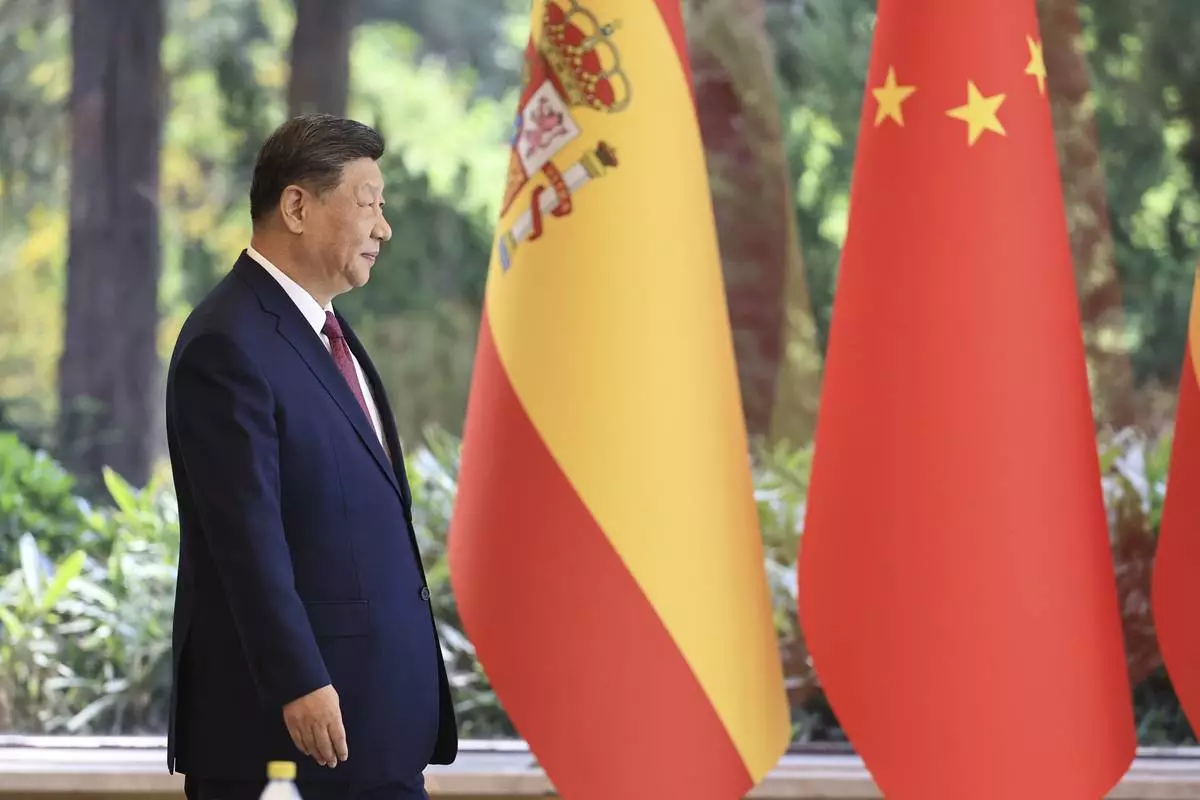
Chinese President Xi Jinping arrives for a bilateral meeting with Spanish Prime Minister Pedro Sanchez, unseen, at Diaoyutai Guest House in Beijing, China, Friday, April 11, 2025. (Andres Martinez Casares/Pool Photo via AP)
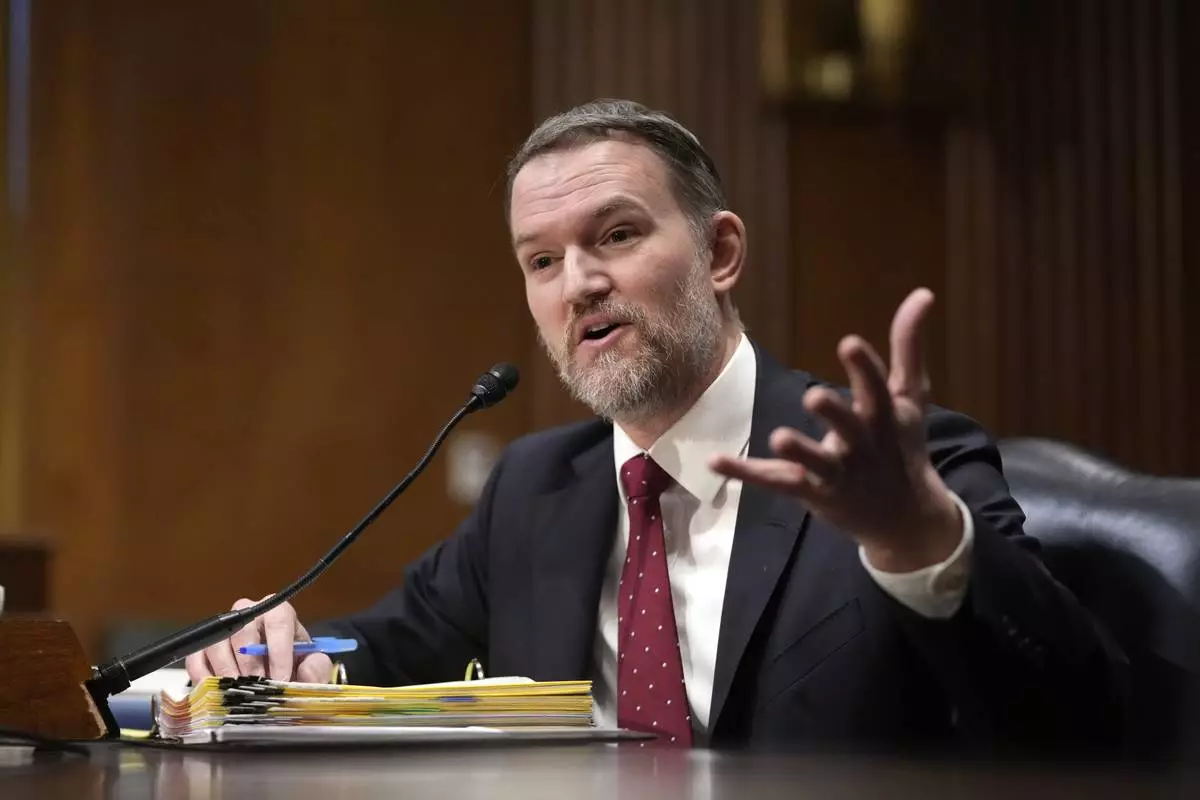
U.S. Trade Representative Jamieson Greer testifies before the Senate Finance Committee on Capitol Hill in Washington, Tuesday, April 8, 2025. (AP Photo/Mark Schiefelbein)
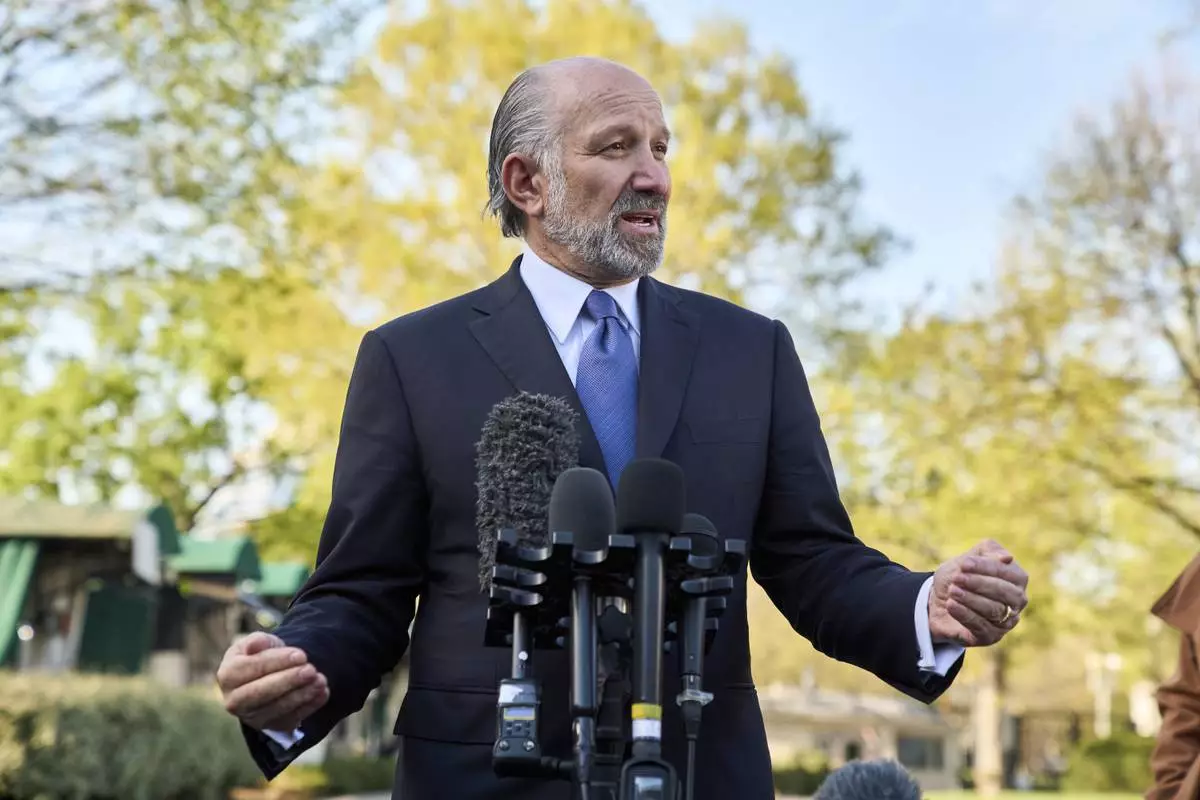
Commerce Secretary Howard Lutnick speaks to reporters outside the West Wing of the White House, Wednesday, April 9, 2025, in Washington. (AP Photo/Jacquelyn Martin)
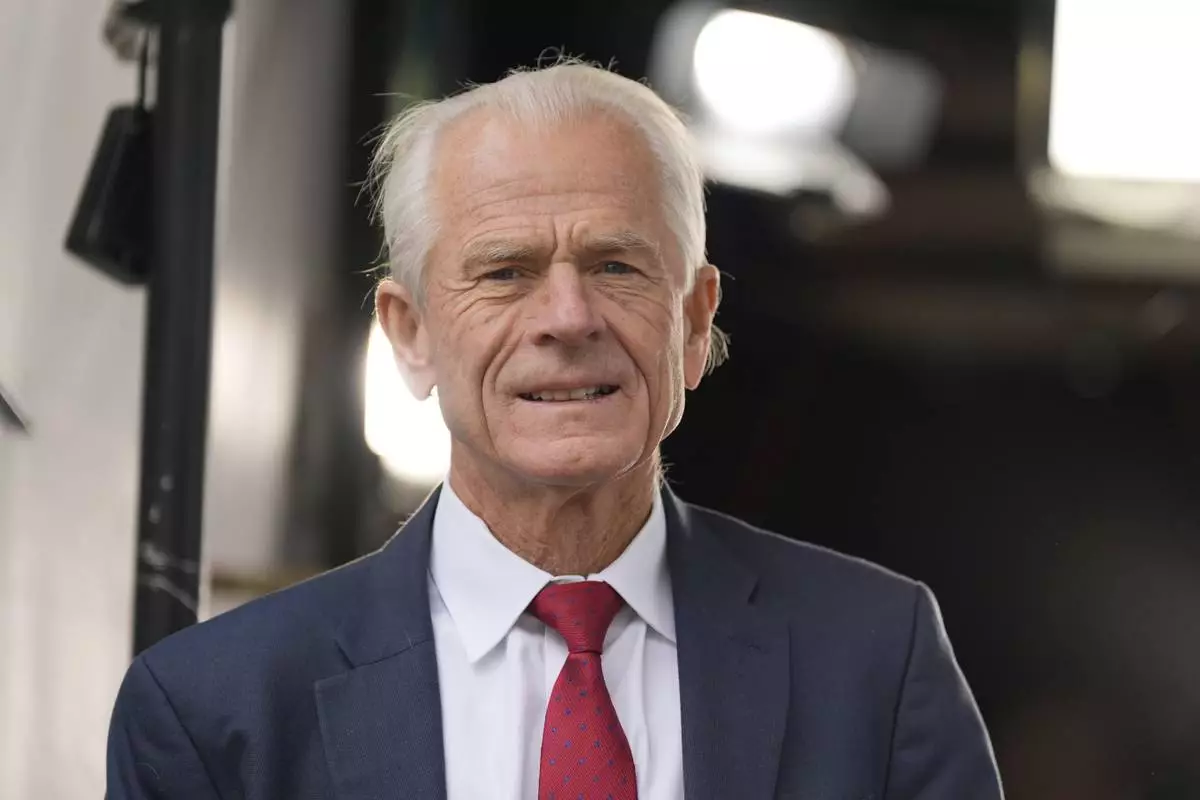
White House trade adviser Peter Navarro is pictured before participating in an interview outside the White House, Thursday, April 10, 2025, in Washington. (AP Photo/Alex Brandon)