Cross-boundary passenger traffic estimation and arrangements for Easter festive period
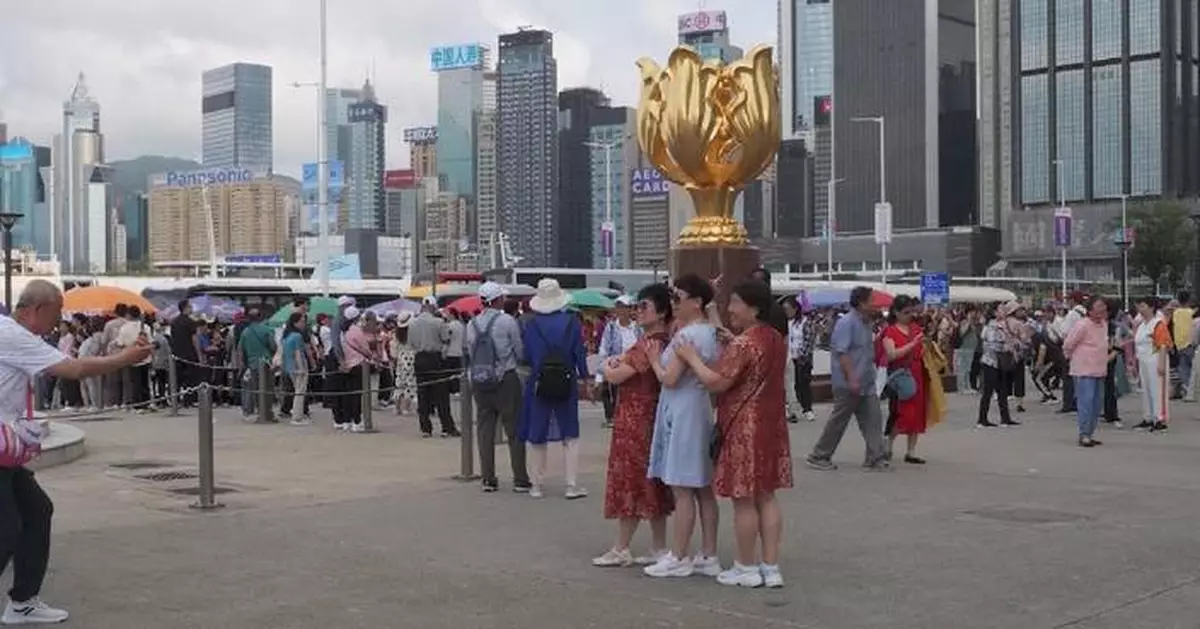
The Immigration Department (ImmD) estimates that around 6.04 million passengers (including Hong Kong residents and visitors) will pass through Hong Kong's sea, land and air control points during the upcoming Easter festive period (from April 17 to 21). The ImmD, in consultation with the Shenzhen General Station of Exit and Entry Frontier Inspection and other Mainland authorities, estimates that around 5.05 million passengers will pass through land boundary control points. The number of outbound and inbound passengers using land boundary control points will be relatively higher on April 18 (Friday) and April 21 (Monday), with around 759 000 passengers and 618 000 passengers respectively.
The ImmD estimates that the passenger traffic at the Lo Wu Control Point, the Lok Ma Chau Spur Line Control Point and the Shenzhen Bay Control Point will be heavy, with a daily average forecast of about 225 000, 202 000 and 164 000 passengers respectively.
To cope with the anticipated heavy traffic during the festive period, the ImmD has minimised leave for frontline officers for flexible deployment and the operation of extra clearance counters and kiosks.
Furthermore, the ImmD, the Hong Kong Police Force, the Customs and Excise Department and the MTR Corporation Limited will set up a joint command centre at the Lo Wu Control Point to make necessary arrangements. The ImmD will also establish close communication with Mainland authorities, including the Shenzhen General Station of Exit and Entry Frontier Inspection. To ensure a smooth passenger traffic flow, passenger conditions will be closely monitored and appropriate traffic diversion plans will be adopted when necessary.
To avoid congestion and longer-than-usual waiting times for immigration clearance, the ImmD advises all land boundary passengers to plan in advance, avoid making their journeys during busy periods and keep track of radio and TV broadcasts on traffic conditions at various control points. The busy times at boundary control points are available on the website of the ImmD at www.immd.gov.hk. Furthermore, passengers may also check the estimated waiting times at each land boundary control point at any time or place via the Immigration Mobile Application (ImmD Mobile App). They can then plan their trips effectively and save time queuing at control points. The ImmD Mobile App can be downloaded free of charge from the Apple App Store (supports iOS version 12.0 or above), Google Play (supports Android version 8.0 or above), Huawei AppGallery (supports Android version 8.0 or above) and the APK file available on the ImmD website. Passengers can download the ImmD Mobile App by scanning the QR code (see Annex) or via the ImmD website, www.immd.gov.hk. In addition, information on public transport services to and from various control points is available on the Transport Department website at www.td.gov.hk.
For travellers making journeys to the Mainland, the ImmD reminds them to carry their proof of identity and valid travel documents for crossing the boundary. Hong Kong residents should also check the validity of their Home Visit Permits. Non-permanent residents must carry their valid smart identity card as well as their Document of Identity for Visa Purposes or valid travel document.
Holders of the acknowledgement receipt issued due to the reported loss or replacement of their Hong Kong identity cards, or children under 11 years old who hold Hong Kong identity cards, should carry a valid travel document or Re-entry Permit.
About 700 e-Channels have been installed at various control points. To further enhance the clearance efficiency of control points and allow more Hong Kong residents to use the fast and convenient e-Channel service, starting from March 31, the ImmD has adjusted the applicable age for e-Channel service for holders of smart identity cards. Eligible Hong Kong permanent residents aged 7 to 10 years old, who are at least 1.1 metres tall and hold a smart identity card and a valid Hong Kong Special Administrative Region Passport, can use the e-Channels without prior enrolment for self-service immigration clearance via face recognition technology at all control points. Moreover, the Contactless e-Channel service is available at all control points now. All eligible Hong Kong residents, after enrolment, can generate an encrypted QR code through the Contactless e-Channel mobile application to enter the e-Channel and then verify their identity with the facial verification technology for automated immigration clearance.
In addition, all control points have introduced self-service departures for visitors to Hong Kong (Smart Departure), which provides greater travel convenience for visitors. The service employs facial recognition technology for identity verification, which allows eligible visitors holding electronic travel documents to perform self-service departure clearance through Smart Departure e-Channels without prior enrolment.
Hong Kong residents who require assistance while travelling outside Hong Kong may call the 24-hour hotline of the Assistance to Hong Kong Residents Unit of the ImmD at (852) 1868, call the 1868 hotline using network data or use the 1868 Chatbot via the ImmD Mobile App, send a message to 1868 WhatsApp assistance hotline or 1868 WeChat assistance hotline or submit the Online Assistance Request Form.
EDB reminds parents to choose primary schools under Central Allocation process for their children
The Education Bureau (EDB) today (January 12) reminded parents that children who have joined the Primary One Admission (POA) System for 2026 but have not yet secured a discretionary place can take part in the Central Allocation process for a Primary One (P1) place in a government or aided primary school. Parents concerned should make their choice of schools within the period from January 19 to 25.
Digitalisation of POA
---------------------------
In line with the Smart Government strategy, the EDB has fully implemented digitalisation of the POA. Parents who have registered as POA e-Platform (ePOA) users and have bound their account to "iAM Smart+" may submit the Choice of Schools Form for Central Allocation from January 19 to 25 through the ePOA. Please refer to the related videos and Parent's Guide on the EDB's website (www.edb.gov.hk/en/edu-system/primary-secondary/spa-systems/primary-1-admission/poa_eplatform/index.html) for details of the procedures for activating and logging into an ePOA account and for making school choices for the Central Allocation of POA via the e-Platform.
Making school choices at Central Allocation Centres
-----------------------------------------------------------------
The EDB will send letters to parents on January 14 inviting them to make their choice of schools. To cater for the needs of different parents, parents can still submit the Choice of Schools Form in paper form by visiting the designated Central Allocation Centre at the suggested time slot (i.e. 9.30am to 12.30pm or 1.30pm to 4.30pm on January 24 (Saturday) or 9.30am to 12.30pm on January 25 (Sunday)) stated in the letter.
Parents who are ePOA users may choose to submit the Central Allocation Application via the ePOA or in paper form to the Central Allocation Centre but should not submit duplicate applications. Parents who have not yet received the letter by January 19 should call the School Places Allocation Section of the EDB (Hotline: 2832 7700) as soon as possible.
Only one parent of an applicant child is required to complete the school choice-making procedures. Parents are advised not to take their children to the Central Allocation Centre if possible. Parents who cannot make school choices within the suggested time slot can go to the designated Central Allocation Centre from 1.30pm to 4.30pm on January 25. The Choice of Schools Form will be sent together with the letter to parents who have submitted a paper Application Form at the Discretionary Places stage for filling out in advance.
In the event of adverse weather or other special conditions on any day during the period of making school choices, please pay heed to radio or television announcements on the relevant special arrangements.
Unable to submit application within specified choice-making period
------------------------------------------------------------------------------------
For individual parents who are unable to use the ePOA or go to the Central Allocation Centre to make school choices, they can authorise in writing a representative to bring the completed Choice of Schools Form and their signed Letter of Authorisation to the Central Allocation Centre to proceed with the related procedures.
To apply for POA 2026 for their children after January 25, parents need to complete necessary procedures with the School Places Allocation Section, which will separately arrange P1 places for the applicant children in June.
Change of residential address
--------------------------------------
An EDB spokesman reminded parents that, if they have recently moved their residence or have such plans in the near future, they are required to inform the School Places Allocation Section as soon as possible so that they can make school choices in the POA School Net where their new home is located. Parents should fill in the actual residential address of their child. If they provide a false address for securing a P1 place, the POA application of their child will be rendered void and the P1 place allocated will be withdrawn.
The EDB has put in place a monitoring mechanism to verify the residential addresses of applicant children as given by the parents. Random checks have also been stepped up. The public may call the School Places Allocation Section to report suspected cases of using a false address by parents for their children's POA application. The EDB will take action against false address cases.
Mechanism of Central Allocation
----------------------------------------
Central Allocation is composed of two parts. Part A, which takes up 10 per cent of the P1 places earmarked for Central Allocation, is for unrestricted school choices. Parents can choose up to three government or aided primary schools in any school net. Part B takes up the remaining 90 per cent of the P1 places earmarked for Central Allocation. Parents of applicant children residing in the school net concerned are to select schools from the "Choice of Schools List for Central Allocation (Primary One Admission 2026)" of their school net, while parents of applicant children who intend to commute daily to schools in Hong Kong are to select schools from the "2026 Choice of Schools List for Central Allocation (For Applicant Children who intend to commute daily to schools in Hong Kong)". Parents should fill in the Choice of Schools Form in the order of their preference.
The mechanism of the Central Allocation is based on parents' choices in general. The computer-programmed allocation will first process the school choices in Part A and then the school choices in Part B. For oversubscribed schools, the order of priority in allocating places will be determined by random numbers generated by the computer for individual applicants to ensure fairness.
For information about the procedures for Central Allocation, please call the EDB's 24-hour automatic telephone enquiry service at 2891 0088.
Release of Central Allocation results
----------------------------------------------
For parents who have already activated their ePOA account via "iAM Smart" or "iAM Smart+", they will receive their Central Allocation results through the ePOA from 10am on June 3. Parents who wish to receive the allocation results via SMS on June 3 may choose such an option in the Choice of Schools Form. In addition, the allocation results will be sent to parents by post on June 3 and 4.
Source: AI-found images