Skip to Content Facebook Feature Image

Another US aircraft carrier in Mideast waters ahead of second round of Iran-US nuclear talks

News

Another US aircraft carrier in Mideast waters ahead of second round of Iran-US nuclear talks
News

News

Another US aircraft carrier in Mideast waters ahead of second round of Iran-US nuclear talks

2025-04-15 23:46 Last Updated At:23:50

DUBAI, United Arab Emirates (AP) — A second U.S. aircraft carrier is operating in Mideast waters ahead of the next round of talks between Iran and the United States over Tehran's rapidly advancing nuclear program, satellite photos analyzed Tuesday by The Associated Press showed.

The operation of the USS Carl Vinson and its strike group in the Arabian Sea comes as suspected U.S. airstrikes pounded parts of Yemen controlled by the Iranian-backed Houthi rebels overnight into Tuesday. American officials repeatedly have linked the monthlong U.S. campaign against the Houthis under President Donald Trump as a means to pressure Iran in the negotiations.

More Images
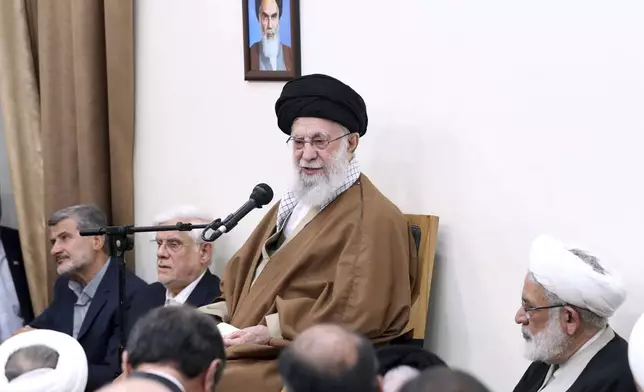
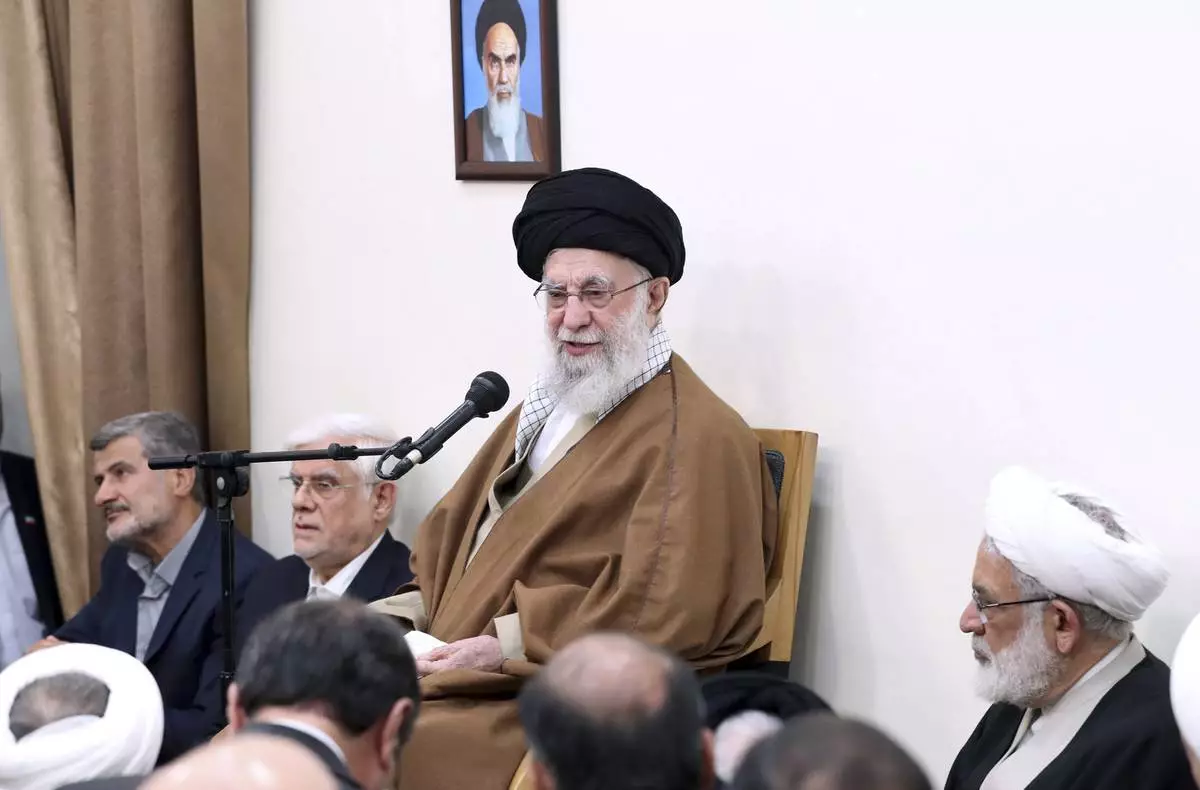
In this photo released by the official website of the office of the Iranian supreme leader, Supreme Leader Ayatollah Ali Khamenei speaks in a meeting with a group of top officials, in Tehran, Iran, Tuesday, April 15, 2025. (Office of the Iranian Supreme Leader via AP)
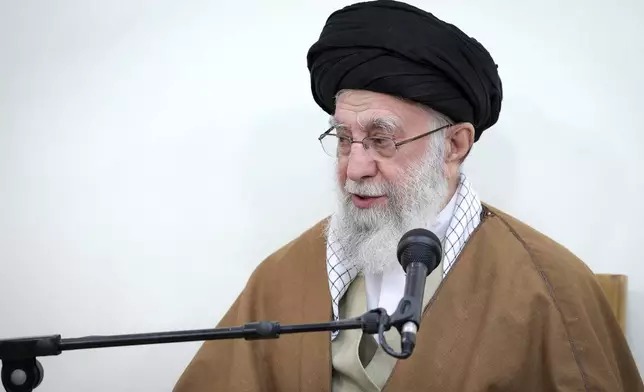
In this photo released by the official website of the office of the Iranian supreme leader, Supreme Leader Ayatollah Ali Khamenei speaks in a meeting with a group of top officials, in Tehran, Iran, Tuesday, April 15, 2025. (Office of the Iranian Supreme Leader via AP)
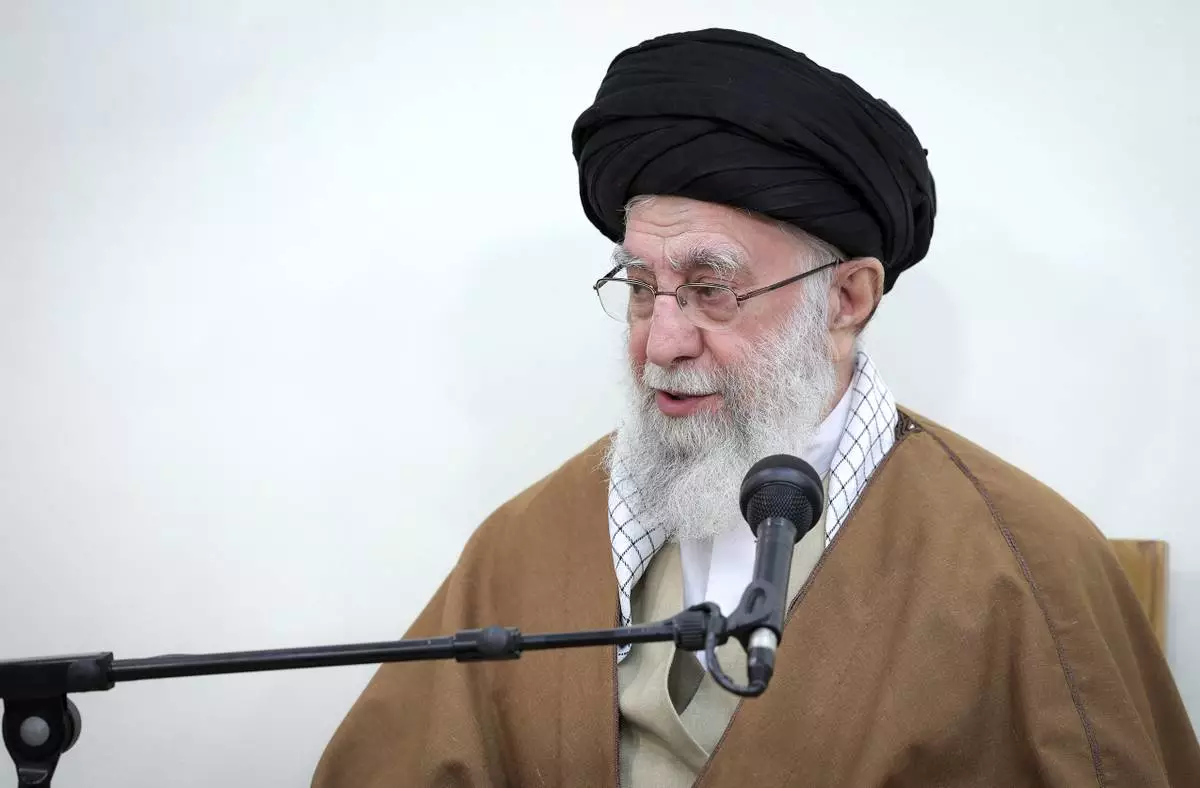
In this photo released by an official website of the office of the Iranian supreme leader, Supreme Leader Ayatollah Ali Khamenei speaks in a meeting with a group of top officials, in Tehran, Iran, Tuesday, April 15, 2025. (Office of the Iranian Supreme Leader via AP)

In this photo released by an official website of the office of the Iranian supreme leader, Supreme Leader Ayatollah Ali Khamenei speaks in a meeting with a group of top officials, in Tehran, Iran, Tuesday, April 15, 2025. (Office of the Iranian Supreme Leader via AP)

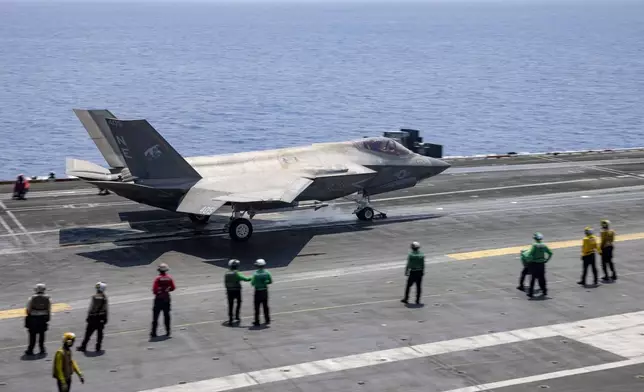
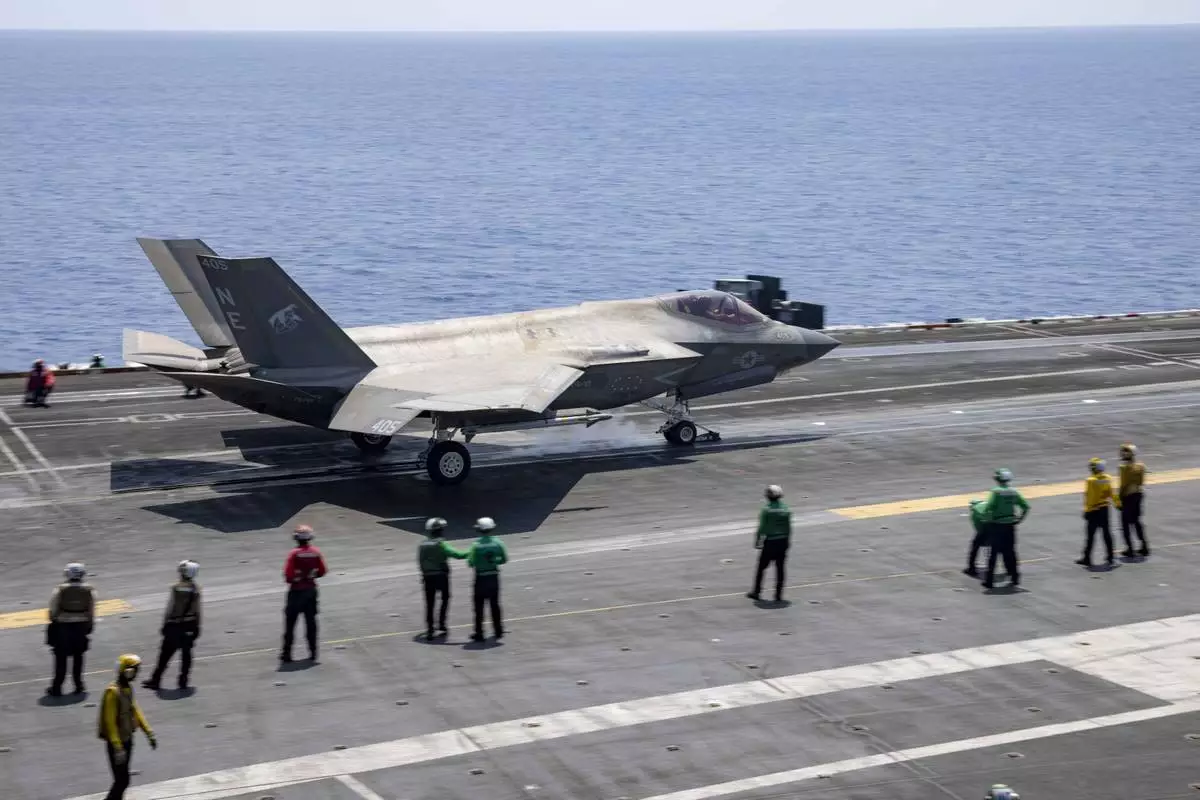
This photograph released by the U.S. Navy shows an F-35C Lightning II launch off the USS Carl Vinson aircraft carrier while operating in the Middle East on April 10, 2025. (Petty Officer 2nd Class Isaiah Goessl/U.S. Navy via AP)
This photograph released by the U.S. Navy shows an F-35C Lightning II launch off the USS Carl Vinson aircraft carrier while operating in the Middle East on April 10, 2025. (Petty Officer 2nd Class Isaiah Goessl/U.S. Navy via AP)

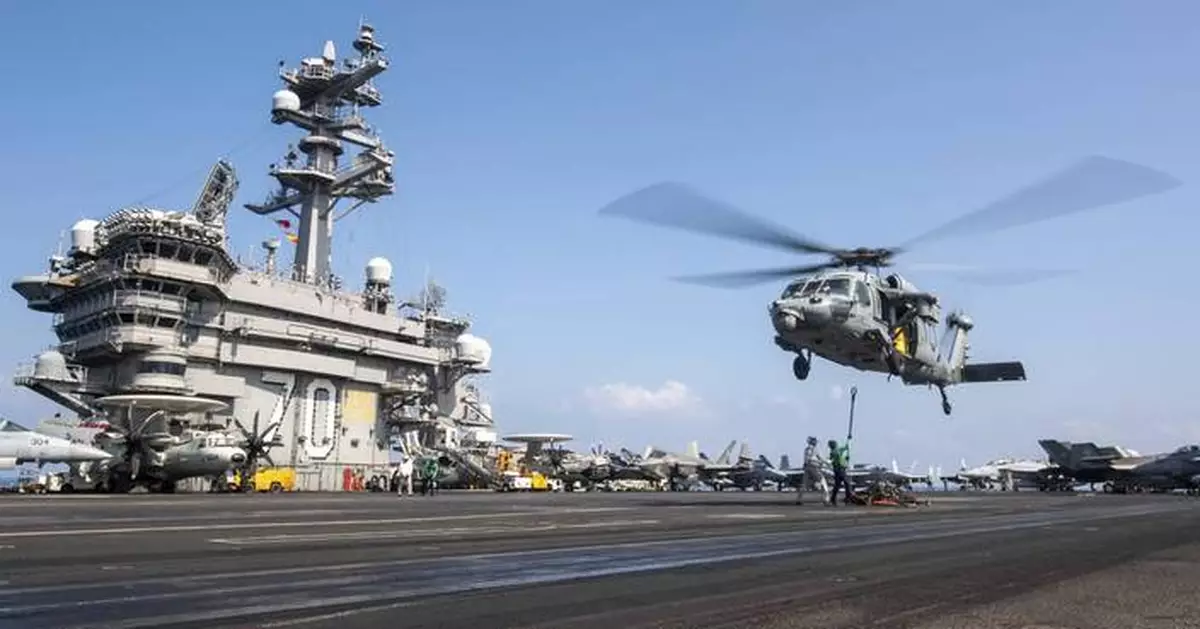
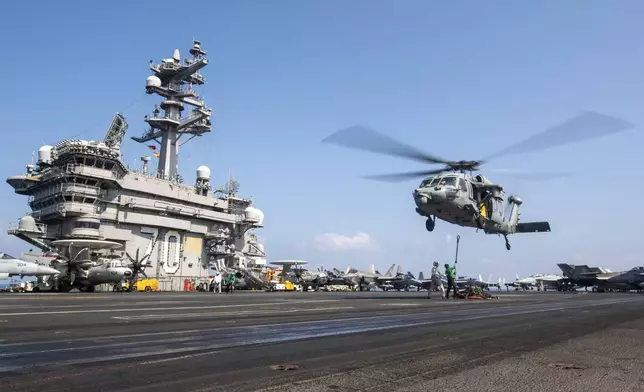
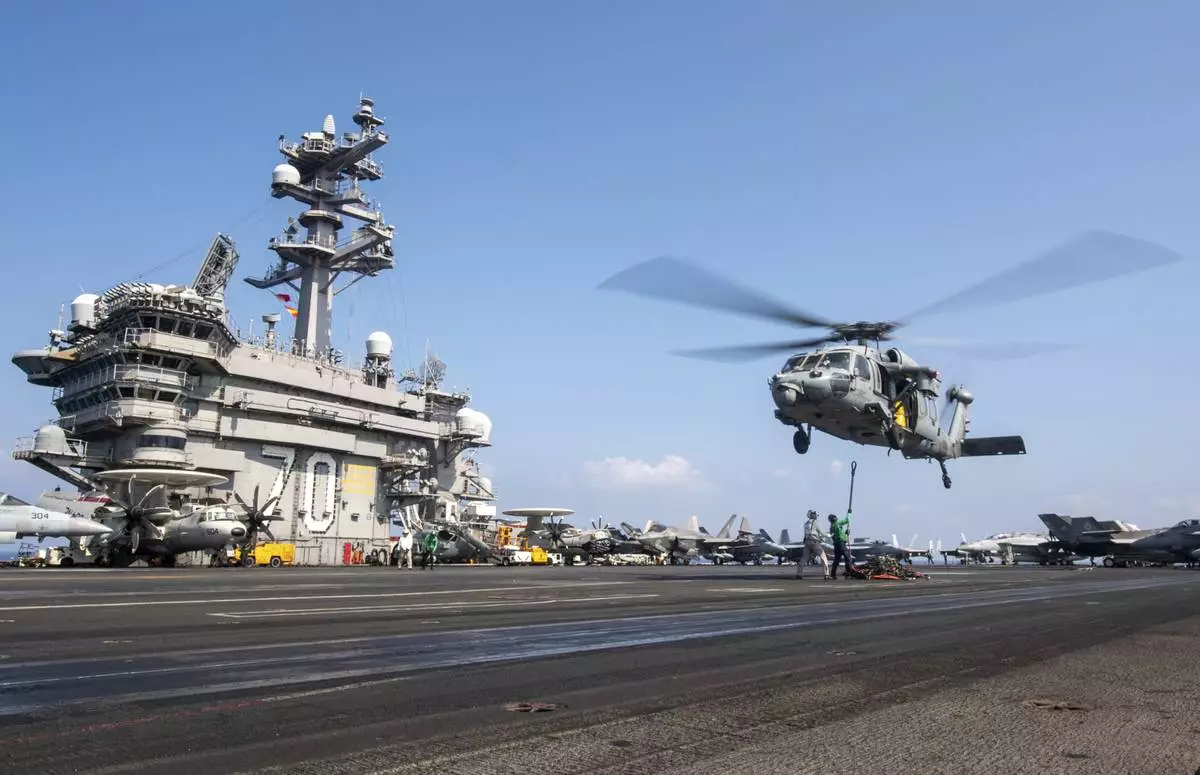
This photograph released by the U.S. Navy shows a MH-60S Sea Hawk helicopter hovering over the USS Carl Vinson aircraft carrier while operating in the Middle East on April 12, 2025. (Petty Officer 3rd Class Nathan Jordan/U.S. Navy via AP)

This photograph released by the U.S. Navy shows a MH-60S Sea Hawk helicopter hovering over the USS Carl Vinson aircraft carrier while operating in the Middle East on April 12, 2025. (Petty Officer 3rd Class Nathan Jordan/U.S. Navy via AP)

Questions remain over where the weekend talks between the countries will be held after officials initially identified Rome as hosting the negotiations, only for Iran to insist early Tuesday they would return to Oman. American officials so far haven't said where the talks will be held, though Trump did call Oman's Sultan Haitham bin Tariq on Tuesday while the ruler was on a trip to the Netherlands.

The stakes of the negotiations couldn’t be higher for the two nations closing in on half a century of enmity. Trump repeatedly has threatened to unleash airstrikes targeting Iran’s nuclear program if a deal isn’t reached. Iranian officials increasingly warn that they could pursue a nuclear weapon with their stockpile of uranium enriched to near weapons-grade levels.

But even Iran's Supreme Leader Ayatollah Ali Khamenei reportedly described the first round of talks as going “well,” while still couching his remarks Tuesday.

U.S. Mideast envoy Steve Witkoff, who represented America in last weekend's talks in Oman, separately signaled that the Trump administration may be looking at terms of the 2015 nuclear deal that the president unilaterally withdrew from in 2018 as a basis for these negotiations. He described the talks last weekend as “positive, constructive, compelling.”

“This is going to be much about verification on the enrichment program, and then ultimately verification on weaponization,” Witkoff told Fox News on Monday night. “That includes missiles, the type of missiles that they have stockpiled there. And it includes the trigger for a bomb.”

He added: “We’re here to see if we can solve this situation diplomatically and with dialogue.”

Satellite photos taken Monday by the European Union's Copernicus program showed the Vinson, which is based out of San Diego, California, operating northeast of Socotra, an island off Yemen that sits near the mouth of the Gulf of Aden. The Vinson is accompanied by the Ticonderoga-class guided missile cruiser USS Princeton and two Arleigh Burke-class guided missile destroyers, the USS Sterett and the USS William P. Lawrence.

The U.S. ordered the Vinson to the Mideast to back up the USS Harry S. Truman, which has been launching airstrikes against the Houthis since the American campaign started March 15. Footage released by the Navy showed the Vinson preparing ordinance and launching F-35 and F/A-18 fighter jets off its deck in recent days.

The U.S. Navy's Bahrain-based 5th Fleet, which oversees the Mideast, declined to discuss details of the Vinson's operations. However, hours after the AP's report, the U.S. military's Central Command posted videos from the two carriers on the social platform X saying there had been “24/7 strikes” on the Houthis by the two carriers.

The Vinson's arrival came as Khamenei, while speaking to high-ranking government officials in Tehran on Tuesday, endorsed the progress of the talks.

“We shouldn’t be overly optimistic about this dialogue, nor overly pessimistic," the 85-year-old Khamenei said. "The first steps have been taken well and executed properly. From here on, the process should be followed carefully. The red lines are clear — both for the other side and for us. We may or may not reach a result, but either way, it’s worth pursuing.”

He also urged officials “not to tie the country’s affairs” to the talks, which are scheduled to have a second round on Saturday.

“Of course, we don’t fully trust them — we know who we’re dealing with,” Khamenei added. “But we are optimistic about our own capabilities.”

Meanwhile, Witkoff offered for the first time a specific enrichment level he'd like to see for Iran's nuclear program. Today, Tehran enriches uranium to up to 60% — a short, technical step from weapons-grade levels of 90%.

“They do not need to enrich past 3.67%,” Witkoff told Fox News. "In some circumstances, they’re at 60%, in other circumstances, 20%. That cannot be.

“And you do not need to run, as they claim, a civil nuclear program where you’re enriching past 3.67%. So this is going to be much about verification on the enrichment program, and then ultimately verification on weaponization.”

The 2015 nuclear deal Iran agreed to with world powers under President Barack Obama saw Tehran agree to drastically reduce its stockpile of uranium and only enrich up to 3.67% — enough for its nuclear power plant at Bushehr. Iran in exchange received access to frozen funds around the world, and sanctions were lifted on its crucial oil industry and other sectors.

Late Tuesday, Witkoff wrote on X that “a deal with Iran will only be completed if it is a Trump deal.”

“Iran must stop and eliminate its nuclear enrichment and weaponization program,” he wrote. “It is imperative for the world that we create a tough, fair deal that will endure, and that is what President Trump has asked me to do.”

Iran's Javan newspaper, which is believed to be close to its paramilitary Revolutionary Guard, suggested in an editorial Tuesday that Tehran would be open to reducing its enrichment.

“Something that we have done before, why should we not carry it again and reach a deal?” the editorial asked. "This is not called a withdrawal by Islamic Republic from its ideals anywhere in the world.”

When Trump withdrew from the deal in 2018, however, he pointed at Iran's ballistic missile stockpile as one reason to leave the deal. Witkoff said any deal with Iran would have to include “missiles, the type of missiles that they have stockpiled there and it includes the trigger for a bomb.”

Iran relies on its ballistic missiles as a hedge against regional nations armed with advanced fighter jets and other American weaponry. Getting it to abandon its missile program likely will be difficult in negotiations.

Associated Press writer Nasser Karimi in Tehran, Iran, contributed to this report.

The Associated Press receives support for nuclear security coverage from the Carnegie Corporation of New York and Outrider Foundation. The AP is solely responsible for all content.

Additional AP coverage of the nuclear landscape: https://apnews.com/projects/the-new-nuclear-landscape/
In this photo released by the official website of the office of the Iranian supreme leader, Supreme Leader Ayatollah Ali Khamenei speaks in a meeting with a group of top officials, in Tehran, Iran, Tuesday, April 15, 2025. (Office of the Iranian Supreme Leader via AP)
In this photo released by the official website of the office of the Iranian supreme leader, Supreme Leader Ayatollah Ali Khamenei speaks in a meeting with a group of top officials, in Tehran, Iran, Tuesday, April 15, 2025. (Office of the Iranian Supreme Leader via AP)
In this photo released by an official website of the office of the Iranian supreme leader, Supreme Leader Ayatollah Ali Khamenei speaks in a meeting with a group of top officials, in Tehran, Iran, Tuesday, April 15, 2025. (Office of the Iranian Supreme Leader via AP)

In this photo released by an official website of the office of the Iranian supreme leader, Supreme Leader Ayatollah Ali Khamenei speaks in a meeting with a group of top officials, in Tehran, Iran, Tuesday, April 15, 2025. (Office of the Iranian Supreme Leader via AP)

This photograph released by the U.S. Navy shows an F-35C Lightning II launch off the USS Carl Vinson aircraft carrier while operating in the Middle East on April 10, 2025. (Petty Officer 2nd Class Isaiah Goessl/U.S. Navy via AP)
This photograph released by the U.S. Navy shows an F-35C Lightning II launch off the USS Carl Vinson aircraft carrier while operating in the Middle East on April 10, 2025. (Petty Officer 2nd Class Isaiah Goessl/U.S. Navy via AP)

This photograph released by the U.S. Navy shows a MH-60S Sea Hawk helicopter hovering over the USS Carl Vinson aircraft carrier while operating in the Middle East on April 12, 2025. (Petty Officer 3rd Class Nathan Jordan/U.S. Navy via AP)
This photograph released by the U.S. Navy shows a MH-60S Sea Hawk helicopter hovering over the USS Carl Vinson aircraft carrier while operating in the Middle East on April 12, 2025. (Petty Officer 3rd Class Nathan Jordan/U.S. Navy via AP)

WASHINGTON (AP) — A day after the audacious U.S. military operation in Venezuela, President Donald Trump on Sunday renewed his calls for an American takeover of the Danish territory of Greenland for the sake of U.S. security interests, while his top diplomat declared the communist government in Cuba is “in a lot of trouble.”

The comments from Trump and Secretary of State Marco Rubio after the ouster of Venezuela's Nicolás Maduro underscore that the U.S. administration is serious about taking a more expansive role in the Western Hemisphere.

With thinly veiled threats, Trump is rattling hemispheric friends and foes alike, spurring a pointed question around the globe: Who's next?

“It’s so strategic right now. Greenland is covered with Russian and Chinese ships all over the place," Trump told reporters as he flew back to Washington from his home in Florida. "We need Greenland from the standpoint of national security, and Denmark is not going to be able to do it.”

Asked during an interview with The Atlantic earlier on Sunday what the U.S.-military action in Venezuela could portend for Greenland, Trump replied: “They are going to have to view it themselves. I really don’t know.”

Trump, in his administration's National Security Strategy published last month, laid out restoring “American preeminence in the Western Hemisphere” as a central guidepost for his second go-around in the White House.

Trump has also pointed to the 19th century Monroe Doctrine, which rejects European colonialism, as well as the Roosevelt Corollary — a justification invoked by the U.S. in supporting Panama’s secession from Colombia, which helped secure the Panama Canal Zone for the U.S. — as he's made his case for an assertive approach to American neighbors and beyond.

Trump has even quipped that some now refer to the fifth U.S. president's foundational document as the “Don-roe Doctrine.”

Saturday's dead-of-night operation by U.S. forces in Caracas and Trump’s comments on Sunday heightened concerns in Denmark, which has jurisdiction over the vast mineral-rich island of Greenland.

Danish Prime Minister Mette Frederiksen in a statement that Trump has "no right to annex" the territory. She also reminded Trump that Denmark already provides the United States, a fellow member of NATO, broad access to Greenland through existing security agreements.

“I would therefore strongly urge the U.S. to stop threatening a historically close ally and another country and people who have made it very clear that they are not for sale,” Frederiksen said.

Denmark on Sunday also signed onto a European Union statement underscoring that “the right of the Venezuelan people to determine their future must be respected” as Trump has vowed to “run” Venezuela and pressed the acting president, Delcy Rodriguez, to get in line.

Trump on Sunday mocked Denmark’s efforts at boosting Greenland’s national security posture, saying the Danes have added “one more dog sled” to the Arctic territory’s arsenal.

Greenlanders and Danes were further rankled by a social media post following the raid by a former Trump administration official turned podcaster, Katie Miller. The post shows an illustrated map of Greenland in the colors of the Stars and Stripes accompanied by the caption: “SOON."

“And yes, we expect full respect for the territorial integrity of the Kingdom of Denmark,” Amb. Jesper Møller Sørensen, Denmark's chief envoy to Washington, said in a post responding to Miller, who is married to Trump's influential deputy chief of staff Stephen Miller.

During his presidential transition and in the early months of his return to the White House, Trump repeatedly called for U.S. jurisdiction over Greenland, and has pointedly not ruled out military force to take control of the mineral-rich, strategically located Arctic island that belongs to an ally.

The issue had largely drifted out of the headlines in recent months. Then Trump put the spotlight back on Greenland less than two weeks ago when he said he would appoint Republican Gov. Jeff Landry as his special envoy to Greenland.

The Louisiana governor said in his volunteer position he would help Trump “make Greenland a part of the U.S.”

Meanwhile, concern simmered in Cuba, one of Venezuela’s most important allies and trading partners, as Rubio issued a new stern warning to the Cuban government. U.S.-Cuba relations have been hostile since the 1959 Cuban revolution.

Rubio, in an appearance on NBC's “Meet the Press,” said Cuban officials were with Maduro in Venezuela ahead of his capture.

“It was Cubans that guarded Maduro,” Rubio said. “He was not guarded by Venezuelan bodyguards. He had Cuban bodyguards.” The secretary of state added that Cuban bodyguards were also in charge of “internal intelligence” in Maduro’s government, including “who spies on who inside, to make sure there are no traitors.”

Trump said that “a lot” of Cuban guards tasked with protecting Maduro were killed in the operation. The Cuban government said in a statement read on state television on Sunday evening that 32 officers were killed in the U.S. military operation.

Trump also said that the Cuban economy, battered by years of a U.S. embargo, is in tatters and will slide further now with the ouster of Maduro, who provided the Caribbean island subsidized oil.

“It's going down,” Trump said of Cuba. “It's going down for the count.”

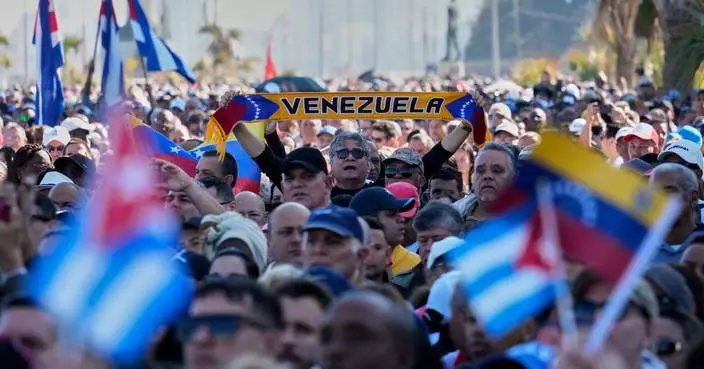
Cuban authorities called a rally in support of Venezuela’s government and railed against the U.S. military operation, writing in a statement: “All the nations of the region must remain alert, because the threat hangs over all of us.”

Rubio, a former Florida senator and son of Cuban immigrants, has long maintained Cuba is a dictatorship repressing its people.

“This is the Western Hemisphere. This is where we live — and we’re not going to allow the Western Hemisphere to be a base of operation for adversaries, competitors, and rivals of the United States," Rubio said.

Cubans like 55-year-old biochemical laboratory worker Bárbara Rodríguez were following developments in Venezuela. She said she worried about what she described as an “aggression against a sovereign state.”

“It can happen in any country, it can happen right here. We have always been in the crosshairs,” Rodríguez said.

AP writers Andrea Rodriguez in Havana, Cuba, and Darlene Superville traveling aboard Air Force One contributed reporting.

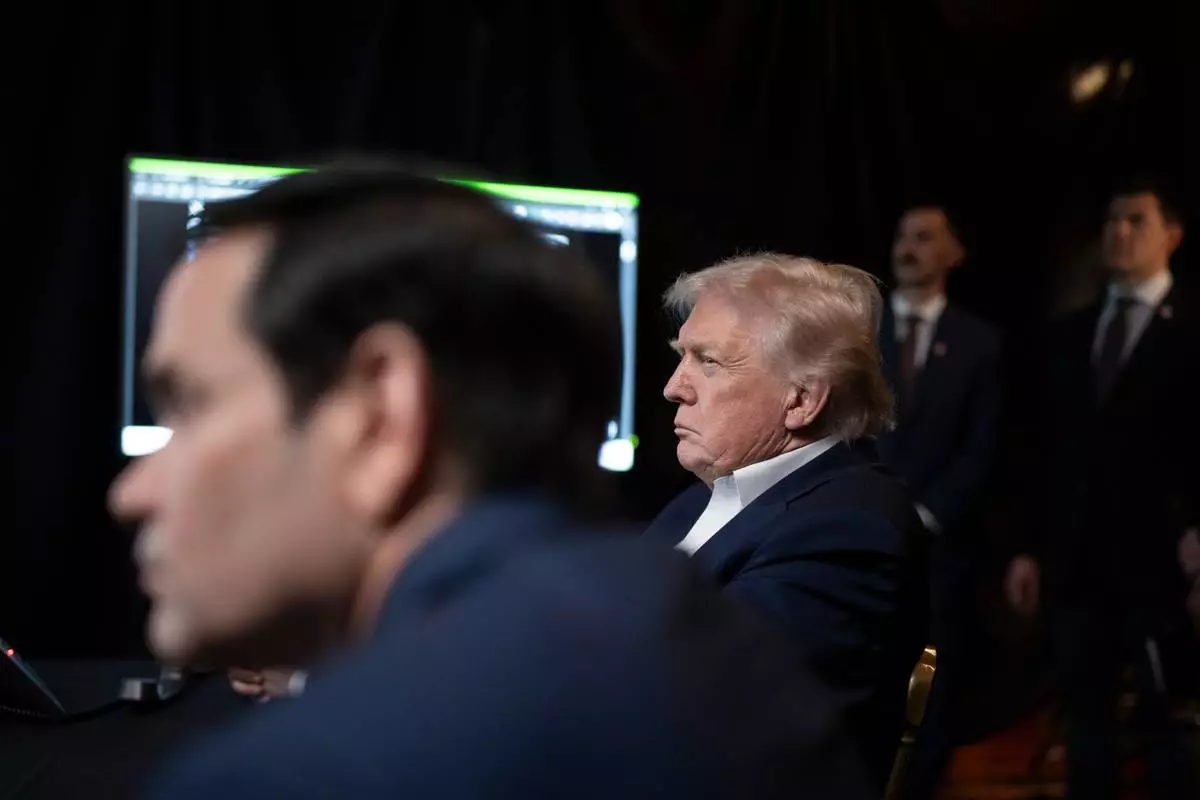
In this photo released by the White House, President Donald Trump monitors U.S. military operations in Venezuela, with Secretary of State Marco Rubio at Mar-a-Lago in Palm Beach, Fla., Saturday, Jan. 3, 2026. (Molly Riley/The White House via AP)

In this photo released by the White House, President Donald Trump monitors U.S. military operations in Venezuela, with Secretary of State Marco Rubio at Mar-a-Lago in Palm Beach, Fla., Saturday, Jan. 3, 2026. (Molly Riley/The White House via AP)

Recommended Articles